Not a Lump by Greta Hayer

I would have known what to do if it had been a lump; instead, in the mound of my left breast was a hole. At first, it was hardly more than a dark pore, like a pinprick, but after a few days, it was big enough to hide a button in.

I called my brother’s husband. “Honestly,” he said. “I don’t know that much about breasts.”

“You’re a surgeon.”

“I’m a foot surgeon.” He sighed, breathing into the mouthpiece. “Besides, I’m usually the one making the holes.”

Not what I wanted to hear. “How’s Mike?”

“Tell me you’ll get that looked at by an oncologist or something.”

“It’s not a lump. Cancer is a lump.”

When we hung up, I looked at my chest in the yellow light of the bathroom. The hole looked up at me, as wide as a dime. Inside, I only saw blackness, maybe a pinkish tone to it. I leaned closer to the light, shoving my chest over the sink and pressing hard against the cold porcelain. Inside, I saw a shiver of movement. Had something burrowed deep within me, or was I merely seeing my own heart?

I called my doctor, who asked if it hurt. It didn’t. Since it didn’t hurt, and it wasn’t a lump, he figured what was there to worry about? I nodded, though we were on the phone, and he couldn’t see my assent.

I went out. I started the night with a trio of friends. Not good ones, not friends who discussed something a precious as our own mortality. Besides, they were perfect, flawless versions of the female form, and certainly, none of them bore a hole in their chest.

I lifted a glass of wine to my lips, and for a moment, the world was only a pungent red sea and a clear sky. When I lowered the glass, my friends were gone, easing their way into the crowded bar, fitting into circles of conversation and pockets of secrets.

The bartender waved at my empty glass.“Another one?” 

“I guess. It’s not a lump.”

His face broke into a grin. “Then, you’re celebrating.” He poured a pair of shots. “My mom’s a survivor.”

His mom? How old was he? Not so much younger than me. Or maybe a lot younger. I couldn’t tell the ages of people younger than me anymore; maybe that was a symptom.

I grinned shallowly, but threw back the whiskey. The heat of it traveled down my neck, pooling like liquid fire in my chest.

My shirt dampened. A dark pool gathered above the hole, leaking whiskey onto my top.

The bartender noticed, pointing with an elbow as he poured another patron a drink. “Looks like you spilled.”

I shook my head and tried to cover the seeping wetness with a hand. I felt the eyes of everyone in the bar, gawking. My friends were nowhere, or maybe they were among the strangers staring. The liquor trickled down my chest, under my bra, past the waistline of my pants. I was dying. I had to be.

In the ER, the doctor checked my breathing and shook his head. He pressed the stethoscope to my whole breast and shook his head. “Your vitals are fine. Bloodwork is negative.”

I covered myself as best I could with the papery hospital gown. “What’s wrong with me?”

“I suggest you go home, sleep it off.” The doctor was already moving toward the door. “At least it’s not a lump.”

I touched the edge of skin around the hole, sticky with the remnants of the alcohol. It was big enough that I could probably insert my pointer finger. “Yes,” I said, nodding and smiling vacantly. “So lucky it’s not a lump.” 


Greta Hayer received her MFA at the University of New Orleans and her bachelor’s degree in history at the College of Wooster, where she studied fairy tales and medieval medicine. Her fiction has appeared in Beneath Ceaseless Skies, Luna Station Quarterly, and Maudlin House and her nonfiction has appeared in Booth and Flint Hills Review. Her column, “In Search of the Dream World,” can also be found in Luna Station Quarterly.

Five Things I Admire About Tudi by Olivia Post

1.  Tudi cannot be humiliated. This is not unusual for a dog, but it’s notable because my love language is cruelty. I tell her that she’s funny looking. I tell her that her face looks like a boiled potato that got dropped on the ground. She’s got that stupid Shih Tzu profile, where her protruding eyes fit snuggly between a leathery monkey nose. Sometimes her face, full of adoration and need, makes me so mad. I mock her in private and in front of others, but I always cast a smile on her after. I love her oddity—her goblin face, the way her fat ass waddles from room to room, how she’s unhurried like she has already decided where she’s going. I love her so much it spills out as contempt. I admire that she knows the difference between derision and love, and that it doesn’t affect her self-esteem.

2.  Tudi makes eye contact with everyone she meets and that makes people smile. And when someone tries to bend down to pet her, she’ll trot away knowing that she doesn’t owe them anything. This is admirable, because I’m so eager to please and rarely do. Sometimes she’ll make sustained eye contact with a man, and he’ll smile at her and then say “hi” to me. I’ll say “hi” back and notice that my voice doesn’t quite work, because I haven’t talked to a human in a long time. Tudi doesn’t talk much either. When she barks, which is usually at cats, she seems surprised by her own voice.

3.  Tudi has no friends except me. This on its own is not admirable, but she’s so satisfied with only one friend. In reality she’s my only friend too, and that thought fills me with a frantic loneliness. I wish I were more like Tudi.

4.  Tudi doesn’t have any ambitions and that doesn’t bother her. She sleeps twenty hours a day and only moves long enough to eat, or find a different place to sleep. I don’t have any ambitions either. I just get out of bed and go to work because I have to. Tudi doesn’t need to work and I wish I had her life. I do wish she would contribute though. I ask her to tip her server after meals (me). I ask her who will pay the bills. At sixteen, my mother started demanding rent money. She’d call me a lazy, fat slug in front of her friends. She’d call me useless and then give me a private little smile. When I ask Tudi for rent money, she looks interested at first, but then sticks her whole back foot in her mouth. I tell her she’s choosing to do nothing with her life, parroting my mother. But she doesn’t care.

5.  Tudi exudes a quiet joy and shares it with me. I named her Latuda after the anti-depressant my insurance wouldn’t cover and she’s exactly that. I call her over, telling her it’s time for my medicine. I call her CEO of Snuggle Corp. and demand a shareholder’s meeting. I admire her emboldened cheerfulness, how she’s immune to my criticism. My inner voice has mutated into a crueler version of my mother’s. “You stupid fat ass,” I think to myself when I do something not quite right. “You’re pathetic.” I don’t think Tudi has an inner voice, but if she does it probably doesn’t say that.

And One Thing I Don’t

1.  Tudi terrorizes the neighborhood cat who often lurks outside our door. The cat is only a little smaller than her and hides under parked cars when Tudi approaches. At first I thought she loved this cat, but her behavior doesn’t look like love. She barks and lunges, pulling at her leash with an unfamiliar fury. I can imagine her saying, “Get a job, you lazy fat ass. Do something with your life,” as if she’s learned from me all too well that cruelty is more admirable than softness in small things.


Olivia Post currently lives in New Orleans, where she is working on her MFA in Fiction at the University of New Orleans.

Where There’s Smoke by Leslie Walker Trahan

I never saw my mother with a cigarette when she was alive, but now that she’s dead, she goes through a pack a day at least. I smell her smoke in every room of my house. I find her butts smashed into my floors. She’s with me while I make dinner. I grease the pan with butter. I prepare the chicken to roast. Then I hear the quick tick of a lighter, and when I turn around, there are ashes lining my pan. Mother, I say, stop it. But she never listens. She’s already burned three holes in her recipe book, one in her wedding dress, too. At night, she waits for my husband to fall asleep before she starts in. There is the smell of smoke and the glimmer of a cigarette in the dark, and when I run my hands over my husband’s chest, ashes grind against my palm. When I go out, I smell smoke on the streets. At the dry cleaner, the bank, the grocery store. Everyone breathes out smoke, long wispy curls that dissolve when I look straight at them. So many people, I think. So many secrets. I remember those final days. My mother in her thick floral nightgown, tucked tight beneath her sheets, and me leaning down to hear her better. I sure would like to get in trouble someday. Her lips were pinched back, her pale pink gums exposed. I stop at a bar and ask a man out front for a book of matches. He winks and drops one into my palm. Come see us sometime, sweetheart. I hear Mother’s laugh behind me. When I turn, her embers graze my hand.


Leslie Walker Trahan’s stories have been featured in The Forge, New Delta Review, Gone Lawn, and SmokeLong Quarterly, among other publications. She lives in Austin, Texas. You can find her online at lesliewtrahan.com.

A Universe Waiting to Be Born by Cathy Ulrich

In this universe, time is on a rewind, time is in reverse, and the girl detective gets unkidnapped, gets set back down on the sidewalk beside the gaping Thomas from chemistry class. He is thinking apples like smells hair her, and his smile goes and comes, white-toothed. The girl detective becomes unaware of the long black car turning round the corner, her head dips down and up as she listens to Thomas’s backward talk, as they go backward into the school, as they grow younger imperceptibly, as Thomas’s hand nearly brushes the girl detective’s, as it pulls away.

The sun falls back into its rise, birds migrate north for the summer, the spools unwind and unwind, and the girl detective sits at her bedroom window and thinks alone not am I. Universes and universes and universes are there.

The girl detective walks backward home, her mother plays Billie Holiday backwards, her father returns from a trip he hasn’t yet left for. They uneat their dinner at the long dining table, empty forks becoming full, tipping back down to their plates. There is a silence of unspoken words that surrounds them.

The girl detective heads backward to her birth, she will be unborn, she will be part of the fabric of everything, small and new in this reversing place, she looks out across a sea of universes and a sea of girl detectives going forward and away from her, and she wants to tell them, I know how it ends, I know how it all ends, but she is swallowed up in her beginning and carried with everything into a universe waiting to be born.


Cathy Ulrich always sets her clocks at least 10 minutes ahead, which is kind of the opposite of going backwards in time. Or something. Her work has been published in various journals, including Quarter After Eight, Ecotone, and Flash Frog.

Other Husbands by M.L. Krishnan

 We aspired to be like you, with your spouse and lover and child, with the way that you gathered and displayed men as though they were hand-hammered coins that you strung from your wedding girdle—your veshti-clad husband with a voice like the wind at sea and a throat filled with song, and your lover from Bareilly or Ludhiana or some other city from the North with an incomprehensible name, with his mongrel loyalty and film-star looks, and your beautiful child whose joy fell upon you like a meteor outburst, her laughter slopping cosmic debris around your toes sheathed in silver. It didn’t matter who the father of that child was. It didn’t matter that you deserved none of this, the love, the men and their fevered attention, the way that you held yourself so self-effacingly, as if to dare us, as if to say, look what I can do with this cratered skin, with my unplucked eyebrows and unshaved armpits, with my teeth, with this phlegm-colored nighty that hung on me like a military tent, vast and irregular and frowned with creases. As though your good fortune was a life-insurance agent with a steady name like Kannan or Manikandan who pressed his bearded face into your upper thighs, and you took him in with your homemaker dullness, just as you did everything else. You were never like us. We shone too much, we jumped too far, we stood tall and proud in our splendor, in our angles of nose and jaw and leg, in the way that we excelled at everything that we put our minds to: field hockey, polynomials, makeup, the devotional compositions of Saivite saints. Maybe that was our downfall. Your compliance, wielded like a razorblade that slid easily under men, under us, under the viscera of our anxieties, our love, slick and hot and foreboding to the touch.


M.L. Krishnan originally hails from the coastal shores of Tamil Nadu, India. She is a 2019 graduate of the Clarion West Writers’ Workshop, and her work has appeared or is forthcoming in Trampset, Paper Darts, Quarterly West, Sonora Review, and elsewhere. You can find her on Twitter @emelkrishnan.

The Painted Moth by Jennifer Fliss

My boyfriend Mark and I were painting the walls of our shitty little rental. The landlord gave us permission, though he refused to replace, or even spot-clean the haggard carpet – dotted with who knows what from who knows when.

We taped up the door frame and windows and the perfect place where the walls meet the ceilings. Blue tape like bodily outlines saying a death had been there.

“You idiot. You did it wrong. Let me,” Mark said, as he used his body like an insult and pushed me out of the way. As he grabbed the tape roll, he left a patch of scratches on my wrist, like a special plaid. He was not a man who bit his nails and he rarely trimmed them, preferring to go for monthly manicures. He liked them in points. His daggers often left marks, and I often ran my own fingers over the cuts and felt the burn again and again.

In the quiet of a cricket night, the screen door open, I stood on a ladder painting the upper reaches of the bedroom. Mark crouched at the floor, working near the baseboards. I closed one eye for precision. Ran the brush in a smooth line, impressed with my even lines.

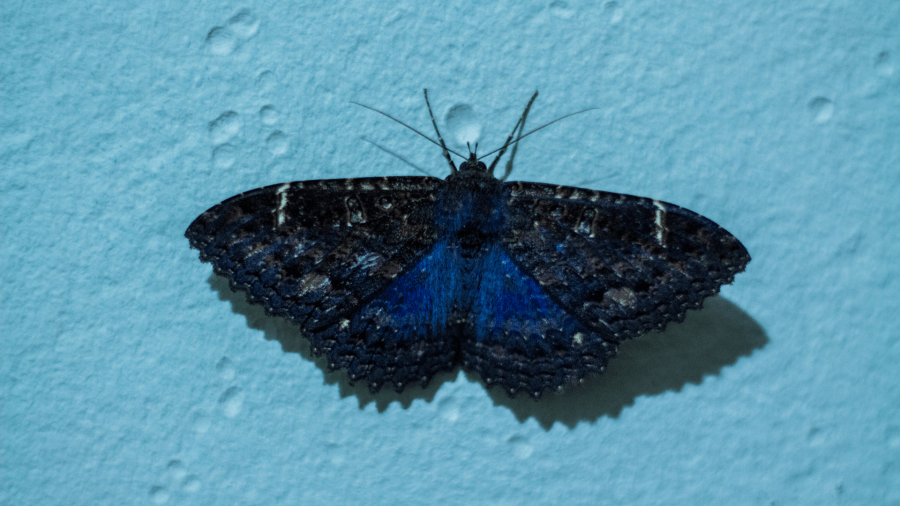
About two inches from the ceiling, I discovered a moth on the wall. It was the size of a half dollar, beige, as moths are, mottled like it was diseased. I saw its whisper thin wings flutter. Well, it was really more of a tremor, so faint was the movement. But as I got near, the moth stilled its subtle beating. I blew at it and thought about flicking it with my finger, but imagined it immediately turning to dust and crumbling, and I don’t know where I got that idea. I decided to leave it, but when I bent to dip the brush in more paint, it had moved. Spectral. The ghost had departed.

I painted a few more lines, and dipped again and continued to search the walls for the creature. It only took a moment to realize that the moth had moved a couple feet back and I had accidentally painted it over. It’s wings, thorax, even the fine antennae, now a relief, but not quite a work of art. I dropped the brush. Horrified. I stared at the winged creature, wondering what to do. I tapped its body with a fingernail, came away with a smear of blue. The moth only twitched its antennae and then stopped moving altogether. It stayed on the wall, a tempest blue fresco of a moth; it could’ve been a butterfly for all the paint.

The color we had chosen was Hawaiian Blue. It’s like we’ll always be on a honeymoon, Mark had said. I’d never been to Hawaii, so I wouldn’t know. And we never talked about a honeymoon since, or the pomp and circumstances that would lead to such a trip. The color was closer to the tears painted by children. We adults know that tears are clear and they dry white and phantom-like on our skin. They aren’t blue at all.

Up on the ladder, I felt a sudden surge and dropped my paintbrush. “Gotcha”! Mark growled as he grabbed my waist. I slipped down the rungs of the ladder and my head whacked the corner of the counter. I saw speckles. They looked like the wings of a moth. Of my moth. Of a moth shaking off its paint, its bindings.

“Ha,” Mark said, and went back to his corner to continue his important work.

Mark painted as I nursed my head with a bag of frozen corn. Mark called me lazy a few times with a smile. But he never noticed the moth as he went over to fix my mistakes.

We stayed in the house for four years. I’d made up many stories for the stains on the carpets. Stew. Coffee. Love. Miscarriage. Death. And nearly every night, under the great heft and misguided love of my boyfriend – who was still my boyfriend and not my husband, or even fiancé despite his move-in promises – I watched and waited for a sign from the moth. Whacha looking at? Mark would say before he came. Whacha looking at? as he rolled over and turned out the light. He never waited for the answer. I know because his snores quickly replaced his oh gods.

The moth, I understood was dead the minute I coated its not diseased but beautiful wings.


Jennifer Fliss is a Seattle-based writer whose writing has appeared in PANK, The Rumpus, The Washington Post, F(r)iction, and in the 2019 Best Small Fictions anthology. She is also the 2018/2019 Pen Parentis Fellow and a 2019 recipient of a Grant for Artist Project award from Artist’s Trust. Her debut short story collection, THE PREDATORY ANIMAL BALL, is forthcoming from Okay Donkey Press in November 2021. She can be found on Twitter at @writesforlife or on her website at www.jenniferflisscreative.com.

After 70 Years in the Ice, Steve Rogers Visits Whole Foods by Emily Capettini

I.

The first time, he never makes it past the fresh produce section.

Steve stares at the leafy greens ivied against the far wall, radishes like low-slung suns through smoke. He recognizes the cloudy marbles of cabbages, tucked in with purple twins. Knuckles of ginger root and seven kinds of apples, piled high like pirate treasure. There are packages of fruit slices nearly as green as that liquor a grateful woman in Belfort had insisted they take. They’d known it, too, was a treasure excavated, cellar dust layered thick on the bottle.

One of his men had thrown up in a field later and Steve thinks that field must have grown lush since ’44, plants gone to seed decades-thick over where his boots sunk. How many ghosts layer there like impression fossils. Then, Steve had hoped to press his own mark on history, leave something for another to find.

Now, he fills his basket with fruits and vegetables bright enough to hurt.


II.

Steve goes to the far side of the store next time, back set against the lure of produce. He finds himself in front of a long case heaped with cheese like rubble. Steve rests his hand just inside the glass, the cool breeze a modern marvel he expects will never fade to ordinary. There are things that stay fixed, even in this new century: summers are still sticky in New York; a body still sweats.

He picks a few wedges of cheese, soft-rinded and dimpling under his gentle grip. They’d always been his favorites, even before hard cheeses disappeared overseas.

There was a day not long after Steve hung up that prop shield when he had to dart through a farm field gone fallow. He ducked into a cave, tried to remake himself small. Steve brushed against rough wood and found on top a cool surface that dimpled under his touch.

The search for him crossed back and forth in front of the cave, and Steve slivered off pieces of the cheese, letting each melt on his tongue until dawn or death found him first.


III.

Everyone gives him a double-take when they see him texting, as if a full keyboard would be any trouble after a telegraph. Steve sighs, wishing for the luxury of being unremarkable. The problem with imagination, he thinks, is it only looks forward.

If anyone ever bothered to ask him what he liked best about here, he’d say coffee. Not the lattes and specialty cafés that remind him he ought to see Rouen or Paris again, but the bins lining the aisles here, each tracing an origin that spirals somewhere else. He buys more than he can really drink, stacking it inside cabinets until his whole kitchen smells like coffee.

When he and his men were able to save up enough coffee for full cups to go around, they used to wish for another tomorrow, blowing away steam like birthday candles. Steve remembers the odd splendor of rest. The comfort of sitting squeezed together in whatever shelter they’d found or made. He never made his own wish, too aware of his still-new body’s mortgage.

There are thousands of tomorrows between him and those scraped-together evenings, now. Sometimes, Steve wonders if those wishes had been rationed out like the coffee, and his share is what finally pulled him free of that long sleep.


Emily Capettini is a queer fiction writer from the Midwest who loves a good ghost story. Her work has most recently appeared in places like Middle House Review and Lammergeier, among others. Her chapbook, Girl Detectives, is forthcoming from Porkbelly Press later this year. Find out more about her at emilycapettini.com.

The Cake You Bake Your Father is Not a Cake at All by Sara Torres-Albert

Writer’s tip: Panic-bake this story on your oven’s highest setting the afternoon after your dad’s birthday for best results.

INGREDIENTS:

Whatever dregs of groceries are left from last week’s haul. You have no time to shop.

PREPARATION:

Step 1: Bring your batter to a boil

Complete this step while beating stiff peaks into cream cheese like the froth of rabid waves. The kind that pitched your father’s stomach on the days he’d shell out a hundred bucks for two spots on a fluke boat and you’d dredge up nothing but barking sea robins as he floundered about the cabin, slipping the crewman a fifty to hook a fish on your line. The frosting will basically be meringue, and the toothpick you run through the yellow cake you pull from the oven will tell you it’s still soupy in the middle. The top will begin to burn. 

Notice your garbage bin eying your not-cake wantingly. Hurl your creation inside.

Tell yourself cookies mail better anyway. Cookies send a better message, too. Cookies say, See? I didn’t forget your 60th, and I totally didn’t blank on what to get you. Cookies are an act of love.

Step 2: Cream the butter until your heart aches

Settle on your go-to chocolate chip and leave three sticks of butter out to sit. Remember your mother won’t eat the cookies you send—not with her recent health kick. Notice the butter in its wax sleeve like a plaque-caked artery. If you know anything about your father it’s that his cholesterol has stunned three doctors and he’s compensated with fish oil and Alex Jones miracle pills ever since. Grate your teeth against the thought that maybe cookies don’t say I love you at all. Maybe if you really loved your father you would buy him an exercise bike or a juicer, an Apple Watch. At least you’d cut the sugar down by half. 

Step 3: Whip your flaxseed until it achieves egg-like consistency

The juicer you find on Amazon will be on backorder. Relent. Swap the butter for a vegan recipe by a mommy blogger with four and a half stars. Blend the wet ingredients first—the coconut oil and brown sugar, the vanilla extract. Check the yield and wonder what kind of lunatic writes a recipe that makes eleven cookies anyway. Mutter, The same kind of lunatic who puts flaxseed in dessert, under your breath. 

Tell yourself you’ve got to stop talking to yourself. Your father talks to himself and it’s always given you that fluke boat angry ocean churn, the same one you got on road trips when you’d finished telling a story and his twitching silence told you he was somewhere else, that he’d been somewhere else for some time. Stir over where it is he goes, where it is he’d rather be so badly he can’t help but beam up out of his skin without you. Your cookies will be a homing beacon—Earth to dad. Come in, dad. You’ve left someone behind.

Step 4: Mound your dough into generous golf balls

Admit you’ve felt weird toward your father since long before the abductions started, since half of every sentence your mother speaks to you became a dig at him after you asked if they were still in love at the movie theater when you were eight and she chewed the straw of her root beer through the previews and exhaled no. Swallow the fact that sometimes you’d like to tell her to shut up about him but you never summon the bile. So instead you let them wage their silent war tied up in birthday Apple Pays and holiday deposits, each extra twenty dollars that detonates in your bank account a declaration of who loves you more.

Think how fucked up it would be to send your father cash. More fucked up when you consider he just mailed your Christmas check. The money you’d send your father is a cash back guarantee. Plus twenty dollars? Plus fifty? Realize you don’t know how much you’d give him but you don’t know how to fucking bake either. Test your cookies to find that they are mineral oil and beeswax—food grade, sure, but better as table varnish than birthday treat. 

Say, Vegan cookies aren’t cookies anyway, talking to yourself again. Toss them out with the cake.

Step 5: No Guinness? PBR is fine

The post office closes in two hours, so find a nice beer bread recipe, done in forty minutes with prep. Recognize that your bread is a cheek gnawed with regret that your father’s not the type of dad you can grab a beer with. Fold in the protest—it’s not like you want him to start drinking. Just that maybe you’d have more to talk about if he did.

Step 6: If you can’t make your own salt, store-bought is fine

As you mix your ingredients, realize you haven’t spoken to your father in months. Guilt is the marrow that will weigh your bones before you remember he’s got your number too and you never know what to say to him anyway. Still, try him hands free and listen as the line cuts short. There will be no recording on his voicemail, the affectless beep alone. Your call will smack of the split lip you earned catching your face on the dining room table when you were five. Wonder if your father cries over you the way you’re crying now, whisking your salt into the batter. Wonder if he’ll recognize its tang.

Step 7: Season garbage with bread to taste

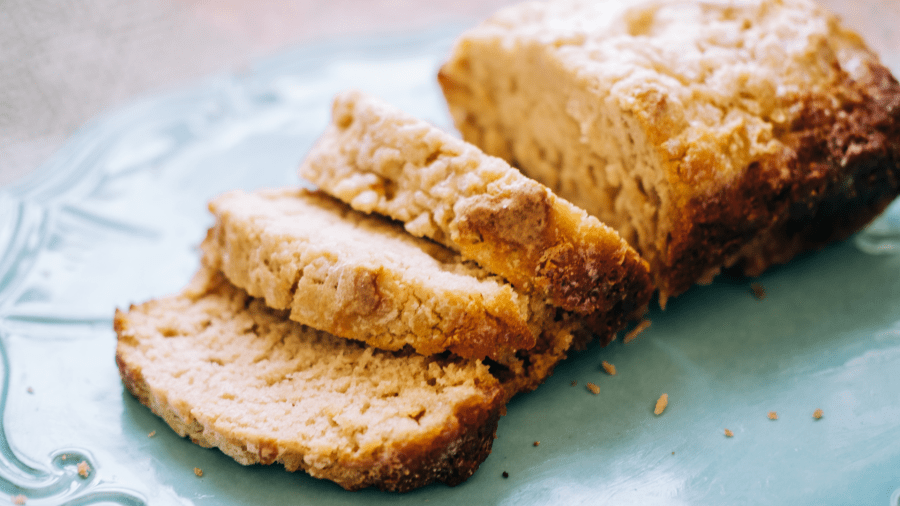
After twenty minutes in the oven, remove your bread to find the boule too sticky, your kitchen flourless. Feed your un-bread to the mass grave and buy an Amazon gift card for twenty bucks more than your father last gave you. Type, Happy belated, into the obligatory note space. I hope you buy yourself something nice.

Maybe he’ll get the juicer after all.


Sara Torres-Albert is a communication consultant by day, associate editor for the non-partisan youth vote initiative VoteThatJawn.com by night, and a fiction writer in the minutes in between. She lives in Philadelphia with her boyfriend and two cats.

Meat Bag by Hannah Gregory

Meat Bag goes to work. Meat Bag goes home. Meat Bag sleeps in her quiet, queen bed that she bought on the internet, that arrived in a narrow cardboard box with a common word for a company name with a non-essential letter missing (a silent e perhaps), that attacked her like a can of snakes when she opened the package, that off-gassed petroleum for a week. She bought a bedframe recommended by a Trusted Review Website because it was sturdy and reasonably priced; it only squeaks a little.

Meat Bag goes back to work in the morning. Her ceiling drips water on top of her head. Her boss accuses her of poking holes in the ceiling. Meat Bag wants to say that she would rather work on the first floor so she can be the first to drown when it floods, but the water dripping on her head is a good start. She wants to say this, but says she will try to fix the hole. She will be a good worker who loves her job as much as she loves her health insurance, so she can get her hormones and surgeries paid for, so she can be a Female Meat Bag, rather than a Meat Bag (culturally Meat Bags are assumed male, but the term can be used interchangeably for all Meat Bag genders; it is not a good system and Meat Bags hate it the most, especially when there are three gender options on surveys: Male, Female, Meat Bag). Meat Bag opens her lunchbox—another recommendation from the Trusted Review Website—and eats her lunch meats and cheese squares on artisanal crackers with imported olives and peak season strawberries on the side.

Meat Bag is stuck in traffic for several hours on her way home. She learns later that the driver just vanished in the middle of driving, causing a fifty-car pileup. Meat Bag also learns that the driver was another Meat Bag like her—the only fatality in the accident—but they reported her death using her old name and wrong pronouns. Meat Bag cries because that is what meat does when meat sits outside for too long. Meat Bag does not sleep well that night because there is a lump in her mattress that is not her dog. She is already past the 60-Night Sleep Trial Period so she cannot send her mattress to a homeless shelter as part of their 60-Night Sleep Trial Period Guarantee. Meat Bag tries to move to a different part of the bed, but Meat Dog takes up too much room.

Everyone gets their performance reviews at work the next day. Meat Bag has lots of Needs Improvements. Her boss tells Meat Bag that her best quality is how she shows up to work on-time. Meat Bag does not feel great about her job after her performance review. She sometimes hates being a Meat Bag. She wonders why she is part of this company, why she has to make incremental improvements in her life so she can have her health insurance and eat her estradiol too.

A co-worker comes up to Meat Bag and asks, “Hey, Meat Bag. You ever feel like a big ol’ bag of meat sometimes?”

Meat Bag looks at them and sighs. “All the damn time.” She tries to force a smile that shows them that they are in this together.

The co-worker looks annoyed and disgusted. “Why are you so weird?”

Meat Bag looks at her phone during her lunch break. She looks at reviews on the Trusted Review Website, because she wants a new non-lumpy mattress, but is disappointed that their top recommendation is the lumpy mattress she already owns. On the Feed, she sees an article about another vanishing Meat Bag, also misgendered, also deadnamed. Meat Bag wants to cry, cry. These vanishings are happening every day. She wants to know why this is not national news, why no one seems to pay attention except for a few people on the Feed. Everyone only seems to care about creating a separate Meat Bag Olympics and separate Meat Bag bathrooms so all Meat Bags can cram into a single stall and pee their Meat Pants while waiting in line because Meat Bags are apparently so numerous and pervasive that they are a threat to the integrity of national bathrooms and the Olympics. The ceiling drips with greater frequency on Meat Bag, so she moves her body and puts her garbage can under the drips.

That night, Meat Bag locks her dog out of the room and masturbates to videos of other Meat Bags like her. Seeing variations of her body eroticized turns her on, although her therapist tells her that this is a bad sign, that no one will give her hormones or surgeries if her idea of being a Female Meat Bag is because she is turned on by the idea of becoming a Female Meat Bag. She thinks this is old-fashioned as she wipes up the mess on her Meat Bag body. When she lets her dog back into the room, Meat Dog jumps on Meat Bag, licks her face, and jumps in the bed. The lump has gotten bigger in the mattress and Meat Bag cannot fall asleep that night. She thinks about all the other Meat Bags who have vanished. Raptured but not in a good way. She loves them and is sad about all the passion they left behind in this world.

At work the next day, Meat Bag’s boss tells her that everyone in the office hates her and that while meat is socially acceptable, it is inhumane. After her boss leaves, Meat Bag feels the water dripping on her head, turning into a thin stream, then a deluge. Her body becomes wet. Wetter than wet. She feels dissolved. She hopes that this is the flood that will take her away. She hopes that this is her turn to vanish.


Hannah Gregory is a trans, queer writer from Western Massachusetts. She lives with her wife and dog. More of her work is forthcoming in Passages North and X-R-A-Y. Find her on Twitter @hannah_birds.

Silver Rings by Aimee Parkison

An illusionist, Lillian could disappear inside silver rings. Shimming through silver rings, Lillian melted on stages to reappear inside me. Moving through my body, pressing against my organs, she was like a mother to me until I gave birth to her and she became like my child. Night after night in her rickety trailer with papered walls, cuddling like children, she coaxed me inside her silver rings where we joined a caravan of wheeled houses for magicians and traveling dancers.

Her makeshift bedroom would fall apart, maps sticking to my skin. When traveling with her, I would find Austria or France in the palms of my dusty hands. Once, I had to scratch Italy off my elbow in the dark, using a little scotch and pond water to whisk the boot tip away into the murk of gunpowder, soup crackers, and motor oil. After buying rough sponges to scrub Antarctica off my hip, even the thought of the poles made my skin break out in hives. Calmly, I told her the maps needed to come down from the bedroom walls. She refused.

“The maps are the walls,” Lillian whispered, polishing her silver rings. She used to whisper to me in Latin, but I grew tired of never knowing what she meant. I was weary of how estranged I felt when close enough to smell the chestnut scent of her long, tangled hair.

“What’s that sound?” I asked.

I was just a boy when I realized the whistling in the dark was wind whipping through creases of delicate paper. Her maps really were the walls. How long, I wondered, would her bedroom hold us, especially if we moved against each other with such force? She wounded me delicately, intimately, on an almost hourly basis. Our prolonged passion threatened to unravel the jumbled world of cities and villages mapped out on delicate paper.

Scarred and sacred, Lillian had been everywhere, or so she claimed. Criminals shuttled her around the world and traveled with her in scuttling ships and later in ramshackle caravans across dark country roads through entire summers of rain and locusts. She was born to the wrong people, the child of children who had no homeland, vagabonds or nomads or worse, some said. One of those men who traveled with her was supposedly her father, who died at the hand of a beautiful thief who had been a classically trained dancer. Lillian was an illegitimate child with a bastard’s knowing eyes illuminated by the loss of romantic notions. That was another life: the women her wayward father touched without remembering their names, stolen jewels more precious than spilled blood.

“She was glad,” Lillian said, speaking of her mother, who evaporated inside the silver rings to hide inside Lillian and never reappeared until Lillian’s father died. “Later that night, she was dancing. Never shed a tear. He wouldn’t have wanted her to. He would have wanted me to dance with her over his grave, so I did. That was our way, always dancing toward death, never looking back. There was no changing it, no making it right. There were only the silver rings.”

After dissolving inside the silver rings, Lillian wouldn’t let me touch her skin or her hair. I could merely caress her long fingernails or the jagged edges of her bright white teeth chiseled to shark points. Most of the time, I was afraid to touch her teeth, afraid she might bite me, although she never did. Maybe that’s why I was always stroking the maps with my sweaty hands, leaning against deep blue oceans in the night.

“Who do you think I am?” she whispered, crushing a cigarette in the ashtray.

“You remember,” I said, “who I was. Don’t you? You’re the one who found me inside the silver rings. Aren’t you?”

I discovered Japan twisted into a ribbon on my right knee and Canada encrusted on my inner thigh along with various fragments of nondescript ocean. Washing England off my arms in the shower, I found another greener England on my belly and realized there were many worlds in her bedroom, so many collections of repeated and overlapping continents and countries and oceans and rivers and islands that it was impossible to know where one old map began and another ended.

The maps were like my life, all those stories of who I was, who I could have been. Stories of me disintegrated like old maps on Lillian’s walls. In every story, my father was the exquisite thief who had stolen my childhood.

Maps of various colors and sizes, expanding or shrinking frames, repeated across Lillian’s tattered walls to reveal patterns and variations of time, temperature, elevation, rainfall, death rates, population, imports, and exports.

In the shower, washing all these wondrous places off my pale body, I sloshed and cried, realizing we went nowhere. She and I were staying in one place in her bedroom while studying maps. Only inside silver rings did I ever really go to all the places I wanted to go by exploring the complex territory of our bodies and the flat scales of her maps’ fading shores.

When she refused to look at me, she refused to say my name. She was preparing the silver rings for places she whispered like prayers. Some nights she communicated with me by saying the names of cities and countries and oceans I assumed she had traveled or longed to escape.  

She was always refusing something or someone, usually me. Everyone around her shaking her down for one favor or another, she was too giving, too generous with her vanishing until refusal became breathing. If she didn’t refuse, she would cease to exist, disappearing into her silver rings, as she had many times before an audience.

There were men who would suck the flesh off her bones if she would allow. There were women who would steal her name.

Fading, she would give herself to the silver rings that swallowed her.

Depending on which earrings she wore, she wanted to hide. The earrings were a clue to her state of mind. There were jewels inside her just as there were jewels scattered in dark corners of the trailer.  Silver rings swallowed unexpectedly rare jewels.

If I went down to the river, I could sometimes find the place where her life turned on the people we left behind. Despite all the faces she had touched as a child, there was always one face she was afraid of—the face of her father.

She walked the rickety bridge with a gun in one hand and a bottle of vodka in the other. As the silver rings moved over me without touching me, she gazed at me as if I were a boy. Then, she shot the vodka to keep me from drinking it.

Inside the silver rings, we traveled across this country and many others. Especially in rural areas braced by the old religions, there were those willing to pay to see us disappear. In her trailer where we reappeared, she ate and slept and barked orders and bathed and brushed her hair, always in the nude. The rings demanded such starkness, along with a certain abandon allowing her to suffer no shame. Life was the indignity she had to overcome daily, the comparable wealth of our poverty allowing her such freedom compared to other women, most of whom couldn’t approach us because of their fathers’ and husbands’ prejudices.

She used to call me inside the silver rings.

I ran to her brassy voice, despite my unwillingness to obey her without question. I owed so much to her because of the way she had found me and all she had done to allow me to live with her inside the silver rings, the deep warmth of her body enough to shelter me for the eternity of moonless nights we traveled. Under the clouded sky’s coming storms, mountains of distant tree hills became indecipherable walls of mist.


Aimee Parkison is the author of Refrigerated Music for a Gleaming Woman, winner of the FC2 Catherine Doctorow Innovative Fiction Prize.  Parkison has been published in numerous literary journals and teaches in the Creative Writing Program at Oklahoma State University. Her historical feminist horror novel, Sister Séance, is forthcoming from KERNPUNKT.  More information is available at www.aimeeparkison.com.