
Family Double-Dare, “The Lima Beings vs. Toledo TNT,” June 1991 by T.J. Martinson

A succubus visits Marc Summers each night. He knows her only as Why. For hours at a time, she writhes atop him, her long hair curtaining her face like black corn fleece, saying, “Why, Why, Why.” Only stopping once he reaches orgasm, an act that requires a willing forfeiture of his soul. 

He hasn’t slept more than four hours this week, and all four of those came between tapings. In his makeup chair, snoring, the fear of Why’s return permeates even the most insensate of snoozes such that he wakes sweating and screaming, “Why, Why, Why.” The makeup team rushes in with foundation at the ready, a bottle of cold water, a mug of hot coffee, a bowl of room-temp oatmeal.

Just today, faces have begun to change. They all look the same or everyone looks like nobody. He eats only oatmeal. Everything else comes up instantly. The PA rushes him onto the soundstage, hands him his cards and his microphone. He coifs his hair and looks out across the studio audience. They are here to remind him of Why. 

The cameras are on and Marc reads from the cards. Two families battling for bragging rights from the great state of Ohio right here in sunny Los Angeles. The Jensen family from Lima wearing red, the Waters family from Toledo wearing blue. Are we ready to have some wild fun? Today’s game: Baby Bird. Dad will suck slime from a garden hose and pass it to Mom without using hands. Mom will ferry a mouthful of slime to Child, on the other side of the stage, and carefully but quickly spit it into their open mouth. Child will mouth the slime to the top of the Booger Pyramid and spit the contents into the Nasal Chalice. First team to fill the chalice adds a hundred dollars to their score. 

Protective eyewear is distributed. Marc Summers fades into the background as the fathers suck slime, veins in their forehead slithering. The studio audience cheers but beneath their cheering lies a univocal chant, a woman’s timbre. “Why, Why, Why.” He shakes his head like a dog to get it out. 

The Lima Beings are way ahead of Toledo TNT. Toledo mother is having misgivings about spitting into her daughter’s mouth. Toledo father shouts, aggressively, from the other side of the stage. Curse words are spoken and then shouted. There’ll be hell to pay in the editing bay later, but by then Marc will be home with a glass of chilled white wine and a palmful of caffeine pills that drum his heart into a laugh track. They won’t keep her away forever, but that’s not the point. The point is to buy some time.

The days are getting longer and it will be light outside yet. Light enough to see the smoke from a northern wildfire crawl down the hills. He’ll kiss his children’s heads and pray these walls are thick. But his children are not why. He’s offered them before, but the succubus shook her head as she grinded atop him. Wrong answer, try again. If there is a reward at the end of this, he’d be shocked.

He watches The Brady Bunch and wakes to the succubus atop him, saying, “Why, Why, Why.” He answers with almost everything he knows—the names of National Parks, World Series winners since 1973, his mother’s favorite hymns—but she shakes her head and continues until he orgasms. He convulses like a salted snail, gripping the leather arms of the recliner, only opening his eyes once he’s finished in whimpering victory. She’s gone. But she leaves a trace. The smell of a rotting orchard, the sense of having misplaced something. The semen drips down his thigh and he believes, for a moment, The Brady Bunch closing theme to be her humming. One day, he will not be able to orgasm and Why will kill him. It’s beginning to feel as preferable as it does unthinkable.

T.J. Martinson is the author of The Reign of the Kingfisher (Macmillan, 2019), Her New Eyes (Clash Books, May 2025), and Blood River Witch (Counterpoint Press, June 2026). His shorter work has appeared in Passages North, Lithub, CRAFT, [PANK], JMWW, The Offing, LIT Magazine, Permafrost Magazine, Heavy Feather Review, Pithead Chapel, and others. He is an assistant professor of English at Murray State University.
Gettysburg 2019 by Allie Hoback

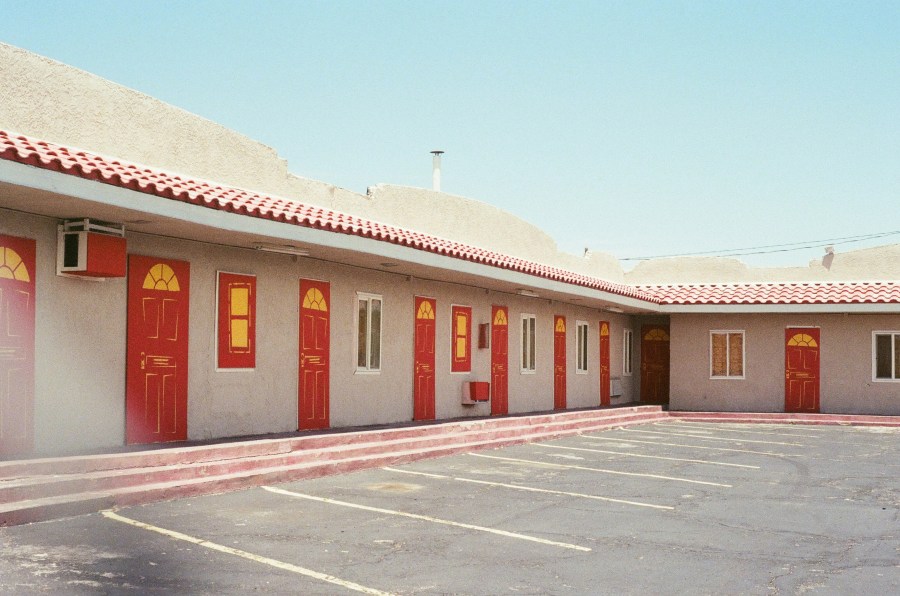
I met him at the Heartbreak Motel. A thirty-five-dollars-a-night
no-nonsense no-thrills motel. Hours before he materialized,
I threw the key cards & myself to the edge of the bed,

thought of the split roadkill I saw up I-70. Gettysburg:
weird tourist trap, war junk store, cold cider
in a cold November getting colder. Dirty ice

from a dirty ice machine. He made fun of the TV
bolted to the dresser. We play-stabbed each other
with imaginary bayonets, walked through empty

battlefields & got soaked in rain. We smelled of damp
grass & I wondered how long we could possibly
keep doing this. The cheap sheets seemed clean

when I kissed him––the kind of kissing
that only comes at the end of distance. In the morning
when he left me, I watched him walk across the motel

parking lot. I drove home north into a snowstorm.
My love for him glacier, moving downhill under its own weight.

ALLIE HOBACK is a poet from the Blue Ridge Mountains of Southwest Virginia. She earned her MFA in creative writing from Syracuse University. Her work has appeared or is forthcoming in New Ohio Review, Poetry Northwest, and Salamander, among others. She lives in Washington, DC, where she professionally keeps houseplants alive.

Moo Moo by Christine Aletti

Today the milk smells like a barnyard. Grass makes animals taste like animals. Even before her belly swelled, she didn’t want cow in her coffee and now she triple checks the date on the milk carton, counts the days it’s been open on her hand (five). Time has been troublesome since 33 weeks and 4 days ago. She throws the milk away.

*

Moo moo, says the cow in her dream. The cow is her mother 25 years ago at Mt. Kisco Country Club and the moo moo is the long, flowing dress her mother wears because tonight there is a BBQ on the pool’s lawn. They will eat watermelon and roasted pig and corn and the kids will chase fireflies into paper cups while the parents talk and drink bubbles from plastic flutes.

When she awakes, she wonders why her mother called that outfit a moo moo and not what it really could be: a goddess gown.

*

She sits on her leather couch and waits for the lactation consultant. Now, at 40, will her body know what to do? The doorbell rings. As she peels her pink hide from the gray hide, she’s aware of all the flesh around her bones— too much flesh— her diagnoses of pregnant and slightly overweight have creamed together. Even though she can’t see them, she knows the hinds of her legs are now red and stippled.

Knock knock, says Katie the Consultant. 

As she takes her breasts out, she remembers: the pool’s dressing room. It smells like chlorine and spray deodorant, sunscreen and grilled cheese. There are milky-white wooden walls. Every day, she leads her trio to the tampons under the bathroom sink. They peel off the paper and stick their fingers through the cardboard, wondering where to put it and who will put it there first. 

Then they stand on the rickety bench, peering out the windows into the pool area. There is Matt the Lifeguard, eighteen and blond-haired, blue-eyed, lap-swim-muscled; and then, their mothers, gossiping in lounge chairs. Hers wears tennis whites instead of a bathing suit.

*

She alternates making C’s and U’s with her hand over her size G’s. 

It will feel natural, Katie the Consultant is reassuring her. Baby will know what to do.

She is not convinced. 

Will baby know this—that she has never known what to do with her breasts? In the last two decades, she’s fought nature, augmenting them into larger, raised shapes, detaching the nipple and then anchoring it into a higher, perkier place. If baby is a piece of her, severed, will it too, fight nature? 

She contains acres, wide-open pastures of all the people she’s been. And oh, how that body now stretches, stores, expands. Is it natural then, that she should be so concerned about cramping, contracting, shrinking? She’s more worried about fit: into her bikini, into her child’s gaping little mouth.

*

At the pool, her brother, four years younger, always wiggles around with a woggle between his legs and says things like amaze-balls, tiggle-bitties, and awesome-sauce.

*

Katie has brought a plastic baby doll with flanged lips.

Katie models football hold, where baby feeds wedged under the armpit. She wonders what the little toenails will feel like around her back, if they will flounder or grip or curl.

Don’t worry about the arms or legs. Katie the Consultant reads her mind. Baby is used to being smooshed all together.

No one has prepared her for this type of intimacy.

She’s taken aback at how a newborn, like a vampire or a pet, doesn’t eat; it feeds.

*

Ol’ McDonald had a farm, E, I, E, I, O. 

*

Her mother calls from North Carolina after the appointment. 

I finally lost weight and wore a bathing suit, her mother is saying. And your dad, you know how he just hates big boobs. Hates ‘em. He just walked by me, raised his eyebrows, and said Barbarella.

*

These are the words about birth her mother and sister swat around: bloody murder, ripped, freaked out, elderly pregnant, ruined, huge. 

These are the phrases about motherhood her friend—an acquaintance, really—texts about her newborn, age 42 days: exclusively breastfeed, why am i doing this to myself, husband is useless, cried 3x, brain fog, don’t drive anywhere. 

Every text contains a command or a recommendation. You should. Don’t. 

Which fears are her own? This unsolicited chatter swarms into her mind and she is once again frightened. She will be: zombie cow

Why not: divine mother? 

*

Her mother refused to change in the pool’s dressing room and her father gladly shelled out for a cabana every season. A windowless 10×10 closet behind the pool’s entrance. One afternoon, a storm rolls through and she and her trio squish inside. Under the thunder, she hears a softer twinkling: laughter, music. She shushes the girls and together they squint through the cabana’s slats.

The teenage lifeguards dance close together. Matt the Lifeguard roams his hands freely over Liz Head Lifeguard’s chest. In front of everyone! No one seems to mind.

Something inside her shifts and she nervously jams the V of her toes into her Achilles’ heel.

The music is low but the lyrics are unmistakable. 

Bwok, bwok, chicken, chicken. Bwok, bwok, chicken heads. 

The words travel from the cluttered, musty lifeguard shack, through the sliding window, and out into the green, impressionable world. 

*

Her mother arrives with a can of formula, just in case.

She doesn’t know that, in those first dark days after baby is born, her breasts will work on an invisible clock that no one, not even Katie, told her about. It will disgust her. She will leak and spurt milk from bedroom to kitchen and her daughter — no longer the anonymous baby— won’t latch and will scream for hours, days, and what seems like years.

Tiggle-bitties. Big ol’ titties. 

Her mother won’t whisper Told you so. She’ll shake the bottle and say See, isn’t this easier?

Ol’ Macdonald had a farm.

The formula will froth. Her daughter will struggle to digest. Time will pass more slowly than those endless summers of girlhood. Together they will pace the kitchen and she will drink cold coffee and track her steps, each one getting her closer and closer back to that body that she never knew what to do with. 

She’ll forget what she was called before she was Sandra’s mom.

E, I, E, I, O.

Christine Aletti has an MFA from Sarah Lawrence College. Her work has most recently appeared in Twyckenham Notes and the Saw Palm Review. She lives with her daughter in Florida, for now.

Quack by Julliette Holliday

Do you see that duck in the water?

You’re seeing things, they say. That duck is your losing mind.

No time for breathing into brown paper bags.
Here come the honeycombs. Flare ups of black
holes. My deadness in the hollows of circles and hexagons.
Do you want to eat me? I ask them.
Here comes the confirmation. Patterns of cavities emerge
in the midnight ripples. Mouths
of baby waves.

That water is an animal.

That water petting, pushing, brushing, disappearing that duck.
That water petting, pushing, brushing, disappearing that me.
That water petting, pushing, brushing, disappearing that—

That duck is losing my mind.
Goodbye.
Goodbye.
Good—

I see it! they say.

Gas diffuses for the honey like a love song. Oozing
out the hexagons, filling up the hollowness, covering
the combs, moistening my brain
folds, dripping down my face. Death
hides itself away.

I taste sugar.

Did you hear that?

Quack.


I was that animal.

JULLIETTE HOLLIDAY (she/her) is a Brooklyn based, Black, multi-hyphenate artist—writer, composer, director, producer and educator. She has collaborated with The Eugene O’Neill Theater Center,  NYU Tisch, La Mama Experimental Theatre Club, The Tank NYC, and Trusty Sidekick Theater Company, and more. Originally from Columbus, OH, and a graduate of Sarah Lawrence College, Julliette’s poetry and creative non-fiction has received support from Kenyon Review’s Adult Writers Workshop and VONA (Voices of Our Nations Arts Foundation Workshop). She was awarded the Katharine Bakeless Nason Participant Scholarship in Nonfiction for Bread Loaf Writers’ Conference 2025.

On Your 60th Birthday, Resembling Our Mother, Dead at 61 by Patricia Q. Bidar

You emerge from your apartment, wheatfield hair ablaze in the afternoon sun. My big sister, skinny in a form-fitting dress. Today you are 60. I smooth my Hawaiian shirt over my paunch. 

“Birthday girl.” I hand you your gift, a bottle of second-to-cheapest tequila. I got Bellflower Pete to stop at the liquor store before he dropped me off. I’m thinking ahead to what I will drink. How you and I will arrive early and can get in a round or even two before your guests arrive. It’s been so long.

You pass me a tin of gummies and some weed cookies from your job at the dispensary. “For you, Princely.” Your nickname for me; my wife Pia has family money. 

You hold up a finger and vanish inside to put away your gift. You close the door quickly as you always do, leaving me on the step. You think I don’t know about the stacked-up newspapers and books and bottles and cans and CDs and record albums. All the sentimentalia you kept after our mother went. These objects provide you with comfort. I get that.

“Been a while.” I say when you reemerge.

“In the flesh.” Also, before I lost my license, you are nice enough not to say. Before my knee replacement; the botched tropical ale startup.

For a long time, I wondered whether you and I would stay in touch, once our mother went. Like us, she was a person of appetites. We share her face, wide and placid. We two share memories of being taken to the movies, her slipping alone to the back row where her married boyfriend waited. Another time, our mother and us, asked to leave our town’s Octoberfest, because she could barely walk. The face of the lady volunteer: Those poor kids. But life with our mother included small joys. She loved a celebration. And it is I who keep it going, now.

It’s bright outside. I lean against your mailbox as you secure your door, “Hang on, hang on, hang on.” I’m floating lightly. I’ve taken a hydrocodone pill. I tap at my phone and order the cheapest option on the Lyft menu. After she finishes work Pia, a teetotaler, will meet us at the brewery and drive us home.

Our driver is a young Latina in a black SUV. Her posture is very straight. “Your hair is really pretty,” I say.

“Thank you, sir,” she says, and I hear your soft guffaw. She passes the first three onramps. She stays on Western Avenue, even in East Hollywood, which is dodgier than when we grew up. But none of the raggedy characters near the 7/11 or clustered near boarded up storefronts pay us any mind.

“I just got a knee scooter,” you say with your crooked smile. “Well, a neighbor left it behind.” 

“Ooh.”

You add so quietly you are nearly muttering. “Can’t walk more’n a couple of blocks.” I hear you breathing beside me, an unsettlingly intimate sound.

“Since COVID, every time I sit down, I fall asleep,” I offer. I drop my head to my shoulder, eyes empty and tongue lolling. Refreshing your lip gloss, you chuckle. 

“Maybe you have that thing where a person keeps waking themselves up when their breath stops,” you say.

“Ha! Pretty sure my wife would have told me.” Underscoring the difference between us.

“Point taken,” you say sharply. You flash raised hands like a blackjack dealer and turn to the window.

You once told me that if you’d gotten married, you’d have saved hundreds of thousands in online shopping. Partied less. Stayed in good health. The presumption being that if it weren’t for my being married, my life would look a lot more like yours. I thought that was idiotic—why should it be another person’s job to keep us in line? But I have allowed the truth of it to soak in. You know how Pia takes care of me. She tells me when my food is burning, that the tub is about to overflow. Alone, I’d neglect my hygiene. I’d forget to feed the cats or pay our bills and lose my phone. In the end, I’d forget language altogether, reduced to aping lines from television shows and podcasts and graphic tees. 

Like our mother, you and I both hold an unfillable void inside, even as we participate now and then in life’s parade. She was so skinny and jaundiced at the end. Her formerly dancing brown eyes gone flat. The thought of that happening to you makes me swallow hard. I’d be alone, then. The last of our family.

We arrive in San Pedro and gritty Pacific Avenue. I hoist myself out of the car. You are already flitting around to my side. The driver pulls away, heading toward the harbor. To clear the air between us, I defer to you, asking sotto voce what tip I should give.

“Most people don’t even tip,” you answer absently, straightening your dress. 

“How do these drivers afford nice cars, when they get paid so little?”

“I just hope ours doesn’t take that same route all by herself,” you say. I rush to agree. We like thinking of ourselves as concerned for others. I’d told Pia I was worried you had terrible news about your health. I didn’t say I was invited to this shindig after one of my late night calls to you, lonely and high. That you were always cool about these calls and never threw them in my face. 

I crook my arm for you to take. Smiling together at the brewery’s entrance, we make our way across Pacific Avenue, ready for a celebration. We are our mother’s children, after all.

Patricia Quintana Bidar is a western writer from the Port of Los Angeles area, with roots in southern Arizona, Santa Fe, NM, and the Great Salt Lake. Her work has been celebrated in Wigleaf’s Top 50 and widely anthologized, including in Flash Fiction America (W.W. Norton), Best Microfiction 2023, and Best Small Fictions 2023 and 2024. Patricia’s debut collection of short works is coming from Unsolicited Press in December 2025. She lives with her family and unusual dog outside Oakland, California. Visit patriciaqbidar.com.

Notes Toward the Month After May by Penny Wei

I have started to count the number of times the microwave
hums before I eat. The evening it was seven I told myself
that odd numbers are lucky. Like the women who wear ankle-
length skirts and read weather reports for pleasure. Like
the crow that tipped over its feet on the edge of the Walgreens
parking lot and dipped its own beak in cement. I stepped around
it and said sorry, like you do when you bump into a mannequin
that looks like your father. The news says that the bees are
leaving but I’m still getting stung by things. Not insects, but
poorly-timed entrances of gods through oven sparks explaining
why all my dreams are just variations of that one bus
I never caught in 2017. They start with guilt, composting.
Somewhere, the glaciers are crying. Somewhere, my mother
is planting begonias in the shape of the Chinese character
for enough. I’m still wearing that eelgrass wig, blinking
Morse code at the sun. Except the sky has the vague look
of a person who has said too much at a dinner party. So I
tell my dog to stop sighing like a human. It questions
why I don’t stop answering to my government name.
I then remember the crow, who later exploded. Not like
boom, but like oops. Like it had a scheduling error and
forgot it was made of muscle. I try not to name the loam anymore.

PENNY WEI is from Shanghai and Massachusetts. She can be seen on Dialogist, The Weight Journal and Inflectionist Review and has been recognized by The Word Works and Longfellow House. She also has a passion for journalism.

Bed Rot by Sarah Chin

On the first warm morning of spring, Tom arrives holding half-wilted tulips like a man holding a bouquet of blunt instruments. He says he’s leaving me. For Amsterdam. Not the city—he clarifies—a woman from work. Named Amsterdam.

I do not cry. I do not rage. I do not pull his sweater over his head and pummel him with my fists like we’re in a hockey fight. No. I thank him. I say, Thank you so much, Tom, and close the door behind him, as if he’s just delivered an egg and cheese on poppy.

I don’t know why he brought a gift, but it would certainly make the whole thing worse if I refused it. I place the tulips—ten of them, all pink, smug, idiotic—in a blue Mason jar that’s been in the sink since Thursday. The tulips fan their little legs like debutantes on muscle relaxants. I put the stupid, little bitches in front of the open window by my bed.

Lovely women have fresh flowers in their homes. I read that in the Martha Stewart Living I keep under my toilet plunger. Lovely women don’t get left for women with architecture for legs. I want to be lovely, but my eyelids are heavy with exhaustion and SuperMax XXL Lash Wow! Mascara. In other words, I want to be unconscious.

I unzip my skirt like I’m shedding the fiction of who I thought I was. I remove the tastefully slutty blouse and distastefully supportive bra that I had so carefully picked for what I assumed would be a surprise brunch date. It’s horrific how excited I was. I collapse in bed. Flannel sheets from Costco. Grey and bleak, and so am I. The mattress groans. The tulips, meanwhile, look thrilled to be here. I can hear birds singing outside, and I hate them for it.

In another life, I was a sparrow. I sang loudly and often and took breadcrumbs from kindly strangers. I never once opened a shared phone plan with someone who said “babe” too often.

If I was a sparrow, I would be lapping at a glass of wine or pure love or whatever it is they drink in Amsterdam. This is not something I know. I have never had the occasion to get a passport. I’m not a globe-trotting hussy. My knowledge is limited to the Wikipedia page I skimmed after wondering what would possess someone to name a baby after a place half a world away. My guess is that it was a “creative” riff off one of those glossy city-names—Brooklyn, Paris, London—meant to sound worldly and sophisticated.

I’ve seen her photos, once, back when I was still trying not to be the kind of woman who Googles. But I Googled. It was after I saw her name on Tom’s phone. My first thought was, “oh, she’s lovely.” She has a face like a milk commercial. Her voice is a high-end essential oil. She probably doesn’t even try—or worse, pretends she doesn’t.

That’s the trick, isn’t it? Lovely women pull off femininity like backflips off the high dive. I’ve been trying so hard, since before I even met Tom. I smile at strangers. I go to Pilates. I say “sure” more often than “no”. I shave my body hair so that I’m smooth and blank.  Tom liked that about me, that I was “cool.” An iceberg. 

I watch the overripe tulips as morning turns into noon into everything after. One by one their petals fall, indecent and slow. He loves me. He loves me not. The petals scatter like little, pink casualties until there’s only one flower still perfectly intact in the ragged bunch. I reach from my supine position and pluck it out of the jar. I hold it to my nose, my lips. Then I bite. It tastes like pesticides and greenery. I chew and chew and chew the flower like cud.

Tulip madness. That’s what they called it. That’s what Amsterdam was famous for—at least according to Wikipedia. I think I understand something now, even if I’m not sure what it is.

I run to the bathroom and kneel on the floor. I vomit, knees pressed to the cold tile, hands gripping the rim as if I might fall through. The petals come up last—chewed, soft and blushing, floating wreckage in the toilet bowl. He loves me not.

I wash my mouth out in the sink. My lips are blood red, and my cheeks glow feverishly. My eyes shine—not with health, but with a kind of recognition. I look like someone I haven’t seen in a while. Not lovely, the way Amsterdam must appear when she enters a room like a neatly wrapped present, but raw and unruly.

I am already so alive.

I open the window all the way and lean out. It smells like warm dirt and a strange, feverish bloom. The birds are shrieking. They do not care if they sound lovely when they open their mouths. I scream back.

Sarah Chin is a writer with a day job in politics. Her work has been published in Epiphany, HAD, SmokeLong Quarterly, Points in Case, Sine Theta Magazine, and more. She lives in Chicago, Illinois and was born in the Year of the Fire Rat, which pretty much sums her up. More of her work can be found at sarahchin.net.

Decomposing at Bathhouse, FiDi by Grace Dilger

Link to PDF: Decomposing at Bathhouse, FiDi by Grace Dilger

GRACE DILGER is a poet and educator. Her work has been featured in Peach Fuzz Magazine, The Brooklyn Quarterly, The Southampton Review, Grody Mag, The Elevation Review, Proud to Be: Writing by American Warriors Vol. 9, Slug Mag, The Racket Journal, Yes Poetry, High Shelf Press, Defunct Magazine, The McNeese Review, Barzakh, Nonbinary Review, and The Bangalore Review. She received her MFA from Stony Brook University and teaches at Monroe University.

Spirals by Natalie Wallington

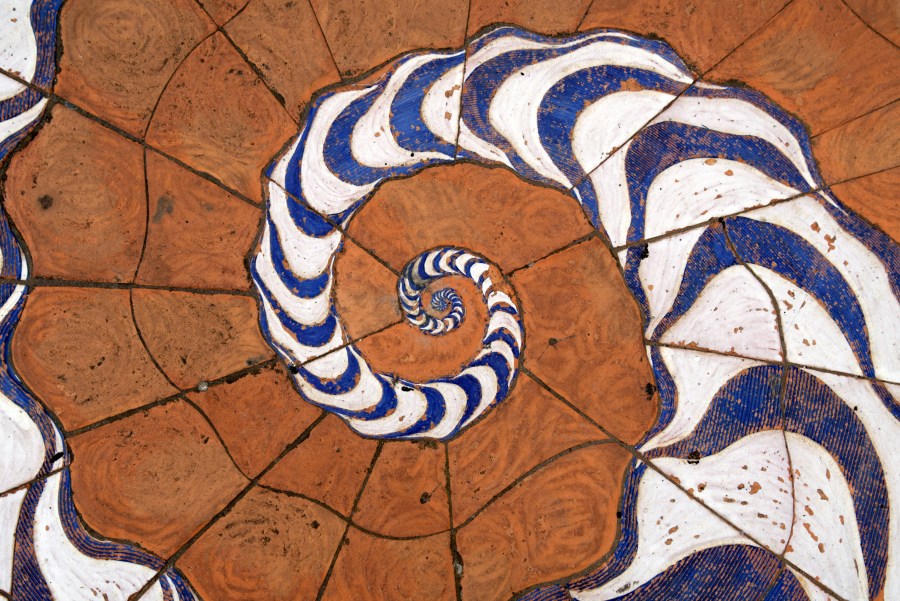
I am nine when I see the lights in the sky. I crow to Mom from the back seat that there’s a triangle over the field, moving away from us. She says she needs to keep her eyes on the road, but that I can draw it for her when we get home. I take some artistic liberties. What I saw as three soft, even lights I draw as a formation of floating spirals. I tell Mom that the aliens live inside each one like snails. I tell her their bright bodies are what make the rigid hulls glow.

I am thirteen when I see an alien’s ship behind glass at the natural history museum. The placard calls it an opalized ammonite; a curled fossil millions of years old and as big as a cinnamon roll, its pearly surface glinting back the whole cream-washed rainbow. I recognize it instantly, as if my drawing was some prophetic vision. I write my field trip essay about an ancient visitor from another world and get a D+ with the note “creative but false.” I start drawing the spiral on the back of my hand in crusty ballpoint pen, refreshing it whenever it fades, so when the aliens come back they’ll know right away who to trust.

I am seventeen when Mom finally sends me to therapy. The office has the color and smell of oatmeal. I invent a boyfriend who sometimes takes things too far in the back of his Jeep and feign angst over my belly fat. Mr. Dale eats it up. He doesn’t even ask about the spiral graffiti I’ve been caught leaving around town. I brag about my deception in the chatroom afterwards, where I’ve amassed a community of nearly two hundred fellow believers. They’ve seen the spiral ships too, hovering over pastures or appearing up close in dreams, glowing flesh moving inside translucent shells. Their descriptions color in the details of what I never saw.

I am twenty-one when I take a receptionist job at a medical imaging lab. I wear fingerless gloves to my interview so they won’t see the white scarring where countless metal nibs have etched the same spiral for almost a decade. I spend the workday on the paranormal message boards while the MRI revs in the next room like a jet engine. I map sightings of the aliens’ ships and misfile enough medical records that my boss checks the computer’s browser history. The day after I’m laid off, my online community reaches five thousand people. They comfort me when I share the news. I tell the truth: that I’m not upset. It just makes me want the ships to get here sooner.

I am twenty-five when my supporters pool the money to buy a condemned cottage in rural Oklahoma. The location was carefully chosen for its proximity to past sightings. The nearest neighbors are three miles away down a peanut-butter-colored dirt road. Mom begs me to reconsider, to get an apartment in the city where I can meet other people my age. I hug her and don’t answer — she doesn’t know about the others, a whole network around the world that looks to me as a visionary. She waves as I pull out of her driveway for the last time. A creek flows near my new house over a bed of muddy silt. I sit in it to cool off after mowing the first enormous spiral into the overgrown field.

I am twenty-nine when we begin making arrangements. There are several dozen of us scattered in trailers and tents around the property. The county won’t let us add rooms to the cottage until we fix the ones already there. We don’t plan to live here long enough for that. Every morning we gather in the field, tracing the spirals with our bodies. Every evening, we practice sinking into the creek. We light bonfires. We send letters that scare the few people who still love us. My drawing is framed behind glass above the crumbling mantlepiece. When I close my eyes underwater, I can see the spiral lights as clearly as if I actually had.

I am thirty-three when I awake from a dream surrounded by light, certain that the aliens have come for us after our years of sacrifice. But the headlamps are attached to men; the floodlights attached to their trucks lined at the gate. I’m dragged outside squinting. Around me I hear people running, hollering, trampling tents. Mom shows up to court and cries the whole time, like she really believes I would do what they’re claiming. My sweaty lawyer tries playing up the alien angle to get me deemed mentally unfit. A few defectors take the stand to say I’m dangerous. I feel sorry for them, having to go through life knowing nobody’s coming to save them.

I am thirty-seven when the letter arrives. The woman wants to interview me for a documentary. She says the county is even letting her film on the land they seized. In the visiting room I show her my ink. Spirals on the backs of both hands, done stick-and-poke by a kid in the next cell block. She wants to hear about my follower who died in the creek. I tell the truth: that he was tired of waiting. The woman asks me if I’m tired of waiting. For the first time in years, I think of the triangle over the field — three soft lights that could have been anything. And I tell her I’ll wait as long as it takes. I tell her I know what I saw.

Natalie Wallington is a writer living in Memphis, Tennessee. Her flash fiction has previously appeared in Wigleaf, Ellipsis and 101 Words. She is a co-founder of the Kansas-Missouri Writers’ Collective and was a finalist for the 2025 Mythic Picnic Postcard Prize.

There was a meaning by Amelia Averis

There is a boy who speaks in rain at arrivals.
He has time in this world
where the rockpooled minnow
flashes silver seconds.
We follow the funeral and I try to say
‘I am sorry I am not afraid of you’ but I cannot lie,
or forgive the recurrent ghost;
I cannot learn his lesson.
In this dream there is guilt but not enough of it.
I will not die on this hill
but I am freezing beautiful
to an accidental death.
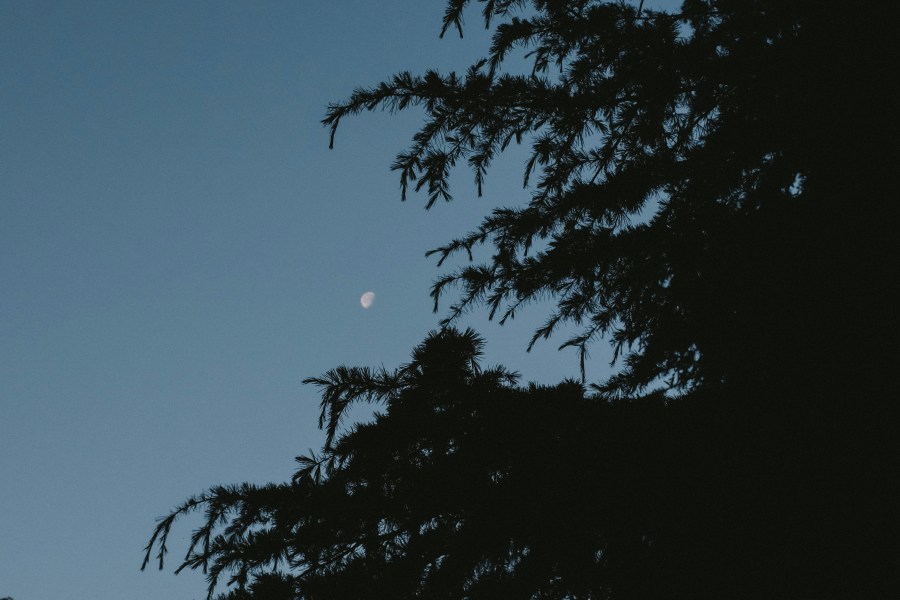
With the moon hanging over the park as the sea, I kissed it
and cried twice
to make it real.

AMELIA AVERIS  is a writer and journalist from Jersey, Channel Islands. She was highly commended by judges of the Passionfruit Review “Here and Now” contest, and also appears in HeimatTiger Moth Review, Palette Poetry, and Prosetrics. The organs of her poems can be found in her decade of journals, where she explores themes of longing, loss, beauty, and memory. Her chapbook as the ink birds split the sunset with Alien Buddha Press is on Amazon. You can find more Amelia at https://ameliaaveris.journoportfolio.com.