After 70 Years in the Ice, Steve Rogers Visits Whole Foods by Emily Capettini

I.

The first time, he never makes it past the fresh produce section.

Steve stares at the leafy greens ivied against the far wall, radishes like low-slung suns through smoke. He recognizes the cloudy marbles of cabbages, tucked in with purple twins. Knuckles of ginger root and seven kinds of apples, piled high like pirate treasure. There are packages of fruit slices nearly as green as that liquor a grateful woman in Belfort had insisted they take. They’d known it, too, was a treasure excavated, cellar dust layered thick on the bottle.

One of his men had thrown up in a field later and Steve thinks that field must have grown lush since ’44, plants gone to seed decades-thick over where his boots sunk. How many ghosts layer there like impression fossils. Then, Steve had hoped to press his own mark on history, leave something for another to find.

Now, he fills his basket with fruits and vegetables bright enough to hurt.


II.

Steve goes to the far side of the store next time, back set against the lure of produce. He finds himself in front of a long case heaped with cheese like rubble. Steve rests his hand just inside the glass, the cool breeze a modern marvel he expects will never fade to ordinary. There are things that stay fixed, even in this new century: summers are still sticky in New York; a body still sweats.

He picks a few wedges of cheese, soft-rinded and dimpling under his gentle grip. They’d always been his favorites, even before hard cheeses disappeared overseas.

There was a day not long after Steve hung up that prop shield when he had to dart through a farm field gone fallow. He ducked into a cave, tried to remake himself small. Steve brushed against rough wood and found on top a cool surface that dimpled under his touch.

The search for him crossed back and forth in front of the cave, and Steve slivered off pieces of the cheese, letting each melt on his tongue until dawn or death found him first.


III.

Everyone gives him a double-take when they see him texting, as if a full keyboard would be any trouble after a telegraph. Steve sighs, wishing for the luxury of being unremarkable. The problem with imagination, he thinks, is it only looks forward.

If anyone ever bothered to ask him what he liked best about here, he’d say coffee. Not the lattes and specialty cafés that remind him he ought to see Rouen or Paris again, but the bins lining the aisles here, each tracing an origin that spirals somewhere else. He buys more than he can really drink, stacking it inside cabinets until his whole kitchen smells like coffee.

When he and his men were able to save up enough coffee for full cups to go around, they used to wish for another tomorrow, blowing away steam like birthday candles. Steve remembers the odd splendor of rest. The comfort of sitting squeezed together in whatever shelter they’d found or made. He never made his own wish, too aware of his still-new body’s mortgage.

There are thousands of tomorrows between him and those scraped-together evenings, now. Sometimes, Steve wonders if those wishes had been rationed out like the coffee, and his share is what finally pulled him free of that long sleep.


Emily Capettini is a queer fiction writer from the Midwest who loves a good ghost story. Her work has most recently appeared in places like Middle House Review and Lammergeier, among others. Her chapbook, Girl Detectives, is forthcoming from Porkbelly Press later this year. Find out more about her at emilycapettini.com.

The Blob by Karissa Venne

I was chopping onions when the blob materialized in my kitchen.

I turned, and the blob was there, tucked in a corner by my fridge. I yelped, dropped my knife, and backed into the counter, its edge rocklike against my spine.

The blob didn’t react. It stayed in its corner, pearly and jiggling. Its amorphous body was opaque, like a giant egg white. It was as small as a basketball or a toaster or a Maltese dog. Every few seconds, I thought I could spot a pair of eyes or a mouth, but then it would shift, and the features would fade. It was a bleached-out Flubber, a mercurial creature of my very own.

A normal person would have shooed the blob away, attacked it with bleach, called their landlord or animal control. But I wasn’t normal, or at least, not in a normal stage of my life. I was 21, newly graduated from college, and I lived alone. I’d metamorphosed from a fledgling surrounded by warm, laughing bodies to a solitary and apathetic adult existence, the stuff of nightmares. There were days when I didn’t talk to a single person unless I ran into one in the office bathroom.

So I welcomed the blob. I cooked an omelette and ate it, studying my new houseguest. Before leaving for work, I filled a bowl with water and left it on the floor, figuring all creatures need hydration. Eight hours later, I found the bowl drained and the blob sporting a lovely translucence, like liquid soap or plastic wrap.

The next morning, the blob was opaque again, and though I’d struggled through high school biology, even I could figure this out. I left out another bowl of water and that night, the blob was clear again. As I fell asleep, I wondered how it drank. Did it have a mouth I couldn’t see?

Days passed. The blob huddled in its corner, its jiggling mass a comfort to me. It was always moving, but never getting anywhere. I watered it every morning and evening, the routine cemented like teeth-brushing. The blob was always translucent now.

I tried feeding it. I offered it sliced banana, spoonfuls of yogurt, handfuls of cereal. I experimented with kale, salted cashews, a chicken breast. I even tried a poached egg, figuring it might appreciate the egg’s blobbiness, remind it of itself.

The blob didn’t touch any of it. In my cubicle, instead of compiling spreadsheets, I’d Google things like, “what to feed a frog” because it felt like the pet closest to my blob. My blob. Somehow it had become mine.

That was when I wondered if my blob was like a plant, and needed photosynthesis to survive. If that was the case, I was worried, terrified really, as my blob had chosen the darkest corner of my kitchen to habitate.

That night, I dragged a cushion from my couch to the kitchen floor, sat across from my blob, and ate with my plate in my lap. After a few nights of this, my blob jiggling in agreement as I complained about my day, I finally touched it.

It was wiggling like usual, the movement even lovelier up close. I lifted a single finger. As I reached, my blob jiggled faster, almost vibrating.

My finger brushed the blob’s surface and it was exactly as I’d imagined: cold, smooth, and pliable, like gelatin. Our contact filled me with confidence. I moved to grip the blob with both hands, imagined pulling its entire body toward me. But instead, it shuddered and flattened onto the kitchen tile, trying to hide.

My blob was scared of me.

I woke up the next morning optimistic: I’d proven my blob could move. That day, I placed its water a foot away.

At work, I was filled with a jittery anxiety, as if I’d downed four coffees instead of three. Was I right? Would it move? I ached to leave my cubicle.

That night, I found my blob in its corner, but with the bowl of water drained. I congratulated it, and it jiggled faster in response.

Each day, I moved the water bowl further, and my blob drained it and returned to its corner. After a week, I placed the bowl in front of my kitchen window, sun streaming through the panes. I bounced out of my apartment and spent hours daydreaming about my blob. No one at work noticed. That was the problem with my life then, nothing I did made any impact.

I imagined my Blob, capitalized in my mind now like a true name:

Dragging itself to the window, slurping its water, and finally soaking up the sunlight it craved.

Transforming into a small doughy person, greeting me with open gelatinous arms each night, and talking in a gurgling language only I could understand.

Evolving somehow, infusing color into its viscid insides, dashes of bright pinks and purples, dots of yellows and oranges, bursts of blues and greens, like one of those bioluminescent sea creatures in National Geographic.

So convinced I was of this fantasy, that what happened instead took a moment to register. The Blob was indeed in front of the window when I returned home. But something was wrong.

It was a puddle on the kitchen tile. Completely still, no jiggling, not even a quiver. I rushed to its side, placed my palm against it, and felt a warm, hardened, plastic-like surface. It smelled acrid, wrong.

Peeling it from the floor, I held the flattened Blob to my chest, its hard edges poking my arms. I waited for the Blob to rouse and transform into its usual lump, prove it was hiding like the last time, only faking, what a great joke.

But my Blob didn’t budge. I’d coaxed it toward the sun, overheating its innocent goo body, liquefying it. I’d reduced my beautiful, effervescent Blob into an object.

And I was alone again.


Karissa Venne (she/her) is a Digital Resource Development Editor at Oxford University Press who lives in Western Massachusetts with her soon-to-be wife and their epileptic kitten. She received her MFA from The New School, has a story published in F(r)ictions Dually Noted, and one forthcoming in Pure Slush’s Lifespan Vol. 2: Growing Up.

The Cake You Bake Your Father is Not a Cake at All by Sara Torres-Albert

Writer’s tip: Panic-bake this story on your oven’s highest setting the afternoon after your dad’s birthday for best results.

INGREDIENTS:

Whatever dregs of groceries are left from last week’s haul. You have no time to shop.

PREPARATION:

Step 1: Bring your batter to a boil

Complete this step while beating stiff peaks into cream cheese like the froth of rabid waves. The kind that pitched your father’s stomach on the days he’d shell out a hundred bucks for two spots on a fluke boat and you’d dredge up nothing but barking sea robins as he floundered about the cabin, slipping the crewman a fifty to hook a fish on your line. The frosting will basically be meringue, and the toothpick you run through the yellow cake you pull from the oven will tell you it’s still soupy in the middle. The top will begin to burn. 

Notice your garbage bin eying your not-cake wantingly. Hurl your creation inside.

Tell yourself cookies mail better anyway. Cookies send a better message, too. Cookies say, See? I didn’t forget your 60th, and I totally didn’t blank on what to get you. Cookies are an act of love.

Step 2: Cream the butter until your heart aches

Settle on your go-to chocolate chip and leave three sticks of butter out to sit. Remember your mother won’t eat the cookies you send—not with her recent health kick. Notice the butter in its wax sleeve like a plaque-caked artery. If you know anything about your father it’s that his cholesterol has stunned three doctors and he’s compensated with fish oil and Alex Jones miracle pills ever since. Grate your teeth against the thought that maybe cookies don’t say I love you at all. Maybe if you really loved your father you would buy him an exercise bike or a juicer, an Apple Watch. At least you’d cut the sugar down by half. 

Step 3: Whip your flaxseed until it achieves egg-like consistency

The juicer you find on Amazon will be on backorder. Relent. Swap the butter for a vegan recipe by a mommy blogger with four and a half stars. Blend the wet ingredients first—the coconut oil and brown sugar, the vanilla extract. Check the yield and wonder what kind of lunatic writes a recipe that makes eleven cookies anyway. Mutter, The same kind of lunatic who puts flaxseed in dessert, under your breath. 

Tell yourself you’ve got to stop talking to yourself. Your father talks to himself and it’s always given you that fluke boat angry ocean churn, the same one you got on road trips when you’d finished telling a story and his twitching silence told you he was somewhere else, that he’d been somewhere else for some time. Stir over where it is he goes, where it is he’d rather be so badly he can’t help but beam up out of his skin without you. Your cookies will be a homing beacon—Earth to dad. Come in, dad. You’ve left someone behind.

Step 4: Mound your dough into generous golf balls

Admit you’ve felt weird toward your father since long before the abductions started, since half of every sentence your mother speaks to you became a dig at him after you asked if they were still in love at the movie theater when you were eight and she chewed the straw of her root beer through the previews and exhaled no. Swallow the fact that sometimes you’d like to tell her to shut up about him but you never summon the bile. So instead you let them wage their silent war tied up in birthday Apple Pays and holiday deposits, each extra twenty dollars that detonates in your bank account a declaration of who loves you more.

Think how fucked up it would be to send your father cash. More fucked up when you consider he just mailed your Christmas check. The money you’d send your father is a cash back guarantee. Plus twenty dollars? Plus fifty? Realize you don’t know how much you’d give him but you don’t know how to fucking bake either. Test your cookies to find that they are mineral oil and beeswax—food grade, sure, but better as table varnish than birthday treat. 

Say, Vegan cookies aren’t cookies anyway, talking to yourself again. Toss them out with the cake.

Step 5: No Guinness? PBR is fine

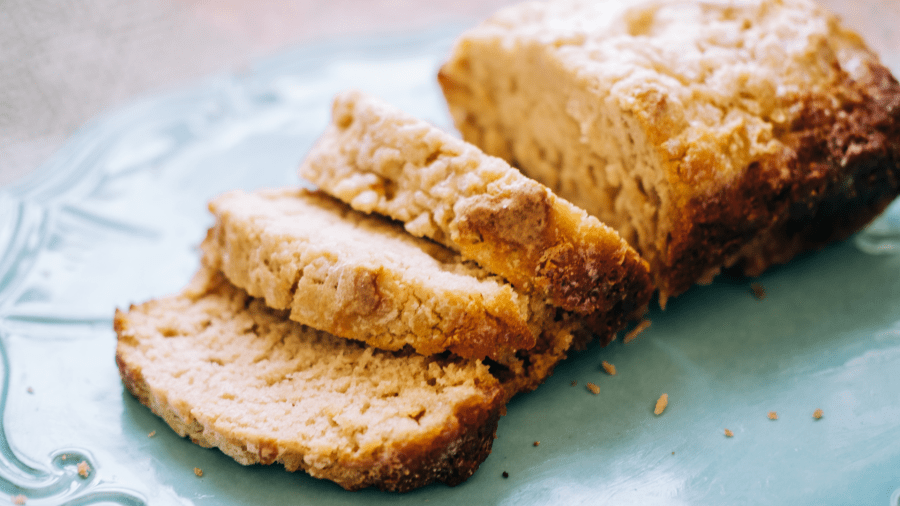
The post office closes in two hours, so find a nice beer bread recipe, done in forty minutes with prep. Recognize that your bread is a cheek gnawed with regret that your father’s not the type of dad you can grab a beer with. Fold in the protest—it’s not like you want him to start drinking. Just that maybe you’d have more to talk about if he did.

Step 6: If you can’t make your own salt, store-bought is fine

As you mix your ingredients, realize you haven’t spoken to your father in months. Guilt is the marrow that will weigh your bones before you remember he’s got your number too and you never know what to say to him anyway. Still, try him hands free and listen as the line cuts short. There will be no recording on his voicemail, the affectless beep alone. Your call will smack of the split lip you earned catching your face on the dining room table when you were five. Wonder if your father cries over you the way you’re crying now, whisking your salt into the batter. Wonder if he’ll recognize its tang.

Step 7: Season garbage with bread to taste

After twenty minutes in the oven, remove your bread to find the boule too sticky, your kitchen flourless. Feed your un-bread to the mass grave and buy an Amazon gift card for twenty bucks more than your father last gave you. Type, Happy belated, into the obligatory note space. I hope you buy yourself something nice.

Maybe he’ll get the juicer after all.


Sara Torres-Albert is a communication consultant by day, associate editor for the non-partisan youth vote initiative VoteThatJawn.com by night, and a fiction writer in the minutes in between. She lives in Philadelphia with her boyfriend and two cats.

Meat Bag by Hannah Gregory

Meat Bag goes to work. Meat Bag goes home. Meat Bag sleeps in her quiet, queen bed that she bought on the internet, that arrived in a narrow cardboard box with a common word for a company name with a non-essential letter missing (a silent e perhaps), that attacked her like a can of snakes when she opened the package, that off-gassed petroleum for a week. She bought a bedframe recommended by a Trusted Review Website because it was sturdy and reasonably priced; it only squeaks a little.

Meat Bag goes back to work in the morning. Her ceiling drips water on top of her head. Her boss accuses her of poking holes in the ceiling. Meat Bag wants to say that she would rather work on the first floor so she can be the first to drown when it floods, but the water dripping on her head is a good start. She wants to say this, but says she will try to fix the hole. She will be a good worker who loves her job as much as she loves her health insurance, so she can get her hormones and surgeries paid for, so she can be a Female Meat Bag, rather than a Meat Bag (culturally Meat Bags are assumed male, but the term can be used interchangeably for all Meat Bag genders; it is not a good system and Meat Bags hate it the most, especially when there are three gender options on surveys: Male, Female, Meat Bag). Meat Bag opens her lunchbox—another recommendation from the Trusted Review Website—and eats her lunch meats and cheese squares on artisanal crackers with imported olives and peak season strawberries on the side.

Meat Bag is stuck in traffic for several hours on her way home. She learns later that the driver just vanished in the middle of driving, causing a fifty-car pileup. Meat Bag also learns that the driver was another Meat Bag like her—the only fatality in the accident—but they reported her death using her old name and wrong pronouns. Meat Bag cries because that is what meat does when meat sits outside for too long. Meat Bag does not sleep well that night because there is a lump in her mattress that is not her dog. She is already past the 60-Night Sleep Trial Period so she cannot send her mattress to a homeless shelter as part of their 60-Night Sleep Trial Period Guarantee. Meat Bag tries to move to a different part of the bed, but Meat Dog takes up too much room.

Everyone gets their performance reviews at work the next day. Meat Bag has lots of Needs Improvements. Her boss tells Meat Bag that her best quality is how she shows up to work on-time. Meat Bag does not feel great about her job after her performance review. She sometimes hates being a Meat Bag. She wonders why she is part of this company, why she has to make incremental improvements in her life so she can have her health insurance and eat her estradiol too.

A co-worker comes up to Meat Bag and asks, “Hey, Meat Bag. You ever feel like a big ol’ bag of meat sometimes?”

Meat Bag looks at them and sighs. “All the damn time.” She tries to force a smile that shows them that they are in this together.

The co-worker looks annoyed and disgusted. “Why are you so weird?”

Meat Bag looks at her phone during her lunch break. She looks at reviews on the Trusted Review Website, because she wants a new non-lumpy mattress, but is disappointed that their top recommendation is the lumpy mattress she already owns. On the Feed, she sees an article about another vanishing Meat Bag, also misgendered, also deadnamed. Meat Bag wants to cry, cry. These vanishings are happening every day. She wants to know why this is not national news, why no one seems to pay attention except for a few people on the Feed. Everyone only seems to care about creating a separate Meat Bag Olympics and separate Meat Bag bathrooms so all Meat Bags can cram into a single stall and pee their Meat Pants while waiting in line because Meat Bags are apparently so numerous and pervasive that they are a threat to the integrity of national bathrooms and the Olympics. The ceiling drips with greater frequency on Meat Bag, so she moves her body and puts her garbage can under the drips.

That night, Meat Bag locks her dog out of the room and masturbates to videos of other Meat Bags like her. Seeing variations of her body eroticized turns her on, although her therapist tells her that this is a bad sign, that no one will give her hormones or surgeries if her idea of being a Female Meat Bag is because she is turned on by the idea of becoming a Female Meat Bag. She thinks this is old-fashioned as she wipes up the mess on her Meat Bag body. When she lets her dog back into the room, Meat Dog jumps on Meat Bag, licks her face, and jumps in the bed. The lump has gotten bigger in the mattress and Meat Bag cannot fall asleep that night. She thinks about all the other Meat Bags who have vanished. Raptured but not in a good way. She loves them and is sad about all the passion they left behind in this world.

At work the next day, Meat Bag’s boss tells her that everyone in the office hates her and that while meat is socially acceptable, it is inhumane. After her boss leaves, Meat Bag feels the water dripping on her head, turning into a thin stream, then a deluge. Her body becomes wet. Wetter than wet. She feels dissolved. She hopes that this is the flood that will take her away. She hopes that this is her turn to vanish.


Hannah Gregory is a trans, queer writer from Western Massachusetts. She lives with her wife and dog. More of her work is forthcoming in Passages North and X-R-A-Y. Find her on Twitter @hannah_birds.

Missing Enough to Feel All Right by Janelle Bassett

I’ve recently been forced to become a morning person, and I think this shift is rearranging other parts of me. Suddenly I crave citrus and can only sleep on my back. I wake up to the still-dark and drink coffee while lying down in front of a sun lamp. My neck is covered with scalds and my pajamas are covered in stains, but I can’t seem to sit up until I’ve had half a cup and ten minutes of LED shine.

I used to wake up and lie still, refusing to open the blinds, pitying the many people who were already standing up and buttoning their shirts in the mirror like idiots. I didn’t have a job to get to, no one was waiting for me to crack their eggs, my day started when I felt ready. But now, thanks to my sister, I have become something so much worse than a daylight buttoner: a person with a coffee pot on her bedside table.

Amy asked me to take over her catering business for six weeks, during her maternity leave. She has five employees. She could have asked any one of them to step up, yet she felt none were capable of being in charge—so our Amy either has trust issues or is truly very bad at hiring. My only qualification is her trust in me. She knows that I follow directions and hate letting people down. I can cook, sure, but it’s not the kind of food you charge money for, unless it’s dumped on a buffet counter and paid for by the pound.

There was an implication in Amy’s request that I wasn’t doing anything important with my life, that I could drop everything and be her stand-in for a month and a half, no problem. This wasn’t true—I had to cancel two weekend trips with friends I used to like, postpone a laser hair removal appointment, and fully bow out of my happy hour spin class. I had prepaid for sixteen weeks, which is practically a full-term pregnancy.

Amy and I have always operated at different speeds. She’s all in, she sprints, and I get there eventually, right when I have to. Just because Amy enjoys doing too much too quickly and without necessity, she treats me like I’m not doing enough. Sometimes I wonder if she handed me her business to show me, first-hand, what the early risers and the go-getters of the world can accomplish.

To help with my lack of catering expertise, Amy maintains a constant digital presence. She’s either FaceTiming in with that baby on her breast to berate me as I stir gravy, or she’s sending WhatsApp messages about proper basting or the risk of underseasoning. The chain-of-command in the kitchen is: Amy-on-my-phone, then me, then the five employees who resent my unearned authority. I’ve overheard them making fun of my inability to chop vegetables finely. “I’m sure the client was hoping for potatoes cut like thick toenails.”

But, two weeks in, I’m rolling along with this catering gig. Very few clients have asked for a refund. I’ve learned to pronounce cumin properly and have loudly proclaimed that aprons are the mullets of clothing—dull in front, cheeky in back.

This morning I get to Plenty of Dish at 6:30 to unlock the door and warm the ovens. (Amy swears she was forced to keep this name when she bought the bakery from her mentor—to preserve the name recognition they’d built up—but I’ve heard her tell people about the business and she delights in saying it aloud. She does an eyebrow thing with “dish,” as if to help the pun along.)

There’s a bridal shower order to fill today. They want forty lemon muffins with blackberry buttercream icing and uncircumcised penises stenciled on top. Last week, when we got the order, I messaged Amy, “Where do you keep the uncircumcised penis stencils? Near the whisks?”

It turns out I had to draw one, freehand, then cut it into a stencil myself. This took seven attempts. One of those attempts ended up looking like a thorny rose, which won’t go to waste, as we get more and more clients throwing divorce parties.

I turn on the lights and all the cake stands gleam “good morning.” It’s all open shelving in here, which means the drawers are stuffed full of unsightly items like meat thermometers, paper plates, and twisty ties. To maintain that clean, sleek look, we keep the paper towels in the refrigerator door.

Amy sent me today’s agenda at 2:30 in the morning. She has no night mode. Any correspondence is answered immediately and desperately and comes with a photo of the baby against her “I’m the BRIDE” sweatpants, which she’s been wearing ever since childbirth left her with a third-degree tear. We call the baby Rip Torn for now, but we will transition into calling him Anthony as the entrance wound he made in my sister heals.

The first item on Amy’s agenda is: “Line up ingredients on kitchen island, ensuring complete inventory and correct amounts.” I get out the flour, vanilla, and baking powder, the sugar and lemons. As I step toward the refrigerator for butter, my phone pings. Amy says, “the unsalted.”

I grab the eggs and unsalted butter. Now Amy is calling on FaceTime. I answer, but point the phone toward the egg carton because it’s too early for faces. “I’m following the directions. What do you want?”

The baby is screaming. He sounds red and like he’d like to go back where he came from. I pivot the phone, so I can see Amy’s face. She’s blank, desolate—she looks like she’s just seen the next four years of her life and they were as loud and insistent as that current moment.

I tell her not to worry, to get some sleep, that I have everything under control, that Deidre will be in soon to belittle and correct me, to give me some credit—I’ve been doing this for two whole weeks.

Amy is bouncing now. She’s set the phone down and is bending her knees over and over to jostle the baby into being soothed. Her head goes in and out of the frame as she says, “I just wanted to see the light in the kitchen as the sun came up. And oh, I see the stacks of saucers behind you. My saucers. Can you walk over and show me the magnetic knife holder?”

I consider saying no, but her face is a convincing counter argument. I carry my phone across the room and hold it in front of the wall-mounted knives.

Amy sighs. “I had zero stitches in my panties when I bought that.”

The baby (I really need to start thinking of him as my nephew) is still loudly hating his existence. The two of them are going up and down but staying the same.  “Do you… want me to show you the mixer?”

“Please.” I set the phone down temporarily, so I can move the stand mixer from the shelf onto the counter. It’s heavy—high-end, comparison shopped-for. I put my hand in the frame for the reveal, gliding it along the base, like I’m either selling the mixer or am about to make it disappear. “Here it is.”

“Could you turn it on? I want to see it go.”

I affix the beater and plug the cord into the wall. “You ready?”

She’s bouncing harder, blurry. “Do it.”

I turn the mixer up to ten—full speed—and point the phone down into the mixing bowl. I can’t see Amy, but I know she’s going faster still, that she’s whirring and full-speeding to keep up with all her babies.

(She bought this place at twenty-seven. She repainted, designed a logo, took the doors off the cabinets and worked every weekend. She developed a ricotta pineapple pie that was featured on a local news segment. She changed her pants daily. Her eyebrows only conveyed a fraction of her delight.)

Deidre is here. She calls over the noise, “If you’re making an ASMR video, you should put on some lipstick.”

I switch off the mixer and the baby stops crying. No. Amy has hung up. I don’t know whether to hope that my sister, suddenly alone, has stilled or that she hasn’t slowed down at all.

I eye my ingredients on the island, trying to act like I wasn’t caught participating in a digital postpartum appliance trance. “Amy wanted to see her kitchen. I don’t think she and the baby are getting along.”

Deidre nods. She’s had babies. “It’s an adjustment period. They’ve both been forced out.”

She picks up the penis stencil I’d set near the sink. “Divorce party today?”

“No! That’s my best penis! Amy approved it.”

Deidre puts the penis back where she found it and starts her ring-removing routine. She can’t bake with rings on, she says, and yet can’t leave the house bare-handed. “That’s clearly a thorny rose. Or a rumbled pug? Amy must be underslept.”

“Do you think I should go over there and check on her?”

Deidre looks up from her hands. “You haven’t gone to see her since she had the baby?”

“I’ve been running her business!” I suppress the image of my sister’s pleading, bobbing face. If Amy wanted my help or my company, she would ask, right? I try to think of a single time when she made herself vulnerable to me, or showed any strain from traveling at the speed at which she thrives.

Deidre is no longer looking at me, the bad sister, the thick slicer. She’s stacking her rings one by one, so she can slip them into a zippered pocket of her purse with one movement.

“I’ll go to her today,” I tell Deidre, trying to work out how many appliances I can fit in my trunk and whether I can seatbelt a stack of twenty saucers.


Janelle Bassett’s writing has appeared in The Offing, American Literary Review, The Rumpus, Smokelong Quarterly, VIDA Review, and Slice Magazine. She lives in St. Louis and is an Assistant Fiction Editor at Split Lip Magazine.

Fly Fishing with God by Andrew Bertaina

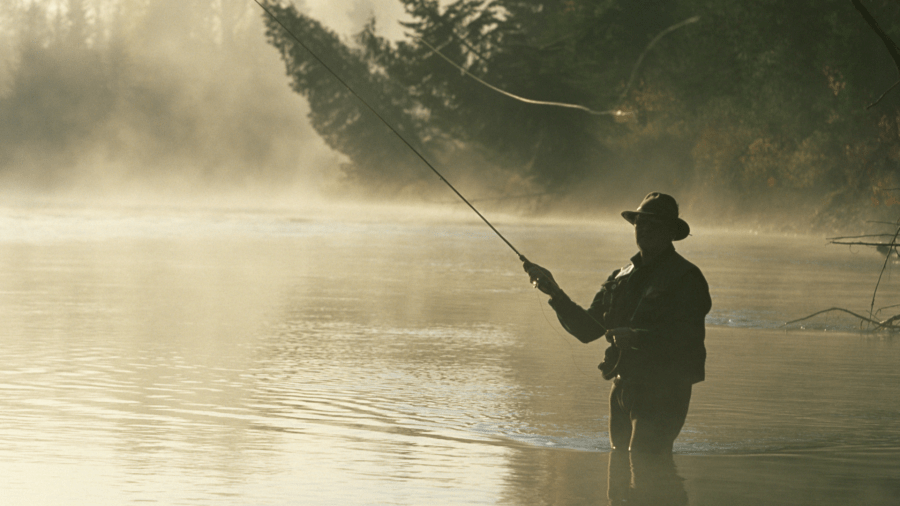
In the first lonesome years after college, the man used to fly fish with God. They’d met through a friend of a friend, a mutual interest sort of thing. God didn’t have a car, and the man did. God wasn’t a freeloader. He just didn’t have an interest in learning to drive. Sometimes the man wanted to ask if God was a New Yorker, but the accent didn’t fit. 

On days they fished, the man awoke early, careful not to disturb his wife; her hair splayed across the pillow. She stayed awake late, staring into her phone, in the way of contemporary unhappily married couples. Sometimes she kept the lamp on late, read poems by a local author she’d met at the library. The man kissed her quietly and left.

God usually waited at the bus stop, smoking a cigarette and staring pensively into the middle distance, coins of light flickering on the underside of leaves, low slung clouds, pigeons bobbing about like buoys. 

The rides were strangely silent. God wasn’t much of a morning person. 

Let there be light, He said, But not so goddamn early. 

The man turned up the radio.  

Eventually, they climbed into the mountains and up an old road, which crossed, via a series of bridges, the raging torrent of the river, glittering blue green below. The sun arrived through the skinny trunks of lodgepole pines—diagonal strips of light, the sort of thing Vermeer would have really nailed. At road’s end, was a waterfall and a small pool, where they’d unload the cooler, sandwiches, beer, and gear. 

In the few months that these trips took place, the man and his wife started to fight. At first, they’d been small fights, but now they were saying unforgivable things to one another. Lately, after the fights, she’d drive her car off into the night, and he’d stand outside, watching the fireflies seemingly flicker in and out of existence.  

As they fished, he found himself wanting to ask God about heaven or what his wife thought of him. But God seemed exhausted, distant.

The mornings after fights, she’d always be there, breathing heavily in the clean linen sheets. The man loved her tenderly, as deeply as he’d thought possible.

Do you need anything, today?

She pretended to sleep.

He drank coffee in the kitchen, waited for her to wake. Squirrels dare-deviled through oaks in the yard. She was a locket, and he had lost the key. Sometimes he dreamed himself in search of the key, swimming through rivers, prying open the mouths of fish, looking for that glittering piece of metal that would free them both.

God frowned and cast again. The man felt lonely and sad, a child lost on the playground.

At least I brought the loaves, God said. I’ll make a million of them, and we can feed the ducks.

The man didn’t know whether to laugh. He was thinking of his wife, of how much she held him in disdain. The wind bent the leaves, ran through the grass. An hour passed.

Fuck all, God said, and walked across the water, feet dimpling the surface. He plunged His fist into the white rapids and pulled out a wriggling salmon. As they cooked the fish over the camp stove, neither of them mentioned the feat. God seemed embarrassed as though he’d made platypuses again.

When the man returned with fish and desperately tired, his wife would ask if the trips were worth it. He could hear the admonishment, time they weren’t spending. Sometimes he stayed awake, bleary eyed, to ask after her day. Once, he’d picked up the poems she read, mostly nonsense about old lovers reincarnated as dogs, geese, pebbles of light, train sounds in the distance. The poems were like koans whose answer was sadness.

In this dream-like state, he thought of his father, who had been incredibly loving, so smothering in his love that the man had been desperate to leave. Now he understood that he was searching for someone like his father, now dead, a soul to love him fiercely. He thought about telling his wife, but her brow was knit tightly, foreclosing questions.

Eventually, God told him He was no longer interested in fishing. He said He wanted to work on a low crossover dribble that flowed into a step-back jumper. Like James Harden, God said, but with a longer beard. 

The man was home every Saturday now, mowing the lawn and watching college football. His wife stayed in the kitchen, reading poems, voraciously now. Sometimes, he swore he saw her slip scraps of paper into her mouth.

Late at night, when he thought she was sleeping, sometimes he’d catch her reciting the poems she’d surreptitiously eaten, scraps of lines floating in the air above them. He shook her awake.

What are you doing?

You were reciting poetry.

Don’t be silly, she answered, rolling over.

He looked at the crease where hip met thigh, longed for her. He stood at the window. The moon lay on the grass in the yard. He prayed.

* * * *

Months later, long after his wife had moved in with the writer across town, the man ran into God at the gas station. God tried hiding behind a row of candy bars. The man stood behind God in line, staring at Him intently. Finally, God turned and said, I couldn’t take all the damned silence. 

The man nodded, understanding he’d missed the opportunity to ask questions about meaning, love, the shape of the universe, time’s flow, questions that would plague him for the rest of his life. The same kinds of questions, he understood now, his wife so desperately wanted him to ask. 

At the register, a middle-aged man with a wrinkled brow rang him up and asked if he wanted anything else. The man looked up at the row of cigarettes behind the counter, the bits of amber colored whiskey. He wanted so many goddamn things he didn’t know how to ask for.


Andrew Bertaina received his MFA in creative writing from American University. His work has appeared in many publications including: The ThreePenny Review, Witness Magazine, Redivider, Orion, and The Best American Poetry 2018. More of his work is available on his website at www.andrewbertaina.com.