
The Candy Children’s Mother by A.A. Balaskovits

I had to send them away. They were children not born of me; they came rushing out between some other woman’s legs, one right after the other, and I was told she lost so much of her liquid that, as soon as they squealed in the air, she had dried up, all broken apart, and pieces of her blew away with the gust of their father’s grief. I had not known her, being so young myself when she died, barely out of my first bleeding, that when I was invited to her funeral, as the whole village was, I looked at the fractured remains of her bones with the curious pity one has for a dead animal. I expressed the appropriate grief to the father, my eyes cast down and my lips trembling, but he must have seen something genuine in me, though there was none at all, and he asked my father if I would be a suitable replacement. My father hand hesitated to grant the blessing, but when a bag of coins found their way into his fingers, my father’s hand was firm.

It was not so bad, at first. The children would not suckle from my breasts, but I warmed milk from the goat and dripped it into their mouths until their skin stretched over their expanding bones. They grew fast: the boy, Hansel, with his greedy appetite, and the girl, Gretel, long and thin like a branch, but whose arms knocked the china from the table if she did not get her way. They loved me, I suppose, as much as their father did, though when they saw my belly begin to expand they huddled together and whispered. When the rain forgot to fall on our small garden and the ground cracked, our lone goat’s milk refused to be coaxed, and the four of us knew what would happen: a fifth would devastate us. Two of us would have to go. We would all starve if we remained together. I have not been taught numbers as men are, but even I know that three is less than five.

My grandmother once told me that once you go into the forest, you come back a changeling. Or you don’t come back at all.

Gretel was awake the night I decided. Our small house had only one room for sleeping, and so all of us dreamed together. I climbed above their father and massaged his neck and behind his ear, as he likes. I pressed his hands to my belly and rejoiced at what we had created.  In his ear I whispered that I would not die with its birth, for I was made of stronger things than dust.

It was difficult, after we finished, to fall asleep, for that daughter who was mine but not mine stared at me all night, the moon reflecting off her dark eyes.

They cried, of course, the boy more than the girl – his emotions reflected his appetite, and he could keep neither in check. Their father cried as well when he held the door open, but I held my hand on my belly – my only bargaining chip – and he gave them a little bread and told them they were old enough to make their own way, though they were young, too young.

At night, I asked them to forgive me, though they were already gone.

*  * *

I bore him my daughter and I did not die. She suckles from my breast and squirms and laughs with all the happiness of a small thing. I see myself in her, that bit of myself that did not have to choose. With so few mouths to beg, the goat returned to its milk. We are saved.

Their father weeps for them, though quietly, as he knows it upsets me and my daughter. I don’t voice what flows in my veins: I do not want them to come back, not my long-armed daughter nor my voracious son. If they come back, it is I who will pay the price for saving us, I who will pay the price for desiring my own daughter over them, I who will pay the price for making the difficult decision, though it was their father who held the door. After a few months, I suspect that they have died out there, and while I feel the ache of loss, I am also relieved that I will not suffer their retribution, even though they would be within their right.

* * *

One night, a little time before the birth of the new year, as I sit on the little landing with my daughter wrapped up against my breast, showing her snow for the first time, I see two figures make their way towards the house. Rather, I smell them first, the sickly stench of rotten sugar clings to them like a death. The boy is so big he makes the earth shake with each step, and the girl, tall and thin as she always was, had a red glint in her eye, and her teeth, when I they are near enough to see, are filed to uneven spikes.

They are almost upon me, and I hold my sweet baby daughter to my breast as I stand tall to receive them, these children that I have sacrificed to save my own, these children who are mine and not mine, these children who now sniff at my arms and neck, looking for the place to bite.


A. A. Balaskovits is the author of Magic for Unlucky Girls (SFWP). Her writing can be found in Indiana Review, The Southeast Review, The Missouri Review, Apex Magazine, and many others. She is the Co-Editor in Chief of Cartridge Lit. On twitter @aabalaskovits.
The Numbers Game by Gaynor Jones

First, the bodies.

3 on the first day. When your head was still bleeding and the smoke was still curling black across the white. When you had checked all the pulses. When you didn’t know what to do and so you started doing what you thought you should and then you didn’t know if you should even be doing that.

9 on the second day when you were determined and something gave you strength, maybe it was your husband moaning or maybe it was your daughter crying or maybe it was the stranger praying to a god you’d never heard of.

16 on the third day when the efforts of the second day had carved a tunnel of ice into the snow and you could almost fling the bodies down the track you had made and award yourself three points or a gold medal or whatever they give Olympic-standard curlers.

4 on the fifth day because on the fourth day you couldn’t face it, on the fourth day you shut down and it was like giving birth, when they warned you that the high of the endorphins from labor would crash (not that word, not that word) drift away and leave you broken and sobbing and numb. There were four on the fifth day, but they came in many pieces.

2 Legs. Two legs that used to wrap around your waist – your neck even – in younger, more adventurous times. Two legs that walked out of the church by your side, that stood next to you in your eight-hour labor, that paced the hospital corridor for hours after while they fixed you up. Two legs. Crushed.

64 tray meals. It’s not enough, it’s not enough, it’s not enough.

2 movies you have seen about this very scenario. First the one with the terrible ending and the two Hollywood stars who inexplicably fucked their way out of trouble. They had a dog. Of course, they had a dog. If you found a dog now you would eat it. And you would hum The Littlest Hobo theme song while you did. Then the other movie. The one with the soccer team. The one with the thin goatee guy, who used to date Winona Ryder pre- Johnny Depp, pre-shoplifting. Wait. Is that right? Or did you just want them to be a couple because of the on-screen chemistry? Because, right now, figuring this out seems like the most important thing. Because you’re trying to fill your brain, to replace the memories of the book of the film because you’re remembering the detail about what they did, so much detail that you wished you’d never read it, details about how they cut the flesh and how they made bowls from skulls, and utensils from bones.

6 bodies mauled. They look like the exhibition you went to, the one everyone raved about because dead, peeled bodies were something that they were never going to see. You waited four months for the tickets and then you left within minutes. The bodies made you sick. You didn’t want to know what was inside of you.

6 bodies mauled = 1 moment of hope. That something else is alive out here.

822 pawprints you counted before you began to lose sight of the plane and turned back.

5 times you felt like something was watching you.

1 time you shouted, “Come at me, bitches!” then ran away from your own echo.

9 days.

10 days.

11 days.

1 decision to make.

26 months. Your mother nags you, says “she’s two,” but you count her in months because she is closer to a baby that way, closer to you.

1 vision. You wrap her up, as warm as you can, using everything you have found. You strap her to your back with torn seatbelts, singing songs the whole time. She whispers back, raw red cheeks trying to smile at Mummy’s voice. You kiss goodbye to her father, say a prayer with the stranger. You can see the headlines already. You can see the picture of your husband in his wheelchair, your baby with missing toes, you – gaunt, but glowing, your chest puffed out and your loose teeth smiling. The stranger won’t be there – he doesn’t fit the headline. You’ll probably get free trips to Disneyland and an appearance on Ellen. And all this will seem worth it. You fix the newspaper picture in your mind, project it out onto the blankness before you. Then you set off into the snow.


Gaynor Jones is an award-winning short fiction writer based in Manchester, U.K. Her website is http://www.jonzeywriter.com.

The Unreliable Narrator Apologizes by Chris Haven

I never meant to mislead you. I know you are suspicious of surprise endings, and I have done my best to represent all the facts as I knew them.

If I told you the sun kissed my face on the day I was born, does it matter if in fact it was cloudy? If you trust me to walk down this path, are you not moving with your own feet? If at the end you no longer believe me, have I not given you something? Something which you did not have previously?

It’s fair to say that people are fascinated with me. Love to study me. This would not be so had I given you merely ordinary knowledge. So dull. Shouldn’t everything be a clue? That glance, this gesture.

Here, in this mystery that we’re in together, shall I be the detective? No, you be the detective. Let’s take turns, see what we can find. How will you know the one who loves you? Your true calling? The safety, and the danger?

The sun is setting, and it’s getting harder to see here in the dark. What is this that we hold in our hands? If I tell you that I hold my own heart in my hands, will you believe me? Would you believe the one you love? If I tell you that I hold your heart in my hands, will you let me carry it? If I tell you that you hold my heart in your hands, what will you do with it?

Come, let’s look for some more clues.

Soon it will be so dark we won’t be able to see each other. It’s too late now to turn back. We don’t really know each other that well, it’s true. But the darker it gets, the more we have to hold to our trust. Please don’t suspect me. There’s only a little ways more to go. I know it’s late, and you’re getting hungry. So am I, but I will share what I have with you.

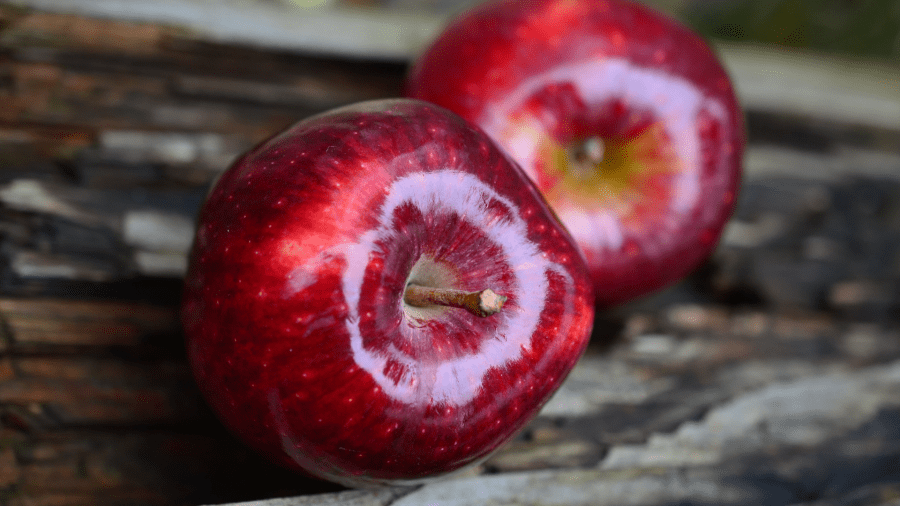
I didn’t want you to know this earlier, but I’ve foreseen this problem. I have taken care of you. What we have in our hands, they are really apples.

It’s okay. Go ahead.


Chris Haven has short prose in or forthcoming in Cincinnati Review miCRo, FRiGG, Atticus Review, Jellyfish Review, Electric Literature, and Kenyon Review. He teaches writing at Grand Valley State in Michigan. Find him on Twitter @ChrisLHaven.

Squirrels in the Attic by Jenny Fried

If you follow my spine you will find the way I live here, flag up on the mailbox, arms stiff under the weight of the roof. In the mornings I crack eggs with my toes and cut myself on the shells. When the mailman comes I cover my face with my hair and wait for the sun to come down.

My dearest Colonnade, he says today, the weather is warm in Phoenix. I got a dog. I went drinking with some friends last night, and I couldn’t help but think how the dragonflies here live only one day. There was a pair on the stool next to me, locked together. I wanted to squeeze them between my fingers knowing they would die tomorrow.

Thinking of you, all the best,

 G.

I can hear the shingles cracking above me. How they breathe and strain under every step of the little feet! He will write me tomorrow I am sure, another G, another dog, another colonnade. He will be in Phoenix D.C. Iowa City Montreal Davenport Dallas Anne Arbor, the cicadas, he will say, do you remember the stars?

If you follow my spine you will find the things he leaves here, letters and letters and autographed pennies, kept under glass so the marker won’t run. You will find me crouched on a dripping couch, tambourine skin stretched over the sky. There are squirrels in my attic who play with little feet, hide nuts in my mailbox and chew on the flag. I keep my eggs by the stairwell, painted in red, broken teeth pointed at the slope of the rail. I always say I’ll leave them this time, but every morning I smooth down their points with my toes, and the little feet come tumbling down.


Jenny Fried is a writer living in California. Her work has previously appeared or is forthcoming in Cheap Pop, Jellyfish Review, Milk Candy Review, and X-R-A-Y. Find her on twitter @jenny_fried.

Hypotheticals by Zach VandeZande

A person wakes up one morning to find that they are sad. This is not news, as a person is often sad. The sadness that a person feels does not require a reason, but a person, being rational, seeks one anyway. And then, from there, maybe a solution could be looked for.

It might happen like this: a person sits up in bed, prepares to live a whole day, uses a cell phone to watch a video of a dog eating pizza, and then is forced to reckon with their sadness. A person might wonder how universal their experience is without that universality or lack thereof causing a further wrinkle to the sadness that they experience. This is of course allowed and possible and even happens, sometimes. A person might suppose that focusing on the universality of experience might even be a kind of solution to sadness. Though in some—even many—cases it isn’t.

Or else a person might rise immediately, skipping the phone-in-bed part of the morning, looking for the dew-dappled new feeling of young daylight. In that case there might perhaps be something in the air worth breathing in, or streaks of yellow pollen on all the cars, or actual chirping birds—birds not existing only as the providence of the proverbial—or just a chance at seeing people dressed nicely for work or school might be enough to cause a forgetting of sadness. A person might need only to forget for a minute for the sadness to be gone. Sadness might be as fleeting as joy.

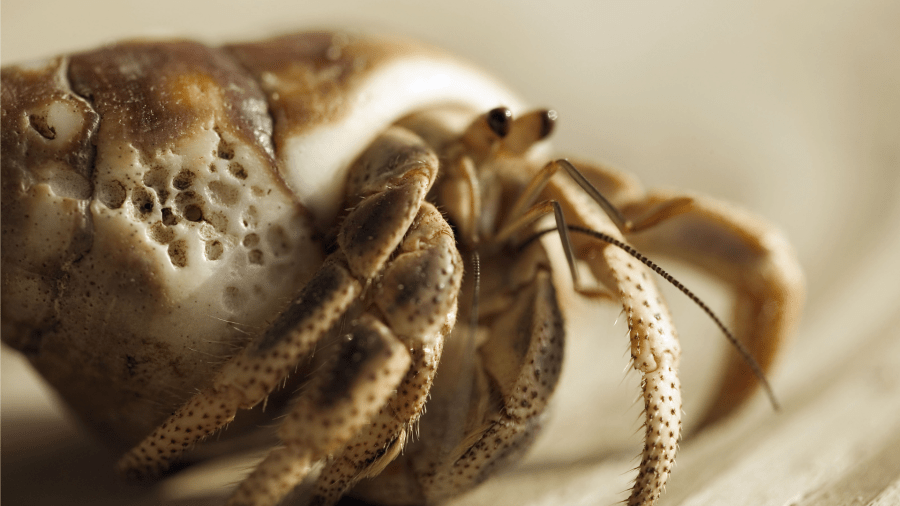
If not, though, a person might search for places to go on vacation. A person might stay in playing video games all day, claiming illness. A person might masturbate or have sex with a stranger, might take sadness out for a drive or might just take sadness out on someone else. A person might get a hermit crab at a store in a beach community and make it a little beachy home in a plastic terrarium bought for that purpose. There’s so much a person might do, each if so crowded with thens. And is this abundance a part of the sadness, or is it rather that out of that abundance only one thing ever happens?

Finally, a person might invent for themselves some kind of framing device to bracket off the things that they feel into discrete units of meaning. They might make a list of reasons they feel sad and reasons they shouldn’t. They might spreadsheet or bullet journal the mess of feeling until it reveals its way to be clean. They might write a story, even, that puts their sadness at such a remove that they no longer have to hold on to it. Imagine that. Imagine a person so foolish and desperate.

When a person arrives at the beach community, they might stop at a lunch stand and order a sandwich and two kinds of chips. They might wonder how they would write it all down. Is it a west coast beach or an east coast beach? It doesn’t much matter, probably, except in the brand of chips available, in the particular texture of décor. Are there surfers, or are there retirees walking their black labs? Are there rocks, driftwood, the placental bag of a dead jellyfish, a kind of life so foreign as to be unrecognizable and new to a person? Will a person meet someone? Will a person convince a friend to come along? Will a person feel connected to nature or to people or to god/existence/their own eager self? And what of the sun in the sky? Will it be beautiful today? Will a person find it beautiful? And can someone here tell me if there’s a next?


Zach VandeZande is an author and professor. He lives in Ellensburg, Washington (sometimes) and Washington, DC (sometimes). He is the author of a novel, Apathy and Paying Rent (Loose Teeth Press, 2008), and a forthcoming short story collection, Liminal Domestic: Stories (Gold Wake Press, 2019). He knows all the dogs in his neighborhood.

Deer. Us. by Arlene Ang and Valerie Fox

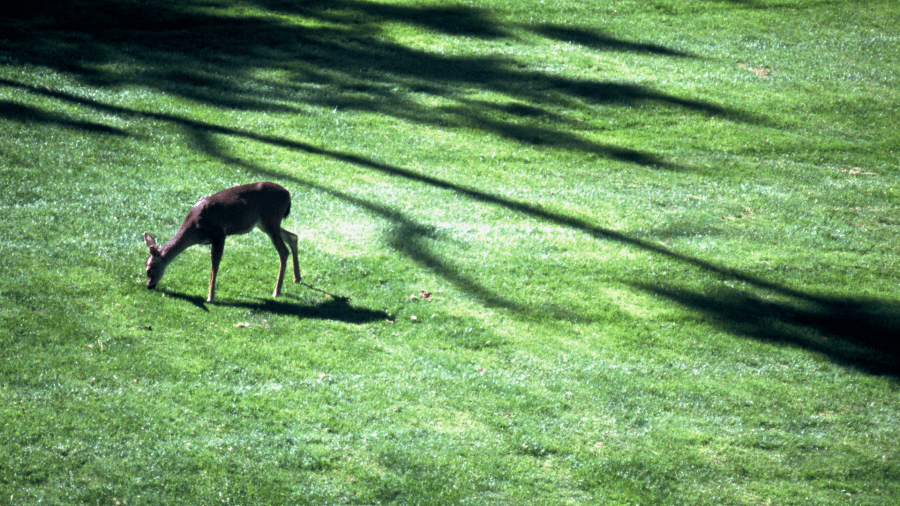
The summer the deer moved in was our last chance to move out. They camped on the lawn all day and dropped suspicious pellets on the grass and walkways. Our mother turned into a frenzy of shouting. She spent hours shaking and throwing household objects at them—hammers, different Bibles, watering cans, shoes, and once a broken chair. However, they would simply stamp their hooves in her direction or ignore her. My brother Simon and I watched the situation worsen from our second-story bedroom window. We had no money, but we stayed cool on “borrowed” ice cream. The deer, we figured, were less lucky. People didn’t come over to bring food or pat their cheeks because their father had run off with the gas station floozy.

Then came our mother’s obsessive redecoration. She covered over the kitchen walls with birch bark and pages from Bass Master and Gourmand Highlights. Most nights she stayed up rearranging the living room furniture. “See? We’re in New York now,” she said. “We don’t need to move out to change our environment or have a better life. It’s all about interior design.”

Simon accepted this without question. He was four years younger than I was and only knew about our mother’s “salad days” (her expression) based on the practice of historical tableau. He usually got to hold the colors while I jumped over a small hill and yelled, “Mulligan!” This kept us occupied after the cable got cut off. I also started studying deer behavior and writing stories about their hidden relationships. Simon could barely read. It didn’t stop him from flushing my notes down the toilet or breaking my pens in half. He believed that fictional characters were works of the Devil and could possess anyone who read about their lives.

We were on our 67th day of eating cold cheese sandwiches for lunch when an anonymous postcard postmarked Velva, Wyoming arrived. Our mother had been lying all these years about having a twin sister. Fortunately, I intercepted this message before anyone could read it. I hid it between the pages of The Deer Hunter, which I kept under my mattress. I wish I could say I lost track of time or that summer went by in a blur, but when you’re young you keep track of everything. Every hour, like a white lie or betrayal, told a story that was connected to a spider web of past and future hours.

Simon’s fears grew horns the day our mother decimated all her potted plants by watering them. I thought it was some sort of badass voodoo and laughed. Simon and our mother weren’t amused. Around the house, leaves and flowers turned black and littered the floor like charred suicide notes. That was when I noticed that deer had really black eyes that bore holes through walls. Their odors came in through these holes. And their fleas.  They stood around in groups, hemming us indoors, making silent nodding gestures. Whenever the back screen door banged and waved, they would freeze. Then their strange and powerful hind legs would jerk around like Aunt Jill when she had one too many gin and tonics (in our mother’s scenic memory). Add to this a disproportional lawn elf, and you begin to see it through my eyes. Deer body language changed most hours, on the hour. They seemed organized in their drinking, taking turns to share the water that collect in trash can lids.

One doe set herself apart by her use of Spanish, aimed especially at Simon. He had a deep love of animals and worried a lot about those facing modern-day problems like sadness, diabetes, loss of a special connection to the land. It was no wonder he had a hard time learning languages. His operating system ran on emotion, not English, much less Spanish. Teacup—the doe with a kettle-shaped scar on her nose—bullied him with demands only he could hear. Little by little he began to spend all his time hiding in the closet with his collection of Civil War soldiers for protection. After that, he stopped being Simon.

Like a happy ending, that’s when our father came back home. He was drunk and almost ran over our mother, who wasn’t exactly sober either. The deer had gone for the night, but a raccoon managed to steal into the house. Simon observed all this from our bedroom window, his plastic vampire fangs gleaming like upside-down horns in the moonlight.


Arlene Ang and Valerie Fox have been collaborating on writing fiction and poems for many years, and have published work in Juked, Apiary, Thrush, MadHat Lit, New World Writing, Cordite, qarrtsiluni, Admit 2, and other journals. They’ve written a novel together, The Honeymoon Series, (as yet unpublished). They have also published a compilation, Bundles of Letters Including A, V, and Epsilon (with Texture Press). Ang lives in Spinea, Italy, and is very active in the yoga world. Fox lives in central New Jersey, U.S., halfway between New York and Philadelphia, which is convenient for her teen-aged daughter (who is, luckily, obsessed with theater).

Iconoclast Orangutan by Adam Lock

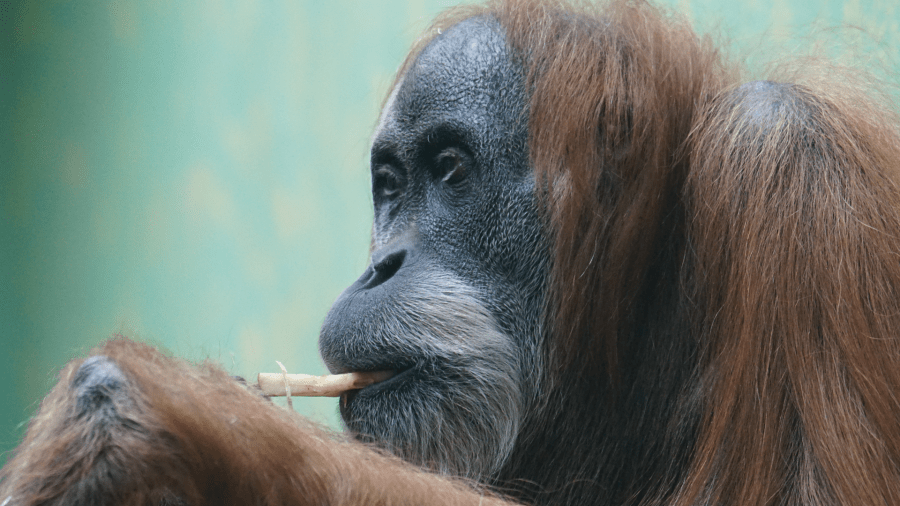
The orangutan takes a long deep breath, looks left then right, his plate-shaped face blinking, chin raised, mouth closed. Endangered. An iconoclast.

Using a long stick, he prods a coin the color of his hair across the concrete riverbed. He tilts his head; look how the stick bends where it meets the water.

He should exercise, climb the wooden fort, or swing on the huge tire, maybe work out where they’ve hidden the fruit. He could make another nest, higher up. But what would be the point? Every day there are the same grinning faces, the same pointing fingers, the same clicking cameras.

He flexes his back, rolls his shoulders, thinks about the life and death struggle of past lives.

At night, he climbs the wall at the far end of the enclosure and takes a stroll around the zoo. One day, he’ll set them all free and they’ll march to freedom, all of them, together.

When the moon is at its highest, he knuckle-walks back to his enclosure, climbs the wall, and lies next to his mate in their nest. Revolutions take time to plan, to organize, and they can be messy, can be upsetting for everyone, for both sides.

He rests a hand on his mate’s hip. She’s warm, hazy with sleep, close to extinction. They use the rhythm method; he makes a mental note of her ovulations. Not that he needs to; there’s something in the shine of her hair, the shimmer of her fingernails, the sweetness of her breath.

A gust of wind bends the tops of trees in the forest on the other side of the enclosure. He shuffles his bulk closer to his mate. It’s inside her, life: a swirling nebulae, a nursery of stars, the Pillars of Creation reaching out light years in every direction. Shivering, warm with abstinence, with squandering, he sighs, breathing the orange hair on his mate’s shoulder one way, then the other. Tomorrow, he’ll save his species. Tomorrow, he’ll begin a revolution. For now, he’ll inhale the mammalian warmth of another, and sleep.


Adam Lock writes in the Midlands, UK. He recently won the TSS Summer Quarterly Flash Competition 2018 and the STORGY Flash Competition 2018. He was placed third in the Cambridge Short Story Prize 2017, and has been shortlisted twice for the Bath Flash Fiction Award 2018. He’s had stories appear in publications such as Lost Balloon, New Flash Fiction Review, Former Cactus, MoonPark Review, Fictive Dream, Spelk, Reflex, Retreat West, Fiction Pool, Ellipsis Zine, Ghost Parachute, and many others. You can find links to his stories on his website: http://www.adamlock.net. He’s also active on Twitter @dazedcharacter.

The Sound of Silence by Melissa Goode

Sleep only comes for me now in intervals, in dreams. Tonight, you are as thin as when we met and you are wet. You shine. I hug you—skin and bone. You are cold and smell chemical, institutional. I don’t ask how you got to be so wet.

I say, “Do you know how much I love you?”

You drop your head and smile and all I want is for you to say “yes.”

* * *

You used to call me my darling. It hit every time—hard and fast—an explosion in miniature. And I said it back to you, because we all want to own someone.

* * *

You are nowhere and everywhere.

You are the man in a bank commercial, kicking a football on a luminous green lawn with your kids. A boy and a girl, they make you laugh. You are our lab who treads softly through every room of our house looking for you. Today, I see you lying on our couch, your head on one armrest and over the other your feet hang. You sing parts of your favorite song—you pick it up and put it down again.

* * *

Hello darkness, my old friend.

* * *

In the shower, I tell myself to feel the water fall on my skin, to feel the wet, the heat. You draw me against you. Your hands sear. They start and stop. Start and stop. Your mouth opens wide and your teeth close around my shoulder. I want you to bite hard. You don’t. You don’t leave a mark.

* * *

I close my eyes—your feet are bare beside our bed and they disappear as you kneel on the floor before me.

* * *

At the cafe, you sit beside me. Your leg shakes up and down and your boot beats the floor. I reach under the table and squeeze your thigh, it’s okay it’s okay. The shaking and beating stop. I wish they would start again.

I eat the salted caramel macaroon, my favorite, and yours remains on the plate, strawberry.

* * *

You sip your coffee and hold the cup over to me.

“Do you reckon this is soy? I can’t tell.”

I smile at your voice, your low, beautiful, unbearable voice. You tip the cup towards my mouth, as if I am a child.

I take a tiny sip from the place where you did. “Yeah. It’s soy.”

You sip and say, “I can taste it now.”

“How are you?” I say, but you just shake your head.

What? What? Tell me.

* * *

“The cats were out again last night,” I say. “Screaming and hissing. I can’t handle it.”

I don’t ask—did you hear them too? I don’t want you to tell me that you didn’t hear anything, that you weren’t there.

I say, “We were never ever going to sleep in separate beds. Do you remember?”

* * *

The waiter plants the check on the table and says, “Is there someone I can call for you, ma’am?”

The couple at the neighboring table stare at me as do the other patrons. They stare and then turn away.

“No. God. I’m fine,” I say. “Can’t a woman have her coffee in peace?”

I wrap the strawberry macaroon in a paper napkin and place it in my bag with the others.

* * *

I sit in our car and I cannot turn the ignition to drive home again. I rest my head against the steering wheel and close my eyes—your feet are bare beside our bed and they disappear as you kneel on the floor before me and take hold of my hip. You keep me standing. I say, more my darling more come on come on come—


Melissa Goode’s work has appeared in SmokeLong Quarterly, Wigleaf, Split Lip Magazine, Forge Literary Magazine, FRiGG, and matchbook, among others. Her story “It falls” (Jellyfish Review) was chosen by Aimee Bender for Best Small Fictions 2018 (Braddock Avenue Books). She lives in Australia. You can find her at http://www.melissagoode.com and on Twitter @melgoodewriter.

Hello There, Talk Show Host by Nicholas Grider

One reason we are blessed that Talk Show Host graces us with his slate-blue metallic sheen, the color of a luxury object that has a price but no name, is this: Talk Show Host doesn’t give a shit. Talk show host lets his electric charisma trail behind him on the ground like the filthy wedding dress of an excited bride thrilled to have been jilted, running through gravel streets singing of flames and liberty. And yet here he is, our Talk Show Host, more than willing to waste himself on us, spread thin across the world’s screens, smooth-skinned and often benevolent.

We love Talk Show Host. Talk Show Host doesn’t give a shit.

Or: Talk Show Host might actually give a shit, but how are we to know? Do we know what evils lurk in the small, green heart of Talk Show Host? Perhaps.

It takes more work hours to care for Talk Show Host’s lustrous hair gleaming under benevolent stage lights like an avenging raven or similar dark-hued bird than there are actual feathers on an actual bird bigger than an avenging raven, a bird such as a grudgeless emu.

Talk Show Host stares into the lens and asks if he were to smile a little lopsided and whisper to us that a moth is actually a form of bird, would we maybe give the idea some thought? Baby bird, Talk Show Host whispers, smiling, before slapping his long, powdery hands shut like a cartoon jail door, clap!

Talk Show Host wants you to know that love is a renewable resource but you have to pay for it anyway. Do you nestle your love behind your heart, Talk Show Host would like to know, and if not, what do you nestle behind your heart, and is it warm there, is it a place a nice young Talk Show Host may spend a long weekend tweaking his regimen?

Witness Talk Show Host’s shit-eating grin before the unsuspecting special guest accidentally speaks the secret word. What is the secret word, Talk Show Host? Why is it secret? Is it the key to a hidden door or a building full of hidden doors?

In Missouri there is a museum consisting of doorknobs that are or once were personally important to Talk Show Host. He holds a special ribbon cutting ceremony there in which he slits the ribbon down its spine so that it is thinner and seems delicate but, even still, none may enter, only glimpse or be told about the mysterious treasures of the museum in small-font sections of glossy magazines that want you to know all men probably look perfectly nice in plaid suits, not just talk show hosts and male models nursing sadnesses for so long those sadnesses no longer have a name.

Talk Show Host extends his hand toward the lens because he wants to get to know you better––is it a trap? If it is a trap, is it a good kind of trap, like service-economy capitalism? Will you tell us what good means and what it no longer means if we take you by the hand, Talk Show Host?

The different ways the Talk Show Host can smile number in the thousands and have yet to be comprehensively cataloged.

The set is deserted, the band is quiet, the stage is dark––but here is the Talk Show Host, and he wants to talk to you while your parents are in the other room pointing at translucent documents and bouncing a harsh whisper back and forth between them.

If we cannot trust you, Talk Show Host, whom may we trust? Is belief in Talk Show Host analogous to belief in God as defined by medieval Jewish philosopher Maimonides, i.e. “There’s no way of knowing, so just go for it”?

Talk Show Host, what is the difference between belief and trust, and how do you part the two as neatly as your hair is parted on late afternoons five days a week while your lithe yet muscular back is turned away from the approach of night and you eat measured amounts of small, brightly-colored food items while squinting at the new kind of news we have now?

Talk Show Host will save us from the news, and from turning into our parents, and from hidden fees.

Talk Show Host doesn’t give a shit, whistles while he works, invites you to follow him to his cold, clean, many-windowed home where he may or may not massage whichever of your cold joints aches the most before gently laying you on a cold, clean marble slab so you may take a record-setting nap while Talk Show Host departs to wander impossible meadows and say convincing things about strategy to skeptical woodland creatures.

Talk Show Host, where will you go after the hour of saxophones and velvet has arrived and it is time for sleeping and dreaming and the quiet nervous knitting done by the immune systems of quiet, nervous children?

When the lens that loves you waits in the dark for your return, does it still somehow gleam and reflect you?

Talk Show Host will help us figure out whether to fear death or chaos more, and reassure us with in-jokes that death and chaos are not the same thing.

Talk Show Host shrugs and tells us terror is a mockery of awareness, and therefore comical.

Talk Show Host, it’s election season midnight once more, will you pretend to rescue us by telling us we won’t notice the difference, will you smile, will you leave silently in your dark gray suit and apple-green tie and never return? Will you be generous and leave behind for us just one of your thousands of smiles so we may always remember that sometimes stupidity is even better than sleep?

When Talk Show Host arrives at the end of his arduous journey, he will know what home is because there are some things all Talk Show Hosts must know, and knowledge is a form of grief, but we must never speak of it, not even to our pets.

We are the children of secrets, Talk Show Host, we are ambiguous birds. If you don’t give a shit, if your contract forbids it, who will teach us what a journey is and how long to linger here on the shag carpet and when, finally and with the majestic calm of a distant ocean, to go?


Nicholas Grider is the author of the story collection Misadventure (A Strange Object) and the chapbook Forest of Borders (Malarkey Books). Their work has appeared in Atticus Review, Conjunctions, Five:2:One, Guernica, Midnight Breakfast, Vol. 1 Brooklyn, and X-R-A-Y. They can be found apologizing for things on Twitter @ngrdr.

L’Humaine Condition by Lily Wang

When one person is chosen everyone is chosen. Each life is random and must be taken as a whole, thus illuminating life from all directions, thus there can be no darkness.

Montaigne pulls out an alien. He knows his life is over.

He pulls out the alien from the hole in the ground and they both lay panting on the grass. Montaigne panting for the both of them, Montaigne panting for the world. He is disappointed. He trails the fleshy-pad of his fingertip along the surface of the alien, so brave already, waiting for the nick. It never happens. The alien is smooth and rectangular, not opal but quartz, with mirror flecks. He has seen counter-tops like it, he is awed.

Augustine is the next to arrive. Montaigne and Augustine do not know each other, or if they know each other they have never mentioned each other. Augustine is penetrated by his own seeing of the alien and loses his appetite immediately. He takes his position some five feet away and begins to speak at an even tone. His English is plain and intermediate. The feeling he arouses in the alien is a kind of compromised purity.

Stepping back for a moment to fix the viewpoint on—a squirrel, who adventures to the farthest end of a branch and paws at its own head, then lays flat on its stomach beneath the sun, then, maybe a fluff floats past.

No one is interested in the squirrel because that would be too easy.

The alien asks to be held. Montaigne replies, I am already holding you. Augustine stops speaking. The alien wants to know where the baseball game is. You have it all wrong, Montaigne continues, looking to Augustine for the first time. They notice blood in each other’s left eye, but for some reason neither man informs the other of this symptom. Perhaps there is no point. There are no doctors around and there are no tissues.

Augustine makes a lunge for the alien. I am only thinking of her, he says. Montaigne has no interest in fighting and gives up the alien at once. Look at yourself, Montaigne says. His sound is modest and ironical. You are dull and round, he says to Augustine, who is dull and round next to the alien. My only daughter is sick, Augustine says. You can save her, you can do something, can you not? Montaigne hears this and changes his mind. He grabs at the alien, causing it to slip from Augustine’s arms. You are not thinking, he whispers to Augustine. Their eyes are quickly filling with blood.

The two men glance around. They miss the resting squirrel entirely, but so does time, and so the earth. There is no net for the squirrel. There is no language for its history. They look down at the alien who is writhing in the grass.

Am I wrong?

Am I right?

It is no longer clear who is saying what.

The encounter is anticlimactic for everyone, and together the two men return the alien back to its hole. Go back to where you came from, they say in unison. The alien whimpers and makes suckling noises, a long tentacle lashes out and seizes Montaigne’s neck. GO BACK, Augustine says, and the alien asks, where? Where?

There is only here, there is only this, there is only me, there is only you.

The three fall to the ground. An hour has passed.

I can see my blood, Montaigne says.

Yes, says the alien.

I can see my blood, Augustine says.

It is the same blood as your daughter’s, says the alien.

Augustine stands up, then Montaigne follows. They walk off together, keeping a safe distance between each other, like strangers. Awaking from its nap the squirrel falls and lands on the alien, and begins to eat.


Lily Wang is the author of the poetry chapbooks Everyone In Your Dream Is You (Anstruther Press, 2018) and Oh(!) (Dancing Girl Press, 2019). She is the founder of Half a Grapefruit Magazine and you can read more of her work in Peach Mag and Cosmonauts Avenue.