Explanation of Your Benefits and Losses by Angie McCullagh

This is an overview of transactions from November 2018 – February 2020.

This is not an actual request for payment. It is only a series of numbers.

Amount Billed – $59,578.66

Number of mammograms, ultrasounds, and biopsies required to confirm diagnosis – 4

Your negotiated discounted rate – $53,243.22

Total anxiety attacks experienced while you waited for the doctor to say invasive lobular carcinoma – 2

How many instances, after you heard and while you drove to your daughter’s third grade class Thanksgiving feast, that you had to pull over to scream into your cupped hand – 3

Amount covered by insurance (A bundle. Plus we allowed you to take advantage of our contractual rates – you should know this) – $37,007.03

Times your husband said he’d watch the kids so you could nap, but then disappeared to the garage – 7

Gift cards you won online playing casino games and taking surveys so you could buy goods, then return them for cash to pay the bare minimum on medical debt – 12

Amount you may owe – $16,236.19

This is definitely not a bill.

Who received care – You, mostly from nurses, who flushed your port and infused you with your chemo regimen and hugged you when you learned the octopus (that’s how you think of it now, with glissading arms and grabbing tentacles) had spread to your lymph nodes.

Head scarves, hats, and even a wig you ordered to find something that made you feel enough like your normal self – 11

Hours spent knowing you should help your son with math or wash the dog with her anti-itch shampoo or cook something, anything, so your family can eat food other than teriyaki from Sunshine Sushi – 3,017

Hey, this is no bill, but it is a heads up that another enormous payment is coming due soon.

Who should be grateful: You. Unless you enjoy, at the age of 43, the slow slither of death while your children who are too young to properly live without you (who else will remind them to wear helmets on their scooters and to cup their pink cheeks in the morning while you whisper they are more precious than Trader Joes Peppermint Joe-Joe’s – an inside joke?)

Occasions you’ve thought sliding toward oblivion and exploding into glittering stardust would be better – 0


Angie McCullagh lives and writes (mostly fiction) in Seattle with her husband, two teens, and emotionally fragile mutt.

A Closed Door with a Keyhole by L Mari Harris

I turn to the woman standing in line behind me: There are two doors. Which one do you choose—left or right? She looks up from her phone, wary. What’s behind the doors?, she asks. This is a simple game to get to know one another, to see if we are compatible as friends. I stare back at her. You tell me.

My great-great aunt broke into neighbors’ houses with a bobby pin she’d pull from her big cinnamon–bun of hair. I never met her. My parents told me the stories, how once they found out what she was doing they quietly went around to the neighbors’ houses and tucked envelopes of cash in their screen doors to make up for the little things my great-great aunt was taking—a decorative hand towel, toothpicks in a little ceramic penguin, butterscotches and cocktail mints. I asked why none of the neighbors ever called the cops. Because they felt sorry for her. They said she had seen much, had basic needs that went unmet for many years, that these life experiences changed her. Bis auf die Knochen?, I asked. We didn’t understand her either, they replied.

I think of my great-great aunt in that big rambling house all by herself for all those years, living among furniture brought over from the old country, how my parents described room after room after room filled with those heavy uncomfortable pieces, how as she got older and frailer the dust collected. After she died, my parents sold off every last piece and locked the door behind them. I once told them it all sounded so romantic, living among the ghosts of the old country. It wasn’t, they said. It smelled like a terrible sadness.

My parents ask if I’ve met anyone nice when they call. This sounds like a trick question, I say. My mother huffs You know. Like a friend or maybe a special guy. I hear a muffled discussion, then my father crystal clear: We’re worried you’re all alone there. I tell them I’m surrounded by ten million people, how can I possibly be alone? Then I ask if my great-great aunt ever took any dishware, because I need a new set.

Sometimes I ride two stops past my stop so I can repeat the past on a leisurely stroll. The woman from the other day is coming out of a store and I fall in behind her. She’s carrying shopping bags in both hands. Her high-heeled boots quickly clip-clip-clip on the sidewalk, as if she has to get home because she has a million things to do before she finally gets a moment to herself. I stay half a block back, follow her to a brownstone. She pauses, tilts her face up to the door and stares before climbing the stairs. She shuts the door behind her and the stoop light goes out. The night blankets me once again, and I imagine children and a husband tugging at her as she tries not to show she’s rushing through dinner preparation and bedtime rituals. I wonder if she’d enjoy weekly dinners out, a chance to vent about children sticky with pancake syrup and snot, the husband mumbling under his breath You wanted them. I’d pick at her fries and tell her about my great-great aunt’s renegade life, how people called her spinster but they were dead wrong, how she had the ghosts of our ancestors from the old country to talk to and that suited her just fine. I’d tell her I could understand what it’s like having so many people in my life that I can’t wait to get rid of them for an hour or two.

I dream of a closed door with a keyhole. I can hear laughter, music, glasses tinkling. I look through the keyhole and see a woman, her hair twisted and pinned to the nape of her neck, her earrings catching the light when she tosses her head back to laugh at something someone is telling her. I look closer, and I’m the someone who’s making her laugh. The room is crowded, and we have carved our little spot along a wall to share our secrets. We laugh, reminiscing about how we met standing in line all those years ago, how I tapped her on the shoulder and asked her to pick the left or the right door. How she thought I was the most interesting person she’d ever met, how there was something so familiar about me.


L Mari Harris’s work has appeared or is forthcoming in matchbook, Ponder Review, (mac)ro(mic), Bandit Lit, Pithead Chapel, Tiny Molecules, among others. She lives in central Missouri. Follow her on Twitter @LMariHarris and read more of her work at www.lmariharris.wordpress.com.

The Pixelated Tiger by Jack Barker-Clark

I used to dream of traveling down my own throat. I had a stammer and tripped on words, and I would close my eyes and imagine myself passing through roped-off plasma and plunging carbon. I was hoping to find the cause: a constellation of upturned chairs or a picket fence. It was 1998 and every afternoon after school we played Tomb Raider, nosedived off ramparts and swam in low-grade lagoons. I was always zip-lining into clearings where tigers generated. They were pixelated, these tigers, but insatiable, rabid, a frightening blockade of sunburst cubes, and I came to wonder if it was a pixelated tiger rooming in my throat, swallowing up all my consonants.

He always looked over-toiled, moon-starved, whenever I imagined my tiger, which made me cherish as much as revile him, and we ploughed on together, pitiably, through the class register and the English presentations and the randomized swimming galas, one or the other of us always biting my tongue. In 1999 we took a school trip, a pretty place in the Lakes, and we were, my tiger and I, assigned a third party to row with. Alex, the history buff, had not quite volunteered but was rowed out onto the bruised lake anyway, and the dappling jangled and there was flotsam and bits of outcrop reflected back in the water. The rowboat was stiff and from far out the banking’s gradient looked sheer, a bowl, as though the landscape beyond was landless, was watercolour.

Unhappy at the rocking, the pitch of things, at how far I’d insisted we row, Alex berated me in the boat. My words wouldn’t rise and we faced each other in silence, eventually turning to watch the blue noise on the shore, its abstract brightness. Did he stand up or was the boat disturbed? they later asked, and I didn’t know. He was suddenly in the water, gulping, trying to sift the lake out from under him, and I sat with my tiger in the pale light and watched Alex thrashing until he wasn’t. The pixelated tiger rowed me back softly to the shingle beach.

In my late teens the stammer became less pronounced, was dimmer now. I had attended speech therapy, learned to tap my foot, sang in the choir. After such surges in confidence, I found, pixelated tigers often vacate the throat. At first I extolled this miracle. But I was only abbreviated in other ways. He sank into my core and knocked at my chest. Behind the fists of my lungs he hollowed out his den, prowling, unblinking. The pressure on my wide-tracked ribs was concentrated and I longed for my stammer back. At night I performed squat thrusts, my limbs as string, willed him to roll upwards: fundus, adrenal, thymus, trachea, cortex, thick pate, into sky, a ream of ash. But he never rose, he only sank. Did he stand up or was the boat disturbed? I still don’t know. Now here I go. I put myself in the bath, down flat under the skim. My body moves like a gondola. The words crawl all over me.


Jack Barker-Clark is a writer and artist from a passé valley in the North of England. He is the founder of Pale Books, a reading project, and writes primarily on literature and ornamental grasses. He tweets occasionally at @jackbarkerclark.

Sleeping Beauties by Tiffany Promise

The Land of Trazodonia is a hidden chamber within the walls of Slumberland Psychiatric Hospital. It both exists and doesn’t exist at the same time. This is where we Sleeping Beauties tell our secrets. We all wear masks of each other’s faces.

Instead of swallowing, we let our pills dissolve on our tongues, sending them straight into our mucous membranes. Straight into our bloodstream. We don’t have time for them to dilly-dally through our digestive systems, to fight with whatever thawed-out muck was supposed to pass for Sup. The oblong blue bars that keep our brains from quaking; the tacky, sunshine-colored globules that keep our hearts from over-beating; the chalky, white tabs as big and round as moons. They taste a little bit like Clorox and a little bit like licking frogs. A lotta bit like love.

While waiting patiently for our Meds to kick in, we sit Duck-Duck-Goose-style while gentle technicians re-attach electrodes and sensors to our mottled chests and scalps. Their gloved fingers move across our skin like tiny sparks of hope.

We are so thankful to have ended up here. So far away from Rhinestone, Texas, the Pear Tree Trailer Palace, dead Maxine’s partially-deflated balloon-head. From the grit-grime of spanged change, from Johnny’s calloused hands. His sweet, sweet, sweet till sour breath. From under Pepper Jack’s thumb, the bruised knees & missing gag reflex. Broke-the-fuck-open face. From mother’s dusty attic, the clumps of hair & fingernail clippings. Rotten apple cores. From the fifty-one-fifty-one-fifty-one-fifty. Their bughouse rubber rooms ever-blooming with red storybook roses. From that quiet spot in the library. Backpack full of binge, diuretics, lax tabs & Philip K. Dick.

Far from everything……
                                              everything……
                                                                            everything……
                                                                                                          that hurt us……

Twenty hours of sleep might seem like a lot, but when you’re a sloppy, messy, useless thing—more mercury than blood—twenty hours ain’t peanuts.

So, safely snuggled by seven, we finger the starched sheets as the sleep-tingles slowly creep and we let ourselves sink deep into the deep. That sweet, dark spot where we’ve got whole ribcages of defenses to protect us.

We sleep……
                            we sleep……
                                                        we slee……


Tiffany Promise (she/her) is a writer, poet, chronic migraineur, and the mother of two wildlings. She holds an MFA from CalArts, and her work has appeared in Brevity, Black Clock, tiny journal, Every Day Fiction, Blanket Sea, Sunspot, and is forthcoming in Peculiar and Creative Nonfiction. Though she now lives in Austin, Texas, Tiffany is originally from the mudbug-ridden swelter of the Gulf Coast, which is the setting of her recently-completed first novel, Eggs.

Painting Birds by Jennifer Todhunter

Sometimes, when we caught the birds, we’d dip their tails in our fingerpaint, their tiny wings struggling against our clumsy hands, their miniature beaks gasping for breath or a worm, we were never sure which one. Sometimes, we’d sneak up trees toward their nests, shove their fragile shells in our pockets and scale back down, our feet barely hitting the trunk, our hands sticky with sap, our never-brushed hair full of pine needles, and we’d place the eggs in a shoebox underneath our bedside lamp, cushion it on some grass and sticks and we’d die at any sort of movement. Die. 

Sometimes, when a baby hatched in the wild, we’d sit on the windowsill in our bedroom and listen to it cry out for its mum, the frantic chirp of a newborn, and we’d think how familiar that was, how we’d be making the same noise if we weren’t so distracted by this perfection. 

One time, we caught a finch and we painted its tail yellow and after that it perched in the tree outside the kitchen where we scrambled eggs by ourselves every morning and sometimes it sang to us, a warbling lilt.

One time, we watched an eagle swoop down and carry a baby with a blue head away in its giant claws, while its mum flew around like she was on fire, and we looked at each, our hearts stuffed with envy. 

One time, we heard a yellow-tailed bird fly into our bedroom window and drop dead on our deck, and we put it in the freezer because we wanted to preserve its beauty, the contrast of yellow against black feathers, its delicate softness against the stiffness of death, so we nestled its body against frozen rib roasts and bags of blanched spinach, and we left it there until we didn’t remember it was there any longer.


Jennifer Todhunter’s stories have appeared in The ForgeHobartCHEAP POP, and elsewhere. Her work has been selected for Best Small Fictions, Best Microfiction, and Wigleaf´s Top 50 Very Short Fictions. She is the Editor-in-Chief of Pidgeonholes and founder of Trash Mag. Find her at www.foxbane.ca or @JenTod_.


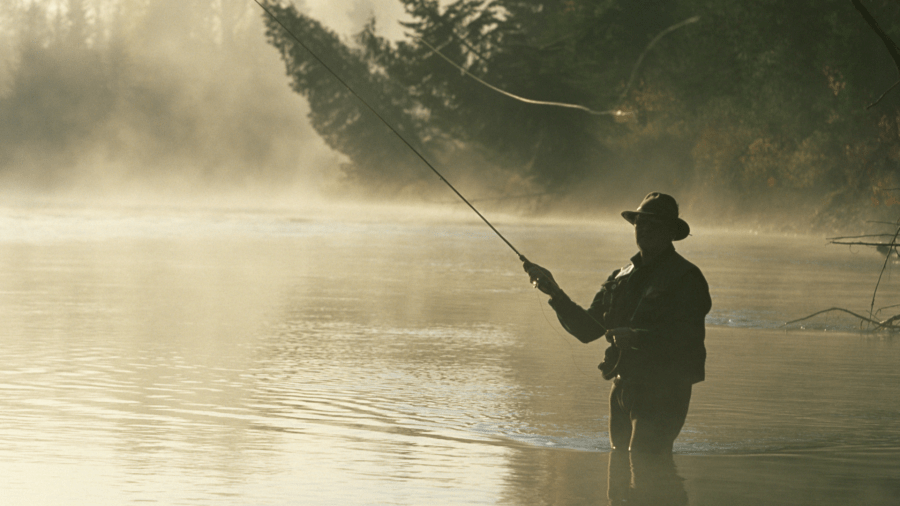
Fly Fishing with God by Andrew Bertaina

In the first lonesome years after college, the man used to fly fish with God. They’d met through a friend of a friend, a mutual interest sort of thing. God didn’t have a car, and the man did. God wasn’t a freeloader. He just didn’t have an interest in learning to drive. Sometimes the man wanted to ask if God was a New Yorker, but the accent didn’t fit. 

On days they fished, the man awoke early, careful not to disturb his wife; her hair splayed across the pillow. She stayed awake late, staring into her phone, in the way of contemporary unhappily married couples. Sometimes she kept the lamp on late, read poems by a local author she’d met at the library. The man kissed her quietly and left.

God usually waited at the bus stop, smoking a cigarette and staring pensively into the middle distance, coins of light flickering on the underside of leaves, low slung clouds, pigeons bobbing about like buoys. 

The rides were strangely silent. God wasn’t much of a morning person. 

Let there be light, He said, But not so goddamn early. 

The man turned up the radio.  

Eventually, they climbed into the mountains and up an old road, which crossed, via a series of bridges, the raging torrent of the river, glittering blue green below. The sun arrived through the skinny trunks of lodgepole pines—diagonal strips of light, the sort of thing Vermeer would have really nailed. At road’s end, was a waterfall and a small pool, where they’d unload the cooler, sandwiches, beer, and gear. 

In the few months that these trips took place, the man and his wife started to fight. At first, they’d been small fights, but now they were saying unforgivable things to one another. Lately, after the fights, she’d drive her car off into the night, and he’d stand outside, watching the fireflies seemingly flicker in and out of existence.  

As they fished, he found himself wanting to ask God about heaven or what his wife thought of him. But God seemed exhausted, distant.

The mornings after fights, she’d always be there, breathing heavily in the clean linen sheets. The man loved her tenderly, as deeply as he’d thought possible.

Do you need anything, today?

She pretended to sleep.

He drank coffee in the kitchen, waited for her to wake. Squirrels dare-deviled through oaks in the yard. She was a locket, and he had lost the key. Sometimes he dreamed himself in search of the key, swimming through rivers, prying open the mouths of fish, looking for that glittering piece of metal that would free them both.

God frowned and cast again. The man felt lonely and sad, a child lost on the playground.

At least I brought the loaves, God said. I’ll make a million of them, and we can feed the ducks.

The man didn’t know whether to laugh. He was thinking of his wife, of how much she held him in disdain. The wind bent the leaves, ran through the grass. An hour passed.

Fuck all, God said, and walked across the water, feet dimpling the surface. He plunged His fist into the white rapids and pulled out a wriggling salmon. As they cooked the fish over the camp stove, neither of them mentioned the feat. God seemed embarrassed as though he’d made platypuses again.

When the man returned with fish and desperately tired, his wife would ask if the trips were worth it. He could hear the admonishment, time they weren’t spending. Sometimes he stayed awake, bleary eyed, to ask after her day. Once, he’d picked up the poems she read, mostly nonsense about old lovers reincarnated as dogs, geese, pebbles of light, train sounds in the distance. The poems were like koans whose answer was sadness.

In this dream-like state, he thought of his father, who had been incredibly loving, so smothering in his love that the man had been desperate to leave. Now he understood that he was searching for someone like his father, now dead, a soul to love him fiercely. He thought about telling his wife, but her brow was knit tightly, foreclosing questions.

Eventually, God told him He was no longer interested in fishing. He said He wanted to work on a low crossover dribble that flowed into a step-back jumper. Like James Harden, God said, but with a longer beard. 

The man was home every Saturday now, mowing the lawn and watching college football. His wife stayed in the kitchen, reading poems, voraciously now. Sometimes, he swore he saw her slip scraps of paper into her mouth.

Late at night, when he thought she was sleeping, sometimes he’d catch her reciting the poems she’d surreptitiously eaten, scraps of lines floating in the air above them. He shook her awake.

What are you doing?

You were reciting poetry.

Don’t be silly, she answered, rolling over.

He looked at the crease where hip met thigh, longed for her. He stood at the window. The moon lay on the grass in the yard. He prayed.

* * * *

Months later, long after his wife had moved in with the writer across town, the man ran into God at the gas station. God tried hiding behind a row of candy bars. The man stood behind God in line, staring at Him intently. Finally, God turned and said, I couldn’t take all the damned silence. 

The man nodded, understanding he’d missed the opportunity to ask questions about meaning, love, the shape of the universe, time’s flow, questions that would plague him for the rest of his life. The same kinds of questions, he understood now, his wife so desperately wanted him to ask. 

At the register, a middle-aged man with a wrinkled brow rang him up and asked if he wanted anything else. The man looked up at the row of cigarettes behind the counter, the bits of amber colored whiskey. He wanted so many goddamn things he didn’t know how to ask for.


Andrew Bertaina received his MFA in creative writing from American University. His work has appeared in many publications including: The ThreePenny Review, Witness Magazine, Redivider, Orion, and The Best American Poetry 2018. More of his work is available on his website at www.andrewbertaina.com.

Three Short Tales by Joshua Jones

Something New

One day, in a park surrounded by skyscrapers, a woman began to float. This was midway through the ceremony. The guests were shuffling and coughing and sneaking glances at their phones. By the time anyone noticed, she was thirty feet up, flexing her toes, paddling the air, kicking until the imitation-glass heels went sailing. One hit the groom, the other the cassocked minister, his face still in his book. The sole made a satisfying clonk against his shiny scalp. The groom—her groom, she had to remind herself—mouthed Why? but she no longer looked at him, no longer looked down at all. From across the park, another white-trimmed figure moved skyward, then another, then another. The brides saw each other and waved, did little twirls. Some pulled their veils free, others ripped at their trains. One by one, they tossed their bouquets to the spectators below. There was a mad scramble.


Biology Lessons

It happened when Ms. Robishaw was at the blackboard. The girl, that is, and the frog, a bulbous looking thing that barely fit in the glass jar. It didn’t struggle in its chloroformed stupor but gazed liquidly at the girl. Then came the wet, smacking sound followed by a flurry of giggles and more kisses as the rest of the class took out their specimens and puckered up. By the time Ms. Robishaw turned around it was too late: where once there were frogs, there now slumped the sagging bodies of men and women, all naked. She recognized them all. There was Tony, who once taught PE the next county over, but now was sprawled across the desk closest to Ms. Robishaw. She prodded his belly; it had doubled in size since she’d stopped answering his texts. Two desks over lay either Brad or Brandon, or was it Braydon? He worked downtown, she was sure of that. Was big in something or other, though now he looked, sadly, rather small. And Giselle, who looked so peaceful that Ms. Robishaw felt a twinge of regret until she remembered the yelling, the cutting remarks, the actual cutting, the scars still visible along her thighs. There were no princes, no princesses. At the back of the class, a man began to flutter his eyelids. Garth. He always wrote such earnest poetry. Then threatened to share her nudes on Reddit. He looked better as a frog. Ms. Robishaw clapped her hands, louder and louder, until the class’s twittering quieted. Class, she announced, we’re going to need more chloroform.


One Hundred Years

It was over one hundred years ago. The Spindlers’ Guild couldn’t keep up. Prices doubled, trebled, and still people bought the green-tipped spindles—first those bourgeois fawners, you know the type: the ones who doted over the young Aurora, who bought sleeping dresses to match her repose, who outlined strict guidelines as to who could revive them (at least a minor duke; great kisser; no baldies)—but next came the fishwives, the ones who couldn’t give a tit about the royals and some spoiled, sleep-sick princess; they dreamt of a decent night’s sleep, a decent year/decade/century of sleep without grubby hands prodding them for food or favors. Is it any wonder that fights erupted over the last spindle? Or that, to meet demand, the factory foremen mandated fourteen-hour shifts? They threatened the slowest Spindlers with flogging, the prettiest ones with worse. After the Shop Steward complained and was beaten into a coma, half the Spindlers pricked their fingers and swooned right there on the factory floor. The rest walked out, wielding spindles like spears, threatening to jab any foreman who stepped in their way. They picketed day and night while orders mounted up. To Persia, to India, to the Empress of China herself. The town guard was brought in, scattering the picketers with clubs and pikes, cracking ribs, breaking skulls. That night, the empty cobblestones glistened red in the light of the burning factory. Where were the guard, the foremen? Perhaps they nodded off, the strikers said. A prick of the finger is all it’d take. The fire raged higher, engulfing the night. The town slept through it all.


Joshua Jones lives in Maryland, and his writing has appeared in The Best Microfictions 2020, The Best Small Fictions 2019The Cincinnati Review, CRAFT, Paper DartsSmokeLong QuarterlySplit Lip Magazine, and elsewhere. Find him on Twitter @jnjoneswriter or visit his website: www.jnjoneswriter.wordpress.com.

Three Fictions by Sara Nović

Hearing Paired

I turn around too fast and quickly we’re laughing; in a room of low-tide silence, our eyes ignite with the insight that they’ve told us all the same can’ts, though you’ve heard them differently, and not at all.

From Peru you bring Español, a little Quechua, Amaya, the Lengua de Señas Peruana, de Inmaculada, de Sivia, though all that gets you nothing except a seat in the special needs work program. Beside you I’m inspiringly bilingual, but English crushes fat atop everything here—not quality nor quantity, just specificity.

Your hands say mouth-tap-W, with agua on your lips, mine answer back water, mouth-tap-W.

Alone at night on the #66 home, my eyelids start open by another’s hot breath. The man is angry that I haven’t listened, but when he hears my voice, his changes. Sorry, his mouth says, hiss of sympathy. I push the color from my self-conscious cheeks, and think about the morning we spoke three languages at once, understood one perfectly.


Hunger Games

Sticks and stones may break her bones, but words make easy work of it: thigh gap, wristbone, collarbone necklace, and other lessons she learned at school. That body would be perfect with a little less body, conscious uncoupling, brittle by design.

She is to be seen not heard, unless she says what we need to hear: she already ate, she ate a late lunch, she’ll eat later, she’s not herself. She’ll feel more herself with a little less self. Mind over matter, matter discarded.

Self-inflicted (if you don’t count the ones who cheered the infliction, nursed the affliction).

Detoxed, flushed, returned to the soil, splay of twigs on the forest floor.


Kaddish

“There is no mourning on Shabbat,” the Rabbi said, and a feeling like a laugh came up in my throat. I tucked a stray hair behind my ear; I had not seen myself in a week. The Rabbi didn’t look away, superior the partitionHe strode the aisle between our benches and said it with such certainty all I could think was the nerve, to walk across the shul and lie to our faces like that. As if grief could be governed by calendar squares.

I began to fear the ease with which the words fell from his lips. History of falsehood latticed through the floorboards, or running beneath them like a subterranean river, contaminated wellspring. I wondered what other lies we’d built ourselves upon. But, of course, that’s how I’d ended up here—there was no one on earth left to ask. 

The realization sent the room back underwater: chandeliers’ refractions white-hot and writhing, temple contained in the globe of a tear, the tears that do not exist on Shabbat.

So I fought flood with flood. And there was evening and there was morning on the eighth day.


Sara Nović is the author of the novel Girl at War, nonfiction anthology America is Immigrants, and another novel forthcoming in 2022, all from Random House. She has an MFA in fiction and literary translation, and lives in Philly. 

Casey, Who Exorcises People by Eric Rasmussen

Casey performs exorcisms at the desk he rents in the corner, and that’s not even weirdest part about him. The bathroom in the middle of the shared workspace doesn’t lock, so he yells “occupado” whenever he’s in there and he hears us walk past. He surrounded his workspace with heavy velour drapes, mostly green, some burgundy, hung from the industrial girders overhead. Every time he enters or leaves it’s a full-on can’t-find-the-edge-of-the-curtain comedy routine. And he reminds us constantly that, even though he conducts exorcisms in there, he’s not an exorcist. He would need a license to be an exorcist.

Mostly, though, he’s gentle and sweet. He arranged a holiday potluck and gift exchange for the whole floor, and he remembers the names of our family members. Sometimes he stands a little close when he talks, and he’ll refer to our appearances more than he should, but here’s all you need to know about Casey: he eats a peanut butter and jelly sandwich, every day.

One morning, Casey shows up with a guy who looks exactly like him, except twenty-five years older, like a mugshot artificially aged by computers. We guess it’s his dad, and the old man stops at our desks to confirm it.

“Hey there,” says the guy. “I’m Casey’s father. Please allow me to apologize for my kook of a son.” He pauses so we can laugh. “What a weird-o, right? Just imagine trying to live with him.” In that moment we do, and it isn’t so bad, because Casey probably picks up after himself and keeps a lot of interesting books around the apartment. “I’m kidding,” says Casey’s dad. “But once again, here I am. Good old dad to the rescue.”

Casey comes up behind and says, “Is this senior citizen bothering you?” He smiles, but his eye also twitches, which tells us that Casey loves his father, but is dying a slow death by a thousand tiny cuts from his old man. It explains a lot.

While Casey’s dad gets coffee from the kitchen alcove, we look him up. He used to be a licensed exorcist, until an incident twenty years earlier when he tried to extract the ghost of serial killer from some famous debutante. The procedure failed, and the girl went on to murder fifteen people, mostly library volunteers and crossing guards. Big deal, lots of press. Now, instead of being an exorcist, he exorcises people. Just like Casey.

“Dad’s here because I need help,” Casey announces to the office, the same way he does when he asks us to quiet down for his sessions or informs us the kitchen is out of paper towels: hands on his hips, eyes pointed at the ceiling, speaking to no one in particular. “Tough case,” he says. “Not sure what to do.”

The “tough case” arrives ten minutes later. A woman, barely five feet tall, with dark hair and skin. Old, but not that old. Big handbag, tan shoes. She shuffles across the floor with her head down. We don’t actually look at her; Casey says it’s weird enough for his clients to get exorcised in a co-op office space without random writers and programmers and graphic designers staring at them. As always, we remain as pieces of furniture, working on our computers.

Casey and his dad gesture the woman back towards the curtains in the corner, then both men bumble around to find an opening (hilarious). They enter, the drapes waft shut, and we hear the murmur of the exorcism. The fabric absorbs their actual words, but only for a little while. Casey and Casey’s dad raise their voices as they try to out-exorcise each other.

“The spirt of the almighty lord compels you to leave this woman.”

“Actually, the unknowable power of the father, son, and holy ghost command that you vacate this mortal host.”

We stay focused on our screens, even though it’s hard.

“Leave this earth forever, evil spirit.”

“Or, plunge forever into a bottomless pit of suffering as punishment for the sins you’ve brought to this earthly plane.”

That’s when things really start to get weird.

The curtains billow, and rays of light escape between the gaps. A low, rumbling voice speaks in some language we don’t understand. Our translation apps don’t recognize it either. Then thuds, thumps, and the sound of furniture dragging across the floor. We start an office email thread: “That’s some exorcism.” “It’s not an exorcism, remember—neither of them has a license.” “Should we be doing something?”

“The love of god will smite you forever.”

And more importantly, your ancient evil will never sully mankind again.”

Ten minutes later the session ends, and the woman exits the curtains. She looks beat up but happy, like she survived an intense massage. A few minutes after that, Casey’s dad departs as well.

“A demon of the old world,” he says. “Those are tough ones. Here’s hoping it doesn’t take up residence in your microwave.” We look toward the kitchen alcove. ”Just teasing.” He laughs. “They don’t actually do that.”

After his father leaves, Casey comes out with his head in his hands.

“How’d it go?” we ask.

He tells the whole story as if we hadn’t heard it ourselves. When he’s done, he tries to smile, but he fails. “And I’m sorry about my dad. He can be awkward sometimes.”

Poor Casey. We try to help. “It sounded like you could have handled it on your own. You probably didn’t even need him.”

“Probably.”

Casey’s such a good guy. Does anyone ever tell him that? “You’ve clearly got what it takes to be an exorcist,” we say. “You should get your license.”

“Maybe.” Casey shrugs. “Alright. Back to it.” He fumbles with the curtains again. The microwave makes a strange groaning noise. We wonder if it’s time to start working from home.


Eric Rasmussen serves as fiction editor for Sundog Lit, as well as editor for the regional literary journal Barstow & Grand. He has placed short fiction in Fugue, Gulf Stream, Pithead Chapel, and South Carolina Review, among others. Find him online at theotherericrasmussen.com.

How to Wear White to a Wedding by May Hathaway

1.  Open the invitation on a Tuesday, two weeks after it’s landed in your cramped mailbox. You are curled on the couch, stretching your feet out of the tight ugly brown shoes you wear every day and sorting through the credit card statements you’ve been avoiding and Sears catalogs gathered on your coffee table when you see this envelope, large and cream-colored. The paper is so thick it feels like you’re rubbing powder off of it. Your sorority sister Sarah, the invitation says, is getting married. Would you like to attend?

2.  You don’t recognize the name of Sarah’s fiancé. Back in college, she had dated a guy on the crew team. You consider checking “declines regretfully” on the RSVP card; there are better ways to spend a weekend, like organizing your bookshelf by color or feeding pigeons in the park. Calculate the costs: you’ll need to buy a wedding gift, reserve a hotel room, and book a bus ticket; there’s no way you’ll be able to afford airfare, especially at this time of year. It’s okay, though. You’ll do anything for your sorority sisters. You promised them that much when you pledged.

3.  Email your boss to let him know that you’ll have to take off a day or two next month, hoping that the abundance of exclamation points will soothe his frustration. You’re not a particularly good employee, and you know that; you’re lucky he hasn’t replaced you. Still, sometimes when you sit down at your desk and plaster on your customer service smile, you feel a surge of rage. You did everything right—you applied to college, did okay in your classes, made friends. You told men in suits about yourself and described challenging life experiences in rooms with glossy oak furniture. You went on dates with your cousin’s friend and that guy from Tinder and your colleague’s dog-walker’s brother—even if the whole career thing didn’t work out, you could learn how to be a good wife. And still, look at where you are now: you are a receptionist for a dermatology practice and Sarah is a bride-to-be. Can you believe it? She probably hasn’t sent half as many emails in her lifetime.

4.  Sarah’s wedding registry is neat and colorful and expensive; she seems to have gained a taste for silverware. Somebody has already bought a panini press and a food processor. You duly scan the list of available items. You decide to purchase a tablecloth and placemats so that she’ll remember you at every meal. Maybe she and her husband will talk about you over plates of quinoa and invite you to dinner parties, where you’ll brush hands with business executives and women who wear Tiffany wristlets, real ones, and you’ll make casual conversation over cheese platters. You can only hope.

5.  The wedding is in the Adirondacks, which makes your stomach churn. You grew up in upstate New York; you know the lakes and mountains there better than the back of your hand. Sarah grew up in Alabama or Arkansas or Georgia, somewhere decidedly dry and full of non-hikers. And you don’t own the mountains, obviously, and you’re not going to gatekeep a whole territory, but Sarah? The Adirondacks? Really?

6.  You’re taking the Greyhound bus to the wedding when disaster strikes. You’ve left work early, much to the chagrin of your boss and the guy with severe adult acne who keeps trying to flirt with you while scheduling appointments, and you’re beginning to regret it; you get nauseous on buses easily. Your favorite purple minidress doesn’t really fit anymore—it’s loose around the waist and tight at the armpits—but you still went to the effort of getting it dry-cleaned. Everyone looks miserable here, yourself included. When the bus grinds to a halt, you stand up and feel the granola bar you ate for breakfast rising towards your throat. Outside, you spit a few times as people shuffle towards their luggage, trying to get the sour out of your mouth. By the time you’re done wiping your lips, only the driver is left. When you duck under the bus to grab your things, you see a single suitcase left—the duffle bag with your dress is gone. Shit.

7.  You hate the Adirondacks. You hate this venue. They have a small store, like you knew they would, and the dresses are all sold at exorbitant prices, like you knew they would be. The unexpected part is that almost all of their dresses are sold out; more than one guest, it seems, has been forgetful. The only dress they have left in your size is a lacy ivory sheath, and you swipe your credit card without hesitation. It occurs to you to let Sarah know about your new outfit, but you’re so tired after a long bus ride, and it’s definitely not a big deal; she’s probably at the rehearsal dinner right now. Besides, as much as it pains you to admit it, you hate Sarah.

8.  When you wake up in the morning and slip into the dress, you do not feel the expected guilt. You coat your eyelashes in mascara and rub blush onto your cheeks and wait for a pit to form in your stomach, but you’re surprisingly calm. You eat eggs from the hotel breakfast bar and observe how easily they break apart into little nubs. On the way to the venue, you think about all the times you could’ve gotten married, even if it was just to the guy who smiled at you in the parking lot once, and touch up your concealer.

9.  You are in the Adirondacks wearing white to a wedding. Everyone is staring at you. Everyone hates you. Everyone includes yourself, but more importantly, everyone includes Sarah, whose face is blotchy despite her heavy layers of makeup. She is screaming, you think. Specifically, she is screaming at you; the words are coming in chains of how could you wear that and how are you so stupid and you’re jealous of me, I’ve known since college and today is my day, mine. From her latest stream of vitriol, you have learned that her fiancé’s name is Mark. You wonder if he’s going to calm her down, but he stands there, useless, like most men. Sarah, you think, is having some sort of psychotic break. She is unwell. She needs help. It is not until Mark takes a step towards you instead of towards Sarah and places a hand on your arm, firm in an entirely uncaring way, that you realize that you are screaming too.

10.  In one of the most humiliating moments of your life to date, call your mom from your hotel bathroom. You called an Uber from the venue after Mark hauled you onto the grass, where you stumbled in your heels—it seemed like an appropriate time to splurge. When she picks up, you are crying too hard to get the words out. For a good minute, you are gasping for air while your mom asks you what’s wrong over and over again; each inhale feels like your chest is cracking open. Stop blubbering, she says, and you steady your lower lip long enough to tell her that you need money to book a ticket back home. She starts yelling, just like Sarah did, and snot leaks onto your white dress. I didn’t even do anything, you say quietly between sobs. I didn’t even do anything. After hanging up, you crawl onto starchy sheets of the hotel bed and think about how difficult it is to be loved. The deposit lands in your bank account three hours later.


May Hathaway is a writer from New York City. Her work is published or forthcoming in Hobart After DarkPANK, and Vagabond City Lit and has been recognized by the Scholastic Art & Writing Awards and the National YoungArts Foundation. An alumna of the Adroit Journal Summer Mentorship Program and the Iowa Young Writers’ Studio, she will attend the University of Pennsylvania in the fall.