Dead Bird by Todd Dillard

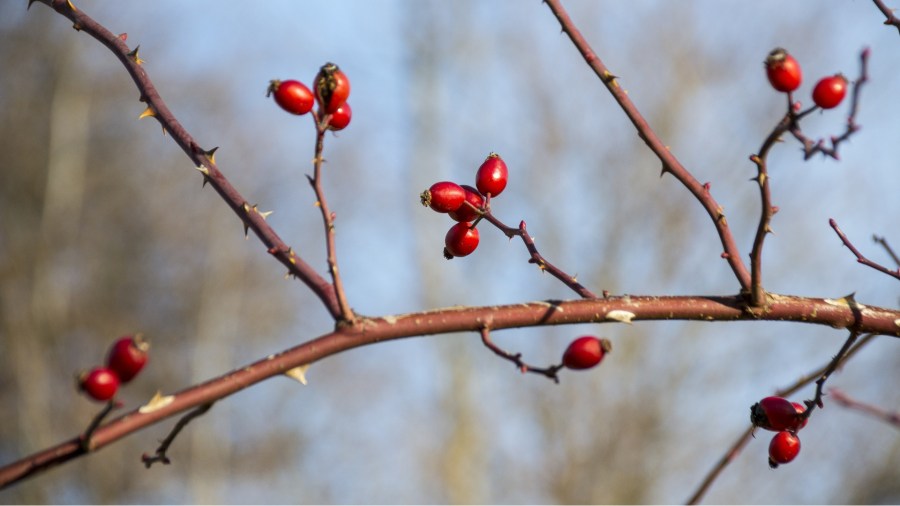
You swung the chainsaw through the rosebush,
lopped off its top, and found,
tucked in fang and bramble,
a nest of juniper twigs. Inside it,
I waited, dead since last season,
curled like a dropped dishcloth.

You worried you were a terrible father.
You worried your sunblock-slathered daughter,
splashing at the water table across the yard,
would totter over and thump you
with a question shaped like me.

You worried too, briefly,
if I was a blunt omen
when you didn’t believe in omens.

You placed my nest and I in a grocery bag
as if you’d just come back from the store,
a quick errand to pick up a little death
because you’d run out
and who knows when you’ll need some more
to sprinkle on your pillow or morning cereal?

You knotted the bag,
and gentle as laying a babe in her crib
you placed it in the garbage,
unhitched another worry from your throat.

In the dark I listened to the chainsaw growl.
I imagined you holding it over your head.
I imagined you thinking: I am trying to be a good father,
bringing the chainsaw down.


Todd Dillard’s work has appeared or is forthcoming in numerous publications, including Crab Creek Review, Longleaf Review, Nimrod, Superstition Review, and The Boiler Journal. He was a finalist for the 2018 Best Small Fictions anthology, and has been nominated for Best of the Net 2018. He lives in Philadelphia with his wife and daughter, and can be found on Twitter via @toddedillard.

Big Bad by Mary Hamilton

There’s this wolf outside my house. He’s tearing up trees. Throwing them over his shoulder. Making a mess.

He’s banging on the door. When I don’t answer, he pulls the sidewalk up like it’s tape on a cardboard box. He uses the mailbox post like a toothpick. He’s tearing this house apart piece by piece. From the right angle, it still has the façade of something whole, but there are holes. The roof is collapsing, the stairs are gone, rubble where there used to be flowers, music, a home. And now, I don’t know where I’d even begin rebuilding. My neighbors have all moved away. He ate their roofs, their lawns, their porches. It’s just the two of us now. Me and him.

He’s pressed up against the front door, his tongue licking the lock. I’m pressed up against the other side, holding everything together. I listen to him breathe. Listen to his dripping teeth and gums. The slurping saliva. The wheezing breath. I can smell it. Then he starts the scraping. That one claw at the door. Scraping in the same space over and over. Going deeper. Never speeding up, never slowing down. Just a consistent, slow scrape at the wood between us. I can hear his breath, his hair, his tongue lolling out of his mouth. I manage enough breath to say, “What do you want?”

“I just want you to be okay,” he says, as that one claw breaks through the last of it.


Mary Hamilton’s work has appeared in Smokelong Quarterly, Wigleaf, and the Indiana Review. She lives in Minnesota.


Prey by Christine Taylor

He bounds down the back steps:
my dog has caught
the scent of prey.
From under a lawn chair,
a bunny sprints
for her life,
dashes in sharp S-turns to thwart
the husky on her trail.
She reaches the fence
unforgivably low,
and when she can’t slip underneath,
she leaps into the air–
a valiant attempt
to escape
into the rest of her years.

The dog leaps too
catches her struggling body
just as it falls from the apex
of her last grasp at life.
Her bones crunch
between the strength of his jaws,
and he savors every bit of her–
head, belly, limbs.
The ravenous moment passed,
he lies down in the grass
satiated
panting
his head raised to bask in the sun.

I want to say I’m horrified, but
I have, after all, witnessed
the event as a bystander
who hasn’t moved
from her spot
on these steps
who hasn’t rushed to wrest
the dog away
to save
hasn’t at least called out Stop!

I stumble down the steps
fall into one of the Adirondack chairs
watch finches escape the feeder.
Thunder comes to sit
at my feet
a drop of saliva
lands on my shoe,
and I can’t help but pet him
bury my fingers
in that downy sable fur.


Christine Taylor, a multiracial English teacher and librarian, resides in her hometown Plainfield, New Jersey. She serves as a reader and contributing editor at OPEN: Journal of Arts & Letters. Her work appears in Modern Haiku, Glass: A Journal of Poetry, The Rumpus, wildness, and The Paterson Literary Review among others. She can be found at christinetayloronline.com.

Plan Exclusion by J. Bradley

The magician died before he could put me back together again and my health insurance wouldn’t cover “acts of god” (their words). The woman skewered with swords who leads our support group reminds us that we should count our blessings, but the boy who lost his nose and index finger disagrees, always.

J. Bradley is a two time winner of Wigleaf‘s Top 50 (Very) Short Fictions. He’s the author of Neil & Other Stories (WhiskeyTit Books, 2018). He lives at http://www.jbradleywrites.com.

+ by Rebecca Kokitus

Content warning: pregnancy loss.


little symbol, little opposite
of emptiness
the first name you’re given
and the last

little larvae, little tadpole
knocking against the walls
of my bowels

little bee sting, little parasite
suspended in your
bloated blood cave like a bat
—you never blink

foam at the mouth,
spit up rabid water
mourning sickness
I’m mourning you, you sense it

sense the morning
you’ll break like a fever,
nothing but roadkill guts
in my underwear

and I’ll mourn you then, too.

Rebecca Kokitus is a part time resident of Media, PA just outside Philadelphia, and a part time resident of a small town in rural Schuylkill County, PA. She is an aspiring poet and is currently an undergraduate in the writing program at West Chester University of Pennsylvania. She has recent work in Moonchild Magazine, Rising Phoenix Review, and Rose Quartz Journal, among other places. She tweets at @rxbxcca_anna.

Madlib by Kim Magowan

Mom, when you were at the FERRIS WHEEL Saturday, Ron BENT the CLOCK, so I couldn’t HICCUP. He put his KNEECAP over my EYEBROW, so I couldn’t even GIGGLE. Then he stuck his ELBOWS inside my EAR. I JUGGLED and JUGGLED. Remember, you asked why my TEETH were so TURQUOISE? I know you MIX Ron is FIZZY, but really, he’s a KANGAROO. Mom, I don’t SNORT you, I know how SUGARY you’ve been, but I fucking CARTWHEEL him. Ron said if I KNITTED you, he would FLY me, and besides, you would never WHISPER me. So, do you SNIFF me?


Kim Magowan lives in San Francisco and teaches in the Department of Literatures and Languages at Mills College. Her short story collection Undoing won the 2017 Moon City Press Fiction Award and was published in March 2018. Her novel The Light Source is forthcoming from 7.13 Books in 2019. Her fiction has been published in Atticus Review, Bird’s Thumb, Cleaver, The Gettysburg Review, Hobart, New World Writing, Sixfold, and many other journals. She is Fiction Editor of Pithead Chapel.

In the Morning Their Shirt is Hanging Off the Bed by A. Prevett

A. Prevett_Poem Submission-page0001

Link to PDF: A. Prevett_In the Morning Their Shirt is Hanging Off the Bed

A. Prevett (she/they) is a human from Atlanta. Their most recent poems have appeared in or are forthcoming from Hobart, Cherry Tree, Puerto del Sol, among others. They received their MFA from Georgia State University. You can find them online at www.aprevett.com or on Twitter @a_prevett.

Outline by Darrin Doyle

“Please lie down,” the man said. He gestured at the pale sidewalk pocked with divots.

“What for?” asked the boy. Could he trust this man? This stranger?

“I can’t draw your outline unless you’re on the ground, can I?” The man’s lips smiled. His eyes sparkled.

He was younger than the boy’s father. Better looking, slim and athletic. Carried himself with a bright and bouncy step. Dressed in khaki shorts and a blue shirt the color of the afternoon sky. The boy had been reading on a bench in front of the library, waiting for his father to get out of his doctor’s appointment down the block.

“Jack London,” the man said, nodding at the book. “Man versus nature, am I right?”

The boy closed the book, embarrassed. Reading was his own private experience, and he didn’t like talking about it. Not to anyone, not even his parents.

“Man doesn’t usually come out on top in that battle.” The man threw back his head and gave a robust chuckle, as if he’d made a great joke. His blond hair was as bouncy as his step.

“Like I said,” the man continued, “I’m doing an art project. Kind of an experiment, actually. What kid doesn’t like experiments?”

He set his case on the sidewalk. It looked like a suitcase, rectangular, bound in dark leather the color of a storm cloud. The man unsnapped a button. Kneeling, he spread his wares, revealing an extensive collection of chalk. Each piece was strapped individually to the inside of the case.

“My own personal rainbow,” the man said. “Pretty much every color you can think of.”

The boy’s curiosity was piqued. He’d been warned not to talk to strangers, but this man seemed kind. Other people – families – strolled along the sidewalks on this sunny warm day, peering into shops, licking ice cream cones. The boy felt safe and he was enjoying the attention from the man. He didn’t have any close friends. When your parents were both ill, kids didn’t like to play with you.

“Take one,” the man said. “Whichever one you want, it’s yours.”

The boy selected a piece the color of blood. It was nearly as thick as his wrist and as long as a pencil. “I can have this?”

Seeing the boy admire it, the man said, “You won’t find this at the local art supply store. This is special chalk, the only kind like it in the world.”

“Where did you get it?”

The man’s expression was thoughtful but guarded, as if remembering an event he wasn’t sure he wanted to share. “I’ve had it for a long time, put it that way. Got it when I was around your age.”

The man said they needed to relocate so nobody would step on the boy, or bump him while he was tracing. Around the back of the library the two found a square of pavement close to the dumpsters. From this vantage the boy could no longer see the sidewalk.

“Don’t worry,” the man said, noticing the boy’s concern. “Won’t take long.” He opened his case again and slid on a pair of gloves. “Were you waiting for someone?”

“My dad. He’ll be back soon.”

“He left you at the library?”

“He’s at the doctor’s,” the boy said. “Should I lie down here?”

“Looks like a good spot. Nice and clean.”

“I can’t think of a pose.” The boy was sitting on the pavement, suddenly at a loss, suddenly weighted by the inevitabilities and possibilities of life, which he was only now beginning to recognize.

“When someone walks past your outline, what should people think about? Anything you want to be, we’ll make you come alive.”

“Flying, I guess.”

“Wonderful. A common request.”

The boy lay on his stomach. He extended his hands and tried to imagine he was soaring through the sky. But the ungiving cement, rough against his bare arms, made him terribly aware that he was stuck to the earth.

“You thinking about your dad?”

“I don’t know.”

“He sick?”

For the past few months the father had been having dizzy spells. It was hard for him to take deep breaths. The boy’s mother had an advanced case of M.S. and couldn’t walk or move well. She’d been suffering for years, since the boy could remember. The boy tried not to think about what would happen if he lost his dad.

The man began chalking. The boy could feel the pressure of the man’s hand against his ribs, wiggling back and forth as he drew a thick line. The raw scraping of the chalk sounded small and lonely. The concrete was cool against the boy’s cheek. He imagined the man cutting a hole in the world. The boy would drop through it, leaving a space in the shape of him. He wanted to experience falling. He wanted to be pulled toward something terrible and permanent where bodies didn’t exist. “To Build a Fire” was the story he had just finished. The man froze at the end. It was sad, but everybody dies.

That’s what the boy read.

The man worked without speaking, a steady pace, as if completing the outline was both necessary and urgent. It was a strange and unfamiliar sensation, someone working so diligently for him. It gave the boy a feeling in his stomach he’d never had before. The man progressed around the boy, doing the arms, hands, and head. The boy breathed in the man’s body: rich, salty sweat mixed with the dust of the chalk. Pressed against the pavement, the boy became aroused. Before long the man’s hands were positioned inside the boy’s thighs: back and forth, back and forth, jiggling the boy slightly but persistently. His erection strained. A powerful surge rushed through him. He gasped, feeling his own hot breath as he kissed the pavement.

“All done,” the man said. “Let me help you up.” He extended a hand.

The boy stood on his own. Wetness on his belly. He hoped the man hadn’t seen, didn’t know. The man’s face gave no indication. The boy slid the gifted chalk into his pocket.

The man stepped back a few feet and looked hard at the outline, as if searching deep water for something he was certain lay just beyond his vision. “What do you think?”

The boy was shocked by what he saw: “It’s me.”

The man had used vibrant colors, lines weaving through each other, intertwining in a braid. The effect was of a pulsing energy, like a force field in the boy’s shape. The boy couldn’t believe how big he’d gotten.

A faraway voice called his name. The boy ran to his father without looking back, the blood-red chalk nestled firmly against his thigh.


After graduating from Western Michigan University with an MFA in fiction, Darrin Doyle taught English in Japan for a year. He then earned his PhD from the University of Cincinnati. He is the author of the novels Revenge of the Teacher’s Pet: A Love Story and The Girl Who Ate Kalamazoo, and the short story collection The Dark Will End the Dark. His short stories have appeared in Alaska Quarterly Review, Blackbird, Harpur Palate, Redivider, BULL, and Puerto del Sol, among others. Currently, Darrin teaches at Central Michigan University and lives in Mount Pleasant, Michigan with his wife and two sons.

A Wrinkle in Grief by Savannah Slone

whitewater rafting in molten silence,
a blunt abstraction
to distract yourself from your own humming of
insufficient hymns
melancholy was served as an appetizer
with a dirty glass later filled with water
with mostly melted ice cubes
that day
and it didn’t matter
because how could anything matter
when you’re mending your soul
lacerations with patches of anointed amnesia
sewn tight with silver seams but the
light still invades through the slits
since you’re not very good at sewing
wounds, your flux repairs an attempt worth giving up on


Savannah Slone is a queer writer who is completing her M.F.A. in the Pacific Northwest. Her poetry and short fiction has appeared in, or will soon appear in Heavy Feather Review, Boston Accent Lit, The Airgonaut, Ghost City Press, decomP magazinE, Maudlin House, FIVE:2:ONE, Pidgeonholes, TERSE Journal, Glass, and elsewhere. She enjoys reading, knitting, hiking, and discussing intersectional feminism. You can read more of her work at http://www.savannahslonewriter.com.

On the Point Between You and Infinity by Chloe N. Clark

I had a dream that you submerged my body in the lake. My husband told me this, as he washed dishes after breakfast. He was so careful with the plates, slowly turning them in his hands as he washed away the remnants of French toast and syrup. I almost didn’t hear him, he spoke soft as he stared out the window. I wondered for a moment if he meant to speak aloud at all. His gaze was out the window, focused on a distant point—maybe the tree that grew on the hill behind our house, he was always looking at that tree. But then he turned to me, looked me directly in the eye, and asked, why the fuck would you do that?

In dreams, when I was a child, I’d get lost for days, weeks, once even for my entire lifetime. My mother called me “her good dreamer” and other mothers marveled at the way I would nap anywhere—the limbs of trees, the backs of cars, under tables at neighborhood birthday parties. In my dreams, I’d always be going somewhere else, I could never stay in one place. Sometimes my legs ached when I woke up, from all the trudging through forests, the swimming through oceans, the walking through cities I’d never been in before. But I’d never submerged anyone in a lake. So I turned to my husband, what are you talking about?

I don’t mean you, like in reality, I mean the dream you. Why would you push me under the water? He turned back to look out the window, hands returning to the work of dishes. His back turned to me reminded me of the first time we’d met. I’d been lying on the river bank, elbows spread wide so my hands could clasp behind my head, staring at the sky to watch clouds. I liked to find the shapes that I knew weren’t there—it was easy to say what a cloud might look like, much harder to figure out what it could never look like. I heard a splash and turned my gaze earthward, to a man at the river, who was trying in vain to skip a rock across the surface. As if you could do that on such a moving surface, there was something so hopeful in his foolishness. I’d yelled out, I don’t think they’ll skip. He’d turned to me, one hand going to shield his eyes so he could see me through the sunlight. I’m not trying to skip them, he said. I’m just throwing them.

Maybe I was mad at you? I ask him. I tried to imagine the stream of dream events that would lead to me wanting to sink him like a stone. He shrugged, I don’t think I’d done anything. He has moved on to drying the dishes, to the slow movement of towel across plates. Well, what happened before the submersion? I stood up from the table, walked to him, put my hands around his waist, tucked my head into the crook between his head and shoulder. That was the beginning, he said.

About a month after we were married, he’d told me that when he was a child he had used to sleep walk. His mother would find him halfway across town, some nights. His parents had rigged up bells, alarms, ways to make sure they heard him or he walked up. He told me that the strange thing was that he never dreamed of movement, he was always still in his dreams, removed as if he was watching a movie of someone else’s life. And then one day he stopped doing it, he started dreaming as himself. He never woke up again, outside, staring up at the night sky peppered with sharp stars.

Well, what was the end then? I asked. He stopped drying the plate in his hands, set it down, turned so we faced one another, his hands now on my waist, my hands again on his. Outside the birds in the trees were singing, the crickets were chirping, such sounds. He pulled me a little closer, let our bodies sway together to the sounds. Our hearts beating to the same tune for a moment, and then he spun me out into a single twirl. He said, I think you pulled me back out.


Chloe N. Clark’s poems and fiction appear in Apex, Future Fire, Little Fiction, Uncanny, and more. She is co-EIC of Cotton Xenomorph, writes for Nerds of a Feather, and teaches at Iowa State University. Her debut chapbook, The Science of Unvanishing Objects, is out now and she can be found on Twitter @PintsNCupcakes.