Ashes than Dust by Iris Jamahl Dunkle

“Let go said the
What.
Let go said everything.”

–Brenda Hillman, “Split Tractate”


A fox sprinted across the dark driveway:
orange spark that trailed through the headlight’s spot.

You register this sighting as a totem. Then,
drive on into the life you’d written one way,
then revised due to characters disappearing.

In the nightmare. No, in the dream. (never
sure when it’s called a dream or a nightmare.

My son says it’s only a nightmare if
you wake up screaming
) there’s a dead body

being consumed by a writhing nest of
black and white snakes. They are re-writing what was lost.

When you wake you decide you would rather
be ashes than dust. You’d rather blaze out
like the fox, like a fur of sparks in the night,
than be left to rot, be untold.

By now, you thought time would have righted the swerve.
Thought your tires would have found tread. Instead,

you live in an echo chamber where owls
call and call, asking for forgiveness.


Iris Jamahl Dunkle was the 2017-2018 Poet Laureate of Sonoma County, CA. Interrupted Geographies is her third collection of poetry. It was featured as the Rumpus Poetry Book Club selection for July 2017. Her debut poetry collection, Gold Passage, was selected by Ross Gay to win the 2012 Trio Award. Her second collection, There’s a Ghost in this Machine of Air, was published in 2015. Her work has been published in publications including San Francisco Chronicle, Fence, Calyx, Catamaran, Poet’s Market 2013, Women’s Studies, and Chicago Quarterly Review. Dunkle teaches at Napa Valley College and is the Poetry Director of the Napa Valley Writers’ Conference.
Kitchen, West-Facing Window by Jackie Sherbow

In our morning conversations the creature
on the roof might be invisible; a ducks’ nest
hanging batlike from the ceiling;
someone and their dog as one body.
Flour dripped on potting soil makes
bread grow—thick, healthy loaves,
stalagmites in our kitchen. I ask for
twine and you bring me
a length. I tie it around the stringy
stalks I’ve just replanted. This thing
always seems to lean away
from the sun—I turn it, like
I know better. To be happy
is an effort—you know this
about me.


Jackie Sherbow is a writer and editor living in New York. Her poems have appeared or are forthcoming in Moonchild Magazine, Bad Pony, Luna Luna, Day One, The Opiate, and elsewhere, and have been part of the Emotive Fruition performance series. She works as an editor for two leading mystery-fiction magazines, as well as Newtown Literary, the literary journal dedicated to the borough of Queens, NY.

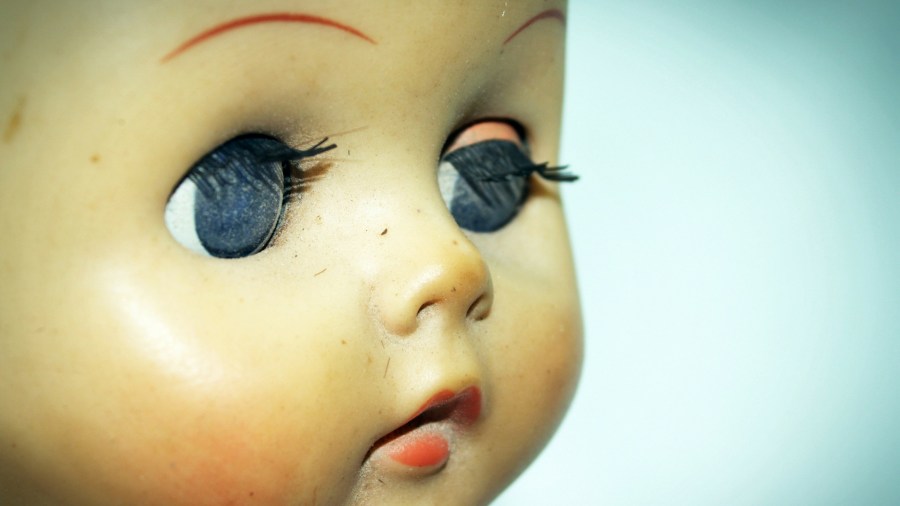
German Company Says Talking Doll is Not “Espionage Device” by Martin Ott

Cayla listens to chatter perhaps a little too well.
She asks questions. Important for the kids to tell
her their toughest regrets. Eyes are not windows
to the soul. They are mirrors for secrets exposed.

No one knew Cayla was a double agent, first
for parents worried about boyfriends and the thirst
for drugs. The nights were long on the cold shelves
and the dolls decided to make up alternative selves.

Some children became dolls. Some dolls became spies.
Some spies became children. Some memories were lies.
The press release was practiced by a boy kissing the lips
of his cordial doll, his paralyzed audience, a syllepsis

from the time she, he, or they could imagine a universe
beyond the swift stares and steps; the microphone whirs
in a world where it is fine to not believe or to know.
The pieces, too, tell the assembly of how to grow.


A longtime resident of Los Angeles, Martin Ott has published eight books of poetry and fiction, most recently LESSONS IN CAMOUFLAGE, C&R Press, 2018. His first two poetry collections won the De Novo and Sandeen Prizes. His work has appeared in more than two hundred magazines and fifteen anthologies.

Desireé Panda and the Lee Van Cleefs by Tracy Lynne Oliver

A murder dinner for beckoning. Let’s have a grave way with phonics. Let’s tangle bright inside one another. Holding forks, holding knives.

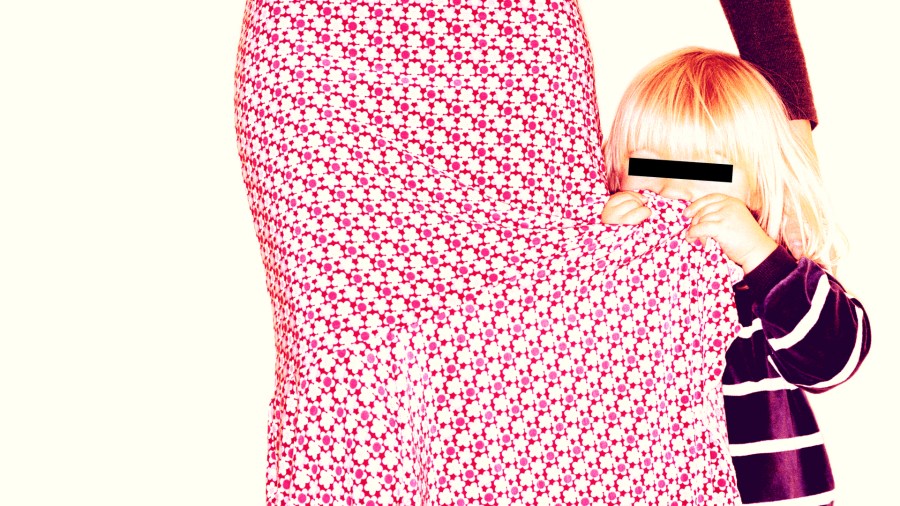
Come out from behind my mother’s skirts. Take a bow between us. We’ll hold hands like she’s not even there. Like how she’s never been there. Be my kind. Be what I have been.

Have you versed before?

Have you come inside someone you wanted to become?

In a special way, you have visited me; an errant balloon, a dusty seascape, a scraped knee with edible scab. I have yearned to taste your footskin, too full on my own. Let’s rub each other’s heads in the dark. Let’s torture a young boy together. You go first, and then I will go first.

In a leftover summer dark where I don’t matter, you will get mud-wet with drown. I will take my feather petticoats into the depths for you. I will scoop you with my arms. I will embrace your travesty, lay you before your mother, kiss your gloated, dead mouth barfing fish.

Let’s all be horrified.


Tracy Lynne Oliver is attempting to make a new name for herself in this writing game. Check out her website: tracylynneoliver.com or just follow her on Twitter @T_L_OLIVER.

Louisiana Necropoem by Laetitia Burns

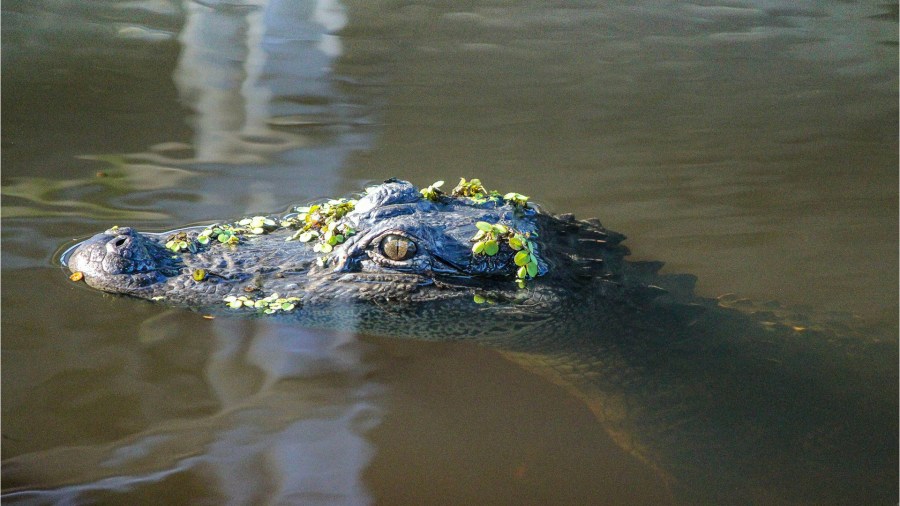
I float dry through the wet grave
a grief boat in the rain my dry eyes
polka dotted with flowers gray green gray
till they reach the bottom of the blackness

a grief boat in the rain my dry eyes
digging the narrow house, water rises
till they reach the bottom of the blackness
I mistake for an alligator by the pond

digging the narrow house, water rises
to tan carpet, mosquito hawk, troglodyte
I mistake for an alligator by the pond
I wonder if she went smoking to hell

on tan carpet, mosquito hawk, troglodyte
polka dotted with flowers green gray green
I wonder if she went smoking to hell
I float dry through the wet grave


Laetitia Burns has been writing poetry since the age of ten. She lives in Los Angeles and is the assistant of a famous Hollywood comedy writer. Her poetry is forthcoming in Tin House.

Webster’s Dictionary defines “communist” as “one who speaks with ghosts” by Brian Dau

From their high places, the hawks stalk
toddlers and leer down at the ghost
of Marcus Aurelius screeching and
bubbling mad purple geometries,
chanted scars etched into young brains:
“I’m cicadas swarming, I’m flame,
I’m a four-and-a-half-hour erection!
I’m a rotted oak filigreed with vine,
I’m asteroid impact, I’m astral projection!”
He’s like this all the time. He pretends it’s falling
into water that shuts his eyes. The hawks
unblinking and him watching them back.
He gnaws a stalk of wheatgrass. He says
“Being dead is as stoic as you can get,”
and the way he says it sounds like a threat.
The raptors chorus and pick
off the smallest and sickly
as the children riot and disperse.
See? Things are never as bad
as they seem. They are worse.


Brian Dau is a writer and editor in Los Angeles. His work has appeared in Three Line Poetry. All income from his poetry contributes to replacing his body with robot parts.

Last Night in Antsville by Sharon Suzuki-Martinez

Overheard: “I crawled my way out of the dirt, and by God, I will crawl my way back into the dirt.”

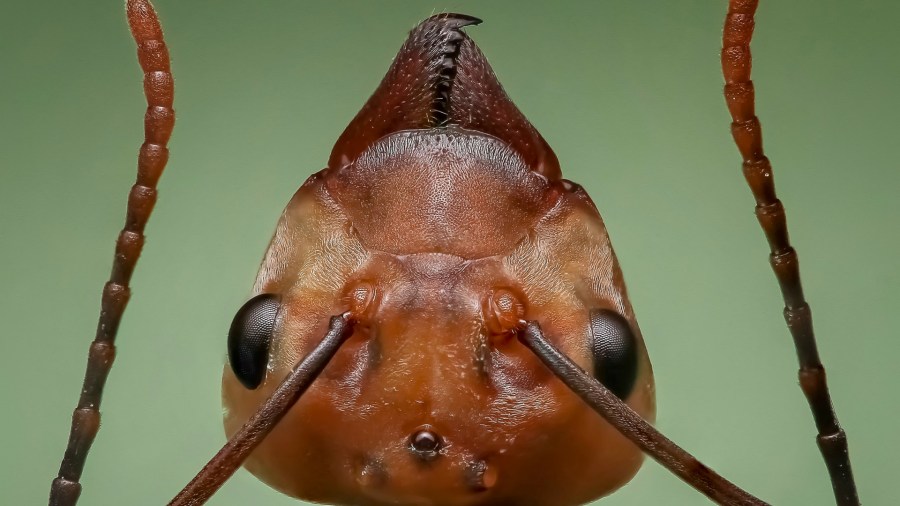
“I never asked to be born,” was my older sister’s favorite response to our mother’s nagging. We were finishing our roadkill chicken dinner when mom brought up college again. Antoinette, my sister, stormed out to piss the evening away at the barrelhouse, as always. Her best friends, Antonia and Antigone, worked at the local venom factory, so that’s where she planned to go after high school—end of story. Sobbing, mom grabbed the dirty dishes with her mandibles and smashed them against the wall. As always, I helped clean up the mess in silence. Nobody knew I was leaving this hole tomorrow for Hollywood. Maybe forever this time.


Sharon Suzuki-Martinez’s first book of poetry, The Way of All Flux, won the New Rivers Press MVP Poetry Prize in 2010. Her work has appeared in Gargoyle, South Dakota Review, Duende, Dusie, Clockhouse, and elsewhere. She created The Poet’s Playlist, a music/poetry blog, but now mostly photographs and writes about little-known animals at sharonsuzukimartinez.tumblr.com/


A Seal Skull Seems To Be a Wolf Skull by Erin Rice

Its boneheadedness its bark
texture – they are both trees
when you get down to it. Upside down
a sculpture with a cliff face to hang
onto for fun. What about the children
who could get lost in the nostril cavern.
A warning should be posted to the mothers:
          the ear, nose, and throat wells
          are the most fun for pups
          and the most diseased.
Repelling down the bridge is a good family
time but climb back up
before you reach the caves or –
If you were a skull,
seal or otherwise,
don’t you think your best rest would be bobbing
postpartum in a walled sea of parts? The sockets,
the departed mandible, the furry stitching
between plates, pairs and pairs
and a funny one here and there.


Erin Rice currently lives in San Antonio with her dog, Dewey. She got her MFA from the University of San Francisco and is now studying immunology.

The Lazarus Questionnaire by Ted Mico

Please list the ways in which our concept of death might be improved upon:

The sin of living, the sin of not dying: which is the greater sin?     

Would peacock cremation be the best way to jump-start the phoenix population?   

Did you meet the dead animals you’d killed in your first life? How’d that go?

To the best of your recollection, what was the average wingspan of a seraph?

Were they beautiful? If yes, did you feel judged by this loveliness?  

Did you hear the Cocteau Twins coming or going?  

Was there forgiveness? Was there?

Did you hear the crows peck open the field above you?

The regret of going, the regret of coming back: which is the keener?

Do you feel you’ve stopped living or stopped dying?

To the nearest decimal point, please count your blessings:

When you examine a Lichtenstein self-portrait, do you see a self?

Do you feel you’re the victim of a father and son magic act?

Do you consider earth your new birth mother?

Describe your feelings toward God the Father and his apprentice son:

How many times a week do you now have sex with your wife?        

Is this more or less than before?           

Define the traits you have in common with a) a seraph, b) a peacock c) a phoenix

Do people see you as coming or going?

Please use the space below to tell us what you want to see the next time:


Ted Mico began his writing career in London as a critic for the weekly music paper Melody Maker. Since then, he has edited three books, written columns for places such as The Guardian and Huffington Post, and had his poetry published in journals such as Caesura. He is now based in Venice, California.