The Signs by Gabe Montesanti

Backtracking is a rigged poker game, and yet, I still play. I bake backtracking on the top rack of the oven and scatter its crumbs through the forest. Like a bait dog, backtracking still growls at its own reflection. Backtracking and I steal every No U-Turn sign in the city of St. Louis, Missouri. Mounted on the wall like a moose head, backtracking stares at me through empty eyes. I bite into the poisonous pit of a backtracking plum because I’ve survived those juices before. Sometimes, backtracking pitches a tent in the wilderness. What’s the difference between me and nostalgia? backtracking wants to know. Mirrors reflect backtracking like a set of circular footprints in the sand, the hump of a question mark. Backtracking is the frozen tundra in the arctic onto which I can’t help but keep my cheek pressed. Like sandpaper, backtracking wants to use mindless repetition to make smooth what was once rough. Backtracking is disiecta membra, limbs of a scattered poet, Latin from Horace’s Satires. At the 7-Eleven soda machine, between the root beer and the cherry cola, backtracking induces nausea. Extraterrestrials don’t buy into backtracking because their aircrafts only move forward. Beam me up, I scream from a barren field of corn. Don’t let me track back into myself what I have collected by running away.

Gabe Montesanti is the author of BRACE FOR IMPACT: A MEMOIR, which chronicles her time skating for Arch Rival Roller Derby. She earned her MFA at Washington University in St. Louis. Her work has been published in Huff Post, LA Times, Lit Hub, and elsewhere. She is currently at work on a second memoir. 

Rules for New Girls by Leslie Pietrzyk

1976

That Bicentennial summer everyone talks about tennis, desperate to be pretty Chrissy Evert, thwacking balls into meteors. We’re tired of being Iowa girls. But tennis rackets cost real money, meaning of us five, only Janelle’s got a racket because she’s got one of everything. Still, no one plays tennis, so Janelle can’t much lord her fancy Head racket over us. Boy, that makes me secretly happy. 

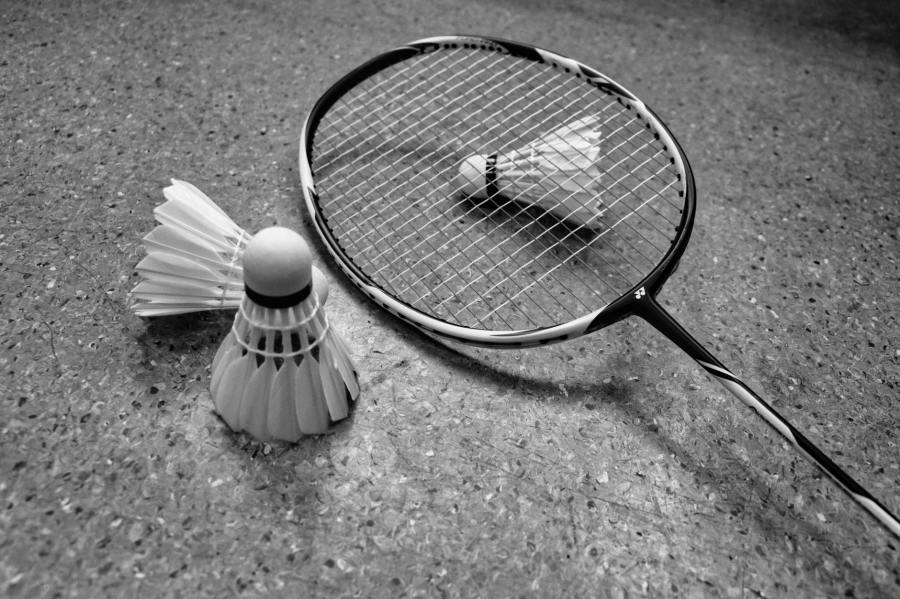
Suzanne and Tracy find a ratty badminton set in their garage, so we agree being Chrissy Evert with badminton rackets counts. One problem solved but there’s another: four rackets, five girls. They had been an easy four until my mom, her boyfriend, and I moved into the neighborhood in March—as Janelle reminds us while we rock-paper-scissors to see who plays and who’s stuck being line judge. It’s Donna, the nicest and fairest. “You’re swapping with Donna first,” Janelle tells me. “That’s the rule for new girls.” 

Suzanne and Tracy’s dad sets up the net: no wobbling. We’re in the front yard because the back’s a hill, only good for sledding. Where I lived before was flat and concrete and no yards and no kids. I didn’t know not to like it. “Ew,” Janelle said.

Playing out front will be exposed, with cars passing, strangers eyeing us swat the birdie like it’s a fly in the kitchen, belly-laughing as we leap and miss, crashing into the scratchy crabgrass. I hate people watching, can’t stand people knowing things about me. “New girl’s got a secret,” Janelle told the others yesterday, smack in front of me.

Suzanne and Tracy team up, leaving me with Janelle. She tugs the top off a dandelion. “Fine,” she says to no one, tossing away the yellow flower. “Fine,” I say right back. The thing is, I might actually be good at badminton. Keefer, our cranky gym teacher, liked me best of the sixth grade girls because I can run forever. “This girl,” Keefer said on the last day of school, handing me the highest presidential fitness certificate with the biggest, goldest seal.

Janelle’s terrible at badminton but criticizes me left and right. I’m in her way, she complains, or she shouts, “Stop your dumb, weird breathing.” I whack my racket hard, making air whistle between the strings. Suzanne’s good, and we whoosh the birdie between us.

Then Janelle pushes in front of me so I can’t swing without hitting her, meaning Suzanne wins the point as the birdie arrows feathers-up into the grass. She and Tracy high-five. “You’re hogging,” Janelle says.

“That doesn’t count.” I don’t know why I say that because I don’t care.

“Ask the line judge,” Janelle says.

“You guys,” Donna says.

Janelle arcs her racket through empty space, and I step back. She might never like me, even if I wait forever. We’re not moving back, and those old friends are gone. “No way,” my mom says. Her creepy boyfriend has his important new job. I hate him.

Right then, a station wagon with wood paneling pulls curb-close, and a woman wearing too-big sunglasses rolls down the window and calls, “Can one of you girls pretty-please help me for a sec?” A checkered scarf covers her hair, is knotted tight at her throat. Like she’s the wolf waiting in Little Red Riding Hood’s grandmother’s bed.

Suzanne and Tracy stare at the grass. Donna’s face reddens. Only Janelle watches me, a strange, hard, unfriendly smile distorting her face. Like a painted clown who’s not funny. Like she wants me to cry. Like she knows what happened in my old neighborhood though I’ve told no one.

I remind myself to breathe, because Stranger Danger is the scary man with handfuls of candy. He’s a troll, an ogre, the witch in the forest. He’s not real. This is a lady like our moms driving a car with a bicentennial license plate from Michigan.

My own mother worries about strange men, about boys demanding to see my underwear, about the priest. “Tell me if anything happens,” she says, “promise.” I promise. But when it did, I didn’t know any words she wanted to hear. Like, what if he’s not a stranger?

Janelle points at me. “Go see what she wants. You’re the new girl.”

“Are you afraid?” I ask.

“Never.” She tosses her racket way high in the sky and starts sauntering toward the car even before the racket crashes to the ground.

It’s not a game. I despise Janelle, but it’s not like I truly want her to disappear. I pick up her racket, curving my fingers into the grip, touching the warm, worn leather where Janelle’s fingers were.

“Wait,” Donna says, not to Janelle but to me.

Suzanne and Tracy poke their fingertips against the taut strings of their rackets, maybe testing them. What if no one likes Janelle? Maybe the rule’s that the new girl says it. Say it, I think. Give them what they want and they’ll like you.

I say, “Let her go. She’s fine.”

We watch Janelle talk to the woman then slide into the front seat of the car. The door slams, and the car drives off. “She didn’t even wave goodbye,” Tracy says.

“How come dumb Iowa doesn’t have special red, white, and blue license plates for the Bicentennial?” Suzanne asks.

“Great question,” Donna says.

So we four wonder about that for a while, and other stuff, until our mothers call us in for dinner, Janelle’s mother’s voice coming hoarse and wretched through the screened window of my bedroom late into the night.

Leslie Pietrzyk’s collection of linked stories set in Washington, D.C., Admit This to No One, was published in 2021 by Unnamed Press. Her first collection of stories, This Angel on My Chest, won the 2015 Drue Heinz Literature Prize. Short fiction and essays have appeared in Ploughshares, Story Magazine, Southern Review, Iowa Review, The Sun, and Cincinnati Review, among others. Her awards include a Pushcart Prize in 2020.

Animal Relief by Rachel Becker

We’re sitting on our first adult couch
to which the cat has already done his worst,
fabric pilling. It’s from Jordan’s.
We spent real money.

From here, the crooked chandelier jangles
on its chain. Mismatched bulbs flicker
like filmstrips, our dinner table,
paint-stained, pocked—again, the cat.

Sometimes I clear plates too soon.
Evil waitress, my husband jokes, fork raised.

So different from how my father ate,
hunched over and full of complaint,
the meat, too dry, and beans, over-boiled.

He left the table, still chewing,
like a child, who had soiled himself.

Rachel Becker’s poetry appears or is forthcoming in journals including North American Review, Post Road, Crab Orchard Review, Poetry South, and RHINO. She is also an assistant poetry editor for Porcupine Literary: A journal by and for teachers. She lives in Boston. 

Now I Turn Myself into Origami by Susan Israel

I make myself into a chrysanthemum so I can fit in this box, the box our vacuum came in; it’s not so big that I don’t have to fold myself first. Knees drawn up, arms wrapped around me, head down. It’s 85 degrees but my teeth are chattering; I’m a fluttering paper flower. I can still hear the heavy footsteps that stomped through the classroom, stopping to reload, stomping again. Pop. Pop. The teacher didn’t even have a chance to ask why he was there. I hear stomping in the breezeway connecting garage to kitchen. I’m in the box and the box is in the closet and I hold my breath; he’s coming in here too! He followed me from school and now he’s coming to get me. I might puke. It’s not safe to come out. “Rachel, are you here?” he calls, then louder, “Rachel!” He knows my name. It’s a trap. My screaming classmates cried, running to the door, to the windows. Pop. Pop. Pop. I can still hear them. My paper hands reach up and cover my paper ears. I was lucky there was a box in the classroom, a box like this. It was turned upside down. And I folded myself into a swan and ducked my paper head under my paper wing, trembling. The popping stopped. “Is anyone alive in here?” I didn’t budge. “It’s safe now.” I didn’t believe them. I didn’t want to see what I knew was outside the box. And then I had to and I saw blood, so much blood, my friends’ blood. I spread my swan wings and flew, I didn’t look at anyone or anything else; I just flew home over the chaos, over the ambulances and police cars and panicked people to my home, to this box and folded myself into a flower, sprouting roots right through the cardboard, through the floor, right through the earth, my heart still pounding. “Rachel?” I can hear his voice breaking. Then, “I was at the school. I couldn’t find her. They don’t know if she’s one of them, they haven’t all been identified yet. So I came home, but she’s not here either. I don’t know where she is.”

Home. I push aside my petals and peek out the closet door. He’s sitting on the couch, my father, his face in his hands, the phone still lit, lying on the floor next to his feet. 

 “Dad?” I can’t fight back my tears any longer; they gush from my eyes. I’m a girl again, not a chrysanthemum and my petals scatter as I stumble into his arms and they fold around me.

Susan Israel’s work has been published in Blink-Ink, Backwards Trajectory, Does It Have Pockets, MacQueen’s Quinterly, JAKE, 50 Word Stories, Bright Flash Literary Review, Flash Boulevard, among others. She lives in Connecticut.

Breaking News: Barbie Eats Trump During Baltimore Pride Fest by Chrissy Stegman

What else was left for her to do? Giant in pink,
her laughter clanging down Charles Street
like bells rung wild to the dystopian melody.

She was a blaze in glorious sequins. Swirls
through the crowd, her skirt sliced the air
like ribbons of rampage, her manicured hands filled
with noise and want. She saw him, glitterless,
small in the gold chair he made for himself.
A throne as yellow as piss. The crowd parted
like the sound of rain. She moved toward him,
her shadow a blossom of organza fire in the setting sun.
She plucked him like feral lint from a coat lapel.
She flicked him, a spinning trinket tossed
to gravity’s obsequious gamble & caught him
mid-fall. Her mouth opened into a cave of cherry
and fuchsia, a holler of lipstick

When he fell, she swallowed him whole.

Love did this: the riot of it. Love
for the smashing, the making,
the breaking. Love
for our country and the streets
lit like a sky of teeth.

Chrissy Stegman is a poet/writer from Baltimore, Maryland. Recent work has appeared in: UCity Review, Rejection Letters, Gone Lawn, Gargoyle Magazine, Anti-Heroin Chic, Stone Circle Review, Fictive Dream, Inkfish, 5 Minutes, Libre, and BULL. She is a 2x BOTN and Pushcart Prize nominee. www.chrissystegman.com.

Two Stories by Lavina Blossom

Slow Leak

She mounts the first step up from the driveway, hand on the rail. She forgot to leave the front light on but her aging eyes can see well enough from the neighbors’ lights. Wait, had she locked the car door? She depresses the button on the device in her hand, hears the faint unsatisfying click, pushes the button again, a louder click this time. She brings the device up to her face, hits lock and the click is faint, so it’s locked already, right?

But does she have her phone? She rummages in her purse. She can’t feel it in there. Returning to her car, she hits the unlock button. Good, she had locked it. She gets into the driver’s seat and looks in the console. 

She stares out the windshield a moment, weary, then dumps her purse on the passenger seat, shakes it. The phone lands on the pile and she tucks it back into her purse, then adds her wallet, comb, pack of tissues, lipstick, gum, nail file, clippers, the tiny notepad, pencil and pen, a sales slip, her small address book. 

She needs to enter numbers into her phone if she can remember how her grandson said to do it. Every number but Rhonda’s, although yes, she will add that too, and call Jeff, ask how his health has been, although she never cared much for Rhonda’s husband. A pity her friend went first. Up to a year ago, she was full of fun.

Damn, she meant to stop at the gas station. Her son had that gadget to measure air in the tire, but no air pump. Probably a slow leak, he said. But doesn’t that mean she needs a new tire? And which tire was it? She’ll call her son tomorrow, or hell, just look at the tires. It ought to be obvious. Or maybe she will call, talk to the kids if they’ll get on the phone. No, too soon. She has just seen them, only about five minutes before they went to their rooms. 

She rocks herself out of the car, straightens her skirt. Now where are her keys? She leans in and bumps her head on the door frame, sucks her teeth, plucks the keys off the dash. Standing straight, she swipes at her hair that has fallen forward, catching the key ring in a curl. She deep breathes and slowly untangles it. She would get her hair cut really short, but her husband likes it longer. Liked it. Still, when she visits him, she does not want to look different, unfamiliar. He still has some recognition. He seems to know her even if he can’t say who she is.

With the car door closed, she starts up the steps. Did she lock the car? She depresses that doodad thing. A faint click, so unsatisfying. She hits the other button, likes that sound better, being clearer and sharper. She depresses the buttons one after the other, louder click, softer click, louder click, softer click. She decides the final louder click locks.

She wishes she was in bed, but now she can’t recall if she took her umbrella when she left the house. Nearly at her front door, she looks up into the sky. No stars.

There’s a light on her phone, but she can’t remember how to turn it on. She must not fall. Better to live here alone than take one of her grandsons’ bedrooms. They would resent her. It simply cannot happen.

She turns around, looks at the car, shakes her head, turns toward the three remaining steps to the stoop, turns toward the car. She starts to walk down, hating to leave the umbrella in there in case she needs it in the morning. She presses a button, but no click. She’s too far away. Does she have a fresh battery? She walks down farther, testing as she goes, pressing the button with her thumb until she hears a click. She stands a while locking, unlocking, locking, unlocking, matching rhythm to the labored pulse in her throat.

We Wear Suits

They are gray and tailored. We look professional. We look expensive. The women have gray purses, the men, gray wallets. Our shoes match, and our hair. Our teeth are white and straight. I wore braces for a year, but no one here knows this.

We never hurry when walking between our cubicles to speak to one another. We enunciate. We are smart and know where jokes are going, so we don’t need to finish telling them. I used to laugh. Then I smiled. More recently, I grimace.

The curtains are kept closed. I opened them once. I learned that beyond is ripe color. I wonder if our eyes are a betrayal. None are gray. 

I look into the other’s faces. I drop a pencil. No one reacts. I drop a stapler. One person nearby flinches, doesn’t look.

Tomorrow, when I deliver a document, I will touch someone’s hand.

Lavina Blossom is a visual artist and writer. She grew up in rural Michigan and now lives in Southern California. She has written articles on the writing process for the Inlandia Institute and was a poetry editor for the Inlandia Institute’s online journal. Her poems have appeared in various publications, including 3Elements Review, The Paris ReviewPoemeleonCommon Ground ReviewGyroscope Review, and Ekphrastic Review.

[When a man and a] by Jason Fraley

When a man and a woman love each other, they can opt (i) for sexual
relations or (ii) to memorialize their feelings in a securities contract.

English makes it difficult to gender a piece of paper.

Even though I babble Latin, the doctor assuages my parents’ fears,
assures them I’m indeed living.

My parents, perhaps biased, repeat that I’m the most beautiful legal
document in the whole world.

After leaving the hospital, they take me to the exchange.

My crib is a plastic sheet tucked into a writing desk drawer.

A bespeckled man with a milky beard gazes from atop a wooden
crate. He predicts that, one day, I will be worth 30 pearls, an entire
bundle of flax, or six counterfeit rubies.

My parents are keen on those three outcomes.

What my parents learn is that securities contracts are not
circumcised. They are sliced into tranches.

Some price my finest details: a stylized T to start a paragraph, an
anachronistic diagram of a human skeleton.

Some speculate that a thumb-smudged page number or struck-
through drafting error will solicit a turquoise shaving or heron
feather at some later date.

Bidders disperse when they must pay more than quail eggshells for
my errata.

My parents are aghast as I’m confettied to the highest bidder.

Think of tranches like trenches.

A trench may be a rut, channel, furrow, or cut depending on when a
shovel breaks or Orion hides his bicep behind cloud cover.

A trench doesn’t become an excavation just because that’s where
the wind hides confetti squares appraised as worthless.

But that is one reason.

Jason Fraley is a native West Virginian who lives, works, and periodically writes in Columbus, OH. Current and prior publications include Salamander Magazine, Barrow Street, Jet Fuel Review, Quarter After Eight, West Trade Review, and Pine Hills Review.

giving all my heart to the dirt sprayed across my hands by Fabiola Cepeda

Sometimes I like to draw on my teeth, but not today. I do not like to draw on my teeth today because yesterday Luis ate dirt. The day before Luis was sprayed across my hands and my shirt; I had to dig a hole in my backyard. I said a prayer for Luis, my friend Luis. Today I put my pillows on the top shelf in my closet, I am giving up sleep for him.

My reasons for anything are always temporary, so it doesn’t matter if Luis killed the rabbit, even when he bit him. I miss my old life, when we would skip over rocks on the river, dip our feet in, get a cold. I miss being frozen in our room, unable to move, forgetting what it felt like to feel normal and healthy, wishing for more than anything to be warm and healthy again.

My feet slipped from under me during class while I fell asleep with my head down. looking out the window, my friend Sarah asked me if I was okay. I do not know how to tell her that I do not have time, I gave time up for Luis.

The rain falls all over the place, and my CD keeps skipping in my ears. Today is All Saints Day, I dressed up as, well it doesn’t matter, now that you can’t see it. My mom made me dress up for All Saints Day, I tried really hard not to celebrate it without you, I know it was your favorite. No one really likes All Saints Day. Mom and Dad’s breath comes from the same bed now, they gasp and are curious; I forget how thin the walls are here. I am going to stop crying all the time, I want to be as alive as one could try to be, even if that means doing the bad things. I want to hear people say, “That’s not like you! Luis would be disappointed,” but I know they are lying.

On the underside of a fog you are so lonely. Alone, with dirt sprayed across your face, wedged between your skin. I don’t want to be shot brushing my teeth with you. Alone in the modesty of our gums, waxed with baking soda. It was easier to avoid a greater sadness than whatever this is, I guess that’s why I did it. Why I buried you in the backyard, sliced up, full of juice.

It is still raining and you have stolen the warmth from this earth. But someday secretly, I will work on bringing you back up. That way we can walk into the theater, hand in hand; see the tiny stage hold up the great fools. Their shadows bouncing behind their eyes. And yes, it is all necessary, to see multiples of you through my backyard window.

The leaves are a yellow and it reminds me of you, and even though the road is closed I go down in. taking in the trees, searching for you. It is hard to find you in the dust that fills the air. I wish I could have looked at you a little longer, Luis. I know I must go but my ears hurt from wind blowing. The new is not important to me anymore, how could all of this keep happening when you are gone. You’ve been far from land for too long, just come back.

I could almost see you floating in class today. I didn’t cry, it was an awkward mask I forced myself to wear. Tall people do not seem to understand, Luis, the destruction of moldering at a wooden altar. At the funeral, others laughed. In your towel my knees killed grass, feet were brown and shone through the crack that ran up the wall. I got thrown to the tub, but I leaked out of my knee and made my escape to your grave. But they twisted me back and lives carried on.

My feet hurt from walking across streets for you. I can’t go go home anymore and sleep. I don’t think you would have this Luis, but I can’t keep squinting my eyes just so I can remember you. It is hard Luis, to eat when I think I see you on the kitchen table. It is even worse when I go to Abuela’s house and see multiples of you swaying in the wind. I go drawing on my teeth and smearing my nose on the couch. I don’t miss you anymore, you were just a lemon, Luis.

Fabiola Cepeda is a Mexican-American Writer from San Antonio, Texas. Her work has been published in Gravel, Cargoes, and The Hunger Journal. She is currently pursuing a degree in creative writing and studio art from Hollins University in Roanoke, VA. You can find her on Instagram @whatfabifound and @fabiolaleyendolibros.

App City by Rachel Myers

welcome to [city]
please observe all traffic laws in [city]
park only in these designated lots
or garages       pay here
or on the app

the machines
will serve you
they are here to help you
we gave them mouths to say

pay for your parking here

observe them in rows     dominoes
echoing each other     activated
by motion   please enter
your license plate     that is not
from this state
you are a robot
try again     try again

it would be better
to download the app     where
you must also prove     you are not
a robot       the robot asking you
can differentiate

you may not
park elsewhere
you may not
park here         unless you pay
at the machine     that speaks
but again
it would be better
to download the app
which is different from the app
for [other city] and [other city]

you must pay       on the app
or at the machines       that say
you can pay   but cannot
recognize you   you
with your movements   your ability
to select     which pictures
have a bicycle in them

Rachel Lauren Myers is a poet from northern Nevada. Her work can be found in Red Ogre Review, South Florida Poetry Journal, Sky Island Journal, and elsewhere. She is an assistant editor at MEMEZINE. She recently relocated to Massachusetts with her pug, Watson, and can’t get over all the lush greenery. Find her on Instagram and Bluesky at @hellostarbuck.

Fireflies by Rina Olsen

Last night I had the dream that my father had had nearly twenty years ago now. But it couldn’t have been the same dream because it wasn’t me on the railroad tracks. It was my daughter.

In this dream I was following her from behind. Far behind. I wanted to hurry. Or at least call out to her. But for some reason I couldn’t.

She was on the track that ran over the river into the woods. The west bank. When she was little I used to bring her out here. We’d take pebbles and rocks home. Pretty ones to decorate the house with. Or she’d pick some leaves and make crayon rubbings of them. My father used to bring me here as a kid often. The last time we were here my daughter was at summer camp and the sky looked like it wanted to rain and he asked me about her college plans. 

She stopped coming with me when she was about fourteen but I still keep those rubbings with me.

In my dream I could see the riverbank through the spaces between the tracks. Pretty spot. Must’ve been my second year of college when we came down here one August. Me and this guy. He took me one night to see the fireflies and while we were sitting on the rusted track he caught one for me so I could hold it before it flew away. Just sat there on my fingertips blinking on and off. They were everywhere that night. Fallen stars among leaf litter. Yellow eyes blinking. I shivered and he put his arm around me and said Cold? and even though I shook my head he pulled me closer and squeezed. So I rested my head on his shoulder and looked up at the outline of his jaw against the sky. He looked down at me and our faces were so close that I could smell the fruity aftertaste of vape and then the taste of peaches was in my mouth hot and damp and then we were on the tracks and then all I knew was soft peach flesh and yellow blinking eyes all around us.

When my father asked how it happened I said nothing. Must’ve thought he could get more out of me than my mother could. But no one got anything out of me. No one ever gets anything out of me if I don’t want them to. All the goddamn time  he was pestering me what are you gonna do what are you gonna do what are you gonna do but I was barely listening because by then I was shut up for good.

In my dream I followed the tracks out over the water. The smell of brine and shit and suntan lotion wafted up. Water brown and stinky as ever. Sailboats dotted it like flecks of white paint on brown canvas. That’s how I knew that guy actually. I used to go sailing all the time before I dropped out. Out with friends in the sun. Tanned arms short white skirts fishing rods. I never told my parents about the drinking. Always drinking back then. Bottles littered the deck and we’d throw them overboard. We threw a lot of things overboard. One time when he was on the boat I drank too much and vomited. Didn’t get to the railing in time and it got all over his feet and my feet but he still held my hair back for me. I can see it in this dream: ribbons of orange trailing after one of the sailboats. Probably his boat. Maybe he’s holding back another woman’s hair now.

In the dream my daughter was already in the forest but I was still over the east bank. Litter flashing in the sand: beer bottles soda cans cigarette packs. High school. Sneaking out at lunch to drink smoke do whatever. The intimacy of a leather steering wheel spinning through my hands at midday. The first burn of Bud Lite on my throat. One time on the sand where the grass springs up nice and tall a classmate put his hand up my skirt and I let him. I never told my father about that. This was around the time he had the dream of me crossing the railroad tracks and him following behind and in the morning he said something like Hey you doing okay? But there’s no way he knew about any of that. I knew when my daughter started smoking but I never said anything. She doesn’t know I know. But I know.

In my dream I spotted my initials on a wood railroad tie where the tracks met the east bank. I’d carved them when I was thirteen or fourteen. The letters used to be a fresh sandy color. In my dream they were as dull and faded as the river. Hungry flowers crawled over the rusted steel. Pickerelweed milkweed marigold. They smelled like my mother’s laundry detergent. As a toddler I would bury myself in the laundry and listen to my mother call my name Where are you where are you answer me and when she was near crying I would pop out and run to hug her. When my daughter was born I always folded the laundry immediately so she couldn’t do the same.

In my dream I was in the woods now. My daughter far ahead. Wait. I wanted to call to her. Wait for me. The fireflies were starting to come out and for some reason I could sense that something terribly wrong was going to happen. Dread grinding against my stomach. Wait for me.

I watched her crouch on the tracks. I wanted to move forward but all I could do was watch from behind which meant I couldn’t see what she was crouching over.

What are you doing?

Wait for me.

Come back!

She stood and straightened. Then: I’m fine Mom. But don’t look. It’s a secret.

Rina Olsen, a rising high school senior from Guam, is the author of Third Moon Passing (Atmosphere Press, June 2023) and The Water Stricken (Atmosphere Press, October 2024). An alumna of the 2024 YoungArts program, Iowa Young Writers’ Studio, and Adroit Journal Summer Mentorship Program, her work has been recognized by the John Locke Institute, Sejong Cultural Society, Carl Sandburg Home, and Guam History Day. Her fiction pieces “Bataya Slums, 1971” in Milk Candy Review and “Skeletons in the Closet” in Okay Donkey were long listed for Wigleaf‘s Top 50 Very Short Fictions in 2024. When she isn’t writing, Rina can be found playing the piano, looking up obscure history, or with her nose in a good book. Find out more at her website: https://rinaolsen.com.