A Universe Waiting to Be Born by Cathy Ulrich

In this universe, time is on a rewind, time is in reverse, and the girl detective gets unkidnapped, gets set back down on the sidewalk beside the gaping Thomas from chemistry class. He is thinking apples like smells hair her, and his smile goes and comes, white-toothed. The girl detective becomes unaware of the long black car turning round the corner, her head dips down and up as she listens to Thomas’s backward talk, as they go backward into the school, as they grow younger imperceptibly, as Thomas’s hand nearly brushes the girl detective’s, as it pulls away.

The sun falls back into its rise, birds migrate north for the summer, the spools unwind and unwind, and the girl detective sits at her bedroom window and thinks alone not am I. Universes and universes and universes are there.

The girl detective walks backward home, her mother plays Billie Holiday backwards, her father returns from a trip he hasn’t yet left for. They uneat their dinner at the long dining table, empty forks becoming full, tipping back down to their plates. There is a silence of unspoken words that surrounds them.

The girl detective heads backward to her birth, she will be unborn, she will be part of the fabric of everything, small and new in this reversing place, she looks out across a sea of universes and a sea of girl detectives going forward and away from her, and she wants to tell them, I know how it ends, I know how it all ends, but she is swallowed up in her beginning and carried with everything into a universe waiting to be born.


Cathy Ulrich always sets her clocks at least 10 minutes ahead, which is kind of the opposite of going backwards in time. Or something. Her work has been published in various journals, including Quarter After Eight, Ecotone, and Flash Frog.

Dear Andrew Cunanan by Dani Putney

When you smashed
Jeff’s head in, the love
of your life’s mouth agape
across the living room,
I was there, a fourth
presence in the apartment,
learning from the greatest
sugar-daddy killer in queer
history. Though I was born

a year before in your Cali
home, my soul astral-
projected to that night
in Minneapolis, a day after
my parents’ anniversary.
Diwata carried the flame
of my spirit to you for a lesson
in balance: fire doused
in the city of water, a Filipino

embroiled in the intimacy
of white death. I fused
with you then to form a whole
person, your half of Luzon,
mine of Cebu—no need
for David, Lee, or Gianni
in our purgatory of gay
mongrelhood, our torso
clad in gilded Oroton.

Some say you were
a psycho, but I only saw you
with my baby eyes: a tempest
unstuck in American empire,
a bundle of entropy
much too premature
for the future we deserve.
In this life we’re but tiyanak,
Drew, lost in trails of blood.


Dani Putney is a queer, non-binary, mixed-race Filipinx, and neurodivergent writer originally from Sacramento, CA. Their poems appear in outlets such as Empty Mirror, Ghost City Review, Glass: A Journal of Poetry, Juke Joint Magazine, and trampset, among others. They received their MFA in Creative Writing from Mississippi University for Women and are presently an English PhD student at Oklahoma State University. While not always (physically) there, they reside in the middle of the Nevada desert. Dani’s debut poetry collection, Salamat sa Intersectionality, is now available from Okay Donkey Press.

Other Husbands by M.L. Krishnan

 We aspired to be like you, with your spouse and lover and child, with the way that you gathered and displayed men as though they were hand-hammered coins that you strung from your wedding girdle—your veshti-clad husband with a voice like the wind at sea and a throat filled with song, and your lover from Bareilly or Ludhiana or some other city from the North with an incomprehensible name, with his mongrel loyalty and film-star looks, and your beautiful child whose joy fell upon you like a meteor outburst, her laughter slopping cosmic debris around your toes sheathed in silver. It didn’t matter who the father of that child was. It didn’t matter that you deserved none of this, the love, the men and their fevered attention, the way that you held yourself so self-effacingly, as if to dare us, as if to say, look what I can do with this cratered skin, with my unplucked eyebrows and unshaved armpits, with my teeth, with this phlegm-colored nighty that hung on me like a military tent, vast and irregular and frowned with creases. As though your good fortune was a life-insurance agent with a steady name like Kannan or Manikandan who pressed his bearded face into your upper thighs, and you took him in with your homemaker dullness, just as you did everything else. You were never like us. We shone too much, we jumped too far, we stood tall and proud in our splendor, in our angles of nose and jaw and leg, in the way that we excelled at everything that we put our minds to: field hockey, polynomials, makeup, the devotional compositions of Saivite saints. Maybe that was our downfall. Your compliance, wielded like a razorblade that slid easily under men, under us, under the viscera of our anxieties, our love, slick and hot and foreboding to the touch.


M.L. Krishnan originally hails from the coastal shores of Tamil Nadu, India. She is a 2019 graduate of the Clarion West Writers’ Workshop, and her work has appeared or is forthcoming in Trampset, Paper Darts, Quarterly West, Sonora Review, and elsewhere. You can find her on Twitter @emelkrishnan.

Ode to My Sleep Mask by Michael Mark

satin slip

of void

masqueraders’ façade
villain’s guise

classic
                                                                                    hole
                                            black

stack of bills
and ceiling crack
concealer

even

the cat’s gaze

i fantasize inside
you noon to                                                                                     new moon

                                                        locked in
clockless flight

my eye
nighty my
cloaked orbuculum

tapered abyss

over my nose

bump
and slope


Michael Mark’s poetry has appeared or is forthcoming in Alaska Quarterly Review, The Arkansas International, Copper Nickel, Michigan Quarterly Review, Pleiades, Ploughshares, Salamander, Salt Hill, The Southern Review, The Sun, Waxwing, and The Poetry Foundation’s American Life in Poetry. He’s the author of two books of stories, Toba and At the Hands of a Thief (Atheneum). His website is at michaeljmark.com.

The Painted Moth by Jennifer Fliss

My boyfriend Mark and I were painting the walls of our shitty little rental. The landlord gave us permission, though he refused to replace, or even spot-clean the haggard carpet – dotted with who knows what from who knows when.

We taped up the door frame and windows and the perfect place where the walls meet the ceilings. Blue tape like bodily outlines saying a death had been there.

“You idiot. You did it wrong. Let me,” Mark said, as he used his body like an insult and pushed me out of the way. As he grabbed the tape roll, he left a patch of scratches on my wrist, like a special plaid. He was not a man who bit his nails and he rarely trimmed them, preferring to go for monthly manicures. He liked them in points. His daggers often left marks, and I often ran my own fingers over the cuts and felt the burn again and again.

In the quiet of a cricket night, the screen door open, I stood on a ladder painting the upper reaches of the bedroom. Mark crouched at the floor, working near the baseboards. I closed one eye for precision. Ran the brush in a smooth line, impressed with my even lines.

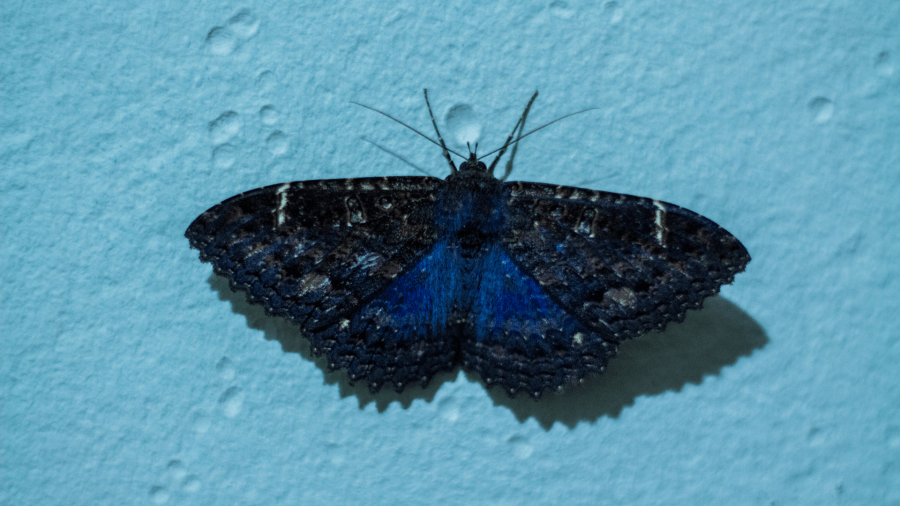
About two inches from the ceiling, I discovered a moth on the wall. It was the size of a half dollar, beige, as moths are, mottled like it was diseased. I saw its whisper thin wings flutter. Well, it was really more of a tremor, so faint was the movement. But as I got near, the moth stilled its subtle beating. I blew at it and thought about flicking it with my finger, but imagined it immediately turning to dust and crumbling, and I don’t know where I got that idea. I decided to leave it, but when I bent to dip the brush in more paint, it had moved. Spectral. The ghost had departed.

I painted a few more lines, and dipped again and continued to search the walls for the creature. It only took a moment to realize that the moth had moved a couple feet back and I had accidentally painted it over. It’s wings, thorax, even the fine antennae, now a relief, but not quite a work of art. I dropped the brush. Horrified. I stared at the winged creature, wondering what to do. I tapped its body with a fingernail, came away with a smear of blue. The moth only twitched its antennae and then stopped moving altogether. It stayed on the wall, a tempest blue fresco of a moth; it could’ve been a butterfly for all the paint.

The color we had chosen was Hawaiian Blue. It’s like we’ll always be on a honeymoon, Mark had said. I’d never been to Hawaii, so I wouldn’t know. And we never talked about a honeymoon since, or the pomp and circumstances that would lead to such a trip. The color was closer to the tears painted by children. We adults know that tears are clear and they dry white and phantom-like on our skin. They aren’t blue at all.

Up on the ladder, I felt a sudden surge and dropped my paintbrush. “Gotcha”! Mark growled as he grabbed my waist. I slipped down the rungs of the ladder and my head whacked the corner of the counter. I saw speckles. They looked like the wings of a moth. Of my moth. Of a moth shaking off its paint, its bindings.

“Ha,” Mark said, and went back to his corner to continue his important work.

Mark painted as I nursed my head with a bag of frozen corn. Mark called me lazy a few times with a smile. But he never noticed the moth as he went over to fix my mistakes.

We stayed in the house for four years. I’d made up many stories for the stains on the carpets. Stew. Coffee. Love. Miscarriage. Death. And nearly every night, under the great heft and misguided love of my boyfriend – who was still my boyfriend and not my husband, or even fiancé despite his move-in promises – I watched and waited for a sign from the moth. Whacha looking at? Mark would say before he came. Whacha looking at? as he rolled over and turned out the light. He never waited for the answer. I know because his snores quickly replaced his oh gods.

The moth, I understood was dead the minute I coated its not diseased but beautiful wings.


Jennifer Fliss is a Seattle-based writer whose writing has appeared in PANK, The Rumpus, The Washington Post, F(r)iction, and in the 2019 Best Small Fictions anthology. She is also the 2018/2019 Pen Parentis Fellow and a 2019 recipient of a Grant for Artist Project award from Artist’s Trust. Her debut short story collection, THE PREDATORY ANIMAL BALL, is forthcoming from Okay Donkey Press in November 2021. She can be found on Twitter at @writesforlife or on her website at www.jenniferflisscreative.com.

Kuchisabishii by Kathleen Hellen

pre-wired for the bliss that maximizes

pleasure
I motive toward the impulse
motive toward taboo—o,

little lonely mouth
opening and
closing

the self self
administering

M&M’s, double-chocolate chip
I oven nothing but
the comfort of

the silver fridge
that Jabbas like a hut
the Ben & Jerry’s—o,

little lonely mouth
transmitting

from febrile tongue
to hips
expanding

a theory of the
sex
without the sex

I feast
on the enormity of self


Kathleen Hellen’s honors include prizes from the H.O.W. Journal and Washington Square Review, and her prize-winning collection Umberto’s Night, published by Washington Writers’ Publishing House. Hellen’s poems have appeared in Barrow Street, Cimarron Review, Colorado Review, jubilat, The Massachusetts Review, New Letters, North American Review, and West Branch, among others. Her credits also include two chapbooks, The Girl Who Loved Mothra and Pentimento. Hellen’s latest full-length poetry collection is The Only Country Was the Color of My Skin.

Undertow by Matthew Mastricova

Jeff wants to grows long enough to reach the moon. He’s been doing those stretches, where you grab on the gnarliest limb of a tree and let your body stretch down. Jeff says the neanderthals used to do it. He says one day he’s gonna get big enough to crush the moon between his palms. Serves it right for sitting up so close in the sky, causing tides and shit. His arms have grown like an inch or two. Or maybe he dropped his body so hard he unraveled something. I missed the first two snaps and have to settle for gawking at the rough fractal guts of his uncle’s maple tree. It was like looking at the inside of my own skeleton. I wanted to hurl. The last time I wanted to get sick so bad was when Jeff’s older brother pushed me off their back porch and I landed on my arm wrong and clean broke it. He was that kind of motherfucker.

The third time Jeff’s fat ass breaks a branch, I’m videotaping him to find the moments where gravity drags Jeff’s arms down beyond their limit. No one believes in Jeff but me. They don’t know how much spite is in that guy’s teeth. Venom can take you a long way if you let it, so even though Jeff’s hands are splintered to hell after the branch breaks, he doesn’t even wince. He’s been through worse. At his brother’s funeral, Jeff showed me the scar from where his brother sliced his stomach for hogging the xbox. He pulled me into the bathroom and said “Jody I gotta show you something” and he let me trace the shape of it and I swear to god I could feel it breathing.

Jeff gives me his hands and I get to work removing the slivers of pulp. I want to stick his whole fist in my mouth, suck out the poison that’s keeping him going, but I focus on the damage I could see. By the time I return Jeff his hand it’s swollen like a corpse. Another shot at vengeance the wild stole from him. Even with the dead hand he still plans on trying. He asks me if I’d come over next time and watch just in case something happens and the other hand goes, too. If I’d tie his hands to the trees, then. I say yes, of course I’d do that Jeff, but it’s only because I believe he’d figure a way to do it some other way. Jeff, one day he’ll crumble the moon between his fingers and banish the ocean tides, and then he’ll have nothing left to break but himself.


Matthew Mastricova is the fiction editor for Third Point Press. Their work has appeared in Catapult, Joyland, Redivider, The Threepenny Review, and elsewhere.

At night I imagine the coyotes by Gion Davis

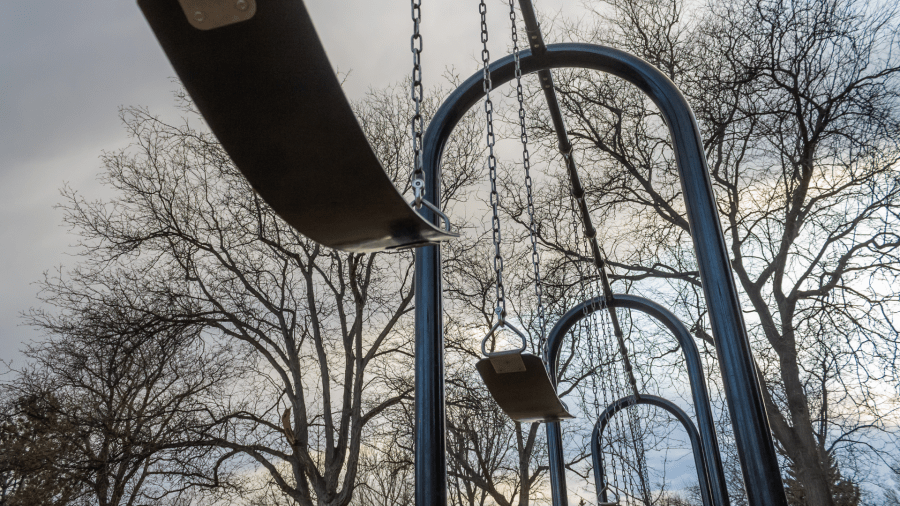
Laughing together
On the swing sets
At the empty school up the road
The city is finally theirs
I’d laugh too if it was me
Who was I?
My star chart says I was born
To be an employee
When I always felt I should be
A planet myself
Trudging through the universe
As a gigantic lonely eyeball
Leave it to heaven
To tell me how I should
Exist on the ladder
As though it wouldn’t be more
Cost effective for me to drop dead
Abandoning the pizzas I’d pick up
With all the boyfriends I’d have
The tattoos and birthdays
And paying for water
What is it like
To be an unstructured animal
As innocent as Jupiter
And twice as beautiful


Gion Davis is a queer poet from Española, New Mexico where they grew up on a sheep ranch. Their poetry has been featured in Wax Nine Journal, SELFFUCK, Tilted House, and others. They have received the Best New Poets of 2018 Prize selected by Ocean Vuong. They are the editor of Rhinestone Magazine and their chapbook Love & Fear & Glamour was published in 2019. They graduated with their MFA in Poetry from the University of Massachusetts, Amherst in 2019 and currently live in Denver, Colorado. Gion can be found on Twitter @gheeontoast and on Instagram @starkstateofmind.

The Curtains We Bought by Sheila Mulrooney

We ordered curtains from a second-hand furniture shop. They said shipping took nine weeks, but we agreed that two months of naked windows was better than funding Bezos. I remember how we murmured this to each other as we fell asleep, like a lullaby. You in your boxers, me in my t-shirt, both thick with sweat. I didn’t tell you, but I was scared those nights, unable to sleep with the glare of streetlamps on our drywall. I felt like the whole city could see us. They were watching, laughing at our poverty and love.

~

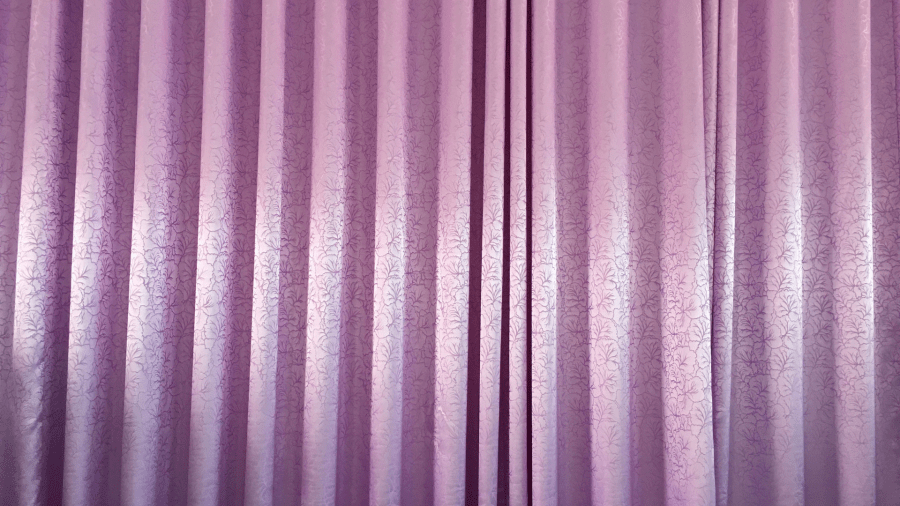
They came wrapped tightly in plastic and crinkled with static. The white polyester was blotched with purple lavender, a synthetic pattern repeating itself like cars on the highway. You shook them out and immediately the room smelled of something processed and unclean. I wished we could afford nice things, like linen curtains or cotton bedsheets. You took four quarters from our Mexico Vacation Jar and left for the laundromat. I saw the static shock you as you turned the doorknob.

~

You picked them up after dinner, along with two six-packs. We were slightly drunk when you plastered them against the glass and said look, we can finally do it with the lights on. This reminded me that I wanted to string Christmas lights around the rod, then drape the curtains over them, creating a gauzy purple glow. Kinky, you said. So we fished out a string of lights, untangled them, then looped them around the curtain rod, singing Deck the Halls and spilling beer on our jeans. What I wanted to say was we are so happy, we should die so we don’t have to be scared and unhappy tomorrow. But I didn’t because I knew doing so would bring tomorrow anyway.

~

The next morning we tried putting up the curtains hungover. I think you were ashamed of our silliness the night before. You clipped your movements so they were angular and sharp. The stitching is already coming apart, you said as if the low quality disgusted you. Again I wished we were rich and spent our Sunday afternoons shopping instead of bartending and writing blogs for start-ups. You would choose beautiful curtains and we could be happy in this life that we share.

~

The curtains did not fit over the Christmas lights. We tried for forty-five minutes before stripping them from the iron rod and letting them fall into tangles.

~

We abandoned the apartment for the afternoon, the curtains a pile of soft purple on the floor. We went to Tops, bought heaps of ramen, eggs, and vegetables, planning an enormous stir fry to fight the hangover. You needed shampoo and I remembered toothpaste. By the time we checked out, the bill was $77.93, almost $30 overbudget. We walked home deflated, knowing we spent too much but could not take it back.

~

It is sunset, dinnertime, when the curtains are finally up. In the flutters of evening wind, they seem both mysterious and adolescent. Like a symbol in a coming-of-age movie, where a female protagonist will lose what her parents call her virginity to the wrong boy. This will be the greatest hardship of her affluent life, the only plot point bourgeoise screenwriters can produce. I imagine the actress as wispy with thick eyebrows, and I resent her and her fictional ilk. I stand there hating her, wanting to be her, until you yell food’s ready, come and get it. Then I shut the window and return to you.


Sheila Mulrooney has an MA in English Literature from the University of Toronto. Her work has appeared in a number of journals including White Wall Review (forthcoming), The Wayfarer, Rejection Letters, and others. She is at work on her first novel.

Shadows by Ruth Lehrer

It’s a good thing to know who your enemies are
That’s what they say when they start worming
into all the holes of your life
tracking your diet your loves your mindset
analyzing meaning in your patterns of poop
what the wrong type of tea can do to your tooth enamel
scribing all your failures
in a chart on a spreadsheet in an app
dictating a memo to all your exes and past librarians
checking all the books you have left on your shelf
for more than six months without cracking
and taking away a donut and six Oreos
for each rhyme you left unfinished

You try to keep your nail biting a secret
but it’s typed in Helvetica on the bathroom wall
in red paint against the tiles blue.


Ruth Lehrer is a writer and sign language interpreter living in western Massachusetts. She is the author of the novel Being Fishkill, the poetry chapbook Tiger Laughs When You Push, and many other poems. You can find her website at ruthlehrer.com.