The Roadrunner by Brianne M. Kohl

Holly lays in bed, one leg bent over the edge, the other bare foot resting on the cool creased pillow. Pink toes. Avon Pink Minx. She idles the morning away, watching cartoons and smoking cigarette after cigarette. Charlie would not approve but Charlie is not here.

Holly throws an arm behind her head and stares at the television. Sly coyote – he’s painting a road on a desert floor that leads to a stone wall. He adds trees and a guard rail. Leaves no detail undone. He waits behind a dusty boulder for the Roadrunner to hit the wall. But the Roadrunner has a secret: she can turn paint into pavement, pavement into horizon, horizon into escape.

Holly pulls smoke into her lungs. Charlie is a doctor – a radiologist but still. He likes to tell Holly all the horrible things cigarettes can do to the human body. But Holly has decided: she will not die from cancer. Not any sickness, actually. Not fire, not gunshot – KAPOW! Not from Charlie’s fists that fall like anvils from the sky.

Her death will only be activated when (A) she lifts a soup spoon to her mouth, (B) pulling a string that (C) jerks a ladle which (D) chucks a bag of blue marbles at a bucket, tipping it and (E) spilling bird seed onto the table. The extra weight in the pail (F) pulls a cord which (G) opens and ignites a Zippo (H) setting off a rocket which (I) causes a sickle to cut the string (J) releasing a pendulum attached to (K) a blade that swings back and forth, across her throat.

The bird seed though? For the Roadrunner – who, let’s be honest, needs the calories.

A slip of greenish paper blows past her window, flush against the glass for a moment before catching the wind. And her funeral? Will Charlie come? Does a restraining order last after death? Will he send a bouquet of Daisies and a card that says, I’m sorry, sorry, so sorry, I love you, please? Baby, please. I’ll do anything.

Within moments of that first sheet of paper, a flurry of pamphlets rains down outside like ticker tape in a war parade.

Holly stamps out her cigarette and jogs to the front door of her apartment. The world outside is silent but for the shuttering of paper as it hits roof tops and slides down. She looks up but cannot see sky. Hundreds of thousands of sickly yellow-green papers fall.

Reaching out her door, she grabs one.

WE WERE HAPPY.

She opens the tri-folded pamphlet to find a watermark of an atomic bomb in the background. It is crudely drawn like a child’s rendering, ACME written on the side.

Come home.

You have nine days.

Holly steps out into the storm of paper, letting them slap past her face. People stand on porches and beneath awnings, pointing up.

“What the hell is this?” her next-door neighbor asks. Holly doesn’t know the woman’s name. She only knows the woman has a small, annoying terrier named Lemon Drop who barks constantly. The woman pushes against a drift of paper to open her door.

“I don’t know,” Holly says and hands the woman a flier. Lemon Drop bolts out into the lawn, yipping and chasing paper.

“This is some Heaven’s Gate bull shit,” the woman says. “Nine days. What’s in nine days?”

Air sirens go off and the two women stand together for several minutes, unsure what to say.

“You had problems recently,” the woman says. “Police were at your place a couple times. That guy wouldn’t leave you alone.”

Holly looks over in surprise. The papers taper off slowly until the last few fall and blue-skies return.

“I’m not sayin’ he’s doin’ this,” her neighbor says when Holly doesn’t respond. “But someone is. Probably the government. Russia, maybe. They gave us that virus through the chem-trails, you know.”

“Do you hear airplanes?” Holly looks up. Fliers pile up like snow drifts, clinging to trees and shrubbery, papering the entire neighborhood in sickening yellow-green.

“I didn’t hear nothing,” the woman says, grabbing Lemon Drop and slinking back into her apartment.

The woman reminds Holly of her mother. Chem-trails, Pizza-gate, there isn’t any awful thing her mother isn’t eager to believe.

Never about Charlie, though.

Back in her apartment, Holly checks her phone. The pamphlets fell not just on her neighborhood but the whole town. On the whole state. Reports come in quickly. Every state. Everywhere. Every country. Nine days, the pamphlets say, in every language. We were happy and now we are not.

Her wedding anniversary is in nine days. Holly sinks to the beige carpet. It smells like old, musty dog. She’s scrubbed it a dozen times and it doesn’t matter; she could scrub it a dozen more. The apartment walls are beige, neutral like sand. She was going to paint them but what’s the point?

Stupid Coyote – he’ll blanket the world in paper just to see her run. He’ll strap a rocket to his back and light his own tail on fire. He’ll paint a tunnel on a stone wall but she’s already on the other side of it. His schemes fail because it’s the Roadrunner who bends the laws of physics not the Coyote. She who can turn paint into pavement, pavement into horizon, horizon into escape.


Brianne M. Kohl’s work has been featured in various publications including Catapult, The Masters Review, and Jellyfish Review. She won first place in the 2018 Wigleaf Short Fiction Contest and second place in the 2020 Atticus Review CNF Flash Contest. She has work forthcoming from River Teeth.

Pigeons Are Having… by Sarah Sarai

Unprotected sex
on top of my
air conditioner,
upsetting most
of my flock who know
I run a moral
air conditioner
at top speed.

There’s no talking to
a pigeon.
Only arm-flappage
in a stiff wind.

I live by example which
I set.

Not in concrete with
a palm I set
nor in jello
though I swoon
at shimmerings.
Vulnerability.

Of women.

I ask pigeons
protect themselves from
the consequential and inconsequential.

I ask women.


Sarah Sarai is an independent editor in New York. Her poems are in Sinister Wisdom, The Southampton Review, DMQ Review, Hobo Camp Review, Barrow Street, Zocalo Public Square, and many others. That Strapless Bra in Heaven, her third poetry collection, was published by Kelsay Books in 2019. She grew up in L.A. and still checks stats for the Dodgers.

No Running by Taylor Clarke

No one could tell him what to do, not anymore, so he went to the pool. The end of the world had happened overnight, and so everyone else remained tucked in their beds. The front desk staff slumped over their computers. Colin had the run of the place.

The resort pool was small, which was disappointing. It was designed for adults to sit around, a uniform four feet deep—which he could stand in, on his tiptoes —and without the fancy accessories one might expect from a resort: no slide, no diving board, no water features or zero entry. Colin had been to a pool with all of the above once, at Disney World. His parents had been upset because he enjoyed the pool more than waiting in line for hours to ride a lazy boat past some old robots from the Pirates of the Caribbean, and with only one pirate from the movie. He would have preferred to stay in that pool forever.

This pool was a subpar substitute, but it could have been worse. The pool could have been inside, humid and without a view of the sky. There could have been no pool at all.

So he decided to be grateful and strapped his goggles to his head. They were polarized, a word he’d learned from the packaging, dark lenses that made him feel like a spy, hiding the blistering sun behind sparkling blue. Through them, the water was a lurid cerulean. He kept his rash guard on, not because his mother had told him to, which she had, but because he was fat, and even now, with no one to see, no one at all, the existence of other people a total impossibility, he worried about his tummy extending over his board shorts, which he preferred to knot securely under the protrusion of his gut.

He jumped. Colin heard the splash and knew it was a big one, but there were no onlookers to confirm that his cannonball was a 10 out of 10. When he surfaced, the sun had already begun baking away the water he’d displaced. He floated on his back.

He flipped onto his stomach. He doggy-paddled back to the wall, a true doggy-paddle, pretending he was one of the fancy yippy dogs at the resort, some still closed in rooms, barking when he walked past to go to the pool. He sank beneath the surface, braced both feet on the wall, and was disappointed to find that the momentum of a single push was enough to get him to the other side, surfacing easily just before the opposite wall.

He decided on a tea party, with the goal not of a perfect mimicked tea party, beverages poured for friends, but of the longest tea party. Tea brought to his lips, pinky raised, for the longest time anyone had ever held an underwater tea party. He breathed deeply, the way his mother told him to do when he was upset, one hand on his tummy, trying to fill every inch of his insides. When he felt full, he gulped his last bit of air, filling the space at the very top of his lungs and throat, and sunk beneath the surface.

Sitting on the floor of the pool was easy. He always sank quickly—his swim instructors at the community pool back home had said, like a stone. He sat cross-legged on the concrete, bubbles escaping his nose even as he tried to hold his air in, and counted. Seven Mississippi, eight Mississippi, nine Mississippi. He poured himself tea. He didn’t pour any for imaginary friends. He knew they were all gone. He was eight, and no longer an idiot. He didn’t wonder what would come next, what would happen to the bodies in the hotel, or after he’d eaten all the food in the room’s mini fridge. He didn’t think about how he would feel when the dog down the hall from his parents’ room grew quiet. Twenty-six Mississippi, twenty-seven Mississippi. Counting left room for nothing else.

He sipped tea. The pressure in Colin’s chest was building, and he was in pain, but the record for the world’s longest underwater tea party couldn’t be less than forty-five seconds. He himself had hosted a thirty-five seconder, before.

At forty-nine seconds, he pushed off the concrete with his hands. The second or two before he reached the surface were awful, end of the world awful. He thought he wouldn’t make it; the pressure in his head would explode and he would simply be floating boy-pulp, like when someone vomits in the pool and the lifeguard has to fish out the offensive mass with a skimmer. He would be the offensive mass. Except there would be no one to use the skimmer. He would just float on the surface, forever, his brain food for gulls, if there were still gulls.

But Colin emerged, and he inhaled. The pool deck was empty. He wanted to knock the silence out of his ears like water. In the brief rise from pool floor to surface, he had imagined that his mother might suddenly appear on a lounger, a stopwatch counting up on her phone. She would have collected all the trapped dogs, and she would congratulate him on the longest tea party held by anyone left alive. She would be clapping.


Taylor Clarke is an MFA candidate in Fiction at Brooklyn College. Her fiction has appeared in Grimoire and The Nottingham Review. She is currently at work on a story collection about the end of the world.

Duck Fat by Audrey Gidman

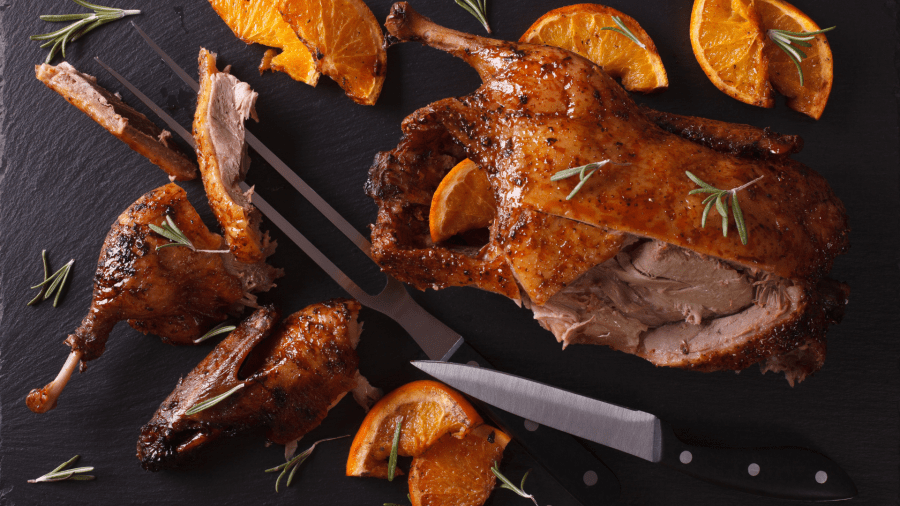
A duck makes a good gift. A dead
duck. Neck full of bones. Tender,

she says. C’est très bien. The best
part.
Her tongue slips,

even now, after so long. I ask
her if she misses France.

She hands me a duck & says
nothing. Later, in the kitchen,

I pull the wings apart at the joint,
peeling & smearing fat

& puckered skin, loosening
until they unhinge.

I slip my finger somewhere
between the sternum

& the inside of the ribs,
push through the dark hollow

of carcass & twist
the spine until it pops

at the vertebrae, body
in two. I pile

the pieces in a pot to simmer,
imagining my mother’s

hands as I work. Slender & olive-
skinned. I know she worries

I do not have enough
so she taught herself to kill. I coil

the neck around the breast,
trying to make it fit. It bends

in a way mine could. My mother
says we do what we have to do.

The word mother gets stuck
in her throat like a bone.


Audrey Gidman is a queer poet living in Maine. Her poems can be found or are forthcoming in SWWIM, Wax Nine, The Inflectionist Review, The Shore, Luna Luna, Rogue Agent, The West Review, and elsewhere. Her chapbook, body psalms, winner of the Elyse Wolf Prize, is forthcoming from Slate Roof Press. Twitter // @audreygidman.

Beauty is Only… by Jessica June Rowe

Or, How to Get Over Your Shitty Ex: A 10 Step Skincare Routine.

Step 1: Cleanser. You’ve got to start with a clean slate. Apply to damp skin in slow, circular motions. This is your chance to wipe away the past. Wipe until the long-lasting makeup you applied this morning lasts no more. It all breaks down: dark circles around your eyes, a red smear around your lips. Rinse. Watch the colors bleed from your face to your fingers to the sink.

Step 2: Exfoliator. You missed a spot. Scour your skin with a sugar-based scrub. Like your ex, who called you sweet and said you liked it rough. Exfoliate every molecule, spare no tender place. Rub your eye sockets, bruise your jawline, wring your hands around your throat until your muscles give way. Rinse.

Step 3: Toner. Restore the acid in your skin. You’re getting older, losing your edge. You wanted to leave him for ages, but you didn’t until it was him leaving you. But you don’t miss him. You shouldn’t miss him. Balance yourself every night with an alcohol-based toner. Feel the light burn of chemical stability, feel your tolerance build, feel better about your choices.

Step 4: Essence. What exactly is an essence? It doesn’t matter. Your skin is as dull as single life. Slap a hydrating essence onto your skin. When fully absorbed, slap on some more. You always need more hydration. Didn’t work? Are you drinking enough water? Are your showers too hot? Too long? Stop crying in those showers. Stop letting the tears and steam drain your sinuses, letting the water run until your skin shrivels. You’re always falling short. Drink more, cry less, slap more until your skin is drowning. Think it’s enough? It’s not enough.

Step 5: Roller. Take your routine to the next level with a jade roller. Start at the center of your face and roll outwards until you reach your hairline. Use the roller’s edge to work under the top layers of your skin and peel them off in a single motion. Set your face-skin somewhere flat to dry. No wrinkles here.

Pro-tip: Use the roller on your exposed superficial fascia. Fascia massage is all the rage, after all, and you know how to deal with rage. Be sure to wash your roller with warm water and gentle soap afterward; leftover blood can lead to bacteria build-up. You know how to deal with blood.

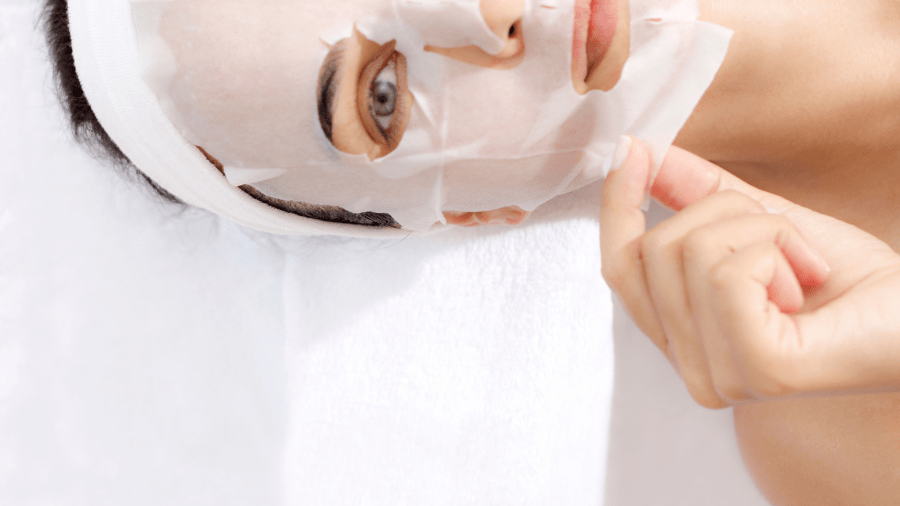
Step 6: Sheet Mask. Without your skin, you’re so sensitive. A sheet mask is soothing, revitalizing, reinventing. For 15-20 minutes, you can pretend that you’re someone else entirely, that you’re applying their skin. You pretend you’re the girl your ex is now dating. You watch the makeup tutorials she cross-posts on Instagram, YouTube, TikTok. You analyze every new video, searching for bruises lurking under all those layers of foundation. All you find is flawless skin. You wonder if your ex is the one taking all her staged poolside photos. You hate her. You envy her skill with liquid eyeliner. You love her skincare tips, her gentle voice, her #glow.

Step 7: Serum. God, you’re pathetic. Didn’t we go through this already? You need a serum, a punch of perfection. Active ingredients will actively eradicate your shame, your spite, your ugliness, your inability to let go. Use a high concentration, enough to erase any skin-memory that makes you you. No one wants that. For the best results, tear away the fascia, the subcutaneous fat, the retaining ligaments. Make it all the way down to your thick skull. Smear the serum across your cranial bones; let it soak into your marrow. If you experience soreness, irritation, instability, despair—ignore it. Dig deeper with a pair of metal tweezers. Chip away at your forehead; twist the sharpened points until you trepane your way to your frontal lobe.

Step 8: Spot Treatment. Through your skull-hole, it’s so much easier to see those hard-to-reach spots. Tweeze away the tricky blood vessels, the wrinkles in your brain, the scar tissue that keeps forming from overthinking, not thinking, stupid thinking. Trauma isn’t cute. You don’t want him back. You don’t. You do. You don’t. Apply a strong spot cream to the places, spaces, memories, emotions you want stripped away; apply at night so you can let it penetrate your imperfections all night long.

Step 9: Moisturizer. Doesn’t that feel better? Time for more hydration. A moisturizer will create a nourishing barrier to prevent all your efforts from going in vain—and it’s a great adhesive. Slather generously to both sides of your skull-bones and face-skin and press gently to re-adhere.

Pro tip: Follow up with a facial oil for true resilience. Feel your pores, your sweat glands, your nerves seal shut. Trap in everything from before. Your face should be as smooth as a mirror: reflecting everything, absorbing nothing. You are bright, immaculate, beautiful. The pain you felt, you feel, is nothing.

Step 10: Rinse, Repeat. This is the rest of your life. You will care for your skin until it dies, and you with it. Probably alone, but who knows. New skin, new you, maybe even new love. You deserve love, even when you don’t. You do. You don’t. You do. If you ever forget, just add more steps. You always need more hydration. Try creams, peels, correctors, removers. Mask your face, your hands, your feet, your hurt. Remember: you can’t break out if you never break.


Jessica June Rowe is an author, playwright, editor, and perpetual daydreamer. She is on the Editorial Board of Exposition Review and has served as both the Editor-in-Chief and Fiction Editor. A Best of the Net nominee, her fiction has appeared or is forthcoming in Gigantic Sequins, Atlas and Alice, Pidgeonholes, Timber Journal, and Noble/Gas Qtrly, while her short plays have been featured on multiple stages in Los Angeles. One of her poems is stamped into a sidewalk in Valencia, CA, where she currently lives. She also really loves chai lattes. Find her on Twitter @willwrite4chai.

Literary Realism by Ayokunle Falomo

And then there was you who traded a kingdom he could
            not hold for a kingdom he could not hold. Inside

your left ventricle, a small village. Inside your right, a court.
            Inside the court, a court jester plays judge—his gavel

a turkey leg. Inside its marrow, a two-throated beast
            who’s made a castle for himself. Inside your hunger,
another hunger. Inside that, another. And so it goes.

            Inside the hole where your tongue once was, a cage.
            Inside the cage, a parrot that only knows to repeat
every word you’ve ever thought but never said. On the south

            side of your personal heaven, God sits on his card-
board throne & holds an avocado pit. As if it were the world.


Ayokunle Falomo is Nigerian, American, and the author of African, American (New Delta Review, 2019) and two self-published collections. A recipient of fellowships from Vermont Studio Center and MacDowell, his work has been anthologized and published in print and online, including Houston Public Media, The New York Times, Michigan Quarterly Review, The Texas Review, New England Review, Write About Now, among others. He holds a Bachelors of Science degree in Psychology from University of Houston, a Specialist in School Psychology degree from Sam Houston State University, and is currently a Zell Postgraduate Fellow at the University of Michigan’s Helen Zell Writers’ Program, where he obtained his MFA in Creative Writing—Poetry.

A Universe Waiting to Be Born by Cathy Ulrich

In this universe, time is on a rewind, time is in reverse, and the girl detective gets unkidnapped, gets set back down on the sidewalk beside the gaping Thomas from chemistry class. He is thinking apples like smells hair her, and his smile goes and comes, white-toothed. The girl detective becomes unaware of the long black car turning round the corner, her head dips down and up as she listens to Thomas’s backward talk, as they go backward into the school, as they grow younger imperceptibly, as Thomas’s hand nearly brushes the girl detective’s, as it pulls away.

The sun falls back into its rise, birds migrate north for the summer, the spools unwind and unwind, and the girl detective sits at her bedroom window and thinks alone not am I. Universes and universes and universes are there.

The girl detective walks backward home, her mother plays Billie Holiday backwards, her father returns from a trip he hasn’t yet left for. They uneat their dinner at the long dining table, empty forks becoming full, tipping back down to their plates. There is a silence of unspoken words that surrounds them.

The girl detective heads backward to her birth, she will be unborn, she will be part of the fabric of everything, small and new in this reversing place, she looks out across a sea of universes and a sea of girl detectives going forward and away from her, and she wants to tell them, I know how it ends, I know how it all ends, but she is swallowed up in her beginning and carried with everything into a universe waiting to be born.


Cathy Ulrich always sets her clocks at least 10 minutes ahead, which is kind of the opposite of going backwards in time. Or something. Her work has been published in various journals, including Quarter After Eight, Ecotone, and Flash Frog.

Dear Andrew Cunanan by Dani Putney

When you smashed
Jeff’s head in, the love
of your life’s mouth agape
across the living room,
I was there, a fourth
presence in the apartment,
learning from the greatest
sugar-daddy killer in queer
history. Though I was born

a year before in your Cali
home, my soul astral-
projected to that night
in Minneapolis, a day after
my parents’ anniversary.
Diwata carried the flame
of my spirit to you for a lesson
in balance: fire doused
in the city of water, a Filipino

embroiled in the intimacy
of white death. I fused
with you then to form a whole
person, your half of Luzon,
mine of Cebu—no need
for David, Lee, or Gianni
in our purgatory of gay
mongrelhood, our torso
clad in gilded Oroton.

Some say you were
a psycho, but I only saw you
with my baby eyes: a tempest
unstuck in American empire,
a bundle of entropy
much too premature
for the future we deserve.
In this life we’re but tiyanak,
Drew, lost in trails of blood.


Dani Putney is a queer, non-binary, mixed-race Filipinx, and neurodivergent writer originally from Sacramento, CA. Their poems appear in outlets such as Empty Mirror, Ghost City Review, Glass: A Journal of Poetry, Juke Joint Magazine, and trampset, among others. They received their MFA in Creative Writing from Mississippi University for Women and are presently an English PhD student at Oklahoma State University. While not always (physically) there, they reside in the middle of the Nevada desert. Dani’s debut poetry collection, Salamat sa Intersectionality, is now available from Okay Donkey Press.

Other Husbands by M.L. Krishnan

 We aspired to be like you, with your spouse and lover and child, with the way that you gathered and displayed men as though they were hand-hammered coins that you strung from your wedding girdle—your veshti-clad husband with a voice like the wind at sea and a throat filled with song, and your lover from Bareilly or Ludhiana or some other city from the North with an incomprehensible name, with his mongrel loyalty and film-star looks, and your beautiful child whose joy fell upon you like a meteor outburst, her laughter slopping cosmic debris around your toes sheathed in silver. It didn’t matter who the father of that child was. It didn’t matter that you deserved none of this, the love, the men and their fevered attention, the way that you held yourself so self-effacingly, as if to dare us, as if to say, look what I can do with this cratered skin, with my unplucked eyebrows and unshaved armpits, with my teeth, with this phlegm-colored nighty that hung on me like a military tent, vast and irregular and frowned with creases. As though your good fortune was a life-insurance agent with a steady name like Kannan or Manikandan who pressed his bearded face into your upper thighs, and you took him in with your homemaker dullness, just as you did everything else. You were never like us. We shone too much, we jumped too far, we stood tall and proud in our splendor, in our angles of nose and jaw and leg, in the way that we excelled at everything that we put our minds to: field hockey, polynomials, makeup, the devotional compositions of Saivite saints. Maybe that was our downfall. Your compliance, wielded like a razorblade that slid easily under men, under us, under the viscera of our anxieties, our love, slick and hot and foreboding to the touch.


M.L. Krishnan originally hails from the coastal shores of Tamil Nadu, India. She is a 2019 graduate of the Clarion West Writers’ Workshop, and her work has appeared or is forthcoming in Trampset, Paper Darts, Quarterly West, Sonora Review, and elsewhere. You can find her on Twitter @emelkrishnan.

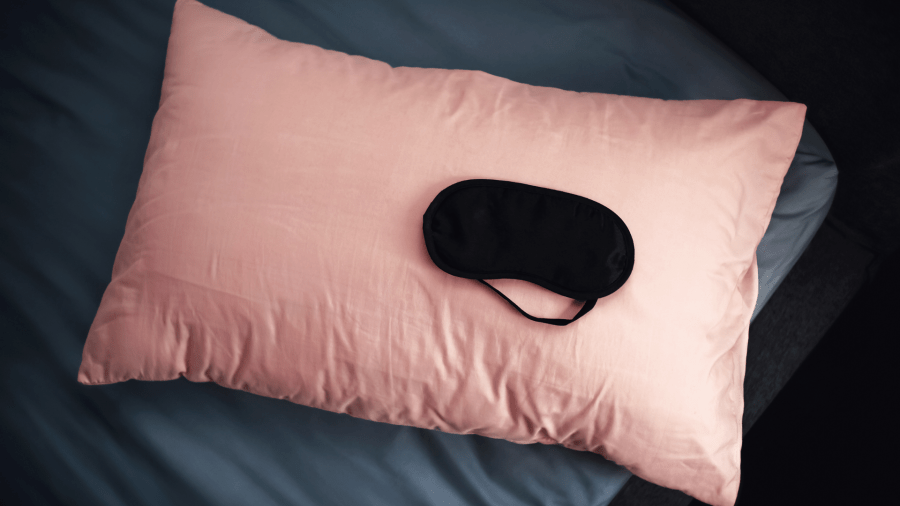
Ode to My Sleep Mask by Michael Mark

satin slip

of void

masqueraders’ façade
villain’s guise

classic
                                                                                    hole
                                            black

stack of bills
and ceiling crack
concealer

even

the cat’s gaze

i fantasize inside
you noon to                                                                                     new moon

                                                        locked in
clockless flight

my eye
nighty my
cloaked orbuculum

tapered abyss

over my nose

bump
and slope


Michael Mark’s poetry has appeared or is forthcoming in Alaska Quarterly Review, The Arkansas International, Copper Nickel, Michigan Quarterly Review, Pleiades, Ploughshares, Salamander, Salt Hill, The Southern Review, The Sun, Waxwing, and The Poetry Foundation’s American Life in Poetry. He’s the author of two books of stories, Toba and At the Hands of a Thief (Atheneum). His website is at michaeljmark.com.