
Five Things I Admire About Tudi by Olivia Post

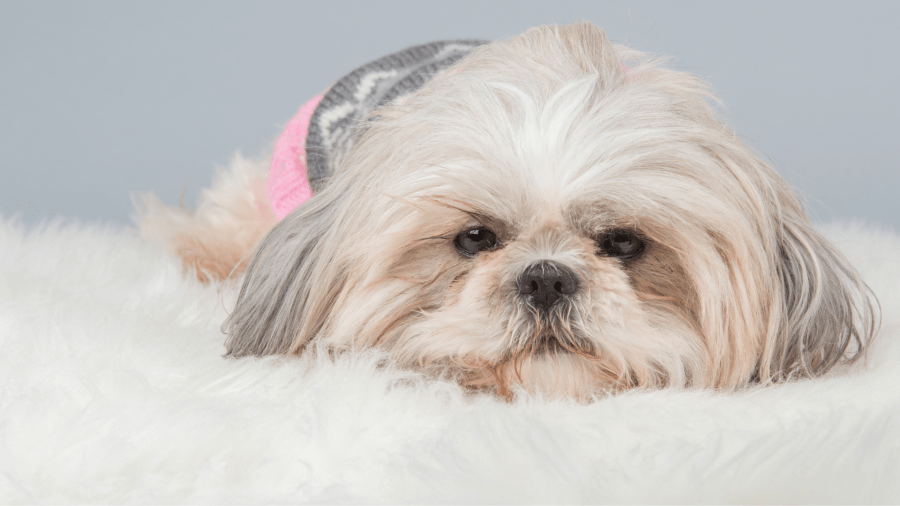
1.  Tudi cannot be humiliated. This is not unusual for a dog, but it’s notable because my love language is cruelty. I tell her that she’s funny looking. I tell her that her face looks like a boiled potato that got dropped on the ground. She’s got that stupid Shih Tzu profile, where her protruding eyes fit snuggly between a leathery monkey nose. Sometimes her face, full of adoration and need, makes me so mad. I mock her in private and in front of others, but I always cast a smile on her after. I love her oddity—her goblin face, the way her fat ass waddles from room to room, how she’s unhurried like she has already decided where she’s going. I love her so much it spills out as contempt. I admire that she knows the difference between derision and love, and that it doesn’t affect her self-esteem.

2.  Tudi makes eye contact with everyone she meets and that makes people smile. And when someone tries to bend down to pet her, she’ll trot away knowing that she doesn’t owe them anything. This is admirable, because I’m so eager to please and rarely do. Sometimes she’ll make sustained eye contact with a man, and he’ll smile at her and then say “hi” to me. I’ll say “hi” back and notice that my voice doesn’t quite work, because I haven’t talked to a human in a long time. Tudi doesn’t talk much either. When she barks, which is usually at cats, she seems surprised by her own voice.

3.  Tudi has no friends except me. This on its own is not admirable, but she’s so satisfied with only one friend. In reality she’s my only friend too, and that thought fills me with a frantic loneliness. I wish I were more like Tudi.

4.  Tudi doesn’t have any ambitions and that doesn’t bother her. She sleeps twenty hours a day and only moves long enough to eat, or find a different place to sleep. I don’t have any ambitions either. I just get out of bed and go to work because I have to. Tudi doesn’t need to work and I wish I had her life. I do wish she would contribute though. I ask her to tip her server after meals (me). I ask her who will pay the bills. At sixteen, my mother started demanding rent money. She’d call me a lazy, fat slug in front of her friends. She’d call me useless and then give me a private little smile. When I ask Tudi for rent money, she looks interested at first, but then sticks her whole back foot in her mouth. I tell her she’s choosing to do nothing with her life, parroting my mother. But she doesn’t care.

5.  Tudi exudes a quiet joy and shares it with me. I named her Latuda after the anti-depressant my insurance wouldn’t cover and she’s exactly that. I call her over, telling her it’s time for my medicine. I call her CEO of Snuggle Corp. and demand a shareholder’s meeting. I admire her emboldened cheerfulness, how she’s immune to my criticism. My inner voice has mutated into a crueler version of my mother’s. “You stupid fat ass,” I think to myself when I do something not quite right. “You’re pathetic.” I don’t think Tudi has an inner voice, but if she does it probably doesn’t say that.

And One Thing I Don’t

1.  Tudi terrorizes the neighborhood cat who often lurks outside our door. The cat is only a little smaller than her and hides under parked cars when Tudi approaches. At first I thought she loved this cat, but her behavior doesn’t look like love. She barks and lunges, pulling at her leash with an unfamiliar fury. I can imagine her saying, “Get a job, you lazy fat ass. Do something with your life,” as if she’s learned from me all too well that cruelty is more admirable than softness in small things.


Olivia Post currently lives in New Orleans, where she is working on her MFA in Fiction at the University of New Orleans.

Mojave by Sarah Hernandez

i’ve been lying here for so long
with grass peeking through my hips
and dust working into the gaps of my teeth.

the sky is so big and forgetful,
a place with no memory.
i wish i could be like that.

i hadn’t thought you meant it that time.
the swallow dives down, down, down
and never really hits the ground.

i suppose we had one last First, baby,
kept special in the sun-soaked spot,
in my overexposed skull.

you never visit like you promised.
maybe you thought i wouldn’t remember
but how could i not?

i am the gift you gave the open sky
with grit grinding my joints away,
and your love forever on my mind.


Sarah Hernandez is a Texas-born writer and lover of literature. Her main median is poetry, and her sources of inspiration are the forces of nature and womanhood. Her hobbies include hiking, cooking, and witchcraft and her work has previously appeared in The Dead Mule School of Southern Literature. She lives in Austin, Texas.

Where There’s Smoke by Leslie Walker Trahan

I never saw my mother with a cigarette when she was alive, but now that she’s dead, she goes through a pack a day at least. I smell her smoke in every room of my house. I find her butts smashed into my floors. She’s with me while I make dinner. I grease the pan with butter. I prepare the chicken to roast. Then I hear the quick tick of a lighter, and when I turn around, there are ashes lining my pan. Mother, I say, stop it. But she never listens. She’s already burned three holes in her recipe book, one in her wedding dress, too. At night, she waits for my husband to fall asleep before she starts in. There is the smell of smoke and the glimmer of a cigarette in the dark, and when I run my hands over my husband’s chest, ashes grind against my palm. When I go out, I smell smoke on the streets. At the dry cleaner, the bank, the grocery store. Everyone breathes out smoke, long wispy curls that dissolve when I look straight at them. So many people, I think. So many secrets. I remember those final days. My mother in her thick floral nightgown, tucked tight beneath her sheets, and me leaning down to hear her better. I sure would like to get in trouble someday. Her lips were pinched back, her pale pink gums exposed. I stop at a bar and ask a man out front for a book of matches. He winks and drops one into my palm. Come see us sometime, sweetheart. I hear Mother’s laugh behind me. When I turn, her embers graze my hand.


Leslie Walker Trahan’s stories have been featured in The Forge, New Delta Review, Gone Lawn, and SmokeLong Quarterly, among other publications. She lives in Austin, Texas. You can find her online at lesliewtrahan.com.

This Isn’t Anything by Francine Witte

When Burley comes home late every night, I tell myself he’s busy. He tells me that, too, but I believe it more when I say it.

Now, I do understand. He’s been busy before, but this is a busy with a smell on it.

This particular night, it’s 9 p.m. exactly. He comes in all fed even though I made pot roast. The pot roast that burned while I waited for him, the flat char of it still coating the air. Burley whooshes himself into the shower. Careful to take off his jeans and shirt and ball them into a wad. “Best to leave those,” he says. “I stopped for gas, and some jerk spilled coffee all over me.”

I wait till the shower is running to give his shirt a good sniff. Not a hint of coffee anywhere. Nothing is wet. And then I go for his jeans – in the pocket, a matchbook. Red with the black outline of two lovers, two cocktail glasses about to clink.

After the shower and him toweling himself off. “Whatta day” and “I shoulda called.”

I hold up the matchbook. “Oh this,” he says. “This isn’t anything. Guy at work was passing them out. New place opened up down the street.”

Burley says, work’s gonna be a bear this week, just so I know. He likes to compare everything to animals. Guys at work are a bunch of donkeys. Me, I’m a cute little cat.

And I am. Curled up and patient, like my mother taught me to be. This is what men like, she said. And really, I didn’t mind. Although Burley forgets sometimes that a cat needs attention. A tickle on the back of its neck. A rake of fingers through the hair. Later, in bed, I nuzzle up, kitten-like. He turns on his side. “Tired,” is all he says.

I whisper, “hey I’d love to go to that matchbook place with you. Have drinks like we used to.” I say this as his breath becomes even with sleep. I wobble his shoulder, and say it again, but he doesn’t move. He is a lost mountain to me now.

Something that isn’t hunger exactly gets me up on my feet and into the fridge. I pull out the leftover pot roast, burnt as it is. I kitten my face into it. Nuzzle and nibble and suck. Soon I go from tame little cat to feral. I crouch down to the floor and start gnawing like a lion on one of the nature shows I watch when Burley isn’t home. And then, without a sound, Burley just like that in the doorway. The swell of the fluorescent light overhead, sudden and sharp.

Burley leans over and struggles the pot roast away from my mouth. A look on his face like he caught me kissing another man. He lifts me to my feet. He flinches as my fingernails dig into his shoulders. Any harder and there would be blood. “What’s wrong with you,” he says with a look on his face like one of those animal trainers who realize they’ve gone too far. “I told you,” he says, “none of this is anything,” He grabs a dishtowel, wipes the grease off my chin and kisses me down to the floor.

Next morning, the mess from last night all over the kitchen and Burley humming from the bathroom. The pot roast, the dishtowel, the spot on the floor with naked us rubbed into it. I think about asking Burley now to tell me about the gas station. What was the feel of it, I want to say. Who was this guy? Was he bigger than you? Was the coffee hot? Why weren’t you burned? I clean everything up and put on a pot of coffee, the smell of it filling the room. The same smell that wasn’t anywhere on Burley’s shirt, and when Burley comes in and kisses me on the cheek, pulls back and winks at me, I feel a million questions on my tongue, a lion’s growl forming in my throat…


Francine Witte’s poetry and fiction have appeared in Smokelong Quarterly, Wigleaf, Mid-American Review, and Passages North. Her latest books are Dressed All Wrong for This (Blue Light Press,) The Way of the Wind (AdHoc fiction,) and The Theory of Flesh (Kelsay Books.) Her chapbook, The Cake, The Smoke, The Moon (flash fiction) will be published by ELJ in Fall 2021. She is flash fiction editor for Flash Boulevard and The South Florida Poetry Journal. She lives in NYC.

The Allegory of the Pizzas by Lisa Richter

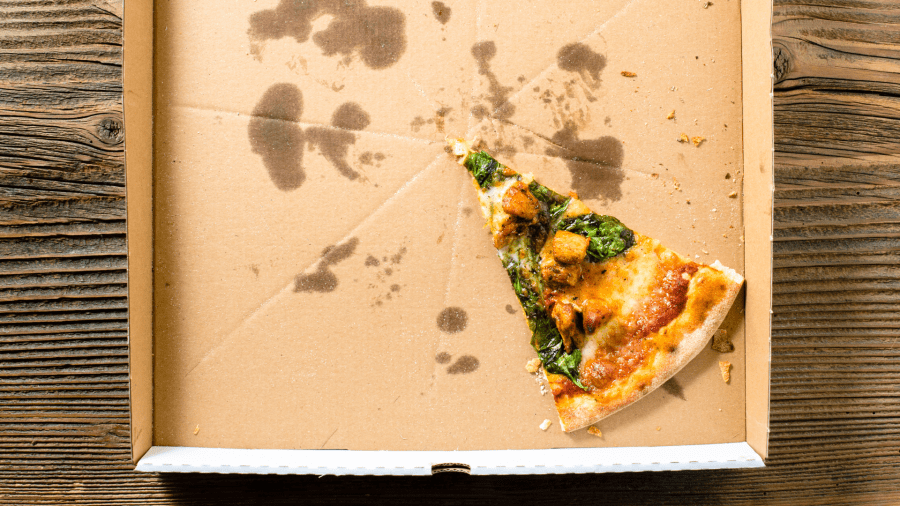
There were two pizzas, and we ate
neither of them because they were delivered
to the wrong address. For days we could dream
of nothing else, no matter what we stuffed
our faces with. Each pizza would have come
with its own carefully chosen toppings:
on yours, Thai chicken and crushed rose petal,
ground into a paste; on mine, picket fences
and the footprints of baby shoes.
Oh, we had other meals, ordered in
because suddenly order took on a new
importance. We took down all our books
then re-shelved them all by texture.
More than once, we declared
each other out of order and in contempt
of the court of private opinion.
Eventually, our plants had to water us.
I made a slipknot of your hunger,
slid it over my wrist. You turned mine
into a sail and resented me when the wind
puffed it over the lake. What we desired
could not fit into flat cardboard boxes.
No crust in the world could support it.


Lisa Richter is the author of two books of poetry, Closer to Where We Began (Tightrope Books, 2017) and Nautilus and Bone (Frontenac House, 2020), which won the National Jewish Book Award for Poetry and was longlisted for the Raymond Souster Award. She lives in Toronto, Canada.

Big Head Syndrome by Hannah Whiteoak

George is proud of his oversized head, but the girls in the office keep laughing at it when they think he can’t hear. Arriving in the office one Monday morning, he hears them giggling in the break room and catches a snippet of their conversation. “I wonder how he fits through the door…” When he stomps in to heat up his morning mackerel, they give him the briefest of greetings and scuttle back to their desks.

At home, George has a specially made door, which is wider at the top, so he has no trouble fitting through it. Of course, he doesn’t tell the girls that. Instead, he grinds his teeth and writes an angry email to human resources.

The reply assures him that the company takes bullying very seriously. However, it points out, having an oversized head isn’t a protected characteristic. Unless he would describe it as a disability?

George most certainly would not describe the head as a disability. It’s inconvenient from time to time, but it’s also where he keeps his gigantic brain. George knows that his superior intellect is what makes him so good at his job. His spreadsheets never have errors. He doesn’t make basic spelling mistakes in emails, unlike his manager, Karen, who doesn’t know the difference between “it’s” and “its,” and yet still tries to tone-edit his written communications with junior staff.

* * * *

At St. Matthew’s Independent School for Boys, George’s extra-large head was considered an asset. It did most of its growing during his boarding years, swelling from an average-sized noggin to the impressively bulbous specimen it is today. Every time he reduced an opponent to tears in a debate, it grew a little more. His parents praised the growth at the end of every term, and put him on a special diet that they hoped would make it grow faster.

He’d been bullied back then, too. Some of the stupider boys pretended to be overwhelmed by the smell of the brain-boosting fish he ate at every meal. George, who took great pleasure in sitting in front of them in class so they had to lean into the aisle to see past him, knew they were jealous. His big head would take him places, while they, with their macaroni cheese and pin-prick skulls, would never amount to anything beyond these ivy-covered walls.

* * * *

Molly from HR taps her pen against the side of her cheek and stares across the desk at George with a look of pity that makes his fists clench.

She tips her head to the side, mimicking the simpering dog in the calendar on her wall, and says, “I don’t suppose there’s any way you could get it treated?”

George splutters with rage. Do they ask Marcus to suppress his tics? Do they expect Maria to magic away her photosensitivity so they don’t have to hold meetings in rooms so gloomy several of the older managers — himself included, though he hasn’t liked to mention it — struggle to read their notes? No? Then why should he get rid of his extra-large head?

Molly smiles. “Karen says that sometimes it shrinks a little when you’re absorbed in a task. I wonder if that’s something we could cultivate.”

George storms out, grazing his ear on the door frame. All he wants are some reasonable adjustments. Someone to do his copying, because it’s… well, not impossible, but unpleasant, certainly, for him to squeeze into the photocopier room. Someone to fetch him coffee, so he can keep his great mind focused on his work, rather than being waylaid by chit-chat. And an end to the head-focused bullying.

As he returns to his desk, Karen shouts a cheery hello from the neighboring cubicle. Of course, she can see the crown of his head, showing off its bald spot over the top of the divider. Will they never give him any peace?

But even though it attracts attention, he wouldn’t give up his head for anything. When that evening he lays down to sleep, blood rushes to his brain, bathing him in a soothing wooziness. If other people’s minds are like televisions, replaying memories whenever they close their eyes, then his is an entire multiplex cinema. He selects a film from his school days and basks in the glory of himself.


Hannah Whiteoak’s work has recently appeared in publications such as Flash Fiction Online, Reflex Fiction, TSS, and Brilliant Flash Fiction. Connect online at www.hannahwhiteoak.me or on Twitter @hannahwhiteoak.

The Roadrunner by Brianne M. Kohl

Holly lays in bed, one leg bent over the edge, the other bare foot resting on the cool creased pillow. Pink toes. Avon Pink Minx. She idles the morning away, watching cartoons and smoking cigarette after cigarette. Charlie would not approve but Charlie is not here.

Holly throws an arm behind her head and stares at the television. Sly coyote – he’s painting a road on a desert floor that leads to a stone wall. He adds trees and a guard rail. Leaves no detail undone. He waits behind a dusty boulder for the Roadrunner to hit the wall. But the Roadrunner has a secret: she can turn paint into pavement, pavement into horizon, horizon into escape.

Holly pulls smoke into her lungs. Charlie is a doctor – a radiologist but still. He likes to tell Holly all the horrible things cigarettes can do to the human body. But Holly has decided: she will not die from cancer. Not any sickness, actually. Not fire, not gunshot – KAPOW! Not from Charlie’s fists that fall like anvils from the sky.

Her death will only be activated when (A) she lifts a soup spoon to her mouth, (B) pulling a string that (C) jerks a ladle which (D) chucks a bag of blue marbles at a bucket, tipping it and (E) spilling bird seed onto the table. The extra weight in the pail (F) pulls a cord which (G) opens and ignites a Zippo (H) setting off a rocket which (I) causes a sickle to cut the string (J) releasing a pendulum attached to (K) a blade that swings back and forth, across her throat.

The bird seed though? For the Roadrunner – who, let’s be honest, needs the calories.

A slip of greenish paper blows past her window, flush against the glass for a moment before catching the wind. And her funeral? Will Charlie come? Does a restraining order last after death? Will he send a bouquet of Daisies and a card that says, I’m sorry, sorry, so sorry, I love you, please? Baby, please. I’ll do anything.

Within moments of that first sheet of paper, a flurry of pamphlets rains down outside like ticker tape in a war parade.

Holly stamps out her cigarette and jogs to the front door of her apartment. The world outside is silent but for the shuttering of paper as it hits roof tops and slides down. She looks up but cannot see sky. Hundreds of thousands of sickly yellow-green papers fall.

Reaching out her door, she grabs one.

WE WERE HAPPY.

She opens the tri-folded pamphlet to find a watermark of an atomic bomb in the background. It is crudely drawn like a child’s rendering, ACME written on the side.

Come home.

You have nine days.

Holly steps out into the storm of paper, letting them slap past her face. People stand on porches and beneath awnings, pointing up.

“What the hell is this?” her next-door neighbor asks. Holly doesn’t know the woman’s name. She only knows the woman has a small, annoying terrier named Lemon Drop who barks constantly. The woman pushes against a drift of paper to open her door.

“I don’t know,” Holly says and hands the woman a flier. Lemon Drop bolts out into the lawn, yipping and chasing paper.

“This is some Heaven’s Gate bull shit,” the woman says. “Nine days. What’s in nine days?”

Air sirens go off and the two women stand together for several minutes, unsure what to say.

“You had problems recently,” the woman says. “Police were at your place a couple times. That guy wouldn’t leave you alone.”

Holly looks over in surprise. The papers taper off slowly until the last few fall and blue-skies return.

“I’m not sayin’ he’s doin’ this,” her neighbor says when Holly doesn’t respond. “But someone is. Probably the government. Russia, maybe. They gave us that virus through the chem-trails, you know.”

“Do you hear airplanes?” Holly looks up. Fliers pile up like snow drifts, clinging to trees and shrubbery, papering the entire neighborhood in sickening yellow-green.

“I didn’t hear nothing,” the woman says, grabbing Lemon Drop and slinking back into her apartment.

The woman reminds Holly of her mother. Chem-trails, Pizza-gate, there isn’t any awful thing her mother isn’t eager to believe.

Never about Charlie, though.

Back in her apartment, Holly checks her phone. The pamphlets fell not just on her neighborhood but the whole town. On the whole state. Reports come in quickly. Every state. Everywhere. Every country. Nine days, the pamphlets say, in every language. We were happy and now we are not.

Her wedding anniversary is in nine days. Holly sinks to the beige carpet. It smells like old, musty dog. She’s scrubbed it a dozen times and it doesn’t matter; she could scrub it a dozen more. The apartment walls are beige, neutral like sand. She was going to paint them but what’s the point?

Stupid Coyote – he’ll blanket the world in paper just to see her run. He’ll strap a rocket to his back and light his own tail on fire. He’ll paint a tunnel on a stone wall but she’s already on the other side of it. His schemes fail because it’s the Roadrunner who bends the laws of physics not the Coyote. She who can turn paint into pavement, pavement into horizon, horizon into escape.


Brianne M. Kohl’s work has been featured in various publications including Catapult, The Masters Review, and Jellyfish Review. She won first place in the 2018 Wigleaf Short Fiction Contest and second place in the 2020 Atticus Review CNF Flash Contest. She has work forthcoming from River Teeth.

Pigeons Are Having… by Sarah Sarai

Unprotected sex
on top of my
air conditioner,
upsetting most
of my flock who know
I run a moral
air conditioner
at top speed.

There’s no talking to
a pigeon.
Only arm-flappage
in a stiff wind.

I live by example which
I set.

Not in concrete with
a palm I set
nor in jello
though I swoon
at shimmerings.
Vulnerability.

Of women.

I ask pigeons
protect themselves from
the consequential and inconsequential.

I ask women.


Sarah Sarai is an independent editor in New York. Her poems are in Sinister Wisdom, The Southampton Review, DMQ Review, Hobo Camp Review, Barrow Street, Zocalo Public Square, and many others. That Strapless Bra in Heaven, her third poetry collection, was published by Kelsay Books in 2019. She grew up in L.A. and still checks stats for the Dodgers.

No Running by Taylor Clarke

No one could tell him what to do, not anymore, so he went to the pool. The end of the world had happened overnight, and so everyone else remained tucked in their beds. The front desk staff slumped over their computers. Colin had the run of the place.

The resort pool was small, which was disappointing. It was designed for adults to sit around, a uniform four feet deep—which he could stand in, on his tiptoes —and without the fancy accessories one might expect from a resort: no slide, no diving board, no water features or zero entry. Colin had been to a pool with all of the above once, at Disney World. His parents had been upset because he enjoyed the pool more than waiting in line for hours to ride a lazy boat past some old robots from the Pirates of the Caribbean, and with only one pirate from the movie. He would have preferred to stay in that pool forever.

This pool was a subpar substitute, but it could have been worse. The pool could have been inside, humid and without a view of the sky. There could have been no pool at all.

So he decided to be grateful and strapped his goggles to his head. They were polarized, a word he’d learned from the packaging, dark lenses that made him feel like a spy, hiding the blistering sun behind sparkling blue. Through them, the water was a lurid cerulean. He kept his rash guard on, not because his mother had told him to, which she had, but because he was fat, and even now, with no one to see, no one at all, the existence of other people a total impossibility, he worried about his tummy extending over his board shorts, which he preferred to knot securely under the protrusion of his gut.

He jumped. Colin heard the splash and knew it was a big one, but there were no onlookers to confirm that his cannonball was a 10 out of 10. When he surfaced, the sun had already begun baking away the water he’d displaced. He floated on his back.

He flipped onto his stomach. He doggy-paddled back to the wall, a true doggy-paddle, pretending he was one of the fancy yippy dogs at the resort, some still closed in rooms, barking when he walked past to go to the pool. He sank beneath the surface, braced both feet on the wall, and was disappointed to find that the momentum of a single push was enough to get him to the other side, surfacing easily just before the opposite wall.

He decided on a tea party, with the goal not of a perfect mimicked tea party, beverages poured for friends, but of the longest tea party. Tea brought to his lips, pinky raised, for the longest time anyone had ever held an underwater tea party. He breathed deeply, the way his mother told him to do when he was upset, one hand on his tummy, trying to fill every inch of his insides. When he felt full, he gulped his last bit of air, filling the space at the very top of his lungs and throat, and sunk beneath the surface.

Sitting on the floor of the pool was easy. He always sank quickly—his swim instructors at the community pool back home had said, like a stone. He sat cross-legged on the concrete, bubbles escaping his nose even as he tried to hold his air in, and counted. Seven Mississippi, eight Mississippi, nine Mississippi. He poured himself tea. He didn’t pour any for imaginary friends. He knew they were all gone. He was eight, and no longer an idiot. He didn’t wonder what would come next, what would happen to the bodies in the hotel, or after he’d eaten all the food in the room’s mini fridge. He didn’t think about how he would feel when the dog down the hall from his parents’ room grew quiet. Twenty-six Mississippi, twenty-seven Mississippi. Counting left room for nothing else.

He sipped tea. The pressure in Colin’s chest was building, and he was in pain, but the record for the world’s longest underwater tea party couldn’t be less than forty-five seconds. He himself had hosted a thirty-five seconder, before.

At forty-nine seconds, he pushed off the concrete with his hands. The second or two before he reached the surface were awful, end of the world awful. He thought he wouldn’t make it; the pressure in his head would explode and he would simply be floating boy-pulp, like when someone vomits in the pool and the lifeguard has to fish out the offensive mass with a skimmer. He would be the offensive mass. Except there would be no one to use the skimmer. He would just float on the surface, forever, his brain food for gulls, if there were still gulls.

But Colin emerged, and he inhaled. The pool deck was empty. He wanted to knock the silence out of his ears like water. In the brief rise from pool floor to surface, he had imagined that his mother might suddenly appear on a lounger, a stopwatch counting up on her phone. She would have collected all the trapped dogs, and she would congratulate him on the longest tea party held by anyone left alive. She would be clapping.


Taylor Clarke is an MFA candidate in Fiction at Brooklyn College. Her fiction has appeared in Grimoire and The Nottingham Review. She is currently at work on a story collection about the end of the world.