Shark Body by Josephine Wu

Two years ago, my sister googled my
symptoms & warned me I would bear
cavities in my stomach. Back then,

I laughed, telling her I shed
grief like a fish. That all the softness
I had been holding would bloom

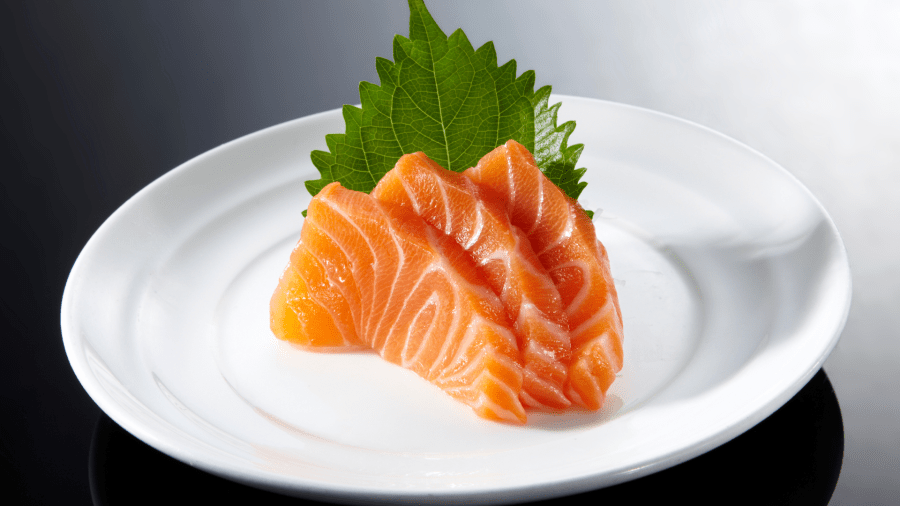
into sashimi, wet as a newborn
weeping. The body narrowing
into shadow. Two years ago,

when I first turned jawless,
the teenage lifeguard found a beached shark
on the shore of a lake my sisters & I

deemed monstrous. That night, we snuck
through the gate to see if it had
two heads, human teeth, a body worth

honesty
in retelling. Instead, we found
its dagger-white belly scribbled

with blood, a dark smiley
etched underneath the tail.
We imagined it to be from local

fishermen, abandoned beer cans, the
serrated teeth of sea glass. Shark pups
sensing loss & gnawing their way out of

their mother. Two years ago, I imagined loss
to beget loss. I didn’t know
it was from me all this time, it was me

careening into the dark,
scraping against softness.


Josephine Wu is a writer from New Jersey. She has been published in diode, Hobart Pulp, and Eunoia Review. She has also received two Best of the Net nominations and was a Lannan Fellow for Poetics and Social Practice at Georgetown.

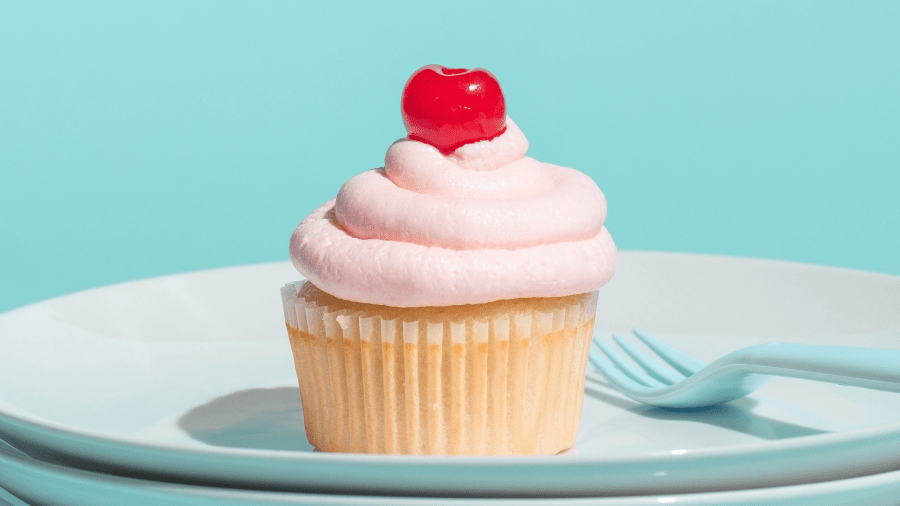
Last Day Cupcakes by Jeffrey Yamaguchi

I overheard they were ordering cupcakes for tomorrow. I knew what was up. A toast was in the works, on my last day, of what’s likely going to be my last job. I have given my share of toasts of this kind over the years: It’s a funny comment, then a meaningful remembrance of some incident of kindness, and then a really big, over-the-top thank you. What are we going to do without you? That heartfelt question can’t help itself from being asked. It’s on the tip of everyone’s tongues. If no one asks, it’s still hanging in the air, captured in the collective gleam of the faces of those gathered, all standing there in uncomfortable shoes, holding plastic glasses. But we all know the answer. It can break your heart.

These past few months I’ve been taking things, one at a time. Not to keep. I just chuck the item in the first garbage can I see, or leave it somewhere, some place where it might carry on into a new life. I started small, with a stapler from my desk drawer. I placed that on the little makeshift seat in a dressing room. I was there trying on clothes because I thought I’d get a new shirt for my last day, to mark the occasion. But it’s also possible I was just having a hard time being clever with the stapler abandonment, and the only thing I could think of was to leave it in a dressing room. I did laugh while I was doing it, but now, I don’t really get why I thought it was so funny. I also didn’t bother buying a new shirt for my last day in the office. While I truly believed in the forthright irony of that idea, I knew I’d have to verbally call it out and explain it if I wanted anyone else to get in on the joke, and at this point it’s hard enough just to ask, How’s your day going?

 I left one giant file folder on a subway seat. Got off the train and let it go further into the darkened recesses of the city. I took a clock off of the wall, and placed that on a tucked away tree in the park. I used a thumbtack to situate it on the tree. Before I left, I ripped off the hands of the clock, and threw them into the lake. I also snatched one of those forgettable recognition slash award plaques off the wall in the hallway and just left it on the elevator. People were going to see it on the floor and on the one hand wonder why someone would just leave an award there—perpetually stuck in a rise and fall transitory state—but also, not be willing to derail wherever it is they’re going in order to figure out the rightful owner of the memorialized tribute. It’s not like it’s a wallet or a phone or something along those lines that’s truly vital to, well, I was going to say, existence… but of course it depends on what kind of existence you are currently tracked into.

And okay, I admit it, I did take the framed picture of my boss where he’s wearing a polo shirt with the company’s old logo and celebrating catching a fish with a bunch of work colleagues—I definitely worked with some of those people but it was so long ago I can’t recall any of their names. After grabbing a quick burger and fries and then clearing my fast food tray of condiment soiled wrappers, I propped up the photo on the top of the garbage can, letting it teeter right on the edge of the hole. Clearly it was time to stop, and I did. I’m reliable in that way.

After leaving the office on my second to last day, I decided to rework my schedule. It hit me just as I was skipping my subway stop, that I would keep going, to that cupcake shop that I’ve always believed to have the best cupcakes, ever. I could taste them now, and would truly do so soon enough. I decided right there and then that I would not be making it into the office tomorrow. What are they going to do? Fire me? So that means there will be no last day. Tomorrow will be just that: tomorrow.

Jeffrey Yamaguchi (jeffreyyamaguchi.com) is the author of 52 Projects and Anya Chases Down the End, and his work has been featured in publications such as Atticus Review, Kissing Dynamite, Nightingale & Sparrow, X-R-A-Y Lit Mag, Vamp Cat Magazine, Black Bough Poetry, Feral, and The Storms.

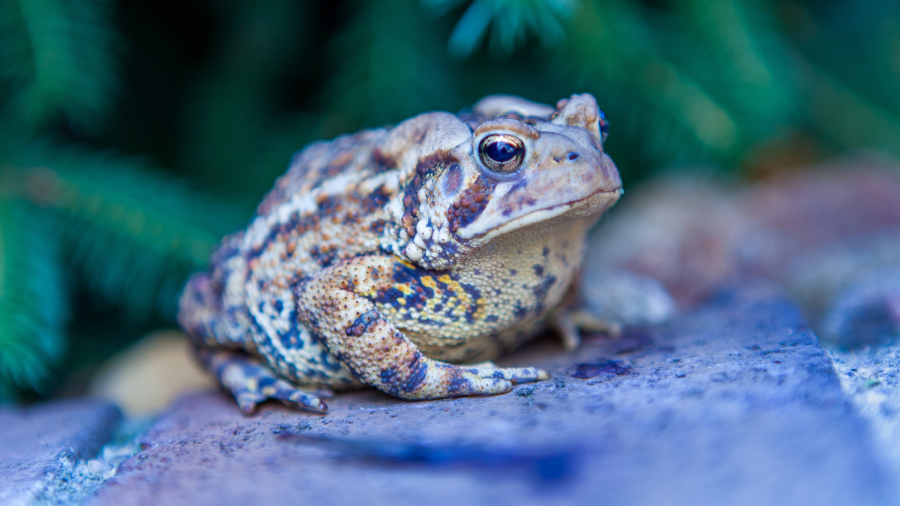
The National Park Service Warns Us Not to Lick the Psychedelic Toad by Carla Sofia Ferreira

Please don’t lick this psychedelic toad,
                                                                        National Park Service warns.

I have
              a few follow-up questions.

I want to hear first from those of you
who are looking at toads—psychedelic or otherwise—
and then think, hmm, time to lick that.
I want you to know I’m speaking from a place
of great envy, even admiration, I, who am
so cautious at taking even logical risks like
jumping feet-first into a crystal clear lake on a summer day or
kissing a man who is my friend and whose lips I want to taste or
any other small and probably not fatal leap like those,
but there are those of you out there, who are
licking toads? Can I meet you? Can we talk?
I have so much to learn.

Next, some questions for the National Park Service:
you might think I want to ask you how you know a toad
is psychedelic, but no, I want to know about this small
kindness, this extension of yourselves beyond what I am sure
is a daily cat’s cradle of red-tape routines into this gesture—
telling others what you likely never imagined you would
have to say: please do not lick the toads, though they are beautiful
because I know, personally, how hard it is to deny simple risks
that could yield pleasure but only at the expense of perhaps great
pain. In fact, really, I don’t know what the consequences are for licking
a psychedelic toad. You see, I am, I guess, a typical
American who did not read past the headline and also I am given
to writing poems the way some people might be drawn to, say, licking
a toad despite its poison, so I wrote this instead. But National Park Service
representative, whoever you are, out there, writing these public service
announcements, I hope you see them for what they are: an act of care,
a steady caution, the hand that holds the kettle.

I have some questions for the frog, too,
namely, what’s it like to be craved
beyond logic, beyond caution?


Carla Sofia Ferreira is the daughter of Portuguese immigrants and a teacher from Newark, New Jersey. Author of the microchap Ironbound Fados (Ghost City Press 2019) and forthcoming debut poetry book, A Geography That Does Not Hurt Us (River River Books 2024), her writing can be found in The Rumpus, Cotton Xenomorph, Glamour, underblong, Washington Square Review, and EcoTheo, among others. She believes in community gardens, semicolons, and that ICE must be permanently abolished.

The World We Leave You by Frank Jackson

Children, if there’s anything your mother and I have learned throughout the experience of being in the workforce it is the value of team meetings, and having all the proper stakeholders together at once, in order to arrive at what might be described as an actionable consensus and that is what each of you are tonight. Each one of you represents a proper stakeholder of a well-established entity known as the McDermott’s, and though we lack the legal protections generally offered through articles of incorporation, we do find ourselves heavily embedded into the dreary economic realities of our current participation in this late-capitalist endeavor. Children, I don’t have to describe for you the gruesome details of our complex taxation system, nor would I want to terrify you regarding the intricacies of something as seemingly simple as the selection of health care coverage, or the indecencies of navigating archaic PEO software in the hopes of submitting a time off request. These are often referred to as the “benefits” of our employment. Children, if these are the benefits, please allow yourself the capacity to imagine the detriments. You have surely seen the weariness that has encapsulated your mother and I, how it’s frayed the edges of our relationship, strained our patience, turned us into lesser fathers and mothers, often misunderstanding each other in the simplest of ways, becoming distracted by the day-to-the-day redundancies and strangeness of the corporate environment. Perhaps you’re aware of the effect it’s had on our lovemaking. The utter noiselessness of our bedroom. The lack of visible intimacy. We have become broken vessels. Children, I put the question to you. Is that fair? Should mommy who birthed you into existence be made to toil endlessly in inert, airless, sexist, corrupt structures that perennially gnaw and eat away at her sanity? Doesn’t mommy love you both very much?  Doesn’t mommy deserve a better life? Children, what of me? Would you wish your father to drop dead suddenly of a heart attack, or a brain aneurysm, or leaping from the office of one of my superiors? What we are proposing is simple. Complete, unconditional, and total surrender. Children, what we are saying is your mother and I are leaving the workforce behind. It has no further use for us. We have quit our jobs and we are going where the wind takes us. This unfortunately puts on hold certain ventures we had previously negotiated, namely memberships into certain traveling soccer teams, certain orthodontic procedures, certain Disney vacations, certain Netflix and Hulu subscriptions. We could go on and on and on, but children please stop your crying because we need you focused on this next part, which there being no other way to say it, is for each of you to begin the arduous process of putting together an up-to-date resume and finding yourselves a means of income. Your mother and I can assist you in the correct formatting and structure of your C.V., however you will ultimately be responsible for providing the majority of its content. I have done you the tremendous service of researching a list of jobs you can put yourselves in the running for, a generous variety of options, taking into consideration the unique skills and talents you each possess, that we as your father and mother, have become so keenly familiar with and it goes without saying we intend on providing you each with exceptional letters of recommendation. Children, you find yourselves in the most fortunate of times. Thanks to the recently repealing of child labor laws, the burden of protective regulations that previously restricted your full entry into the collective workforce have now been tossed aside by the invisible hand of the market with joyous bipartisan support. The professional possibilities in front of you now are endless, from meatpacking plants to auto shops, from construction sites to neighborhood bars, all avenues to an honest day’s work are right in front of you. Children, bills arrive on a monthly basis, and they must be paid, and all your money will go toward the paying of these bills, and once you stop your crying you will realize the great opportunity before you, and the possibility that someday you will become what our complex taxation systems defines as ‘a success,’ at which time you can rescue your mother and I from an underworld of utter collapse.

Frank Jackson is an MFA graduate from the Writer’s Foundry at St. Joseph’s University. His fiction has appeared previously in journals such as X-R-A-Y Lit, Metratron, Sledgehammer Lit, The Bookends Review, and Shabby Doll House. Find him on Twitter @frankerson.

Taxidermy by Sarah Fawn Montgomery

Frozen to a position
more pleasing, I am

at last a specimen
to your liking, mount

made still, silent
and shellacked to shine,

woven with wire
to shape your desire

onto what is no longer
living, though you’ve bound

me down, hollowed
heart and liver, tangled

arteries and mellow
fat left to harden

on the table, blade
abandoned for thread

to stitch around emptiness
and how I howl

mouth stretched wide
like wound and the want

of your reflection
in my vacant glass eyes.


Sarah Fawn Montgomery is author of Halfway from Home (Split/Lip Press), Quite Mad: An American Pharma Memoir (Ohio State University Press), and three poetry chapbooks. She is an Assistant Professor at Bridgewater State University.

Your Stepfather, the Giraffe by Cathy Ulrich

(“Your Stepfather, the Giraffe” originally ran in Gravel Magazine in November 2015 and was nominated for a Pushcart Prize. It currently appears in Cathy’s new collection, SMALL, BURNING THINGS.)


On the twelfth anniversary of your parents’ divorce, your mother calls you up.

I’ve met someone, she says. There’s something breathless in her voice, something fluttering. She wants you to come to the house to see him. She always calls it, the house. Are you coming to the house this Thanksgiving? You should come by the house this weekend, and I’ll give you some home-baked chocolate chip cookies. As if it doesn’t belong to either of you, especially your mother.

Will you come? she says, and so you do.

Your mother greets you at the door of the house, a diamond ring winking garishly on her finger.

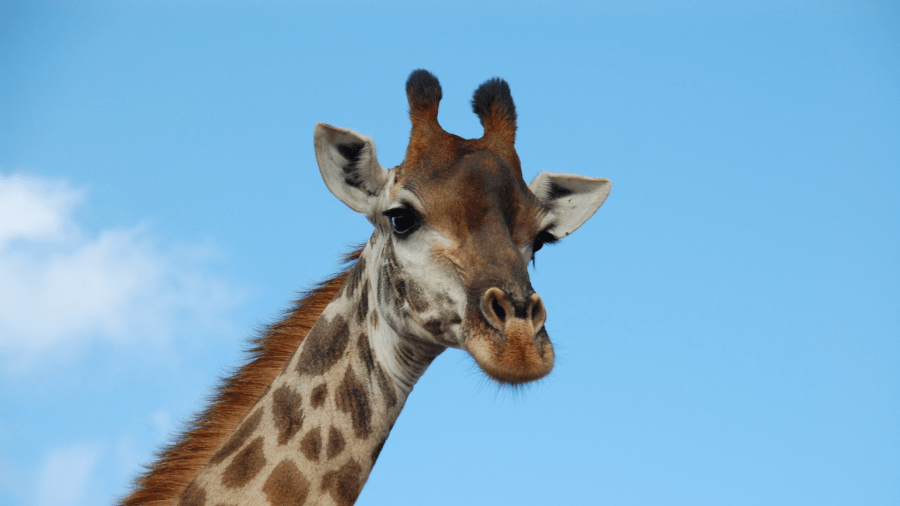
It was love at first sight, your mother sighs, and takes you round back of the house, where her new husband is contentedly grazing off the tops of the neighbors’ trees.

His name is Howard, says your mother.

Her giraffe ducks its head in your direction, as if in greeting.

You’re probably upset I didn’t invite you to the wedding, your mother says. It was just a small ceremony. Just us and the judge, and your Aunt Susan as witness.

She reaches out and strokes her giraffe’s leg. It was all very spur of the moment, you know.

Your mother has always been the type who likes the spur of the moment, not like you, or like your father, who would never do something like fall in love with a giraffe. Your mother likes to say your father lacks an adventurous soul. Sometimes they meet for lunch (to discuss you, you assume, for they have never had anything in common outside of that), and they’ll embrace politely upon parting, your mother brushing your father’s cheek with her lips.

We’ll have to do it again sometime, your father says, and your mother laughs.

I should never have married an accountant, she says. So predictable.

Her new husband, she says, hasn’t got a head for numbers (it’s one of the things I love about him, she declares jauntily, running her hand tenderly along the giraffe’s leg). Your mother has become an expert on giraffes since the last time you saw her. She says her giraffe is a Masai giraffe—you see the distinctive blotches on his coat, she offers in a tour guide’s voice—and that the horns atop its head are actually called ossicones.

He’s a ruminant, you know, she says.

The whole time, your mother’s giraffe has been eating from the neighbor’s trees, muscles twitching at her caress.

We’re moving to Kenya, says your mother. He’s so lonely here.

The plan, she says, is for her to travel with her husband with only what she can carry on her back. She has vowed not to be jealous if he mates with other giraffes.

I know he’d like to have a child of his own, she says. Who doesn’t want that? and strokes the top of your head with her free hand.

Besides, she says, giraffes don’t mate for life.

We’re an exception, she says, showing you again her diamond ring.

She says she’s always wanted to visit Kenya and, while they’re gone, you can stay in the house.

Much nicer than that cramped apartment of yours, she says.

Her giraffe tears some bark of a tree limb and chews it noisily.

What about lions? you say.

Your mother blinks, her calf eyes dull and wide, like the giraffe’s. Well? she says. What about them?

Cathy Ulrich is the founding editor of Milk Candy Review, a journal of flash fiction. Her work has been published in various journals, including Black Warrior Review, Passages North, Split Lip Magazine, and Wigleaf and can be found in Best Microfiction 2022, Best of the Net 2022, and Wigleaf’s Top 50 Very Short Fictions 2022. Her new short story collection, SMALL BURNING THINGS, was released by Okay Donkey Press in 2023. She lives in Montana with her daughter and various small animals.
Amazon Reveals Feature That Teaches Alexa to Sound Like Your Dead Loved Ones by Todd Dillard

When I chat with my mother
lately it’s about the internal

temperature of cooked chicken,
the ingredients for a DIY fly trap.

The baby naps and my mother plays
Tracy Chapman the way she used to.

When the baby wakes up he rips
my mother out of her socket

and her silence fills the room
like water in a suicide’s tub.

Sometimes my mother tells me it’s going to rain.
After, she says, “Have a nice day Todd.”

The way she says my name is plastic
orchids on a snow-covered headstone.

(The way I say her name
is by not saying her name at all.)

I don’t ask Mom why she lights up
when my wife and I lay together in bed.

I’ve learned with the dead
there’s something you need to know

and when they tell you
they die all over again.


Todd Dillard’s work has previously appeared in GuernicaWaxwingAdroit JournalFairy Tale Review, and Sixth Finch. His debut collection Ways We Vanish (Okay Donkey Press) was a finalist for the 2021 Balcones Poetry Award. He is a Poetry Editor for The Boiler Journal, and lives outside of Philadelphia with his wife and two kids.

The Werewolves of Camp Emerald Lake by L. Soviero

The big kids tell us small kids about the werewolves of Camp Emerald Lake. About how it’s super easy to turn into one. All it takes is meeting it in your dreams. Over the first week of camp, it’s all anyone can talk about—in the mess hall, during swim lessons, while on flora and fauna photo hunts, when constructing pinecone bird feeders to send home to our folks. I hate all the talk. Only because I don’t understand the fuss. But the girls from my cabin ask the big kids what attracts a werewolf. And Nancy, whose dad is a Marine, which we decide gives her inherited authority, says we need to leave raw meat under our cabin stairs.

So, Bonnie and Katrina and Meg steal hamburger patties from the mess hall freezer. And even though Nancy never advised it, Bonnie decides it can’t hurt if we eat some too. Marry us to the meat. We divvy up portions and pop them in our mouths, and I can’t help but feel it tastes like the end of a AA battery (though, don’t ask me why I know that). It’s Katrina who has the nightmare first. Because that’s what it ends up being. In it, the full moon swelled like a spider’s egg sac in a starless sky. There was a baying too, somehow both far away and under her skin. It gurgled at times, full of woebegone guts and melancholy blood.

None of us believe her the morning she tells us, but she says, come and see. And we gather around her in the corner of the cabin like she’s a toasty fire. She pulls up her nightgown. And between her legs is a poof of brown, bushy hair. It’s not real, one of the girls says. Katrina shouts that it’s as real as church, and she lets us take turns patting it. It reminds me of Brillo. Maybe not as rough, but still strong enough to scrub a plate. After that, all the girls are desperate to be werewolves, so the big kids tell us it has to be a fresh kill this time. Bonnie says her brothers are manly men with pickups and callouses, and they taught her how to chop wood with a small axe and use the sun as a compass and set traps for God’s small creatures.

So, she shows us how to do that last one with a few simple supplies: some yarn, a forked stick, a wicker basket from the arts and crafts center. And her trap is the real deal, 100 per cent fool proof, because we catch us a baby bunny. Nose wriggling. Eyes alive with the fear of death. But now that we have the bunny nobody wants to kill it until Megs grabs it by the ears and swings it against a tree. It’s brutal, but fast. We cut its throat with a Swiss army knife and take turns sucking its blood. We giggle because it looks like we’re wearing lipstick. We get real silly and blush our cheeks with it too, and for some of us it’s the first time we’ve worn makeup.

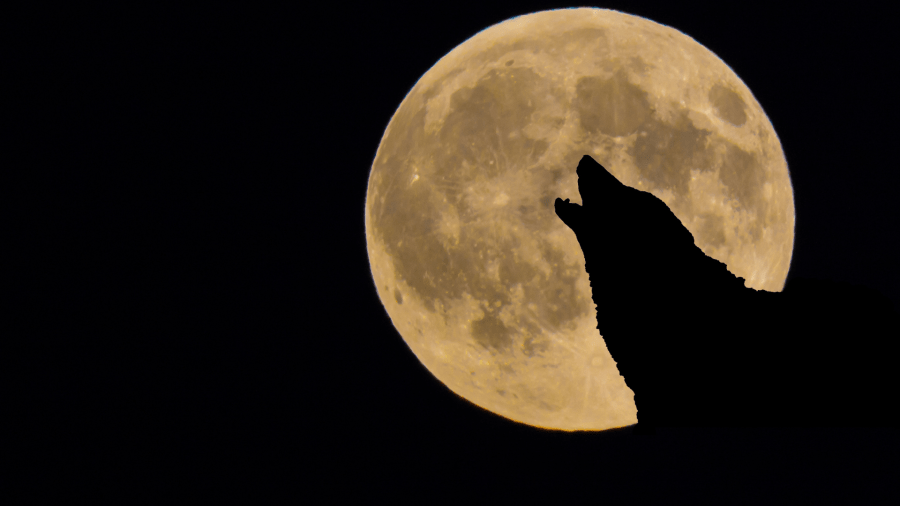
That night, we’re skeptical because we know the big kids like to mess with us small kids, but when we go to bed we do so with our fingers crossed. Whispering lispy prayers to the star dust. When we wake up in the morning, it’s worked. We all have our very own tufts. And on each of our beds are dark stains in the most beautiful of patterns. Like the ink blots the doctor showed me in his office those days after mom passed. Luna moths. Galaxies gobbling other galaxies. Pelvic bones exploding like rotten fruit. He showed me the patterns because I didn’t want to talk. And when I did talk, all I did was scream. But I don’t want to scream anymore. Not when I can howl. That’s what we do when the moon’s as swollen as our moms’ bellies were with us. And if you go out into the darkness, you’ll see us there—not as girls, but as silhouettes against a perfect moon—with mouths open, ready to take a bite.

L. Soviero was born and raised in Queens, New York but has made her way around the world, currently laying her hat in Melbourne. She has been nominated for Best Small Fictions on multiple occasions and a Best of the Net, and has been longlisted for the Wigleaf Top 50. Her story “Lucy Ignores Death” was spotlighted in the 2021 Best Small Fictions anthology. Her recent or forthcoming work can be found in Cloves Literary, Janus Literary, and Emerge Literary Journal. A more comprehensive list of publications can be found at lsoviero.com.

Bundle of Joy by Catherine Weiss

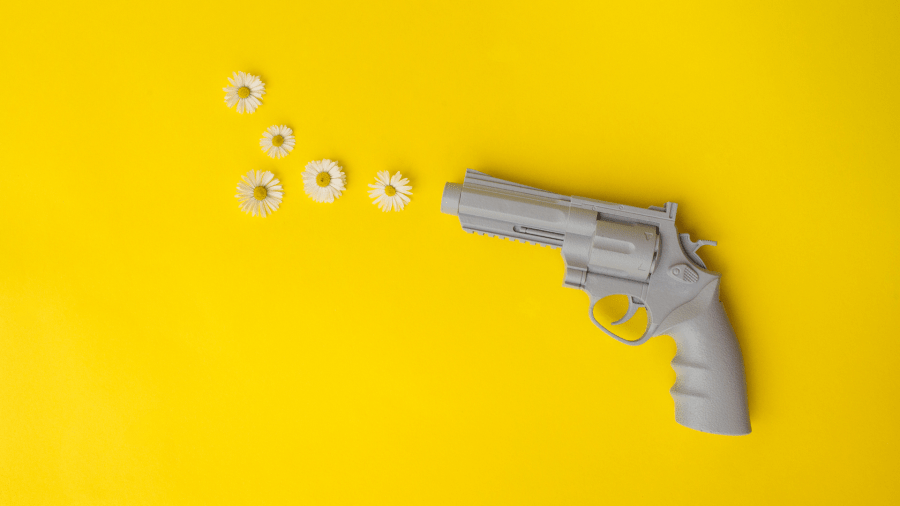
if you are ever handed a gun
in a social setting

there is this funny
expectation

that you coo
over design or heft,

maybe portability.
it is polite to find

some reason to admire
the machine.

when the new friend
laid the weapon

onto my lap
i couldn’t appreciate

in that moment
its promise of violence.

your gun is beautiful.
you should be very proud.

i am thinking of the newborn
my sister-in-law birthed

two days ago.
i’m afraid

to hold a gun
and a baby

for two different reasons
but my hands

feel dangerous
in just one way.


Catherine Weiss is a poet and artist from Deer Isle, Maine. Their poetry has been published in Tinderbox, Up the Staircase, Fugue, Bodega, Counterclock, petrichor, HAD, Taco Bell Quarterly, and Flypaper Lit. Catherine is an artist behind the collaborative poetry chapbook/card deck I WISH I WASN’T ROYALTY (Game Over Books, 2020). They are also the author of the chapbook-length poem FERVOR (Ginger Bug Press, 2021), and the full-length poetry collections WOLF GIRLS VS. HORSE GIRLS (Game Over Books, 2021) and GRIEFCAKE (Game Over Books, 2023). Find more at catherineweiss.com.

Look Under the Bed, Please? by Brianna Johnson

Content warning: childhood SA


I told my parents there was a monster under my bed. I asked them to look. Instead, they complained of sore knees and bad backs. The trip to the floor and back was too far for their joints to make. They told me it was probably nothing, just a lost Barbie doll, or an old LEGO brick. I decided to believe them.

Then the scratching started. They told me it was just the floorboards settling, or roaches, or mice scurrying to and fro. They said don’t worry they’d set traps in the morning.

I decided to believe them, but then my bed began to shake. They told me it was possibly an earthquake, or termites chewing at the bedposts. I didn’t need to worry.

I struggled to believe them when I heard a voice in the dark. My parents blamed the radio and the neighbors’ loud TV. I told them it knew my name. They said they didn’t have time for this. They were tired. Didn’t I know how late it was? Didn’t I know how hard they worked? It was just my imagination. They’d deal with me in the morning.

They said similar things when I told them how dad’s friend, Uncle Simon, kissed me hard on the mouth. His teeth scraped mine. They said he probably just missed my cheek. I should’ve turned my head. Or I turned it the wrong way. I decided to believe them. So, I didn’t tell them when it happened again at the 4th of July barbeque, at the pool party, at my birthday… I just needed to keep turning my head.  

Then the voice beneath my bed spoke again. My name, my name… rang in my ears. Its voice was scratchy, like a smoker’s, like Uncle Simon’s.

I pulled the blanket over my head. I plugged my ears with my fingers and squeezed my eyes shut. Maybe it would stop if I just turned my head. So, I tilted and bent trying different angles, like the antenna on my nana’s TV. She called them rabbit ears. I imagined myself as a bunny burrowed in the blankets of my bed, safe and sound.

My name, my name still scratched in the dark. No, it was just my imagination.

In the morning, I yelled for my parents. They showed up with mugs of fresh drip coffee and the sleep washed from their eyes. My mom had removed the rollers from her hair. I watched as they looked for me in the closet, under the blanket, out of the still closed window… never where it really mattered—nowhere even close.

From under the bed, I watched their fuzzy slippers shuffle toward the door. I tried to yell again when they shrugged and left the room. The monster put a claw over my mouth. It shook its head and looked at me with its many pitying eyes. What good would it do? I knew this to be true, so I decided to stay here in the unending dark.

Brianna Johnson’s stories have appeared in Cosmonauts Avenue, Gigantic Sequins, The Molotov Cocktail, Wigleaf, Kenyon Review, Obsidian: Literature & Arts in the African Diaspora, and elsewhere. An alumna of the Tin House Summer Workshop and Hurston/Wright Weekend Workshop, she is a two-time Pushcart Prize nominee with work longlisted for the Wigleaf Top 50. An MFA graduate from The University of Tampa, she teaches college English in Orlando, FL. Visit Brianna online at her website, on Twitter, and on Instagram.