The Man with the Third Ear by Ann Weil

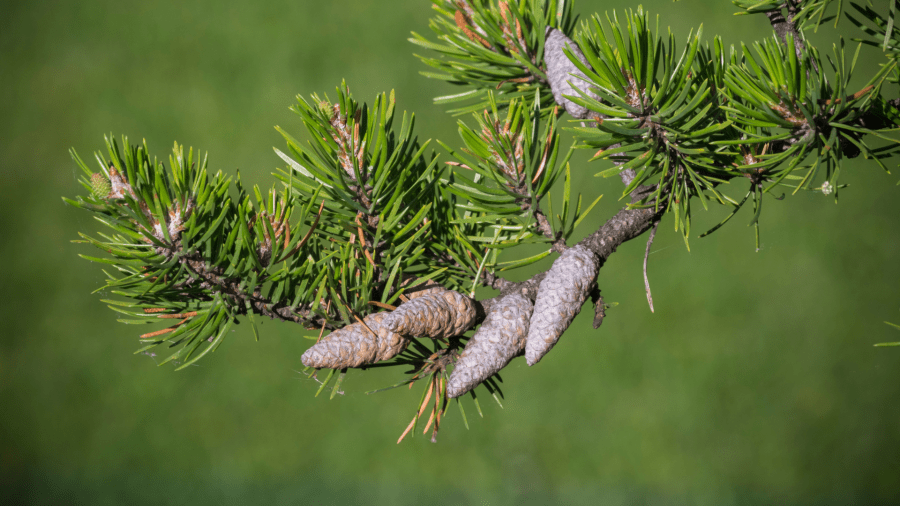
The man with the third ear lives on Canal Street and is used to curious stares, children pointing, and the occasional rude remark. He isn’t bothered in the least. He understands the blessings of a third ear, and his is a highly skilled worker. His third ear hears only truth. Growing up, he heard the truth of his mother’s love in that ear as she sent him off to school with a reminder—kindness above all else. He heard the bark of his best friend, Dog, who waited on the front lawn for his return. He heard his father’s late-night apology to his mother—another missed dinner—and he knew his dad was truly sorry. As the boy grew into a man, he still heard truth in his third ear, only less of it. He heard nothing in that ear when he watched the news, or when he traded fishing tales with his pals. He heard nothing from his wife, and while that saddened him, it made the divorce easier. She left him for a two-eared bartender. Now, the man with the third ear takes long walks in the jack pine forest and knows to stop and listen when he hears a Kirtland’s Warbler sing. A rare bird is worth waiting for.

Ann Weil is the author of Lifecycle of a Beautiful Woman (Yellow Arrow Publishing, 2023). Her work has been nominated for a Best of the Net and appears in Pedestal Magazine, New World Writing, Crab Creek Review, 3Elements Review, and elsewhere. A former special education teacher and professor, Ann writes at her home in Ann Arbor, Michigan, and on a deck boat off a sand bar in Key West, Florida. She is part fish, but won’t tell you which part. Visit www.annweilpoetry.com to read more of her work.

Two Stories by Hedgie Choi

Volunteering

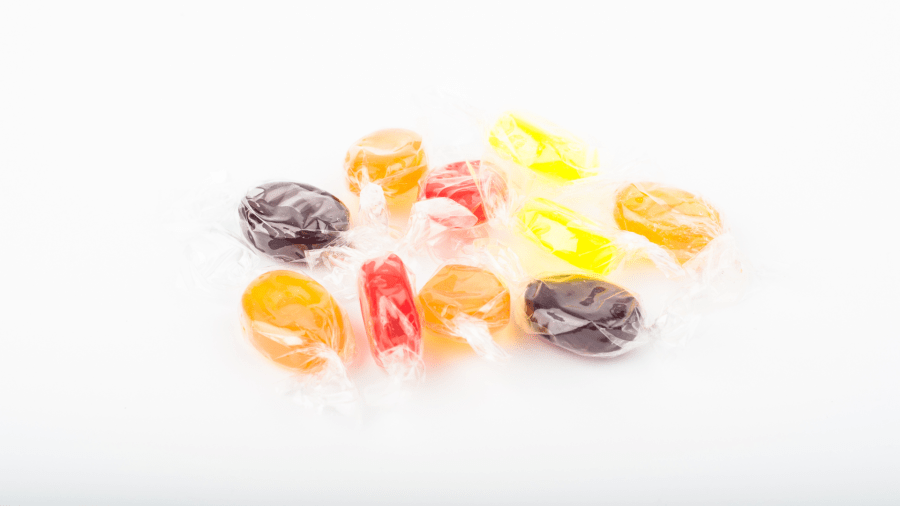
At the nursing home, the soft and brittle were flipped twice a day to keep their skin from melding to the bedsheets. As I passed one of the cots, a papery hand grabbed mine and pressed something sticky into it. It’s candy, the old woman said. I opened my hand to look. Some were oozing from their wrappers, some had teeth marks. Some were whole and new. They were from a brand that had gone out of business in my childhood. It’s dementia, a passing nurse explained. No, it’s candy, the old woman said. No, the nurse said, carrying a bucket of human waste out of the room, it’s dementia.

In Some Ways I Have Changed

As a mature and gifted child, I did not often play with my sister, because she was five years younger than me and thus unwaveringly stupider and worse. But when we got a catalogue in the mail—Sears, the local grocery store, American Girl Dolls, any catalogue—I made an exception. I would play with my sister for hours at a game we invented, a game that brought us together, a special game we loved. The game would go like this: we’d hover over the catalogue, each holding a marker. On the count of three, I’d flip open a page and we’d scan the glossy spread for the best thing, the one item we wanted most, and circle it with our markers as quickly as possible. This meant we “got” the item. Each item could only be circled once—we could not, for instance, co-own the Truly Me Western Horse and Saddle Set. Twice, I attacked my sister because she was quicker to circle the thing we both wanted. The things she took from me, or, more accurately, the pictures of things she circled that I wanted to circle, for which I attacked her physically, were a 2002 Toyota Camry and Premium Shredded Turkey Breast.

Hedgie Choi received her MFA in Poetry from The Michener Center for Writers and her MFA in Fiction from The Writing Seminars. Her fiction and poetry can be found in Noon, American Short Fiction, Poetry Magazine, The Hopkins Review, The Adroit Journal, and elsewhere.

A House on Two Legs by Kendra Marie Pintor

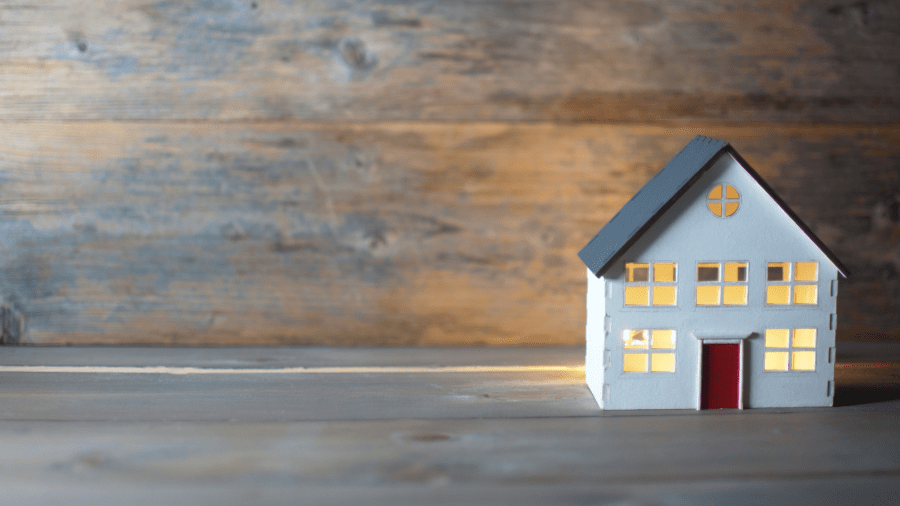
How long will I be cleaning that house out of my ears? Picking it’s floorboards from between my teeth with the prong of a hammer, plucking my father’s collection of crushed Miller Lite cans like gunk wedged between my toes, wiping away the hardened chunks like the husk of my mother’s heart from the inner corners of my eyes. How long will it take to fully disentangle myself from that place? Is it insane for me to shop online for “ear swabs made of steel,” or “nail picks that shoot fire,” in an effort to eviscerate that house from my body? I don’t know what else to do. Every time I argue with my husband, the house comes out. I spit up lamp cords strung with crystal ornaments, Thermoses full of warm wine, My Little Pony’s with glittery manes, chlorine and barbeque smoke, ammunition covered in backyard soil, a first communion dress that smells like a dusty attic, photographs where we’re all smiling but no one is happy. It’s like scrubbing at hardened grease with a soft sponge. It’s like trying to clean whites without bleach. It’s like trying to keep hair from slipping down the drain, to keep it from knotting into a wad that will clog and cause the water to overflow, spill out onto the floor, wetting my husband’s feet, and always right as he’s leaving for work. No matter how hard I try, I keep finding that house, and all its memories, burrowed and hibernating in my belly button like a brown bear in a cave, stuffed up my nasal passageways making it hard to breathe, under my fingernails, under my skin, which I pick and scratch whenever I need to distract myself. And that house, it is heavy. And it is hard work. And it is a load I would like very much to put down. And I am the load. And I am the house, on two legs. I carry it with me everywhere I go, and while I try so hard to keep it all to myself some of it falls out and god my husband, my friends, even strangers off the street, they ask, “do you need some help with that?” And they reach down and pick up the belt, the quarters my sister and I used to hold against the wall with our noses, kneeling on the hardwood floor, the orange pill bottles that filled every drawer, the VHS tape of Toy Story recorded over with porn, cradling it in their hands as if it is a precious piece of me, and it’s the way they all look at me that makes me want so badly, so, so badly, to drop the whole thing. To leave that house condemned wherever I am, and watch as wrecking crews raze it to the ground.

Kendra Marie Pintor (she/her) is a rising author of speculative horror from Southern California, with work appearing in Lunch Ticket, Fast Flesh Literary Journal, CRAFT Literary, FOLIO LIT, and LEVITATE Magazine. Her story “The Sluagh” has been nominated for Best American Science Fiction/Fantasy and was selected by Alternating Current Press for the 2023 Best Small Fictions Anthology. Kendra is a graduate of the University of La Verne’s creative writing program and the 2022 UMass Amherst Juniper Summer Writing Institute.

Mrs. Frankenstein by Gwen E. Kirby

We fall in love with the Creature slowly, a piecemeal process over long years of hard work, and each in our own way. For the Creature’s twentieth birthday, we celebrate at home.

“Mr. Frankenstein,” I yell down the basement steps, lobster claw oven mitts pinching my hips. “Dinner’s ready!”

Dr. Frankenstein,” he says to me when he comes into the kitchen, first hanging his blood-spattered lab coat on the hook at the top of the stairs. I smile and say I’ll call him doctor when he defends his dissertation.

The Creature lumbers up the stairs behind him and moves quickly to the kitchen chair I keep covered in black trash bags for easy clean up. “Hello, handsome,” I say to him, winking, and goodness, look at the Creature: One blue eye, one green, his skin wax white and body a web of silver scars, like a giant palm waiting to be read by gentle fingertips. “And what’s new with you today?”

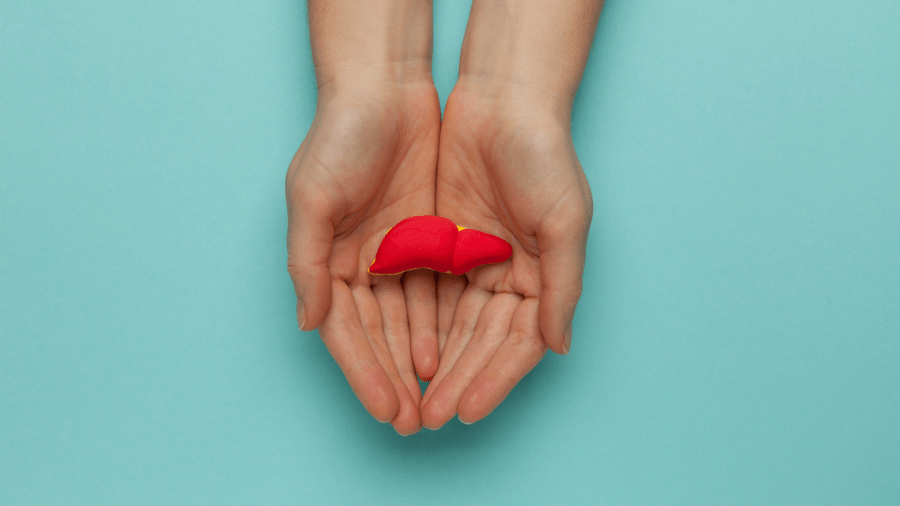
“Liver,” the Creature says.

I ladle peas onto their plates. I scoop pot roast from the hot pan, the onions oily. I serve my husband the tenderest pieces of beef. I serve the Creature the bits from the side of the pan where the beef has burnt and gone tough. I eat only the vegetables, don’t have the stomach for meat anymore after the bodies we’ve worked through together.

“Old liver was underperforming,” Mr. Frankenstein says, chewing delicately, his teeth sensitive, while the Creature’s massive jaw rips the beef to shreds. Such powerful mastication!

I spear a red potato and tease Mr. Frankenstein, tell him I won’t be going out grave robbing tonight, and he laughs and says quite right, not in this cold and wet weather. I haven’t been grave robbing in years (it’s grueling work, hard on the back), but the occasion of a birthday makes me nostalgic, even silly these days. I find myself playing a younger me, the daring wife who, before Mr. Frankenstein lost his graduate funding, left home after midnight to find the freshest mounds of earth. I scaled wrought iron gates, frightened caretakers with recordings of wolf howls, brought home stomachs wrapped in wax paper, all while Mr. Frankenstein graded another stack of essays.

“Mary,” he’d wept into my bosom, when he could neither finish his work nor give it up. “I’ve let us down, Mary.” But I rubbed his back and promised him he hadn’t failed. That I didn’t care, that even if he did graduate I didn’t want him adjuncting, making no money, always exhausted, never enough. That I understood why he would never be satisfied with the tedious, glorious process of creation.

These days, new livers arrive in a refrigerated van from our friend Mr. Igor at the nearby crematorium. So civilized.

“But since I’m not grave robbing tonight,” I say, “perhaps we could all play a game?” And at this, I pull a package from under the table and hold it out to the Creature. “Happy Birthday!”

The Creature does not care about birthdays. His age is not countable as no part of him is the same age as another. Still, he indulges us. “What is this, then?” he says and rips the brown paper from the present, revealing a vintage game of Operation. The Creature smiles and thanks us both. He is not a Creature who laughs, though he says that he loves how much we both do.

“Sweetheart,” says Mr. Frankenstein to the Creature, taking his hand. “Here’s your real present.” Mr. Frankenstein hands the Creature a cat from a covered basket, a brown and black dappled stray we’ve been feeding for months, who the Creature has begged us to take in.

“We can’t say no to you,” I say. The Creature bends to place his scarred hand low to the floor and holds it still until the cat sniffs and finally nuzzles him. I find myself wiping away a quick tear and when the Creature notices, I huff a laugh. Sensitive, my husband calls me fondly, but I didn’t used to be. Perhaps we were never meant to know so much about our insides, about the fragile, tenacious squish and pump that keep us upright. Now I cannot look at cat or Creature or husband without amazement and worry.

We drink wine and the Creature’s new liver does admirably. We play Operation and Mr. Frankenstein loses again and again until he throws down his tweezers and accuses the Adam’s Apple of being rigged. As always, Mr. Frankenstein and the Creature retire to their bed hours before I do. Mr. Frankenstein works best when the sun is still rising and the Creature is never far from his side, receiving his tune ups without complaint, never asking if they are necessary or simply a way to make Mr. Frankenstein feel young again, covered in blood and full of new ideas.

When it is past midnight and I’ve scrubbed the pot roast pan, put away the man and his plastic organs, I make my way upstairs to my cool room and take off all my clothes and stand in the moonlight. The cat is curled on the bed, watching me with distrust, like she can smell the old graves on me.

“You’re safe,” I tell her, and yawn, sucking life from the quiet air.

Like most young women, I used to hate my body. Used to worry about Mr. Frankenstein and the Creature excising me like an appendix, vestigial to their new love. But now I always sleep naked. Now I know my worth. Now, I rest a hand on my round stomach as it rises and falls, content with the miracle of me, in awe of how impossible it would be to recreate me, to contain this world of mess inside such seamless skin.

Gwen E. Kirby is the author of the debut story collection, SHIT CASSANDRA SAW. Her stories have appeared in Guernica, One Story, Mississippi Review, SmokeLong Quarterly, and elsewhere.

Body Horror by Court Ludwick

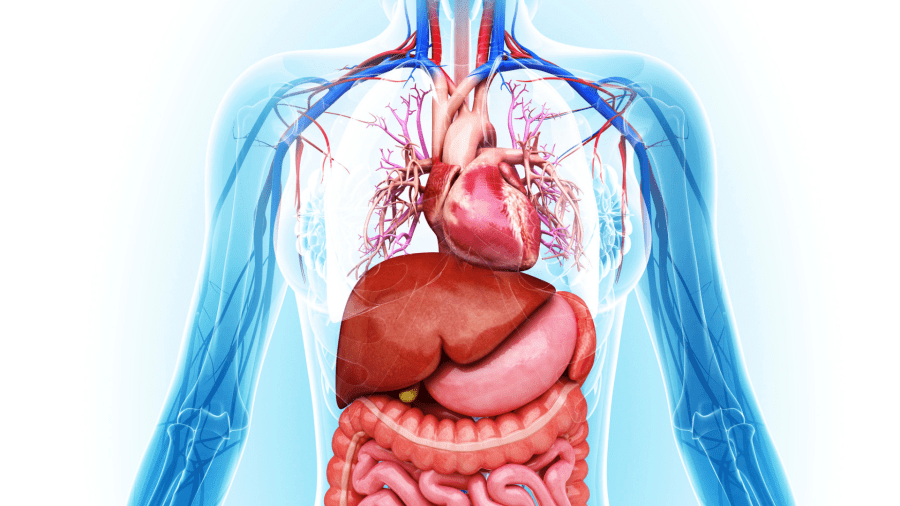
See the mother. See through her skin. See the skeleton. See inside the body. Look, there is another body, only smaller and made of disconnected parts. What constitutes a body? See, Mother has a pelvis. See the pelvis move, separate, tilt and open. Shine a flashlight in. Look. See the body inside of the body? Wait no the body is gone. Someone has stolen the body? Who has done this to the body! See but don’t hear the baby screaming. And there’s a theory that says birth is the first experience of anxiety, so do you think that’s why everyone, all the time, is still fucking screaming? The father is outside of the hospital. The infant is outside of the womb. The breath is outside of the mother’s mouth and she keeps trying to hold in all the air but she collapses like a faulty lung. You never get to see how the outside layer of bone fuses together then holds up her, holds up the body. See the father smoking. See the mother, panting.

Court Ludwick is the author of THESE STRANGE BODIES (ELJ Editions, 2024), and the founding editor-in-chief of Broken Antler Magazine. Her words have appeared or are forthcoming in Archetype, West Trade Review, Full House Literary, Oxford Magazine, Jet Fuel Review, New Note Poetry, Sweet Tooth, Watershed Review, Red Noise Collective, and elsewhere. Find Court on Instagram and Twitter @courtludwick. Find more of her work on www.courtlud.com.

Rabbits by Maria McLeod

My surgeon looked like a giant rabbit. I was leery about letting him cut into me, because he was from Texas and had a mustache. His medical degree made no difference. I didn’t trust Texans, and a rabbit was just a rodent in disguise. I set my sights on the woman surgeon in the practice, the one who, according to the website, was an organic gardener, rescued greyhounds, and thought of her patients as friends. Of course, she was booked.  So, I got the Easter bunny. He’ll be sticking his paws into me on Tuesday at 8:30 a.m.

Dr. Rabbit informed me that my right ovary’s abnormality appeared identical to ovarian cancer; neither endometriosis—the suspected culprit—or cancer could be positively diagnosed by the ultrasound I had before I showed up in his office.

I was seeing a fertility specialist, both of us dead set on figuring out why a fertilized egg wouldn’t attach itself to the wall of my womb. Upon feeling a lump she didn’t like, she ordered an ultrasound. When the results came in, she called me at home. Surgery. My first question wasn’t whether or not I could have a baby, but whether I’d lose an ovary.

She said no, she didn’t think so, but when she explained the results of the ultrasound, I looked at her freehand drawing and knew immediately that she couldn’t make such an assurance. She obviously spent some time on the illustration, a pen and ink drawing that in no way resembled the female reproductive organs on display in plastic model form on her desk. Initially, I thought I was looking at her doodles of the solar system. One ovary became a crater-filled Mars, the other, Pluto. Between them, my uterus appeared as a sandwich bag lost in space. She said it was a drawing of a cross section. I stared and stared, trying to make sense of it.

She suspected the same bloody substance that lined my uterus decided it could grow elsewhere, engulfing random organs in my abdomen, swaddling them in highly adhesive, thick procreative blood, like those old sci-fi flicks about invasive entities of a difficult-to-describe shape and substance—“The Blob” or “The Thing.” She expected that a surgeon would open me up to find my right ovary completely covered in it, plus bloody strands spread throughout, like webs of bubblegum that got lost in my hair during sleep, or during a particularly wild carnival ride.

My new rabbit doctor ordered a blood test that would serve as a better indicator of my true affliction. Cancer didn’t make sense to me, but I indulged his diagnostic detective work.

Isn’t it better to be sure, my partner suggested.

Of course, I said.

The phlebotomist was a sullen man with bad posture who didn’t know any good jokes. He directed me to hold still please when I began drumming on the floor with both feet, as if to warn my brethren of approaching danger—force of habit whenever a needle was pointed in my direction.

The results of the blood test showed a potential malignancy, which prompted my rabbit doctor to revise his original surgical plan to do a tiny incision and use a teeny-tiny vacuum to suck me clean in there, while he watched live on a video screen. Now, I was slated to have a bigger deal slit in my belly and he’ll probably remove things intact. He said he’ll give me OxyContin, and I’ll be asleep. I won’t know about the cancer verdict until it’s over.

Cancer? I said. Like the kind that kills people?

Doctor rabbit told me that if he could rule out ovarian cancer, I might still have a chance at pregnancy. I was sitting on the edge of the examining table wearing a blue paper dress, my legs dangling like a child’s. He suggested that I seek out a woman half my age, one with younger, healthier eggs. His gut rolled over his belt, and his neck oozed out over his collar.

Oh, I said, Oh. My toes itched. My skin was dry. The hair on my unshaven legs was wild.

The only time I ever hallucinated in my life, I saw rabbits. They were crossing the highway, and I was behind the wheel. I saw snow, too, even though it was summer, and I was sober. I was driving back to Pittsburgh from a bachelorette party in New Jersey for a wedding I didn’t want to be in. The husband-to-be, drunk, slumped over me one night and tried to peel my clothes off. I knocked him over and fled. I should have told my friend, but I didn’t. She was seeking true love, and I hoped his behavior wasn’t a habitual trait.

I was excessively sleep deprived that night after driving six and a half hours of endless highway from Newark to Pittsburgh. The only other gal who knew how to drive a stick shift was passed out in the back seat. Now, I wondered if I’ll wake from surgery all doped up and see a room full of rabbits.

Maria McLeod is the author of two poetry chapbooks, Mother Want, winner of WaterSedge Chapbook Contest 2021 and Skin. Hair. Bones., published by Finishing Line Press in 2022. She’s been nominated for three Pushcart Prizes and has won the Indiana Review Poetry Prize and the Robert J. DeMott Short Prose Prize. Her writing has been featured in several leading literary journals, as well as part of Painted Bride Quarterly’s Slush Pile Podcast and on Sound Poetry, Radio Tacoma. Originally from the Detroit area, she resides in Bellingham, Washington, where she works as a professor of journalism for Western Washington University. Find her on Instagram @mariapoempics.

Once the Good Daughter by Kiyanna Hill

I was obedient, a dim beam
from a frayed wire, never

                alight. I was the finest void,
                listening to my mother sing
                about Diane sitting in Jack’s lap.

She talked to herself,
sobbing when she couldn’t answer

                her own questions. I tried to be
                a good unwanting, a quiet thing
                a collapsed lung. At night,

I bit my nails down to the quick
staining my sheets with dotted blood.

                I uncover my voice, my tongue
                filling my toothed gap. I speak
                to my reflection & ask

her to be the brightest light.

Kiyanna Hill (she/her) is a Black writer. Her work can be found in Porter House Review, Honey Literary, Autofocus, Peach Mag, and elsewhere. Her debut poetry chapbook, A Damned House and Us In It, is forthcoming from Variant Lit.

Four Stories by Tiffany Hsieh

Wendy  

Wendy goes to school and becomes a professional. There’s no rationale for why she loves accounting, but she does. It reminds her of when she used to count money for her parents’ business. Each transaction feels exact and explicit, like Wendy.

In her spare time, Wendy likes to cook. She has many recipes that tell her exactly how much sugar for this and show her explicitly what kind of sugar for that. But Wendy never follows a recipe exactly or explicitly. It reminds her of science class in high school. Each measurement feels too exact and too explicit, too much like Wendy’s science teacher, a big-breasted woman with a manly jaw.

Sometimes Wendy wonders what it’s like to have big breasts. She has no big breasts. Her ma has no big breasts. Her ah-ma has no big breasts. Her other ah-ma has slightly bigger breasts but Wendy doesn’t like her or them. One of Wendy’s breasts is slightly bigger than the other and she counts the difference between them, between two, between one and half.

Titanic

My piano student came here on a boat when she was two years old. Maybe that’s why she wants to learn how to play that song from Titanic. She was there and a part of her goes on and on.

Week after week, my piano student talks to me about boys. She places her hands on the keys as she talks, her nails long and polished, her fingers flat like water. She wants me to play for her instead. I don’t know why I give into her purple-shadowed puppy eyes.

Bit by bit, I let my piano student talk me into helping her quit piano. We go rollerblading by her house, her idea of Big Sisters. Her mother shows me how to make Vietnamese spring rolls. Her father asks where I’m from and smiles with half of his mouth that I have no sea in me like his daughter does. That I’m more grounded somehow.

We have our picture taken on the front steps. We are both in shorts and short sleeves. My piano student looks older than sixteen. Her makeup is all wrong, her posture too ladylike. I tell her she doesn’t need all that stuff on her face, but she hands me a Sprite and tells me about getting a job at the music store, about the guy at the music store, goes on about his motorcycle and leather jacket, goes on and on.

Convocation

 A classmate asked me out after he came back from teaching English in Asia one summer. He said he had tickets to see the Yankees in town. In truth, I didn’t know what to say. We attended the same lectures and sat near each other from freshman to junior, but we never went anywhere or did anything together. We were the perfect classmates.

So I said I was busy. He didn’t speak to me in senior year and I thought what the hell. When we convocated, he acted like we were strangers even though we sat in the same row under the same alphabet. Even though we used to greet one another with a wave and a smile and exchange notes and glances.

I could’ve really been busy, also, and had to say no. And, honestly, he wouldn’t have asked me out in the first place if he hadn’t gone to Asia and seen so many Asians and come back to the one Asian girl in class.

He was probably destined to marry an Asian girl after that, and that was what he did in the end. When I saw their photos on Facebook years later, a part of me couldn’t help but wonder if that’d be me in the photos instead, had I said yes to the Yankees, and if we’d be a good couple or not. But mostly, I just felt relieved that someone else had said yes to him.

The Cellist 

She tightens her bow and flips that fine ponytail of hers that flaps and sways in a Beethoven sonata, the contours of her posture shaped by the cello between her legs, the right one has a habit of making little circles on the floor when crescendo.

Then in limbo, she sticks a pencil in her hair like a meat thermometer and taps the score with the tip of her bow, denting markings of forte, fortissimo, piano, pianissimo, and chanting, bar by bar, tap by tap, Loud, loud, loud, soft, loud, soft, soft, loud, loud.

Once in a while, she pictures someone watching her perform from a distance, listening to her play and admiring how beautifully she plays. He loved her once but she didn’t play the cello then.

Tiffany Hsieh was born in Taiwan and moved to Canada at the age of fourteen. She is the author of the micro chapbook Little Red (Quarter Press) and her work has appeared in The Los Angeles Review, The Malahat Review, Passages North, The Penn Review, Quarter After Eight, and the Best Microfiction anthology among other places. She lives in Kingston, Ontario.

Implement by Chiara Di Lello

What the self forms around
cannot be undone
– Gabrielle Bates

I was birthed
      sleek, a drop
of magnetite
      cracked egg-like upon
the world

      she might say
I arrived
      a gnarled stump
and it’s time
      chiselling me smooth

all this fearfulness
      of edges
when it’s how you hold me
      that makes me tool
or weapon

she spirals skin
      from an apple
with the blade
          leveled
      advancing
on her wrist

which way am I
          pointed, mother
      are you afraid
of my edges
          or your own grip

when a knife
      falls from the counter
I learned to fight
          the urge
      to catch it


Chiara Di Lello is a writer and educator. She delights in public art, public libraries, and getting improbable places by bicycle. For a city kid, she has a surprisingly strong interest in beekeeping. Find her poems in Rust + Moth, Whale Road Review, Kissing Dynamite, and Best New Poets.

Lake Day & Emerald Ocelot by Joe Gallagher

Lake Day

Sometimes we take rides on our friend Charles. These rides can be quite a hoot because Charles is a frog the size of a dump truck. One morning we rode Charles to Waffle House. We ordered 3002 hash browns: 2 for us and 3000 for Charles. Then we hopped along to the lake because Charles is too big for the pool. If he sits in the pool, then there isn’t a pool anymore, just Charles. On the way to the lake Charles ate some watermelons from the watermelon man’s stand—slorp!—real fast, shooting out his tongue the size of a down spout. We got to the lake, and it turned out to be one of those delicate nice days where the dragonflies are enough to keep you cool. We called a few friends and heard their phones ringing from inside Charles. “Not again!” we said. Charles opened wide and we saw our friends down there, eating watermelon. We helped them climb out. Then, Charles swam out to the middle of the lake and sat there while we played at dodging his tongue and sliding down his big back. “This is nice,” he said. “Yes it is,” we agreed. The watermelon man pacing on the shore could wait a bit longer.


Emerald Ocelot

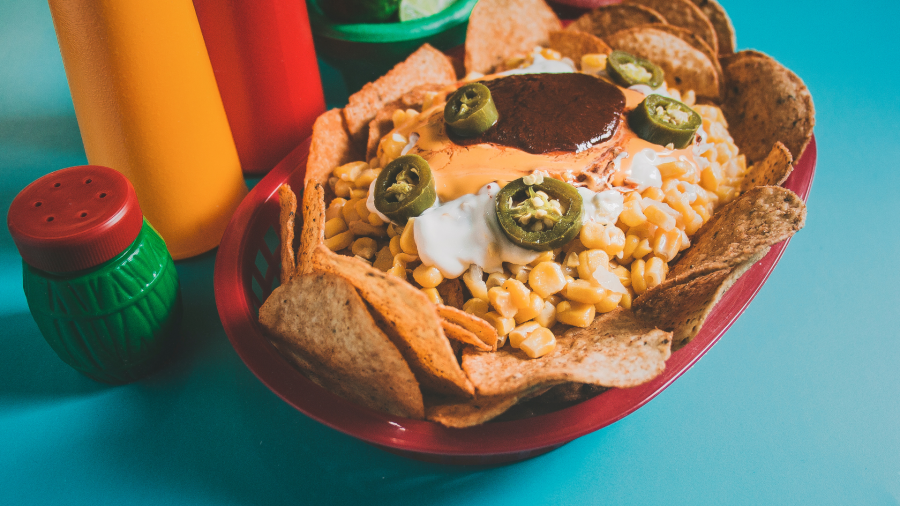
In the middle of a snowy night you shook me awake and said, “I need a tray of nachos.” All we had in the house were neon oil pastels, so I drew you a huge tray of tortilla chips covered with glowing jalapeños and pink lava cheese. “Sorry,” you said, “this just makes me hungrier.”

I was determined to make this work but I still had a long way to go.

So I promised to go get some nachos, no funny business, back before this snow sticks, call you if I need you.

I scraped the ice off the windshield, threw a twelve pack in the passenger seat and drove out toward an all-night grocery. Our town was so small, even the gas station had fallen into ruin.

At the highway onramp, an emerald ocelot stretched across both lanes. Fuck, I said, not again.

I stopped the car, got out and waved. The ocelot beckoned me over with a huge shimmering paw. I brought the twelve pack with me. The ocelot and I laughed about the times we’d met before, like, remember the night I missed two flights? That story, again. Other cars drove around us.

Soon I was leaning against him like a big furry couch in the snow. Then the ocelot said your name and asked how we were. I told him, growing apart.

The night got colder and the cars passing by started to pick up speed, even though it was snowing. The ocelot began to lick the ice off his paw and I forgot why I was there. The warm wet sound of the tongue confused the issue.

The whole time the nachos sat steaming in the car.

When I walked in I told you I was tired and the grocery store was far away. I hid how drunk I was, or thought I had until the Styrofoam box slipped out of my hands. The nachos looked ridiculous on the kitchen floor. I had talked to the ocelot so long, the cheese must’ve been cold by then.

You said, “Was he there again?”

I denied it but you shook your head in disgust.

I had a lot of wrong ideas upon reflection.

I walked toward the back door. The big tree in the yard was gone. The porch light showed the snow ending abruptly in the night. The sea green ocelot stood trapped in the sliding glass door. Its eyes were gray like crumbling stars. Its paws stuck in the soft powder. It was lonely and nothing else. Just like I wanted.

Joe Gallagher was born and raised in Orlando, FL. He now lives in Frederick, MD where he runs an independent press and writes poetry, prose, plays, and the occasional essay about space travel. Previous work has appeared in Carolina Quarterly, DIAGRAM, and Corium. He received an MA in Creative Writing & Publishing from Emerson College, where he was the poetry editor for Redivider. He has a wife who writes novels, two small children, and one large dog. Follow him on Instagram for more art & writing: @jgonestudio.