No One Holds a Grudge Like a Crow by Mac Crane

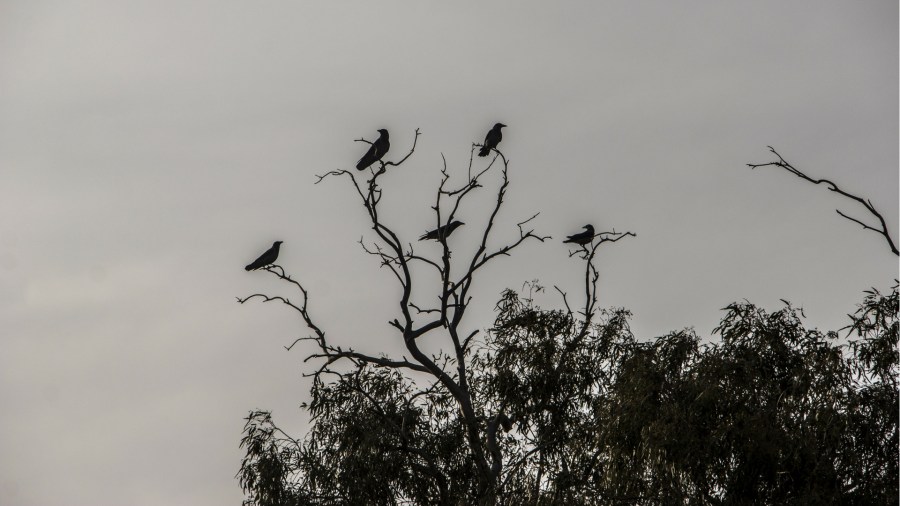
You wake up to the cawcawcaw of the crows outside. They still hold a grudge against you for that one month Lynx made you foster a cattle dog mix. He barked at the crows every time he took a shit, and they haven’t forgotten. Crows can remember individual faces. They pass this information down from generation to generation. In many ways, they are smarter than your own family that can’t even manage to call once a year. Somethingsomethingsomething about the June bug coffins lining your windowsill. They freak people out. Even over the phone. They can hear the June bug ghosts wailing.

Cawcawcaw, only louder this time. You muse over who you might be to the crows. “That imbecile with the evil dog” or perhaps, “That super cool guy we simply cannot pardon for his wrongdoings. No matter how rad his Saved By the Bell crewneck is. Yes, we mean it. No matter how rad.” You roll over and grab the notebook you keep on your nightstand for moments such as this and add the latter to your long list of crow speculations. You consider how the president may wind up pardoning himself before the crows pardon you.

You tried to make the crows forget. You started wearing a beanie whenever you left the house. They went crazier than ever as if to alert one another. A few even dive-bombed you and stole your beanie. It was a nice beanie too. Lynx had crocheted it for you. A pretty baby blue hue that calmed your tap-dancing neurons. After the crows stole your beanie, you started painting your face. First like a June bug, because why not? They didn’t like that. They took large dumps on your Welcome mat. Swirled like soft serve and impossible to fully clean up.

When you painted your face like the pink Power Ranger they cooed and fluttered their feathers. Yeah, they liked that shit. You thought you’d finally won and then what you think happened is one of the elders slammed down his gavel and said, “No, he is guilty regardless of his beauty.” Then one of the crows jimmied your bedroom window and broke in and stole the photo of Lynx that you kept on your nightstand.

Your last reminder of her.

The crows remember when you finally broke it off with Lynx. They remember it as well as you do.

You recall quite clearly covering her body in stamps. She just lied there and let you. Like it was the most natural thing in the world. Like love is only love if you drive that person away. The crows gathered at the windows and pecked the glass with their black beaks.

It was a Sunday so you set her on the counter by the door where you wouldn’t forget her, but on Monday it was raining and on Tuesday you were late for work. On Wednesday your horoscope warned against taking chances and on Thursday you got into a fight with the sky. On Friday you worked from home and drank whiskey far too early. On Saturday you scribbled the return address on her chest, in hopes that she’d be sent back to you, but it’s been more than three years now and the mailman got a new job so he wouldn’t have to continue disappointing you.

You climb out of bed and put your robe on, wrapping it tightly around you. You examine the June bugs, take roll call. Sylvester, Frangelica, Bryant, Nuchi, Manuel, Zane, Eva, Bo, Jian, Arnold. Everyone is present and accounted for, their exoskeletons perfectly intact. You are envious of their armor.

You take a deep breath, pull your hood over your head, then walk out the front door. The elder crow alerts the others of your presence. Cawcawcaw cawcawcaw, a new urgency in their calls. You shadow-box the air, daring the crows to challenge you. One by one, they begin to surround you. Left, right, uppercut, right, right, you dance around your yard like a more agile, less sad version of yourself.

The crows fly in circles around you, so fast that you can’t see the individual birds. Just the dark blur of their hostility, like a tornado.

Over the years you grow old and fragile inside that tornado. Your punches turn to gentle waves, your feet become cement blocks. The crows lose their voices and the only thing you can hear is Lynx telling you that the stamps were expired. That she’s here and everywhere.

Mac Crane is a queer, nonbinary writer and editor. Their work has appeared or is forthcoming in Pigeon Pages, Pidgeonholes, and Drunk Monkeys, among others. They currently live in San Diego with their wife. You can read more of Marisa’s work at marisacrane.org and their twitter handle is @mcrane_12.

with an empathy so fatal #44 by Darren C. Demaree

the children want to be
aggressive

with their empathy
they want to hold

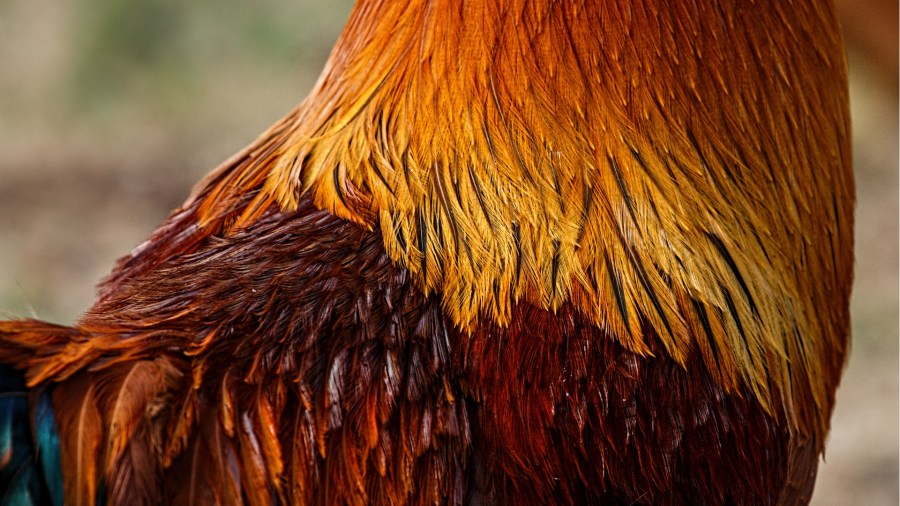
the rooster of each day
so they can show you

the rooster of each day
they’ve already asked

for tattoos of that rooster
on their chests

i told them if empathy
is an alarm if you think

empathy should be
an alarm then i find

no fault in you making
that permanent

the minute you’re eighteen
until then i’ll keep

buying orange to red
markers for your early

morning routine


Darren C. Demaree is the author of eight poetry collections, most recently “Two Towns Over,” which was selected as the winner of the Louise Bogan Award from Trio House Press.  He is the recipient of a 2018 Ohio Arts Council Individual Excellence Award, and the Nancy Dew Taylor Award from Emrys Journal.  He is the Managing Editor of the Best of the Net Anthology and Ovenbird Poetry.  He currently lives in Columbus, Ohio with his wife and children.

Agonal Respiration by Caleb Michael Sarvis

Spencer and Josie are hosting a house warming party. I bring Dakari, because Megan’s left him and we arrive close to the end. I meant to arrive on time, but we saw a fox when we stepped out of our Uber and followed it briefly into the woods. It watched us from behind a fallen tree and we passed the boxed wine back and forth, content to wait for its return. I would have offered my meatball of a heart had it meant one caress of that fox’s tail.

It never did, and now we’re shirt-stained and late.

Spencer and Josie bought their place in Bartram, a newly-developed area of town surrounded by forest awaiting more destruction. It’s an end-unit townhouse, succulents planted underneath expensive rocks. When we step inside, familiar teeth play cards around the dining table. Spencer asks us to take our shoes off, Josie recommends a glass of Garfield’s sangria, who I recognize to be the husband of the woman I love. In the coming weeks, I’m supposed to raise their newborn baby because neither wants to be a parent. He and I’ve never met, and I don’t think he knows who I am. She and I decided the adoption over pizza.

I realize Garfield looks exactly like me, only beardless, with different eyes. His eyes are all white, no pupil, and I’m not sure where he’s looking.

Josie’s plastic wings shake as she deals the cards. I avoid the Sangria, though Dakari’s finished off our box, and my thirst is only worsening. For a while I was sober, but I can’t remember the value in that.

The three other friends leave, they’ve been there for hours. Dakari deals and Spencer asks me how I’ve been. I tell him my new job has a lot of free snacks, plenty of dead time, and I can swear as much as I want. Spencer nods, he was a copywriter long before I was, is part of the reason I fell into it. I’m supposed to have edited this novel we’re going to publish through our small press, which I haven’t, and he’s avoiding asking me about it.

“How do I get a job like that?” Garfield asks.

“You have to be an artist,” I say. Dakari snickers at this and throws me a thumbs-up, shoves grapes in his mouth.

“You could be an artist, Garfield. Just have to become a little less practical,” Josie says. The wings she’s sewn into her shoulder blades look weathered and torn. She needs to replace them, just as I do my windshield wipers, but I imagine the process is plenty more difficult. Josie believes she is a fairy – has chosen to be a fairy – and doesn’t want any children of her own. Spencer waves it off, thinks her youth currently speaks for her, and like her youth, this mindset will fade.

Garfield pulls a pill from a zip-lock bag. He washes it down with some of his sangria. There isn’t much about him I dislike, I guess, other than he’s married to the woman I love. He shuts his eyes, smiles, and returns to the conversation. Creases slowly fade from his brow.

“Everything will be fine soon enough. Just a waiting game now,” he says and collects his cards.

“Game isn’t over,” I say.

“Evidently, you’re mistaken.”

I’m worried the baby will have his blank eyes, his smug stillness. How will I ever trust it? Dakari is out of his seat, dancing without music. Josie laughs and takes the hand he offers, teeth marked purple. Garfield pulls cigars from his shirt pocket, motions them towards Spencer and me. We join him on the porch.

The smoke is chalky and stale. I’ve never been good at this.

“How does the world look to you?” I say.

Spencer peers over his shoulder, watches Dakari and Josie.

“Different than you, I imagine,” Garfield says. He can puff rings, tiny and large. When he relaxes, smokes normally, it scoots from his lips like a seahorse. “How does the world look to you?”

“Hard to explain.” But it’s not. The world is a finely-painted aluminum ball. We’re the afterthought of someone else’s lunch. I spend most of my day wondering how to peel it all open. I won’t say this aloud. Instead, I say something stupid, like, “Babies are an art.”

“Hmm.” Garfield’s eyes appear to be made of the same smoke he spews into the night.

Spencer laughs at this, cheeks fat with drink. “My intuition only works in hindsight. I think I’m broken.” He sucks on his cigar, blows a large cloud to the sky, “She had me cut slots in the back of all her shirts.”

We sit in silence, listening to the minute crackle of our burning cigars. Smoke leaks from my mouth, a foggy sort of drool. I don’t believe in souls, but I imagine mine to be a little droopy, heavy with nonsense. I forwent efficiency in exchange for meditation long ago. No turning back now. A fox, perhaps the same as before, trots around the man-made lake behind their townhouse. It appears present, immediate, hungry.

Dakari knocks on the sliding glass door. We turn and see his face, eyes in bloom, face sagged. In his hands, he holds Josie’s wings.

Spencer opens the door, takes the wings from Dakari, then runs up the stairs. “Josie!” he says.

Dakari grabs three beers from the fridge, joins us on the porch.

“What happened?” Garfield says.

“She went to get comfortable. Her dress got caught, so she pulled harder.”

The fox returns, begins its second lap. I feel for it, the chase. Perpetual.

We drink our beers, content to watch the lake and overstay our welcome. Garfield’s voice grows soft. He tells us he doesn’t want to go home, that it doesn’t make a difference, either way.

Spencer’s returned downstairs. He has blood on his hands, his shirt, no concern for us. He’s flushed, hair slicked back. He washes his hands in the kitchen sink, returns upstairs. He leaves the water running.

Dakari finishes his beer, orders an Uber. “Beach bars?” he says. I think he might be asleep.

Garfield walks backwards, away from us, towards the lake, leaves his cigar and beer behind. When I think he’s looking at me, his eyes are lunar. “Make sure you do it right,” he says. The fox approaches lap three, fearless. When it passes, Garfield takes off after it, a pacing sort of trot, and my chest swells like the Hindenburg.


Caleb Michael Sarvis is a writer from Jacksonville, Florida. He is the author of Dead Aquarium or (i don’t have the stamina for that kind of faith) (Mastodon Publishing 2019). He is the fiction editor for Bridge Eight Press and co-host of the Drunken Book Review Podcast. His work has been featured in or is forthcoming from Hobart, Split Lip Magazine, Saw Palm, Fjords Review, Eyeshot, and others. You can read his column on FX’s Atlanta at barrelhouse.com.

Ashes than Dust by Iris Jamahl Dunkle

“Let go said the
What.
Let go said everything.”

–Brenda Hillman, “Split Tractate”


A fox sprinted across the dark driveway:
orange spark that trailed through the headlight’s spot.

You register this sighting as a totem. Then,
drive on into the life you’d written one way,
then revised due to characters disappearing.

In the nightmare. No, in the dream. (never
sure when it’s called a dream or a nightmare.

My son says it’s only a nightmare if
you wake up screaming
) there’s a dead body

being consumed by a writhing nest of
black and white snakes. They are re-writing what was lost.

When you wake you decide you would rather
be ashes than dust. You’d rather blaze out
like the fox, like a fur of sparks in the night,
than be left to rot, be untold.

By now, you thought time would have righted the swerve.
Thought your tires would have found tread. Instead,

you live in an echo chamber where owls
call and call, asking for forgiveness.


Iris Jamahl Dunkle was the 2017-2018 Poet Laureate of Sonoma County, CA. Interrupted Geographies is her third collection of poetry. It was featured as the Rumpus Poetry Book Club selection for July 2017. Her debut poetry collection, Gold Passage, was selected by Ross Gay to win the 2012 Trio Award. Her second collection, There’s a Ghost in this Machine of Air, was published in 2015. Her work has been published in publications including San Francisco Chronicle, Fence, Calyx, Catamaran, Poet’s Market 2013, Women’s Studies, and Chicago Quarterly Review. Dunkle teaches at Napa Valley College and is the Poetry Director of the Napa Valley Writers’ Conference.

Birds of a Feather by Tianna Grosch

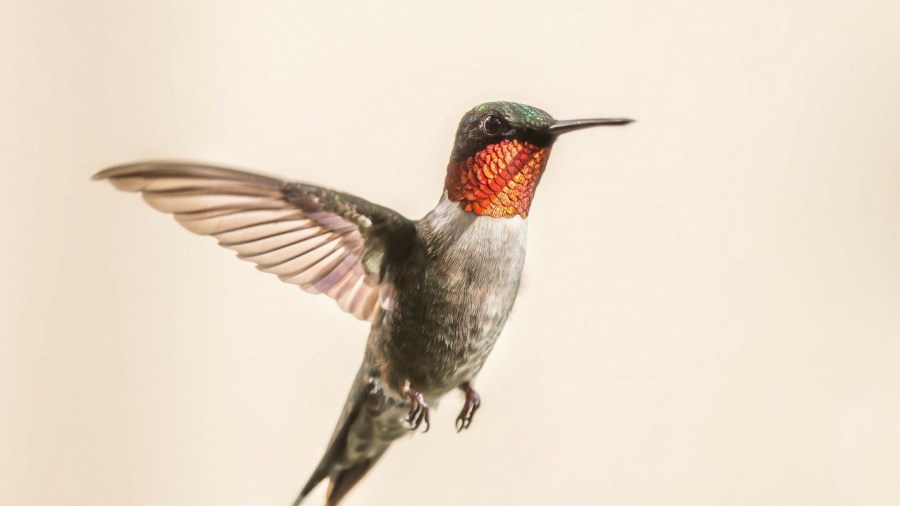
The small view on the New Mexican plain doesn’t offer much from the barred windows of cell 118, but sometimes I catch a glimpse of a bird out in this heat. These are the ones I sketch, in quiet moments to myself with a pen and paper I bought from Charlotte. Her favorite, she told me, are hummingbirds. Mine too. I draw them from memory. My garden used to attract them for miles. I would sit by the window, glass between us, and watch as they swarmed, wings buzzing and beating against the stiff air miles a minute.

I fondle three pills tucked away in my breast pocket, imagine what it would feel like to pop them in my mouth and swallow. I wouldn’t need water to chase them down, but I don’t dare take them. The little pills anchor me in more ways than one.

I think back to Charlotte’s proposal, her nonchalance in telling me how to start. I could see how it would become a habit, hiding the tiny pearls in my cheek at each Med-Line, transferring them to the secret pocket fashioned in the breast of my jumpsuit.

Charlotte and I sat together in the middle of the block, two months ago now, a sea of women surrounding us. I looked around, keeping my head low. My eyes registered the human shades coloring the room – midnight, chestnut, olive, porcelain. The rhythm of voices pulled me in and pushed me back out, a tide of small talk, complaints, criticisms, and misfortunes – secrets were the undercurrent.

I focused back on Charlotte.

She leaned in, whispering. “You know those little pills you get?”

“Yeah.”

“Share those with me and I’ll share my commissary.”

“What do you want with them?”

Charlotte chuckled, tugging at her scraggly, braided hair. “Same as you, sweetie. An escape.”

Charlotte reached out and traced the tip of her finger across the back of my hand.

“Take your time, think about it.” She smiled at me, and her eyes wrinkled at the corners. “We have all the time in the world.”

Charlotte is invincible, I’m almost certain. Like a hummingbird flitting her wings, she is unstoppable. But then again, she’s already caught.

A bird without wings at all. Just like me.


Tianna Grosch received her MFA at Arcadia University last year and works as Assistant Editor at Times Publishing Newspapers. She is working on a debut novel about women who survive trauma, as well as a memoir. Her work has previously appeared or is forthcoming in Ellipsis Zine, Crack the Spine, Burning House Press, Who Writes Short Shorts, New Pop Lit, Blanket Sea Magazine, Echo Lit Mag, and Nabu Review, among others. In her free-time she gardens on her family farm and dreams up dark fiction. Follow her on Twitter @tianng92 or check out her writing on CreativeTianna.com.

Kitchen, West-Facing Window by Jackie Sherbow

In our morning conversations the creature
on the roof might be invisible; a ducks’ nest
hanging batlike from the ceiling;
someone and their dog as one body.
Flour dripped on potting soil makes
bread grow—thick, healthy loaves,
stalagmites in our kitchen. I ask for
twine and you bring me
a length. I tie it around the stringy
stalks I’ve just replanted. This thing
always seems to lean away
from the sun—I turn it, like
I know better. To be happy
is an effort—you know this
about me.


Jackie Sherbow is a writer and editor living in New York. Her poems have appeared or are forthcoming in Moonchild Magazine, Bad Pony, Luna Luna, Day One, The Opiate, and elsewhere, and have been part of the Emotive Fruition performance series. She works as an editor for two leading mystery-fiction magazines, as well as Newtown Literary, the literary journal dedicated to the borough of Queens, NY.

Feeding Time by Tara Isabel Zambrano

Almost spring, and a sparrow hits the fan and falls into the mutton curry while we’re having lunch. Papa says it’s something to do with feeding her chicks, the bird’s always in a hurry. I pick up and carry the stunned little creature to the bed where Papa and Ma don’t sleep together anymore.

Year after year these sparrows have been making nests in that corner of the living room―one morning a broken egg on the floor, yolk clinging to the fractured shell. The same week Ma woke up in a pool of blood and cried for weeks because it was a boy.

Every few days, Ma cleans the bird shit stuck on the floor and the wall. Back in the nest, the mother’s at attention, a rush of wings as if responding to Ma’s curses. Some days the sparrow sits on the fence, flies around, swoops this way and that, shows off.

Now the bird lies on her side, breathing hard, until she puffs her gravy stained chest and stands up. Before I help Ma to dispose the mutton curry―the only food we had because we’re down to single meals a day since Papa got fired last month, I check on her again―and sure enough she’s back in the nest, peeping at our empty dining table.


Tara Isabel Zambrano lives in Texas. Her fiction has been published in Tin House Online, Bat City Review, Slice, Yemassee, and other journals. She works as a semiconductor designer in a startup and holds an Instrument Rating for single engine aircraft. She reads prose for The Common.

German Company Says Talking Doll is Not “Espionage Device” by Martin Ott

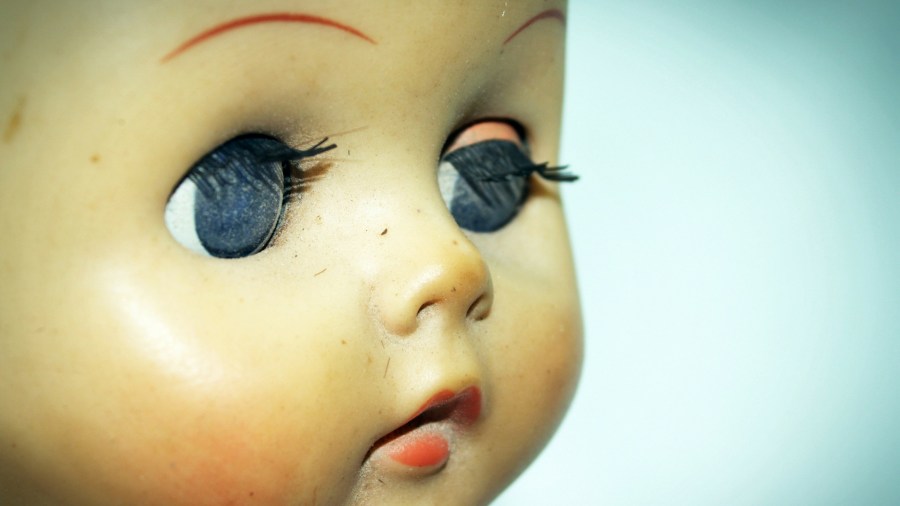
Cayla listens to chatter perhaps a little too well.
She asks questions. Important for the kids to tell
her their toughest regrets. Eyes are not windows
to the soul. They are mirrors for secrets exposed.

No one knew Cayla was a double agent, first
for parents worried about boyfriends and the thirst
for drugs. The nights were long on the cold shelves
and the dolls decided to make up alternative selves.

Some children became dolls. Some dolls became spies.
Some spies became children. Some memories were lies.
The press release was practiced by a boy kissing the lips
of his cordial doll, his paralyzed audience, a syllepsis

from the time she, he, or they could imagine a universe
beyond the swift stares and steps; the microphone whirs
in a world where it is fine to not believe or to know.
The pieces, too, tell the assembly of how to grow.


A longtime resident of Los Angeles, Martin Ott has published eight books of poetry and fiction, most recently LESSONS IN CAMOUFLAGE, C&R Press, 2018. His first two poetry collections won the De Novo and Sandeen Prizes. His work has appeared in more than two hundred magazines and fifteen anthologies.

Wild Hairs by Tomas Marcantonio

“You see those sparkles on the water? There, where the sun catches the crests of the ripples? They set my blood alight.”

I make an effort with the reaction. Less a laugh and more a heavy exhalation, but it’s polite enough. She’s still looking at me.

“Look at this,’ she says, taking the lighter off the wooden table. She opens a flame, holding it in front of me. ‘Imagine your blood’s laced with paraffin and I hold this to it.’

“It’d hurt,” I say, trying to smile.

She shakes her head. “It’d rip right through you. You could cower and shrink into the corner, or you could charge like a flaming phoenix into the air.”

I smile and thumb at the condensation on my beer glass. I never know what to say when she talks like this.

“You’ve no idea, do you?” she says. She looks back at the water, at the progress of the yachts, sails up before the horizon. “Don’t you wanna get out there? Doesn’t it make you want to do something? Look at that peak,” she demands. I do what she says. The cars are scrolling past on the bridge, the mountain green behind it. “What do you think when you see that peak?’

“It looks good,” I say. I wish I could say more, but I don’t know what she wants.

This time she’s visibly frustrated. “Let’s hike it,” she says, her eyes fixed on mine.

“When? Today? I thought you just wanted to chill.”

She rolls her eyes. “Fine, tomorrow, whenever. I just want to get to the top of that mountain.” She looks away at it. “I wanna rip my way to the top like a clawed beast, then stand there and crow and look down at the water. And then roar, and shout, and throw a frisbee from the peak and watch it sail across the water.”

I shrug. “We can do it if you want.”

Her chin goes down, her jaw clenched. This isn’t going to last. I start to wonder if this will be our last day together. I take a sip of the beer.

“It said on your profile you liked to travel,” she says after a time.

“I do,” I say. “I did. I told you lots of my travel stories already. Africa and everything, remember?”

She runs a finger around the rim of her glass. “And now your wild hairs have fallen out.”

I look at her, but her eyes are on the ocean again. “What?”

“Your wild hairs. You had them, and now they’ve fallen out. Your peacock feathers. You plucked them and threw them behind you like a trail of crumbs, and you think that’s enough.”

I start thinking how I can end this amiably.

“Let’s swim,” she says. “Now, right now. Let’s charge into the water like golden pups.”

I pick up my drink again. She’s been getting more like this every date.

“What is it?” she says. “What’s holding you back? There’s something, isn’t there?”

“You mean why don’t I want to swim? A dozen reasons.”

She smiles. “Wow. You’re riled. I can see that you’re riled now. It’s taken long enough. There’s never more than one reason. Give me the real reason.”

I look around.

“Give me the real reason,” she says again. “Stop making stuff up in your head. Give me the reason you won’t go swimming right here, right now, with the water sparkling like that.”

“There’s all these people here.”

She looks at me and nods. “Yeah. So what?”

“No one else is swimming.”

“Yep. No one else. You a sheep?”

I don’t say anything.

“Can I ask you something, Mark? When did it all stop being exciting for you? When did you start caring so much about what everyone thinks?”

I can’t answer. I can’t answer because I don’t know.

“Goodbye, Mark.”

She stands and finishes the last gulps of her beer, drops it back into the condensation puddle on the table. She walks onto the sand and strips down to her underwear, runs into the water, screaming like a banshee. The people on the other tables are watching her, smiling.

I watch her from the safety of my chair. Wild hairs. Yes, damn it, I used to have wild hairs too. I used to have them all over. I had balls of electricity on the tip of my tongue. Golden fireworks fizzing through my toes. Where did they all go?

Maybe I burned them all out. Maybe I was too pleased with myself, let myself off the hook. Yes. I stopped trying. Trying to scare myself. Scare away the anxiety.

I stand. I feel the eyes on me. My heart’s going like a damn stampede. Horses’ hooves churning up the ground with their lucky metal shoes. I usually try to slow them down, herd them into the shadows, sling on their blinkers. But maybe I’ve been hiding too long. I close my eyes for a moment, imagine pulling out the starter’s gun. Hold it into the air. Bang. Now they’re thundering into the home straight, and I’m riding every damn one of them. Standing on their backs with my hands in the air and my wild hairs on end. Yes, it’s been a while.

I charge into the water. Dive, and the cold engulfs me. Crystal awakening, a rebirth in ice. I feel the salt on my lips, the sting of the sun in my eyes. Too damn long.

She swims over to me, hair plastered over her face. We float, face to face. She has the mountain behind her, the sea, and I want it all. I want to gobble it all up and tear it to shreds.

“I don’t think we should see each other anymore,” she says.

I nod.

“It’s not my job to put you together again.”

I nod again. And smile. I lick my lips and taste the salt on them. It tastes much better than I ever remembered.


Tomas Marcantonio is a fiction writer from Brighton, England. He has been published in various journals and anthologies, most recently Ellipsis Zine, Firefly Magazine, Storgy, and The Fiction Pool. Tomas is currently based in Busan, South Korea, where he teaches English and writes whenever he can escape the classroom.

Desireé Panda and the Lee Van Cleefs by Tracy Lynne Oliver

A murder dinner for beckoning. Let’s have a grave way with phonics. Let’s tangle bright inside one another. Holding forks, holding knives.

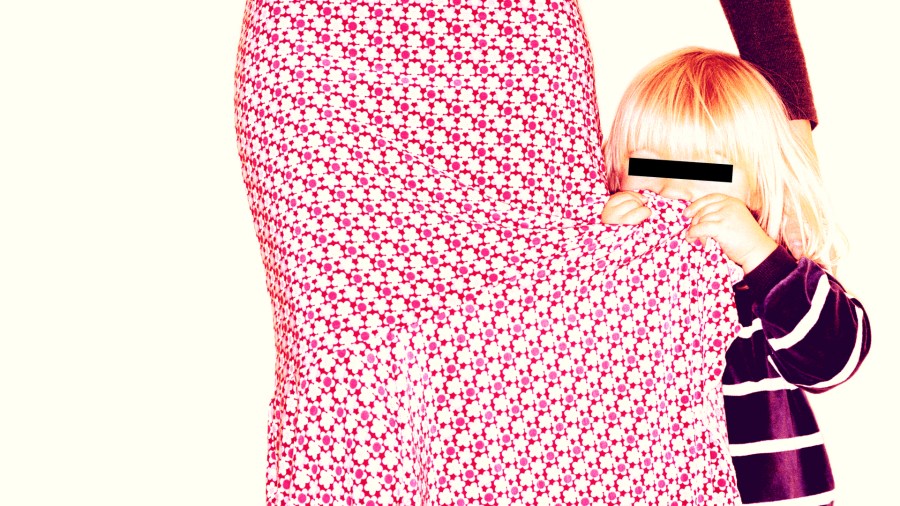
Come out from behind my mother’s skirts. Take a bow between us. We’ll hold hands like she’s not even there. Like how she’s never been there. Be my kind. Be what I have been.

Have you versed before?

Have you come inside someone you wanted to become?

In a special way, you have visited me; an errant balloon, a dusty seascape, a scraped knee with edible scab. I have yearned to taste your footskin, too full on my own. Let’s rub each other’s heads in the dark. Let’s torture a young boy together. You go first, and then I will go first.

In a leftover summer dark where I don’t matter, you will get mud-wet with drown. I will take my feather petticoats into the depths for you. I will scoop you with my arms. I will embrace your travesty, lay you before your mother, kiss your gloated, dead mouth barfing fish.

Let’s all be horrified.


Tracy Lynne Oliver is attempting to make a new name for herself in this writing game. Check out her website: tracylynneoliver.com or just follow her on Twitter @T_L_OLIVER.