giving all my heart to the dirt sprayed across my hands by Fabiola Cepeda

Sometimes I like to draw on my teeth, but not today. I do not like to draw on my teeth today because yesterday Luis ate dirt. The day before Luis was sprayed across my hands and my shirt; I had to dig a hole in my backyard. I said a prayer for Luis, my friend Luis. Today I put my pillows on the top shelf in my closet, I am giving up sleep for him.

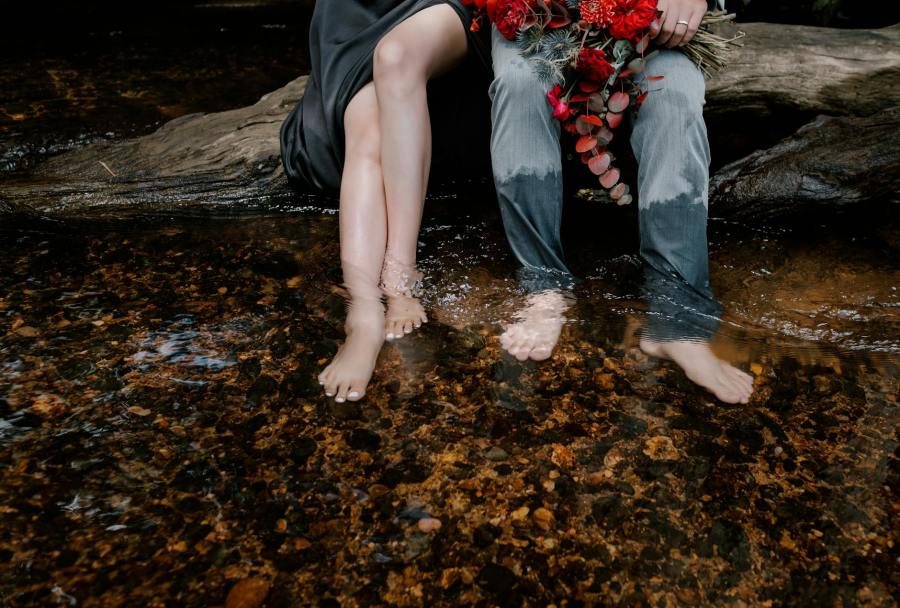
My reasons for anything are always temporary, so it doesn’t matter if Luis killed the rabbit, even when he bit him. I miss my old life, when we would skip over rocks on the river, dip our feet in, get a cold. I miss being frozen in our room, unable to move, forgetting what it felt like to feel normal and healthy, wishing for more than anything to be warm and healthy again.

My feet slipped from under me during class while I fell asleep with my head down. looking out the window, my friend Sarah asked me if I was okay. I do not know how to tell her that I do not have time, I gave time up for Luis.

The rain falls all over the place, and my CD keeps skipping in my ears. Today is All Saints Day, I dressed up as, well it doesn’t matter, now that you can’t see it. My mom made me dress up for All Saints Day, I tried really hard not to celebrate it without you, I know it was your favorite. No one really likes All Saints Day. Mom and Dad’s breath comes from the same bed now, they gasp and are curious; I forget how thin the walls are here. I am going to stop crying all the time, I want to be as alive as one could try to be, even if that means doing the bad things. I want to hear people say, “That’s not like you! Luis would be disappointed,” but I know they are lying.

On the underside of a fog you are so lonely. Alone, with dirt sprayed across your face, wedged between your skin. I don’t want to be shot brushing my teeth with you. Alone in the modesty of our gums, waxed with baking soda. It was easier to avoid a greater sadness than whatever this is, I guess that’s why I did it. Why I buried you in the backyard, sliced up, full of juice.

It is still raining and you have stolen the warmth from this earth. But someday secretly, I will work on bringing you back up. That way we can walk into the theater, hand in hand; see the tiny stage hold up the great fools. Their shadows bouncing behind their eyes. And yes, it is all necessary, to see multiples of you through my backyard window.

The leaves are a yellow and it reminds me of you, and even though the road is closed I go down in. taking in the trees, searching for you. It is hard to find you in the dust that fills the air. I wish I could have looked at you a little longer, Luis. I know I must go but my ears hurt from wind blowing. The new is not important to me anymore, how could all of this keep happening when you are gone. You’ve been far from land for too long, just come back.

I could almost see you floating in class today. I didn’t cry, it was an awkward mask I forced myself to wear. Tall people do not seem to understand, Luis, the destruction of moldering at a wooden altar. At the funeral, others laughed. In your towel my knees killed grass, feet were brown and shone through the crack that ran up the wall. I got thrown to the tub, but I leaked out of my knee and made my escape to your grave. But they twisted me back and lives carried on.

My feet hurt from walking across streets for you. I can’t go go home anymore and sleep. I don’t think you would have this Luis, but I can’t keep squinting my eyes just so I can remember you. It is hard Luis, to eat when I think I see you on the kitchen table. It is even worse when I go to Abuela’s house and see multiples of you swaying in the wind. I go drawing on my teeth and smearing my nose on the couch. I don’t miss you anymore, you were just a lemon, Luis.

Fabiola Cepeda is a Mexican-American Writer from San Antonio, Texas. Her work has been published in Gravel, Cargoes, and The Hunger Journal. She is currently pursuing a degree in creative writing and studio art from Hollins University in Roanoke, VA. You can find her on Instagram @whatfabifound and @fabiolaleyendolibros.

Fireflies by Rina Olsen

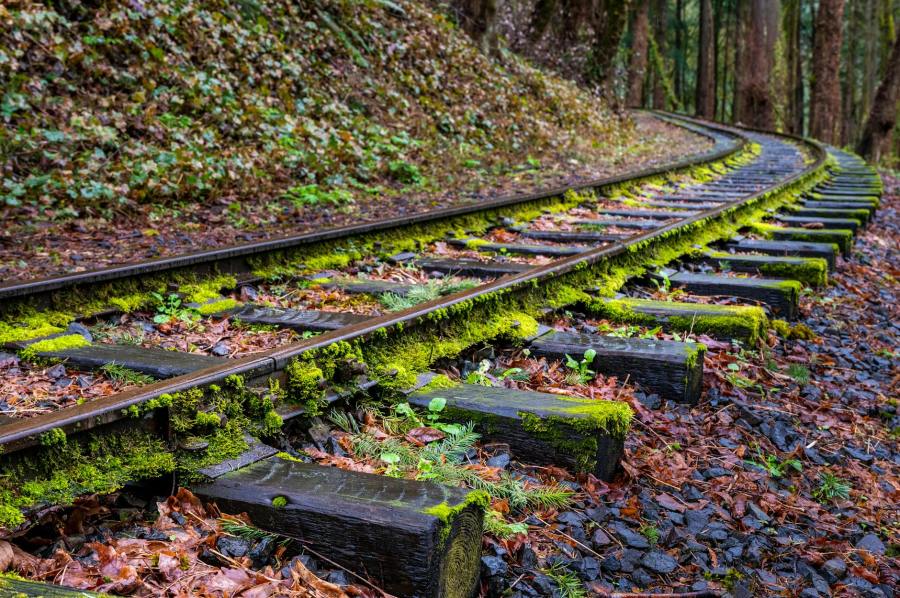
Last night I had the dream that my father had had nearly twenty years ago now. But it couldn’t have been the same dream because it wasn’t me on the railroad tracks. It was my daughter.

In this dream I was following her from behind. Far behind. I wanted to hurry. Or at least call out to her. But for some reason I couldn’t.

She was on the track that ran over the river into the woods. The west bank. When she was little I used to bring her out here. We’d take pebbles and rocks home. Pretty ones to decorate the house with. Or she’d pick some leaves and make crayon rubbings of them. My father used to bring me here as a kid often. The last time we were here my daughter was at summer camp and the sky looked like it wanted to rain and he asked me about her college plans. 

She stopped coming with me when she was about fourteen but I still keep those rubbings with me.

In my dream I could see the riverbank through the spaces between the tracks. Pretty spot. Must’ve been my second year of college when we came down here one August. Me and this guy. He took me one night to see the fireflies and while we were sitting on the rusted track he caught one for me so I could hold it before it flew away. Just sat there on my fingertips blinking on and off. They were everywhere that night. Fallen stars among leaf litter. Yellow eyes blinking. I shivered and he put his arm around me and said Cold? and even though I shook my head he pulled me closer and squeezed. So I rested my head on his shoulder and looked up at the outline of his jaw against the sky. He looked down at me and our faces were so close that I could smell the fruity aftertaste of vape and then the taste of peaches was in my mouth hot and damp and then we were on the tracks and then all I knew was soft peach flesh and yellow blinking eyes all around us.

When my father asked how it happened I said nothing. Must’ve thought he could get more out of me than my mother could. But no one got anything out of me. No one ever gets anything out of me if I don’t want them to. All the goddamn time  he was pestering me what are you gonna do what are you gonna do what are you gonna do but I was barely listening because by then I was shut up for good.

In my dream I followed the tracks out over the water. The smell of brine and shit and suntan lotion wafted up. Water brown and stinky as ever. Sailboats dotted it like flecks of white paint on brown canvas. That’s how I knew that guy actually. I used to go sailing all the time before I dropped out. Out with friends in the sun. Tanned arms short white skirts fishing rods. I never told my parents about the drinking. Always drinking back then. Bottles littered the deck and we’d throw them overboard. We threw a lot of things overboard. One time when he was on the boat I drank too much and vomited. Didn’t get to the railing in time and it got all over his feet and my feet but he still held my hair back for me. I can see it in this dream: ribbons of orange trailing after one of the sailboats. Probably his boat. Maybe he’s holding back another woman’s hair now.

In the dream my daughter was already in the forest but I was still over the east bank. Litter flashing in the sand: beer bottles soda cans cigarette packs. High school. Sneaking out at lunch to drink smoke do whatever. The intimacy of a leather steering wheel spinning through my hands at midday. The first burn of Bud Lite on my throat. One time on the sand where the grass springs up nice and tall a classmate put his hand up my skirt and I let him. I never told my father about that. This was around the time he had the dream of me crossing the railroad tracks and him following behind and in the morning he said something like Hey you doing okay? But there’s no way he knew about any of that. I knew when my daughter started smoking but I never said anything. She doesn’t know I know. But I know.

In my dream I spotted my initials on a wood railroad tie where the tracks met the east bank. I’d carved them when I was thirteen or fourteen. The letters used to be a fresh sandy color. In my dream they were as dull and faded as the river. Hungry flowers crawled over the rusted steel. Pickerelweed milkweed marigold. They smelled like my mother’s laundry detergent. As a toddler I would bury myself in the laundry and listen to my mother call my name Where are you where are you answer me and when she was near crying I would pop out and run to hug her. When my daughter was born I always folded the laundry immediately so she couldn’t do the same.

In my dream I was in the woods now. My daughter far ahead. Wait. I wanted to call to her. Wait for me. The fireflies were starting to come out and for some reason I could sense that something terribly wrong was going to happen. Dread grinding against my stomach. Wait for me.

I watched her crouch on the tracks. I wanted to move forward but all I could do was watch from behind which meant I couldn’t see what she was crouching over.

What are you doing?

Wait for me.

Come back!

She stood and straightened. Then: I’m fine Mom. But don’t look. It’s a secret.

Rina Olsen, a rising high school senior from Guam, is the author of Third Moon Passing (Atmosphere Press, June 2023) and The Water Stricken (Atmosphere Press, October 2024). An alumna of the 2024 YoungArts program, Iowa Young Writers’ Studio, and Adroit Journal Summer Mentorship Program, her work has been recognized by the John Locke Institute, Sejong Cultural Society, Carl Sandburg Home, and Guam History Day. Her fiction pieces “Bataya Slums, 1971” in Milk Candy Review and “Skeletons in the Closet” in Okay Donkey were long listed for Wigleaf‘s Top 50 Very Short Fictions in 2024. When she isn’t writing, Rina can be found playing the piano, looking up obscure history, or with her nose in a good book. Find out more at her website: https://rinaolsen.com.

Marriage by Amber Burke

Dark Circles

The husband and wife my husband and I met at the dinner party both have undereye circles so dark they are almost purple. Even though they smiled often enough, the dark rings gave the couple a haunted, intimidating air, as if they had glimpsed the end of the world, and we didn’t talk to them much. We talked about them—or rather, their dark circles—later that night in bed. We wondered if the dark circles could have predated the marriage and even sparked the initial attraction between the future husband and wife, causing each to recognize in the other a second self. Or perhaps they came after the marriage and are being caused by the same factor; the meals the husband and wife share could be missing the same important nutrient, or the same city noise or streetlight could be keeping them both awake, or they could be worried about or grieving for the same person. Or perhaps they have caused them in each other—the dark circles arose from whatever they are in the habit of doing together that is keeping them up: fighting, or making love, or reading out loud, or speculating late into the night about couples they hardly know.

A Small Danger Remains

I am no seamstress, but no one would see the rough stitches I was hash-marking in the ripped lining of my husband’s coat pocket, through which he’d lost many things—money, keys, his phone. When I was nearly finished, I lost my needle. I’d set it down to adjust the coat on my lap and when I reached for it, it jumped off the table where it had been resting. I couldn’t see where it went. This is why people have pincushions, I thought, but I didn’t have a pincushion. It was remarkable really that I had a needle and thread that matched the coat well enough.

I thought the needle was likeliest to have landed on the coat itself. I inspected it, then got up and flapped it over the chair where I’d been sitting, in the corner of the living room by the light. Nothing. I inspected the chair, and then the floor under and around it. I didn’t see the needle anywhere.

My first impulse was to get my husband to help me look. But I thought it unlikely that he would find it; his eyes are exactly as bad as mine, and I am usually the one who finds things. I thought it more likely that he would upbraid me for my carelessness; he could sit on the needle, or the dogs could step on it, and was I going to be the one to take them to the vet if they did? If we didn’t find it, from then on, every time we went to the living room, he’d inquire about the needle and lower himself onto the couch with exaggerated wariness. After long enough, it might turn into a joke; wherever he sat, he might say, “Ouch!” and I would laugh but also feel something poking me. I decided to take my chances; if the needle was somewhere I couldn’t find it, perhaps it was also somewhere it wouldn’t hurt anyone. I took another needle, finished my sewing, and this second needle I made sure to put away neatly.

Later that night, when my husband was showering, I looked for the lost needle with the help of a flashlight, to no avail. I put on my reading glasses and crawled around the living room with my nose very close to the floor. No needle. The following week, I expanded my search field, even flipping books over and shaking them and tapping the dirt around potted plants fruitlessly. That was last month. More recently, I’ve checked for the needle in the fruit bowls on the kitchen counter, between the sheets of our bed, and in the cupholders in the car where all manner of things appear, but not the needle. We sat outside on the porch last night, and I caught myself scanning the early spring grass, looking for something sharp.

No one has so far been injured. The days are already lengthening. It will be summer soon, and in the sharper light, the glint of the needle may be easier to see.

Miracle Grow

My husband planted grass seed but would water it only once a week, and then give it only a quick sprinkle, saying it is drought-resistant grass. I too am ambivalent about grass, but I pitied the grass he so carefully planted, which, after the spring rains were over, quickly began yellowing under the hot sun. So I began watering it generously when he was gone, which he was for work, a few nights every week. Now he thinks the drought-resistant grass grows magnificently without water and is sure we do not need to water it even one day a week.

Amber Burke graduated from Yale and the Writing Seminars MFA Program at Johns Hopkins University. She now teaches writing and yoga at UNM-Taos. Her work has been published in in swamp pink, The Sun, Michigan Quarterly Review, Flyway, X-R-A-Y, Quarterly West, and Superstition Review, among other places. She is also a regular contributor to Yoga International and co-author of the yoga ebook, Yoga for Common Conditions.

I Found a Stone Under My Skin by Amanda Parrack

May 10th 9:58 pm

I was brushing my hair when I noticed the top part of my head was tender. When I put my fingers through my hair searching for the tender spot, I stopped and felt the bump the size of a dime. For some reason I had an urge to pop it, like a pimple, so I did. When I squeezed the bump, blood ran a straight line down my neck and what was left was a small stone in my hand. I took a shower of course. I am hoping to schedule a doctor’s appointment tomorrow.

Before that, I was having one of my depressive episodes. Thank God I live alone even though I have my cat, because who in the world would keep up with the messes I leave around the house? I fed Salem in the morning and laid around all day watching reruns of Community. I don’t know what I am doing with my life, and graduation is around the corner. I hate that Sammy broke up with me only two months in. I was hoping she would be my future or at least I would have her a part of that.

May 11th 5:58 pm

I scheduled a doctor’s appointment and was able to get something at 3pm. When I checked in, I sat in the waiting area by a TV with sounds from a recent episode of SpongeBob. I glared at past text messages from Sammy and decided to shoot her an update. I know she said she doesn’t have feelings, but there’s always a chance. Wouldn’t she want to know about the part-time job I got? In all honesty I shouldn’t have sent it, but I did.

The doctor had my blood taken and is supposed to call tomorrow if there is a chance I have cancer or something. She asked if I did drugs or alcohol to which I said no, but then she asked if I drank caffeine, and I said I did. She looked at me like I murdered someone even though tea and coffee are the one joy I have in life. She suggested I cut back on so much caffeine and said that the hole in my head should heal up soon. She also was in much disbelief when I said a stone came out of my head. Perhaps she thinks I do LSD. She did ask very carefully if I did drugs.

May 13th 6:45 pm

Sammy didn’t reply to my texts for a while. I kept saying that we should talk and asking why she was pushing me away. When she finally did respond, she sent something short and simple. That she is sticking to our agreement of not talking for a while until she gets her shit figured out. I should probably get my shit figured out.

The doctors called and said there is no sign of cancer in my bloodstream but I am low on iron. I am not sure what that means or why a rock came out of my head. Just yesterday, I found another tender lump in my armpit. This morning I popped it and this time the stone was as big as a quarter. The doctor suggested I take iron pills, so maybe there is some correlation? Who knows, I am not a doctor. I am just a music major.

Speaking of which, I haven’t been doing good at being a music major. I haven’t been practicing much and I haven’t been inspired to write music. With graduation around the corner, sometimes I wonder if it was a terrible idea to do music. The job outlook isn’t too great. I guess I could be a teacher. Backup jobs are always teaching at some middle school, because the world will always need more teachers. People keep asking me my plans after graduation. If these stones don’t stop coming and I die from them magically, perhaps there won’t be any future.

There is this guy Brian I work with at the gas station. He’s a smoker and always knows what each regular prefers when they check out. Brian used to also be a music major but ended up as the manager of the gas station which worries me.

Working at the gas station, you see a lot of people that are reflections of the broken systems in society. You start to feel pretty terrible handing a forty-year-old man his tenth lottery ticket for the day around lunchtime. Or the woman who just bought a whole box of cigarettes.

Anyways, these stones that keep coming from my body feel like a relief.

May 14th 9:00 pm

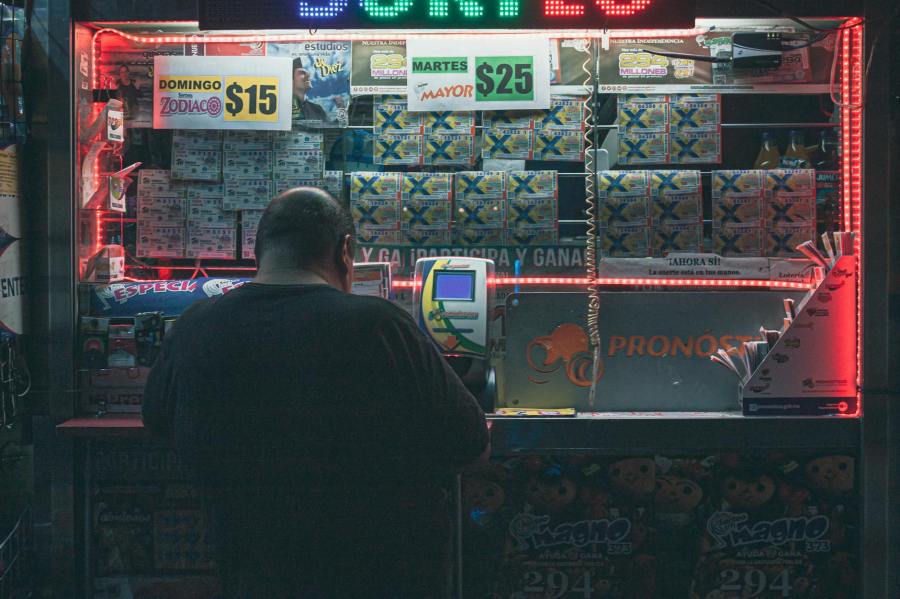
There’s a handful of repeat customers who buy lottery tickets. They go and scratch off and come back with less money than they had and start the process all over again. They don’t even say hi at this point like some normal human would. They just go to the lottery board and point at the numbers they want me to grab.

But it turns out I handed out a winning ticket that ended up becoming $141,000. The lottery guy came in and told me. I was nervous since there were rumors I was going to receive a $1,000 tip. That would definitely help. I had a stone at the tip of my thumb, just a small one that’s all, but I could feel it was ready to pop. The guy ended up giving me 50 dollars. When he did, I gripped the money too hard and the stone popped out right into the lottery guy’s hands. We both just looked at each other.

May 20th 11:45 pm

Wow, it’s been a while since I have updated. I usually jot something down every day or two.

The problem is that I have been busy. The stones have been growing from my body at an astounding rate, and I probably look pretty ugly from them. Sammy would never take me back. I have a little bucket in the corner of my room full of them. Salem tends to keep away from them and always hisses when she gets near. I have wondered if there is some correlation to kidney stones, but the last two appointments have found no correlation. The doctors left me with no answers and a huge hospital bill, so I have decided not to go back and to deal with this problem on my own.

Maybe the stones are growing because I want them to.

I don’t smoke or anything nor have I ever bought lottery tickets, but these stones, although they might sound scary to you, are a way for me to cope sometimes. It’s almost out of compulsion, the way people pop a zit and find it satisfying. There is no pain and little blood from my scars. One time after an angry customer argued with me, I went to the bathroom to pop a stone from my elbow and it felt so good.

I guess you could say I wanted this to happen.

I want something, anything, to happen.

Amanda Parrack is an undergraduate at Missouri State University and works at the writing center as a writing consultant. She lives in Springfield and spends her free time out in nature.

After His Mother Throws Him Out, Nicky Spends the Night on the High School Roof by Kathryn Kulpa

This was 1997, before everything sucked. You could wander off school grounds, or back onto them. Life was fluid. It could expand. “A FIDDLER ON A ROOF!” Nicky shouted. His tenth-grade girlfriend had been in that play. She played a grandmother in a babushka: still looked hot. And now, like he’d psychic summoned her, his old girlfriend came walking by. He gave her a hand up. They shared a smoke. Nicky watched moths masquerade as fireflies against the moon. He watched the moon turn shy and hide behind a cloud. Like his ex-girlfriend, it went away sometimes. Sometimes, it came back.

Kathryn Kulpa is the author of For Every Tower, a Princess, just released by Porkbelly Press, and A Map of Lost Places, forthcoming from Gold Line Press. Her stories can be found in Best Microfiction, Best Small Fictions, BULL, Moon City Review, trampset, and other journals. Find out more at kathrynkulpa.com

Two Micros by Jeffrey Hermann

The Voice of God Gives Up the Act

This was years ago. God stopped speaking from the sky and admitted that there are actually many gods and they all shared the job of the voice of god. It got complicated; they could never agree on anything. Nowadays they ride the bus or go to the mall. They talk too loudly. Voicing their little opinions, all the authority drained out. They’ve become lazy and forgetful. They get distracted by nice weather or their own fingernails. If someone is hogging a public restroom it’s probably them, primping in the mirror when you really need to go. They are vain but there is something sweet there. Maybe because they have no money, or that they aspire to an ideal of love. One time a god came running out of the kitchen to bring me a smoothie but spilled the whole thing on the carpet. The small god started crying, little tears on her cheeks. A glittery river of snot running from her nose. It’s okay, I told her–I’m not mad. She gets upset about storms, too. The darkening sky, how the birds all get quiet. There’s nothing to be scared of, I say. And we sit by the window and take everything in. We listen to the rain on the house, we count between the thunder and the lightning, and we sip the smoothies we remade together because she wanted another chance to make me happy.

If it’s Not One Thing it’s a Million Things

I feel I was born at exactly the right time in history. Every day I wake up and find problems built just for me. There are things I say sorry for and things I try to forgive. I forgive a woman on the news who stole money from her boss. I’m sorry I called so late. What are we doing 400 years from now? I wonder all the time. I’m not young anymore so I don’t think about heartbreak the way I used to. I know there’s not a word for everything. Our dog sleeps in a little bed on the floor while my wife and I watch TV. Sometimes there’s a train whistle in the distance. Our dog looks up when he hears the train whistle in the distance. I look up at my dog when he looks up when he hears the train whistle in the distance. If there’s a heaven I hope it’s me walking in our front door like normal. I hope it’s my kids barely looking up from their phones to say hello. Did you hear the news? The world’s best scientists say they discovered what will come after us and it’s dinosaurs again. They’ll roam the planet like they used to. They’ll hunt and claw and forage. They’ll uncover our bones in the earth and think nothing of it.

Jeffrey Hermann’s poetry and fiction has appeared in Electric Lit, Heavy Feather, HAD, trampset, and other publications. Though less publicized, he finds his work as a father and husband to be rewarding beyond measure.

Almost Plea to My Ex-Therapist by Rachel Laverdiere

Things may have gotten too serious too quickly, but I gather up the long skirt of my dress and step out of Steve’s vintage yellow bug—a car I’ve dreamed of owning since I was little— one of Steve’s many green flags. Maybe, like you always said, despite the father who abandoned me and a failed marriage, I believe in the magic of happily-ever-afters. I tell myself it’s carsickness making my stomach turn, the pickle and peanut butter toast I wolfed down for breakfast or maybe Steve proving his love by showing up dressed in a tux and his black Converse when I dared him—another green flag—but deep down, I’m pretty sure it’s something more serious. You always say it’s easiest to come clean early, but I can’t figure out how to tell him we’re probably gonna need to special order a car seat designed for a bug without you coaching me through it. I try to picture an older, balding Steve sporting a dad bod, but I can’t, so how do I know I’ll love him forever? How can I be sure Steve won’t dump me in this parking lot, leave me to raise a child I wind up resenting like my mother resents me for ruining her life? You’d say, Cycles are meant to be broken, but THE CLOCK IS TICKING, AND IT’S ALMOST TOO LATE!

Steve unlocks the door, so I follow him into the gun shop he inherited a decade ago and think of how his handle, YourSecondHusband, felt like a challenge, which—as you, more than anyone, knows—I’m always up for, so how could I not have swiped right? He looks up at the giant portrait of his mother behind the counter, and in his sexy baritone says, “Mama woulda loved you, Boo. Wish she coulda met you.” Mama’s gunmetal grey eyes bore into me and tell me otherwise, and more than ever, I wish I hadn’t ghosted you three months ago because lunch with Steve felt more important than crying on your couch while you scribbled in your notebook. In my head, my mother tells me, For chrissakes, his mama breastfed him until kindergarten—she’d convince him you’re looking for a meal ticket. You would tell me to ignore my mother’s voice, so I look up at the ceiling and mouth, Fuck you, Rose! And stare Steve’s mama directly in the eyes. But my mouth waters, and I can’t breathe, so I close my eyes like you’d tell me to and list five people who love me: my cat Pooh-Bear, besties Catherine and Ev, Mom’s ghost. And Steve, of course. My fingertips thaw, but my stomach keeps churning. Steve and his tribal tattoo and dirty blond dreads disappear behind the shotgun display just in time to miss me puking into the trash can. 

Hands trembling, I take the phone from my purse—you’re the only person who’s been there for me. Even though I paid by the hour, I believe you actually care. I type, Help! Need intervention! Courthouse in 20? Re-read the text and add double prayer hands to show desperation, but I slip the phone into my purse, message unsent. 

Steve reappears carrying a small wooden box. His eyes grow moist when he sees me changing the garbage. He takes the soggy trash bag from me and says, “No need to dirty your pretty hands today, Boo-Boo!” I avoid Mama’s eyes, but my cheeks blaze. I know I need to tell Steve. As I open my mouth, my mother pipes up, Fess up under no circumstances–not even gunpoint. Not til he’s put a goddam rock on your finger! She harrumphs and adds, Looks like a runner if you ask me But I’m not asking her anything. I wish I could block her from my thoughts as easily as I did from my life. You applauded my epiphone that I should always do the opposite of what my mother would. 

I clear my throat to tell Steve the truth, but he holds a wooden box out to me and says, “Mama woulda wanted you to have this.” A gigantic sapphire sparkles under the fluorescent glow. My heart thuds even though I shouldn’t be surprised to see my favourite gemstone—everything’s lined up since our first date at the Sparrow Café: his flamingo print shorts, the flamingo garter tattooed around my thigh; my hot pink converse, his black. At the counter, I ordered Sparrow’s spiced dragon chai with extra froth, and Steve turned to me with his boyish grin and said, Wild! That’s my order, too! Each time we find more common ground, it’s like Snow White’s little bluebirds are tugging my heart up into the clouds. We both played varsity volleyball before dropping out of art school—him to help with the shop while his mom was dying, and me because I just stopped showing up; we both want at least two kids because we grew up “only and lonely,” and we’re both petrified of small breed dogs, especially white teacup chihuahuas with pointy teeth because they attack like hungry piranhas. In my head, you say, Your avoidant attachment stems from your germaphobe mother withholding touch and intimacy once you started school, and, because you couldn’t trust her, you tend towards insecure attachments, which means I’m getting in my own way because I don’t think I deserve Steve’s love. 

Steve takes my trembling hand. The ring easily slips onto my finger and he beams, “A perfect fit!” The sapphire winks up at me. 

I shake my head to clear it, fake a smile and say, “Absolutely stunning!” Really, it is. All of this is.

Steve laughs and tucks the ring box into his hot pink cummerbund. When he takes my hand, electricity zings up my arms and into my nether regions. I close my eyes and try to imagine us five years from now. Three kids immediately pop into my mind. My heart races.  A two-car garage appears, then me with my mother’s hips, and Steve, dread-free in a button-up and tie because we’re off to church, and there’s probably another cat or non-chihuahua dog keeping Pooh-Bear company inside, and it all feels exactly right, and I realize it’s me who’s afraid and likely not Steve. I point at my still-flat belly and say, “Ready for this shotgun wedding?” He wraps his strong arms around me, and as he twirls me around and around, I thank god I didn’t send the text because I’ve figured this out on my own like you always said I could.

Rachel Laverdiere writes, pots and teaches in her little house on the Canadian prairies. Find her recent Pushcart Prize and Best of the Net nominated prose in Sundog Literary, Lunch Ticket, and Longridge Review. For more, visit www.rachellaverdiere.com or find her on Twitter at @r_laverdiere.

The Machine by Dana Jaye Cadman

I’d been running the machine for, oh, maybe a dozen years when Ang came in to check for a thing they were suspect of in her chest. “Routine,” I said, to make her feel better. But no one came in just for no reason. We were looking for the one big thing.

And I knew how to find it.

Little woman but the room changed as she walked in. Dark hair long that swayed and suddenly everything seemed brighter. First time in who knows how long I noticed the person before a scan.

She handed me her paperwork and I mumbled toward it, “What music you into? Jazz?” 

Better to maintain objectivity. 

She shrugged and I turned on some music as she lay in the machine.

“Just hold tight, ‘ll be over soon. Ten minutes max. Depending on how still you stay.”

She nodded.

It’s unmistakable to a trained eye, what we’re looking for. Dark masses. Vacuous spots where it looks like a piece of someone is missing.

Thing was, Ang’s body wouldn’t take on the image. Just wouldn’t read right. Even when she stayed still, the whole of her was a blur. Over and within her, an apparition, light, showed on the screen. Three times I tried and the ghost kept dancing, glitching out.

I’d never seen this in an image. My scan, like all the others who had the one big thing, looked like craters on the screen. Conclusive.

“Sorry,” I said through the mic. “A minute.” I ran diagnostics on the machine. All clear.

We’d been instructed not to panic in the case of irregularity. Not to read into it. 

And yet.

She winced. “What’s wrong?”

I could feel my voice shake over the machine’s hum. “Let’s try one more time.”

Her face softened and she held her breath. I pressed scan again.

The machine pulsed on. Again, the image everywhere seemed filled with light. No layers of tissue. No grey spaces where the air should fill her lungs. No deep dark craters. 

She got dressed. “You see anything?”

I pressed print and handed her the paper: Inconclusive.

I hoped she found the hope in this. She could live a life without the knowing. So beautiful where there are no answers. No name for what you have. Or are.

She looked down at it. “So what now? I just go somewhere else? Try again?” 

“Honestly?” I leaned into her. “I’m pretty sure it’ll show up the same way anywhere.”

“So then, what is it?”

I moved closer, closer. I could see something in her eyes then. An extra light. The apparition alive from within her. Like she had a doubled soul.

“What is it they sent you in for?” I said.

“A pain they couldn’t find a why for. I feel it though.” She put her palm on her chest. “Here.”

I reached my hand over, gentle, like touching the surface tension of a pool of pretty waters without making it break. Then, just an inch or so over her skin, there was a spark. A field. An edge to her. A magnetism.

“That,” she said.

She looked into me. Her eyes were backlit like she held a star inside. If it were the one big thing in her, she’d be empty and sinking. I knew that cold gravity. I felt the thing in me pressing against my bones.

But Ang glowed. An extra life in her light. Inconclusive.

“I feel it,” I said. I did. 

“Thank you.” She broke and crashed, crying. “I just needed to know it was real.”

If I had more days to give. Weeks to check on her records. If I could give her only this. 

“It’s real,” I said. “You’re real.”

Dana Jaye Cadman is a poet, writer, and artist. Her work recently appears or is forthcoming in Conduit MagazineFour Way ReviewThe GlacierThird Coast Magazine, and elsewhere. She is Assistant Professor and Director of Creative Writing at Pace University, Pleasantville. See more at danajaye.com.

Baron Karl von Drais’ First Bicycle Ride by Andrew Graham Martin

My name is Baron Karl von Drais, and I aim to purge the horse from history.

I’ve got just the thing to do it, too.

But more on that in a moment.

First.

Horses: vile, repulsive, odorous beasts. There is no word strong enough for these devils. They foul our streets with their swamp-like waste and they toxify our already-charged atmosphere with their nasty temperaments. Horses are without virtue. A horse cannot love you. A horse cannot be tamed. A horse feels no pity when it flings you from its back.

So I shall bring the time of the horse to its end.

As I write this, the quill trembles in my hand and plops of my sweat dot this yellowed parchment. Two empty chairs sit across from me. One vacated willingly. The other unwillingly. The unwilling chair is a wooden child’s stool, with its seat removed. The seat is now outside, attached to my invention, baking in the hot German sun.

In this way, my boy will accompany me on my first ride.

In a few short moments, I will perform an inaugural journey from my home here in Mannheim to the Schwetzinger switch house. A nine-mile round trip.

I will complete this trek in mere minutes.

I will enlist the help of no odorous, dangerous beasts.

My journey will be a horseless one.

I will commit the journey on a transport of my own invention. A laufmaschine. A running machine. The English call it a draisine. I’m partial to the French term: draisienne.

My draisienne is unlike a horse in every conceivable way. My draisienne has carriage wheels for legs. My draisienne has no bones nor meat nor sinew; she is housed in a clean, wooden frame. My draisienne does not respond to prodding ankles in the ribs; her back wheel halts with the simple pull of a cord. My draisienne does not produce excrement, nor flatulence, nor snorts. My draisienne is silent as a windless night. She is cool to the touch, as willow bark in the shade. My draisienne is safe. If one were to fall from her seat, the distance would be inches, not feet. The draisienne will not continue running if she leaves a small broken body behind her on the pavement. My draisienne will slow to a stop if there is no one to propel her forward.

My draisienne will not wander. She yearns not for food nor drink nor company. My draisienne will not leave me, even should we encounter tragedy together.

My draisienne exists for one purpose.

To expedite my travel to Schwetzinger switch house.

I hear the crowd outside growing restless.

I am aware that there are those who oppose me. Old women in the town call me a scoundrel and a cur as I go to retrieve my mail. Children throw their apples at me, saying they’ll soon have extras, won’t they, if I get my way. Anonymous threats have been made against my life. I find their scrawled notes slipped under my doorframe every morning.

Man’s connection to horse is a strong one. I admit this. The bond will not be severed overnight. But severed it must be. However painful it is for us as a society, our reliance on horses cannot be sustained.

Our lives are being poisoned by these wretched creatures. Every day, our bronchi blacken further due to the fumes of their waste polluting our streets. These beasts do not care for us. They dirty our earth and disrupt our lives with their recklessness. They cast off what is most dear to us. Our children. They fracture families. They have no awareness. They have no remorse. They snort and they piss and they chomp their apple slices.

So, their time has come. If, in one hundred years’ time, the metropolises of the world are overrun with horse ghosts, my mission today will have been a success. Horse ghosts are unobtrusive and clean.

Despite knowing it is time to go, I must admit, I cannot stop my hand from shaking. My heart performs a tremolo against my sternum.

One final thought.

If I were truly confident what I was doing was a simple matter, that rendering the horse obsolete as a being would right the tragedies of my past, and set me on a course for contentment… If I were confident in this, would my brow now be as damp as it is? Would my breathing be so shallow?

Strike that.

There is no room for doubt on the narrow path of progress. There is no estate reserved for reminiscing. If uncertainty creeps in, if melancholy threatens, well.

I’ll simply push the carriage wheels beneath me to go faster.

Andrew Graham Martin’s writing has appeared or is forthcoming in McSweeney’s Internet Tendency, MoonPark Review, Post Road, SmokeLong Quarterly, X-R-A-Y Lit Mag, and elsewhere. He lives in Indianapolis, Indiana.

Dadoo by Skyler Melnick

Dadoo is his name. He arrived on our doorstep after a storm. Hat crooked, coat unbuttoned. Told us he was our Dadoo. You mean father? we asked, unsure, and he nodded, repeated Dadoo.

Dadoo crawled into our house, and we let him, because we were in need of a father, and what were we to do, when one miraculously appeared, but let him in and thank our lucky stars.

As we were thanking our stars—Philip, the brightest, and Marigold, shy, flickering—Dadoo slithered toward us, in between us, and shut the window. Bedtime? we asked. He nodded.

We did it, my brother whispered. All the wishing, wondering, waiting. We did, I agreed.

Dadoo woke us for school by cuckooing like a rooster, cuckooing until our eyes adjusted to the morning light, and our ears to the sound. Is this what a father sounds like? We looked at one another, my brother and I, then at Dadoo, his head tilted toward the ceiling. Yes, my brother and I decided, this is a father.

For the time he was with us, which, admittedly, wasn’t long, Dadoo was focused, determined to raise us. After waking, he scoured the kitchen for breakfast food then watched us eat. Watched us crunch each bite. Watched our jaws churn the food. Watched our throats carry it down to our stomachs.

We weren’t sure he was our father, exactly. We weren’t even sure he was human. He appeared to us more creature-like, but we accepted him just the same. We accepted when we got home from school and found him crawling up and down the walls, opening his mouth and shooting out his tongue, catching flies and swallowing them.

Dadoo is marvelous! we clapped.

The marvels were unceasing. When he ripped our front door off its hinges and held it over his head, we applauded. We watched him carry it down to the beach and looked at each other, my brother and I, knowing what our father was trying to tell us, what he was trying to teach us, so viscerally—to be open, to let people in. And we would, we would try. We would have to, now that we had no front door.

He broke us down again—this time the entire back wall of the house. Carried the wall down to the beach as we clapped. We knew what this meant—we admitted to ourselves, my brother and I, that we knew. That sometimes, as Dadoo so eloquently demonstrated, you have to look back. The past has shaped us and, sometimes, we must look back.

Thank you, Dadoo, we said to him as he scurried back into the residence. It was cold without the back wall of our house, but the past can be cold.

As he put us to bed, for the fifth night, our beloved Dadoo ripped off the sheets, first from my brother’s bed, then mine. He bundled the sheets in his arms and stormed off with them.

My brother and I gazed at each other from our respective beds. Yes, we said to each other with our eyes, we must take off our protective layerings and expose ourselves to life.

We woke to the sound of distant cuckoos. We hurried awake like Christmas morning, excited to find where our Dadoo was hiding, what lessons he would teach us today. In our pajamas, we ran down the stairs and out the hole where our front door used to be.

There he is! My brother pointed.

We went hand in hand to the shore and saw Dadoo standing on the back wall of our house, the front door propped up atop it, our sheets billowing like a sail.

Dadoo has made a boat! We clapped at this lesson, unsure what it meant. We watched Dadoo push his house boat into the water. We watched as the ocean took him in its arms, watched as he waved at us. We waved back. The greatest lesson of all, my brother and I agreed—letting go.

Goodbye Dadoo, whispered my brother. All the wishing, wondering, waiting. Goodbye, I agreed.

After trying and failing to swim out to him, we really let go. My brother and I cried into each other, sand crabs biting at our toes. A big sand crab crawled up my leg, and my brother snatched it up. We looked into its eyes, its monster sand crab eyes, so familiar, so distant, so longing. Mother? we asked the crab.

Skyler Melnick has an MFA in fiction from Columbia University. She writes about sisters playing catch with their grandfather’s skull, headless towns, and mildewing mothers. Her work has appeared in Pinch, HAD, Scoundrel Time, Terrain, and elsewhere. She was also awarded 1st place in Fractured Literary‘s 2024 “Ghost, Fable, and Fairy Tales” contest.