Time Only Looks Human by Lynne Jensen Lampe

Everything starts with a start. You emerge from the lake in August, a toddler covered with silt. The neighbor’s mastiff cleans your face and noses you to the glass of cold milk on the porch. An hour later you’re nine, wearing a Scout uniform and no longer thirsty. In the crook of a linden tree you find a small package wrapped in brown paper. Inside is a matchbook and a diagram of a log cabin fire. You gather kindling. The wood flames. You turn thirteen. After eating a salad of dandelion greens, nettles, and wild violets, you sprout breasts and begin to bleed. The mastiff teaches you the word estrus, tells you to go to the c-store for tampons. It’s almost noon. You’re almost twenty, clad in t-shirt and jeans. A car stops. The driver wants to sleep with you. A paper in your pocket reads Sleep = Sex = Death. You think of the lake and sunfish darting in and out of pelvic bones, yellow perch laying opalescent roe along strands of hair. The sun shifts in the sky. You’re thirty-two and ache for motherhood, hike back to the lakeshore. If you wade into the water, you must remain. You decide against this sacrificial birth. The mastiff drops a pup at your feet. You feed the campfire. Before blue spruce can hide the sun, you reach fifty, t-shirt now a fair isle sweater. By the time Ursa Major emerges, you’re seventy-four. Arms empty woolen sleeves, then cross your breasts. Skin heats skin. Fire dies.

LYNNE JENSEN LAMPE’s poetry appears in journals such as The Inflectionist Review, Journal of Compressed Creative Arts, and THRUSH and anthologies in the US, UK, and Germany. Her debut collection, Talk Smack to a Hurricane (Ice Floe Press, 2022), an Eric Hoffer Book Award winner and finalist for the McMath Book Award, concerns motherhood, mental illness, and antisemitism. A Red Wheelbarrow Poetry Prize finalist, she edits academic writing, reads for Tinderbox Poetry Journal, and lives with her husband and two dogs in Columbia, MO. You can find her online at https://lynnejensenlampe.com; Instagram @lynnejensenlampe; or Bluesky @ljensenlampe.

this because dog is god spelled backwards by Erinola E. Daranijo

after Daniella Toosie-Watson

One of these days, I will buy myself a god; and no, not a toy god, but the big kind. I will show my god off to my friends and brag about how big my god is. Say my god is bigger than yours; and when my god barks, I’ll say my god speaks the loudest; when god licks me I can say god loves me too and when god strolls too far, I can say my god has forsaken me. But I’ve been told that’s just pessimism; god can never leave me because every day I’ll pray to dog. Say dog, big dog, dog of mercy, I offer myself unto you. I used to have two gods before, named them Bonnie and Charlie. Bonnie was a sweetheart god. Mother of gods. Charlie was more devil than god—once tried to maul me to death. I ran from the angry god and cried to mother. God tried to kill me! Mother laughed. You do not run from your god. Bonnie and Charlie died many years ago, when I was younger, long before I understood gods. I thought gods never died. Mother cried for weeks. Cried, my gods! My gods! Dog! Why did you have to take my gods?

Erinola E. Daranijo (he/him) is a Nigerian writer. He is the Editor-in-Chief of Akéwì Magazine, and author of the micro-chapbooks An Epiphany of Roses (Konya Shamsrumi Press, 2024) and Every Path Leads to the Sea (Ghost City Press, 2024). He splits his time between the cities of Ibadan, Lagos, and Cape Town. Say hi on Twitter at @Layworks.

The Man with the Third Ear by Ann Weil

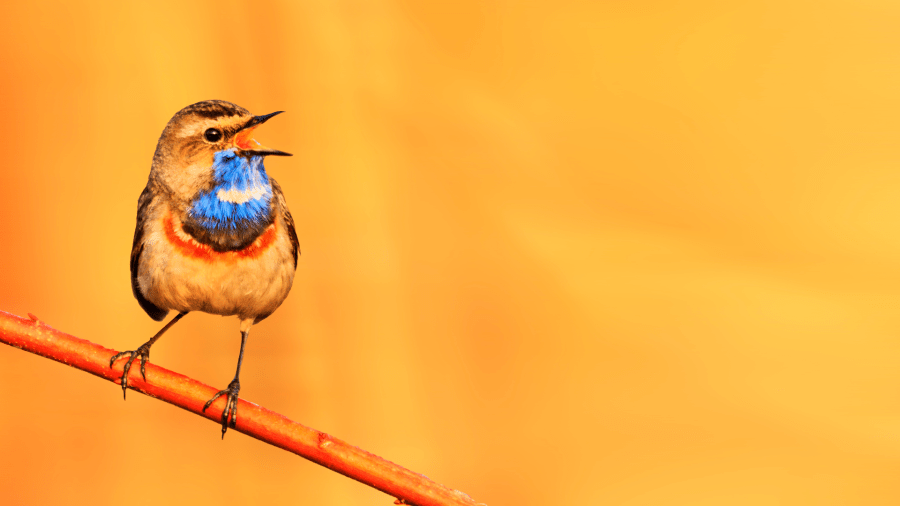
The man with the third ear lives on Canal Street and is used to curious stares, children pointing, and the occasional rude remark. He isn’t bothered in the least. He understands the blessings of a third ear, and his is a highly skilled worker. His third ear hears only truth. Growing up, he heard the truth of his mother’s love in that ear as she sent him off to school with a reminder—kindness above all else. He heard the bark of his best friend, Dog, who waited on the front lawn for his return. He heard his father’s late-night apology to his mother—another missed dinner—and he knew his dad was truly sorry. As the boy grew into a man, he still heard truth in his third ear, only less of it. He heard nothing in that ear when he watched the news, or when he traded fishing tales with his pals. He heard nothing from his wife, and while that saddened him, it made the divorce easier. She left him for a two-eared bartender. Now, the man with the third ear takes long walks in the jack pine forest and knows to stop and listen when he hears a Kirtland’s Warbler sing. A rare bird is worth waiting for.

Ann Weil is the author of Lifecycle of a Beautiful Woman (Yellow Arrow Publishing, 2023). Her work has been nominated for a Best of the Net and appears in Pedestal Magazine, New World Writing, Crab Creek Review, 3Elements Review, and elsewhere. A former special education teacher and professor, Ann writes at her home in Ann Arbor, Michigan, and on a deck boat off a sand bar in Key West, Florida. She is part fish, but won’t tell you which part. Visit www.annweilpoetry.com to read more of her work.

A House on Two Legs by Kendra Marie Pintor

How long will I be cleaning that house out of my ears? Picking it’s floorboards from between my teeth with the prong of a hammer, plucking my father’s collection of crushed Miller Lite cans like gunk wedged between my toes, wiping away the hardened chunks like the husk of my mother’s heart from the inner corners of my eyes. How long will it take to fully disentangle myself from that place? Is it insane for me to shop online for “ear swabs made of steel,” or “nail picks that shoot fire,” in an effort to eviscerate that house from my body? I don’t know what else to do. Every time I argue with my husband, the house comes out. I spit up lamp cords strung with crystal ornaments, Thermoses full of warm wine, My Little Pony’s with glittery manes, chlorine and barbeque smoke, ammunition covered in backyard soil, a first communion dress that smells like a dusty attic, photographs where we’re all smiling but no one is happy. It’s like scrubbing at hardened grease with a soft sponge. It’s like trying to clean whites without bleach. It’s like trying to keep hair from slipping down the drain, to keep it from knotting into a wad that will clog and cause the water to overflow, spill out onto the floor, wetting my husband’s feet, and always right as he’s leaving for work. No matter how hard I try, I keep finding that house, and all its memories, burrowed and hibernating in my belly button like a brown bear in a cave, stuffed up my nasal passageways making it hard to breathe, under my fingernails, under my skin, which I pick and scratch whenever I need to distract myself. And that house, it is heavy. And it is hard work. And it is a load I would like very much to put down. And I am the load. And I am the house, on two legs. I carry it with me everywhere I go, and while I try so hard to keep it all to myself some of it falls out and god my husband, my friends, even strangers off the street, they ask, “do you need some help with that?” And they reach down and pick up the belt, the quarters my sister and I used to hold against the wall with our noses, kneeling on the hardwood floor, the orange pill bottles that filled every drawer, the VHS tape of Toy Story recorded over with porn, cradling it in their hands as if it is a precious piece of me, and it’s the way they all look at me that makes me want so badly, so, so badly, to drop the whole thing. To leave that house condemned wherever I am, and watch as wrecking crews raze it to the ground.

Kendra Marie Pintor (she/her) is a rising author of speculative horror from Southern California, with work appearing in Lunch Ticket, Fast Flesh Literary Journal, CRAFT Literary, FOLIO LIT, and LEVITATE Magazine. Her story “The Sluagh” has been nominated for Best American Science Fiction/Fantasy and was selected by Alternating Current Press for the 2023 Best Small Fictions Anthology. Kendra is a graduate of the University of La Verne’s creative writing program and the 2022 UMass Amherst Juniper Summer Writing Institute.

Lesson by Sophie Klahr and Corey Zeller

Your father teaches you to ride a bike by holding a handful of M&M’s and running ahead of you far down the long road beside the lake. If you catch him, you can have the M&M’s. It sets a precedent. One has to be hungry. How many syllables are there really in “Memory?” I believe it depends on how badly you want it. Don’t mis-take me: I am as afraid of ruining this as I have been of anything. I don’t know if I believe anymore that there are best words in their best order. There is only what one leaves behind.

Sophie Klahr and Corey Zeller are the co-authors of There Is Only One Ghost In The World (Fiction Collective 2, 2023), winner of the 2022 Ronald Sukenick Innovative Fiction Contest. Their work also appears or is forthcoming in Tupelo Quarterly, Copper Nickel, Denver Quarterly, Alaska Quarterly Review, Puerto del Sol, Salamander, and elsewhere. Although they have been writing together for ten years, they have only met once.

On the night my uncle dies i sing a little song by Alyssandra Tobin

I dance a little dance. I let the Jersey Devil talk me down. I listen for the sound of that big voice in my head and find it loud. I pray before the altar of see you laters. I scoop poison out of our rivers. I plant trees in our cities. I think it is no small thing to die and yet it’s also the most ordinary. And what of it. I click my heels and I’m in a smaller world again. One where fewer people who loved me as a child are still here to love me as a bigger child. It’s the vanishing I can’t stand. The sudden jolt of empty stair. The switchback to nowhere. All of it’s got to mean something. What if I told you I had an uncle once named Harry Tacelli? You don’t care. And why should you. I care tho. I’m gonna care until they finally get me. You know, the ones who get everybody, in the end.


Alyssandra Tobin is the author of PUT EYES ON ME NOT LIKE A CURSE published by Quarterly West in 2022. Her poetry can be found in Poetry Northwest, Bennington Review, Puerto del Sol, and elsewhere.

Working for an Oil Company Conglomerate Will Get You Perks Like This by Cheryl Pappas

On a world-class submarine headed to what was left of the Azores, I had just taken one delirious sip of a 1929 Beychevelle Bordeaux when a drop of water plopped on my left shoulder; I watched the crisp cream linen of my shirt morph to gray and looked up: a leak.

The ceiling was 30 feet high, impossible to spot the source. I glanced at the others, drinking their wine and sloe gin fizz. No one had noticed. Alice twirled her shiny black hair while chatting with Rich from finance, her eyes droopy with dopamine. I knew she was sleeping with him now. Days later, Rich’s silken black tie would wash up on a distant shore, but in that moment his teeth held a lively shine, like they were plastic, which in truth they might have been. Another plop. The fairy lights on the upper balconies twinkled like Christmas; violins swooned their way into sleepy hearts; red, white, and blue streamers snowed down from the sub ceiling; children flush with sugar ran up and down metallic stairs. The girls’ dresses fluttered amid giggles and stomping, amid Mozart and a wine glass shattering on the marble floor. It was all very Titanic. I was the only one with the knowledge of what was to come. My vision blurred. I was drunk. I looked long at Alice’s parched lips remembering how soft, how deliriously soft they were when I kissed them under a cherry tree in the dark as I felt two more drops on my shoulder, then three. All the while, as some would find out later, two great whites were a mile away, their noses pointed toward the source of a steady, mellifluous hum.


Cheryl Pappas is an American writer living outside Boston. Her fiction, poetry, and nonfiction have appeared in Hayden’s Ferry Review, Juked, The Chattahoochee Review, HAD, and elsewhere. She is the author of a flash fiction collection, The Clarity of Hunger, published by word west press (2021).

Any Other Person by Arielle McManus

sometimes I like to go on real estate sites & look at apartments for sale in cities other than my own & imagine the kind of person I’d be if I lived there like if I lived in Stockholm I’d have a red bicycle with a silver bell & short hair bleached white-blonde & I’d have a terrace to grow berry bushes & Queen Anne’s lace on & I’d either only smile or frown I haven’t decided which yet & if I lived in Berlin I’d have a neck tattoo & would sleep under a skylight always at the mercy of the weather always at the mercy of something bigger than myself & I wouldn’t think twice about the number of calories in a pint of beer but I’d still be so thin & god you’d be so jealous & if I lived in Paris I’d smoke Gauloises on an ivy-covered balcony & I’d look like some tragic heroine in a novel rated 3.7 stars by people on the internet who don’t know the difference between a prose poem & a lyric essay & I’d have a study full of philosophical books in languages I don’t speak & never will & I’d wear glasses even though I have 20/20 vision & if I lived in Porto I’d drink black coffee standing up in my kitchen tiled with the white & azure azulejos that I stole from the Porto São Bento railway station in the cover of night just me & a chisel & a masonic hammer under the star-needled sky I think I could hear the ocean if I stopped the clash of metal to ceramic long enough to really listen only I’m never quiet enough to hear the waves heed the warnings just skating by on whispered promises & maybe tomorrows mustering up just enough strength to see myself through each acrid dawn


Arielle McManus is a dual Swedish-American citizen, learning as she goes and writing from a tiny, sunlit room in Brooklyn. She is an assistant editor at Atlas & Alice, and her writing has been published by a variety of literary publications including Passages North, Entropy Magazine, and Cabinet of Heed, among others.

Puffy Little Pink Heart by Hannah Grieco

It’s not you, it’s me. It’s not that I don’t feel this, it’s that how I feel doesn’t matter. It’s not that I don’t like you, didn’t want this to happen, didn’t plan to get that drunk and sit in your lap and, okay, maul you in a Burger King booth in front of that family with their four small children. It’s that I really am too old to do those things and also I have two small children of my own and a husband and I can still taste the fry oil in the back of my throat and it, and you, are giving me heartburn. It’s not that me sleeping with you was symbolic of who I used to be and the way I used to act, it’s that I’ve been trying desperately to not turn into something symbolic, something comfortable, something that fits easily on a key chain, something that everyone recognizes when they see it, something sticker-like and shiny, but not too shiny, like maybe a puffy little pink heart sticker on the back of a Mother’s Day card. It’s not that me sleeping next to you wouldn’t remind me of uncomfortable, brave, unrecognizable experiences and feelings, it’s that I don’t get to do uncomfortable, brave, unrecognizable things anymore. It’s not that you aren’t pretty, because you’re so pretty, so pretty I scooted next to you on that bench and asked for one of your fries, the only vegan thing on the menu, which was why we went there in the first place, and I’d been making fun of you all night for being vegan, but actually I find it so appealing, so beautiful that someone cares that much about anything anymore. It’s not that I wouldn’t cast this all away in a minute, because I would cast this all away in a minute, in a second, so fast my entire life would be an intertwined blur of the past rapidly decomposing and you and me driving down the highway in my runaway minivan, Indigo Girls and Dar Williams and KD Lang on your shitty old iPod shuffle, your hand on the back of my neck, my hand on your knee, above your knee, the part of your knee that tickles if I squeeze even a little. My hand on your knee and my heart in my throat.


Hannah Grieco is a writer and editor in Washington, D.C. You can find her online at www.hgrieco.com and on Twitter @writesloud.

Meeting Octavio Paz on the Planet Jupiter by Jose Hernandez Diaz

I met Octavio Paz on the planet Jupiter last fall. He said he’d been living there since his death. Myself, I was on vacation with my family. When I first saw Paz, I paused and asked myself, “Should I go up to him, he’s won the Nobel Prize?” I did. I introduced myself as a comic book writer and illustrator and that it was a pleasure to meet him. We shook hands. I didn’t want to talk about writing with him, so I asked his favorite soccer team. “Pumas,” he said. Later, he asked me what was the name of my most famous comic book so he could get a copy. “The Magician,” I told him. It was getting cold on Jupiter, so we called it a night after that. I never forgot his calmness, though, his class and elegance.


Jose Hernandez Diaz is a 2017 NEA Poetry Fellow. He is the author of The Fire Eater (Texas Review Press, 2020). He has been a finalist for the Andres Montoya Poetry Prize, the Colorado Poetry Prize, and the National Poetry Series. He lives in Los Angeles County where he is an educator and editor.