Autumnkraftwerk by Jay Aelick

What’s left to say about fireflies,
their whimpering glow?
In late August, the leaves are a Kantorei
of uranium. Not long now

until they fall,
sizzling in the creek’s cool flume.
Time makes mushrooms
of us all.

Jay Aelick is a birdwatcher, disc golfer, tarot reader, and sometimes even poet. Their work has previously appeared or is forthcoming in The Journal, The Blowing Rock Art and History Museum, Barely South Review, and elsewhere. They are one half of the St. Balasar University English Club podcast, where real critique partners at a fake university workshop the books the internet had written off.
Sapidissima by Amrita V. Nair

I think you have me mistaken
For something else entirely
It’s easy to do that with me
Happens all the time, really
I just have one of those faces
One of those faces that make you think
That I am harmless and boneless
That you can reel me in and check my weight
And throw me back again and again
And that even as I am gasping for air
I will thank you for your time
That even being considered is a privilege
I think it will be all sorts of awkward
When you finally deign to eat me
I might be a delicacy
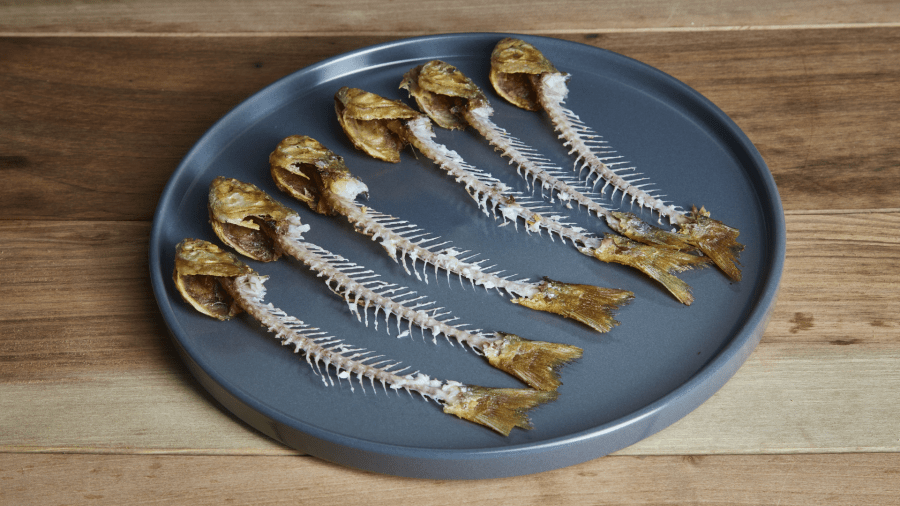
But I have 3,000 bones
They will each do their very best
To stick in your craw.


Amrita V. Nair (she/her) is a poet from India who currently lives in the traditional, ancestral, and unceded territory of the Coast Salish peoples (Vancouver, Canada). Her poetry has appeared in Anak Sastra, Kitaab, The Nervous Breakdown, and Indian Literature and was included in The Bloomsbury Anthology of Great Indian Poems. You can find more on her website: www.amritanair.com.

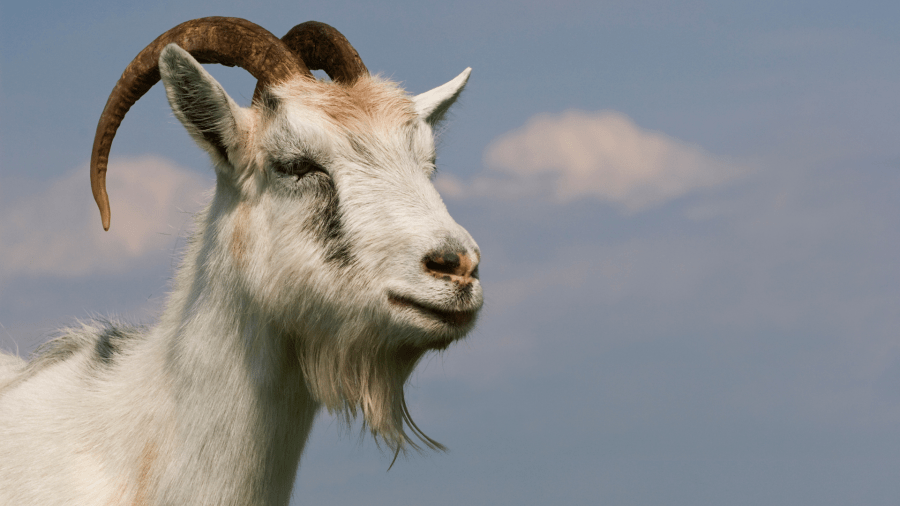
How can you trust us? by Brendan Bense

I mean, you
are a goat and a human reaches out their hand, and sure it has feed
in it, but you’ve never met them before, and they’re not your keeper.
What happened to buy me dinner first and can I trouble you for a cup
of sugar, neighbor? Not that goats need sugar for anything, not that
they have a concept for buying dinner. But don’t you want to be known,
a little, first? Don’t you want a scratch behind the ears, not under
the belly as that isn’t just the right spot, and don’t you want your water
bowl changed and hay replenished and fur brushed and affirmations
affirmed before a stranger can be someone with a name, before you
can reach out and take something from someone without fear, without
wondering if it’s all some plot? But there we are, slack-jawed and stupid
and in awe, leaning into the pen making pspspspsp like we’re calling
over a house cat, arms outstretched, hands pale and ugly and shaking
in the cold, hoping we can be trusted, hoping you’ll trust us, hoping
we will be trusted just once, by more than just a stranger, an animal,
a thing so afraid yet so hungry like us, so afraid and so hungry like us.


Brendan Bense is a poet and UC Irvine MFA candidate whose work can be found in Columbia Journal, The Crab Orchard Review, Rust + Moth, and elsewhere. Before joining the cohort at UCI, he worked as a writer and editor in New York and Philadelphia.

In Response to Question No. 3 by Susan Barry-Schulz

I would be green of course I would
not emerald green
not Kelly
not sea foam green because obviously that would be the worst
not mint
not sage
not Granny Smith apple although I do appreciate the refreshing tartness of this variety
not lime
not Celadon
not forest although we must act now to save the rainforests
        https://www.worldrainforest.org/rainforest-organizations.html
not jade
not moss
not the neon green of the slouchy socks I paired with canvas Tretorns back in 1985
not artichoke
not seaweed
not Malachite
not juniper not pine nor pickle
the green I would be
would be soft & deep
a heathered olive
flecked with specks
of copper & smoke
the same shade of green
as the pearl-buttoned vintage cardigan
I hung on a hook before clocking in
that summer—and never saw again—
the exact shade of green
you can never get back
once you’ve lost it.

Susan Barry-Schulz grew up outside of Buffalo, New York. She’s a licensed physical therapist living with chronic illness. Her poetry has appeared in Barrelhouse online, Bending Genres, B O D Y, Gyroscope Review, Harpy Hybrid Review, Kissing Dynamite, Nightingale & Sparrow, Rogue Agent, SWWIM, The Wild Word, and other print and online journals and anthologies.

stop by Naa Asheley Ashitey

Content warning: sexual assault.


[ stop ] (definition source from dictionary.com)

verb (used with object), stopped or (Archaic) stopt; stop·ping.
        1. to cease from, leave off, or discontinue
        2. to cause to cease; put an end to

        to stop kissing me

SEE MORE

verb (used without object), stopped or (Archaic) stopt; stop·ping.
        3. to come to a stand, as in a course or journey; halt.
        4. to cease moving, proceeding, speaking, acting, operating, etc.; to pause; desist.

SEE MORE

        Please stop.
        You can stop, please.
        Why won’t you stop?

SEE LESS

noun
        5. the act of stopping.
        6. a cessation or arrest of movement, action, operation, etc.; end:

        the thrusting came to a stop after he released.
        The nightmare finally came to a stop; the physical part at least.

SEE LESS


Naa Asheley Ashitey is a writer and aspiring physician-scientist from Chicago living in San Francisco. She’s a 2021 graduate from the University of Chicago where she received her B.A. in Creative Writing with Honors, specializing in fiction and with a minor in the Biological Sciences. She is a PROPEL Post-Bacc Scholar at the University of California, San Francisco where her research centers on cancer immunology. Her work has been published in Soul Talk Magazine, Blacklight Magazine, and Euphony Journal. She’s passionate about increasing the intersection between the humanities and STEM, and advocating for making academia more accessible and equitable for historically excluded groups in higher education.

Periodic Cicada by Michele Rule

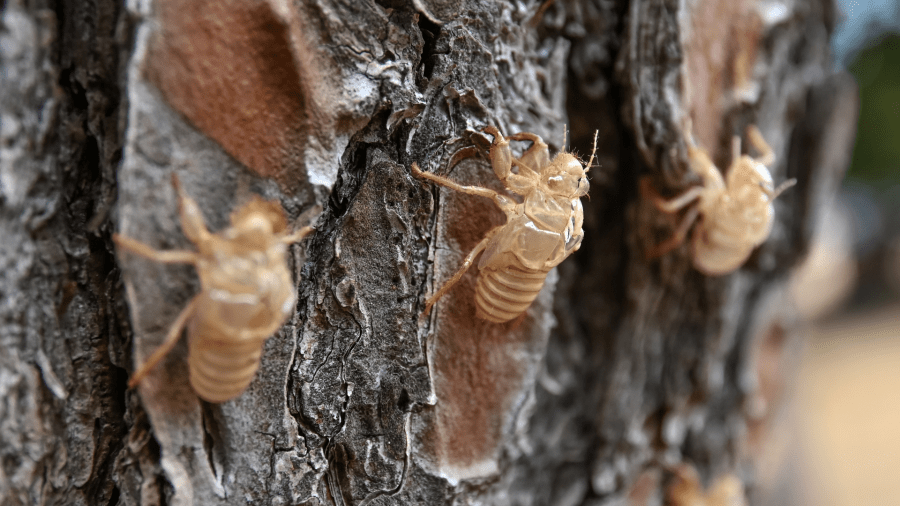
The magicicada have been living quietly
under my ribcage
in nymph form
for seventeen years
Silently observing my inner workings
my maturing

Now they emerge
with a deafening sound
a flight of musical notes
from some double forte experimental jazz gone wrong
They don’t stop with their song
until I am thoroughly unraveled

When I can’t bear another moment of the cacophony
they begin to drop to the ground
one by one
dead
their mission complete

The missing symphony of life
that I waited for unawares
all those years
I cover my ears
to block out the silence
hope their sound might return


Michele Rule is a disabled poet from Kelowna BC. She is especially interested in the topics of chronic illness, relationships and nature. Michele is published in OYEDrum, Five Minute Lit, Pocket Lint, WordCityLit, the Lothlorien, and the anthology Poets for Ukraine, among others. She is an associate member of the League of Canadian Poets. Michele’s first chapbook is Around the World in Fifteen Haiku. She lives with a sleepy dog, two cats, and a fantastic partner.

Aftermath by Jad Josey

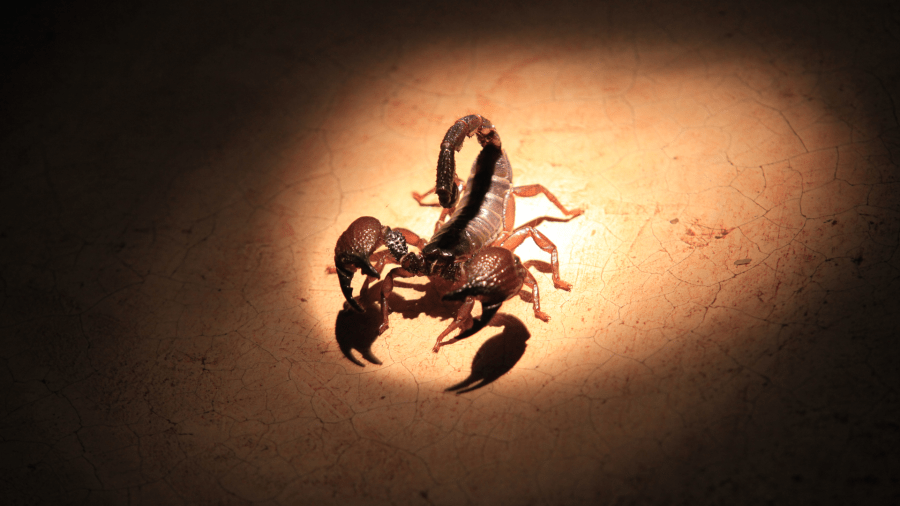
The scorpion emerged from shadow, big enough to matter
and small enough to matter, the world

a dram conspiring between floated spirits,
the grain alcohol, the smoky absinthe,

the way my mother is eleven-hundred miles close and
yours is eight miles and nearly vanished,

an apparition you didn’t intend to summon, though
you might have wished her gone one sticky-hot September evening,

never divining the prophet you’d become, never mind how small her
hand felt in your palm, her heart no longer here, the goodbye gone.

The scorpion scuttled onto my foot, and I waited. Waited
for the pricking poison, waited for what comes before the aftermath.

Waited for something small to bring me to my knees again.


Jad Josey’s work has appeared in CutBank, Glimmer Train, Ninth Letter, Passages North, and elsewhere. He has been nominated for the Pushcart Prize, Best of the Net, and Best Small Fictions and his story, “It Finally Happened,” was selected for inclusion in the Best Microfiction 2021 anthology. Read more at www.jadjosey.com, or reach out on Twitter @jadjosey.

Carrying Caskets by Lynne Schmidt

I avoid your mother for years.
I carry your casket from apartment to apartment
occasionally lifting the lid, watching your body decay.

When your mother comes to visit
I hide the casket in my bedroom.
Your body slides out,
down the stairs,
nearly touching your mother who does not look up,
does not see the skeletal remains of her youngest daughter.

I drag your body up the stairs.
I wrap what remains in a blanket.

I have to hide you,
                have to hide you,
                            have to hide you.

My sister asks how long
I’ve been carrying you,
and I tell her

I dug up your grave
the day after the funeral
and have carried you since.


Lynne Schmidt is the grandchild of a Holocaust survivor. They were a semi-finalist for the 2022 Button Poetry Chapbook Contest, and the winner of the 2021 The Poetry Question Chapbook Contest and the 2020 New Women’s Voices Contest. Lynne is the author of the chapbooks, SexyTime (TPQ 2022), Dead Dog Poems (Finishing Line Press, 2021), and On Becoming a Role Model (Thirty West, 2020). In 2012, they started the project AbortionChat, which aims to lessen the stigma around abortion. When given a choice, Lynne prefers their pack of dogs and one cat to humans.

Lesson by Sophie Klahr and Corey Zeller

Your father teaches you to ride a bike by holding a handful of M&M’s and running ahead of you far down the long road beside the lake. If you catch him, you can have the M&M’s. It sets a precedent. One has to be hungry. How many syllables are there really in “Memory?” I believe it depends on how badly you want it. Don’t mis-take me: I am as afraid of ruining this as I have been of anything. I don’t know if I believe anymore that there are best words in their best order. There is only what one leaves behind.

Sophie Klahr and Corey Zeller are the co-authors of There Is Only One Ghost In The World (Fiction Collective 2, 2023), winner of the 2022 Ronald Sukenick Innovative Fiction Contest. Their work also appears or is forthcoming in Tupelo Quarterly, Copper Nickel, Denver Quarterly, Alaska Quarterly Review, Puerto del Sol, Salamander, and elsewhere. Although they have been writing together for ten years, they have only met once.

A Decision is a Gust of Wind by Corinna Rae Reilly

Yes,
I cut into the flower
and it became
mine. Then         the sick thing
                              died.

Eyes why-wild,
you sugar through the teeth
of it all.
                              Yes,

I traded hinge for door,
                burned my shelves
so they wouldn’t look           empty.

I told you,
my sun was down
                way below belly.
I’m telling the truth           mostly
                            all of us are.


Corinna is thankful to live surrounded by trees in New York’s Hudson Valley. She shares her home with four wonderful beings: her husband, two dogs, and cat. Her poems have been published in Pleiades, The Submission, The Golden Triangle, and elsewhere, but that was about 10 years ago. In that time, she has not stopped creating but has mostly kept her work to herself. After a long hiatus, she’s once again nudging her work out into the world.