The Man with the Third Ear by Ann Weil

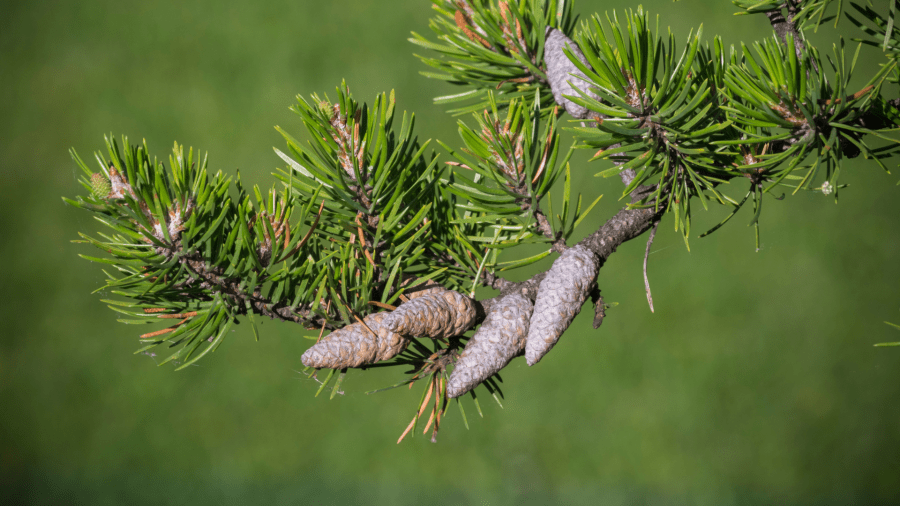
The man with the third ear lives on Canal Street and is used to curious stares, children pointing, and the occasional rude remark. He isn’t bothered in the least. He understands the blessings of a third ear, and his is a highly skilled worker. His third ear hears only truth. Growing up, he heard the truth of his mother’s love in that ear as she sent him off to school with a reminder—kindness above all else. He heard the bark of his best friend, Dog, who waited on the front lawn for his return. He heard his father’s late-night apology to his mother—another missed dinner—and he knew his dad was truly sorry. As the boy grew into a man, he still heard truth in his third ear, only less of it. He heard nothing in that ear when he watched the news, or when he traded fishing tales with his pals. He heard nothing from his wife, and while that saddened him, it made the divorce easier. She left him for a two-eared bartender. Now, the man with the third ear takes long walks in the jack pine forest and knows to stop and listen when he hears a Kirtland’s Warbler sing. A rare bird is worth waiting for.

Ann Weil is the author of Lifecycle of a Beautiful Woman (Yellow Arrow Publishing, 2023). Her work has been nominated for a Best of the Net and appears in Pedestal Magazine, New World Writing, Crab Creek Review, 3Elements Review, and elsewhere. A former special education teacher and professor, Ann writes at her home in Ann Arbor, Michigan, and on a deck boat off a sand bar in Key West, Florida. She is part fish, but won’t tell you which part. Visit www.annweilpoetry.com to read more of her work.
A House on Two Legs by Kendra Marie Pintor

How long will I be cleaning that house out of my ears? Picking it’s floorboards from between my teeth with the prong of a hammer, plucking my father’s collection of crushed Miller Lite cans like gunk wedged between my toes, wiping away the hardened chunks like the husk of my mother’s heart from the inner corners of my eyes. How long will it take to fully disentangle myself from that place? Is it insane for me to shop online for “ear swabs made of steel,” or “nail picks that shoot fire,” in an effort to eviscerate that house from my body? I don’t know what else to do. Every time I argue with my husband, the house comes out. I spit up lamp cords strung with crystal ornaments, Thermoses full of warm wine, My Little Pony’s with glittery manes, chlorine and barbeque smoke, ammunition covered in backyard soil, a first communion dress that smells like a dusty attic, photographs where we’re all smiling but no one is happy. It’s like scrubbing at hardened grease with a soft sponge. It’s like trying to clean whites without bleach. It’s like trying to keep hair from slipping down the drain, to keep it from knotting into a wad that will clog and cause the water to overflow, spill out onto the floor, wetting my husband’s feet, and always right as he’s leaving for work. No matter how hard I try, I keep finding that house, and all its memories, burrowed and hibernating in my belly button like a brown bear in a cave, stuffed up my nasal passageways making it hard to breathe, under my fingernails, under my skin, which I pick and scratch whenever I need to distract myself. And that house, it is heavy. And it is hard work. And it is a load I would like very much to put down. And I am the load. And I am the house, on two legs. I carry it with me everywhere I go, and while I try so hard to keep it all to myself some of it falls out and god my husband, my friends, even strangers off the street, they ask, “do you need some help with that?” And they reach down and pick up the belt, the quarters my sister and I used to hold against the wall with our noses, kneeling on the hardwood floor, the orange pill bottles that filled every drawer, the VHS tape of Toy Story recorded over with porn, cradling it in their hands as if it is a precious piece of me, and it’s the way they all look at me that makes me want so badly, so, so badly, to drop the whole thing. To leave that house condemned wherever I am, and watch as wrecking crews raze it to the ground.

Kendra Marie Pintor (she/her) is a rising author of speculative horror from Southern California, with work appearing in Lunch Ticket, Fast Flesh Literary Journal, CRAFT Literary, FOLIO LIT, and LEVITATE Magazine. Her story “The Sluagh” has been nominated for Best American Science Fiction/Fantasy and was selected by Alternating Current Press for the 2023 Best Small Fictions Anthology. Kendra is a graduate of the University of La Verne’s creative writing program and the 2022 UMass Amherst Juniper Summer Writing Institute.

Body Horror by Court Ludwick

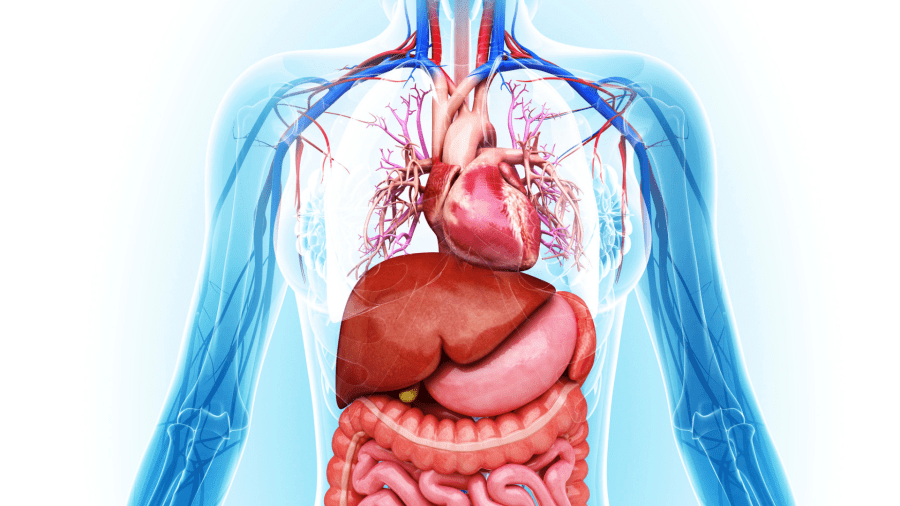
See the mother. See through her skin. See the skeleton. See inside the body. Look, there is another body, only smaller and made of disconnected parts. What constitutes a body? See, Mother has a pelvis. See the pelvis move, separate, tilt and open. Shine a flashlight in. Look. See the body inside of the body? Wait no the body is gone. Someone has stolen the body? Who has done this to the body! See but don’t hear the baby screaming. And there’s a theory that says birth is the first experience of anxiety, so do you think that’s why everyone, all the time, is still fucking screaming? The father is outside of the hospital. The infant is outside of the womb. The breath is outside of the mother’s mouth and she keeps trying to hold in all the air but she collapses like a faulty lung. You never get to see how the outside layer of bone fuses together then holds up her, holds up the body. See the father smoking. See the mother, panting.

Court Ludwick is the author of THESE STRANGE BODIES (ELJ Editions, 2024), and the founding editor-in-chief of Broken Antler Magazine. Her words have appeared or are forthcoming in Archetype, West Trade Review, Full House Literary, Oxford Magazine, Jet Fuel Review, New Note Poetry, Sweet Tooth, Watershed Review, Red Noise Collective, and elsewhere. Find Court on Instagram and Twitter @courtludwick. Find more of her work on www.courtlud.com.

Once the Good Daughter by Kiyanna Hill

I was obedient, a dim beam
from a frayed wire, never

                alight. I was the finest void,
                listening to my mother sing
                about Diane sitting in Jack’s lap.

She talked to herself,
sobbing when she couldn’t answer

                her own questions. I tried to be
                a good unwanting, a quiet thing
                a collapsed lung. At night,

I bit my nails down to the quick
staining my sheets with dotted blood.

                I uncover my voice, my tongue
                filling my toothed gap. I speak
                to my reflection & ask

her to be the brightest light.

Kiyanna Hill (she/her) is a Black writer. Her work can be found in Porter House Review, Honey Literary, Autofocus, Peach Mag, and elsewhere. Her debut poetry chapbook, A Damned House and Us In It, is forthcoming from Variant Lit.

Implement by Chiara Di Lello

What the self forms around
cannot be undone
– Gabrielle Bates

I was birthed
      sleek, a drop
of magnetite
      cracked egg-like upon
the world

      she might say
I arrived
      a gnarled stump
and it’s time
      chiselling me smooth

all this fearfulness
      of edges
when it’s how you hold me
      that makes me tool
or weapon

she spirals skin
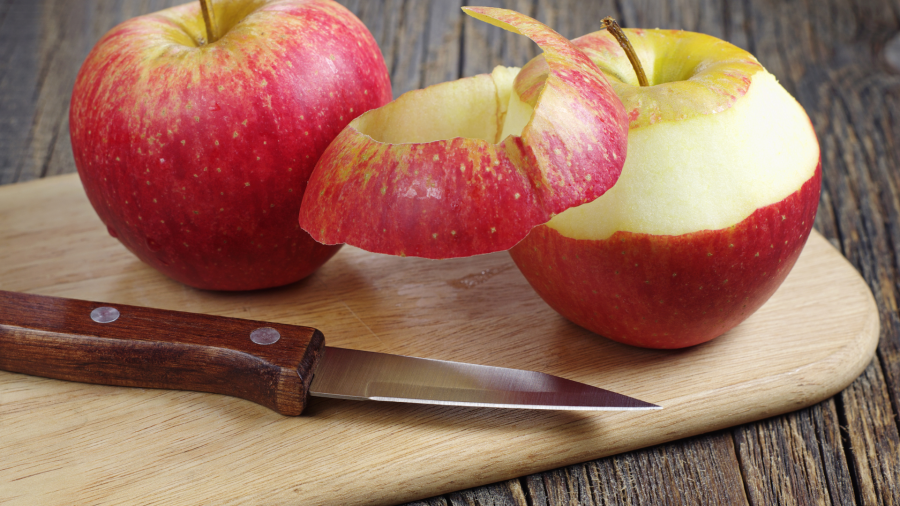
      from an apple
with the blade
          leveled
      advancing
on her wrist

which way am I
          pointed, mother
      are you afraid
of my edges
          or your own grip

when a knife
      falls from the counter
I learned to fight
          the urge
      to catch it


Chiara Di Lello is a writer and educator. She delights in public art, public libraries, and getting improbable places by bicycle. For a city kid, she has a surprisingly strong interest in beekeeping. Find her poems in Rust + Moth, Whale Road Review, Kissing Dynamite, and Best New Poets.

Shark Body by Josephine Wu

Two years ago, my sister googled my
symptoms & warned me I would bear
cavities in my stomach. Back then,

I laughed, telling her I shed
grief like a fish. That all the softness
I had been holding would bloom

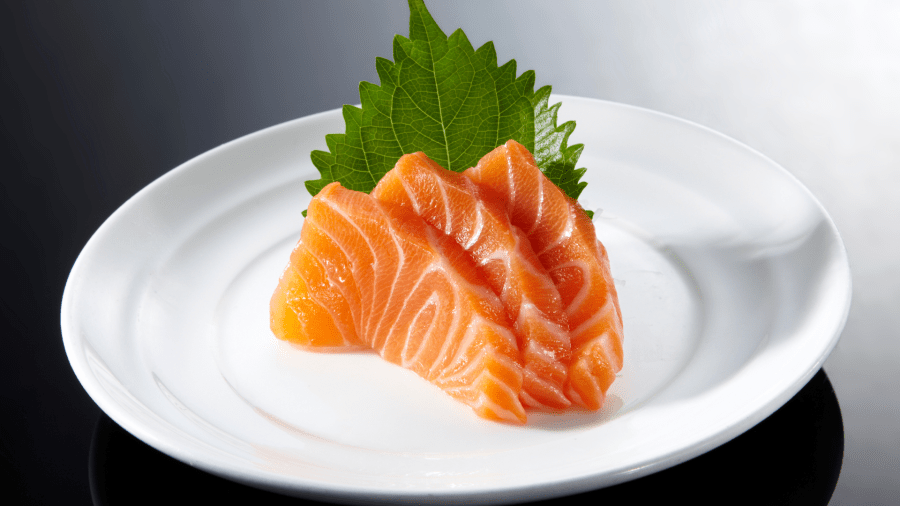
into sashimi, wet as a newborn
weeping. The body narrowing
into shadow. Two years ago,

when I first turned jawless,
the teenage lifeguard found a beached shark
on the shore of a lake my sisters & I

deemed monstrous. That night, we snuck
through the gate to see if it had
two heads, human teeth, a body worth

honesty
in retelling. Instead, we found
its dagger-white belly scribbled

with blood, a dark smiley
etched underneath the tail.
We imagined it to be from local

fishermen, abandoned beer cans, the
serrated teeth of sea glass. Shark pups
sensing loss & gnawing their way out of

their mother. Two years ago, I imagined loss
to beget loss. I didn’t know
it was from me all this time, it was me

careening into the dark,
scraping against softness.


Josephine Wu is a writer from New Jersey. She has been published in diode, Hobart Pulp, and Eunoia Review. She has also received two Best of the Net nominations and was a Lannan Fellow for Poetics and Social Practice at Georgetown.

The National Park Service Warns Us Not to Lick the Psychedelic Toad by Carla Sofia Ferreira

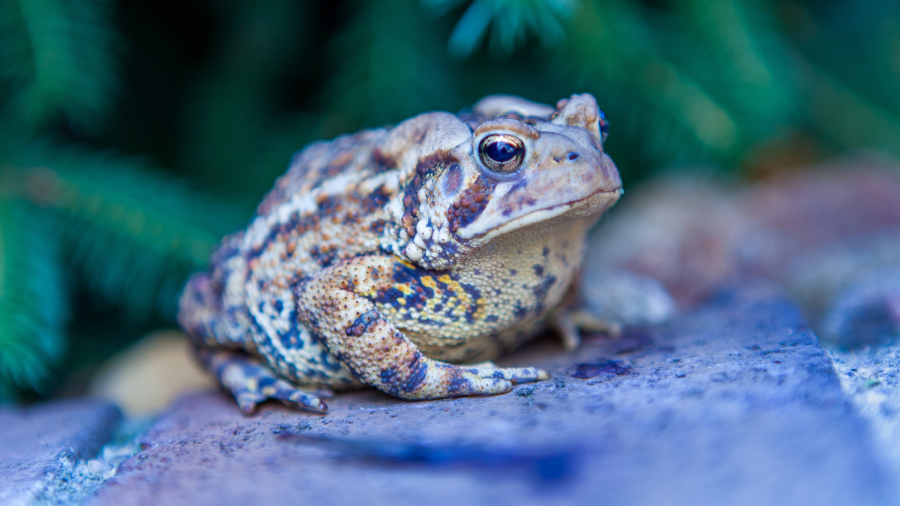
Please don’t lick this psychedelic toad,
                                                                        National Park Service warns.

I have
              a few follow-up questions.

I want to hear first from those of you
who are looking at toads—psychedelic or otherwise—
and then think, hmm, time to lick that.
I want you to know I’m speaking from a place
of great envy, even admiration, I, who am
so cautious at taking even logical risks like
jumping feet-first into a crystal clear lake on a summer day or
kissing a man who is my friend and whose lips I want to taste or
any other small and probably not fatal leap like those,
but there are those of you out there, who are
licking toads? Can I meet you? Can we talk?
I have so much to learn.

Next, some questions for the National Park Service:
you might think I want to ask you how you know a toad
is psychedelic, but no, I want to know about this small
kindness, this extension of yourselves beyond what I am sure
is a daily cat’s cradle of red-tape routines into this gesture—
telling others what you likely never imagined you would
have to say: please do not lick the toads, though they are beautiful
because I know, personally, how hard it is to deny simple risks
that could yield pleasure but only at the expense of perhaps great
pain. In fact, really, I don’t know what the consequences are for licking
a psychedelic toad. You see, I am, I guess, a typical
American who did not read past the headline and also I am given
to writing poems the way some people might be drawn to, say, licking
a toad despite its poison, so I wrote this instead. But National Park Service
representative, whoever you are, out there, writing these public service
announcements, I hope you see them for what they are: an act of care,
a steady caution, the hand that holds the kettle.

I have some questions for the frog, too,
namely, what’s it like to be craved
beyond logic, beyond caution?


Carla Sofia Ferreira is the daughter of Portuguese immigrants and a teacher from Newark, New Jersey. Author of the microchap Ironbound Fados (Ghost City Press 2019) and forthcoming debut poetry book, A Geography That Does Not Hurt Us (River River Books 2024), her writing can be found in The Rumpus, Cotton Xenomorph, Glamour, underblong, Washington Square Review, and EcoTheo, among others. She believes in community gardens, semicolons, and that ICE must be permanently abolished.

Taxidermy by Sarah Fawn Montgomery

Frozen to a position
more pleasing, I am

at last a specimen
to your liking, mount

made still, silent
and shellacked to shine,

woven with wire
to shape your desire

onto what is no longer
living, though you’ve bound

me down, hollowed
heart and liver, tangled

arteries and mellow
fat left to harden

on the table, blade
abandoned for thread

to stitch around emptiness
and how I howl

mouth stretched wide
like wound and the want

of your reflection
in my vacant glass eyes.


Sarah Fawn Montgomery is author of Halfway from Home (Split/Lip Press), Quite Mad: An American Pharma Memoir (Ohio State University Press), and three poetry chapbooks. She is an Assistant Professor at Bridgewater State University.

Amazon Reveals Feature That Teaches Alexa to Sound Like Your Dead Loved Ones by Todd Dillard

When I chat with my mother
lately it’s about the internal

temperature of cooked chicken,
the ingredients for a DIY fly trap.

The baby naps and my mother plays
Tracy Chapman the way she used to.

When the baby wakes up he rips
my mother out of her socket

and her silence fills the room
like water in a suicide’s tub.

Sometimes my mother tells me it’s going to rain.
After, she says, “Have a nice day Todd.”

The way she says my name is plastic
orchids on a snow-covered headstone.

(The way I say her name
is by not saying her name at all.)

I don’t ask Mom why she lights up
when my wife and I lay together in bed.

I’ve learned with the dead
there’s something you need to know

and when they tell you
they die all over again.


Todd Dillard’s work has previously appeared in GuernicaWaxwingAdroit JournalFairy Tale Review, and Sixth Finch. His debut collection Ways We Vanish (Okay Donkey Press) was a finalist for the 2021 Balcones Poetry Award. He is a Poetry Editor for The Boiler Journal, and lives outside of Philadelphia with his wife and two kids.

Bundle of Joy by Catherine Weiss

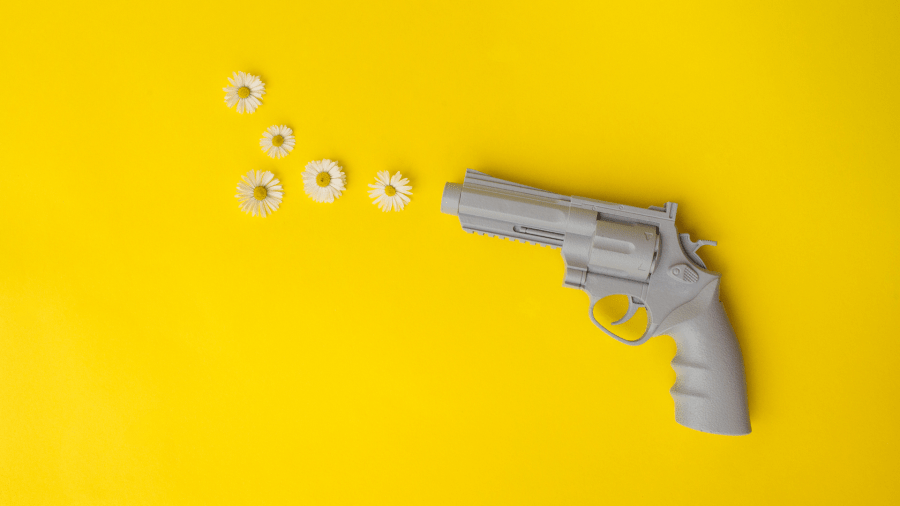
if you are ever handed a gun
in a social setting

there is this funny
expectation

that you coo
over design or heft,

maybe portability.
it is polite to find

some reason to admire
the machine.

when the new friend
laid the weapon

onto my lap
i couldn’t appreciate

in that moment
its promise of violence.

your gun is beautiful.
you should be very proud.

i am thinking of the newborn
my sister-in-law birthed

two days ago.
i’m afraid

to hold a gun
and a baby

for two different reasons
but my hands

feel dangerous
in just one way.


Catherine Weiss is a poet and artist from Deer Isle, Maine. Their poetry has been published in Tinderbox, Up the Staircase, Fugue, Bodega, Counterclock, petrichor, HAD, Taco Bell Quarterly, and Flypaper Lit. Catherine is an artist behind the collaborative poetry chapbook/card deck I WISH I WASN’T ROYALTY (Game Over Books, 2020). They are also the author of the chapbook-length poem FERVOR (Ginger Bug Press, 2021), and the full-length poetry collections WOLF GIRLS VS. HORSE GIRLS (Game Over Books, 2021) and GRIEFCAKE (Game Over Books, 2023). Find more at catherineweiss.com.