Implement by Chiara Di Lello

What the self forms around
cannot be undone
– Gabrielle Bates

I was birthed
      sleek, a drop
of magnetite
      cracked egg-like upon
the world

      she might say
I arrived
      a gnarled stump
and it’s time
      chiselling me smooth

all this fearfulness
      of edges
when it’s how you hold me
      that makes me tool
or weapon

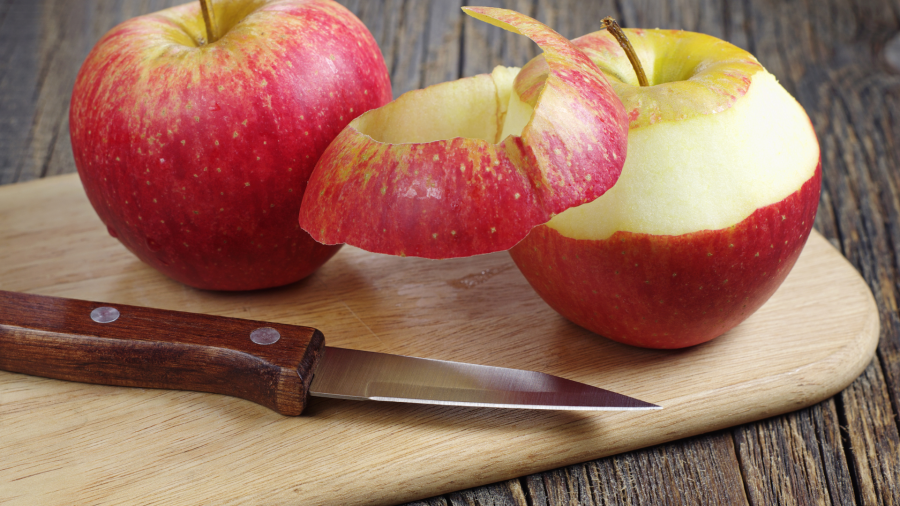
she spirals skin
      from an apple
with the blade
          leveled
      advancing
on her wrist

which way am I
          pointed, mother
      are you afraid
of my edges
          or your own grip

when a knife
      falls from the counter
I learned to fight
          the urge
      to catch it


Chiara Di Lello is a writer and educator. She delights in public art, public libraries, and getting improbable places by bicycle. For a city kid, she has a surprisingly strong interest in beekeeping. Find her poems in Rust + Moth, Whale Road Review, Kissing Dynamite, and Best New Poets.

Shark Body by Josephine Wu

Two years ago, my sister googled my
symptoms & warned me I would bear
cavities in my stomach. Back then,

I laughed, telling her I shed
grief like a fish. That all the softness
I had been holding would bloom

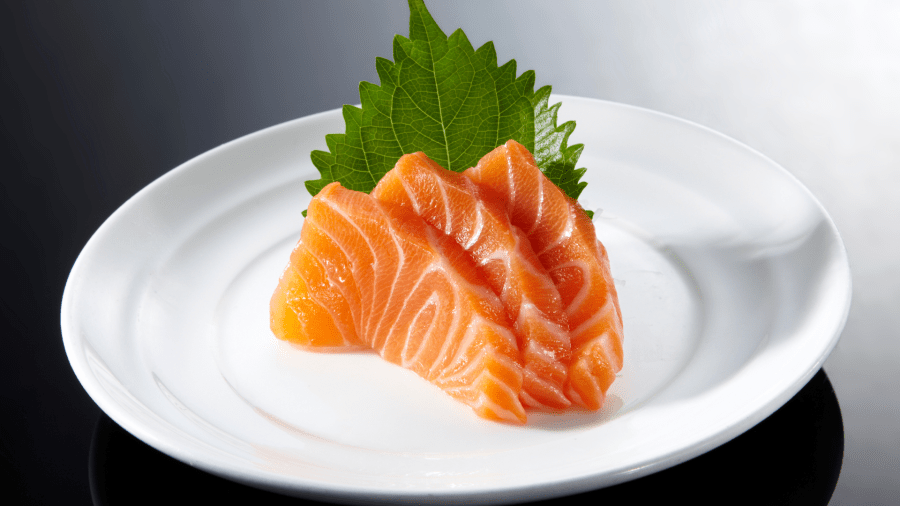
into sashimi, wet as a newborn
weeping. The body narrowing
into shadow. Two years ago,

when I first turned jawless,
the teenage lifeguard found a beached shark
on the shore of a lake my sisters & I

deemed monstrous. That night, we snuck
through the gate to see if it had
two heads, human teeth, a body worth

honesty
in retelling. Instead, we found
its dagger-white belly scribbled

with blood, a dark smiley
etched underneath the tail.
We imagined it to be from local

fishermen, abandoned beer cans, the
serrated teeth of sea glass. Shark pups
sensing loss & gnawing their way out of

their mother. Two years ago, I imagined loss
to beget loss. I didn’t know
it was from me all this time, it was me

careening into the dark,
scraping against softness.


Josephine Wu is a writer from New Jersey. She has been published in diode, Hobart Pulp, and Eunoia Review. She has also received two Best of the Net nominations and was a Lannan Fellow for Poetics and Social Practice at Georgetown.

The National Park Service Warns Us Not to Lick the Psychedelic Toad by Carla Sofia Ferreira

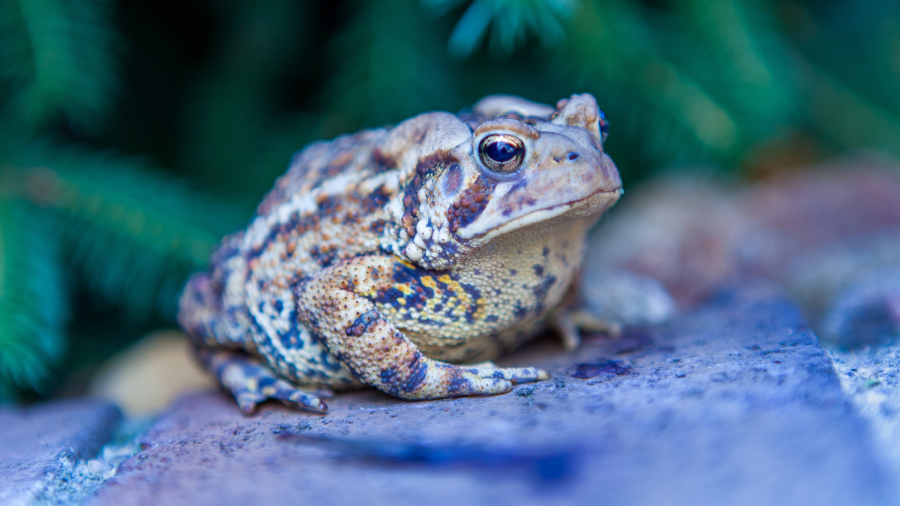
Please don’t lick this psychedelic toad,
                                                                        National Park Service warns.

I have
              a few follow-up questions.

I want to hear first from those of you
who are looking at toads—psychedelic or otherwise—
and then think, hmm, time to lick that.
I want you to know I’m speaking from a place
of great envy, even admiration, I, who am
so cautious at taking even logical risks like
jumping feet-first into a crystal clear lake on a summer day or
kissing a man who is my friend and whose lips I want to taste or
any other small and probably not fatal leap like those,
but there are those of you out there, who are
licking toads? Can I meet you? Can we talk?
I have so much to learn.

Next, some questions for the National Park Service:
you might think I want to ask you how you know a toad
is psychedelic, but no, I want to know about this small
kindness, this extension of yourselves beyond what I am sure
is a daily cat’s cradle of red-tape routines into this gesture—
telling others what you likely never imagined you would
have to say: please do not lick the toads, though they are beautiful
because I know, personally, how hard it is to deny simple risks
that could yield pleasure but only at the expense of perhaps great
pain. In fact, really, I don’t know what the consequences are for licking
a psychedelic toad. You see, I am, I guess, a typical
American who did not read past the headline and also I am given
to writing poems the way some people might be drawn to, say, licking
a toad despite its poison, so I wrote this instead. But National Park Service
representative, whoever you are, out there, writing these public service
announcements, I hope you see them for what they are: an act of care,
a steady caution, the hand that holds the kettle.

I have some questions for the frog, too,
namely, what’s it like to be craved
beyond logic, beyond caution?


Carla Sofia Ferreira is the daughter of Portuguese immigrants and a teacher from Newark, New Jersey. Author of the microchap Ironbound Fados (Ghost City Press 2019) and forthcoming debut poetry book, A Geography That Does Not Hurt Us (River River Books 2024), her writing can be found in The Rumpus, Cotton Xenomorph, Glamour, underblong, Washington Square Review, and EcoTheo, among others. She believes in community gardens, semicolons, and that ICE must be permanently abolished.
Taxidermy by Sarah Fawn Montgomery

Frozen to a position
more pleasing, I am

at last a specimen
to your liking, mount

made still, silent
and shellacked to shine,

woven with wire
to shape your desire

onto what is no longer
living, though you’ve bound

me down, hollowed
heart and liver, tangled

arteries and mellow
fat left to harden

on the table, blade
abandoned for thread

to stitch around emptiness
and how I howl

mouth stretched wide
like wound and the want

of your reflection
in my vacant glass eyes.


Sarah Fawn Montgomery is author of Halfway from Home (Split/Lip Press), Quite Mad: An American Pharma Memoir (Ohio State University Press), and three poetry chapbooks. She is an Assistant Professor at Bridgewater State University.

Amazon Reveals Feature That Teaches Alexa to Sound Like Your Dead Loved Ones by Todd Dillard

When I chat with my mother
lately it’s about the internal

temperature of cooked chicken,
the ingredients for a DIY fly trap.

The baby naps and my mother plays
Tracy Chapman the way she used to.

When the baby wakes up he rips
my mother out of her socket

and her silence fills the room
like water in a suicide’s tub.

Sometimes my mother tells me it’s going to rain.
After, she says, “Have a nice day Todd.”

The way she says my name is plastic
orchids on a snow-covered headstone.

(The way I say her name
is by not saying her name at all.)

I don’t ask Mom why she lights up
when my wife and I lay together in bed.

I’ve learned with the dead
there’s something you need to know

and when they tell you
they die all over again.


Todd Dillard’s work has previously appeared in GuernicaWaxwingAdroit JournalFairy Tale Review, and Sixth Finch. His debut collection Ways We Vanish (Okay Donkey Press) was a finalist for the 2021 Balcones Poetry Award. He is a Poetry Editor for The Boiler Journal, and lives outside of Philadelphia with his wife and two kids.

Bundle of Joy by Catherine Weiss

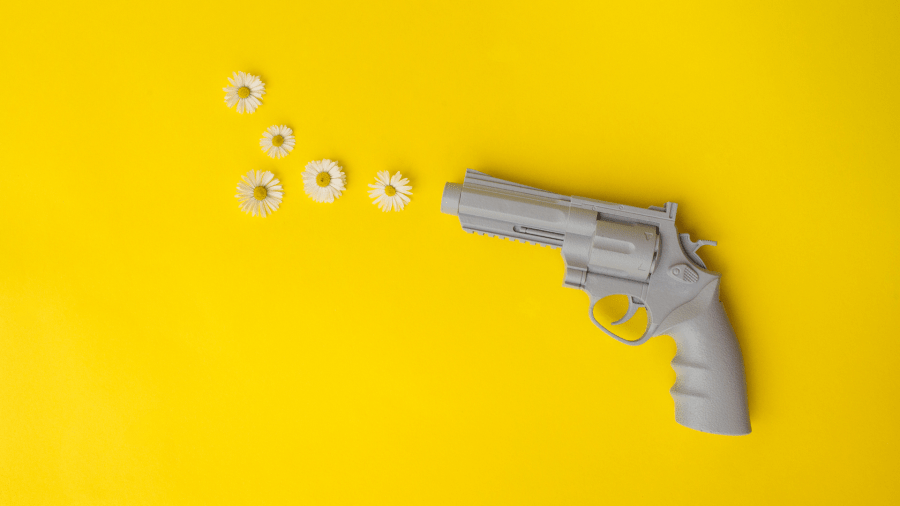
if you are ever handed a gun
in a social setting

there is this funny
expectation

that you coo
over design or heft,

maybe portability.
it is polite to find

some reason to admire
the machine.

when the new friend
laid the weapon

onto my lap
i couldn’t appreciate

in that moment
its promise of violence.

your gun is beautiful.
you should be very proud.

i am thinking of the newborn
my sister-in-law birthed

two days ago.
i’m afraid

to hold a gun
and a baby

for two different reasons
but my hands

feel dangerous
in just one way.


Catherine Weiss is a poet and artist from Deer Isle, Maine. Their poetry has been published in Tinderbox, Up the Staircase, Fugue, Bodega, Counterclock, petrichor, HAD, Taco Bell Quarterly, and Flypaper Lit. Catherine is an artist behind the collaborative poetry chapbook/card deck I WISH I WASN’T ROYALTY (Game Over Books, 2020). They are also the author of the chapbook-length poem FERVOR (Ginger Bug Press, 2021), and the full-length poetry collections WOLF GIRLS VS. HORSE GIRLS (Game Over Books, 2021) and GRIEFCAKE (Game Over Books, 2023). Find more at catherineweiss.com.

Autumnkraftwerk by Jay Aelick

What’s left to say about fireflies,
their whimpering glow?
In late August, the leaves are a Kantorei
of uranium. Not long now

until they fall,
sizzling in the creek’s cool flume.
Time makes mushrooms
of us all.

Jay Aelick is a birdwatcher, disc golfer, tarot reader, and sometimes even poet. Their work has previously appeared or is forthcoming in The Journal, The Blowing Rock Art and History Museum, Barely South Review, and elsewhere. They are one half of the St. Balasar University English Club podcast, where real critique partners at a fake university workshop the books the internet had written off.

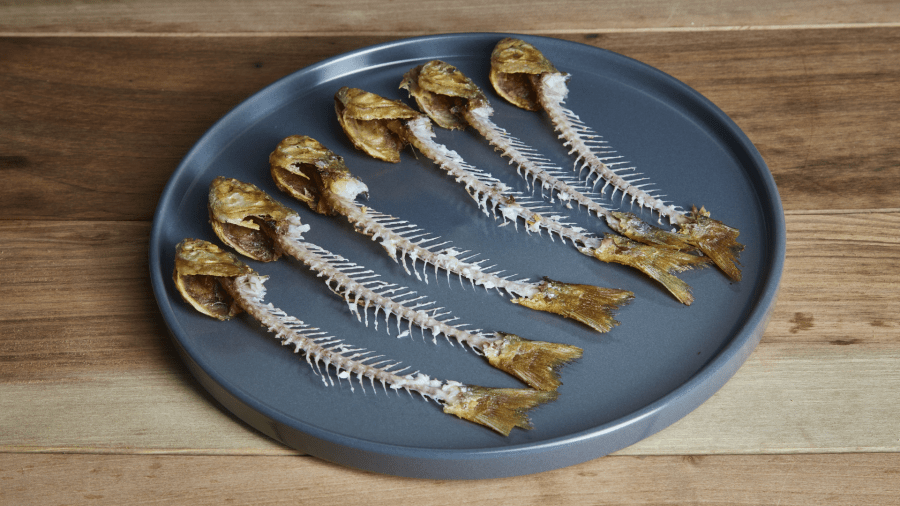
Sapidissima by Amrita V. Nair

I think you have me mistaken
For something else entirely
It’s easy to do that with me
Happens all the time, really
I just have one of those faces
One of those faces that make you think
That I am harmless and boneless
That you can reel me in and check my weight
And throw me back again and again
And that even as I am gasping for air
I will thank you for your time
That even being considered is a privilege
I think it will be all sorts of awkward
When you finally deign to eat me
I might be a delicacy
But I have 3,000 bones
They will each do their very best
To stick in your craw.


Amrita V. Nair (she/her) is a poet from India who currently lives in the traditional, ancestral, and unceded territory of the Coast Salish peoples (Vancouver, Canada). Her poetry has appeared in Anak Sastra, Kitaab, The Nervous Breakdown, and Indian Literature and was included in The Bloomsbury Anthology of Great Indian Poems. You can find more on her website: www.amritanair.com.

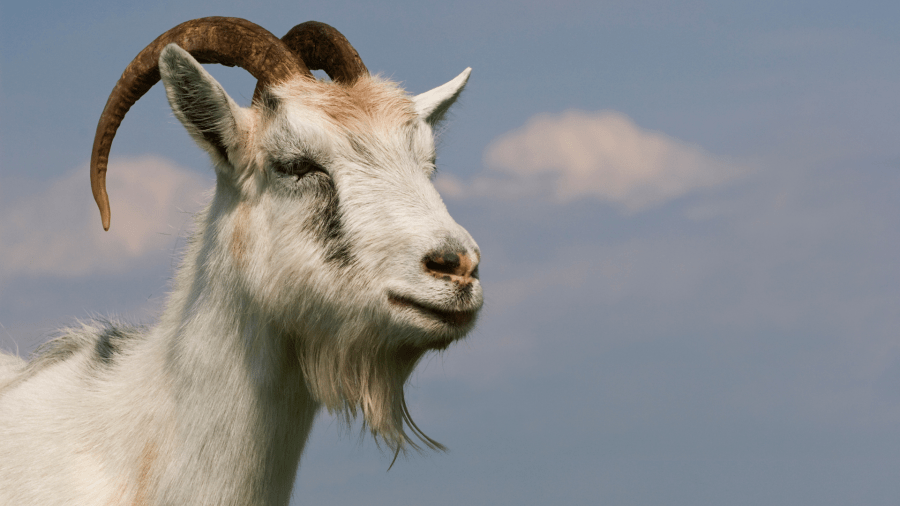
How can you trust us? by Brendan Bense

I mean, you
are a goat and a human reaches out their hand, and sure it has feed
in it, but you’ve never met them before, and they’re not your keeper.
What happened to buy me dinner first and can I trouble you for a cup
of sugar, neighbor? Not that goats need sugar for anything, not that
they have a concept for buying dinner. But don’t you want to be known,
a little, first? Don’t you want a scratch behind the ears, not under
the belly as that isn’t just the right spot, and don’t you want your water
bowl changed and hay replenished and fur brushed and affirmations
affirmed before a stranger can be someone with a name, before you
can reach out and take something from someone without fear, without
wondering if it’s all some plot? But there we are, slack-jawed and stupid
and in awe, leaning into the pen making pspspspsp like we’re calling
over a house cat, arms outstretched, hands pale and ugly and shaking
in the cold, hoping we can be trusted, hoping you’ll trust us, hoping
we will be trusted just once, by more than just a stranger, an animal,
a thing so afraid yet so hungry like us, so afraid and so hungry like us.


Brendan Bense is a poet and UC Irvine MFA candidate whose work can be found in Columbia Journal, The Crab Orchard Review, Rust + Moth, and elsewhere. Before joining the cohort at UCI, he worked as a writer and editor in New York and Philadelphia.

In Response to Question No. 3 by Susan Barry-Schulz

I would be green of course I would
not emerald green
not Kelly
not sea foam green because obviously that would be the worst
not mint
not sage
not Granny Smith apple although I do appreciate the refreshing tartness of this variety
not lime
not Celadon
not forest although we must act now to save the rainforests
        https://www.worldrainforest.org/rainforest-organizations.html
not jade
not moss
not the neon green of the slouchy socks I paired with canvas Tretorns back in 1985
not artichoke
not seaweed
not Malachite
not juniper not pine nor pickle
the green I would be
would be soft & deep
a heathered olive
flecked with specks
of copper & smoke
the same shade of green
as the pearl-buttoned vintage cardigan
I hung on a hook before clocking in
that summer—and never saw again—
the exact shade of green
you can never get back
once you’ve lost it.

Susan Barry-Schulz grew up outside of Buffalo, New York. She’s a licensed physical therapist living with chronic illness. Her poetry has appeared in Barrelhouse online, Bending Genres, B O D Y, Gyroscope Review, Harpy Hybrid Review, Kissing Dynamite, Nightingale & Sparrow, Rogue Agent, SWWIM, The Wild Word, and other print and online journals and anthologies.