Four Stories by Tiffany Hsieh

Wendy  

Wendy goes to school and becomes a professional. There’s no rationale for why she loves accounting, but she does. It reminds her of when she used to count money for her parents’ business. Each transaction feels exact and explicit, like Wendy.

In her spare time, Wendy likes to cook. She has many recipes that tell her exactly how much sugar for this and show her explicitly what kind of sugar for that. But Wendy never follows a recipe exactly or explicitly. It reminds her of science class in high school. Each measurement feels too exact and too explicit, too much like Wendy’s science teacher, a big-breasted woman with a manly jaw.

Sometimes Wendy wonders what it’s like to have big breasts. She has no big breasts. Her ma has no big breasts. Her ah-ma has no big breasts. Her other ah-ma has slightly bigger breasts but Wendy doesn’t like her or them. One of Wendy’s breasts is slightly bigger than the other and she counts the difference between them, between two, between one and half.

Titanic

My piano student came here on a boat when she was two years old. Maybe that’s why she wants to learn how to play that song from Titanic. She was there and a part of her goes on and on.

Week after week, my piano student talks to me about boys. She places her hands on the keys as she talks, her nails long and polished, her fingers flat like water. She wants me to play for her instead. I don’t know why I give into her purple-shadowed puppy eyes.

Bit by bit, I let my piano student talk me into helping her quit piano. We go rollerblading by her house, her idea of Big Sisters. Her mother shows me how to make Vietnamese spring rolls. Her father asks where I’m from and smiles with half of his mouth that I have no sea in me like his daughter does. That I’m more grounded somehow.

We have our picture taken on the front steps. We are both in shorts and short sleeves. My piano student looks older than sixteen. Her makeup is all wrong, her posture too ladylike. I tell her she doesn’t need all that stuff on her face, but she hands me a Sprite and tells me about getting a job at the music store, about the guy at the music store, goes on about his motorcycle and leather jacket, goes on and on.

Convocation

 A classmate asked me out after he came back from teaching English in Asia one summer. He said he had tickets to see the Yankees in town. In truth, I didn’t know what to say. We attended the same lectures and sat near each other from freshman to junior, but we never went anywhere or did anything together. We were the perfect classmates.

So I said I was busy. He didn’t speak to me in senior year and I thought what the hell. When we convocated, he acted like we were strangers even though we sat in the same row under the same alphabet. Even though we used to greet one another with a wave and a smile and exchange notes and glances.

I could’ve really been busy, also, and had to say no. And, honestly, he wouldn’t have asked me out in the first place if he hadn’t gone to Asia and seen so many Asians and come back to the one Asian girl in class.

He was probably destined to marry an Asian girl after that, and that was what he did in the end. When I saw their photos on Facebook years later, a part of me couldn’t help but wonder if that’d be me in the photos instead, had I said yes to the Yankees, and if we’d be a good couple or not. But mostly, I just felt relieved that someone else had said yes to him.

The Cellist 

She tightens her bow and flips that fine ponytail of hers that flaps and sways in a Beethoven sonata, the contours of her posture shaped by the cello between her legs, the right one has a habit of making little circles on the floor when crescendo.

Then in limbo, she sticks a pencil in her hair like a meat thermometer and taps the score with the tip of her bow, denting markings of forte, fortissimo, piano, pianissimo, and chanting, bar by bar, tap by tap, Loud, loud, loud, soft, loud, soft, soft, loud, loud.

Once in a while, she pictures someone watching her perform from a distance, listening to her play and admiring how beautifully she plays. He loved her once but she didn’t play the cello then.

Tiffany Hsieh was born in Taiwan and moved to Canada at the age of fourteen. She is the author of the micro chapbook Little Red (Quarter Press) and her work has appeared in The Los Angeles Review, The Malahat Review, Passages North, The Penn Review, Quarter After Eight, and the Best Microfiction anthology among other places. She lives in Kingston, Ontario.

Five Micro Stage Plays by Benjamin Niespodziany

Autobiographical

The magus reaches into her hat. One rabbit, one gun. One water moccasin. One blunt. “It feels like fighting home,” she says. One stone, one button. “Finding home?” a cast member in the audience asks. The magus does not like that question. The audience member is encouraged to exit. The magus assembles her found objects on stage. “Like a farmer’s market,” she says. “Like a graveyard.” She places prices next to each item and waits for interested buyers that never arrive. “Alakazam,” the magus says, defeated. Her rabbit catches fire. The light guy dies.

Sunflowers and Debt

On stage, the business man is in a cafe. He tries to pay his bill with a bouquet of daisies. The magus is the waitress behind the counter. She is still wearing her tuxedo, but she has a hairnet instead of a top hat. “We do not want a bouquet of daisies,” says the magus. “We want money.” The business man does not have money. The business man is struggling. “I don’t have money,” the business man says. “I’m struggling.” The magus behind the counter walks over and hugs him. Then she stands back and with her wand she lifts the man and shakes him from his ankles. From his pockets there falls but lint and whimpers and dust. The daisies are to the side, thriving in a puddle. “I hate flowers,” says the magus. “I hate money,” says the business man. “The sun above has been above forever,” says the magus. “And yet no one knows its birthday,” says the business man.

Cake vs. Pie

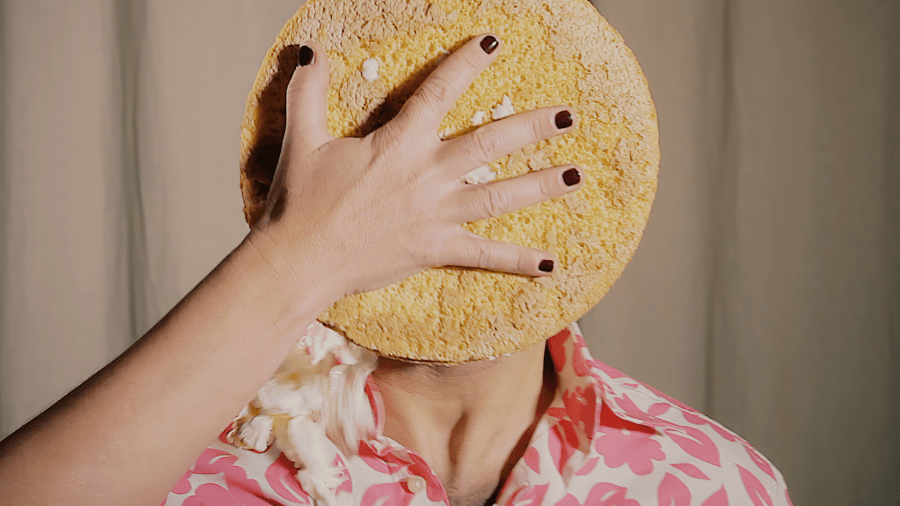
On stage, the business man runs around the kitchen, waiting for his cake to finish. Bereft in mittens he walks in circles. He looks at his watch and he looks at the clock and he continues to walk in circles. “Any second now,” he says. His suit is covered in flour and batter and dough. A cast member in the audience stands and throws a pie. It hits the business man’s face. “A pie?” he says, licking his fingers. “Blueberry.” He smiles, then cries. He opens the oven and blue balloons fill the room. The audience is encouraged to be in awe. “It’s perfect,” he whispers, looking into the oven and climbing inside.

It’s All So Very Polite

On stage, Death knits dinner. Her utensils are yarn and so is her carpet. The pie she provides is made of yarn. She knits plates and napkins. She knits the table. She knits it all. When she is finished knitting a bib for her black cat, a door is brought down through the cardboard clouds. There is a knock from the other side. Death stands in front of the door. Again, there’s a knock on the other side. She sits and hums and knits a gun. It’s all so very polite.

Sitcom Laughter

On stage, the business man and the magus are on a roller coaster, hanging on to the harnesses. They hold hands. They try to kiss but they’re too far apart so they laugh it off. It appears to be a fifth or sixth date. From the sound of the consistent click, the audience knows the ride is climbing. Their feet dangle. “I can see my house,” she says. From the speakers, sitcom laughter is heard. “I don’t like how this feels,” he says. Sitcom laughter. “Maybe we can go to the water park to hide your tears,” she says. Sitcom oohs. “Every day feels like fighting life,” he says. Sitcom awws. “What if I dropped my shoes?” she says. Sitcom laughter. The coaster reaches the top and stops. She looks down and screams. He closes his eyes and prays. The cart behind them is empty. The sun, it sets. The moon arrives. The magus’ confidence and humor fades into fear. “Is this what it means to die?” she asks. “It only makes sense,” he says. Sitcom laughter. A cardboard cloud passes by with seat belts and supplies but the two can’t reach no matter how far their arms extend. “I don’t have my wand,” the magus says. She brings her legs up to her chest and looks afraid. The business man’s feet continue to swing.

Benjamin Niespodziany is a Pushcart Prize nominee, Best Microfiction nominee, and Best of the Net nominee. His writing has appeared in Wigleaf’s Top 50 Very Short Fictions, as well as in Cheap Pop, Maudlin House, Pithead Chapel, Tiny Molecules, and various other places. His debut, full-length poetry collection, NO FARTHER THAN THE END OF THE STREET, was released by Okay Donkey Press in 2022.

José Martí in 2023 by Chip Livingston

José Martí shakes off a 127-year dead sleep as he wakes up on Calle José Martí, according to the street sign. José Martí checks his thin pigskin wallet for his national ID to confirm he is still José Martí. Revolutionary sycamore trees stretch from the sidewalk, shade cloud-scraping brick apartment buildings. The street’s concrete is cut in curves from iron trolley ruts, sloping to a city beach too brown to be Caribbean. Hijo de puta, the poet mutters to himself. Estoy muy lejos de los platanos. “Where am I? When am I?” José Martí asks a man walking nine canines that shine like a starburst, him the wiry stem of their dandelion. “You’re right there,” he tells the poet but is quickly pulled up Calle José Martí by the harnessed manada. “Where am I?” José Martí asks a woman overacting an enthusiastic power walk in tight and colorful elastic. She removes white metal plugs from her ears, presses her finger against a dark glass square strapped to her forearm. Pauses. “Perdón, I didn’t hear.” “The date, the year.” “You’re not from here,” she says. The poet offers her his Cuban cedula. “Oh dear,” she says. “This is not my island,” José Martí says. “This is not your island.” She shakes her head. “But you’ll certainly be a guest of honor. We take our poets and our revolutionaries very seriously in Uruguay in 2023.” La republica oriental. Dos mil veintitrés. Further away than I thought, José Martí thinks. José Martí smooths his mustache and tips a hat he doesn’t wear. “I hope I’ll see you again.” “I need to keep running, but I’d like to have you sign my first edition.” The poet smiles, a little less lost, a little less lonely. Not because he has a street named after him. But he, José Martí, has more than one edition.

Chip Livingston is the author of three books of poetry, a novel, and a story/essay collection, and editor of LOVE, LOOSHA: The Letters of Lucia Berlin and Kenward Elmslie. His short prose and poetry have appeared in Prairie Schooner, Ploughshares, Subtropics, The Cincinnati Review, and on the Poetry Foundation’s and Academy of American Poets’ websites. Chip teaches in the low-rez MFA program at Institute of American Indian Arts in Santa Fe, NM, and lives in Montevideo, Uruguay.

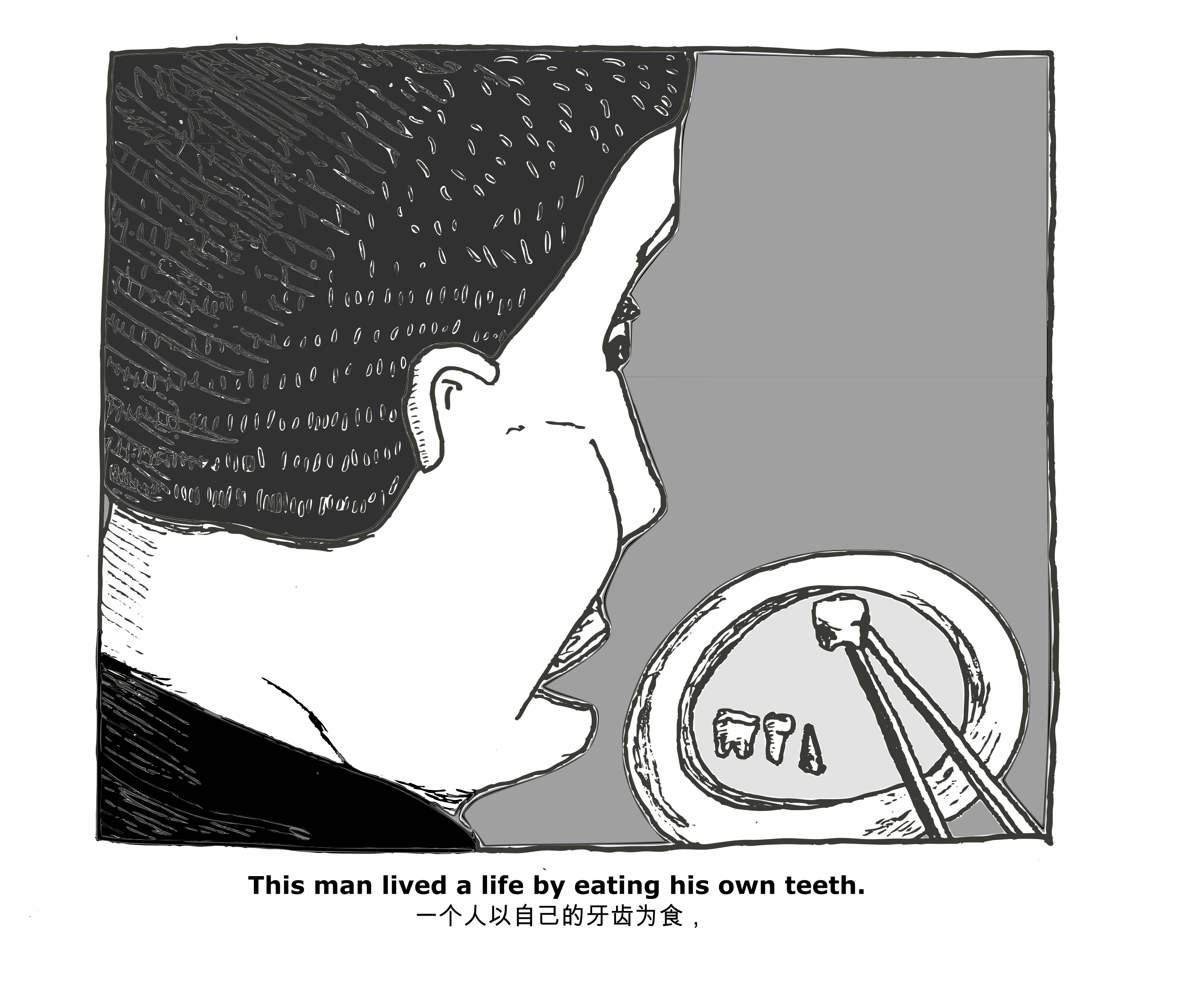
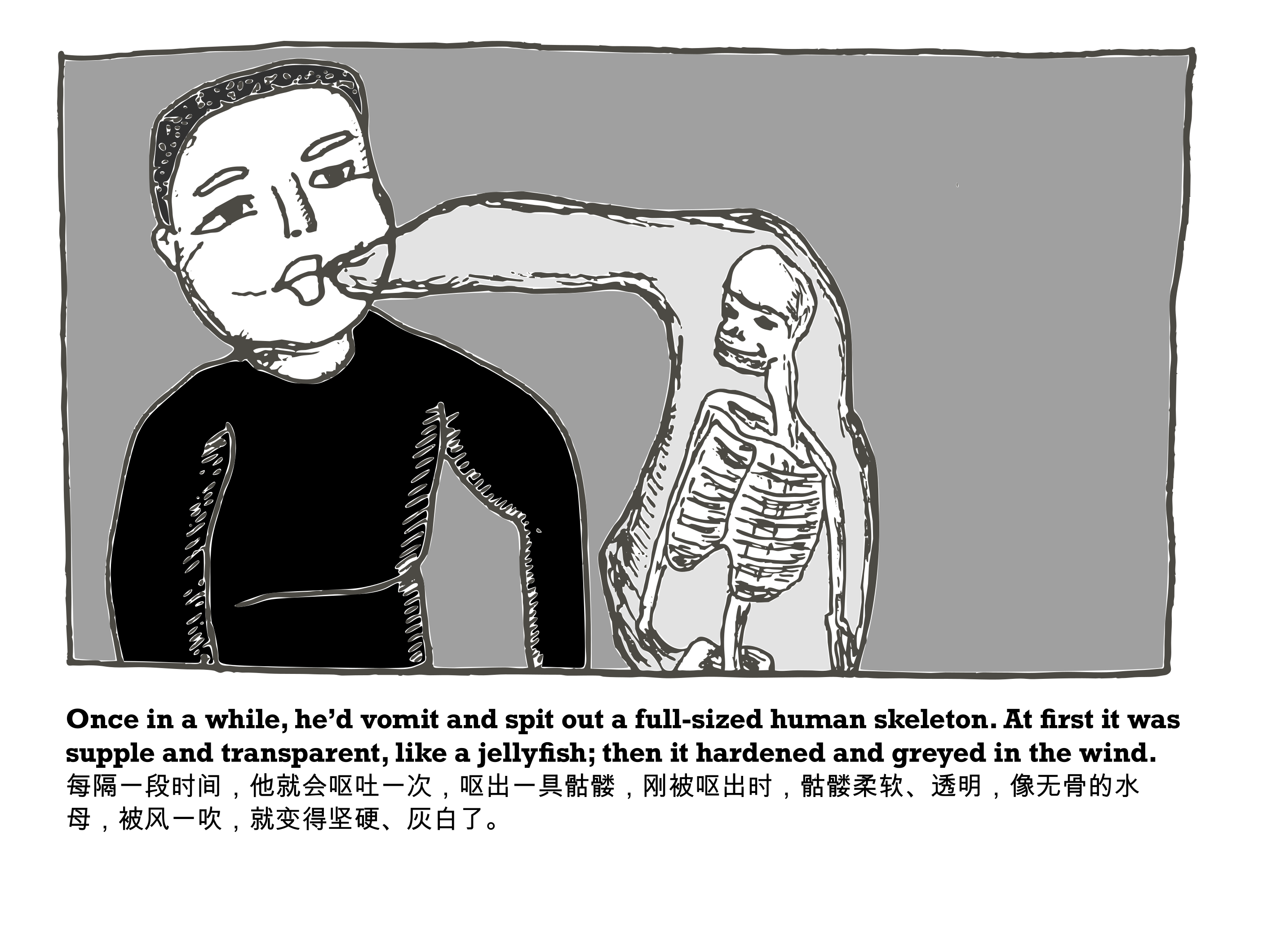
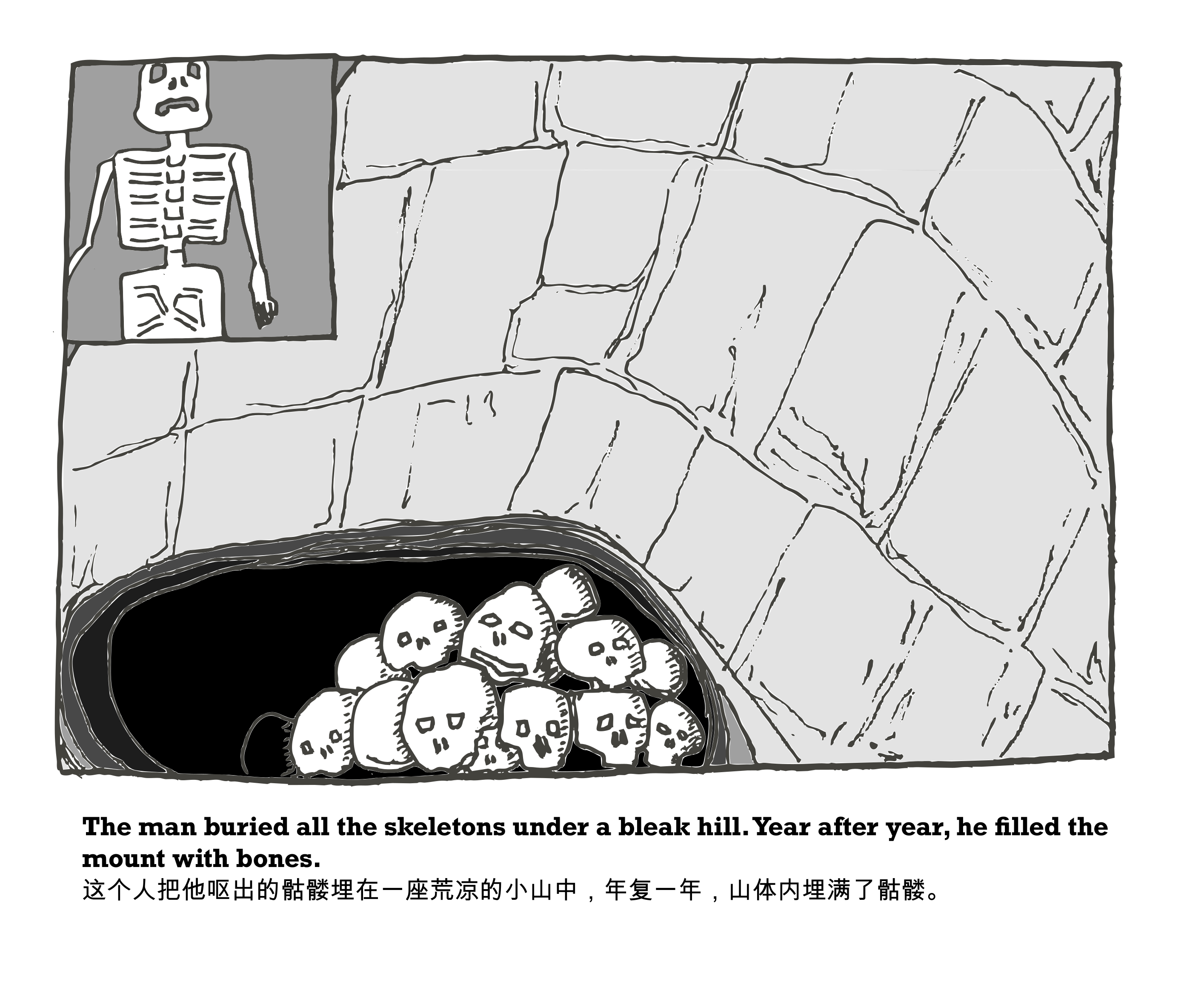
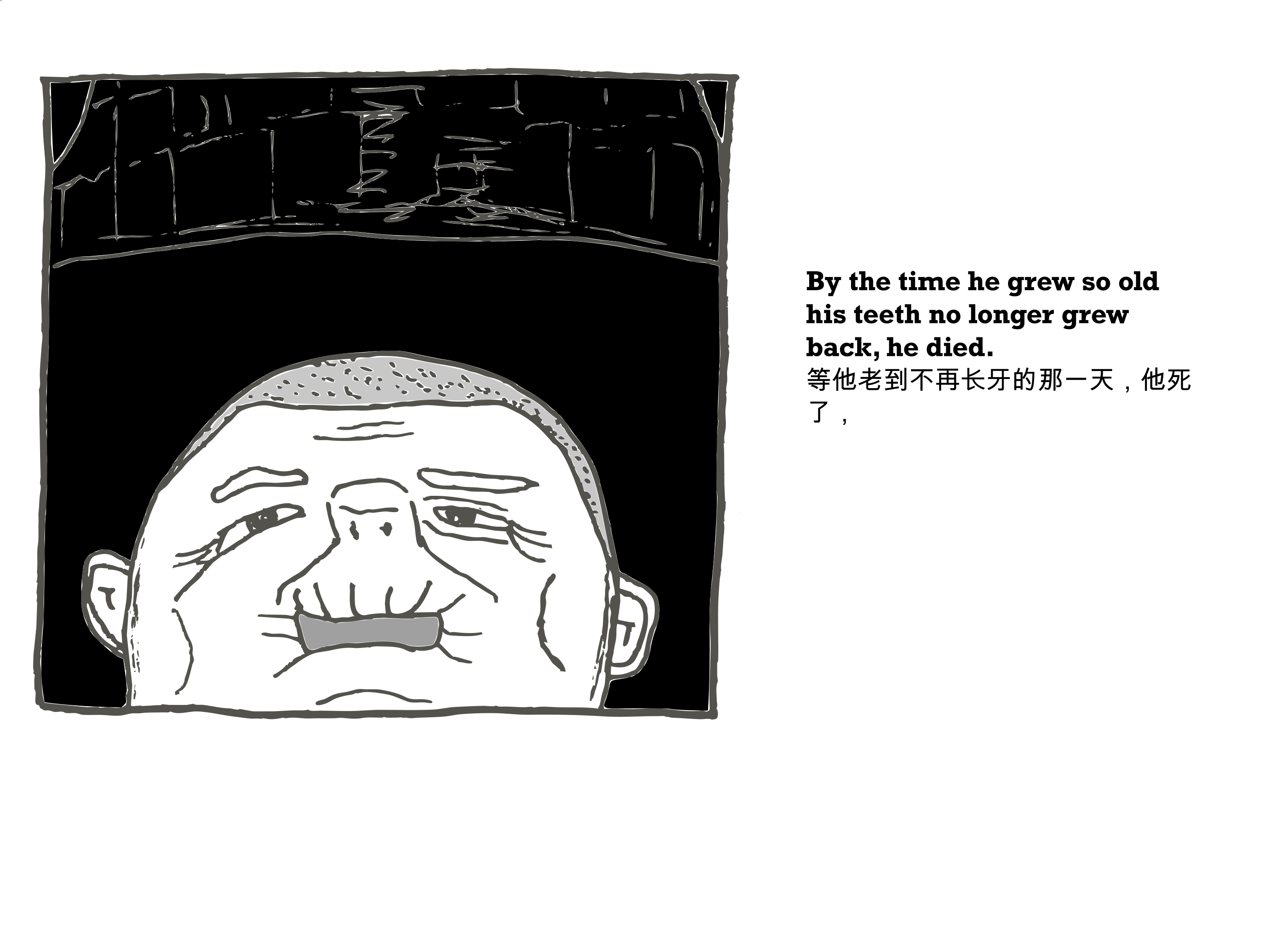
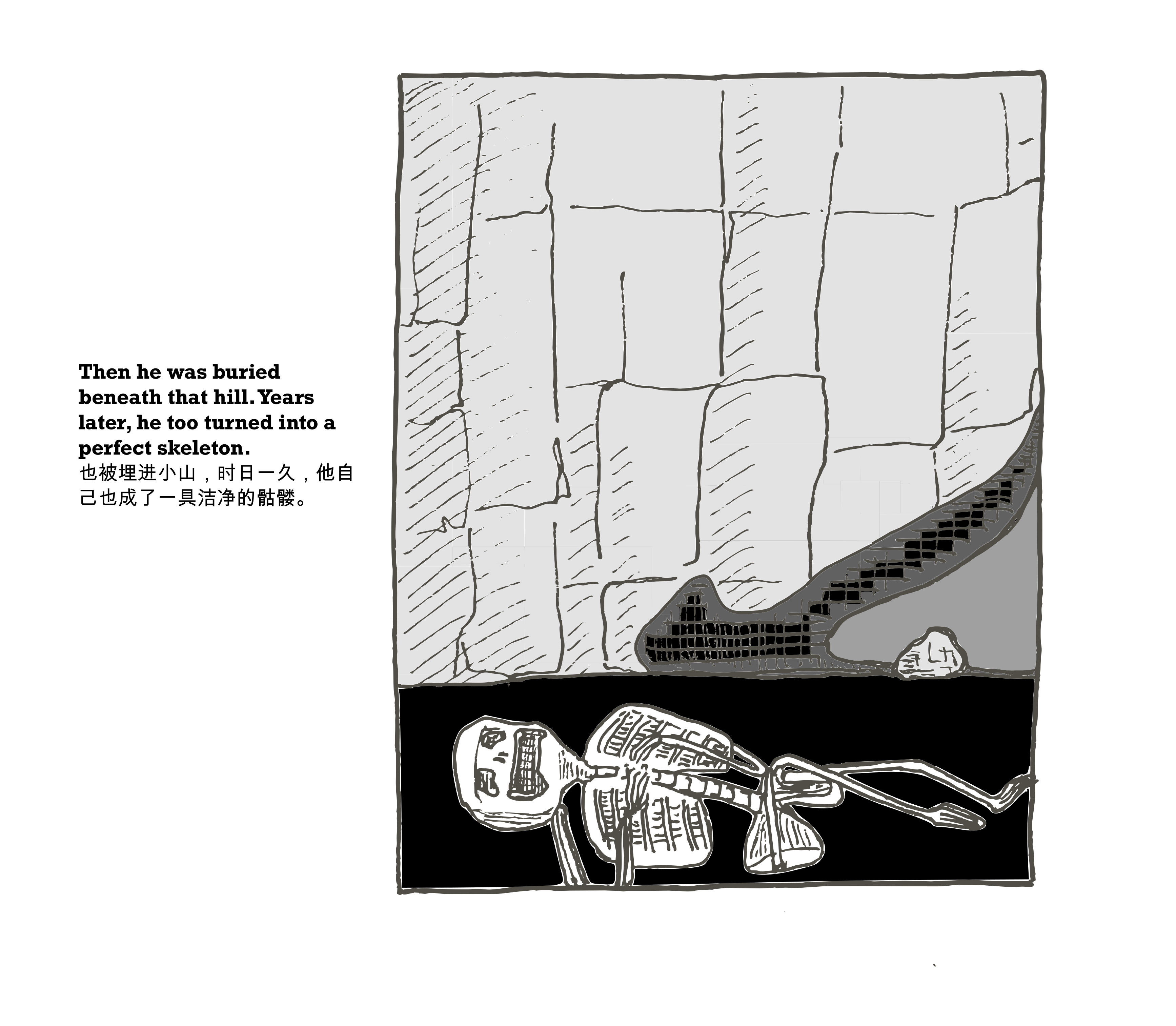
Swallowing Teeth by Zhu Yue (Translated by Jianan Qian and Alyssa Asquith, and Illustrated by Jianan Qian)

Link to PDF: Swallowing Teeth with Illustrations


Zhu Yue has published three short story collections, The Blindfolded Traveler, Masters of Sleep, and Chaos of Fiction. In English translation, his work has appeared in Litro Magazine, The Margins, Paper Republic, The Portland Review, and The Washington Square Review, among others.


Jianan Qian and Alyssa Asquith are graduates of the Iowa Writers’ Workshop with an MFA in Fiction. Jianan is a staff writer at The Millions, and her work has appeared in Granta, Guernica, The Los Angeles Times, and The New York Times, among others. Alyssa lives and works Iowa City, and her stories have appeared in The Adroit Journal, The Atticus Review, The Molotov Cocktail, X-R-A-Y Lit Mag, and elsewhere.

Like Real Women Do by Avitus B. Carle

Mama says real women bleed. Between their legs just as much as the blood being pushed through their veins. She says real women wear tampons. Pads for emergencies. Both when their allergies get bad and they gotta sneeze. Mama says real women get caught foolin’ but doesn’t say what “foolin’” means. Only that Aunt Tessa got caught and got the belt and, when she bends over, folks can still see grandad’s buckle stamped on her legs. Mama says real women work, like her and Aunt Tessa, before any foolin’ happens. That real women know how to treat a man so he’ll cover up, though she doesn’t say what that means either. Real women aren’t afraid of the pain and, mama says, there’ll be pain at first but I’ll get used to it. Some women like the pain while some, like Aunt Tessa, never learn to. I ask mama if that’s what foolin’ means and she says no. Says that foolin’ is what got me my cousins, Rochelle and Azriel. What she means is Aunt Tessa likes to love real women. Not like loving mama and me and her babies. But the women she takes to the back of our trailer, letting them trace grandad’s belt buckle brandings with their tongues. Mama says that, now I’m a real woman, I can ask them to do that to me too. I ask who “them” are. She says whoever I want. As long as, if they’re men, they cover up so no foolin’ happens. I ask if I have to see “them” like she does and she says no. Then she says yes. Just not as often. Real women make sacrifices and she tells me sacrifices are food and clothes and this trailer and these babies and, since I’m a real woman now, I have to help with all of that. Real women know how to keep quiet like Aunt Tessa leading another real woman to her room. Like mama holding hands with two men and leading them to her room. A man comes up behind me, rests his hand on my shoulder. He says something I guess real women like, but I can’t figure out what his words mean. He offers me money, like I’m a real woman. I listen for my mama, my Aunt Tessa, try to hear what real women sound like, then remember real women get real quiet behind closed doors. I unzip my pants, but I don’t pull them down. Peek inside my underwear, make sure the man can’t see. Check if I’m still bleeding, like real women do.

Avitus B. Carle lives and writes outside of Philadelphia, Pennsylvania. Her flash has been published in a variety of places, including Good River Review, HAD, Waxwing, Bending Genres, and No Contact and have been nominated for The Pushcart Prize. Her story, “Soba,” was included in the 2020 Best of the Net anthology and her story, “A Lethal Woman,” will be included in the 2022 Best Small Fictions anthology. She can be found online at avitusbcarle.com or on Twitter @avitusbcarle.

Funland by Rebekah Morgan

We were bout run ragged, sittin’ in the brick building on the side of 72 right before Cooter Creek but past the McDonalds. Getting a call, jumping up, hauling bodies mostly dead, runnin’ back and then sittin’ in the garage smoking pall malls talking shit bout so and so’s niece being strung out again while we was sittin’ next to the big engine or sittin’ outside on the lawn with burnt up grass till another call come in. Mikey’s brother failed outta scuba diving certification on account of claustrophobia. Mike’s daddy had paid for him to go all the way down to Florida for it. Mikey asked me what I thought his daddy bout done to his brother and I said to this man he oughta whooped him two tits from Tuesday and everyone nodded in agreement. Bobby Lee said they found a cop in an old outhouse yesterday or day before with a plastic bag filled bout yay high with gasoline and part of the bag over his head and he was damn near dead from huffing by the time they got to them. Bobby says it was the same damn cop they took out from the Funland not too far awhile back after the cop drank him a bunch of latex paint and it turned his whole mouth black. Bobby says that cop be selling cocaine around here too and knows them boys up in the hills who are runnin’ the gambling ring one county over. Ol’ Coolie chimes in about the paint and why people can’t just stick to sniffing glue like they used to cause now everyone drinking paint or runnin’ rubbing alcohol through a slice of white bread to drink and it’s making a whole lot of extra work for us and don’t they know we’re too tired for this mess. Jason come in even though it’s his day off cause he don’t wanna be at home with his wife cause he hates that fucking bitch and he remembers when him and Bobby were in high school. Jason says him and Bobby were damn near side ways one night at the Red Iguana cause they never carded anyone back then and started calling the escort services from the yellow pages and Jason says after they called bout five different ones the operator asked them if they realized it was the same lady they’d been talking to the whole time and Bobby asked if he’d worn her down yet.


Rebekah Morgan is a writer living in good ole Eastern Tennessee. Previous work can be found with Bull Magazine, Fence, Joyland Magazine, Maudlin House, and New York Tyrant, among others places.

Chickens by Harsimran Kaur

Before: I see grief speeding past my black Toyota Camry on the 29th intersection in the funny, stupid little town called Poppy. I have been living in Poppy for the past twenty-five years—this is where I met my chickens. There are twelve of them—all so ripe—I like them so much that I always want to adorn them. Neat. Put glitter under their eyes, pierce their strong hands (you’re supposed to pierce your hands, and not the softies on your body, left wasted like an ugly Christmas sweater, driven out of existence, lost into the cabaret.) The wolves in my backyard are in love with my chickens. I guess, everyone in Poppy is in love with my chickens—it’s as if their bodies are a magnet. It’s natural for anyone to fall in love with them. When I turn my neck back once again, I don’t see grief disappearing like a cloud of smoke, I don’t see it running in the opposite way anymore—not jolting itself into a corner. I see it turning back. When it’s eighty meters away, I sigh. My first thought is chickens. Perhaps grief is in love with them, too.

After: I come back home, and drop to my knees. The chickens are gone. All twelve of them. Not even a trace. I ask the wolves. I call the cops. I thought grief wouldn’t do anything. But it did. It took my chickens away, I say to Mr. Brad, the detective. A year goes by, I wait, wait, wait. I am so hungry… and they were so ripe. I wonder if they wouldn’t have disappeared without a trace if I fed them to the wolves in the backyard. At least I would have gotten something out of them—a ribcage, for example. A void in my living room—the ribcage. I am so sad. I wish they would come back to me. I would cut them into pieces. They were so ripe. They were like chemtrails over a country club. So present. I really would have eaten them—made them a part of me I would have always adored.


Harsimran Kaur (she/her) is a recent high school grad from Punjab, India. Her writing appears or is forthcoming in Jellyfish Review, BULL, Big Windows Review, Milk Candy Review, JMWW, and elsewhere. An alumna of The Adroit Journal Summer Mentorship Program, her work has been recognized by The New York Times. She loves clementines and Lana Del Rey, and works as an editor-in-chief for The Creative Zine. She tweets @harsimranwrites.

The Dar-Ron Motel by Julia Strayer

The doctor says I should spend the night nearby, just in case, and now I think I’m crazy for doing this so far from home. I find a cheap motel with free TV. It looks better at night when sunlight can’t get to it. Or in a fog when the edges are blurry. But by the light of day, it’s the kind of place I’d drive by without turning my head.

The sign says Dar-Ron Motel and I know a couple named Darla and Ron run it without even asking. Or maybe Darren and Ronda—without an H, because her mother wanted her to be special, the kind of person who wouldn’t grow up to own a rundown motel. Either way, Dar and Ron probably aren’t even together anymore. Maybe it’s just one of them—Darla with a new man who now helps her keep up the place, even though the sign still says some other guy’s name. Maybe the new man resents Ron. Maybe he’s grateful. Or maybe it’s just Darla because no man will stick around long enough to make changing the sign worthwhile.

The night clerk’s a gum chewing teen with red lipstick and hair that’s black on one side, white on the other. I wonder how much thought went into deciding which color would look best on which side. That’s the sort of thing that would prevent me from doing that sort of thing. I envy her. She’s probably the kind of person who’d never change herself for some guy making promises he’ll never keep just to get in her pants, eventually saddling her with a smaller, needier version of himself, unless she’s the one who finds a doctor far from home.

If I owned the motel, I’d name it The Francine because it’d be all mine. I wouldn’t cut up my name and share it with some guy, because that only leads to heartache and dead unicorns. At Halloween, I’d go all out decorating the place, and people would come from all over to see it. Halloween makes everyone equal—visible and invisible at the same time. I’m safe because I can see the masks. It’s easy to tell who’s pretending.

My motel would have a lounge where the lonely people who are missing persons from their own lives could feel like they’re part of something and like they have a home. Maybe they’d rent a room and maybe they’d even meet someone. And they wouldn’t care if the room came with free TV, at least not right away.

Julia Strayer has stories in Glimmer Train, Kenyon Review Online, SmokeLong Quarterly, The Cincinnati Review, Jellyfish Review, Wigleaf, and Atticus Review, among others, including the Best Small Fictions anthology. She teaches creative writing at New York University.

Spectral Analysis by Marc Vincenz

Down at the port where the ribbons flow on a Friday night the pubs are crowded at five, the old skippers congregate, drifting greedily into their odd banter: who caught the most frightening fish, who came face to face with the deep in the eye of a giant squid, or barely escaped that battering from an angry blue whale. Imagine what else they go on about. Long time coming, storm cloud on the horizon, beneath the weather, then above it. Here come the mackerel, the herring, the scores of transatlantic cod. Once this place was loaded with sardines in wooden barrels and sailed from here across the world. The fish could be scooped up by almost any hand—they came from as far as Siberia followed by all the seagulls and one hundred years of frostbite. Take this very can, over one hundred years old, dented and rusted, the metals seep in, but the oil (imported from the Cretan islands) is still a thick emulsion and when you bite in, the salt crystals crackle on your tongue; and the sardines are soft yet firm, their skins have quietly braised in history, touched by cosmic background radiation.

All’s well with you, you say. I would hand you some fragments, some cold evidence, how they were herded onto the boats, searing in pain from cable burns, or those who died with a wire across their eyes, or the cut and scrape of their gills against cold steel; how they came from the other side of the planet to mate and spawn and breed where the most vital and vibrant river finds its source.


Marc Vincenz is an American-Swiss poet, fiction writer, translator, editor, and musician. He has published 20 collections of poetry, including more recently, The Little Book of Earthly Delights, A Brief Conversation with Consciousness, There Might Be a Moon or a Dog, and forthcoming in 2022, The Pearl Diver of Irunami (White Pine Press). His work has been published in The Nation, Ploughshares, Raritan, The Los Angeles Review of Books, Guernica, 3 AM, and World Literature Today. He is publisher and editor of MadHat Press and publisher of New American Writing.