Tongue Depressors by Emily Behnke

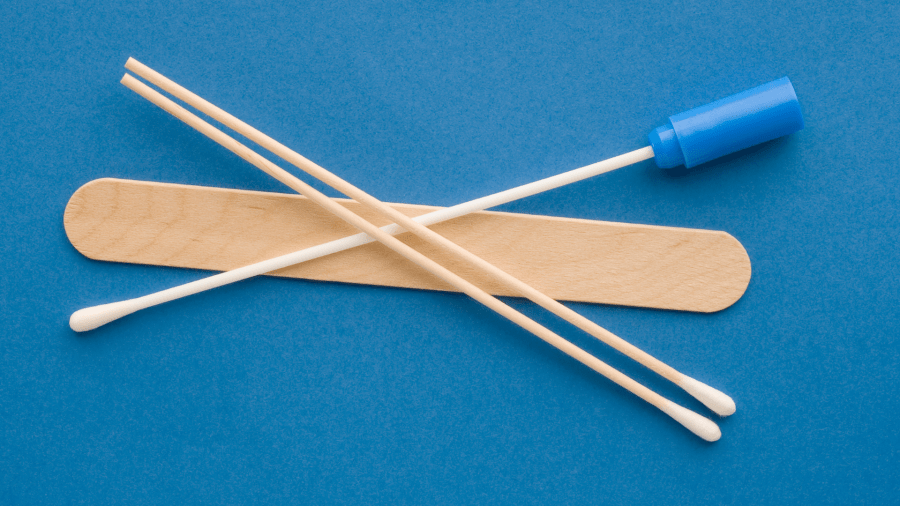
It’s murky, but at the bottom of Sadpond I think I see streaks of green and yellow. Mabel watches me from the window with worry winnowing across her face, so I cut my staring short and go inside. She asks if there’s something wrong with Sadpond. I don’t know, I tell her. Something’s growing in it. She looks at me, serious as she was as a little business-like infant. Ponds are habitats, she tells me. Okay, I say. Things will grow, she tells me. She walks away from me to let that sink in. I haven’t had it in me to tell her about the sunflowers, but she’s putting the pieces together quicker than I can stop her. I don’t go back out to Sadpond for the rest of the day, but I don’t talk to her either, not until she comes out of her bedroom red in the face and sweating. I have a fever, she says in a long yodel. My fingers are ice against her head. She sinks against me and I toss her to the couch. My daughter, I say. We are so easily taken out. Soon enough, her throat is crawling. She hacks up green and asks me to look at her throat so I get the tongue depressors, even though she’s too old for them. We both like the woody taste. I press down. Inside her: swaths of bright red patched with yellow and green, just like at the bottom of Sadpond. Did you drink the pond water, I say, and she pulls away from me in disgust. I’m not fucking stupid mom, she says. I roll my eyes. There isn’t time for this. She hacks again and something comes out like a silken petal. I made a mistake, I say all choked up, and hurt flashes across her face. For some reason, I think she assumes I meant having her. Obviously, that isn’t it. My mistake: thinking I could protect her alone. My mistake: thinking the sunflowers wouldn’t come for her.


Emily Behnke is a graduate of The New School’s MFA program. Her work has been published in trampset, Bear Creek Gazette, Tiny Molecules, and other venues. She’s currently at work on a novel.

There Is Only One Object in the Museum of Darkness by Helen Harjak

It all started with these pains deep in her eye sockets. From there, a tightness would snake into her temples before settling in the back of her head. She felt people’s piercing gazes on her, assessing and questioning. She dropped out of her courses and got an office job, but the pain didn’t seem to go away. Her mornings were spent willing herself to get out of bed.

When she quit her job, the throbbing stayed with her. She moved into the family cabin, tucked away at the edge of a pine forest. She didn’t leave the house much besides a daily walk to the local shop to get the paper—there was no phone line and the TV reception was sporadic, amounting to three different channels that all showed the same shows where the people said the same things.

One day, she read an article in the paper about a young man who had won a novel-writing competition. He was only two years older than her. He was asked how someone so young could come up with a work so deep and meaningful. The young man listed a number of inspiring writers the girl had never heard of. He said he’d gone through a very difficult time in his life. ‘But what really changed me was the Museum of Darkness,’ he said. ‘It’s in England. A bit of a journey from London but well worth the effort.’

She found out that the museum had opened when she was at school. It was popular then, but nobody had written about it in recent years. Yet, according to the museum’s website, it was still going and free to enter. She used what was left of her savings to book a plane ticket.

* * * *

The Museum of Darkness wasn’t easy to get to. You either had to drive along winding, gravel-strewn roads, or walk five miles from the nearest village with a train station. In the initial bubble of excitement, when many people made their way there, they travelled by taxi. It was busy enough that there would always be somebody to pick you up on the way back. But that was then, and this is now.

Nobody sees the girl walking up the road. She takes a small digital camera from her backpack and photographs the front of the building: concrete walls with a vaguely cubist texture forming little turrets, and balconies jutting out full of lush green vegetation. There are many windows on different levels, but it’s hard to gauge what lies beyond them. The girl doesn’t venture off the narrow path that leads to the entrance. She observes her reflection as she approaches the large tinted-glass sliding doors. She can’t bring herself to look away from the two hollows in the middle of her sunlit face. She stops and takes a photo.

The doors slide open when she comes within an arm’s reach. In front of her, another wall of darkened glass. She steps inside and the doors behind her close, trapping her in the narrow space. When she glances over her shoulder, she can still see the outside. With slight unease, she realizes she might be watched through the set of doors in front of her, just as she can look at the rose bush growing alongside the path she has taken.

“Welcome to the Museum of Darkness,” a voice rings out. “Please switch off your mobile phones.”

She can’t tell where it’s coming from and whether it belongs to a man or a woman. It has the metallic twang of a robot but with a tone to it, something subtle, almost mocking. She hasn’t turned on her phone since she landed. She checks it just in case.

“Please mind your step in the dark,” the voice says as the second set of doors in front of her open.

When she walks into the darkness, she discovers she can’t see through the layer of glass that has closed behind her. She’s caught by a sound. A rustling? No, a shuffling. There are waves nearby. And the sea breeze—she’s sure she can smell salt and algae. The ground underneath her feet crumbles like sand. She starts moving towards the waves but stops after a while for fear of hitting a wall. She reaches out a tentative arm. The wall isn’t there. Yet, she can feel the warmth radiating from it, an uneven rock surface heated by the sun. It’s close enough, so she’d better turn left.

The air is damper now. Her thin top clings to her back despite the relative chill. She recalls being in the cellar with her grandmother, removing sprouts from the potatoes. They sat on small stools, her thumb growing calloused from pushing the growths off the surface of the icy-cold vegetables. Her grandmother was telling her a story. That’s when the honking starts.

She jumps to the side, expecting the glare of headlights to illuminate everything in a second. Instead, she hears the clatter of tracks, catches a whiff of something bitter, exhaust-like. She moves away from it and her hand brushes against a flaky tree trunk. A man’s voice is calling out in the distance. The floor underneath her feet dips and squelches besides the occasional sharp crunch of twigs or acorns. There are others around her now, with their tentative footsteps and quiet breathing.

She smells burning, heavy and musky. The smoke stings her eyes. Something falls on her face: little feathery touches run across her skin. She tries to brush them away and detects an earthy odour, of tobacco, something herbal. By instinct, she navigates the corridors of the block of flats. The sound of a distant TV, a child wailing a few doors down, the scent of onions and spices cooking in the kitchen. She hears whispers, a giggle. Somebody takes her hand, squeezes it as they climb the stairs. Then, the hand is gone and she’s grasping at emptiness.

“Are you here?” she asks when she stops, one foot poised in the air. Her voice echoes back at her. She takes tentative steps in one direction, then another. The door! She remembers reading something about an emergency door. Were there stairs leading up to it? She only skimmed old articles about the museum because she didn’t want them to spoil her experience. She lowers herself to the floor and is surprised by the warmth of it.

The floor eventually leads to something solid and rough to the touch. She slides her palm along the wall until she feels a little blister. It’s a small rubber ball, or maybe a large piece of gum someone had left behind. She pokes at it with her index finger. At first, nothing happens when she pushes it. But gradually, the darkness around her begins to hum. Overhead lights blink on one by one, illuminating a vast space painted a soft grey, with clean walls and a shiny floor. By the far corner, a narrow red door bears a sign that says: EXIT.

* * * *

You came from where you came from. You came to leave behind what you no longer needed, the parts that kept you tethered to your fear and grief. The darkness in the museum grows every year, but its walls stand firm.

Nobody sees the girl leave the museum. For a while, she stands by the exit door squinting up at the sky. She wonders how many hours or days have passed since she has last looked at it. Then, she adjusts her backpack and begins her walk back to the village.


Helen Harjak was born in Estonia, studied literature and philosophy in Scotland, and now lives in London, where she works as a freelance journalist and copyeditor. In 2021, she was chosen to participate in A Brief Pause, a professional development program for short fiction writers, run by Dahlia Books. Her work has been published in Visual Verse, Fudoki Magazine, and the anthology Small Good Things.

How to Take a Vacation: A Guide for Medieval Women by Maria Poulatha

1.  Pretend You Fell into a Well.

You are up before everyone, so take your time lowering yourself into a dry well. If it is full of water, be sure you know how to swim. Do not forget to pull the rope down with you and bring a meal that does not spoil. After you are discovered (because the bairns will sniff you out), tell them that you have enough food and water, and to fetch an extra-long ladder that only the chimney sweep two towns away owns. Count how many clouds passing over the window of your well-mouth are shaped like wheelbarrows. Listen to the sound of mud settling.

2.  Break a Leg.

Hold an iron pot as you collapse onto one leg. Continue to scour soiled clothes, stir the pottage, milk the sheep, and plant vegetables with a splintered cane because you can. If you have earned no more than four hours of vacation time, see number three.

3.  Break All Your Limbs.

Jump into a dry well, then order the husband to lower a basket. Stay in bed avoiding all household chores and farming, but remain immobile and unable to dodge even your toddling littlest. Rest your bones as you are fed boiled turnips from a wavering spoon and get assailed with crusty kisses. Limp off in three weeks, otherwise die from thrombosis or bedsores.

4.  Get Abducted by Pirates.

Stay put and look smug, as others flee while your village is getting sacked. Learn new songs, see the world, and abet some despicable crimes. Imagine how much the children would enjoy this.

5.  See Visions.

Describe a field of flaming poppies in the shape of the holy babe, remove yourself to a cloistered space the length of a broomstick (the shed where the dog expired in labor yesterday), and like the mystic of Norwich, accept only visitors wishing to confess their deepest darkest secrets through a peephole or children in need of a wound kissed.

6.  Join a Nunnery.

A convent may not admit a woman with six children, but insist that your husband has lured your offspring with the dark arts and is now trying to convert you. Complete a needlepoint cushion, see a book for the first time, and press it to your breast so that the words may seep into your heart. Notice that the tallow in the votive candles is the same hue as your youngest’s complexion when she has a humid fever. Announce you miss fornicating with the devil, get returned home in a horse-drawn cart full of garlic.

7.  Go on a Pilgrimage.

Make a vow to visit the Holy Land, then collect funds from friends and family to secure their heavenly passage and a slice of the True Cross. Discover that there are new names for birds and flowers and even bugs in Flemish and Breton. Feel faint at the French words parapluie, pantoufle, choufleur. At night, when you lean your head on a rock to sleep, remember the husband’s muscle and jelly arm under your head, and giggle at the way the brute could make you laugh. Go as far as Marseille, then return on your pirate friends’ ship sailing in the opposite direction.

8.  Grow Old.

With the help of wormwood tinctures and magical amulets, reach the all-gum and barnacle age of forty-nine. The surviving children have their own families and the house overflows on Sundays. The eldest daughter brings candles she molded herself and the middle son arrives with baskets of turnips. Bend tiny loaves into bunnies for the little ones and in the evenings, let your husband knead the knotted twigs of your feet, as he tells funny stories about the neighbors. Laugh until the sun sets.


Originally from New Jersey, Maria Poulatha lives in Athens, Greece with her husband and daughter. Her stories have appeared or are forthcoming in Split Lip Magazine, SmokeLong Quarterly (finalist for the Grand Micro contest), Copper Nickel, trampset, and others.

Azaleas by Rachel Hoiles Farrell

A woman goes to Ohio to visit her father. She drives a thousand miles through snow and rain. When she arrives, she finds her father asleep on the kitchen tile. He’s too tired to move to the bed or the couch, he explains. Impossibly, irreconcilably, desperately tired. He says this in a whisper—he is even too tired to talk. The woman asks her father if she can bring him a pillow. No, he says. But the daughter insists. She’s a good daughter, and she doesn’t want her father to have neck problems. The father says he doesn’t care if his neck hurts. Everything else hurts, so why not the neck, too? It feels wrong, he explains, to spare one part of the body when the rest of him must suffer. The woman notices her father is shivering. At least let me bring you a blanket, she says. Her father tells her to fetch one from the refrigerator. In the crisper, he says. Under the mushrooms and onions.

The woman, worried about her father’s state of mind, buckles him into her car and drives him home to Georgia. She carries him through the door in her capable arms, lays him in bed, tucks the covers up to his chin. You’ll never be cold again, she tells him. She gives him a little bell to ring in case he needs anything. She brings him nourishing meals on a tray with a multivitamin and a glass of milk. She bathes him and combs the tangles from his hair. She explicitly instructs him not to wilt or wane. Still, she can feel him diminishing. She bundles him in a sling while she performs her chores, cradling him against her chest, coaxing him to settle when he wakes to cry. She knits him socks and beanie hats.

One day, the woman enters her father’s room to find him curled on the hardwood floor. He’s tired, he explains. He needs to lie down. But you have this bed, the daughter says. Blankets, a pillow. A little bell. Blood coursing with milk and vitamins. Please, her father says. Tears run down his face. Please, can he please have a moment to lie down. The woman goes out of the room and closes the door. She goes outside and pulls the trellis away from the porch, crawling under the house through darkness and dirt until she is under her father’s bedroom. Through the floorboards, she hears him crying softly. She knocks three times. He doesn’t answer. She knocks again. A beetle nests in her hair. The dank smell of earth washes over the woman. She knocks again, listening and waiting. In the yard, azaleas bend toward the sun. The woman knocks again.


Rachel Hoiles Farrell is a writer in Georgia. Her fiction and nonfiction have been published in Jezebel, Joyland Magazine, McSweeney’s Internet Tendency, PANK, Virginia Quarterly Review, and elsewhere. She recently wrote and co-produced the digital web series LOST/FOUND in collaboration with Outjogging Pictures. You can find out more at rachelhoilesfarrell.com.

A Girl Builds a Snowman by Ruth Joffre

Her windows smell like ice. Frost like delicate threads of lace embroidered in the glass. It refuses to melt when the dawn hits the panes, like a surprise slap in the face. Her cheeks are flush with heat after a night spent under her mountain of blankets. One by one, she presses them on the cold sheet of glass, pretending she is an alpinist resting on her ascent of a snow-capped peak. She knows even before she turns on the radio that school will be cancelled. A blizzard has descended, hiding the pits and curves in the road, smoothing the curbs until she can’t tell where the sidewalk ends and the backyard begins. Enough snow has accumulated on the windowsill to bury a bird. If she were to leap into the snowbank now, it would swallow her whole. Sometimes she wishes her parents’ bank would get the whole mess over with already, take the house and the yard, stop giving her parents those predatory loans. Life would be simpler then. Smaller, colder.

For once, she wants to be sure of what comes next.

Her parents take turns shoveling the driveway while she eats breakfast in her slippers. No one notices when she dollops peanut butter into her bowl or sneaks a little ginger cookie from the cabinet. Or perhaps no one minds. Nothing matters on a snow day, it seems. Nothing counts. She could while away the hours reading comic books on the floor or making snow angels outside, but come tomorrow the world would be just as still and the day would be just the same: oatmeal in the morning, soup in the afternoon, canned chili for dinner, the flavors identical, all options exact but for minor variations in the bowl being used, the curve of the only clean spoon, the quality of light reflecting off the icicles in the windows. She can do whatever she wants in these periods between meals. Sled down the hill. Throw snowballs at the neighbor kids. Build a snowman and pretend it will never melt.

All of this is extra. A heart over an “i.” A spell that stops time. Why waste it?

After breakfast, she pulls on her winter gear, her waterproof pants, her big puffy coat that makes her look like a walking sleeping bag with teeth. Outside, she cinches the hood so tight, her field of vision narrows to a point, pinching away the extraneous, the prepubescent nuisances who might distract her from her goal. One snowman isn’t enough. She plans to build dozens. Not only men but people of all genders and of no gender, people more properly defined as witches from an ephemeral snow coven that emerges once a year, after the first big snowfall. What do they want? What spells do they whisper into the frozen heart of the cauldron? The girl cannot say. She is just the sculptor tasked with building containers for their magical spirits. She doesn’t understand their ways any more than she understands her parents’ jobs.

What she does know is this: snow is like love—it collects, it drifts. It takes on unexpected shapes reflecting the source of desire, not the object. You could say that the girl has fallen in love with the one witch at her school, but you would be wrong. It would be more accurate to say: love is the only magic sustaining her as she waits for the other shoe to drop. For months, she has been gathering its power in the bottle of her body, storing up magical moments with the witch—a pale afternoon spent panting on the swings; a portrait unit in art class, where she was the artist and the witch the model; the stray lock of hair the witch allowed her to tuck behind an ear. Now, she will draw on that magic to build her miniature coven. Their pointed hats. Their arcane symbols. Their brooms made out of twigs. She thinks they’re perfect just as they are.


Ruth Joffre is the author of the story collection Night Beast. Her work has appeared or is forthcoming in Kenyon ReviewLightspeedPleiades, The Florida Review OnlineFlash Fiction OnlineWigleafBaffling Magazine, and the anthologies Best Microfiction 2021 2022Unfettered Hexes: Queer Tales of Insatiable Darkness, and Evergreen: Grim Tales & Verses from the Gloomy Northwest. She lives in Seattle, where she serves as the 2020-2022 Prose Writer-in-Residence at Hugo House.

Deer by Hannah Silverman

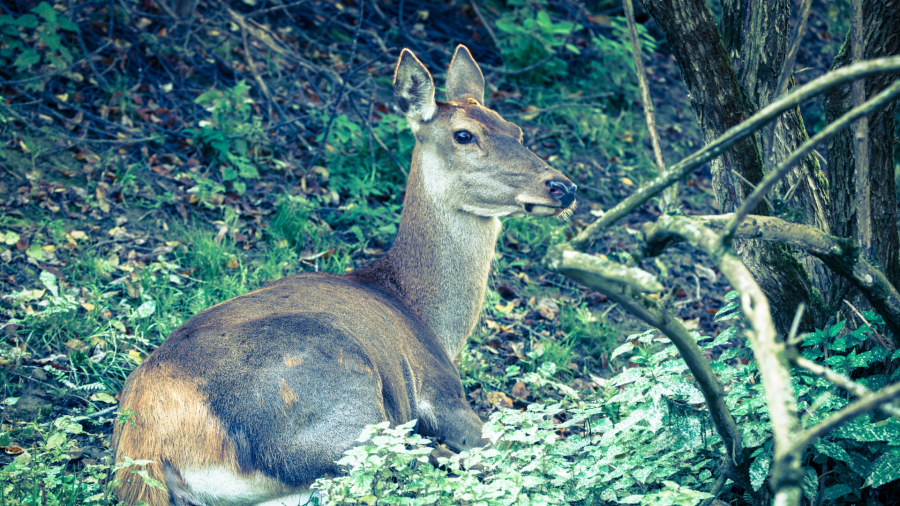
Emi finds the deer in the forest. It hasn’t been dead long, is still warm. It reminds Emi of her mother, something about the grey around its eyes and the sagging nipples on its belly. Emi has the urge to lean down and suckle.

Emi will be fifteen this month. Her mother is planning a party with peony centerpieces. Emi finds the whole affair grotesque.

Emi sits down in the dead leaves beside the deer. It is heavy-looking and beautiful. Emi respects the deer, the way it retreated to the forest to die without ceremony. She wonders what it must have been like to live so quietly, to die in the leaves.

Emi’s mother wants to know what Emi will wear to the party. Emi says, antlers.

Emi visits the deer again the next day. It is still there, but a little less. There is a sparrow on its back, nestled in its fur. Emi strokes the deer’s snout. The bird is unbothered. Emi thinks the deer must have been a mother, and she hates it a little bit. She opens its eyes, yellow-orange irises. The eyelids droop slowly closed as if the deer is drowsy.

Emi goes through her mother’s closet. Sharp, pointed heels. Pearl buttons. Stiff fabric and wires and hidden zippers. In the back, white lace. Beading and tulle. Wherever her father is, Emi is sure he does not keep his wedding tux in the back of a closet. For this, Emi thinks her mother pathetic.

By the third day, the deer is a home for flies and ants, a few maggots in the ears. Emi wishes to climb inside its stomach and go to sleep. She rolls the deer onto its back. It’s no small effort. Emi wants a good view of the stomach. Bald patches, dry blood, matted fur. This stomach has scraped the forest floor, nourished hungry babies with sharp teeth. Emi lifts her shirt to look at her own stomach. It is rounder and rougher than it used to be. A patch of dark hair blooms around her belly button. Perhaps she is turning into a deer. She feels around for extra nipples. Still only two.

Emi’s mother has locked Emi in the house. It is a small house in a cul-de-sac of identical small houses. Emi is not allowed to leave until she picks out a dress for the party. Emi’s mother suggests pink, to match the peonies. Emi suggests brown, like dirt or death. There is a standoff.

Emi will be fifteen tomorrow. She lies naked on her bedroom floor. She may not come out unless she is wearing a dress the color of flowers. Emi lies on her side, head tipped back, belly brushing the grassy carpet, eyes wide and seeing nothing. She imagines she is a dead deer in a forest. She can feel the maggots crawling into her eye sockets, the birds pecking at her tail. Emi’s mother calls to her from the hallway, but Emi does not move because she is a deer and she is dead.

On the morning of her fifteenth birthday, Emi slips out of the house. Her bare feet scrape the perfect suburban pavement. Behind the house, the sun rises above the forest where the dead deer lived. Emi is wearing her mother’s wedding dress. It droops over her shoulders, gapes at the chest, leaving space that Emi is not woman enough to fill.

Emi walks into the forest, the long white skirt turning brown beneath her feet. The deer lies on its back, the way Emi left it. Four legs splayed out, hooves reaching for the sky. Its chest is a cavern, ribs exposed, reddish-black guts spilling out. Emi rolls up her sleeve. The inside of the deer is cold and wet and alive. An ecosystem of things that live inside other, dead things. Emi searches for the heart, but another scavenger has already claimed it. No matter, Emi has a heart of her own.

Emi wipes her sticky pink hands on the white dress. She pulls more goopy blood from the deer’s innards, paints four fresh nipples on the front of the dress. She thinks perhaps this is how girls become mothers, or maybe it is how girls become deer.

Either way, Emi turns fifteen in a pink peony-colored dress.


Hannah Silverman is a Brooklyn-based writer and filmmaker. She earned her BFA in Film & Television with a minor in Creative Writing from NYU. She is a reader at Pigeon Pages literary journal. Her prose has appeared in Litro Magazine, Pigeon Pages, Flypaper Lit, and elsewhere.

My Mother Visits Me in America and is Offended by What the Dishwasher Can Do by Tara Isabel Zambrano

She asks if there’s a human inside, who scrubs the dishes and puts them back as they came in. I laugh, kiss her on her forehead, dipping my nose into her thinning hair.

I smear creamy lotion on my mother’s calloused palms, white settles in the trench of her lifeline. Years of washing dishes for restaurants, to send me to school, to buy books and uniforms after Pa died. Her back curved over dhobi ghats, wringing out towels and sheets. Her long face against the fabric on the clothesline, siphoning damp relief. Now, next to the sink where she has rinsed her life, a dishwasher is draining erasure into the creases on her forehead. During the day, she sticks her finger in the turrets of silverware holders, presses the soap pellets on her wash-annulled palms, their scent embroidered into her shadow. After dinner, her rosary-shaped eyes wait until the red LED of the machine turns off, expecting someone to walk out drenched in water, laced in froth.

“I haven’t embraced the porcelain in days,” she complains, her eyes dull with boredom. “My limbs are sore from underuse.”

“Ma, I have it all so you can rest now!” I plunge my gloved hands into the greasy dishwater in the sink, a mechanical whirring of the motor starting in the background.

“I wake up at night,” my mother says, “and grow sad about the world. It’s dying because there’s too much smartness and not enough touch.”

I shake my head and hear the mushy hurt of her guts–deep breaths, snotted air, a washcloth-cringed wetness split between us.

“It’s a curse not to use your gift to serve. Besides what do you do your entire life if not clean? First, the skin for good health, then the tongue with silence, and last, the mind with compassion,” my mother says.

 I don’t know what to say, so I interlace my fingers in hers. They don’t fit as they once did. There are gaps from which the light escapes.


Tara Isabel Zambrano is a writer of color and the author of the full-length flash collection, Death, Desire, and Other Destinations, from Okay Donkey Press. Her work has appeared or is upcoming in Copper Nickel, West Branch, and Post Road. She lives in Texas and is the Fiction Editor for Waxwing Literary Journal.

Closer by Tara Isabel Zambrano

For fun, we make a dating profile and start talking to girls from other cities, words shooting like a script, Hi, what are you wearing?

Pink blouse, ripped denim shorts.

Underneath?

Raspberry colored bra, a purple thong.

Show me? A little lower, yes, right there.

It’s adventurous to sync up on Twitter, push stories on Insta, location enabled, our fingers swiping the apps as if it’s each other’s skin. We ask each other, Will you let me touch you tonight, our tongues circling inside our mouths like thirsty leeches. We rub ourselves to those topless pictures taken in dimly lit bathroom stalls, until our lids go heavy.

Did you cum?

Not yet, did you?

Yes, of course. Heart emojis, a hot-pink smooch. You have an amazing body, we text before we birth a lake on our bedsheets, smother each other’s names into our pillows.

We want to visit the girls, we want to bring them home. We want to untangle each other’s hair. We want to bitch about the size-zero waists and the shrill voices of our exes, show how we dope in the vape-sucked restrooms at school, how we sneak out of the labs to avoid dissecting a dead cat. How we plan to push and prod on the kitchen floor with each other someday, stretch our skin in imaginative designs and bake cupcakes, stick tight, glistening cherries into the fleshy sponge.

When we get bored of sex, we fight without fists, our words screwing the airwaves. To cool down, we watch the same ASMR session, the drowsy wavelengths like eyes blinking in a dark cave until the video runs out and we wait for each other to hang up.

What we have won’t be fixed without touch, though the difference in our time zones makes us safe and complicated. For a while, it’s just, Hi, thought of you.

Me, too.

We cling to, Are you wearing something interesting today?

No, are you? OK, gtg. We give up calling each other, Amazing, Gorgeous, our fingers sore from softening the knot between our legs. Our skin goes cold for a while, until we swipe through profiles, text another name, the exposed ink on cleavage warming through the screen, our torsos bent, our eyes drunk with expectation as we gaze deeply, Closer, Yes, Can you come closer?


Tara Isabel Zambrano is a writer of color and the author of a full-length flash collection Death, Desire, and Other Destinations from Okay Donkey Press. Her work has appeared or is upcoming in Copper Nickel, West Branch, and Post Road. She lives in Texas and is the Fiction Editor for Waxwing Literary Journal.

A Theft by Rhiannon Jones

“You know an owl is a meant to be a messenger of death?” I said. “Even six-foot anthropomorphized owls.”

He pulled a face. “You think you’re funny, don’t you?”

“Not remotely,” I said. “I just don’t think whoever’s organized this ceremony has really thought it through. After all the bad press with the log flume incident. Why would you get a symbol of death to re-open your ride?”

“Yeah, I really think all the five-year-olds who watch my show are thinking that.” He coughed and said, “I need a cigarette.”

“So have one,” I shrugged.

He was handsome close up. You didn’t notice when he was on TV, when you were distracted by the strangeness of his eyes.

“It’s not that easy.” He smiled at the crowd that stood thirty feet away. “Not when you have to be Barney fucking Owl,” he hissed. “Why’s it taking so long? I cut the ribbon, they take a few photos, bam off I go. Back to the hotel.”

“Everything takes a long time here,” I said.

“Here? This theme park, or this shithole town?”

“It’s not a shithole,” I said, more to myself.

Most nights, sleepless, I opened Google Street Views and swiped through the streets of my home town. I left because I was twenty-five and I hadn’t worked out what I was good at yet, and I stupidly thought I’d find out here. I left because I shriveled each time I remembered how in the last three weeks of my mum’s life, I hadn’t picked up the phone. And I remembered it all the time.

“Ironic things could be so slow at a theme park, don’t you think?” he smirked.

“We cater to the under-twelves,” I reminded him. “That’s why you’re here.”

I swiped through the new estates built over the fields, where flies once clotted around the foxes’ exit wounds, where we once tarred our lungs and burned our throats.

I said, “It was horrific how they died, those people on the log flume,” but he wasn’t listening. I tapped my toes to circulate my blood. “That’s what you have to live with, isn’t it? Every day you wake up and think, I might die today and it might be sudden, or it might be terrifying and drawn-out.

Sometimes you knew it was coming, you knew it for weeks and weeks, and still when it happened it felt like a theft.

He said, “I don’t think about that.”

My swiping always began and ended outside my mum’s house. The text said: Image captured April 2017.

At night I thought if I willed myself hard enough, I could be in that image. Her bedroom lights were on.

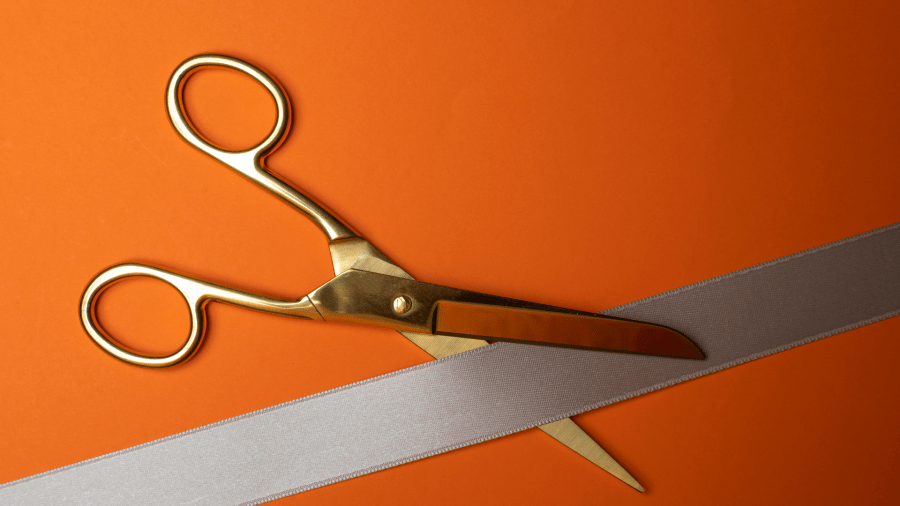
My manager handed the scissors to Barney, blades first.

“Ready, Barney?” a photographer called. “The girl needs to get out of the shot.”

I stepped away and Barney Owl spread his felt wings like he would take flight. His face was paled by camera flashes.

I could stand outside my mum’s house and bite my tongue until I felt blood. I could be there in time.


Rhiannon Jones is a writer currently based in London, UK and her work has previously been published in Hobart, Maudlin House, Lunate, and elsewhere.

Brackish by Eshani Surya

On a catamaran, I think. At twelve, I knew nothing of boats, but I knew my father’s new wife minded being my new mother. Shoving off from shore, we ordered goldenrods of French fries, rimmed with salt and served with pillowy mayonnaise. I ate a full plastic basket while, on an open sea stop, the family snorkeled among the silver fish shoals. The family: my father, his new wife, and a friend’s daughter they’d brought along too. She deserved a trip, my father’s new wife said, this gapped tooth, vivacious girl, smarting from her mother’s newest love affair. My father’s wife didn’t mind playing mother to her.

The captain brought me another basket of French fries out of pity. I ate one after another, trying to dull my cramps with fats and salts like I’d heard helped. My pad chafed, wet against my baby pubic hair, but no one had taught me much of tampons. My father’s new wife said I could use one if I wanted. It was an option. But mine slid in and then out, slick with remorseless blood. So I would not swim, even for the sea turtles and the stingrays in ominous drift and the fields of defiant coral, because I imagined the blood from my pad dissolving into the water and into shark nostrils. I imagined myself bitten and sinking, my pad an anchor in my suit, dragging to me the sand to be embalmed. It frightened me.

On their return, my father and his new wife shared a beer with a lime stuffed into the top. My father’s new wife’s new daughter dabbed salt off her lips once she’d stolen one of my fries. I wondered who’d taught her to be a woman already, as she tanned expertly with my father’s new wife and complained about a chipped manicure and commanded my father’s attention with her complimentary jokes. Seeing the empty fry basket, my father ordered another one, but somehow it didn’t feel like it was for me.

After the catamaran my father was sullen with me for being sullen all day and all night. In bed, I stuffed the blanket in my mouth and cried. The salt stung my skin. The blood in me stung the way only resentment can, with the pounding recognition that a person’s suspicions were right the whole time. My father’s wife left the room, but my father dragged the blanket from between my teeth, the spittle leaving long silver tentacles of grief in the air. He said, I don’t know what’s wrong with you, and then said the same for years afterwards.


Eshani Surya is a writer from Connecticut. Her writing has appeared in or is forthcoming in [PANK], Catapult, Paper Darts, Joyland, and Literary Hub, among others. Eshani is a Co-Flash Fiction Editor at Split Lip Magazine. She holds an MFA from the University of Arizona in Tucson. Find her @__eshani or at www.eshani-surya.com.