You Be the Flotsam, I’ll Be the Jetsam by Melissa Rudick

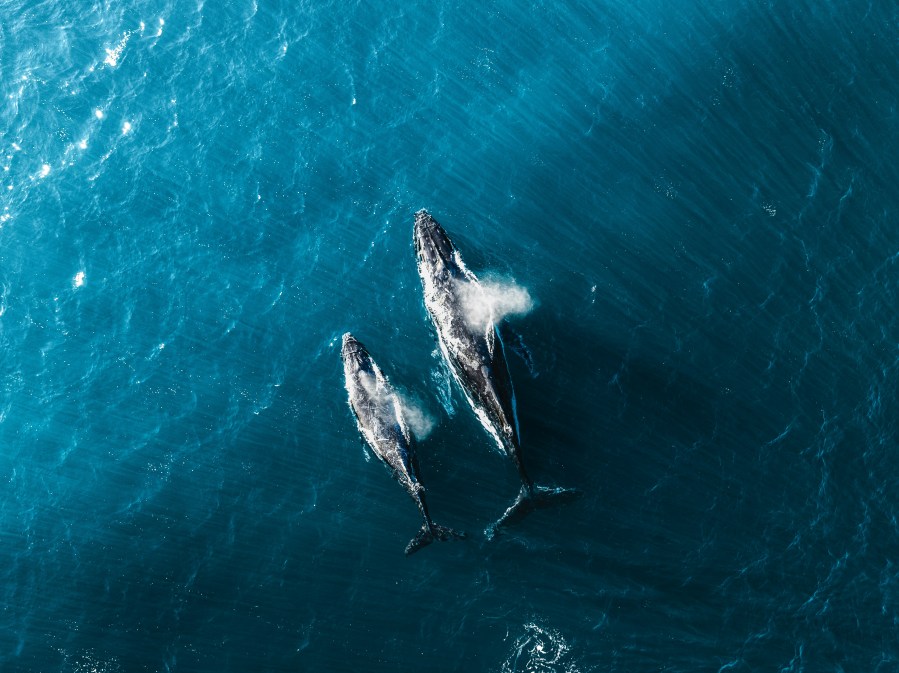
I called off from my job as an IT Support Specialist at the local college Tuesday, and whether as punishment or absolution, was eaten by a whale. If you want to be technical about it, I wasn’t eaten so much as I was in its mouth. The esophagus of a humpback whale is too small to swallow a basketball, let alone an adult human male with a little extra around his midsection. I found that out later, when I saw a marine biologist talking about the incident on TV. 

My buddy Frank, who brought me kayaking that day, thanked me after. He said this was going to blow up his channel. Then he dropped me off at the hospital because of my “creepy smile and dead eyes.” The docs said I was in shock and gave me a full check-up. Seemed like everybody who worked there wanted to poke and prod at me and ask me questions. When they asked me what it was like inside the whale, I forced a laugh, said, “Dark and smelly!” 

To tell the truth of it was impossible. Hell, I didn’t even understand the truth of it myself. 

Mary picked me up at the hospital later. That one eyebrow of hers already raised, as if this was something I had done just to annoy her.

“You ok then?” she asked.

“Yeah, let’s go home,” I said. I reached out for her, but she was already halfway to the parking lot. 

In the car, she was quiet. I watched her chew the inside of her cheek. She turned on the radio and they were talking about me. She turned it off. 

“I don’t see what business you had being anywhere near a whale,” she said. 

“Frank said kayaking would help us relax some is all,” I said. I couldn’t explain it to her. The sameness of my days. She’d tell me that’s what life is for everyone. Why would you think you deserved more than the rest of us, she’d ask. 

“Frank is unemployed and a moron, you shouldn’t listen to him about anything,” she scoffed. “Case in point! I’m sure your boss will be glad to know you were too sick to work yet felt good enough to be swallowed by a whale.” 

“I wasn’t swallowed, Mary. I was just in its mouth for a little bit,” I said. “Frank sent me a video, let me show you.”

“In case you were wondering, I’d already had a massively shitty day, so thank you for all of this.” She pulled into our driveway and got out. “Anyways, it’s all over the internet. I’ve already seen it.” 

Mary’s put up with a lot over the last fifteen years. I get stuck in my head and forget things. I forget her. The only thing I brought to the relationship was being able to make her laugh. 

 “Then you saw how that whale spat me out like I was a band-aid in a pot roast! Like I was some factory worker’s finger in a can of pop! Like I was a pubic hair hidden underneath a burger bun!”

She flipped me the bird, which for Mary is darn close to a declaration of love, and maybe forgiveness too. 

Inside the house, I sat on the couch. “My life flashed before my eyes, you know.”

“What’d you see?” Mary asked.

“Not much,” I said. “Not much at all.”

“Sounds about right,” sighed Mary, sliding a frozen pizza into the oven. 

*

I sat on the toilet watching the clip again and again while Mary slept in our bedroom. There’s me on the water in my red kayak, paddling lazily. A bait ball explodes underneath me, silver fish launch into the air, then rain down on me. A half second later there’s a giant emerging from the ocean, mouth open wide. You can see me rise into the air, the kayak shooting up and away, now empty, and the whale returning below the water. Not even a second later I appear on the surface. 

That I was gone for less than a second didn’t make sense. All I can think is that time works different for a whale, that it operates on its own scale and when I dropped in, it all slowed down for me too. The seconds turned to minutes turned to hours turned to days and there I was submerged in that wet, black cave, the waves and their echo roaring in my ears. I was a speck. I was a nothing. Tiny and absurd is what I was. Am. 

I found a playlist of whale song, stuffed my headphones in my ears, and crawled into bed next to Mary. I pulled her tight the way she likes. She squeezed me back. The whales called to each other. Lonely, it seemed.  I imagined myself sloshing around in that black womb. I closed my eyes to make it darker.

*

Mary called it my Jonah Day. She hummed “Under the Sea” while she washed the dishes. She asked if I wanted to role-play as merfolk. Then, when she saw the teasing hurt me, she got mad again and asked why she never got to have fun. 

“What do you mean, fun?” I asked. 

“I mean, I used to be a person that did things. Like kayaking or jumping off a cliff into water. With you, sometimes. Remember?” 

I had made so many wrong assumptions about what Mary wanted from life and me. I forgot that side of her and we both lost out. 

 “So, neither of us are happy,” I said. 

“But you’re different now.” 

I tried to explain how I’d concluded that man held an outsized view of himself. How we loomed too large on this earth, in no way proportionate to the value we brought. I rambled about wars and climate change and mass extinction events. I told her that whatever fork on the evolutionary road led to us climbing up on land was a mistake.

“We’ve certainly made a mess of things up here.” She nodded her head, thinking. “And you want to go back?”

“Will you come with me?”

We busted into Frank’s garage, left a note that said, “Gone Fishing.” We tied the kayaks to the top of our car. It was night and no one saw us back up to the boat ramp. The ocean calm, we paddled side by side. Mary looked up at the stars. I told her I read online that you could take a scoop of this water, and it would contain more life than stars in the sky. 

Mary cupped the water in her hands, brought it close to her face. “Pleased to make your acquaintance,” she said.

We pulled our oars through the black water. We let ourselves be swallowed up by the enormity of the night sky above us and the sea and all the life it contained below us. We looked everywhere but back. 

We were specks, we were nothings, we were tiny and absurd, together.

Melissa Rudick is a writer living in Lehigh Valley, Pennsylvania. Her work is forthcoming in Vestal Review and The Blood Orange Review. She is currently at work on her first novel. You’ll most likely find her wherever there’s milkweed, looking for monarch eggs.

Door in the Woods by Chris Scott

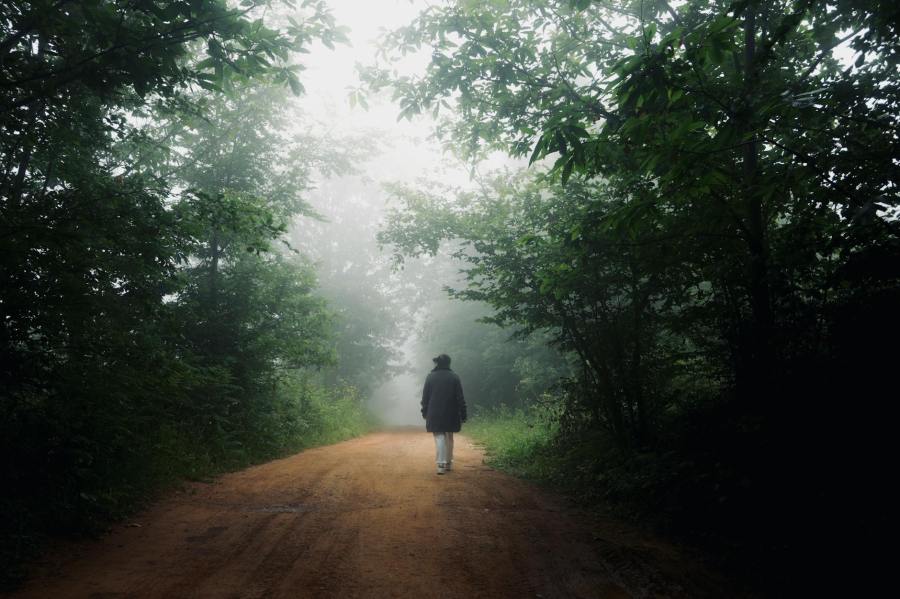
Sarah is hiking up ahead of me, so she’s the first to see it. She goes around the bend, says “Hey now,” and stops in her tracks. Then I see it, too. Right there in the middle of the trail is a single door, like it’s been waiting for us. The door doesn’t belong here, obviously, with no structure around it except for a simple wooden frame holding it in place. “Weird,” I say, because what else can you say? 

We circle it once. Studying Sarah’s face, I can see her wheels turning, some private communion between herself and the door that I’m not privy to. Maybe it’s some kind of art installation? The remaining relic of an old, demolished cabin? The thing about the door though: It doesn’t look like it’s been here very long. Like it hasn’t weathered the elements really at all, like it was just constructed specifically for an audience with us.

Sarah steps right up to it, tries the knob, cracks the door open a bit. And because Sarah is Sarah, she says, “I mean, we have to, right?”

The door makes me uncomfortable but I don’t know how to say this in a way that doesn’t make me seem silly. “Do we? Doesn’t really seem like it belongs here.”

“Yeah, no shit,” Sarah says, the kind of offhand dismissal to which I’ve grown accustomed lately. “Okay then, you walk around it and I’ll go through.”

“Are you sure?” We came to the woods to keep a struggling thing going. Six months of couples therapy and my eyes are constantly peeled for any wrong decision that could strain or sever our increasingly tenuous connection, that could make a trial separation less hypothetical, in the future.

“Count of three,” Sarah says, “You go around it, and I’ll go through. One…”  Her hand still on the knob, the door partly open. “Two…” I run my fingers along the frame. “Three.” I go around just as Sarah walks through, and I’m overcome with the sudden certainty that she’ll vanish, the door transporting her to the moon or Siberia. But before my fear can get away from me, she’s already through. Just a door after all.

“Alright well… shall we?” I say, continuing on the trail, eager to put the door behind us. Sarah catches up with me.

“How do you feel?” I hand her the canteen.

“I feel great,” Sarah says. “How do you feel?” Also great. We round another bend, and I look back. The door is still there, closed again. Then I’m trying to remember, did Sarah shut the door after she walked through? But she must have.

In the car on the drive home, Sarah is taking off her hiking boots in the passenger seat when she says, “I can’t believe you did that.”

“Did what?”

Sarah turns up the radio even though we’re having a conversation. Strange habit. “Walked through that creepy ass door in the middle of the woods.”

I would normally assume Sarah was being ironic, making a joke. But. Seven years together, three of them married. I can tell she’s dead serious. “What are you talking about?”

“Umm…” Sarah curls her lips. “The weird door? On the trail?”

“Yeah, I remember the door. You walked through it, I walked around. I was too chicken. Are you messing with me right now?” I turn the radio off.

“Wait, no. What? That’s completely backwards. You walked through, I went around. Are you messing with me?” Sarah pleads, her voice rising. I turn back and forth from her to the road, trying to figure this out.

“What are we talking about, Sarah?” The door in the woods was maybe an hour ago. How could she be remembering it completely wrong? But her face says: She’s asking herself the same thing about me.

I don’t understand how this is happening. We volley back and forth like this for another ten, fifteen minutes, our accounts of what happened mirroring each other’s almost perfectly, but somehow inverted and wrong. We cycle through the conflict resolution methods Dr. Owens taught us. Patiently going over the details as we clearly remember them, over and over. Then one of us will say “reset” and we’ll take a deep breath and start over, but we always end in opposite places, unable to find our way back together. Sarah says I’m not listening to her, but I am. 

I ask Sarah what it will take to put this behind us. She shrugs, says I could remember walking through. That I could remember it how she remembers it. That would be a start. I don’t know what to say to this. I don’t know how to remember something that didn’t happen. Eventually we run out of energy, just sitting in our respective silences on either side of the car. It feels so ridiculous, all of it. The door. Who went through it, who went around it. But the problem is not the fight, it’s the door. I look over at Sarah a few times but she doesn’t look back at me. She’s somewhere else now.

Later that night I’m back at the trailhead, Sarah at home asleep in our bed. Illuminated in my flashlight, everything looks different than it did earlier, otherworldly, backwards in the dark. But I know the door should be just up ahead, maybe twenty minutes jogging. Assuming it’s still there, and that’s why I’m rushing through the woods now, why I had to do this tonight. This feeling that the door will disappear if I don’t reach it in time. Thinking all the while how absurd this is, but I don’t know what else to do.

Then a wave of relief when I finally see it, waiting for me, pale wood against the moonlight, appearing even more out of place than it was earlier. But right where we left it, still. I pause briefly before the door, thinking this through, but there’s nothing to think through, not really. I take the doorknob into my hand and turn. It’s locked. I try again, harder. Locked. I walk around to the other side, just as locked.

I slam on the door with both palms, the smack echoing through the woods, spooking the animals, species I can’t identify. Then both fists pounding now, not budging, not even a little bit, but I have to get through somehow. I can’t accept otherwise, and I can’t lose Sarah to this. So I’ll be here as long as it takes. Until daybreak, until some other hikers come along who can help me, until I am able to walk through this door finally, and go home to Sarah and say: I went through just how you told it. My world is still your world and I still have a place in it, I swear. How will I ever belong anywhere else?

Chris Scott’s work has appeared or is forthcoming in The New Yorker, Flash Frog, ergot., MoonPark Review, New Flash Fiction Review, scaffold, Gone Lawn, Maudlin House, and elsewhere. His fiction was selected for Best Small Fictions 2025, and has been nominated for the Pushcart Prize and Best of the Net. He is a regular contributor for ClickHole, and an elementary school teacher in Washington, DC. You can read his writing at https://www.chrisscottwrites.com.

13.1 Septillion Pounds by Emily Rinkema

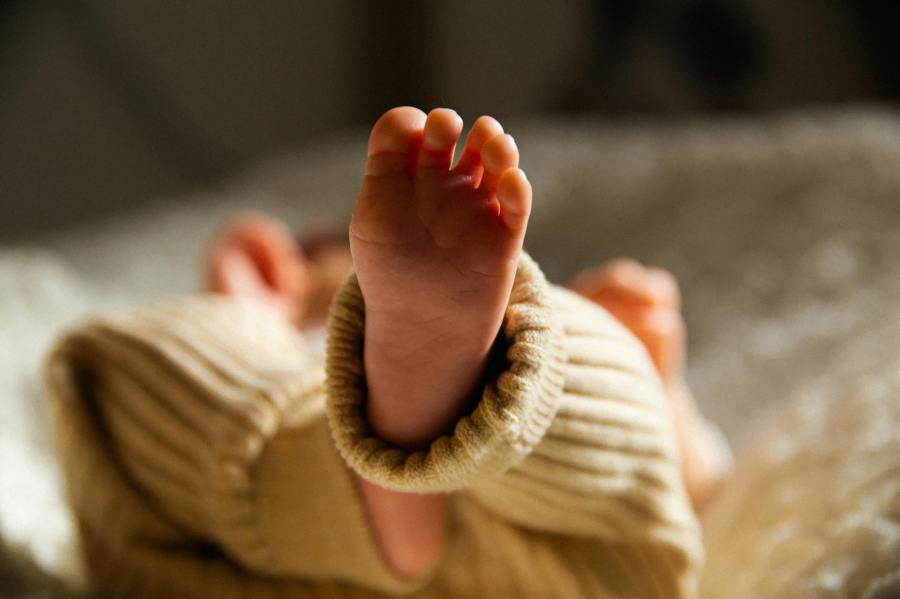
To help her sleep, we give the baby a basketball, a full-size regulation ball that my husband, CT, puts in her crib one night. He writes her name on it with a black Sharpie, bold letters like they would appear on a jersey.

“Ten months is a little young,” I say.

“Never too early for our little athlete,” he says. CT played college ball for a season until he blew out his knee. The first thing he said when he held her was that she was the longest baby he’d ever seen. She came home from the hospital in a UCONN onesie.

When I check on her before I go to bed, she’s still awake with one tiny hand on the ball. She’s never been a good sleeper, but the last month has been significantly worse. She just stares at the slowly spinning mobile of the galaxy above her head, sometimes reaches for it with her fists. I kiss her on the forehead and whisper that the basketball is like the earth. A little poet is never too young for simile. 

In the morning, CT makes us coffee while I go get the baby. She’s asleep. The basketball is on the floor under the crib and the Sharpie is clutched in her hand. I turn on the light.

The walls are covered with math. Math formulas and numbers and equations and graphs and angles and shapes and arrows that direct us from next to the crib to above the changing table to the closet door to behind the rocker and under the window and then back to the crib. 

“Oh, fuck,” says CT, handing me a mug of coffee.

“Language,” I whisper.

“But,” he says, looking around.

“Yeah, fuck,” I say.

CT calls a mathematician while I try to feed the baby, but she wants nothing to do with the Cheerios or blueberries I put in front of her. She just bangs her spoon on the table. She’s got dark circles under her eyes and it’s like looking in a mirror. I can’t remember the last time I’ve slept through the night.

“We did this,” I say to CT, who is now Googling “baby math.” 

“Did what?” He asks.

“Stressed her out,” I say.

“Maybe it’s just math,” he says, putting some pumpkin puree down in front of the baby. “Maybe it’s nothing.” 

I spoon out some puree and bring it towards her, but she just clamps her mouth shut and grabs the spoon. I call my mom and ask if she can come over for a bit.

My mother agrees to take the baby to the park while we meet with the mathematicians. The park’s only a few blocks away, but with all the gear, I suggest she takes the car. On her way out the door, baby on one hip, car seat hooked over her elbow, she raises her eyebrows at me and says, “I told you she was gifted.” She kisses the baby on the top of her head and coos, “Gramma’s little genius.”

Two mathematicians arrive a few minutes later. They are younger than I expected. One is wearing a sweater vest. They both have glasses and are carrying briefcases. The men stand in the middle of the nursery and turn slowly from wall to wall to wall. The taller of the two men takes off his glasses and cleans them. He puts them back on. He opens his briefcase, takes out a notebook, and writes something down. He closes his notebook.

“Well?” asks CT, sitting down in the rocker. 

“Wow,” says the shorter man. “Amazing, really,” he says, taking a deep breath. He points at the wall under the crib. “She starts by calculating the weight of the earth,” he says.

“She’s a baby,” says CT.

“That’s pretty simple math, actually,” the mathematician says, “She just needs the weight of any sphere,” he points at the basketball, “and then she can plug it into Newton’s formula for universal gravitational attraction.” 

The taller man interrupts. “It gets much more sophisticated over here,” he says, pointing to the left of the closet. He bounces a bit on his toes.  “It looks like she’s using semi-parametric predictive modeling to determine existential risk.” He leans towards the wall and squints. He wipes his hands on his pants. He looks at the shorter man and shakes his head. 

 “Wait,” the shorter man says, “Is that strategy optimization for carbon reduction at the bottom of the door?” 

I stare at him, waiting for something I understand, a word, a phrase, a gesture. CT puts his head in his hands. “I have no idea what’s happening,” he says.

“I think she’s looking for a solution,” the tall man says, and when we don’t respond, he says, as if we’re children, “To climate change.”

“But,” I say, and I don’t know what comes after that. I don’t even know what to ask. I think of everything we’ve ever said in front of her, thinking she couldn’t understand. We watch the news during playtime. We listen to NPR in the car. We fight about solar panels and electric cars and how much meat to eat. When I was pregnant, we even fought about whether it was responsible to bring a baby into this world. Did she hear all that? Did she feel it?

CT stands up. “This is fucking ridiculous,” he says. He’s the one who suggested Meatless Mondays. He’s the one who wants a Prius. He’s the one who thought we should skip flying to see his parents this year so we could afford panels on our roof. 

“Wait,” the shorter man says, and looks at his partner for confirmation. He points to the right of the door. “There. Is she using partial differential equations to see if…” and then he stops, squatting in front of the wall nearest the crib. He shakes his head. The taller man keeps putting his hands in his pockets and taking them out again. “It looks like she gave up.” He’s tapping the wall where our baby scribbled with the Sharpie, age appropriate markings that in another world could have been made with crayon or finger paint. “She gave up,” he repeats. 

“She’s a fucking baby,” CT says, and his voice cracks. “A fucking baby.”

“I just want her to be happy,” I say.  “I just want her to write poetry,” I say. CT pulls me into a hug. “Or play basketball,” I say into his neck.

“She can be a poet-athlete,” he says, and we both start to cry.

I check on the baby before I go to bed. Her room still smells of fresh paint, a new color CT picked up at the hardware store after the mathematicians left this morning. Butter yellow to match the stuffed duck he bought on his way home. While the baby napped this afternoon, I took down the universe mobile and replaced it with the one his sister bought us for the baby shower–green giraffes and purple hippos–and CT painted over the math. We’d thought about keeping it, but decided it was all just too heavy for a baby.

“It’s a clean slate,” he’d said when he finished.

The baby is awake and content. She moves her hands in front of her face as if she’s in awe of them, as if she’s still working out whose they are. It’s the way she used to look at me. 

“It’s a blank page,” I whisper to her now, and kiss her on the forehead. And before I leave, I tuck a Sharpie into the corner of her crib, just in case.

Emily Rinkema lives and writes in northern Vermont, USA. Her writing has recently appeared in SmokeLong Quarterly, X-R-A-Y Lit, Variant Lit, and Flash Frog, and she has stories in the Best American Nonrequired Reading, Bath Flash, and Oxford Flash anthologies. She won the 2024 Cambridge Prize and the 2024 Lascaux Prize for flash fiction. You can read her work on her website (https://emilyrinkema.wixsite.com/my-site) or follow her on X, BS, or IG (@emilyrinkema).

98. by Jordyn Damato

  1. There’s something wrong with my head
  2. It’s not a bump
  3. I wish it was a bump
  4. Even if it was a gross, protruding bump that made people afraid to look at me 
  5. I could handle that 
  6. I would dress it up—draw a face on it or something. I don’t know. 
  7. Make it pretty. 
  8. I can’t make the inside pretty. 
  9. I wish I could but
  10. I can’t 
  11. These are some thoughts that infect me 
  12.  Scream right now. Right now. Do it. 
  13.  Flip the table. Now. Flip it or hold your breath until you pass out. 
  14.  Hold your breath until you pass out. Do it. 
  15. I do it. 
  16. I have to do it. 
  17. Scream, pass out, flip things. 
  18. If I don’t, I will die. 
  19. If I don’t, my whole family will die. 
  20. My family is small and not very nice to me but I still don’t want to see them die. 
  21. I saw my twin brother die
  22. When we were kids 
  23. I was not a fan. 
  24. I doubt he was, either. 
  25. Or maybe he was. 
  26. He doesn’t have a voice in his head. 
  27. He doesn’t have a head 
  28. Or a voice
  29. Sorry. 
  30. I guess in many ways, I’m the lucky one 
  31. Mom told me that before 
  32.  Don’t you know how lucky you are? 
  33. After I got sent home from school for stripping naked and attempting to flush my clothes down the toilet 
  34. I made a mess 
  35.  A huge fucking mess! Mom yelled 
  36. I told her it wasn’t me 
  37. It was the voice 
  38.  Newsflash, Tommy! 
  39. It wasn’t a yell, it was a scream. 
  40.  EVERYONE has a voice in their head 
  41. It echoed in my room with two beds 
  42.  You’re not special—don’t give me that bullshit excuse! 
  43. I don’t think I’m special, I wanted to tell her 
  44. I think I’m cursed 
  45. But the words didn’t come out 
  46. Instead, urine came out 
  47.  Piss yourself. Piss yourself right fucking now or else your heart is going to stop. 
  48. I peed. 
  49. Mom screamed. 
  50. Dad came in 
  51. He was drunk 
  52. He pushed me against the wall 
  53. I hit my head 
  54. I hoped for a bump 
  55. (An explanation) 
  56. He spit as he screamed 
  57.  Why do you have to make everything so hard on us? 
  58.  No bump ever formed. 
  59. (No explanation)
  60. He shook my shoulders
  61. Banged my head again 
  62.  You’re so goddamn selfish! 
  63. Through tears and over dad’s shoulder, I saw mom on her knees with disinfectant spray and a rag
  64. I closed my eyes 
  65. I Imagined Tyler’s face 
  66. But it’s the same as my face 
  67. So it didn’t help 
  68. I can’t stand being in this body 
  69. My body 
  70. I miss Tyler
  71. I miss his voice 
  72. I miss the way he could read my mind 
  73. I miss having hot dog eating competitions with him 
  74. I miss winning 
  75. I miss not having a stranger’s voice in my head 
  76.        
  77. I think mom and dad think it’s my fault that he died 
  78. As if I told the drunk driver to be drunk at 7:30am 
  79. As if I told the drunk driver to swerve off the road 
  80. As if I told Tyler to walk on the side closest to the drunk driver  
  81. I broke my arm 
  82. And bumped my head 
  83. But no one seems to remember 
  84. Or care 
  85. Or miss the old me 
  86. I miss the old me 
  87. I miss my old family 
  88. I miss the warmth of the sun on my skin 
  89. The friends I used to have 
  90. The brain I used to own 
  91. It’s a scary thing 
  92. To not own your body anymore 
  93. To not be believed 
  94. To not be trusted 
  95. To keep everyone around you alive every single day, no matter the cost
  96. And to never, ever even hear the words
  97. Thank you 

Jordyn Damato is a writer, lover, dreamer, in that order. She is currently an MFA fiction candidate at Miami University in Oxford, Ohio. Her work has appeared in Brilliant Flash Fiction and Bullshit Lit. Her favorite thing to do is hug.

The Passing of a Little More Than a Year by Lydia Kim

The soccer field was a miracle, an oval of grass behind a middle school where she could train her new small dog, play until it trusted her and understood their togetherness. She hoped to soften its vigilance, give it less reason to erupt.

Soon they met three other women and their dogs, two also-small ones and one big, and they formed a gang. The first summer of the pandemic, when being outside was the one thing you could do, though even that was a bit fraught, it’s not like the wind knew to blow the virus away from you and never towards you. But what a gift. After months of walks by themselves, each anxious for the other, she loved the ritual of heading to the soccer field, unhooking the lead and watching her dog run, thrilled, towards the clot of its friends. The sight of them leaping in greeting pleased her, the validation that her dog could make friends. The four dogs ran and feinted and rolled, sniffed each other’s glands, hunted along the perimeter of the fence for bits of old school lunches. They stayed out there for hours. 

Surprisingly, inevitably, there was the gentle creep towards human friendship, which she knew was rare among strangers and rarer still at her age, almost fifty. They laughed over “Love Is Blind,” the debut season, wondered at sudden celebrity deaths. The doodle had a birthday with party games: dogs racing towards coupes of whipped cream, bobbing for hot dog slices. One of the women had a hysterectomy, another up and got married. They drank champagne for one, then the other. Other dogs came to the field but did not become part of the gang: Julius the Vizsla, Blue the wheezing Frenchie, Lola, curly-haired and shaped like a tipped-over fire hydrant. Their owners kept it moving, didn’t have or want dog treats, just a wave and some small talk. 

Summer passed into dry fall, foxtail season, discussions of whether or not to cover a dog’s snout with protective netting. When the days turned even shorter, she bought four light-up collars so the dogs could play past dusk, a canine rave. They dressed the dogs up for Halloween, again for Christmas, and watched them learn the hard way to give a wide berth to the geese wintering on the field – the geese hissed and chased back, clouds of steam fuming from their beaks. Week after week, she walked to the field and sent her dog to its friends. Her dog looked for her now, came when called. She never quite got over the surprise of it all.

In the spring, she learned two of the women were moving to Oregon, one to Arizona. By summer, everyone was gone. Big dogs found the field, huskies, pit bulls. Sometimes the owners yelled at her even though their dogs were also off-leash, barking and coming too close. 

She walked to neighborhoods with big houses and through the shopping center where she tried to pose her dog for a photo on a bench, Depressed Dog Sitting, c. 2021. It wasn’t the same. Her dog pulled her back to the field where it could spend time free, even if alone. 

She threw the ball and her dog fetched it. This much they did for each other. 

The two of them were not a gang, but they weren’t nothing.

The hot days evaporated into another autumn, and as the sky began to pink, her dog’s collar lit up. A husky entered the empty field. Her dog stopped, let the ball drop from its mouth. The husky considered the geese, then her dog. She moved towards her dog, who moved towards her. The husky chose the geese, sprinted at them. They pushed themselves aloft, rising, gaining smooth altitude, except one at the back, flying, but too low, too heavy. 

The husky leapt, caught the goose in its teeth, snapped its neck left and right, thrashing the bird into the cold grass of the field, a spray of red on two white necks.

The goose lay in the center of its broken wings, the black feet pedaling as if trying to walk.

For days, she saw the carcass from the gate.  She didn’t enter, didn’t want her dog to sniff the goose, hated to see it there, exposed and undefended, picked at. Finally, someone moved it by the fence to make room for soccer goals.

Within a week, the crater filled with new growth. 

They went south, to the trail along the ocean, thick on one side with sea fig and saltgrass, land kelp. Dogs were not allowed on the beach, only the trail, saturated with animal smells and pocked with tiny tunnels that made her think of rabies. 

Her dog strained at the limits of the lead, head lifted at the scent of endless brine. They stopped in a narrow pedestrian-trampled break to watch waves foam the shore below. Waves pushed in, and waves drained out.

The far water was dotted with freighters and ferries, carrying cargo and commuters. The world was grinding its way back to rush-hour traffic and holiday sales. The day had begun to blue. There wasn’t another creature for miles, so she did the calculus and they walked onto the beach. She freed her dog. It stayed with her at first then started to wander away, braving good distance, nosing along crab husks, fifty feet, a hundred feet away, more. Stopping at crushed cans and torn wrappers, the possibility of scraps. Even after a good year, it was hard to trust one’s luck. 

She turned back to look, the apartment buildings squat and flat, the gate to the field ajar, the only way in or out.

Far away, the dark of her dog glowed against the pocket of sky. 

She opened her mouth and made a sound, two clicks of the tongue, a half-trill, not even her dog’s name. The silhouette bent, held, then the shadow moved, began to run.

Lydia Kim has published in Longleaf ReviewPeatsmoke, CatapultThe Hellebore, and in the anthologies And If That Mockingbird Don’t Sing and Non-White and Woman. She’s a Tin House alum and 2024-25 Tin House Reading Fellow and her work has been supported by the Kenyon Writers Workshop, Rooted & Written, and the de Groot Foundation. She is currently at work on a novel and story collection, represented by Ashley Lopez @a_la_ash.

Two Stories by Linda Drach

TRAVEL & LEISURE

I’d see them in the cardiology waiting room. Not every time, but often. The man, shuffling behind an aluminum walker, his right foot dragging; the woman, slowing her gait to keep pace. Always, her hand rested lightly on his bicep. That was completely unnecessary. A gesture of tenderness, I guess. He looked like my second husband. She looked like the Starbucks barista my husband shacked up with before divorcing me. I’d stare at them until the woman felt me looking and glanced over to where I’d parked myself near the giant aquarium so I could reap the calming benefits of fish swishing. My eyes were flamethrowers that singed her bangs, burned through her skull, and incinerated the smoking cessation poster that hung on the wall behind her. Satisfied, I’d pretend to turn back to Travel & Leisure or Yacht World. 

That was before my doctor shunted me off to hospice.

It was strange. I hated that waiting room. But when the couple appeared I forgot that I was waiting. Suddenly, I had energy and a sense of control, whereas just moments before, I’d had neither. I liked sketching in the details of their lives, imagining the bank statements and what was parked in the driveway. I liked thinking about her slutty lingerie, long abandoned, the elastic going slack in a bottom dresser drawer. I liked thinking about her bitching to her friends over too many glasses of Sauvignon Blanc about the pill bottles crowding her quartz countertops. About the long, tedious nights building puzzles instead of fucking. 

Those were good afternoons for me.

It’s been months since I was there. But sometimes, as I’m staring down the teddy bear the volunteers insist on staging at the foot of my bed, I think of that couple. I wonder if he’s in a wheelchair now. I wonder if she’s gotten fat. I hope she’s gotten fat. These daydreams are necessary; they counteract all this false cheer. I heard one of the nurses talking about me, the only thing keeping that one alive is spite. I’m still listening for rubber wheels rolling down the hallway. To feel a little surge.

THE FARM

Pat calls on a Monday night to tell me my nephew – his son – is dead. 

He never says dead. He says Joel is gone. But I know what he means right away, like I knew when our mom told us Sparky or Boo or Snowflake went to the farm, so they could run freely instead of eking out their short doggy lives in our cramped backyard. 

Gone. That’s all he says. That’s all he can say. 

When I get to the ER, Pat is slumped on a vinyl couch, yowling through clenched fists, like a cat with its tail stuck in a slammed door. The chaplain patting his back looks glad to see me. Five bug-eyed youth silently circle the room, like a school of guppies – stoic little fish, who spend their short lives sucking lines of shit off the bottom of their tank and then spitting them out to try again. Relentless in their efforts to find something delicious. Each time, it’s shit. These are Joel’s 12-Step friends. His goddamn friends, who watched him die.

It’s time to see Joel, but Pat says he can’t – he doesn’t want to see him this way, which is dead. When we were kids, I always took care of the lesser burials. Dozens of goldfish, two turtles, three lizards, and a chinchilla. A grim menagerie interred in our mother’s garden, near the concrete statue of Mother Mary. Our household was rough on living things. This is why I never had children. 

The chaplain leads me through a set of double doors, and there’s Joel, wearing the same flannel shirt he was wearing on Saturday. Our boy needs a haircut. His copper locks, the same shade as mine, are shaggy at his neck and fall haphazardly across the petals of his cheeks. His hand is still warm – only a little bit cooler than my brother’s. Where are you, Joel? I whisper in his ear. The chaplain fidgets. He’s certain Joel is strolling through God’s cosmic vivarium. I shoot him a look and he leaves us alone. Can he tell how much I hate him right now? He knows my type. A lapsed Whatever, with my poems and pop songs and coffee can ashes, making half-assed attempts at the everlasting – when what I want is the farm. 

I tell Joel if believing made it so, I’d make myself believe it. I’d send you to a party that goes on forever and never gets out of hand. Where you could play three-handed pinochle with your mother and grandfather and share a bottle of magic bourbon. The kind that won’t lead to black eyes or scarred livers. I’d make sure you’re happy. That you know you’re enough. I’m crying now, with my head on his chest. Bawling, really, like a motherless calf. I picture the floribunda roses framing my mother’s backyard shrine. Vivid red. Heavenly scent. Climbing the chain link, spilling over in its vigor. Back every year, despite our neglect.

Linda Drach is a poet and writer, public health program manager, and volunteer writing group facilitator for the nonprofit Write Around Portland. Her writing has been published in The Bellingham Review, Cagibi, CALYX, Cathexis Northwest, The Timberline Review, and elsewhere. She studies and teaches at The Writers Studio.

things you’ve shared with the ghost in your dorm room (in no particular order) by shelby rice

xii.
you’re lonely and the only thing you’ve felt the touch of is the gutter-water splashing off a car’s michelin tires. one star. you wonder if the mona lisa would be as beautiful if she had a double chin. you’re empty and not displeased about it, but you know you’re going to put the frozen strawberry jam you made with your aunt last summer over cold rice instead of eating a real meal. you’ll feel bad about it later.

xi.
your roommate is doing n+60 jumping jacks a day for lent, and you wonder if she knows by the end that she’ll have to do more than 2000. it takes fifteen days before she folds. you’re not surprised, but something that burns suspiciously of envy crawls up your esophagus. you wonder how long you would have made it. the bass guitar you haven’t played in a month sprouts a mouth and tells you the wicked truth. you can’t sleep that night.

x.
you start to wonder if you were a changeling. somewhere between infancy and now, you stopped thinking about what you wanted to do tomorrow and started to wish it never comes.

ix.
you think the perfect place to work is probably in an aquarium. it’s probably not as glamorous as you make it out to be (if that’s even the proper word) but the darkness and the gurgle of the tanks and the flying floating swilling creatures which drift lackadaisical twilling in the currents. the funny way toddlers walk, little penguins tottering back and forth would be the cherry on top. but maybe that’s just the withdrawal speaking.

viii.
you have a boyfriend who lives off high street. he roosts with two other boys, both faceless entities who come and go as they please. you’re not sure you’ve ever fully met. they seem to exist in a transient state, sort of ever-unpresent, at the grocery or the bar or kicking back at a friend’s house, but never at work. you’re more interested in these boys than your demure, kind-faced boyfriend, but more out of curiosity than libido; you want to know how they live such fluid, ever varying but still listless lives. you wonder if you ever meet if they’ll sweep you up in their unending on-the-go living until you rush on autopilot for as long as they’ll keep you.

vii.
you wonder if you should pierce your own septum. it would do you good to see if you still bleed red like everyone else.

vi.
your godmother is a nun. she doesn’t wear a habit anymore and has licorice gumdrops at her house year-round. they used to burn your mouth but now you find the taste of them keeps you up at night. you buy them at the drugstore but they don’t quite hit the same. the sugar dusting isn’t grainy enough, the taste doesn’t quite clog your mouth the way it used to. maybe it’s because your cousins aren’t egging you on, your brother isn’t trying to outdo you with three more stuffed in his mouth. maybe it’s that he isn’t rushing to the green-tiled bathroom to throw up afterwards. after a fetid few, you let the bag go fallow; it takes root in your pantry and refuses to be disposed of.

v.
the scar on your arm reminds you of a fat leech, if the leech were purplish-pink and created by a miserable idiot and not billions of years of evolution. you tattoo over it, which bolsters you an embarrassing amount, but it hacks away at the quickly dwindling list of things in common you have with your mother. never mind the fact that folks have been tattooing for thousands of years, that it’s not a rash decision, that you’ve been thinking about it almost as long as you could breathe—you think she might have cried when you told her. you schedule a second appointment as soon as possible and wonder if you’re welcome at home anymore.

iv.
your mother and aunt don’t talk anymore, and your grandmother and her sister didn’t either. you wonder if you’re doomed to the same fate.

iii.
you receive a save-the-date and spiral something awful. buried for your own well-being under stacks of junk mail, you send your congratulations and regrets in one run-on message, unable to explain why the thought of a marriage guts you this way. just two people deciding they’re interested in living together for the rest of forever* or whatever it is folks tell themselves. she elbows her way to the back of your mind and you staunchly refuse to acknowledge it. the message you receive back is kind but you can tell there’s a pursed-lip edge to it. you’re glad you won’t have to defrost the summer romper in the back of your closet and try to look happy for six hours. you drink alone the night of the ceremony and shudder to think of what the you in an alternate universe is going through. you wonder if there’s an alternate universe you whose wedding this belongs to.

ii.
you take better care of your plants than you do yourself. you have a meticulously planned spreadsheet which tells you when to water, fertilize, repot; each leaf is examined daily to check for discoloration or spotting. the plethora of pill bottles scattered over your room go unorganized.

i.
you’ve developed a pavlovian response to playing pokemon go. you can’t smoke without it anymore.


shelby rice is trying to reach you regarding your car’s extended warranty. they won the Montaine Award for Creative Nonfiction in 2020 and have been published in Rejection Letters, Existere Literary Magazine, Thirty West, and more. originally from Dayton, Ohio, they recently acquired a cane with a sword inside and will tell anyone who will listen. follow them on twitter @orcmischief (if you dare).

Choices by Anna Hundert

1.    In the beginning, there is the sea. There are no choices in the beginning, because I always begin in the sea. I breathe the tides and the tides breathe me. And who would choose the dry, tasteless air over this sun-soaked dwelling of saltwater breath? I wish to stay here always, to never trade my shimmering fins for grasping fingers and toes. But something out there is calling out to me with a fierce and joyful song. What is calling to me?
        –> The rivers that run through the land like so many veins (go to part 2)
        –> The mountains that rise out of the land like so much adolescent acne (go to part 3) (If you are reading this aloud, omit the following sentence. The third choice is a secret: if you wish to abide by her wishes and allow her to remain in the sea, stop reading here.)

2.    The rivers ask me to become one of them, and I enthusiastically consent. River-spirits can undertake many wonders with our freshwater flow, with our roiling river run of cosmic commotion in our high-fabled rapids and such peace in our quieter bends. Over on the land, I see a young woman running from a pursuer and she calls out to me for help. I —
        –> Pull the pursuer into my currents and drown him inside of me (go to part 4)
        –> Transform her into a tree so that she cannot be violated (go to part 5)

3.    In the mountains, I befriend a great clan of ravens who bestow upon me the secret knowledge of flight. My wings emerge from my shoulder blades and they remind me of my days in the sea. When I begin to lay eggs, I —
        –> Find a sexual partner who might make the eggs into something more (go to part 4)
        –> Scramble them with chopped onions (if you are reading this aloud, bring along the necessary supplies to chop some onions, and then allow yourself to cry in front of your audience; when everyone is sufficiently uncomfortable, you may proceed to part 5)

4.    For a time I think that maybe he can stay inside of me forever, moving with my rhythms, touching each groove and turn and the rim bones of my earthly skeleton. I think I might love him, somehow. But I tell him too soon, speak the love into its own undoing, and he says he must go. I grieve this loss for —
        –> Exactly one hundred years, and my tears create new river tributaries (go to part 6)
        –> The amount of time it takes to press the tip of a thread though the eye of a needle (if you are reading this aloud, you must bring along a needle and thread to demonstrate, and then go to part 7)

5.    I deeply regret that I have done this, and —
        –> My body twists itself into a weeping willow upon the riverbank (go to part 8)
        –> I vow that I shall someday have a daughter and make it so that she can be always wild and free (go to part 9)

6.    A man comes along and sees the rivers of my tears and tells me that I am being melodramatic. I say to him, Nobody asked you. And then I say to him, Let me tell you a story about a young woman who only ever wanted to —
        –> Learn the secret language of trees (go to part 10)
        –> Be able to touch her toes without bending her knees (if you are reading this aloud, demonstrate according to your own abilities, without judgment or fear of judgment, and then proceed to part 11)

7.    I say to myself: If I ever have a daughter, I will make sure that she will —
        –> Respect all rivers as holy places of movement and change (go to part 10)
        –> Always cover her mouth when she sneezes and never dare to grow wings from her shoulder blades (go to part 11)

8.    Life as a weeping willow is not terribly exciting, but one day an oracle comes along the path. In exchange for the shelter that I offer her from the rain, she tells me a story from the future about a young woman who will —
        –> Carve her own self-portrait into the face on the moon (go to part 12)
        –> Conduct a research study in pursuit of a more precise identity for Mitochondrial Eve (if you are reading this aloud, ask your audience if they are familiar with the theory of Mitochondrial Eve; if necessary, attempt to explain mitochondrial genetics and matrilineal descent, dispelling common misconceptions as you are able, and then go to part 13)

9.    She will not cry often, but she will never hold back tears when she feels that they are coming. She will —
        –> Learn how to swim at a young age (go to part 12)
        –> Study to become an engineer and someday design bridges to connect all those castles in the air (go to part 13)

10.    She will study the secret language of trees and will find a way to transcribe that poetry which, over the ages, all of the women who have ever been changed into trees have been composing in their photosynthetic minds, with no way to write it all down, making it difficult for them to keep all the line breaks straight, with their style relatively spare yet overusing commas, and never employing the liberating device of multiple choice; after all, they did not choose to become trees (go to part 14)

11.    She will compose melodies so beautiful that her listeners fall in love with their own breath and never think about dying again (go to part 15)

12.    She will paint another self-portrait using her own menstrual blood and critics will call it a little too on the nose and she will point to the nose in the portrait and say, Yes, blood on the nose, blood everywhere. She will insist that her true home is a place where it is always Christmas and never winter. Meanwhile, the hurt changes from day to day but some essential quality of it remains the same. She will continue to feel this mysterious hurt and wonder about its shape, its size, its texture (go to part 14)

13.    She will wear golden eyeliner and carry a flaming sword. She will enjoy speaking with split infinitives and always find opportunities to use phrases like put that in your pipe and smoke it and how do you like them apples (go to part 15)

14.    She will wash her hands frequently and will always say bless you when she hears somebody sneeze. And she will return to the sea someday; I am sure of it. When the light hits the horizon just right, she will watch the glints on the hairs on her legs as they become the scales of a mermaid’s tail. She may still take human lovers if she chooses to, but she will always make sure that they do not drown.

15.    (If you are reading this out loud, softly hum a song that makes you feel safe. If not everyone in your audience can hear it, that’s okay. And if you sneezed while reading this, bless you.)


Anna Hundert is a fiction and nonfiction writer currently pursuing a Master’s Degree in Theological Studies. Her work has appeared in The Rumpus, Literary Hub, Electric Literature, and elsewhere both online and in print. She is also a regular contributor to the Ploughshares blog. You can find her on Twitter @anna_hundert.

So Much an Outlaw I Belong on a Wanted Poster by Holly Pelesky

My first bull ride was like my first orgasm: mechanical. It was one of those nights when headlights reflect off the wet streets and everything is slick and shiny. Us girls found ourselves where 1st Avenue meets King Street, at Cowgirls Inc. A bar with bras strewn over clothesline, where the bartenders wore shirts cut high enough to show off their belly button rings and the air hanged hot and thick like breath. We had grown up in split-levels, on cul-de-sacs, but that night we wore cowboy boots, bought earlier that day from Renton Western Wear, price tags still affixed to the soles.

I wasn’t going to climb onto that bucking machine so the boys could watch my tits bounce. I was still a virgin barely, but nonetheless. I mean the shyness of me was still intact. I wasn’t going to, but my new boots with the fringe, the music beating in my ears, the beer, that bootstrap, that saddle. The buzz of the crowd electric as I swung my leg over the automatic beast, squeezed it between my thighs. On my revolving perch I learned what the other girls already knew, what I was after: forty-five seconds of being watched like that.


Holly Pelesky writes essays, fiction and poetry. She holds an MFA from the University of Nebraska. Her prose can be found in Roanoke Review, The Nasiona, and Jellyfish Review. She recently released her first collection of poems, Quiver. She works, coaches slam poetry, and raises boys in Omaha.

Soft Bundles by Meghan Louise Wagner

At night, mother feeds me hair. I slurp it down like spaghetti. She rolls me into bed and locks the door. Only after I begin to dream, a mountain girl comes to unspool it from my throat. In the moonlight, I watch her twist it into tight spindles around her knuckles. Golden flecks sparkle off her skin. Her head is bald and smooth and when I to reach up and touch her—to feel if she is real the same way I am real—she swipes a sharp hand across my neck.

Each morning, I find glitter on the floor. It pricks my bare feet as I walk to the mirror to check my throat.

In the kitchen, mother makes bread. I show her my scars. She punches dough against the counter.

“Did they get it all this time?” she asks.

* * * *

Our town is small and we are not the only ones in debt to the mountain girls. Every telephone pole has a yellow sign, CASH FOR DREAMS: CALL THE MOUNTAIN GIRLS. I pass them on the way to school but never stop to read the fine print. It’s bad luck to know about the deals your mothers make. Everyone has heard stories about curious kids who sneak letters out of mailboxes and then, the next day, are found drowned in their bathtubs. Or impaled by tree branches in their sleep. Or, worse, they wake up toothless, without tonsils—no good to anyone.

* * * *

Some mothers tell stories to help their children swallow hair. They say it’s made from magic sugar cane. That it’s been spun into caramel. They promise if you eat it all, then you’ll grow into the prettiest woman in town (no matter how you look now), you’ll be the richest man (no matter how poor you are now), you’ll have the happiest life (no matter how miserable you are now).

If, if, if…

My mother never lies. Not like that. After dinner, she takes hair from the fridge and combs it across the counter. Some nights it’s brown, some nights black, some nights it’s as soft and silver as the snow on the mountain tops. Her forearms are tight from pounding bread all day, but her fingers are delicate. She twirls it into soft bundles of noodles.

“If you don’t eat it all,” she says, “they’ll only bring more tomorrow.”

“And what if I don’t eat that?”

“They’ll bring more,” she says, shrugging.

“They bring more anyway.”

“Exactly,” Mother says, pushing a bowl toward me.

* * * *

The mountain girls come to my school’s graduation. Their golden heads cast a glare in the stadium. None of us will admit we know them. On our way to pick up diplomas, they wave their yellow signs. They cheer the loudest.

* * * *

Years later, when I am grown, I am neither beautiful nor rich nor happy. My throat is too old for swallowing hair and now my mother wanders town, tacking the yellow signs to telephone poles. At night, we eat melon dipped in salt. She tells me I should get married and have children of my own.

“Then,” she says, spitting out a seed, “we can get back in with the mountain girls.”

The next day, I take a train headed to the coast, far from the mountains. There’s another town on the shore that smells of sand and seaweed. I walk past telephone poles with blue signs, CASH FOR DREAMS: CALL THE GROTTO GIRLS. The clouds hang low. I stop inside a salt water taffy shop and buy a box to bring home for mother. The girl who sells it to me has crosshatches on her neck. She pretends not to notice mine.

I take another train going north, further from the mountains. When I arrive in the city, I have eaten most of the taffy. The sky is dark, but the lights are bright. Electronic billboards line the streets. Images flicker on their screens. CASH FOR DREAMS: CALL THE CONCRETE GIRLS.

I stay up all night, drifting past neon lit bars and storefronts until I am back at the train station. I have no more money for a ticket back to the mountains. Inside the terminal, I see a booth. CASH FOR DREAMS.

“Tell us about your dreams,” says a bald, golden headed girl.

Since I don’t dream, I tell her about the mountain girls. She offers me a clipboard and pen. I sit on a cushioned chair.

“Can you help me get home?” I ask.

“We can arrange a deal,” she says, showing me the fine print. It’s the first time I’ve ever seen it myself. My instinct is to look away. But I want to know. To finally know what it is they take.

“Oh,” I say, disappointed by the obviousness of it. “I’ll have to give you children.”

“Only their dreams.”

“But I have to have children?”

“We offer alternative plans.”

“How can I get back to the mountains?”

She flips a page in the clipboard. “We have plans for that, too.”

* * * *

In the morning, as promised, I awake in my bed. I look out the window and see mountains. There is no glitter on the floor.

In the kitchen, I find Mother at the table. I take out a blade and shear her head. She stands still, but winces when I move too close to her ear. Her crinkled, silver hairs fall onto the floor. I sweep them up and carefully twirl them into bundles. Once I wrap them in plastic, I pack them into my basket, crooked beneath my arm.

“It’d be easier if you had children,” she says, shaking her bald head.

I leave the kitchen and go to feed the town.

Meghan Louise Wagner is a writer from Cleveland, OH. Her work has appeared in places such as AGNI, Shirley Magazine, matchbook, Hobart, and X-R-A-Y.