On Your 60th Birthday, Resembling Our Mother, Dead at 61 by Patricia Q. Bidar

You emerge from your apartment, wheatfield hair ablaze in the afternoon sun. My big sister, skinny in a form-fitting dress. Today you are 60. I smooth my Hawaiian shirt over my paunch. 

“Birthday girl.” I hand you your gift, a bottle of second-to-cheapest tequila. I got Bellflower Pete to stop at the liquor store before he dropped me off. I’m thinking ahead to what I will drink. How you and I will arrive early and can get in a round or even two before your guests arrive. It’s been so long.

You pass me a tin of gummies and some weed cookies from your job at the dispensary. “For you, Princely.” Your nickname for me; my wife Pia has family money. 

You hold up a finger and vanish inside to put away your gift. You close the door quickly as you always do, leaving me on the step. You think I don’t know about the stacked-up newspapers and books and bottles and cans and CDs and record albums. All the sentimentalia you kept after our mother went. These objects provide you with comfort. I get that.

“Been a while.” I say when you reemerge.

“In the flesh.” Also, before I lost my license, you are nice enough not to say. Before my knee replacement; the botched tropical ale startup.

For a long time, I wondered whether you and I would stay in touch, once our mother went. Like us, she was a person of appetites. We share her face, wide and placid. We two share memories of being taken to the movies, her slipping alone to the back row where her married boyfriend waited. Another time, our mother and us, asked to leave our town’s Octoberfest, because she could barely walk. The face of the lady volunteer: Those poor kids. But life with our mother included small joys. She loved a celebration. And it is I who keep it going, now.

It’s bright outside. I lean against your mailbox as you secure your door, “Hang on, hang on, hang on.” I’m floating lightly. I’ve taken a hydrocodone pill. I tap at my phone and order the cheapest option on the Lyft menu. After she finishes work Pia, a teetotaler, will meet us at the brewery and drive us home.

Our driver is a young Latina in a black SUV. Her posture is very straight. “Your hair is really pretty,” I say.

“Thank you, sir,” she says, and I hear your soft guffaw. She passes the first three onramps. She stays on Western Avenue, even in East Hollywood, which is dodgier than when we grew up. But none of the raggedy characters near the 7/11 or clustered near boarded up storefronts pay us any mind.

“I just got a knee scooter,” you say with your crooked smile. “Well, a neighbor left it behind.” 

“Ooh.”

You add so quietly you are nearly muttering. “Can’t walk more’n a couple of blocks.” I hear you breathing beside me, an unsettlingly intimate sound.

“Since COVID, every time I sit down, I fall asleep,” I offer. I drop my head to my shoulder, eyes empty and tongue lolling. Refreshing your lip gloss, you chuckle. 

“Maybe you have that thing where a person keeps waking themselves up when their breath stops,” you say.

“Ha! Pretty sure my wife would have told me.” Underscoring the difference between us.

“Point taken,” you say sharply. You flash raised hands like a blackjack dealer and turn to the window.

You once told me that if you’d gotten married, you’d have saved hundreds of thousands in online shopping. Partied less. Stayed in good health. The presumption being that if it weren’t for my being married, my life would look a lot more like yours. I thought that was idiotic—why should it be another person’s job to keep us in line? But I have allowed the truth of it to soak in. You know how Pia takes care of me. She tells me when my food is burning, that the tub is about to overflow. Alone, I’d neglect my hygiene. I’d forget to feed the cats or pay our bills and lose my phone. In the end, I’d forget language altogether, reduced to aping lines from television shows and podcasts and graphic tees. 

Like our mother, you and I both hold an unfillable void inside, even as we participate now and then in life’s parade. She was so skinny and jaundiced at the end. Her formerly dancing brown eyes gone flat. The thought of that happening to you makes me swallow hard. I’d be alone, then. The last of our family.

We arrive in San Pedro and gritty Pacific Avenue. I hoist myself out of the car. You are already flitting around to my side. The driver pulls away, heading toward the harbor. To clear the air between us, I defer to you, asking sotto voce what tip I should give.

“Most people don’t even tip,” you answer absently, straightening your dress. 

“How do these drivers afford nice cars, when they get paid so little?”

“I just hope ours doesn’t take that same route all by herself,” you say. I rush to agree. We like thinking of ourselves as concerned for others. I’d told Pia I was worried you had terrible news about your health. I didn’t say I was invited to this shindig after one of my late night calls to you, lonely and high. That you were always cool about these calls and never threw them in my face. 

I crook my arm for you to take. Smiling together at the brewery’s entrance, we make our way across Pacific Avenue, ready for a celebration. We are our mother’s children, after all.

Patricia Quintana Bidar is a western writer from the Port of Los Angeles area, with roots in southern Arizona, Santa Fe, NM, and the Great Salt Lake. Her work has been celebrated in Wigleaf’s Top 50 and widely anthologized, including in Flash Fiction America (W.W. Norton), Best Microfiction 2023, and Best Small Fictions 2023 and 2024. Patricia’s debut collection of short works is coming from Unsolicited Press in December 2025. She lives with her family and unusual dog outside Oakland, California. Visit patriciaqbidar.com.

Bed Rot by Sarah Chin

On the first warm morning of spring, Tom arrives holding half-wilted tulips like a man holding a bouquet of blunt instruments. He says he’s leaving me. For Amsterdam. Not the city—he clarifies—a woman from work. Named Amsterdam.

I do not cry. I do not rage. I do not pull his sweater over his head and pummel him with my fists like we’re in a hockey fight. No. I thank him. I say, Thank you so much, Tom, and close the door behind him, as if he’s just delivered an egg and cheese on poppy.

I don’t know why he brought a gift, but it would certainly make the whole thing worse if I refused it. I place the tulips—ten of them, all pink, smug, idiotic—in a blue Mason jar that’s been in the sink since Thursday. The tulips fan their little legs like debutantes on muscle relaxants. I put the stupid, little bitches in front of the open window by my bed.

Lovely women have fresh flowers in their homes. I read that in the Martha Stewart Living I keep under my toilet plunger. Lovely women don’t get left for women with architecture for legs. I want to be lovely, but my eyelids are heavy with exhaustion and SuperMax XXL Lash Wow! Mascara. In other words, I want to be unconscious.

I unzip my skirt like I’m shedding the fiction of who I thought I was. I remove the tastefully slutty blouse and distastefully supportive bra that I had so carefully picked for what I assumed would be a surprise brunch date. It’s horrific how excited I was. I collapse in bed. Flannel sheets from Costco. Grey and bleak, and so am I. The mattress groans. The tulips, meanwhile, look thrilled to be here. I can hear birds singing outside, and I hate them for it.

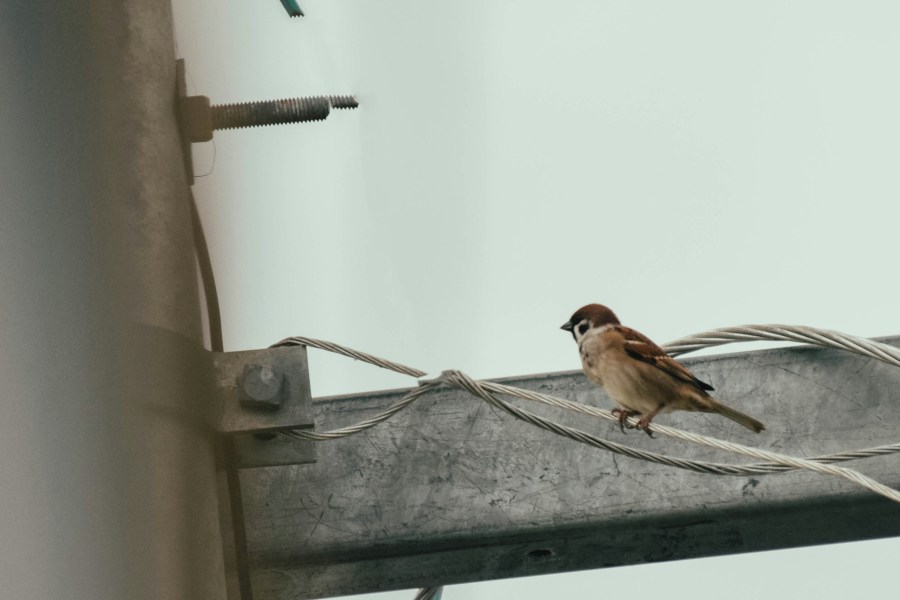
In another life, I was a sparrow. I sang loudly and often and took breadcrumbs from kindly strangers. I never once opened a shared phone plan with someone who said “babe” too often.

If I was a sparrow, I would be lapping at a glass of wine or pure love or whatever it is they drink in Amsterdam. This is not something I know. I have never had the occasion to get a passport. I’m not a globe-trotting hussy. My knowledge is limited to the Wikipedia page I skimmed after wondering what would possess someone to name a baby after a place half a world away. My guess is that it was a “creative” riff off one of those glossy city-names—Brooklyn, Paris, London—meant to sound worldly and sophisticated.

I’ve seen her photos, once, back when I was still trying not to be the kind of woman who Googles. But I Googled. It was after I saw her name on Tom’s phone. My first thought was, “oh, she’s lovely.” She has a face like a milk commercial. Her voice is a high-end essential oil. She probably doesn’t even try—or worse, pretends she doesn’t.

That’s the trick, isn’t it? Lovely women pull off femininity like backflips off the high dive. I’ve been trying so hard, since before I even met Tom. I smile at strangers. I go to Pilates. I say “sure” more often than “no”. I shave my body hair so that I’m smooth and blank.  Tom liked that about me, that I was “cool.” An iceberg. 

I watch the overripe tulips as morning turns into noon into everything after. One by one their petals fall, indecent and slow. He loves me. He loves me not. The petals scatter like little, pink casualties until there’s only one flower still perfectly intact in the ragged bunch. I reach from my supine position and pluck it out of the jar. I hold it to my nose, my lips. Then I bite. It tastes like pesticides and greenery. I chew and chew and chew the flower like cud.

Tulip madness. That’s what they called it. That’s what Amsterdam was famous for—at least according to Wikipedia. I think I understand something now, even if I’m not sure what it is.

I run to the bathroom and kneel on the floor. I vomit, knees pressed to the cold tile, hands gripping the rim as if I might fall through. The petals come up last—chewed, soft and blushing, floating wreckage in the toilet bowl. He loves me not.

I wash my mouth out in the sink. My lips are blood red, and my cheeks glow feverishly. My eyes shine—not with health, but with a kind of recognition. I look like someone I haven’t seen in a while. Not lovely, the way Amsterdam must appear when she enters a room like a neatly wrapped present, but raw and unruly.

I am already so alive.

I open the window all the way and lean out. It smells like warm dirt and a strange, feverish bloom. The birds are shrieking. They do not care if they sound lovely when they open their mouths. I scream back.

Sarah Chin is a writer with a day job in politics. Her work has been published in Epiphany, HAD, SmokeLong Quarterly, Points in Case, Sine Theta Magazine, and more. She lives in Chicago, Illinois and was born in the Year of the Fire Rat, which pretty much sums her up. More of her work can be found at sarahchin.net.

You Be the Flotsam, I’ll Be the Jetsam by Melissa Rudick

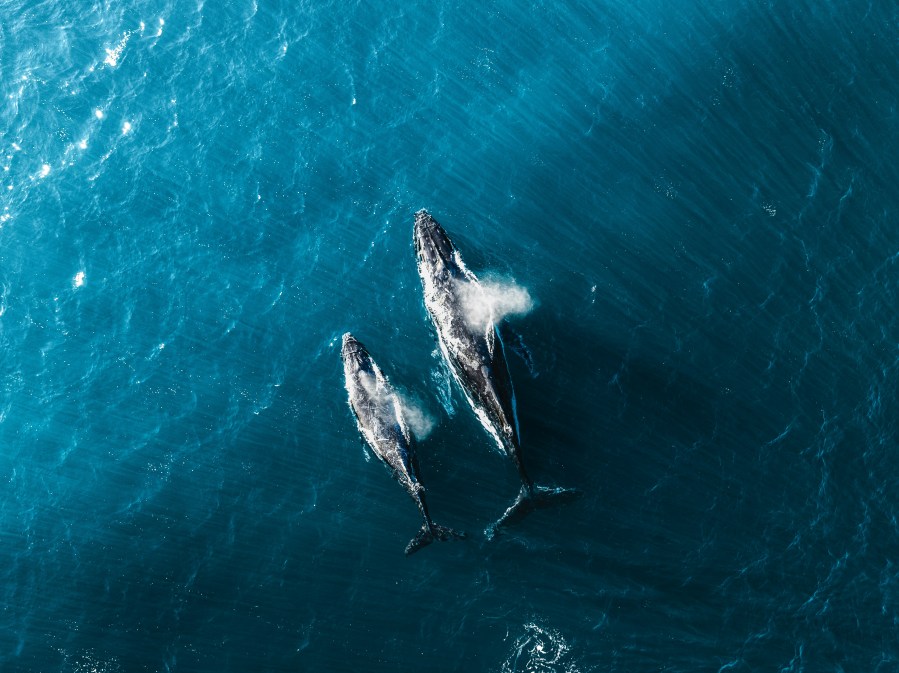
I called off from my job as an IT Support Specialist at the local college Tuesday, and whether as punishment or absolution, was eaten by a whale. If you want to be technical about it, I wasn’t eaten so much as I was in its mouth. The esophagus of a humpback whale is too small to swallow a basketball, let alone an adult human male with a little extra around his midsection. I found that out later, when I saw a marine biologist talking about the incident on TV. 

My buddy Frank, who brought me kayaking that day, thanked me after. He said this was going to blow up his channel. Then he dropped me off at the hospital because of my “creepy smile and dead eyes.” The docs said I was in shock and gave me a full check-up. Seemed like everybody who worked there wanted to poke and prod at me and ask me questions. When they asked me what it was like inside the whale, I forced a laugh, said, “Dark and smelly!” 

To tell the truth of it was impossible. Hell, I didn’t even understand the truth of it myself. 

Mary picked me up at the hospital later. That one eyebrow of hers already raised, as if this was something I had done just to annoy her.

“You ok then?” she asked.

“Yeah, let’s go home,” I said. I reached out for her, but she was already halfway to the parking lot. 

In the car, she was quiet. I watched her chew the inside of her cheek. She turned on the radio and they were talking about me. She turned it off. 

“I don’t see what business you had being anywhere near a whale,” she said. 

“Frank said kayaking would help us relax some is all,” I said. I couldn’t explain it to her. The sameness of my days. She’d tell me that’s what life is for everyone. Why would you think you deserved more than the rest of us, she’d ask. 

“Frank is unemployed and a moron, you shouldn’t listen to him about anything,” she scoffed. “Case in point! I’m sure your boss will be glad to know you were too sick to work yet felt good enough to be swallowed by a whale.” 

“I wasn’t swallowed, Mary. I was just in its mouth for a little bit,” I said. “Frank sent me a video, let me show you.”

“In case you were wondering, I’d already had a massively shitty day, so thank you for all of this.” She pulled into our driveway and got out. “Anyways, it’s all over the internet. I’ve already seen it.” 

Mary’s put up with a lot over the last fifteen years. I get stuck in my head and forget things. I forget her. The only thing I brought to the relationship was being able to make her laugh. 

 “Then you saw how that whale spat me out like I was a band-aid in a pot roast! Like I was some factory worker’s finger in a can of pop! Like I was a pubic hair hidden underneath a burger bun!”

She flipped me the bird, which for Mary is darn close to a declaration of love, and maybe forgiveness too. 

Inside the house, I sat on the couch. “My life flashed before my eyes, you know.”

“What’d you see?” Mary asked.

“Not much,” I said. “Not much at all.”

“Sounds about right,” sighed Mary, sliding a frozen pizza into the oven. 

*

I sat on the toilet watching the clip again and again while Mary slept in our bedroom. There’s me on the water in my red kayak, paddling lazily. A bait ball explodes underneath me, silver fish launch into the air, then rain down on me. A half second later there’s a giant emerging from the ocean, mouth open wide. You can see me rise into the air, the kayak shooting up and away, now empty, and the whale returning below the water. Not even a second later I appear on the surface. 

That I was gone for less than a second didn’t make sense. All I can think is that time works different for a whale, that it operates on its own scale and when I dropped in, it all slowed down for me too. The seconds turned to minutes turned to hours turned to days and there I was submerged in that wet, black cave, the waves and their echo roaring in my ears. I was a speck. I was a nothing. Tiny and absurd is what I was. Am. 

I found a playlist of whale song, stuffed my headphones in my ears, and crawled into bed next to Mary. I pulled her tight the way she likes. She squeezed me back. The whales called to each other. Lonely, it seemed.  I imagined myself sloshing around in that black womb. I closed my eyes to make it darker.

*

Mary called it my Jonah Day. She hummed “Under the Sea” while she washed the dishes. She asked if I wanted to role-play as merfolk. Then, when she saw the teasing hurt me, she got mad again and asked why she never got to have fun. 

“What do you mean, fun?” I asked. 

“I mean, I used to be a person that did things. Like kayaking or jumping off a cliff into water. With you, sometimes. Remember?” 

I had made so many wrong assumptions about what Mary wanted from life and me. I forgot that side of her and we both lost out. 

 “So, neither of us are happy,” I said. 

“But you’re different now.” 

I tried to explain how I’d concluded that man held an outsized view of himself. How we loomed too large on this earth, in no way proportionate to the value we brought. I rambled about wars and climate change and mass extinction events. I told her that whatever fork on the evolutionary road led to us climbing up on land was a mistake.

“We’ve certainly made a mess of things up here.” She nodded her head, thinking. “And you want to go back?”

“Will you come with me?”

We busted into Frank’s garage, left a note that said, “Gone Fishing.” We tied the kayaks to the top of our car. It was night and no one saw us back up to the boat ramp. The ocean calm, we paddled side by side. Mary looked up at the stars. I told her I read online that you could take a scoop of this water, and it would contain more life than stars in the sky. 

Mary cupped the water in her hands, brought it close to her face. “Pleased to make your acquaintance,” she said.

We pulled our oars through the black water. We let ourselves be swallowed up by the enormity of the night sky above us and the sea and all the life it contained below us. We looked everywhere but back. 

We were specks, we were nothings, we were tiny and absurd, together.

Melissa Rudick is a writer living in Lehigh Valley, Pennsylvania. Her work is forthcoming in Vestal Review and The Blood Orange Review. She is currently at work on her first novel. You’ll most likely find her wherever there’s milkweed, looking for monarch eggs.

13.1 Septillion Pounds by Emily Rinkema

To help her sleep, we give the baby a basketball, a full-size regulation ball that my husband, CT, puts in her crib one night. He writes her name on it with a black Sharpie, bold letters like they would appear on a jersey.

“Ten months is a little young,” I say.

“Never too early for our little athlete,” he says. CT played college ball for a season until he blew out his knee. The first thing he said when he held her was that she was the longest baby he’d ever seen. She came home from the hospital in a UCONN onesie.

When I check on her before I go to bed, she’s still awake with one tiny hand on the ball. She’s never been a good sleeper, but the last month has been significantly worse. She just stares at the slowly spinning mobile of the galaxy above her head, sometimes reaches for it with her fists. I kiss her on the forehead and whisper that the basketball is like the earth. A little poet is never too young for simile. 

In the morning, CT makes us coffee while I go get the baby. She’s asleep. The basketball is on the floor under the crib and the Sharpie is clutched in her hand. I turn on the light.

The walls are covered with math. Math formulas and numbers and equations and graphs and angles and shapes and arrows that direct us from next to the crib to above the changing table to the closet door to behind the rocker and under the window and then back to the crib. 

“Oh, fuck,” says CT, handing me a mug of coffee.

“Language,” I whisper.

“But,” he says, looking around.

“Yeah, fuck,” I say.

CT calls a mathematician while I try to feed the baby, but she wants nothing to do with the Cheerios or blueberries I put in front of her. She just bangs her spoon on the table. She’s got dark circles under her eyes and it’s like looking in a mirror. I can’t remember the last time I’ve slept through the night.

“We did this,” I say to CT, who is now Googling “baby math.” 

“Did what?” He asks.

“Stressed her out,” I say.

“Maybe it’s just math,” he says, putting some pumpkin puree down in front of the baby. “Maybe it’s nothing.” 

I spoon out some puree and bring it towards her, but she just clamps her mouth shut and grabs the spoon. I call my mom and ask if she can come over for a bit.

My mother agrees to take the baby to the park while we meet with the mathematicians. The park’s only a few blocks away, but with all the gear, I suggest she takes the car. On her way out the door, baby on one hip, car seat hooked over her elbow, she raises her eyebrows at me and says, “I told you she was gifted.” She kisses the baby on the top of her head and coos, “Gramma’s little genius.”

Two mathematicians arrive a few minutes later. They are younger than I expected. One is wearing a sweater vest. They both have glasses and are carrying briefcases. The men stand in the middle of the nursery and turn slowly from wall to wall to wall. The taller of the two men takes off his glasses and cleans them. He puts them back on. He opens his briefcase, takes out a notebook, and writes something down. He closes his notebook.

“Well?” asks CT, sitting down in the rocker. 

“Wow,” says the shorter man. “Amazing, really,” he says, taking a deep breath. He points at the wall under the crib. “She starts by calculating the weight of the earth,” he says.

“She’s a baby,” says CT.

“That’s pretty simple math, actually,” the mathematician says, “She just needs the weight of any sphere,” he points at the basketball, “and then she can plug it into Newton’s formula for universal gravitational attraction.” 

The taller man interrupts. “It gets much more sophisticated over here,” he says, pointing to the left of the closet. He bounces a bit on his toes.  “It looks like she’s using semi-parametric predictive modeling to determine existential risk.” He leans towards the wall and squints. He wipes his hands on his pants. He looks at the shorter man and shakes his head. 

 “Wait,” the shorter man says, “Is that strategy optimization for carbon reduction at the bottom of the door?” 

I stare at him, waiting for something I understand, a word, a phrase, a gesture. CT puts his head in his hands. “I have no idea what’s happening,” he says.

“I think she’s looking for a solution,” the tall man says, and when we don’t respond, he says, as if we’re children, “To climate change.”

“But,” I say, and I don’t know what comes after that. I don’t even know what to ask. I think of everything we’ve ever said in front of her, thinking she couldn’t understand. We watch the news during playtime. We listen to NPR in the car. We fight about solar panels and electric cars and how much meat to eat. When I was pregnant, we even fought about whether it was responsible to bring a baby into this world. Did she hear all that? Did she feel it?

CT stands up. “This is fucking ridiculous,” he says. He’s the one who suggested Meatless Mondays. He’s the one who wants a Prius. He’s the one who thought we should skip flying to see his parents this year so we could afford panels on our roof. 

“Wait,” the shorter man says, and looks at his partner for confirmation. He points to the right of the door. “There. Is she using partial differential equations to see if…” and then he stops, squatting in front of the wall nearest the crib. He shakes his head. The taller man keeps putting his hands in his pockets and taking them out again. “It looks like she gave up.” He’s tapping the wall where our baby scribbled with the Sharpie, age appropriate markings that in another world could have been made with crayon or finger paint. “She gave up,” he repeats. 

“She’s a fucking baby,” CT says, and his voice cracks. “A fucking baby.”

“I just want her to be happy,” I say.  “I just want her to write poetry,” I say. CT pulls me into a hug. “Or play basketball,” I say into his neck.

“She can be a poet-athlete,” he says, and we both start to cry.

I check on the baby before I go to bed. Her room still smells of fresh paint, a new color CT picked up at the hardware store after the mathematicians left this morning. Butter yellow to match the stuffed duck he bought on his way home. While the baby napped this afternoon, I took down the universe mobile and replaced it with the one his sister bought us for the baby shower–green giraffes and purple hippos–and CT painted over the math. We’d thought about keeping it, but decided it was all just too heavy for a baby.

“It’s a clean slate,” he’d said when he finished.

The baby is awake and content. She moves her hands in front of her face as if she’s in awe of them, as if she’s still working out whose they are. It’s the way she used to look at me. 

“It’s a blank page,” I whisper to her now, and kiss her on the forehead. And before I leave, I tuck a Sharpie into the corner of her crib, just in case.

Emily Rinkema lives and writes in northern Vermont, USA. Her writing has recently appeared in SmokeLong Quarterly, X-R-A-Y Lit, Variant Lit, and Flash Frog, and she has stories in the Best American Nonrequired Reading, Bath Flash, and Oxford Flash anthologies. She won the 2024 Cambridge Prize and the 2024 Lascaux Prize for flash fiction. You can read her work on her website (https://emilyrinkema.wixsite.com/my-site) or follow her on X, BS, or IG (@emilyrinkema).

All the Friends I Could Have Made are Having Fun Without Me by Mackenzie McGee

Alexis throws a big party and everyone’s invited. She lives a half-hour drive from her childhood home, the one with the big bay window and the basement where we had sleepovers every other weekend for most of high school. 

I imagine she’s done well for herself. Her new townhome is in the affluent suburb that kids in our marginally less affluent suburb used to mock. Her Instagram is all pictures of her rescue corgi. Her Facebook is all tagged photos of her at friends’ weddings and thirtieth birthdays, but she’s not thinking about any of them right now. Tonight, she’s fifteen again, and she’s worried I won’t show.

It’s a cool summer evening in Minnesota. From the street I can see the glow of the string lights crisscrossing her treeless backyard. Citronella wafts through the air. I imagine there are two coolers on the concrete patio. The one on the right is stocked with beer and sparkling water. The one on the left is full of Monster Energy Drinks, the Zero Ultra flavor we were obsessed with in tenth grade. Alexis used to buy them two-for-three on her way to our 7 a.m. social studies class. She’s wearing a bracelet made from the can tabs we saved.

Teo’s the first guest to arrive. He pedals down the sidewalk on his childhood mountain bike. I crouch in my car when he passes by. Alexis notices the Jersey in his accent. She asks him, as she will ask everyone, how he knows me. 

He says we met Thanksgiving weekend twenty-five years ago, oh, maybe twenty-two. I was in town visiting my cousins. We were playing basketball in the driveway when he rode up and asked if we wanted to play Nintendo. I loved Nintendo and I hated my cousins, but they were older than me, and they hated Teo. They said he was weird, and when I asked why, they said I was weird too. I’d heard this before. I thought if I could make them like me then it wouldn’t be true.

Michaela comes in as Teo’s finishing his story. She carries her sharpie-covered JanSport on one shoulder, all cool and casual. She shrugs it off to dig for the mix CD she burned for the evening. 

Michaela and I—we shared a cabin at summer camp. We bonded over emo music and the art of tie-dye. We exchanged numbers. She called my house twice that August. I let the phone ring as I tried and failed to conjure a voice full of carefree enthusiasm, the self I could be away from myself. She couldn’t know that the real me was awkward and uncertain, that camp-me was a façade. This was years before I knew to call it fear, not fraud. Michaela left a couple of voicemails. She shrugs like, what are you gonna do?

Alexis nods. That is so like me.

The fashionably late arrive in clusters. Coworkers from my first full-time job sit on the kitchen counter sipping PBRs. Some of my sisters’ friends make friends with my brothers’ friends and share the wisdom I was too awkward to ask for: how to print in pretty bubble letters; how to tell when someone like-likes you, how to tell when someone likes you at all. 

The nice busboy from my short-lived waitressing career is using chunks of cheese to teach Alexis’ corgi to sit. He tells her about the time I got awful hives from the wool scarf I wore to work. He brought Benadryl, just in case. He asks if I RVSPed. Alexis lies and says I texted her to say I’m running late. She doesn’t want people to give up on me just yet.

The biochem TA offers charcuterie to the cute librarian who works the closing shift. The rec league volleyball team I quit after two practices arrives in two consecutive carpools. They dance ironically, and then, a few drinks in, it’s not ironic anymore.

And then they hear it: the drumline’s cadence, the drum major’s whistle. The crowd flows into the front yard to see my high school marching band chair-stepping up the street. Their teenage bodies carry the muscle memory of these instruments, and some of them are really, really good. Someone jumps on the upright piano and leads the living room in a singalong of “Don’t Stop Believing.” The party is in full swing. All that’s missing is me.

I’m still outside, sure I’m about to go home but not ready to admit it yet. I’ll wait in my car five more minutes, and then I’ll go in. I’ll walk through the front door and everyone will cheer, like I’m a fan favorite in a sitcom. There’ll be a big sheet cake decorated with loopy icing in the shape of my name. Everyone will want to know what I’ve been up to, how I’ve been. No one will be mad at me for not calling or texting them back.

I have a minute left when Alexis steps into the front yard, carrying a corner slice of cake on a paper plate. I watch over the steering wheel as she tiptoes between the instruments scattered on the grass. She finds a clear spot to sit cross-legged with the plate in her lap. She looks down the street, down the way I came, and waits for me.

We had every one of our sleepovers at her place, every other weekend for about three years. Then one day, we didn’t. A month went by, and then another. Growing up I often felt, sometimes I still feel, there had been a lesson in kindergarten about how to be a person in the world on a day that I, and only I, had missed. I had wanted to invite Alexis over and return the favor. For a long time, I didn’t know how.

Now everyone inside is getting to know each other and having a good time. Alexis should be inside having a good time. Someone should ask her how she knows me. She was kind enough to host, after all.

I shut the car door behind me. Alexis’ ponytail whips around at the sound. She waves me over and says she’s so glad I’m here, even if the part of the party that was for me is over. The cake has been cut; the end time on the invitation has come and gone. The music is louder than ever. Colored lights flash in the windows. That party, she says, has taken on a life of its own.

She doesn’t ask me to go inside. We sit in the grass and split the slice, taking turns taking bites. The can tab bracelet shushes softly on her wrist. It’s just how I remember it—two of the tabs face the wrong way, their silver underbellies exposed. We watch as guests slowly trickle home in new configurations of designated drivers and rideshares. For each one she says, look. They came here for you. Isn’t that nice? Everyone together, here tonight, and it’s all because of you.

Mackenzie McGee is a winner of the 2021 Pen/Dau Short Story Prize for Emerging Writers. Her fiction can be found in Nat. Brut, Alaska Quarterly Review, Cease, Cows, and elsewhere. She earned her MFA from the University of Arkansas, and she’s currently pursuing a PhD at the University of Kansas.

98. by Jordyn Damato

  1. There’s something wrong with my head
  2. It’s not a bump
  3. I wish it was a bump
  4. Even if it was a gross, protruding bump that made people afraid to look at me 
  5. I could handle that 
  6. I would dress it up—draw a face on it or something. I don’t know. 
  7. Make it pretty. 
  8. I can’t make the inside pretty. 
  9. I wish I could but
  10. I can’t 
  11. These are some thoughts that infect me 
  12.  Scream right now. Right now. Do it. 
  13.  Flip the table. Now. Flip it or hold your breath until you pass out. 
  14.  Hold your breath until you pass out. Do it. 
  15. I do it. 
  16. I have to do it. 
  17. Scream, pass out, flip things. 
  18. If I don’t, I will die. 
  19. If I don’t, my whole family will die. 
  20. My family is small and not very nice to me but I still don’t want to see them die. 
  21. I saw my twin brother die
  22. When we were kids 
  23. I was not a fan. 
  24. I doubt he was, either. 
  25. Or maybe he was. 
  26. He doesn’t have a voice in his head. 
  27. He doesn’t have a head 
  28. Or a voice
  29. Sorry. 
  30. I guess in many ways, I’m the lucky one 
  31. Mom told me that before 
  32.  Don’t you know how lucky you are? 
  33. After I got sent home from school for stripping naked and attempting to flush my clothes down the toilet 
  34. I made a mess 
  35.  A huge fucking mess! Mom yelled 
  36. I told her it wasn’t me 
  37. It was the voice 
  38.  Newsflash, Tommy! 
  39. It wasn’t a yell, it was a scream. 
  40.  EVERYONE has a voice in their head 
  41. It echoed in my room with two beds 
  42.  You’re not special—don’t give me that bullshit excuse! 
  43. I don’t think I’m special, I wanted to tell her 
  44. I think I’m cursed 
  45. But the words didn’t come out 
  46. Instead, urine came out 
  47.  Piss yourself. Piss yourself right fucking now or else your heart is going to stop. 
  48. I peed. 
  49. Mom screamed. 
  50. Dad came in 
  51. He was drunk 
  52. He pushed me against the wall 
  53. I hit my head 
  54. I hoped for a bump 
  55. (An explanation) 
  56. He spit as he screamed 
  57.  Why do you have to make everything so hard on us? 
  58.  No bump ever formed. 
  59. (No explanation)
  60. He shook my shoulders
  61. Banged my head again 
  62.  You’re so goddamn selfish! 
  63. Through tears and over dad’s shoulder, I saw mom on her knees with disinfectant spray and a rag
  64. I closed my eyes 
  65. I Imagined Tyler’s face 
  66. But it’s the same as my face 
  67. So it didn’t help 
  68. I can’t stand being in this body 
  69. My body 
  70. I miss Tyler
  71. I miss his voice 
  72. I miss the way he could read my mind 
  73. I miss having hot dog eating competitions with him 
  74. I miss winning 
  75. I miss not having a stranger’s voice in my head 
  76.        
  77. I think mom and dad think it’s my fault that he died 
  78. As if I told the drunk driver to be drunk at 7:30am 
  79. As if I told the drunk driver to swerve off the road 
  80. As if I told Tyler to walk on the side closest to the drunk driver  
  81. I broke my arm 
  82. And bumped my head 
  83. But no one seems to remember 
  84. Or care 
  85. Or miss the old me 
  86. I miss the old me 
  87. I miss my old family 
  88. I miss the warmth of the sun on my skin 
  89. The friends I used to have 
  90. The brain I used to own 
  91. It’s a scary thing 
  92. To not own your body anymore 
  93. To not be believed 
  94. To not be trusted 
  95. To keep everyone around you alive every single day, no matter the cost
  96. And to never, ever even hear the words
  97. Thank you 

Jordyn Damato is a writer, lover, dreamer, in that order. She is currently an MFA fiction candidate at Miami University in Oxford, Ohio. Her work has appeared in Brilliant Flash Fiction and Bullshit Lit. Her favorite thing to do is hug.

The Passing of a Little More Than a Year by Lydia Kim

The soccer field was a miracle, an oval of grass behind a middle school where she could train her new small dog, play until it trusted her and understood their togetherness. She hoped to soften its vigilance, give it less reason to erupt.

Soon they met three other women and their dogs, two also-small ones and one big, and they formed a gang. The first summer of the pandemic, when being outside was the one thing you could do, though even that was a bit fraught, it’s not like the wind knew to blow the virus away from you and never towards you. But what a gift. After months of walks by themselves, each anxious for the other, she loved the ritual of heading to the soccer field, unhooking the lead and watching her dog run, thrilled, towards the clot of its friends. The sight of them leaping in greeting pleased her, the validation that her dog could make friends. The four dogs ran and feinted and rolled, sniffed each other’s glands, hunted along the perimeter of the fence for bits of old school lunches. They stayed out there for hours. 

Surprisingly, inevitably, there was the gentle creep towards human friendship, which she knew was rare among strangers and rarer still at her age, almost fifty. They laughed over “Love Is Blind,” the debut season, wondered at sudden celebrity deaths. The doodle had a birthday with party games: dogs racing towards coupes of whipped cream, bobbing for hot dog slices. One of the women had a hysterectomy, another up and got married. They drank champagne for one, then the other. Other dogs came to the field but did not become part of the gang: Julius the Vizsla, Blue the wheezing Frenchie, Lola, curly-haired and shaped like a tipped-over fire hydrant. Their owners kept it moving, didn’t have or want dog treats, just a wave and some small talk. 

Summer passed into dry fall, foxtail season, discussions of whether or not to cover a dog’s snout with protective netting. When the days turned even shorter, she bought four light-up collars so the dogs could play past dusk, a canine rave. They dressed the dogs up for Halloween, again for Christmas, and watched them learn the hard way to give a wide berth to the geese wintering on the field – the geese hissed and chased back, clouds of steam fuming from their beaks. Week after week, she walked to the field and sent her dog to its friends. Her dog looked for her now, came when called. She never quite got over the surprise of it all.

In the spring, she learned two of the women were moving to Oregon, one to Arizona. By summer, everyone was gone. Big dogs found the field, huskies, pit bulls. Sometimes the owners yelled at her even though their dogs were also off-leash, barking and coming too close. 

She walked to neighborhoods with big houses and through the shopping center where she tried to pose her dog for a photo on a bench, Depressed Dog Sitting, c. 2021. It wasn’t the same. Her dog pulled her back to the field where it could spend time free, even if alone. 

She threw the ball and her dog fetched it. This much they did for each other. 

The two of them were not a gang, but they weren’t nothing.

The hot days evaporated into another autumn, and as the sky began to pink, her dog’s collar lit up. A husky entered the empty field. Her dog stopped, let the ball drop from its mouth. The husky considered the geese, then her dog. She moved towards her dog, who moved towards her. The husky chose the geese, sprinted at them. They pushed themselves aloft, rising, gaining smooth altitude, except one at the back, flying, but too low, too heavy. 

The husky leapt, caught the goose in its teeth, snapped its neck left and right, thrashing the bird into the cold grass of the field, a spray of red on two white necks.

The goose lay in the center of its broken wings, the black feet pedaling as if trying to walk.

For days, she saw the carcass from the gate.  She didn’t enter, didn’t want her dog to sniff the goose, hated to see it there, exposed and undefended, picked at. Finally, someone moved it by the fence to make room for soccer goals.

Within a week, the crater filled with new growth. 

They went south, to the trail along the ocean, thick on one side with sea fig and saltgrass, land kelp. Dogs were not allowed on the beach, only the trail, saturated with animal smells and pocked with tiny tunnels that made her think of rabies. 

Her dog strained at the limits of the lead, head lifted at the scent of endless brine. They stopped in a narrow pedestrian-trampled break to watch waves foam the shore below. Waves pushed in, and waves drained out.

The far water was dotted with freighters and ferries, carrying cargo and commuters. The world was grinding its way back to rush-hour traffic and holiday sales. The day had begun to blue. There wasn’t another creature for miles, so she did the calculus and they walked onto the beach. She freed her dog. It stayed with her at first then started to wander away, braving good distance, nosing along crab husks, fifty feet, a hundred feet away, more. Stopping at crushed cans and torn wrappers, the possibility of scraps. Even after a good year, it was hard to trust one’s luck. 

She turned back to look, the apartment buildings squat and flat, the gate to the field ajar, the only way in or out.

Far away, the dark of her dog glowed against the pocket of sky. 

She opened her mouth and made a sound, two clicks of the tongue, a half-trill, not even her dog’s name. The silhouette bent, held, then the shadow moved, began to run.

Lydia Kim has published in Longleaf ReviewPeatsmoke, CatapultThe Hellebore, and in the anthologies And If That Mockingbird Don’t Sing and Non-White and Woman. She’s a Tin House alum and 2024-25 Tin House Reading Fellow and her work has been supported by the Kenyon Writers Workshop, Rooted & Written, and the de Groot Foundation. She is currently at work on a novel and story collection, represented by Ashley Lopez @a_la_ash.

The Way My Mother, Who Refuses to Die, Is Like A Ford Taurus by Danielle Barr

My mother died of a massive stroke, but she swears she didn’t. Dropped down dead right there at the breakfast buffet, then climbed back up to her feet—pardon me, she said to the coveralled man behind her—and went on ladling gravy over her biscuits. 

It seemed kind of presumptuous to no-thank-you dying, bald-faced rude like a lingering party guest. After all, sometimes folks dying at the all-you-can-eat is just supposed to be the natural order of things, and—between you and me—the secret best thing about mamas is that they’re temporary. 

By the time we had driven her home from Fancy Rick’s Breakfast Rodeo, her limbs had locked up into a rigor mortis so profound we sat her in the La-Z-Boy and for three days her eyes slid around in their sockets, tracking our comings and goings but never blinking.

Death is like this, though: first soft, then hard, then soft again, but different—mealy, mushy, like the slow rot of a stone fruit, the innards swelling and skin sloughing off and the flesh-fat yellow then brown then black underneath. A more apt description, in fact, I can’t seem to finger than an overripe plum: a bruise where a woman used to be.

You’re dead, Carol-Ann, says her cardiologist—who she swore was a hack, who she once accused of pumping her full of forever-chemicals to keep her just sickly enough to keep needing him but not enough to die—but she turns her chin up at him and gathers her pocketbook up under her elbow. He presses his stethoscope to her chest and waves me over to listen; the stillness between the lobes of her ribs is stark and stunning, a soundproofed room wallpapered in egg-crate foam, and it’s beautiful and horrible both. On the drive home she snuffles out a series of short gasps I take for crying; later, she pores over the Yellow Pages, points a dagger-finger at a few promising options, and despite myself I promise I’ll call and schedule a consult—not a single cardiologist in the county, I’ll report back after, is accepting new patients.

Bobby-Dale’s new girlfriend says it’s kind of romantic, isn’t it, how much she must’ve loved living, hanging on so tight. Heroic, even. Rage against the dying light, and all that.

And Mama, limp-flopping like a Raggedy Ann behind the cordless vacuum says in her parched voice, sandpaper rubbing together, Why thank you, CiCi, how nice of someone to notice, even though just last night she’d rasped that CiCi was a pointless sack of fluids and phlegm with not a thought bobbing around in all that sinew to spare, and I thought she’d sounded just a little jealous.

I consider telling CiCi that it’s actually a haughty refusal to be caught out that courses like sap through the veins that used to ferry blood and lymph across her cells, a kind of stubbornness that stretches deep into the clay like pipsissewa, but instead I chew the inside of my cheek to a pulp; the balance of things is delicate, after all.

Ronda my therapist says, Have you considered she’s gaslighting you? And I sigh and nod but then shrug because of course I have but also what am I going to do? She’s obviously dead but also won’t die and so I get my parking validated by the little Portuguese woman at the front desk and Mama’s waiting in the passenger seat when I climb behind the wheel, dust and ash pooling on my leather seats underneath her naked pelvis, sharp and moon-white in the sun. I almost sneer to At least tidy up after yourself, why don’t you? but instead I pretend I don’t see; instead I say nothing and she says nothing and when we get home I Amazon Prime a dustbuster to keep in the glovebox because this is the sort of thing family does for its own, isn’t it?

For Christmas, I work back-to-backs at the Down-N-Out and take out a personal loan with 33% interest to buy her the Rolls-Royce of caskets, a shiny lacquered thing with pink satin lining and polished brass hardware and a concave pillow to cup her skull: a real swanky place to spend eternity, and cost as much as a mortgage too, which I guess it kind of is. After dinner she lugs it out to the burn pile, price tag still swinging from the handle, and douses it in kerosene, and for a split second I think how easy it would be to tip her over into the bonfire, too, her beef jerky limbs catching like kindling.

Bobby-Dale and Tammy-Rae and me, once enough is enough, sweet-talk Mama into a meeting with Father Johnson at First Harvest, to get his opinion on what it is Jesus and Mary and the whole subcommittee might think about all this, and it’s easy enough getting her there, rubber waders billowing around her waist to keep her soggy snail-trail of putrid something-or-other from soaking the wall-to-wall in God’s living room. For a while she’d been convinced they’d call her a saint, call the Pope, and her face falls when after some discussion the priests decide that she is an abomination and not a miracle. Father Johnson says it’s a sin against God, her refusing to die, but that just makes her dig her heels in all the harder. She spits a dusty wad of coppery scab at their robe-hems and says she’d rather be an abomination than a Catholic anyway, with that attitude and when we sweep her toward the door she shouts over her shoulder that it turns out there’s no God or heaven or point anyway, and sneers wickedly when they hurry off because she knows they know that there’s no one knows better than her.

Bobby-Dale takes Mama up to the house—There there, now, Mama, can’t everybody stomach these things is all, like field dressin’ a deer, or the Yankees—and Tammy-Rae and I idle out at the curb and suck down a pack of Marlboros, one at a time. Tammy-Rae wagers this whole business is all on account of Mama’s Taurus sun, Taurus moon, Taurus rising. Trip-Tauruses, that’s about as Taurus as you can get, according to her. I don’t know much about astrology save for what I read in the weekly, but I’ve been driving this Ford Taurus for fourteen years and can’t get the tranny to shift into second to save my life. I figure Mama with stubbornness etched into her bones by the universe itself is like that too: can’t shift. 

You’re just like her, y’know, Tammy-Rae says, dustbuster in one hand, cigarette in the other, and I scoff that I was born in June.

No. Long-suffering, I mean. Joan of Arc-type shit. She flicks her ashes onto the floorboard, then vacuums them up.

Leave it, is what I say, this time.

Danielle Barr is a full time stay-at-home mom and sometime-writer. She was the winner of the Driftwood Press annual short story contest, and her works have appeared in The Milk House, The Hooghly Review, Querencia Press, and others. She is currently querying her debut novel. Danielle lives in rural Appalachia with her husband and four young children, and can be found on Instagram @daniellebarrwrites, Twitter @dbarrwrites, and Bluesky @daniellebarrwrites.bsky.social.

Divine Creatures and Monsters Alike by M.M. Kaufman

It was a strange time for us all. 

My mother, always a confident woman, acted odd her whole pregnancy. Was nervous from noon to night. My father, a nonstop talker, was silent. And I had what they called “sympathy symptoms.”

When she threw up, I threw up. When she gained weight, I gained weight. When her period stopped, my period stopped. I’d only just gotten it a couple months before. 

We craved the same things. We were repelled by the same things. We refused to touch apples. A whiff of one sent us running to the toilet.

I could feel everything she could in her body. I even knew when it was her time before she did.

When the contractions came, I heard her screams a half second behind my own. I felt the drugs they gave her. I was high in the sky. Like I’d climbed a tree that reached into the clouds. I was watching myself as I lay on the ground. 

I was ripped open when I heard my mother scream. 

What seemed like years later, I woke up. I told my mother if this is what I feel, I couldn’t imagine what she was feeling. She told me not to imagine it at all.

I studied the red, wriggling creature in my mother’s arms. During her whole pregnancy, I never heard my mother or father discuss names. Any name they picked would change the way I looked at the baby. Maybe even how I felt towards him. 

That’s when I asked my parents if I could name my brother. 

They looked at each other in alarm, then at me. Like I was a stray dog that might bite them any second if they made the wrong move. It was no stranger than they acted the whole of that year, so I waited until my mother, then father, gave a small nod.

I wanted him to have a name that marked the beginning of his story, so I asked my mother when she first suspected she was pregnant. She cried, which wasn’t weird after giving birth. But it was weird that my father cried too, cried even harder. 

She spoke more slowly than I’d ever heard in my life, asked if I remembered the day I fell from the top of the apple tree. She said don’t try to remember if I didn’t, but I did. That day we’d learned about Sir Isaac Newton’s laws of motion in school. Important men in history books seemed to have their big ideas alone, so when the school bus dropped me off, before my parents came home, I climbed the tallest tree I could find in the orchard behind our house.

I could never do this when they were home. They never allowed me to go into the old man’s orchard alone, even though he’d encouraged me to come and play in the trees whenever I wanted. Especially if I was bored and alone. 

I sat on the highest branch I could find that day and turned my face to the sun. It worked for sunflowers. I closed my eyes, let the sunshine filter through the tiny veins in my eyelids, and imagined a great red ocean whose depths held kingdoms of new animals to discover. 

An idea was swimming into view, but then a tidal wave came up from the trunk of the tree and shook me loose. As I fell, I dreamed that I not only hit the ground, but sank down into it. The soil folded over me. Sealing me in. 

My mother woke me up with her screaming, held my head in her lap. My father brushed hair and leaves from my face. I touched a hand to my sore abdomen and wondered if I had fallen on my stomach. My father lifted me in his arms and blood ran down my legs.

My body didn’t feel like home after that.

The doctor wrapped my sprained wrist and bandaged my cuts. She took my parents to another room while I was left to my own thoughts on the exam table. 

The only thought I had was that I never got my big important idea. The kind of idea that got its own name—a law of motion, a theory of relativity, a principle of pain, an idea whose name began to answer the question it inspired.

The baby cried. Such a strange sound that made my chest hurt and prickle with sweat. I gazed out of the hospital window into the sun, peering again into my great red ocean. 

I said the first name that fell into my mind. 

We moved after Gravity was born. I’m still trying to have a big idea, but I can’t have them in the orchard anymore. My parents said they’d never liked the old man. It’s time for some space, they said. 

And we had space. From him, from the trees, but also, the natural divide between my mother’s body and my own returned. I felt what I felt now. She felt what she felt. 

I was lonely for a long time.

I didn’t mind the move. There are trees all over the world. Gravity too. Wherever my body goes, there my thoughts go as well, even if there is still an ocean between them.

Sometimes at night when I can’t sleep, and want so badly to talk to someone—but to who, and about what, I don’t know—I close my eyes and hold a flashlight over them. 

I see my great red ocean and imagine myself slipping into the pull of an underwater current. There is still so much to discover there. Divine creatures and monsters alike. I don’t know where it will take me. 

Maybe it’s not a place, but somewhere in time. Sometimes the past pulls at me like seaweed gripping around my ankle, dragging me into a rift in the ocean floor. And if I just look down, look at the face of the sea creature holding me, then some great idea will be illuminated. Maybe.

I turn off the flashlight and open my eyes to my dark bedroom. The present wraps me in a thick blanket of sleep and I am gone. 

The move has been good to us. Instead of an orchard, we have a lake. Weekends I swim and draw every plant and animal I can find. On this new side of the world, my mother smiles, my father talks, my brother is a wonder.

My body is starting to feel like home again.

The baby is walking and climbing and falling down on his own now. Most people call him Gray. But I’ll always call him by the name I gave him. A beginning as strong as the laws of nature. Somewhere to start and somewhere to end all at once.

M.M. Kaufman is a writer based in Georgia. She is a Fulbright Scholar and earned an MFA in the University of New Orleans’ Creative Writing Workshop. She is currently the Managing Editor at Rejection Letters and team member for Micro PodcastHer fiction is published with The Normal School, HobartMetonym JournalSundog Lit, Daily Drunk Mag, (mac)ro(mic), HAD, Olney Magazine, Pine Hills Review, Maudlin House, jmww, Major 7th Magazine, Rejection Letters, JAKEIcebreakers Lit, and Identity Theory. Read more on mmkaufman.com. Find her on Twitter @mm_kaufman, Blue Sky @mmkaufman.bsky.social, Instagram @mmkaufman, or at the carwash.

Gallery by Jane O’Sullivan

Loie Hollowell, Two centimetres dilated, 2023

I’m telling Ben about the heist I read about, how she distracted the security guard while he went upstairs and plucked a painting off the gallery wall. ‘De Kooning!’ I crow. It still thrills me. ‘No one even knew until they died!’

It’s late. Ben watches me from the end of the couch, that pinch to his eyes. ‘Should we call the midwife?’

‘What? No.’ I wave an irritated hand. We have miles to go. Miles. I reach the end of the living room and turn. ‘But I haven’t even told you about the best bit. He—’

‘Slow down.’

‘—Wore a fake moustache. That was it, the whole disguise!’ I keep playing it over, how anyone could just stroll in like that. No real plan, just a dollar-store stick-on and a baggy coat. That’s what I marvel at. How either of them thought it could be alright. But I only manage a few more steps before I’m hissing through my teeth again. The pain is red, orange, magenta, black. Pulling me wide.

Dana Schutz, Breastfeeding, 2015

She was on a plane, long-haul flight somewhere. Her baby was crying so she fed him, like they tell you to do, to calm him. But then she fell asleep. This is what I think about, at three, four, five in the morning, whatever broken time it is, willing myself to stay awake so I don’t suffocate my child and turn into one of those mothers on the news.

The bedroom door creaks and Ben shuffles out to check on me. Also because last week at the clinic, the midwife gave him a pamphlet on postnatal depression. ‘These are the signs,’ she’d said, like she was already thinking about what kind of muffin to get on her break. ‘You should both look out for them.’ And now he is, because he’s like that, and I am pretending I can’t see the doubt in his eyes, the way he studies me. It was his idea, the baby. I thought I could. At least, I told him I could.

The tap runs in the kitchen. Ben sets the glass of water beside me and bends over the back of the couch. His breath is warm on my neck. ‘Look at him,’ he whispers, because love is no problem for him. Love comes easy. ‘Look at his little eyes, rolling back like that. He’s so bloody drunk.’ 

The glass is the only still thing in the painting.

Julie Rrap, SOMOS (Standing On My Own Shoulders), 2024 

Those mothers. The ones who are never on the news. The ones who say, Just heading down the club for a bit, there’s baked beans in the cupboard, and sort your brother while you’re at it. The ones who tell you, Don’t ever get knocked up, worst mistake of my life. The ones who, if you reach for the remote, might suddenly lance their cigarette into the back of your hand. 

‘I don’t know how to do this,’ I tell Ben, our son in my arms. A weight now. A squalling leviathan and he knows. He knows I’m failing him and it breaks me into a million tiny pieces. I do everything I’m meant to. I feed him. I change him. But it’s not enough. And maybe if I’d had a different mother, the love would flow just fine. Maybe it wouldn’t always get so tangled in the constant terror. 

Ben somehow manages to hold us both. ‘But you are,’ he says into my hair, the same thing the midwife taught him to say in the delivery room. ‘You already are. You’re doing it.’ 

Around us, the gallery creaks with other people’s footsteps. The two bronze women rise tall, the one balanced on the other’s shoulders, working together, feeling their way. My son, fifteen now, young leviathan indeed, hunches into his embarrassment. He wants to but he can’t quite face it. These two old women in their nudity.

Grace Cossington Smith, The Window, 1956

‘Oh, I don’t know,’ I say, when my son asks what I see in it all. ‘This and that.’

He’s uncomfortable here. Doesn’t like the quiet, or the feeling that he’s missing something. ‘It’s just a window,’ he says again. ‘I mean it’s pretty, but is that it?’ Like every teenager is always saying. What else is there?

He looks back at the entrance. The crowds drift past on their way to the main exhibition. He wants to be with them, not out here in the wings. No headsets. No trim explanations. I could tell him, Yes, it’s just a window. I could tell him how his father used to plant his hands on my shoulders when he caught me standing there dreaming. How rituals are made, over and over. How eventually I told him I was thinking about my mother and how I was just the same and he said, The fuck you are. Don’t even think it. 

Ben has already found a bench. I watch him across the gallery, squeezing his bad knee. ‘Maybe you could take your dad to the café?’ I say. That is, after all, why the two of them cooked up this plan. The view from the sculpture deck. The pistachio crème brûlées. A nice mother’s day treat. ‘You can get us a good table. Go on, love. I won’t be far behind.’

He is taller than his father now, has the same worry to his eyes, but the uncertainty doesn’t last long. He’s too hungry, for everything. Too eager to see what comes next. He nods at me and goes to collect his father from the bench. And I know exactly how it would feel. A small canvas, maybe. Nothing grand. The tidy weight of it tucked under one arm. The quiet surprise of making it down all those steps and out into the street.

Jane O’Sullivan is an Australian writer. Her art writing appears in Vault, Apollo, Art Monthly, Art Guide and many others. Her fiction has won the Rachel Funari Prize and joanne burns Microlit Award and also been published in Meanjin, Bull, Peatsmoke, Passages North, New Flash Fiction Review, Milk Candy Review and the Spineless Wonders anthologies Pulped Fiction and Play. She lives on Bidjigal and Gadigal Land in Sydney and is online at janeosullivan.com.au and @sightlined.