My Animal Life: An Autobiography in 10 Parts by Sara Barnard

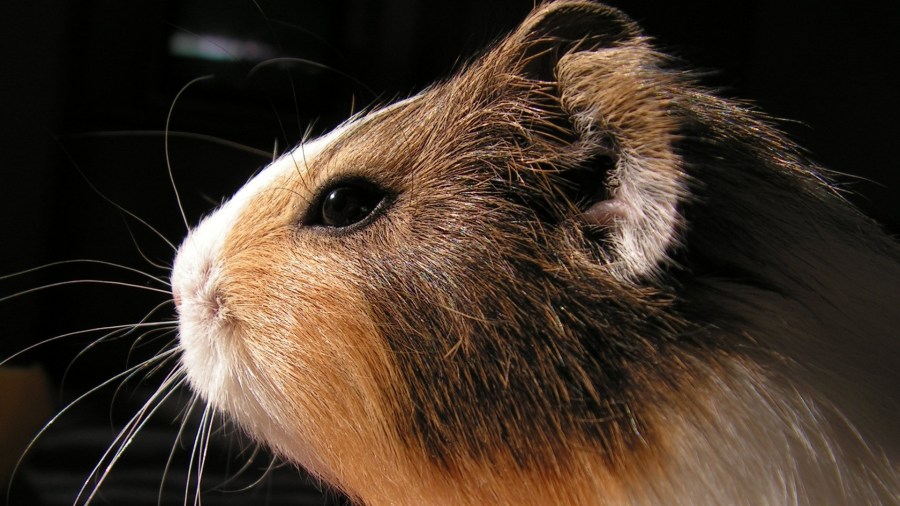
1. In the beginning, Lassie. That old mongrel. But the first death is just the first death. I cried more over Jane who ended up with half her body not working. The vet handed her back in a box, so we could bury her in the garden. Guinea pig doesn’t sound serious enough for such sobs.

2. The Russian hamsters – Rachmaninoff & Shostakovich – were not a great success. I won’t say more here, but I failed them. Twice.

3. I nearly had kittens, but another girl got to them first and it was hard to forgive. Tabby was adventurous; Polly feral, scratching skin to blood.

4. The best of times was Christmas and Christmas was for donkeys. Afternoon walks through graying streets, pockets clunky with chocolate coins, pink sugar mice.

5. My brother, grown to greatness, began the Christmas Rat Walks. I leave to your imagination the river’s path, the stones, the hilarity. Thus do traditions evolve.

6. Miggy, our funny Welsh collie. We loved you, even with the bellows, crossing fields like you had no home, and we took you home to the slate-strewn hills whenever we could, but maybe you just didn’t understand our tongue.

7. Herdwicks and heifers and little lamb who made thee asked mum every Easter, as we drove past daffodil-splattered fields. I heard those words even when the lamb was bloody, abandoned by a wall.

8. Trigger, Benji, Copper, Whisper: you held us, our growing legs wrapped round you. Racing and falling. You carried the coffin painted with sunflowers through the snow when we mourned more brightly than anyone had ever mourned before.

9. Are there more? I forget. But the dogs! So many hounds that jumped in and out of things while their owners will never be remembered apart. The un-dogged were barely complete. Sam, Trixie. Holly, Hunsa, Jack, Jen, Luca, Milo, Isla, Luna. I can’t find, now, all the names, but the smells, the hairs, the wellies at the doors. Walks in woods, so now every path has something missing. Murphy. You were so loved.

10. Then came the sea and the sea-held creatures. The ocean and its furies. The plankton-full swirling. The drifters, the jumpers, the soarers. Another world of lives to never fully know. Instinct takes over. We wait out the storm.


Sara Barnard is from the UK, has lived in Spain and Canada, and is now based on a sailboat (currently in Central America) with her husband, child, and laptop for company. The last few years have mainly been about parenting and PhDing. She recently has had work published in Bone & Ink Press, Glass Poetry Resists, Hypertrophic LiteraryInk & Nebula, and Anti-Heroin Chic.
Twenty-First Century Life by Sarah Freligh

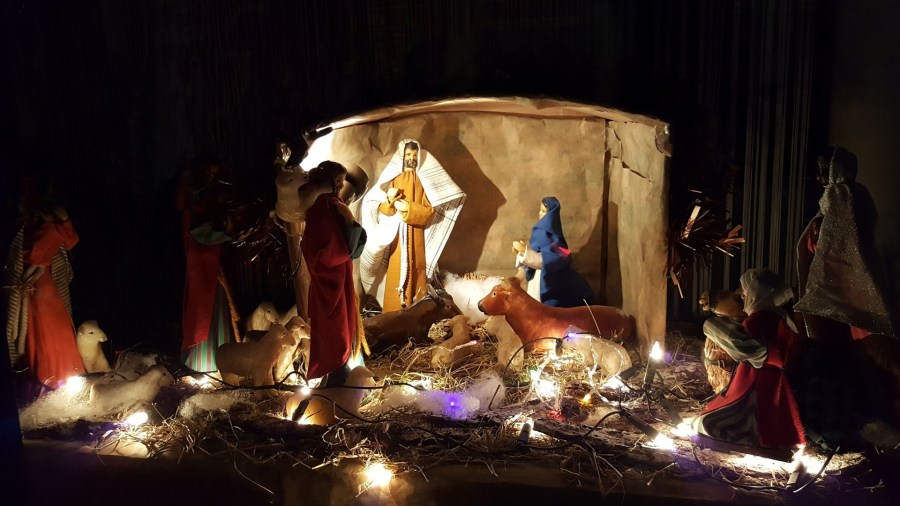
We smoke out back on breaks because Mr. B. says it doesn’t look nice for a flock of angels to be smoking too close to the live creche or the people who line up to pay a buck to witness the miracle of Christmas. We smoke within whiffing distance of three sheep, two donkeys and the one spavined camel Mr. B bought for cheap off a him-and-her circus act that was divorcing. Everyone but Lydia, that is, who sits a ways from the rest of us and swats at the bad air. She’s barely two weeks late but claims she’s already sick as a dog, morning, noon and night. Today she actually pulls the pee stick from her purse for a little show and tell. Says she might tie a blue ribbon around it and present it to her boyfriend, Brett, but what do we all think.

“I had to pee in a jar, take it with me to the doctor’s,” Cherise says.

“You pissed in a jar?” Samantha says. “Jesus.”

Cherise blows a perfect smoke ring. “Peanut butter jar.”

“So, ribbon or no ribbon?” Lydia says.

We all look at each other. Personally I think it’s a bad idea to dress up a mistake and pass it off like it’s something you’re proud of, especially when you’re dealing with a here today/gone tomorrow kind of guy. Take it from me, I know the type.

“Seriously,” Jill says. “You really going to have the kid?”

We all look at her. In three weeks, Jill hasn’t said much beyond hello or nice day. Mostly she humps up her shoulders, slouches over to cover up how big she is.

“I cannot believe you said that,” Samantha says. “Seriously.”

“Why? We’re 21st century women,” Jill says. “We got options. Choices. You know.”

“It’s a baby,” Samantha says. “Not a menu item from the drive-up.”

Jill flicks the ash off her cigarette. “It’s a blob of cells. The size of a sweet pea.”

Lydia’s caged her hands over her stomach like she’s afraid Jill’s going to break and enter at any moment. “I swear I felt it move. Like the flutter of butterfly wings.”

Cherise laughs. “That’s probably gas, honey.”

Samantha tosses her cigarette on the ground and stomps it. “It’s a baby,” she says.

I have seen faces like Samantha’s on a sidewalk, crazy-eyed men and women with twisted mouths out of which fell the ugliest stuff: Murderer. God will judge you. Burn in hell.

The abortion was the easy part.

Some folks would say being single at forty with nothing but a couple of cats for company is a judgment of sort, but then I look around me. At women with wrung-out faces, the occasional black eye. At their men in the bars downtown flirting with girls just out of high school.

I got a life, though not the one I planned. Still, it’s a life. A twenty-first century life.

I check my watch. “Break’s over, kids.”

We stand and shoulder our wings, arrange ourselves in a wedge of angels, tallest to shortest. I reach out with an aim to straighten Jill’s wings, but she’s standing shoulders-back tall for once.

Only then do we fold our hands. Like we’re praying. Like we’re angels. Like we really might believe in miracles.


Sarah Freligh is the author of Sad Math, winner of the 2014 Moon City Press Poetry Prize and the 2015 Whirling Prize from the University of Indianapolis. Her fiction and poetry have appeared in Sun Magazine, Hotel Amerika, BOAAT Journal, diode, SmokeLong Quarterly and in the anthology New Microfiction: Exceptionally Short Stories (W.W. Norton, 2018). Among her awards are a 2009 poetry fellowship from the National Endowment for the Arts and a grant from the Constance Saltonstall Foundation in 2006.

Up There the Mountains Burn Worse by Tom Snarsky

They tell you a story with a giant pause
in the middle: we were lost in thick mists
until somebody found us, brought us

a coat and their warm company, told us
not to worry. Then we woke up next to the
corpse of that somebody, holding an empty

vial that we don’t remember ever having
picked up, we’re terribly thirsty and there’s
no one else around who’s still alive. Cut to

after the giant pause, when even we have
fallen asleep. Now that no one’ll overhear—
not even us—go ahead and tell me that

awful secret you’re keeping from everyone,
even your lovers and your closest friends.
The curtain is still down and the house lights

are still up. So go slow. We have the whole intermission.


Tom Snarsky teaches mathematics at Malden High School. He lives in Chelsea, Massachusetts among stacks of books and ungraded papers with his fiancée Kristi and their two cat children, Niles and Daphne.

To Repel Ghosts by Ran Walker

My mother used to tell me about a ghost that haunted the house across the street from where she grew up. The ghost was a little boy, who, according to legend, was shot by his stepfather. It was the kind of story that was difficult to determine the truth of, but the kind of story that would sneak into my consciousness, just as I was preparing for bed.

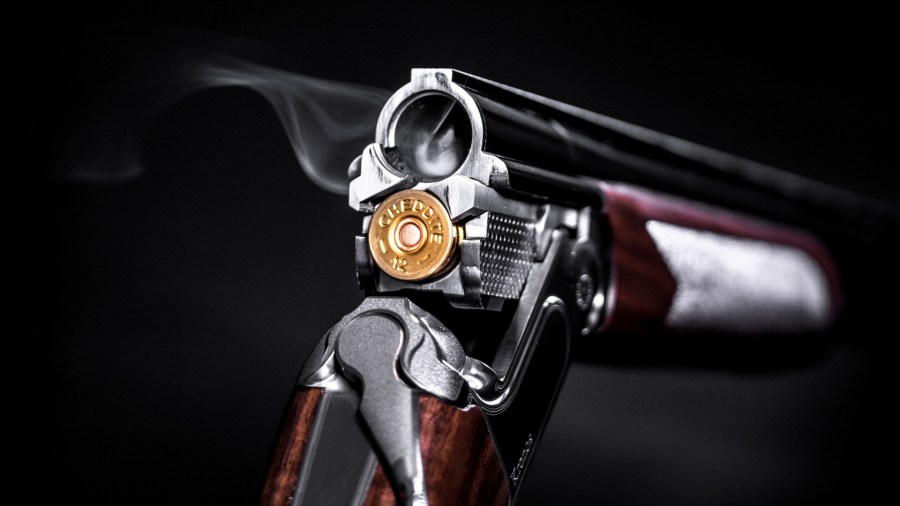
The story felt like one of those tales spun to scare kids around campfires or during sleepovers. It probably wasn’t real at all, but that didn’t stop me from imagining a kid of no more than ten, standing face-to-face with his stepfather, a twelve gauge pressed against his forehead.

I had no explanation for why my mother would tell me a story like that, except that maybe it had something to do with my father choosing to leave us after his girlfriend became pregnant. My mother never talked about him, and because I didn’t want to upset her, I never brought him up either.

Maybe the ghost was supposed to represent my father, although I couldn’t see how. Or maybe this bit of the macabre was my mother’s way of exorcizing some other demon. Then again, knowing my mother, she could very well have been talking about an actual ghost.

When she grew particularly melancholy, I would ask her to tell me about the ghost. For some strange reason, she enjoyed recounting the story, as if it provided some relief to her keeping the darkness bottled up inside.

One day, I built up the courage to press her more about the ghost, wondering if there was any greater specificity to her usual anecdote.

“Did you ever see it with your own eyes?”

“Yes. Twice.”

“What did it look like?”

“Everything above his chin had been blown completely apart. His entire head kind of folded in on itself. It was the kind of thing you kept looking at just to see if you could make sense of it.”

I hadn’t expected that level of detail from her, and my stomach tightened. My mother was carrying this around in her head like loose change in her pocketbook. She had told the story so nonchalantly that I wondered if she even knew what she was saying to her sixteen-year-old son. My imagination had never constructed so graphic an image of the ghost and now I found myself unable to think of anything else.

After that revelation, whenever I prepared for bed, I found myself unable to lie down without the aid of a nightlight. I was afraid the ghost might appear in my bedroom, the nearly headless figure creeping closer to me with each child-like step.

One night my fear-induced insomnia led me to seek protection in my mother’s bedroom. I found her asleep, upright against several pillows in her bed, a cocked twelve gauge resting in the corner, not even a full arms length away.

I backed away slowly, careful not to make a sound. Until that moment, I was not aware my mother even owned a shotgun, especially one identical to the gun in her story.

As I tiptoed back into my bedroom, I locked the door behind myself. I didn’t know who or what my mother feared, but I immediately feared it, too.

With darkness encroaching on my nightlight, I buried my head beneath the covers. It was all I could think to do to repel the ghosts.


Ran Walker is the author of sixteen books. He currently serves on the creative writing faculty for Hampton University in Virginia. He can be reached via his website, http://www.ranwalker.com.

Little Offerings by Laurel Paige

Love happens             too easily, like my bones
came hollow. Anything
can fill them. Like my being grounded
relies on someone else             pressing

palms into my shoulders
relies on me pressing
back, thumb to hip
bone, thumb to thigh.

My nightmares used to be water-
logged. Crocodile teeth pulling
me under. Now

every night my own             teeth fall
out, little white offerings
my body makes,

so light
they’d be weightless in someone
else’s hand. And my bones beg
to be waterlogged

or stuffed with pearls, something
to make my body balanced or             brighter,
easier for someone to             love and to
weigh me down.


Laurel Paige is a recent graduate of the MFA program at Queens University of Charlotte. She lives in Madison, WI where she works at a software company and gives readings at Meaderys. Her work has appeared in Firefly and is forthcoming in The Conglomerate and Semicolon Lit.

Natural Resources by Anita Goveas

The shelves are half-empty, an improvement. Too many options cut down on foraging time, and time is finite. We know this now.

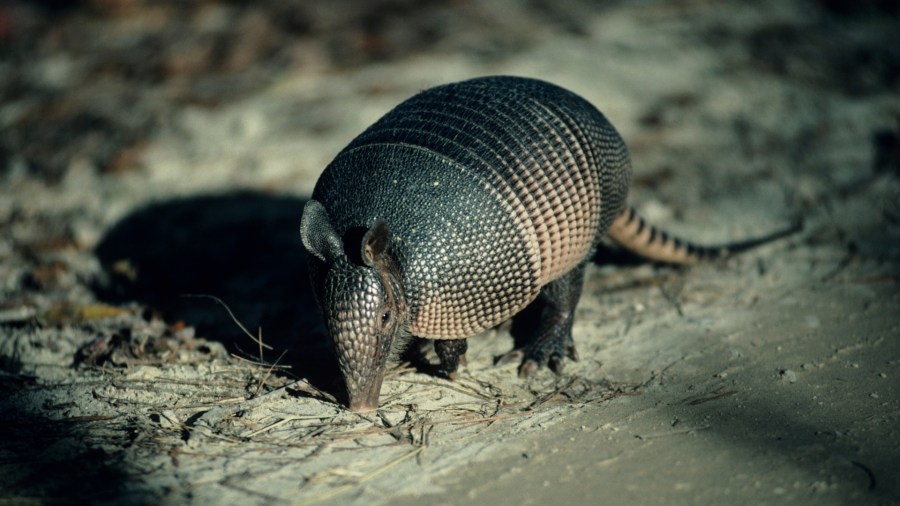
Mongooses are too soft, dormice don’t cover enough, hedgehogs fight back. Trial and error, word of mouth indicate armadillos are the most effective.

Rocks, sharp flints, wood shaved into spears. These are among the products we still have. In the After, protecting the head is essential during hunting and/or gathering. What we don’t eat isn’t wasted. Unlike Before.


Anita Goveas is British-Asian, based in London, and fueled by strong coffee and paneer jalfrezi. She was first published in the 2016 London Short Story Prize anthology, most recently in Spelk, Lost Balloon, and Terse. She is part of the editorial team at Flashback Fiction, is a reader for Bare Fiction, and tweets erratically @coffeeandpaneer.

Chernobyl Fox by David Brennan

News crew. He struts up with a fearless limp, askew, his coat deranged in delicate splotches, an unfoxlike version of fox, this Emperor of Goof.

Why a limp? Let’s see a limp: a soaking rain of cesium-137. The mushrooms revel in the wet, distill the radiation in their caps. Voles, voracious mushroom consumers, make of their bodies vole-sized radiation pills the foxes love to pop. So His Majesty of Calamity recipes marrow-mush of his own bone.

The crew dispenses sandwich makings. A zone of exclusion invites concentration

Ham atop six fat white slices, gathered and fit along the long row of yellowing molars, no condiments but hey

The King of Leakage doesn’t chew nor wolf his food. He’s no longhair, no shaggy loper.

Camera zooms on his mouth: a loaf.

Horse and badger, ungulate and bird, beaver and moose, none have managed to procure such morsels

Dead power lines sag with vine, decorate. Monarch of Mutation

he turns and trots a return, sporting trophy for the reclamation of his realm.


David Brennan’s include If Beauty Has to Hide (Spuyten Duyvil), a collection of cross-genre work, and Murder Ballads: Exhuming the Body Buried Beneath Wordsworth’s Lyrical Ballads (Punctum Books), a work of creative literary criticism. Poems and essays have appeared and are forthcoming in BOAAT, Timber, Always Crashing, Heavy Feather Review and elsewhere. He teaches at James Madison University in Virginia.

When It’s Time to Go by Neil Clark

This time, you just wanted a simple life. Go to work. Watch kitten videos and food vlogs before bed. Over-order Chinese food at weekends when the hangovers bite.

But wherever you go, there’s always something.

Your first ever room had rising damp. The next had moths that ate your clothes.

Your last place had a switch in the cupboard under the kitchen sink, with “NOT IN USE” written above it in red pen. Your head would constantly be in that cupboard, oblivious to your phone pinging in your pocket with concerned texts from family, stern voicemails from work. You’d stroke the switch for days on end, applying tiny and tinier amounts of pressure. You’d trace the letters with your fingernails and wonder if you’d discovered the reset button for the universe.

When it was time to go from there, you flicked the switch, put the keys on the table and left the flat for the first time since the day you moved in. As your plane took off, you saw an earthquake below, just how you’d imagined.

The new house smelt of fresh carpet and just-dried paint. It felt efficiently put together, like it wasn’t passive aggressively wired to the fault lines of the universe.

But you couldn’t figure out how to turn the power to the shower on. Your first morning, you had to wash yourself over the sink. It was cold, and the floor got sudsy and wet. Your shivering made you late for your new job.

Then later.

Later still.

Too late.

Absent.

You put a towel over the puddle and spent the next year sat in the bathroom, watching rings of mold circle the loops of fabric, witnessing ecosystems turn from green to light brown, dark brown to black.

You wondered if this was what God was doing. Sitting naked on His bathroom floor instead of turning up to His day job. Shivering. Watching the hues of the globe shift a little each time we loop round the sun.

You found out about your nickname at work. “Jesus.” You thought it might be because everyone was waiting for you to turn up. That wasn’t it. It was because the suit you bought for your first day was getting holier and holier.

You’d never seen a single moth in the flat. You asked the internet if moths can lay eggs underneath human skin. Took the year off to read all 365,000 results.

After you finished reading each article, you inspected your skin so closely, looked so deeply into every pore that every pore became a black hole. Your body became a network of rifts in the space-time continuum, through which the moths were travelling via the ice age and the space age and the stone age, only emerging into the present day to feast on your suit when you were asleep.

Today, you got a letter from the bosses, asking if you owned any other suits. “The holes are getting ridiculous,” they said. “They leave you exposed in places that shouldn’t be exposed. We see red marks all over your body, like a toddler went mad with a permanent marker.”

“We can see right through you,” they said.

You knew it was time to go when the earthquake caught up. Shook your flat so hard the towel crinkled on the floor, sent ecosystem crashing into ecosystem. Shook the moths out your pores. Shook open the cupboard doors. Revealed a switch under the bathroom sink that said “SHOWER.”

You flicked it and left the keys on the table.

Outside, low black clouds touched the tops of derelict buildings. People ran naked in tight circles, bumping into one another.

As you fled on a stolen scooter, the heavens opened behind you. Flooded the town. Swept your towel into the sea like a magic carpet in the middle of a nervous breakdown.

Your next place will be at the summit of the highest mountain on Earth. The locals will worship the roar and smell of your battered scooter. Feed you. Paint red patterns on your chest and forehead.

You’ll be above the clouds, where you can watch the rains wash away the world underneath until you feel your sense of scale float out of your skull. Until you’re standing over a sink, tap running.

You’ll see a plane on the horizon, with red writing on the side that says, “NOT IN USE.” There’ll be a glint in the window of the cockpit.

Raise a finger, see if you can beckon it over. The locals will love it if you can.


Neil Clark is a writer from Edinburgh. Where he lives, there is a strange switch. He thinks about it. All the time. His work has been published by 404Ink, The Open Pen, formercactus, Memoir Mixtapes, and other cool places. Find him on Twitter @NeilRClark or at neilclarkwrites.wordpress.com.

whole foods rotisserie chicken by Chelsea Harvey Garner

in the car in the parking lot of the brighton whole foods I dig my unpurelled hands into the flesh of a roast chicken. the legs are tied together. I lift the thing to my face and press its burnt skin into my teeth. I am not starving. I ate four hours ago. people walk by and look away. they are nosy but not brave enough to say so. their faces do the denial dance. they are muffled under dusty shields. nothing wild can reach them and this makes them old.

I’m wearing a new watch. we say that this way we can keep time. years ago I was vegan. being loud is not always a sign of courage. I remember those friends and wonder if any have bled onto rocks since I left. I have. I don’t think it’s silly to choose that life. we are all responsible for taking stock of our harm. but what use is pacifism when loving someone well can wreak havoc on their whole life? how can we choose which things are good when showing someone their magic strips years of safety away? and isn’t this good?

we cannot not hurt. even the mercy of the world is a danger to someone. brutal is a framework. a moral made way by resistance. the worst wrong we enact is not really the pain or even the killing but the taunt that gets lodged in the body. the threat we don’t know we lived through. we lose track of the pain then the pleasure and at some point each other. if we still dance we need to know why. we hunt when we’re not even hungry. we start to believe we have time.


Chelsea Harvey Garner is a writer, musician, and therapist. A current fellow with the American Psychological Association, she can be found offering therapy at YOGA NOW in her hometown of Omaha, Nebraska, performing as one-half of synthpop duo Vital Organs, and leading The Big Feels Lab: a series of workshops on mental health and liberation. Her debut chapbook Fruit Diaries is forthcoming.

Tea Kettles by Michelle Ross

I was at the mall to replace a broken tea kettle when I saw one of the dads from my kid’s school, the one who’s a cop. He looks exactly like what he is. Honest, I call that. The way a good tea kettle looks like a tea kettle, whereas some are designed these days to masquerade as other things—flamingos, giraffes, UFOs. For no good reason at all, other than that people in the world collect such shit. This department store, in fact, sells a tea kettle that resembles a toilet. It doesn’t even make sense.

This cop, his name is Donny, keeps his head shaved. His irises look like discs of ice, like if you were to put your finger to his eyeballs, your finger would freeze to them. At a school spaghetti dinner he showed everyone at our table the raised bump on his bicep where he’d been bitten by a police dog. The word “bump” does not do the scar justice unless you think on the scale of the protuberance and hardness of a baby bump. Or like how a tree oozes out its own liquid bandage when you prune it, only the liquid bandage hardens into an impenetrable barrier. Not that I touched his scar. I mean I’d wanted to, because I’m a curious person. But how would that have looked? Me reaching out to place my hand on Donny’s bicep?

Anyway, I spot Donny in the women’s lingerie department, staring absent-mindedly at a rack of animal-print bras. Again with the animals.

I think he must be purchasing a gift for his wife, Kate. That woman is on the board of a charity for dogs and is always asking people to attend this or that fundraiser or purchase this or that expensive raffle ticket for makeovers and computer repair certificates and what have you, but then when the middle school kids are having their bake sales, she’s all oh-I-can’t-buy-any-of-that-or-I’ll-end-up-eating-it-all.

Or maybe since he doesn’t seem to be so much considering the animal-print bras as to be resting his focus on them, he’s just waiting on Kate while she tries on lingerie. Kate runs with that dog of hers, I know, because I’ve seen her, and even if I hadn’t seen her, I’d know because of those calf muscles. Only runners have calves like that, calves so meaty they make you think of drumsticks, like the way predators in cartoons picture their prey as cuts of meat. What I mean is Kate is probably the type of woman who actually enjoys trying on lingerie.

But the person who comes out of the dressing room isn’t Kate but Allison, the mom of that girl in my son’s class who he says lives in a shelter. My son, barely seven, told me the girl, Reilly, isn’t allowed to see her father or rather he isn’t allowed to see her and her mother. Because he threw something at Reilly’s mother. Because glass shattered all over the kitchen floor. Because Reilly’s mother’s cheek turned purple. My son tells me this, and I’m thinking he’s too young to know about stuff like this, but then I think about Reilly and all the other kids who know-know stuff like this, and then I just shake my head. My son told me that Reilly both misses her father and doesn’t. He said, “I understand that, Mom,” and I said, “You do?” “Not about Dad,” he said. “Oh,” I said. “I mean,” he said, “feeling two ways at once. I feel that way a lot, like when I want to go swimming but also I don’t because then I have to have a bath after to get the chlorine out, plus the chlorine always makes my penis sting.”

I realize I’m not so surprised to see Allison. This Donny guy looks like the kind of guy who would cheat on his wife. Like I said, he looks like what he is.

So Allison walks out of the dressing room in this summery white dress. It’s an eyelet fabric, falls to just below her knees. I think of photographs of Woodstock, only she’s a clean, bleached version of that time. And she doesn’t have flowers in her hair, though she looks like she could pull that off, like she should be running barefoot through a meadow in that dress. What is it that bear used to say in that laundry detergent (or was it softener?) commercial? Fresh like a summer’s breeze? Something like that. Scratch and sniff Allison, and she’d smell like daisies and fresh-cut grass and pot.

What I’ve wanted to know ever since my son told me about Reilly and Allison in that shelter is what is her ex like out in the world? Like if he were sitting across from me at a school spaghetti dinner, would he give off a creep vibe? Would I think there’s something not right about that guy? Like Donny over there. Not the most charming man I’ve ever met. Doesn’t smile much. Has that steely stare you expect from a cop, particularly if one is pulling you over for speeding. Or was he more like my Carver? Smiling across the table at Donny at that spaghetti dinner. Offering to refill my lemonade. But then later that night, after our son was asleep, he was all everyone-saw-you-staring-at-his-bicep and don’t-you-fucking-embarrass-me-like-that-again. Carver is like a tea kettle disguised as a sheep.


Michelle Ross is the author of There’s So Much They Haven’t Told You (2017), which won the 2016 Moon City Press Short Fiction Award. Her fiction has recently appeared or is forthcoming in Colorado Review, CRAFT Literary, New World Writing, Electric Literature’s Recommended Reading, Tahoma Literary Review, TriQuarterly, and other venues.