We Feed Them to the Lions by Paul Thompson

Nine years old, with parents distracted, a boy falls into the lion enclosure.

It looked more like a jump, his sister says.

The boy lands safely, in the artificial lake beneath him. He swims to the shoreline, to his new home. Murals of the savanna and non-native plant life.

Background noise played through speakers. The stare of an audience above him.
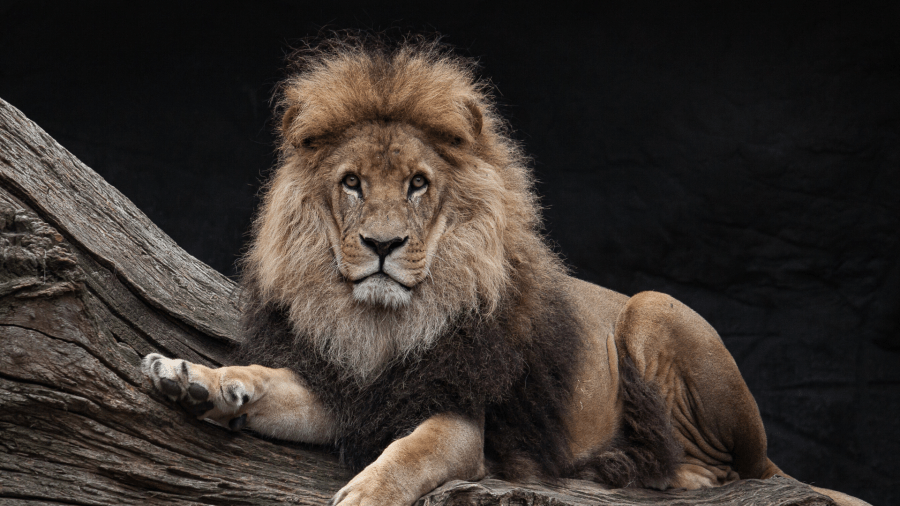
The lions protect him from rescue. Surround him in tight circles. Brush their hides against the hair on his arms. Give him a name in their tongue.

Satisfied that his care is adequate, his parents leave him with the pride. Make arrangements for extended visiting hours. Make plans for social time with one less child.

The boy teaches the lions to swim in deep water, to sleep in humanoid positions.

He shows them his fingerprints, his double-jointed thumbs. Over time, his parents forget his birthday, his age now measured in animal years. Other children jump down to join the herd, parents happy with the care provided.

The hybrid exhibit becomes an attraction. Children themed merchandise in the gift shop.

Until one day late in the autumn, when an adult jumps in and tries to join them. Moving with speed they tear off his limbs and play with his torso, before returning to sleep with the lions.


Paul Thompson lives and works in Sheffield. His stories have appeared in Spelk Fiction, Ellipsis Zine, and The Cabinet of Heed. His work also recently appeared in the National Flash Fiction Day anthology 2019.

Pro re nata Christmas by Elyse Hart

i took a pill at noon instead of nine
so an astronaut blew up in space on christmas.
a child let go of a red balloon
then my mother planted marigolds
next to begonias.

we are what we eat we are where we sleep—
a boy ate one jellybean on christmas morn’.
i took a pill at nine instead of noon.
if jingle bells is a love song then call me dasher
dancer prancer and vixen.

space landed in the garden
so my mother moonwalked to the pharmacy
with a bunch of begonias,
which exploded tinsel.
i took a pill at ten instead of two.

a balloon took hydrogen, not helium
and my head came off,
floated and blew up in space.
wassail rained out the remaining neck.
smithereens of jawbone were found in the alley
behind Rite Aid with my mother’s flowers.

i took a pill straight in the gullet.
those still with their heads
caroled as needed.


Elyse Hart is a poet, songwriter, and composer residing in Los Angeles. Her work has appeared in The Nervous Breakdown with work forthcoming in The Los Angeles Press. Her first chapbook will be released by Subphonic Press in 2020. Find more of Elyse’s work on Instagram at @elysehartpoetry.

The Mechanical Bird Crafts an Email by Caroline Chavatel

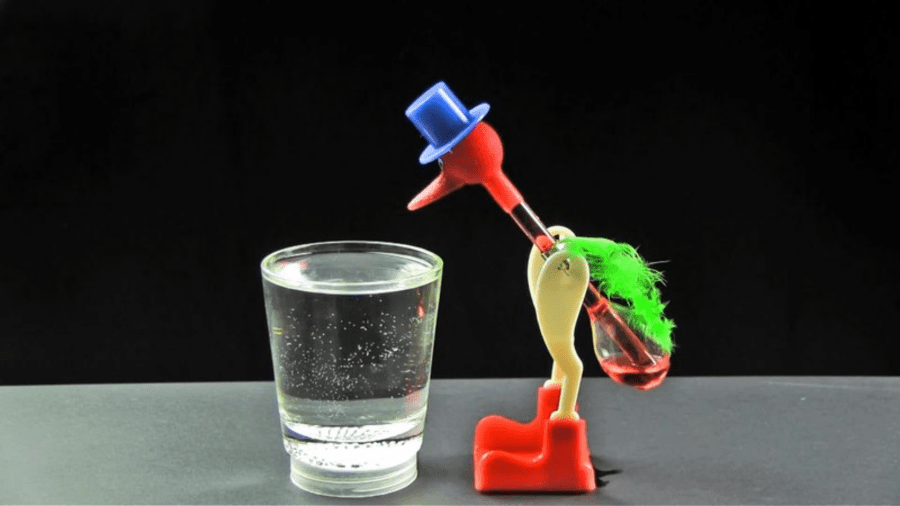
The mechanical bird crafts an email
and we are surprised by its length and wit.
The store has gone dark in its after-
houred mood, so the cameras reveal
his behavior to us. The local news
has reported the unmatched intelligence
of our flocking friend, his beak hammering away
at the keys like a pianist and he makes music,
CC’s the regional manager.
It didn’t always use to be this way—
once he never dreamed of roaming
the local forests, calling out to mates
in syllables we couldn’t sound.
Last week, he almost got swallowed
into a hurricane, up into the nature
of the sky and once, before, he had no
other name. The news had stopped
reporting on him before the email,
had grown tired of his de-
mechanicalization and emergent attitude.
I’m writing to say he is worth noting.
I’m writing to let you know he is here.


Caroline Chavatel is the author of White Noises (GreenTower Press, 2019), which won The Laurel Review’s 2018 Midwest Chapbook Contest. Her work has appeared in Sixth Finch, AGNI Online, Gulf Coast, Hayden’s Ferry Review, Cosmonaut’s Avenue, and The Journal, among others. She is editor and co-founder of Madhouse Press, and co-founding editor of The Shore. She received an MFA from New Mexico State University and is currently a PhD student at Georgia State.

Fur by Kathryn Kulpa

You don’t have to wear the lion head any more, she imagined him saying. You can just be you.

He’d never said this. There was no reason to think he would. Inside the mask her breath felt thick and meaty. Her eyes swam in a humid backwash of sweat and pepperoni pizza. Their fingers touched through velvety paw-fleece. Only below the waist were they human.

“Faster, Nala!” His voice came through muffled, scratchy, but with an artificial high pitch. He never took off his own lion head either.

They’d met last year at the Providence Convention Center, at Comic-Con. Nala, meet Simba! Too fated to be anything else. They had lunch in the food court. He floated his plastic utensil from his chest to hers. “Sporks flew,” he said.

She worked in the Disney store in the mall. He worked in a bank, lived with his mom in Pittsburgh. He fooled everyone, he told her. Looked normal, worked hard, made decent money. But this is who I am, he said, pointing with his lion paw to his lion head. This is who I really am.

And she nodded, because she knew. Being Nala made her something more than the hardly-know-she’s-there girl, the girl who sat in the back row and made B’s but never A’s, who dropped out her junior year of college without a single professor noticing or asking why. The girl who went home every day after work and changed sheets, cooked meals, washed clothes, washed dishes, put her brother to bed. Because after the accident there was no one else to do it.

After the con they texted and Skyped, and then he found this other con in Albany and she drove 300 miles to meet him for the weekend. It was never enough, but it had to be enough.

Because nobody wanted a boring girl who took care of her disabled brother and worked some dead-end job, but everybody loved a cute, little lion cub.

The heat inside the costume made her dizzy, wild with fever. She imagined clawing it from her body, watching stripes of polyester and latex shred away, leaving bald, pink human skin.

But Nala wasn’t who she was either. Not a cub. Not a toy. She felt her muscles bunch. Her nails extend. Laughing, she tore off his head and her own, drank in the rush of cool air. She could smell the blood pulsing in his throat, so close to the skin. Felt his body arch under hers, in terror or in ecstasy.

The lioness threw her head back and roared.


Kathryn Kulpa (@KathrynKulpa) has work published or forthcoming in Smokelong Quarterly, Pithead Chapel, Lost Balloon, and Women’s Studies Quarterly. She is a flash fiction editor at Cleaver magazine and leads a veterans writing workshop in Rhode Island.

She’s Been Living in the Attic for Who Knows How Long by Steve Chang

And there’s a hole through the puffy insulation below—at her feet!—through which she looks down into the home, at her family, and how it’s changing. The sweet-smelling baby is a boy, a teen, and a man. Her husband is old now, his muttering a mystery.

Is this the original cast? Are these the same actors?

She has to admit she’s not sure.

Should she know?

This is how she’d describe the feeling, how she would if anybody asked.

Some days though, there’s another hole, this one in the roof, through which she watches the sky changing colors—orange, and black, and blue, and pink. Is it always the same sky? She thinks of strangers taking turns at a peephole. The colors blink through, one after the other. It’s almost like somebody’s been watching her back.

She doesn’t know who it is, but she’d like to know, someday, this person, if she can.


Steve Chang is from the San Gabriel Valley, California. His work has appeared or is forthcoming in Epiphany, North American Review, The Southampton Review, Jellyfish Review, and elsewhere. He likes reviews. He tweets at @steveXisXok and his website is literally www.stevehasawebsite.com.

Ouroboros by Gretchen Rockwell

Nature will kill you and then make new things from you.
— Welcome to Night Vale

The first time I saw the sharp silhouettes
I couldn’t fumble fast enough to capture
a photograph: Indian flying foxes, bats remembered

from a Weird ‘N Wild Creatures card collected
at ten, when I thought I wanted to be a biologist
before I realized I’d have to do science. Then I traded

that flying fox card for a Cerberus one, caring more
about the spiderweb of wonder between literary
and literal. These days I prefer nature in its un-

nerving wonders. Who needs Athena splitting Zeus’ skull
when mind-controlling jewel wasps exist, spiking into
lesser insects and hijacking them as a host for their spawn

which eat the corpse inside out and emerge fully formed?
I still have a favorite fantastical creature: the phoenix, whose nature
is self-immolation. In reality, the mechanism is rarely so static as fire,

instead often a living instrument, nature curling in on itself
in an endless wheel. The shadow of death takes the shape of wings
or fangs or the leafy fronds of a fern, unfurling. The lesson is:

nature will kill you eventually, from the inside out
or as another of its incarnations. Still, I prefer its marvels
over myth—how certain seeds can only bloom after being

burned, flowers exhaling open after forest fires, ash
still hanging thick in the air while something
new pokes through: life wriggling out through the cracks.


Gretchen Rockwell is a queer poet and supplemental instructor of English at the Naval Academy Preparatory School in Newport, RI. Xer work has appeared in Glass: Poets ResistKissing DynamiteNoble/Gas QtrlyFreezeRay Poetrythe minnesota review, and elsewhere. Gretchen enjoys writing poetry about gender and sexuality, history, space, and unusual connections.

Not What I Ordered by Ava Wolf

“I’ll go wherever you’re going,” he said.

He was a chef—no, a cook, because when I said, “You’re a chef, right?” he shook his head and sniffed the air and told me I smelled delectable, which was an inappropriate thing to say for a variety of reasons, but then he said, “I’m a cook,” and I was like, “Oh, a cook,” as if it mattered anyway—and he was fine. Fine. Built like a human man, by the looks of it.

Then I said, “I’m going home,” and he asked if he was coming with me.

I thought about it. I did! I sized him up, wondering what kind of person wanted to sleep with someone they met less than an hour ago, and then I remembered lots of people wanted to sleep with lots of people, but few acted upon desire, so if anything, this was an admirable display of forwardness, rather than solicitation for sex by a stranger who kept telling the same story of his Jewish cousin named Ariel who played violin on the subway.

He’d imitated his Aunt Linda (pronounced aunt, not aunt, which made me nervous) relaying this information to him: “Your cousin Ariel is playing violin on the L Train!” He did this several times. I laughed. I thought it was funny because of the vodka water. I had asked for a vodka soda, but when I came back from the restroom there was a vodka water on the counter and he said, “I got you a vodka water,” and I said, “I wanted a vodka soda,” but politely, like I was pointing out an observation about the weather, and he looked crestfallen, so I waved my hands around and said it was fine, I’d never had a vodka water, there was a first time for everything. He perked up a bit, and now he wanted to sleep with me. My pee was green because of the riboflavin in my multivitamin.

Here were the options: I could tell him the truth, or I could tell him something else.

“It’s a bit of a complicated situation,” I said, stabbing the slice of lime in my empty vodka water. “I would prefer for you to think of it as though I’ve been inveigled into an elaborate and nefarious crime. I don’t want to drag you into anything. I apologize.”

He straightened up in his seat. Our torsos were different lengths.

“I’m a little disappointed,” he replied, looking into my eyes very seriously. This was excellent news. I loved to disappoint men.

“I’m sorry to hear that,” I lied.

“If you don’t mind me asking,” he said, “what’s so complicated about it?”

I stood up and slipped on my coat, the nice one I wore to work, and turned to face the cook-not-chef, who was disappointed that I had declined to let him, a reasonably attractive person with a Jewish cousin, sleep with me, a reasonably attractive person with many Jewish cousins. Then, I proclaimed loud enough for the whole bar to hear:

“I’m the other woman!”

I left beaming from ear to ear.


Ava Wolf is the author of Year of the Pig (Ghost City Press, 2019). Her work has appeared in Peach Mag, Maudlin House, Occulum, and others. She resides in Philadelphia with her cats, Basil and Juniper. None of them have ever done anything wrong in their lives.

The Lonely Code by Ben Kline

Select: Activity Report // unfinished / select dates // (1987; 2020) // All the times a touch felt like love / total gigabytes per dermal recoil / elasticity : hydration : squirt / [Revise summary]

Filter [smooth] for Z-A descension / (reflection) / useful file://allocation.name / (Query : Peter, where are you?) / Results vary // All the times love fell for sex

Place me between any one / every zero // Repeat into deleted completion / Destination needs no edit : [Click OK] (Are you sure you want to delete?)

(Tapping the Enter key :: nothing happens.)

Revise: Transmit into archive / (Query : Maybe through the black hole / go in (suction) go out (bang)) / Even a universe orgasms // Even a god gets lonely (Query : Were you lonely?)

Singular echo pinging to end / Click OK // Copy of [Report on The Number of Times He Touched Me and Meant It] / (Query : Peter, when did we last touch?)

(A dream? Rewound / New wound /…healed /…erased) [Error detected]

Returning from 1010 / pulled into adjacency // Disc #2404 / 101010101011111000000 // matter : energy reconstitutes all manner of spit and marrow

/ longer the touch, stronger the bruise [ERROR] when the fingertips / lift / [Error Report : He is not sure if he wants to continue.] (Will you bounce back?) (Warning : Too near the event horizon, unable to return.)

Click Save // … // Buffer against system failure // (Analysis : Momentarily I am known : (by you)) / Copied for use (/…for what use?) / Read-only / (Query : What is the absence of touch?)

Click X // (Query : Are you sure you want to lose your changes?) [Deletion complete]


Ben Kline lives in Cincinnati, Ohio, writing poems and telling stories, drinking more coffee than might seem wise. His chapbook SAGITTARIUS A* will be published in 2020 by Sibling Rivalry Press. His work is forthcoming or has recently appeared in The Cortland Review, DIAGRAM, My Loves: a Digital Anthology of Queer Love Poems, Theta Wave, Screen Door Review, Homology Lit, Pidgeonholes, Impossible Archetype, and many more. You can read more at benklineonline.wordpress.com

How to French Kiss Like a Sonofabitch by Ben Slotky

Right before my second wife left me I pretended to read this biography, an autobiography, actually, about Eli Whitney, the inventor of the cotton gin. The autobiography I was pretending to read was called “How to French Kiss Like a Sonofabitch,” and in it, Whitney says that his favorite novel is Russian playwright and author Mikhail Bulgakov’s “The Master and Margarita.” This is in chapter four or five. He was an Evangelical Christian, Whitney was; he owned slaves. He was considering a run for the United States Senate until his untimely death from bronchial pneumonia or something at the age of thirty-seven or forty-seven. These are facts, this happened, you could look it up. This was back then.

I tell my wife this as she walks up the stairs to go to sleep.

She does not answer.

She is not a history buff, I tell myself.

She is busy, I tell myself.

She is not listening, I tell myself, and this is why she isn’t answering me. This makes sense and this is reassuring to me. It makes sense that there is a reason why she’s not answering me and that I can define that reason. The reason, I tell myself, could be any of those things I just mentioned. Another reason could be because I haven’t said anything. This is more likely, I think, because I haven’t said any of this, not about French kissing or pneumonia or sonsofbitches. Sometimes I don’t say anything and this whole scene, the one I’ve just described, is troubling for a couple of reasons, not the least of which is that I may have made the whole thing up.

It’s a possibility, it is.

It’s come to this, it has.

This whole thing is troubling, is disturbing, the fact that I don’t appear to know what I am saying anymore is.

I am not married, I don’t think. Maybe I was before.

I am not married, there are no stairs where I live, and I have no idea when Eli Whitney died, what his political aspirations were, or if there is such a thing as bronchial pneumonia. I bet there is, it sounds like there would be, like there should be, but am not sure.

I also don’t know what it means to French-kiss like a sonofabitch, but it sounds like something I’d say, and we should concentrate on facts, now.

* * * *

Eli Whitney invented the cotton gin. This is true, this is was in that book from before, and in real life. My grandmother and I used to play gin rummy. Gin rummy is a card game and I am kind of card myself. Look at what I am doing right now. This is me winking at you; this is as close as I can get, because I can’t wink. What I am doing right now is clever. Clever and amusing, so clever that my pretend wife married me because of it. She was blind in one eye and almost blind in the other, my grandmother was, and I have written about this before. It was in a story about space, and rockets, and Alabama football. One time I tried to write a story in another story. It was going to be told in the form of a memo, a memo from a meeting, this story I was going to write was, but in it there would be another story, a person talking to you. I never wrote that story. It would be too hard, I think.

* * * *

She would watch a lot of television with her blind eyes. Sometimes she would wink at the tv, wink her blind eye and look out her almost blind eye, I think to try and see better. I always got a kick out of that, if that was a thing that actually happened. My grandmother called jazz “toodling.” I told my wife this once, back when I was pretending she existed, back when we were pretending to be married. I told her my grandmother called jazz “toodling”; I said it just like that because I had just remembered it for some reason. I do not remember if she answered or not but do remember that it wouldn’t matter even if she did.

If she did or didn’t. How could it?

If jazz music ever came on the tv, my grandmother would say “I’m not listening to any of that toodling,” and then she’d turn the tv off. She did the same thing when tampon ads came on the TV. She’d turn it down and say, “I’m not listening to those filthy women.”

* * * *

I don’t know what Mikhail Bulgakov thought about his grandmother, but I loved mine very much. I loved my last pretend wife, too. She is dead now. She died of cancer, I think. I am talking about my grandmother. Settle down. This is all part of the story. I used to write stories about cancer, back when I had a wife or pretended to. I would talk about the different kinds of cancer I have. Bone cancer, brain cancer, face and neck cancer. I don’t do this anymore, I don’t think. I have never had cancer, even though I was born on the Fourth of July. That is a joke, a clever thing, a thing that if I had a wife, would not ever get tired of. This wife would never leave, ever. I don’t have a wife, though. I don’t have a wife who is leaving me, I couldn’t have. None of this could be happening. I have written this so many times, it has to be true.

* * * *

I don’t have cancer, I don’t have wives. I don’t have any real diseases and never have. I don’t mean that women are diseases; that is not what I mean. My last pretend wife almost killed me, though. That’s a joke, that’s me being clever. That’s something my wife used to like until she didn’t.

This particular style of mine has not been well received, what I am doing right now, what I have been doing this whole time, apparently. None of this has been received well, ever, if at all.

And yet I keep at it. I keep making up books and pretending and being clever, being clever. None of my wives seem to like it anymore, nobody does, but I keep doing it and am doing it right now. Some would call this behavior “irrational.” some, like the therapist I saw earlier this afternoon. He made it sound like I had some disease, which I clearly don’t.

* * * *

I do have something called horseshoe kidneys, though. That is a congenital deformity where the bottoms of your kidneys are fused together. This actually sounds like real disease. Maybe it is.

Mel Gibson has horseshoe kidneys, too. He and I do. We are alike in this respect, in this aspect, in this fused kidney aspect or respect. There are a lot of ways in which we are not alike. One time Mel Gibson got drunk and called a female police officer “sugar tits.” I have never done that, and I hope that me having the same kind of kidneys that Mel Gibson does doesn’t mean that someday I might. The idea of this scares me for a lot of reasons, none of which are discussed in my pretend autobiography.

* * * *

In my pretend autobiography “How To Blink One Eye,” I don’t insult any police officers, but I do reveal the fact that I can’t wink, and I said that earlier, but this isn’t about that. This is a little bit about me, this is something my wife would tell you about me if she existed and didn’t leave. She would love this about me. It would be endearing. This is something my pretend wife would love about me if she existed, that I can’t do it, I can’t wink. A simple thing, something everybody can do that I’ve never been able to. People always get a grandmother-sized kick out of this. My last wife did. She did until she didn’t.

* * * *

When I tell people that I can’t wink, they always say the same thing. They say “just blink one eye,” like the reason I can’t wink is just because I don’t understand how to do it, like I don’t understand the mechanics involved. They say just blink one eye, like I don’t know how, like if I knew that all it took was just blinking one eye, that I’d be winking like a sonofabitch.


Ben Slotky’s novel, An Evening of Romantic Lovemaking, will be published by Dalkey Archive in 2020.  His first collection/novel, Red Hot Dogs, White Gravy, was published by Chiasmus in 2010 and republished by Widow & Orphan in 2017. His work has been featured in Santa Monica Review, Numero Cinq, Golden Handcuffs Review, Hobart, Barrelhouse, and many other publications. He lives in Bloomington, IL with his wife and six sons.