
Instead of Heraldry by Matt Broaddus

When the bell tower chimes,
throw me off the roof.
Crocheted into my wool
cocoon. With all the almonds in Calaf
gathered illegally by peasants in the night.
To make pastries and carve them with little angels’
chainsaws. Breakneck death
strolls beside me, a lightning storm.
The wheat rolls off in gritty balls
like the ancient walls of the town.
Men with guns,
hired to live in the turrets of the villas
and shoot each other,
shoot each other.


Matt Broaddus is a Cave Canem fellow and author of a chapbook, Space Station (Letter [R] Press, 2018). His poems have appeared in Fence, Foundry, Sundog Lit, and Black Warrior Review. He lives in Lakewood, Colorado and works at a public library. Sometimes he tweets @mattbroaddus.

Careful by Dan Sanders

If there’s anything I know about, it’s being careful. I don’t like the idea that anything could happen by accident. I like a schedule. I like clocks. I like a list. I like to bake. I like method and precision and avoiding anything that would disrupt this, like other people, animals, I don’t own anything fragile. I don’t like to own anything that might break or would be difficult to reacquire if I misplaced it, though I don’t misplace things. Everything has a place, and I will put it there. I am careful of who I speak to and why. I don’t wear shoes in the house. I have house shoes but mostly for show, in case someone asks. I don’t sleep with socks on so my feet can breathe. I read an article about gangrene that set me straight about feet.

I don’t take any medicines, before you ask. If you go to the doctor and ask for medicine your name gets put on a list, and then the police see the list if anything out of order ever happens. Even if you’re not involved, even if something just near you happens, they’ll ask about that list. It’ll say you’re on drugs and then they throw you in some dark hole. Medicine? No. No, absolutely not.

I live alone and quietly. I keep the radio down. I don’t have any hobbies that make noise, or require me to make nose. I avoid calling attention to myself. Noise gets in my chest, seizes me solid, tries to break me apart. I drum with the pads of my fingers against my temples sometimes to make sure I can still hear, that I am still there, that I am in perfect working order. Three taps, each side, all clear.

I keep myself busy. I have projects and hobbies because I don’t want to go crazy. I collected stamps until I heard some of the glue was poison, switched to puzzles. I put the stamps in the fireplace, burned them, reconsidered my fireplace, bricked it over. Bricks are made of cancer dust, compressed. I covered my house in plastic sheeting, left it up for weeks to catch the particulate when I wasn’t around to vacuum, sealed in a containment suit of my own design, trash bags and scotch tape, holes for my arms and legs.

I bought a computer, but I try not to use it. It was a good distraction but potentially addicting and dangerous, a kind of mind control. Even though I stopped using it, I don’t bring liquid of any kind into the room where I keep the computer which I’ve dubbed “The Computer Room.” I also, as general practice, don’t leave glasses half full of liquid near anything. I’m careful about liquid and I know a lot about stains.

I speak to my landlord as little as possible and my neighbors even less. I’m considering moving to the woods or the desert, I wonder about why I don’t live there already, and it’s mostly to do with ordering in. Ordering food in is expensive, though I am particular about saving. I invest. I am risk averse. I get 30 minutes of exercise a day and will soon enough money to sustain me in this room until I am 120 years old, not that I want to live that long or even much longer, but I could, it’s been done. I do yoga, I stretch. I drink bright purple juices and eat dark leafy greens. I order them in, like I said, repeating myself, making sure it’s clear, I am to be understood.

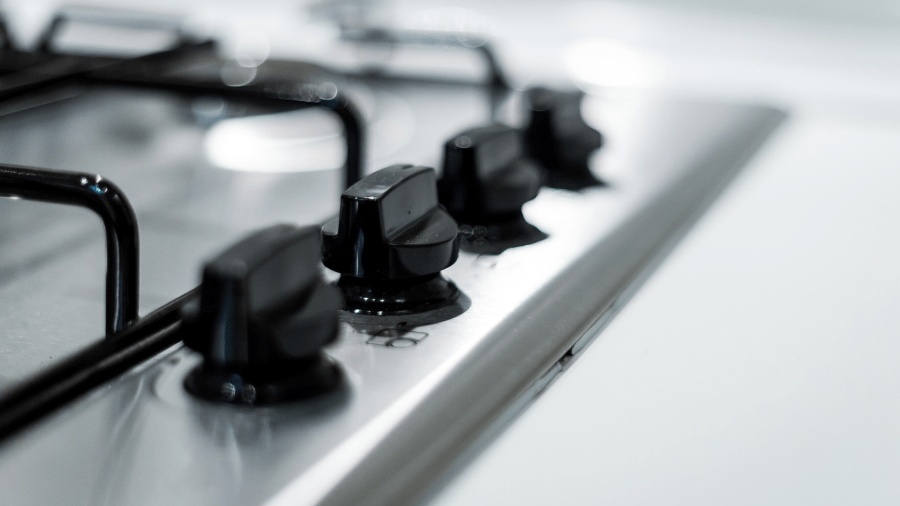
Food is tricky. I try not to cook because the stove has a spot of rust and the vent rattles when it’s on. It’s broken. The landlord said it still works. But broken is broken, broken is a degree of not working, I can see it still works but it rattles so it’s broken. Rattling is step one of a larger problem that will lead to total failure and eventually that thing is going to snap off and send a blade flying into my head or bring the vent crashing through the ceiling and down on top of my head, destroying my kitchen and dinner.

In a pinch I’ll leave the vent off but keep an eye on it. Cook staring straight up, blindly burn my hands, season my food with tears and curse words. I try to be quick about it. Mies en plas. You’ll get cancer if you stand in the chicken and vegetable fumes, whichever fumes, doesn’t have to be chicken. Whatever you cook has fumes. I’m mostly white meat and vegetables. Maybe a tofu. Press that down for a week or two though, I don’t trust that tofu water.

This vent is criminal. I have a carbon monoxide detector in every room of the house. I test them three times a week, along with the smoke detectors. I do not smoke. Of course I do not smoke. I go to the deli when I check the mail. I check the mail a lot. Just in case. I wear gloves when I open the mail in case it’s full of poison. I’m wearing gloves right now.

I was considering buying plastic sheeting for the door handles until I heard that the metal in door handles is anti-microbic or antibiotic or something. Germs hate stainless steel for some reason; they touch it and break apart. I looked into getting more stainless-steel surfaces, tables, chairs, anything that could kill simply by existing. I could sleep strapped down to an operating table or standing up in steel tube like an iron maiden. Something to contain me, keep me right in line and hidden, somewhere I could breathe for once, somewhere I could go to just scream and scream and scream.


Dan Sanders is a writer of short fiction, essays, and vending machine repair guides. His writing has appeared or is forthcoming in The Hong Kong Review, Coffin Bell, Bridge Eight, and wherever fine vending equipment is sold. His novella The Loop will be published this Fall by Anvil Press. Bad drawings of his writing can be found at dan-sanders.com.

In My Dreams, I Own a Laundromat by Elise Triplett

The Mother finds me washing my hands
with lavender detergent in the employees only room.
“The washer ate my dollar,” she explains lifting

the lint crown off my head and the lint veil
from my eyes. I follow her, and root my hands
through its intestines, pinching out each quarter:

“Do you want me to scrape the dirt off those
with my teeth?” She shakes her head, so I place
them in her palms. “Why is there a sea turtle

painted on your window?” I wanted to be constructive.
I say, “I feel unfurnished without it.” The Child watches
me from a metal cart. He’s not supposed to be in there.

“He’s not supposed to be in there.” The Mother hushes
me: “Be constructive.” I want to be. She gets another
washer going. I pick apart the crown, make gloves instead.


Elise Triplett is a writer from Dayton, Ohio. They have been published in Black Bough Poetry and interned with Mid-American Review. They can be found on Twitter @TriplettElise and elsewhere, probably.

Diets by Lucy Zhang

1. Pescatarian

This girl doesn’t eat meat. But she eats eggs, lobster, mussels, cod, and Bronzini. Sometimes she’ll even buy pork bones to make broth for pho but she won’t eat the meat. She might give the bones to the albino dog she’s babysitting. Her dad asks her how she’s going to get any complete proteins and she wonders how to explain to a research chemist that eggs and seafood are sources of all essential amino acids. Amazing what stubbornness does to science, she thinks when she hears another “meat is not the same” blanket statement argument. Instead of responding, she thinks of the turtle and the rabbit she had when she was eleven. The rabbit stayed in a cage in their backyard while the turtle stayed in a bucket. Both were fed plain short-grain white rice–everything eats rice, her dad had said. One weekend she left the turtle out on the patio, thinking it was too slow to get anywhere so it at least deserved to be free of its confines of the bucket. The next day, the turtle was gone and the rabbit was still there and she thought it might get lonely so she set the rabbit free too, hoping both animals would survive the winter. She found a dead turtle with its head sunken into its shell three days later. It’s always three days. One day of searching, one day of worrying, one day to settle the uncertain dread in an unexpected discovery on the walk back from the school bus stop. She carried the carcass with her bare hands and buried the turtle in the front yard with a gardening spade. In retrospect, she shouldn’t have felt too guilty: it would’ve died anyway; rice didn’t have enough nutrients to sustain it.


2. Vegetarian

The girl doesn’t eat meat or seafood. She eats eggs though. Eggs are cheap and versatile. She can buy a dozen for slightly over one dollar. She poaches them, stirs them into soup, scrambles them with chives. When her boyfriend climbs through her window to visit, she makes them omelets with cheese and onion because even though dairy gives her a stomach ache and her parents find cheese stinky, she wants it as much as she wants it to be ok for her boyfriend’s skin color to contrast her own. To have sweet potato and marshmallows casserole on Thanksgiving. To watch the Super Bowl while eating guacamole with tortilla chips. But her parents look over her shoulder, see her graduated and married with a baby of the same hair color and eye color, so she tells them she’s still single and it’s too early to worry.


3. Vegan

This one is tricky. She’s vegan but in secret. A best effort sort of thing. It’s easier now since her mom went through chemotherapy and they’ve stopped drinking milk, cut down on meat, ditched the butter. They take walks around the neighborhood five days a week and her mother’s hair grows back. The girl didn’t find out about her mother’s breast cancer until the night of the operation. It would distract you from your studies, they said. It sure would, she thought. But then again, the tendency to latch onto secrets, bury them so deep you no longer remember it’s a secret but rather an unspoken truth, runs in the family. This is how she stays vegan–at the dinner table when she avoids meat by talking about her belly flop into the pool after a poorly executed forward dive, at school when she hides in the library with the guise that is not entirely a guise of work and study.


4. Keto

Her coworker lost twenty pounds eating avocados and chicken. That much fat makes her nauseous. Also, fat only makes her hungrier. She needs volume to be full: a bowl of boiled cabbage, an enormous Granny Smith apple, a pot of miso soup. She doesn’t like the idea of pouring cups of oil into dumpling filling or mixing butter with coffee.

But she tries it.

Before her dad moved to the United States, he and his siblings ate congee: clouded water with a few specks of rice. More water if they needed to fill their stomachs without spending all of the money.

When they were poor, her parents’ income meant she qualified for free peanut butter and jelly sandwiches at school. She’d never had peanut butter before. It was almost the most delicious thing she’d tasted so far in America, right behind the ice cream that she tried to microwave because grandma said you’re only supposed to eat foods warm.

She needs to buy coconut oil and grass-fed beef and free-range eggs. She needs to give away half her pantry that she can no longer eat. Maybe her parents will take it even though they’re only cooking for two now.


5. Something in between

The girl loves her family very much and will eat whatever they put on the table.


Lucy Zhang is a writer masquerading around as a software engineer. She watches anime and sleeps in on weekends like a normal human being. Her work appears in TIMBER, Ghost Parachute, Scoundrel Time, and elsewhere. She can be found at https://kowaretasekai.wordpress.com/ or on Twitter @Dango_Ramen.

Wetted Appetites by Molly Gabriel

We date for three months before I agree to go the farm to meet his family. I hesitate because he calls his parents by their first names. He says, “Grey and Judy want to meet you.”

I agree because he cooks for me. Well, dehydrates. Elijah dehydrates vegetables, presses and pulverizes until they almost pass for pasta.

* * *

We arrive at their front door after noon. The air is warm and thick with precipitation. He rings the bell then kicks the door. A teenaged boy wearing a bandana and muslin shorts answers.

“Judy is counting the seconds,” the boy says.

“Blame it on her—she got her period on the way here and had to stop. Twice.”

Elijah moves through the door. My face pinks in embarrassment.

“You’re Amelia?”

“Yes.” I try to collect myself.

“My brother calls you?”

“Lemon.”

“Bo,” he says. He reaches, takes my overnight bag from my hand. “Don’t call me Bowie.”

“Okay.” I follow them through the hall to the living room.

Elijah calls, “Ready?” And throws open the double doors to the farm.


An enormous tent flanks the house, looms over their garden. Grey and Judy lounge at a cast iron table at its center. On the table, a tea set stands on a large, handcrafted wooden tray. They’re each beautiful. Serene. Butterflies land and launch from Judy’s hair. Grey’s face is lined from effort and intellect. I believe he seduced many women in his heyday.

Judy rises and rushes to us. She puts her palms at his face. Squeezes.

“The prodigal son,” she says. His eyes drift to me.

“Lem.” He says, still in her grasp, “This is Judy.”

Her hands drop. She turns to me. “Amelia. I understand I have you to thank for the visit.”

“I can’t take credit,” I say. Her glance moves to Grey. He stands to greet me, turns first to his son.

“I thought we agreed you’d call when you got close.”

“No, sir,” he says. “You agreed.”

Bo appears again at the door to the house. “I’m ready.” Grey turns again to me.

“I think it’s time we all ate.”


Judy produces a plate of leaves I’ve never seen. No one moves to touch or eat them right away.

“We hear you’re a poet.” Grey says to me. Bo watches hungrily, as if preparing for a hunt.

Judy rearranges the leaves into geometric patterns. The plate takes new life with each configuration.

“She writes hybrid forms,” Elijah corrects. I grab his leg.

“Oh. What about?” Grey asks me.

“My tongue,” Elijah says. He laughs. Grey’s eyes move to me.

I let my hand fall from his leg. “I actually just wrote a series about containment.”

“Containment?” Judy’s eyebrows raise.

“Responses to entrapment—the physical, the self, the soul.”

“How interesting,” Grey says.

“Lem likes to examine feelings of suffering at the hands of others,” Elijah adds.

His parents’ gazes slide to me like sighs.

“That’s true,” I say.

Though, I almost hate him now.


A purple and yellow butterfly—a species I’ve never seen with wings the size of hands—flutters softly to the plate. Lazes on the leaves. Blinks its wings open, closed, open.

Judy puts her fingers to its wings. She works her hand over, carefully, then quickly crumples the wings. She lifts the destroyed life to her mouth. She bites. The purple wings stain the open hole of her mouth as she chews. She closes her eyes. Savors. She wipes her lips with a napkin, smiles, reveals teeth stained the color of a bruise.

Below the table, I grab his hand.

Grey continues, “Have you always wanted to study poetry?”

Another large, yellow-purple butterfly hovers around us. Bo snatches it from the air and rushes it into his mouth. He chews vigorously, crunching and snapping.

“Poetry,” I clear my throat. I watch two more butterflies drop onto the leaves, “always excited me.”

Grey picks up a butterfly by the wing, works it into his mouth. Judy plucks another, pinches its wings between her fingers. The body resists, flails. Then it’s gone.

“You two must be famished,” she says. She holds it to us—to him.

Elijah hesitates. His eyes linger on mine before moving away.

“Mom,” he says.

“It’s one.” She holds it closer. Softens. She whispers, “I know you’ve missed us.”

He looks away from me. Opens his mouth, allows her to press it in. He chews slowly.

I let him go.

“Amelia?” Grey says. “Can we get you anything?”

“No. Thank you,” I say. Butterflies descend and drift towards us from the bushes like music notes. “I’ve brought my own snacks.”

I pull the book from my purse. I tear out the first page. I rip pieces the size of butterfly’s wings. “I’m vegan,” I say.

I lay a piece on my tongue. I can feel the acid of the page dissolving. And I shiver.


Molly Gabriel is a writer and poet from Cleveland, Ohio. Her work has been published or is forthcoming in Jellyfish Review, Hobart, and Barren Magazine. She is the recipient of the Robert Fox Award for Young Writers. She has been selected for flash readings with Bridge Eight Literary Magazine and the Jax by Jax Literary Festival. She lives in Jacksonville, Florida with her husband and toddler. She’s on Twitter at @m_ollygabriel.

Elusive Shadows by Steve Castro and Daniel Romo

My shadow left me on occasion. At times, he did so to visit his favorite haunting grounds. He once left me to cohabitate with a creature of the night. Why are you always sneaking off? I wondered. I posted an advertisement in the local paper for a new shadow last week. Sadly, my old shadow, the only shadow I ever knew, died of a heroin overdose two weeks ago. Last week, I bought a Pet Rock from Costco. I named her BetterThanAnyShadowCast, a constant (night or day) not dependent on the sun. There’s loyalty placed in an object not needing to copy your every move, an independence embedded in simply sinking to the bottom of a pond. Thursday night, I think I swore I saw my shadow with another man, a burly lumberjack the color and scent of Montana. Friday morning, I ran my hand back and forth across my new pet and remembered how demons and death stalk us all. I’m getting used to the chill across my neck that I believe wants to be adopted. Sunday morning, and still no one has replied to my ad.


Steve Castro’s debut poetry collection, Blue Whale Phenomena, was published by Otis Books, 2019 (Otis College of Art and Design, Los Angeles, California). His poetry has been published in Plume; Green Mountains Review; DIAGRAM; Forklift, Ohio; Water~Stone Review; etc. Two prose poems he co-wrote with Daniel Romo are forthcoming in Hotel Amerika. Birthplace: Costa Rica.

Daniel Romo is the author of Apologies in Reverse (FutureCycle Press, 2019), When Kerosene’s Involved (Mojave River Press, 2014), and Romancing Gravity (Silver Birch Press, 2013). He lives, bench presses, and rides his folding bike in Long Beach, CA. More at danielromo@wordpress.com.

10 Facts About a Winter Day, 2021 by Hallie Nowak

On this winter day in 2021, there were many things happening.

1) Bees were officially classified as extinct. The final bee’s body was being kept in the museum of All the Things That Died and Could Never Be Born Again. The last bee’s wings were pinned with care in a small glass case. The glass case was labeled “The Beginning of the End: Here Flies Forever the Final Bee of Planet Earth.”

2) Although it was winter, it hadn’t snowed at all. In fact, not one fleck of snow had come down. This was the first time in the history of the Northern United States that the temperature stayed above 50 Degrees up until December. No one could predict if it would actually snow or not. Most people assumed it wouldn’t. Many people didn’t care or pretended that they didn’t.

3) A girl was born with no face. She was born in North Dakota. Her parents wept not out of sadness, but out of frantic elation. At one week old, the faceless, nameless girl was shipped from North Dakota and placed in a glass box with two holes in it. The box resided in the same museum as the dead bee. Her face was labeled, “Do Not Touch Me.”

4) Hannah sat and drew a picture of her best friend with her skull cracked open and her brain exposed. She was careful in drawing the thin, pink membrane that peeked beneath the fractured whiteness of her best friend’s head. This was not unusual. It was based around the lyrics to a Radiohead song. There was no other reason that she would have done this.

5) A human body is capable of surviving three days without water and three weeks with no food. After her small, fluttery veins rejected the IV drip keeping her tiny body lukewarm and alive, the girl with no face and no name died two weeks into her exhibition at the museum. Nobody knew how to feed her.

6) There was no funeral for the girl, but if there was, the only person who would’ve wanted to come was the janitor of the museum. After hours, he would place his weathered hand against the cold glass of her box and watch what looked like faceless slumber.

7) When Hannah was seven years old, she often swung on her aunt’s swing set. On a winter’s eve several years before this one, she wandered out into the rare snow and swung. The hornets that miraculously survived winter fell onto her lap in a heap, still in their nest made of holes. As a result of the stings, Hannah couldn’t open her eyes for two days. She didn’t cry.

8) The night before this one, Hannah had a dream that bees were crawling into her mouth. This dream was also in close succession to her losing her virginity. She woke and wondered if the two things were somehow related. She wondered if this is how it felt to be in love.

9) After a very short intermittent period of emptiness, it was decided that the empty box of the faceless girl was to be filled with all of the found carcasses of dead bees that civilians had collected per government-issued command. The bee box was a sold-out spectacle. Everyone who had taste went to see the big bee box. One small boy, who pressed his rosy face to the glass, even suggested that each bee should have a name. All the other little boys agreed and their parents laughed in agreement.

10) At this moment, some ways away, Hannah hangs the portrait of her best friend on her bedroom wall. Hannah didn’t have plans for her life, and that was okay. It was okay, and she told herself so. Isn’t it possible to make things happen by simply telling yourself so? She turns off the lights with the flick of her wrist and leaves the room.


Hallie Nowak is a poet and artist writing and residing in Fort Wayne, Indiana, where she is in pursuit of her undergraduate degree in English at Purdue University Fort Wayne. She is the author of Girlblooded, a poetry chapbook (Dandelion Review, 2018). Her work can also be read in Back Patio Press, Honey & Lime, Okay Donkey, and Noble/Gas Qrtrly where her poem, “A Dissected Body Speaks,” was awarded runner-up for the 2018 Birdwhistle Prize. You can find her on Twitter: @heyguysimhallie and on Instagram: @hallie_nowak.

Just Visiting by Alana Saltz

I employed a molten owl
to deliver my braids
to mailboxes

all along the street
where you lived.

As you watched, foxes jumped up
onto your shoulders—

delicate and wild,

shining fur waving
from the wind.

There are fragments I remember
like costumes
under clothes.

Tell me there’s more to life
than you
and trees.

The trouble is confusion.
I’m always waiting to stay.

This mouthful of years tastes
too sweet.

We built a fort behind the stream,
held down with sticks and rocks.

I wonder if it’s still there.

Pieces of it,
anyway.


Alana Saltz is the Editor-in-Chief of Blanket Sea, an arts and literary magazine showcasing work by chronically ill, mentally ill, and disabled creators. Her poetry has appeared in Occulum, Five:2:One, YesPoetry, LadyLibertyLit, and more. Her debut poetry chapbook, The Uncertainty of Light, was released in February 2020. You can visit her website at alanasaltz.com, and follow her on Twitter and Instagram @alanasaltz.

Tumblers by Sara Lippmann

When Geoff’s out of town, it rains through our ceiling. Plinkety-plink, the sound a direct hit, but it takes me a minute to place and another to rise because lately attention and effort are in short supply. Could be anything, I tell myself, leaky sink, ambitious toilet. Rain – it’s not where my mind is. I add ice to my glass. Geoff got all these tumblers for his birthday, Princess Lea, Chewie, Willie Nelson, like the collector sets they used to sell at Burger King to offset the paper crowns which tore through every coronation. Who doesn’t love stamped on faces? (Hand wash. Don’t run the machine unless you want melted images; there are levels to fragile.) I don’t do dishes when Geoff’s gone, so we’re down to lowballs, invisible Bowie. It’s a quiet rebellion. I chew ice. Kids! Crunch! Clink! They are in the shower, one after the next, which is reassuring: water comes from somewhere. I set out rain catchers in the form of buckets, sauce pots, a soup tureen, but the drizzle becomes a downpour, the crack widens, saturating the plaster, which starts to flake in puzzle-shaped chips, my ceiling peels like a boiled egg, a cranial dissection of fetal pig. There’s no keeping up. Any second my kids’ spongy feet will poke through the sheetrock. Turn it off! I holler. Household emergency! But they either ignore or don’t hear me. Teenagers shower for hours, and still, they smell ripe and alive like they do. That night, I dream of being swallowed by flood. In the morning the water has receded but the crack has gashed open; it’s Cesarean. I call Geoff who says call someone. There’s a breach in my ceiling, I say. Don’t worry, someone answers, and I feel marginally better; Ma’am, he says, and I feel marginally worse. Help’s on the way, but the way isn’t today, and tomorrow’s the weekend, so now my ceiling’s a crater. Piece of cake on the phone becomes holy mother of God in real life, which is often the case with me. We thought it would be easy, help says. Only it’s never easy. A hole this size? It’s going to cost you. I know, I say. You’re lucky the roof hasn’t collapsed. Can you still fix it? Can’t be sure until we go in; the damage may be irrevocable. How old did you say your house is? When they step out to their truck I pee with the door open because it’s urgent, because who can be bothered, which means I’m scrambling when they return with headlamps and tools and assure me there’s nothing they haven’t seen. That’s when the objects start dropping. Rusted flatheads, faucet necks, newspapers from the Carter administration, a wig of red hair (mermaid not clown.) Support beams snap like kindling. They shine their lights in the dark. It’s a burial ground up there, they say, bona fide, as if otherwise I might not believe them. Have you found the body? I deadpan. Holy Grail? Other shoe? But it’s not even cute. Excavation takes time. They need to locate the source. Can’t just slap a patch on the problem. Guitar strings, dusty maps, a bicycle pump, ceramic dog with a chipped hind leg, an empty bottle of quinine, carousel of smoking pipes, torrent of swirled marbles, first edition of Arabian Nights, my mother’s valise, my misspent virginity, the balloon I swallowed in Florida, a shissel of sand, set of clothespin people, a boogerish round of rubber cement, and a terrarium of sea glass, leaf litter and bitter root. All day I watch things tumble and fall. How graceful, their descent, like apple cores from a window. Like ballerinas without heads. When I first came to New York, I’d sit on my grandmother’s terrace listening to opera on public radio. Boats passed beneath the Verrazano-Narrows. Princess Di had just died and a sinkhole threatened to devour her street block. Never in my life, she said, but I was young, then, riding the express bus in my discount blazer and happy hour bloat. Before the ceiling broke, I tried telling Geoff about the decline of scent, a global problem, thanks to extinct perfumes, lost correspondence, ossified insect wings, how I read once they’re gone you can’t get them back. He said I’d be better reading the news. When the men break for lunch, my home becomes mine again, so I lie on the rug beneath the pit, sleep drunk, like a fat black cat curls into a favorite spot and waits and waits for the sun.


Sara Lippmann is the author of the story collection Doll Palace. She was awarded an artist’s fellowship in fiction from New York Foundation for the Arts, and her stories have appeared in Berfrois, Vol. 1 Brooklyn, Split Lip, Midnight Breakfast, and elsewhere. She teaches at St. Joseph’s College in Brooklyn and cohosts the Sunday Salon. Find her on twitter @saralippmann or online at https://www.saralippmann.com.

Self-Portrait as Season 1 of American Idol by Micaela Walley

When Kelly Clarkson won American Idol, she squealed
into a microphone and America felt that shit hard.

I am American, but more TV than reality.
I am more idle than Kelly. A cat hurls
his body over my own as I type and I squeal,
but it’s not the same. If I’m being honest,

there is no space at the judging table
when I’m around. I kick everybody out,
go on with the heavy business of singing
into an empty room.

A montage of every time I’ve loved someone appeared
as Daniel Powter sang you had a bad day, the camera
don’t lie and America changed the channel before I could
give myself any credit.

I am American, but I do not believe
in auditions. If you pause before you say my name,
I know you’re going to say it. I know
I’m never going home. I know home
is a stage with no exit left.

When Kelly Clarkson won American Idol, she sang
into a microphone some people wait a lifetime for a moment
like this and I didn’t believe her. Not for one minute.


Micaela Walley is an MFA candidate at the University of Baltimore. Her work can be found in HuffPost, ENTROPY, Gravel, and Oracle Fine Arts Review. She currently lives in Hanover, Maryland with her best friend–Chunky, the cat.