
Anubis 1 by James Vu

I set myself a bath.

Yes, men sometimes bathe.

When I light my cigarette, Anubis appears on the toilet seat. The light in the room changes—my eyes water in insect mosaics as pitch-black paint whisks along the cracking walls.

The water jigsaw puddles in blue and white, like glass over a cotton candy sky.

Put your face under, he says.

If it was the sea, then we’ve lost so much time and have seen so little.

His laugh isn’t exactly pleasant (it somehow darkens the room and makes my blood warm), but he tells me his favorite jokes, and shows me his collection of favorite ancient and post-industrial weapons.

The best ones are the guns we’ll never get to use. Just some prototypes, he says.

Then, all the pictures of his favorite demonic women, modest and nude. Mostly platonic, he says.

Those are the women we want most.

He smiles coyly, his teeth sharper and whiter than anything you’ve ever seen.

Anubis loves cigarettes, but he only smokes with me because he’s trying to quit. He has a confession:

“I’ve built every single crypt, blinding my vision of every face. It was my end of the bargain. I just want letters from the people I have known:

What the weather is like, how quiet the whispers are when they lay in the grass, or how the wind treats their faces when they’re up in the mountains…

the smell of smoked meat in the summer, and how the sun looks and feels day-to-day. I never got a letter, but I think it’s because they don’t know what to write.

It doesn’t have to be a tome or a tomb.”

In this sea of blue and white bath water, Anubis washes away in the still-dark, a Nile of every star surrounding the scarred, sacred moon.

The moon before all the buildings, streetlights and people. The one that cared for the animals.

With my shadow further from me than before

I rinse off,  I’ll only feel clean momentarily.


James Vu is a languid Californian keeping Portland weird. He is a comic book author and (currently not) paying the bills with a McJob. James Vu loves you and the Lakers. He used to love opiates. James Vu is taller than you and can cook. He just had a poem published in The Pointed Circle and will have a poem published in The Bookends Review in October.

One Fist Holding by Dustin M. Hoffman

Matthew presented his fist to us. His small fingers curled into a promise. Here, each knuckle teased, right here, inside, awaits a witnessing. So, we huddled around Matthew in the back of Mrs. Lowe’s fourth-grade classroom, back by the duct-taped beanbag chair and the class guinea pig who dozed so as not to break our covenant.

I’ll show you, Matthew said, but you can’t ever tell no one.

It felt like church, the waiting, the forthcoming ritual, like communion, like prayer, as we bowed our heads around his fist. Our selfish prayers remained just as secret, just as fist clenched: new bike, G.I. Joe USS Flagg Aircraft Carrier, just one page from one nudie mag, just one kiss from any girl, a house we didn’t have to leave every twelve months.

Unlike church, his ceremony would not lead to letdown. Dry breadcrumb cube, bitter grape juice, parting gifts to compensate for God’s silence. For when Matthew unlocked his fist, gold shimmered. There, gleaming wreath branches arced over a multi-colored shield, a code written in reds and whites and blues and chrome. A hood ornament, Matthew explained, but we already knew how our parents foolishly flaunted their most precious treasures.

Who could be so stupid, to bait our hands, Matthew’s hands, to bend back the golden crest and expose the delicate rubber binding that could be so easily snipped with Father’s knife? In a micro-second slice, we could dismember our parents’ pride. But, of course, we couldn’t. Only Matthew could, and he stowed the hood ornament in the front pocket of his denim cutoffs and lined up for recess, like it was so easy, nothing, like miracles happened every day.


Dustin M. Hoffman is the author of the story collection One-Hundred-Knuckled Fist, winner of the 2015 Prairie Schooner Book Prize. His second collection No Good for Digging and chapbook Secrets of the Wild were published by Word West Press. He painted houses for ten years in Michigan and now is an associate professor of creative writing at Winthrop University in South Carolina. His stories have recently appeared in The Masters Review, Wigleaf, Bull: Men’s Fiction, Redivider, and Juked. You can visit his site here: dustinmhoffman.com

First Day of Spring by Jeanna Paden

Tennessee rains sunbeams for the first time all year
a worm crawls under my skin
inching along, stretching
beside me a level
I use to keep my head on straight
even when the sun is out
my body makes clouds
sewage is gurgling up in the backyard
we pretend we don’t smell it because the money isn’t
there
I am a playground for worms, wonder too much about death
wonder about every person I know who was always bound to die
I spoil everything, never thought I’d live
through the midnights of February
but today, Tennessee is lighting up
green and yellow, wind in the treetops
worms working the dead earth


Jeanna Paden (she/her) is a freelance health and wellness writer and poet. Her poetry has been published by Foothill: A Journal of Poetry, Pulp Poets Press, and The Bookends Review. Her creative work has received nominations for The Pushcart Prize and Best New Poets anthologies. Connect with her on Twitter at @halfwaytoitblog.

Call It My Signature Kill by Kristina Ten

When did I start leaving “Best,” off my emails?

Best, Greg. All the best, Greg. Thanks and best, Greg.

It wasn’t always a lie, though by the end I couldn’t type the word without the tips of my fingers starting to burn. Imagine wishing Jay MacArthur in global sales the best and actually meaning it. Or Johanna Wrigley with her long list of demands, every one of them tagged, impossibly, priority number one. Or Brian Warner from HR, who once told me to my face that I might improve my rapport with the team by including more friendly exclamation points in my emails.

How we say something is as important as what we say.

All my best to you and yours! Greg.

Hard to imagine, but it’s true: when I started at the firm, I harbored no ill feelings toward any of them. I was there to do the work and collect the checks, and I wasn’t closed off to the idea of making a friend or two, having drinks at our local, watching the game back at mine.

But then you get to know someone. And it’s Jay with the Bluetooth headset always in one ear, taking loud calls in the shared bathroom, closing the deal in the stall next to mine while I debate whether to relieve myself or hold it in, whether I want whoever’s on the other end of the line to hear or not. Not in the best interest of the firm, sure, but could that foul sound be my weapon in finally bringing Jay MacArthur down a peg?

I chicken out, of course. Sit and wait, tense from the waist down. Wonder if he sleeps with the headset in. Wonder if he wears it with his wife.

So what came first: realizing I didn’t wish good things for these people or realizing that it was working—the wishing, I mean? Now, I’m not ordinarily one for delusions of grandeur. But you can’t argue with the facts. I joined the firm, I sent the emails—best this, best that—and by all accounts, they all seemed to be doing really, really well.

Don’t get me wrong. When we met, they were doing all right. Brian Warner with his shiny new son and homemade baby food. Once he accidentally packed a jar of it into his own lunch and when he pulled it out in the break room, everyone laughed and awwed like, new dad, endearingly frazzled, and makes his own baby food, too. Goes the extra mile. Sweet potatoes and wet banana mashed lovingly by hand.

Like I said, doing all right. But then I join up, fire off a few bests in his direction, and Brian gets a promotion and starts rolling an Alfa Romeo into the company parking lot.

And get this—get this!—Johanna signs a publishing deal for a goddamn memoir. I watch her empty three packets of instant oatmeal into a bowl every morning and stare at the microwave as the seconds count down. What could possibly have happened in her life that’s worth paying to read about? I wonder if her manuscript editor, like her colleague, will suggest more exclamation points.

Don’t believe me yet? How about this: IT guy, Alan something, nice enough actually. Haven’t exchanged more than a few quick words since he got me set up on my first day. We get into a long email thread about a glitching office printer and hours later I find out he’s put in his two weeks’ notice. Why? Huge inheritance. From? A dead great-aunt he didn’t even know.

Best, Greg. Very best, Greg. Really, why don’t you just win the lottery already? Greg.

So here’s what I did: I stopped. Call it a test, to confirm or deny my suspicions. Call me a man of inquiry. It’s not a crime. Show me a single piece of documentation inside or outside the firm that requires me to sign off with “Best.” You can’t. It doesn’t exist.

Hi Johanna,

Please find attached the files you requested.

Greg

Greg. Greg. Greg, Greg, Greg! And just like that, the spells I had unknowingly cast over the employees of Centurion International began to wear off.

And it was satisfying. It was what I wanted. More than that, it was what they deserved.

Suddenly, Johanna starts talking less and less about her writing deadlines—of which everyone has been so supportive, by the way: “Two hundred pages by Monday? Well, you’ve simply got to cut out early! The firm will understand.”—and come to find out the publisher dropped her.

One day, I pull into work and see Jay’s truck parked in the spot furthest from the building doors. That ridiculous oversize luxury pickup, invariably gleaming, no matter the weather, as if under hot, bright studio lights. As I drive by, I see he’s shirtless and shaving, the driver-side mirror flipped down, his heavy chest pushed up against the steering wheel.

Me, I’m not heartless. I was just about to feel sorry for the guy when I saw the Bluetooth headset already lodged in his ear.

Yes, satisfying seeing them get put in their place. At first. But the mind is amazing in its ability to recover from minor setbacks, and sure enough, everyone was back to their regularly scheduled programming within the week.

Then there’s this new hire, Paul Pritzker. “Call me PP,” he says and makes no indication of joking, displays not a molecule of self-consciousness. And the worst part is: people do it! Out loud, in person, straight faced, on the phone. When a difficult client shows up on the roster, they say with confidence, “Don’t worry. PP’s the lead on that one. He’s got it under control.”

But I consider myself a measured man. Level headed, not prone to overreaction. Hey, let him be called what he wants, right? Who’s it hurting? It wasn’t until this PP sat on the corner of my desk—sat, his full body weight, on the corner of my desk—to carry on a bit of mid-afternoon small talk with Rachel, who sits at the desk next to mine, that I made the decision. Straw, meet camel’s back.

So what goes in my emails now? Not “Best,” and not nothing, either. That wide white nothing after the body of the email and before my name, Greg? Well, you know what they say: empty spaces yearn to be filled.

What we say is as important as how we say it.

Use your words.

Granted, I have to be smart about it. I can’t be so obvious. It takes a certain finesse, an understanding of human psychology, multiple meanings: something our friend Paul Pritzker clearly doesn’t have.

Let them think you’re wishing them luck:

Break a leg,

Greg

Or celebrating their successes:

You’re on fire,

Greg

Or hoping they enjoy that conference in Vegas you never get to go to, no matter how long you’ve been with Centurion or how many times you apply for a spot:

Have a hell of a time,

Greg

Yeah, a real hell of a time. Let them think what they want.

Then watch them pack up for the day, every employee, no matter who they are, grabbing the same assortment of objects: two things they’re addicted to (smokes, phone) and two things they think they’ll need later (keys, wallet).

Watch them pull out of the parking lot.

And watch it come true.


Kristina Ten is a Russian-American writer of short fiction and poetry, and a 2019 graduate of Clarion West Writers Workshop. Her work has appeared or is forthcoming in LightspeedBlack StaticAE Science Fiction, and elsewhere. Find her at kristinaten.com and on Twitter as @kristina_ten.

morning ritual by KJ Shepherd

we lay in bed, shirts and briefs and bare feet,
punch drunk on antihistamines and no sleep,
riffing for hours:

on your dream and whether it’s about your
mother (yes); how transparent a ghost must
be (very); whether i ever went to a private
school (never); about my alter ego’s kinks
(spit); my fur (nice); your fur (incredible);
my eye crust and your snoring (oh well);

we fall into a celebrity incantation:

ruby dee, didi conn, rae dawn chong
kiki dee, deedee king, bb king, chaka khan,
connie chung ruby dee kikideedidiconn
raedawnchongchakakhandeedeeking c c h
pounder

hello i’m shelley duvall
(i kiss you and you kiss me back)
hello I’m shelley duvall
(we sing tom’s diner at each other)
hello i’m shelley duvall
(i plant my nose under your arms)
hello i’m shelley duvall
(my cat is confused by all this)

in the shower, I list all the ways
i will mess this all up:

if I leave town too much, or not enough;
if I fuck too many other guys, or not
enough; if I began to hate my cat for
liking you more than me; if you see me
when I yell in traffic; if I say I love you
loud enough for you to hear it; if you
say tina chow stacy keech robin leach and
I have nothing to give but my eye crust

hello I’m shelley duvall
(i make you breakfast with my last eggs)
hello I’m shelley duvall
(I’ve read about dual star systems)
hello I’m shelley duvall
(you lick my nose and I lick yours back)
hello I’m shelley duvall
(we laugh under the weight of all this)


KJ Shepherd was a historian who became something else. They run the zine you know, i don’t know, and you can also find their poetry and other writing at Contingent, Lady Science, and Tropics of Meta. KJ lives in Austin, Texas.

The Prognosticators by Matthew Burnside

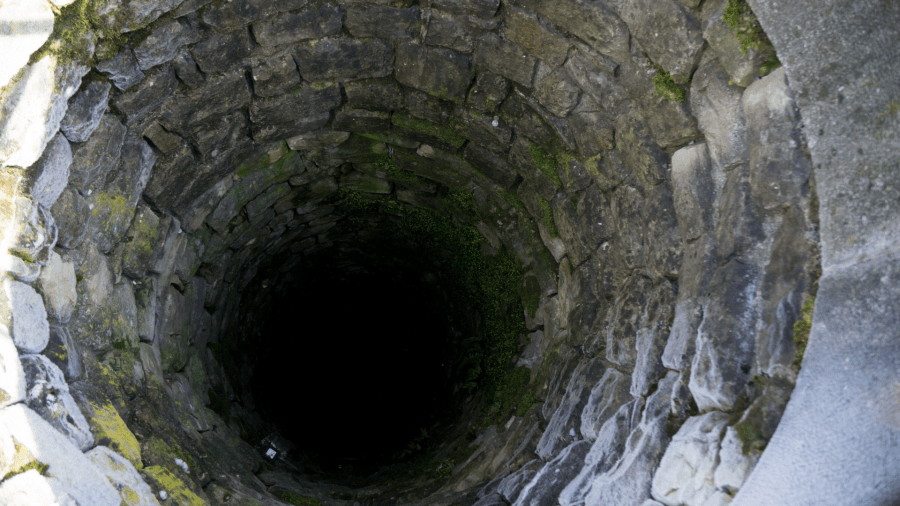
It occurred to all of us about the same time that our little brother could see the truth at the bottom of the well: how all fates entwined, triple-knotted and gleaming in their misery, held together by a wise but stubborn old snake named Mister Misty McRattly Tail, Esquire.

In those days we took turns dangling him by his dusk-colored ankles when we weren’t busy picking at scabs on the porch, or catching too-low clouds scudding overhead toward a big pink horizon of demise.

While it was my turn my sister Witch Hazel counted her splinters gleefully while Buck Owen tore apart a rocking chair and Salinger packed an ant pile into an old pie tin. “Look how big the peppercorns panic!” he hooly-hawed, before pouring it down the back of Zipperboy’s overalls.

“What’s baby see now?” yelled one of em again. I don’t know which.

“Getting closer” I reported, lowering the rope cinched round baby’s ankles as he giggled furiously into the void. “Good baby. Go go go!”

The game of it was just so: Noose up thine soft baby ankles and let descend. Get baby close enough to catch snake in mouth. Pull up for a prize. Most days it wasn’t about winning—just giving a name to our madness.

Soda bottle chimes clanked together strung from their limbs now. An owl peered out from a knothole. “What’s baby see?”

“Not quite yet” I reported, feeling sludgeblooded and starved for action. “First one to brick a bird gets to pet the spider!” one of em announced. I don’t know which.

Next thing I know the sky is thick with salmon dust and breathing is a chore. “Cut it” a neighbor hollered. They must had been burning; I could smell it in the air. Disinfected suds and gristle.

Then all were out wide in the yard equidistantly posed: one burning up the kiddy pool, one blowing black bubbles, one pinching mushrooms, one picking for nose coal. Deep diving.

“What’s baby see?”

“Almost almost,” I reported. Flung my attention down the hole and heard a rising whistle. Like fishhooks swirling around in a bowl made of molars. Glass clicking through its crooked lips.

Someone yodeled. Another yelled out a word we were taught never to say aloud.

Everyone fell down at once, crashing through the grass itch-riddled and red.

“What’s baby see?”

“Nigh coming up” I reported, feeling a sugar high. Sudden summer heat in my bones.

I could feel the future rumbling in my belly, like that pie tin full of ants. Could taste time and rain backwards. Throat full of dandelion parade…little baby bulbs and serpent skulls. Giddy and sad without knowing or caring to know the extent of my own edges.

“What are you children up to now?” said Mother, summoning us for dinner.

Inside, we dunked our heads, said grace, scraped our plates clean.

“So—” Father finally said, slurping his canteen. “How was your day?” In the distance hills were hiccupping; sirens sloshed around like wild bells drunk on panic. Our sheepheads tilted as night was coming on strong, guttering through the slanted board. Mother gnawed a cactus in the disposal.

“Everything is wonderful” I said as baby wriggled, laughing through the snake writhing round in its gummy maw. “Why do you ask?”


Matthew Burnside is the author of Postludes (KERNPUNKT), Rules to Win the Game (Spuyten Duyvil), and the hypertext novel series Dear Wolfmother (Heavy Feather Review). More work may be found at https://matthewburnsideisawriter.tumblr.com.

Lately by Emry Trantham

I have wanted to destroy things.
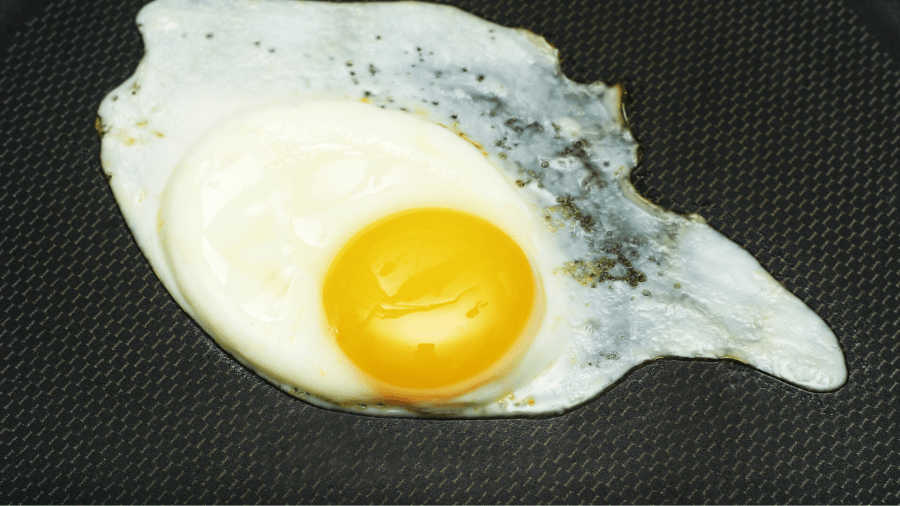
Throw eggs, one by one, into a broad tree

even I won’t miss. I want to hear the shell
burst, see the broken yolk drip-shine against bark.

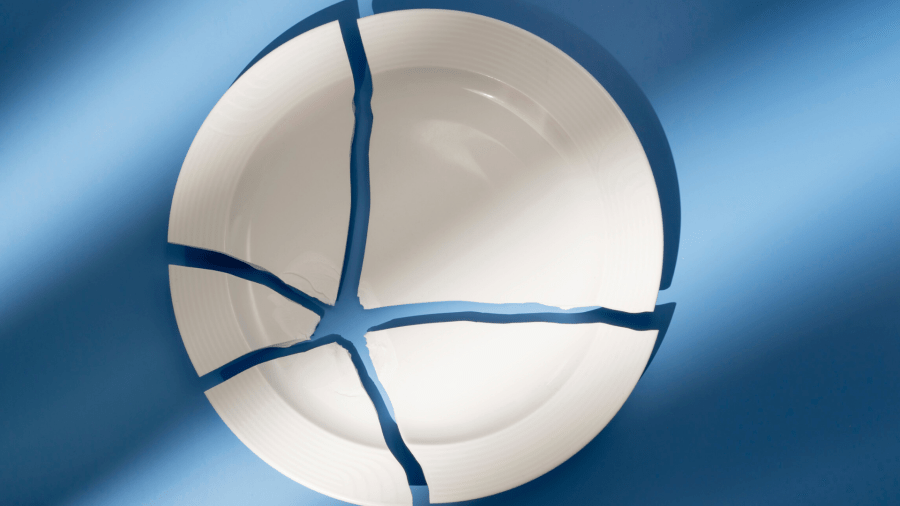
In fantasies I buy every plate in Goodwill
and bring them home to smash

against my stained concrete driveway.
Hurl arch shatter, every plate I found

in Goodwill, every plate I placed in my cart
and hauled to my trunk. I want to shoot

things. Pumpkins, maybe. Finger to trigger
to a gaping exit wound, sticky pulp

and seeds blasted out over my front porch.
I have no gun. I have no pumpkin.

What I have is this apple, glowing red
and round in the palm of my hand.

What I have is this knife, sharp enough
to slice the thin dusky skin of the fruit,

sharp enough to carve its white flesh.
What I have is precision, what I have

is a plate full of apple slices
to take outside to my children.


Emry Trantham is an English teacher in Western North Carolina, where she is raising three daughters and writing poems. Her poetry has been published or is forthcoming in Booth, Tar River Poetry, Carolina Quarterly, Noble Gas Qtrly, Cider Press Review, Cold Mountain Review, and others. She was also a 2019 Gilbert-Chappell Emerging Poet.

Now We’re Getting Somewhere by Claire Hopple

We agree to liaise at the apartment building. I picture myself shepherding you through the tour and already feel perturbed before I’ve parked.

We surveille the vestibule and await developments. You hang your arms over the railing and momentarily drop your head.

“This cruelty-free deodorant has turned out to be anything but,” you say.

This three-story brick complex is barbarous and listless enough to suit you. A distant television is the only sound. There are bike tire tracks on the walls opposite the mailboxes. All the trappings of a dwelling you would consider renting. Or at least looting.

The landlord or property manager or whoever arrives. She sedates us with small talk and you politely avert your eyes.

Her precious schoolmarm demeanor has little effect on me and it’s difficult to determine whether I should be proud of this.

She leads us up to the third floor.

“This dining nook is large enough to host a dinner party, if I can muster enough friends to appear,” you notice once we’re inside.

She runs through the floor plan and the numbers with you while I test the plumbing. I go to wash my hands but can’t figure out how to turn on the sink. I pull at things and twist certain parts but nothing budges. I look underneath it, on its sides, flip the wall switches just to be sure. I walk out and remain quiet.

The woman gets a phone call.

“How’s school?” I ask.

You look startled.

“Let’s find somewhere we can discuss this.”

I oblige.

We move into a bedroom.

“First of all, your enthusiasm is becoming a problem. If you must know, school is going okay. I have this…semi-respected professor who’s very complimentary of my work. But it seems as if he’s becoming senile so I can’t really take him seriously. I have to question all of it.”

The woman ends the call and joins us, walking to the far side of the room to open a window. While she’s leaning over to lift one, you focus on my face and whisper “defenestration” like you want me to push her out into the gravel lot below.

“That abandoned car in the ravine down there should be towed by next week,” she says as she turns around.

She gets another call. I wonder if she is some kind of real estate magnate.

“And are your parents still in that, uh, rough patch?” I squint at you.

You tell me about running into your dad at the grocery store and him not recognizing you. How he blamed it on you wearing a hat. That he disclosed he’d kept a secret pet hidden in the garage. Your mom unearthed the ferret behind the bucket of badminton equipment and later hissed at your dad when he attempted to recuse himself. Then how your mother retaliated by purchasing a used lifeguard chair from the internet and planting it in their pool-less backyard to survey the neighborhood and whistleblow at behaviors she observed but didn’t take to.

“Melodrama” sounds like a caramel-based candy bar, not the highly emotive scenes it contains, though both are perhaps equally fabricated, I think.

When we’ve seen everything there is to see, you shake her hand while saying, “Please accept this symbolic gesture.”

I glance back to observe her wiping the hand she shook with on her skirt. She probably didn’t mean for me to see that.

I pick up what looks to be a Girl Scout badge from the grass and pocket it.

You sum things up by saying you haven’t been all too pleased with your own behavior lately, and so, acting as the only adult in your household, you have grounded yourself.

“It’s customary to stay home unless there are prearranged appointments such as these.”

You are learning that adulthood is basically a series of deciding things but never really getting to decide anything at all.

You’ve probably made it back by now and are reheating a bowl of some leguminous dish in your microwave.

I didn’t get a chance to tell you about the trap door at work. The door leads to what may or may not have once been a cellar. Employees regularly submerge their senses there after talking to clients (and each other) all day. The place seems ideal for a cigarette break, but no one smokes, so we end up bringing down lukewarm LaCroixs and standing around with those.

There isn’t a trap door anywhere in my house but I wanted a similar environment so I’ve created what might be a sensory deprivation closet. There’s nobody to escape from in this setting, only myself, and that is plenty.

You probably wouldn’t have a clue what to make of this news anyway, and you’re an adult who’s grounded herself, so what do you know?


Claire Hopple is the author of Tell Me How You Really Feel (forthcoming), Tired People Seeing America, and Too Much of the Wrong Thing. Her fiction has appeared in Hobart, Heavy Feather Review, People Holding, Timber, and others. More at clairehopple.com.

The Recluse by Jose Hernandez Diaz

A writing residency, at my kitchen table, where I wake up at 4 a.m. because of insomnia from meds, and write a poem about a skeleton in a maze, and no one is around to say it’s cliché, so I publish it in a book called: One Hundred Days of a Recluse.

Jose Hernandez Diaz is a 2017 NEA Poetry Fellow. He is from Southern California. His work appears in The American Poetry Review, Boulevard, Cincinnati Review, Georgia Review, Huizache, Iowa Review, The Nation, Poetry, Poetry Northwest, Southeast Review, and elsewhere. He is the author of a collection of prose poems: The Fire Eater (Texas Review Press, 2020).

to grasp by Tyler Barton

Van could make this move easy: just pack the collection’s sixty-two thousand specimens into rubbermaid bins and rent a box truck. But instead he pitches a big museum shuffle.

“I smell local news!” Marianne, the CEO, says over the Panera she’s eating at her desk, the desk that Van will one day put his feet on, after he usurps her. “Vanny, pass me the dressing?”

Van assembles hundreds of museum volunteers—snake-handlers, taxidermists, ornithologists, the assholes with the loupes, community services students, cleaners, fundraisers, pencil sharpeners, bee-keepers, artists, ten year old boys obsessed with for some reason caves, and those purple-lensed planetarium operators. It’s Monday and they’ve formed a long, winding line of hands leading from the museum basement to the loading dock of the Ex-Salvation Army on Locust Street. The TV crews arrive as hoped, as do print media, and even the museum’s dormant Twitter springs to life as the minerals start swimming down the line of gloved hands.

“Remember your training!” Van says, holding a clipboard. It’s one of the great joys of his job, the clipboard—how he can grip and wrench it and nobody but Van sees the stress leaving his body. The new museum, Van remembers for motivation, will be air-conditioned.

Nine minutes in, an envelope-licker drops a cow skull and its long teeth scatter into the street. Furious, Van hurries over, smiling, and invites the man to head home early.

“It’s the sun,” he says. “Just keeps coming in and out of clouds. It won’t happen again.”

“Good,” Van says, no longer smiling, “bye.”

Luckily obsidian is so hard, because no damage is done when it slips from the botanist’s hands and slams the sidewalk. Regardless, Van asks her out of the line. And pretty soon Van stops asking, and it becomes: Go the hell home! This isn’t practice, people. This is the game!

Each time someone drops a specimen, or is seen chatting to their line partner, Van ejects them. He doles out Adderall illegally and screams at people who look distracted. In this way, the line stretches thinner and thinner, until Person 1 has to lean to reach the outstretched hands of Person 2, which results in more drops—until Person 1 has to lightly toss the item across to Person 2, who does not always have game-ready hands, and the line becomes less dotted with volunteers, and the camera crews have all gone home, and the sun is blinking out, and Marianne has stopped waving her support from her corner office window, and it’s just Van and a handful of others with nothing going on in their lives but this, throwing specimens to one another across empty, ten-yard gaps, until it’s midnight, and the drugs haven’t helped anything, and Marianne is home in bed with a novel, and Van rolls up all 20 feet of the anaconda skin, tucks it under his arm like a football, and mounts the back of the Parasaurolophus. “Take us to the Salvation Army,” he whispers to the life-size though not-alive Dino model. They go nowhere. Parasaurolophus doesn’t have ears. It picked up sound via vibrations in the air. Okay, fair enough, then why can’t it hear the amethyst sailing through the cool dark toward Van’s face?

This is what happens in the coma: Van lives and relives and re-relives his first day on the job, the first time he said his boss’s name out loud, when he did not say his boss’s name, but in fact called her, “Marinara.”


Tyler Barton is a cofounder of Fear No Lit, home of the Submerging Writer Fellowship. He’s the author of The Quiet Part Loud (Split Lip Press). His work has appeared in Kenyon Review, The Iowa Review, NANO Fiction, Paper Darts, and elsewhere. “to grasp” is one part of his connected microfiction manuscript, To Work, which focuses on the absurdity and dread of modern work. He lives in Lancaster, PA, where he works in a Nature Museum and teaches free writing workshops to residents of assisted living facilities. Find him @goftyler or tsbarton.com.