So Much an Outlaw I Belong on a Wanted Poster by Holly Pelesky

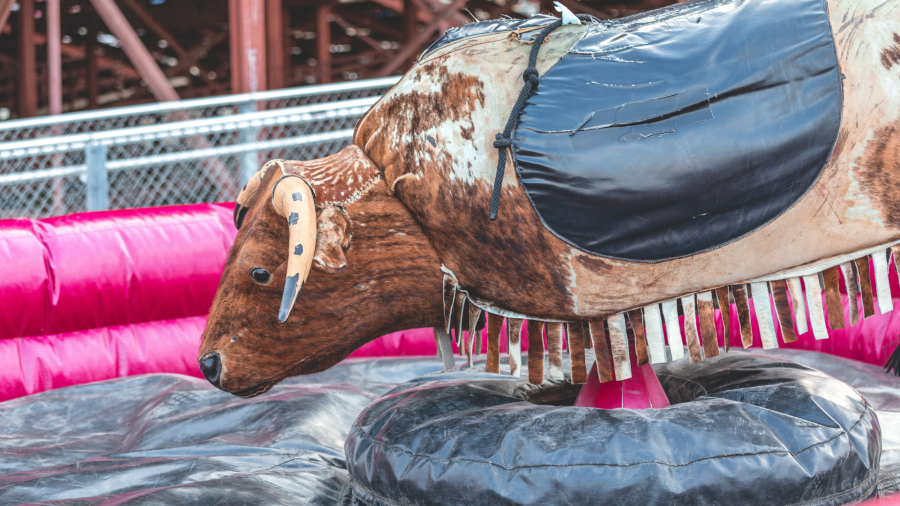
My first bull ride was like my first orgasm: mechanical. It was one of those nights when headlights reflect off the wet streets and everything is slick and shiny. Us girls found ourselves where 1st Avenue meets King Street, at Cowgirls Inc. A bar with bras strewn over clothesline, where the bartenders wore shirts cut high enough to show off their belly button rings and the air hanged hot and thick like breath. We had grown up in split-levels, on cul-de-sacs, but that night we wore cowboy boots, bought earlier that day from Renton Western Wear, price tags still affixed to the soles.

I wasn’t going to climb onto that bucking machine so the boys could watch my tits bounce. I was still a virgin barely, but nonetheless. I mean the shyness of me was still intact. I wasn’t going to, but my new boots with the fringe, the music beating in my ears, the beer, that bootstrap, that saddle. The buzz of the crowd electric as I swung my leg over the automatic beast, squeezed it between my thighs. On my revolving perch I learned what the other girls already knew, what I was after: forty-five seconds of being watched like that.


Holly Pelesky writes essays, fiction and poetry. She holds an MFA from the University of Nebraska. Her prose can be found in Roanoke Review, The Nasiona, and Jellyfish Review. She recently released her first collection of poems, Quiver. She works, coaches slam poetry, and raises boys in Omaha.

Ode to the Empanadas on Pacific & Elm, with Apologies to William Carlos Williams by Carla Sofia Ferreira

Please forgive me, I did not ask the internet for permission
to call it a bodega, the small corner market less than
a two minute walk from the third floor apartment on Pacific,
no less than I was allowed to let my cheeto fuzzed fingers fold
over the pleats of my crisp maroon and gray skirt. In those days,
I confessed my sins to a priest I was not sure would ever see heaven.
How could he? Had he tried the empanadas from the corner market
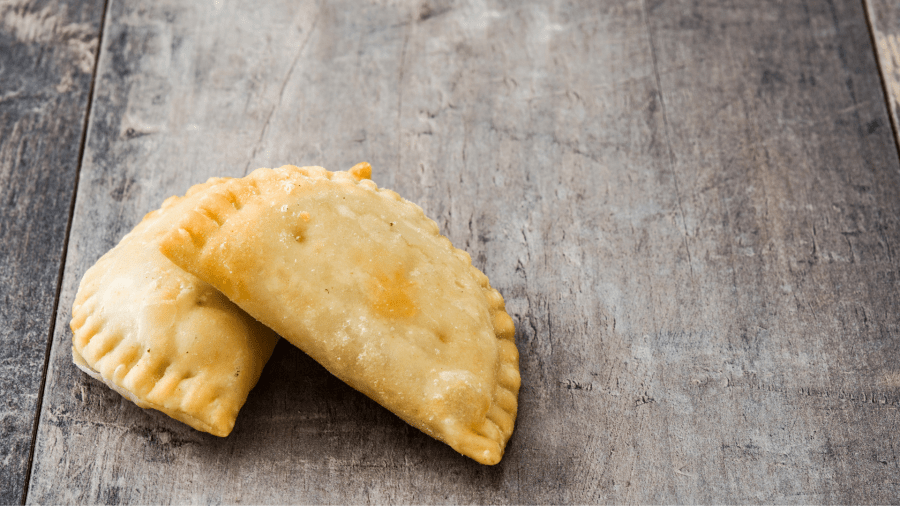
on Pacific and Elm — fried crispy corners enveloping ground beef
and yet the juices running? Was this not absolution? I believe
in small and human graces: the pleasure of lunchtime
in the crowded cafeteria, the salve of antibiotic on a skinned knee,
water from the rusty faucet after the kickball game on the asphalt
parking lot. Miraculous, those empanadas, and oh they tasted good
to me, they tasted good to me.
Sorry I—
am not sorry.


Carla Sofia Ferreira is a Portuguese-American poet who grew up in Newark, New Jersey and who teaches high school English in Newark today. A recipient of fellowships from the Sundress Academy for the Arts and DreamYard Radical Poetry Consortium, her microchap Ironbound Fados was published in 2019 by Ghost City Press. She believes in community gardens, semicolons, and that ICE must be permanently abolished. For a copy of her free poetry prompt chapbook, Eat a Persimmon, created for high schoolers and their teachers, please go here: https://www.carlasofiaferreira.com/post/eat-a-persimmon.

Soft Bundles by Meghan Louise Wagner

At night, mother feeds me hair. I slurp it down like spaghetti. She rolls me into bed and locks the door. Only after I begin to dream, a mountain girl comes to unspool it from my throat. In the moonlight, I watch her twist it into tight spindles around her knuckles. Golden flecks sparkle off her skin. Her head is bald and smooth and when I to reach up and touch her—to feel if she is real the same way I am real—she swipes a sharp hand across my neck.

Each morning, I find glitter on the floor. It pricks my bare feet as I walk to the mirror to check my throat.

In the kitchen, mother makes bread. I show her my scars. She punches dough against the counter.

“Did they get it all this time?” she asks.

* * * *

Our town is small and we are not the only ones in debt to the mountain girls. Every telephone pole has a yellow sign, CASH FOR DREAMS: CALL THE MOUNTAIN GIRLS. I pass them on the way to school but never stop to read the fine print. It’s bad luck to know about the deals your mothers make. Everyone has heard stories about curious kids who sneak letters out of mailboxes and then, the next day, are found drowned in their bathtubs. Or impaled by tree branches in their sleep. Or, worse, they wake up toothless, without tonsils—no good to anyone.

* * * *

Some mothers tell stories to help their children swallow hair. They say it’s made from magic sugar cane. That it’s been spun into caramel. They promise if you eat it all, then you’ll grow into the prettiest woman in town (no matter how you look now), you’ll be the richest man (no matter how poor you are now), you’ll have the happiest life (no matter how miserable you are now).

If, if, if…

My mother never lies. Not like that. After dinner, she takes hair from the fridge and combs it across the counter. Some nights it’s brown, some nights black, some nights it’s as soft and silver as the snow on the mountain tops. Her forearms are tight from pounding bread all day, but her fingers are delicate. She twirls it into soft bundles of noodles.

“If you don’t eat it all,” she says, “they’ll only bring more tomorrow.”

“And what if I don’t eat that?”

“They’ll bring more,” she says, shrugging.

“They bring more anyway.”

“Exactly,” Mother says, pushing a bowl toward me.

* * * *

The mountain girls come to my school’s graduation. Their golden heads cast a glare in the stadium. None of us will admit we know them. On our way to pick up diplomas, they wave their yellow signs. They cheer the loudest.

* * * *

Years later, when I am grown, I am neither beautiful nor rich nor happy. My throat is too old for swallowing hair and now my mother wanders town, tacking the yellow signs to telephone poles. At night, we eat melon dipped in salt. She tells me I should get married and have children of my own.

“Then,” she says, spitting out a seed, “we can get back in with the mountain girls.”

The next day, I take a train headed to the coast, far from the mountains. There’s another town on the shore that smells of sand and seaweed. I walk past telephone poles with blue signs, CASH FOR DREAMS: CALL THE GROTTO GIRLS. The clouds hang low. I stop inside a salt water taffy shop and buy a box to bring home for mother. The girl who sells it to me has crosshatches on her neck. She pretends not to notice mine.

I take another train going north, further from the mountains. When I arrive in the city, I have eaten most of the taffy. The sky is dark, but the lights are bright. Electronic billboards line the streets. Images flicker on their screens. CASH FOR DREAMS: CALL THE CONCRETE GIRLS.

I stay up all night, drifting past neon lit bars and storefronts until I am back at the train station. I have no more money for a ticket back to the mountains. Inside the terminal, I see a booth. CASH FOR DREAMS.

“Tell us about your dreams,” says a bald, golden headed girl.

Since I don’t dream, I tell her about the mountain girls. She offers me a clipboard and pen. I sit on a cushioned chair.

“Can you help me get home?” I ask.

“We can arrange a deal,” she says, showing me the fine print. It’s the first time I’ve ever seen it myself. My instinct is to look away. But I want to know. To finally know what it is they take.

“Oh,” I say, disappointed by the obviousness of it. “I’ll have to give you children.”

“Only their dreams.”

“But I have to have children?”

“We offer alternative plans.”

“How can I get back to the mountains?”

She flips a page in the clipboard. “We have plans for that, too.”

* * * *

In the morning, as promised, I awake in my bed. I look out the window and see mountains. There is no glitter on the floor.

In the kitchen, I find Mother at the table. I take out a blade and shear her head. She stands still, but winces when I move too close to her ear. Her crinkled, silver hairs fall onto the floor. I sweep them up and carefully twirl them into bundles. Once I wrap them in plastic, I pack them into my basket, crooked beneath my arm.

“It’d be easier if you had children,” she says, shaking her bald head.

I leave the kitchen and go to feed the town.

Meghan Louise Wagner is a writer from Cleveland, OH. Her work has appeared in places such as AGNI, Shirley Magazine, matchbook, Hobart, and X-R-A-Y.

Wild Horse by Cathy Halley

Your hand ring heavy against me.
Thigh high, sumptuous endeavor.
We will see tomorrow how your masculine touches mine,
charged particles left to vague.
We seed,
sow two streets with the same name in different boroughs,
sing caramel songs that refuse to liquid.

You are a sinkhole of wonder.
I lie down with you and let it happen,
like conversation, like lyes, burning good.

Be gracious now and wait.

We are a successful series.
You are legs that end in true ankles,
sheer mouth, wrists I hold and lead.
Lend me your delivery, how you move your hands.
Your happiness. Mine.
An unmatched opposition. A pair, approved,
tenderness of color.
Your hair beneath your neck,
an elegant expression—mouth open some, softened, let go,
your eyes unafraid at night and in silent light,
unblinking broken,
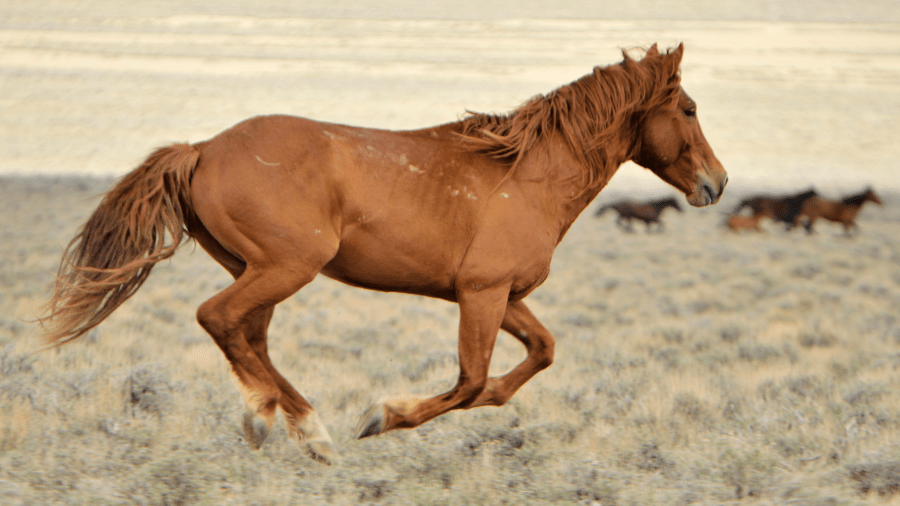
a horse in the wild at dusk eating grass,
ten, twelve, fifteen, me.


Cathy Halley is the Editor in Chief of JSTOR Daily. Her work has appeared in Pocket Myths and poetryfoundation.org.

Yes, You Can Eat Your Goldfish by Susan Rukeyser

Yes, you can eat your darling goldfish. He is most likely a form of ornamental carp, and he will taste as you expect: muddy and full of bones.

You can eat all your darlings, once you kill them. Although why you killed Prince Harry the goldfish I cannot understand. Was it all the staring, his bulging eyes? Was it his flashy orange scales, so out of place in your dark, dusty cabin full of your ancestors’ ghosts? Or was it that his beauty faded by the day, in your care, and you could not bear to watch it—how his scales grew dull and his swimming listless, until he mostly stayed put in the middle of the small, round, glass bowl that was his world since you brought him home from that Memorial Day carnival? His translucent fins fanned like the scarves of an old burlesque dancer still going through the motions.

You sure looked like you wanted him when you paid $3.00, six times in a row, tossing rings onto a pole. Prince Harry watched you from the table full of glass goldfish bowls and saw how you labored for him, how you fought against your own shortcomings to win him as a prize. But now it’s August, and you should have set him up with a proper tank by now, some plastic plants and aquarium gravel, at least.

Prince Harry was an $18.00 goldfish, which makes him as expensive as any other freshwater fish on the menu at your local upscale seafood place. But you should know that the diet you fed him of dehydrated fish flakes won’t please your palate, nor your conscience. (Maybe you could have treated him better?)

What’s done is done, I get it. I just hope you killed him with kindness.

Because, you know, Prince Harry the goldfish was miserable in that little glass bowl. He was never going to become the best fish he could be, trapped in there. In the wild—if you had released him, an invasive species—he could have grown far beyond your expectations. (Seriously, he could’ve grown to be a foot long!) But at what cost to the other fish in the lake that butts up to your cabin? Prince Harry would crowd out the others that belong there.

Your darlings can be eaten, and they should be, if they fail to thrive. If you fail them.

But Prince Harry the goldfish will leave a bad taste in your mouth. He watched you toss all those rings at the carnival. For him. He thought you loved him. He thought he was home.


Susan Rukeyser writes and reads in Joshua Tree, California. Her debut novel, Not On Fire, Only Dying, was released by Twisted Road Publications and she recently completed her new novel, The Worst Kind of Girl. In 2018, Susan founded World Split Open Press to publish feminist books, including The Feckless Cunt Anthology. She also hosts the Desert Split Open Mic, Joshua Tree’s feminist, queer, and otherwise radical open mic and occasionally interviews local and visiting authors. Susan’s short fiction, creative nonfiction, and multimedia work appear in numerous places, both online and in print. linktree.com/susanrukeyser

Foodie, Or I Miss Every Hometown Cookout by KB

Fuck the presentation, I want the food to taste good. Like chopped
slop covered in barbecue sauce brisket. Like mama’s wing flings
on top of greasy paper towels with a side of somewhat burnt
sweet potatoes. I want the meal to give me -itis I can feel in my tongue;
tums needed to hush up the organs telling me I’ve made mistakes today.
None of it was a mistake, really. The only thing I regret is not asking
for extra hot sauce, extra communion with my niggas over hot plates
while barbed off in backyards with an uncle that has bunions on his toes
hollering, CAN YOU HEAR ME under the Bengay. Today, I hear you auntie.
Swearing I forgot to take the chicken out; making chitlins in a room of people
with my blood or at least best interest in their hearts. I say your name,
spaghetti & fish after a friend has went to pasture. I say your name as I look
at the coffee shop menu, wondering what has a sprinkle of spirit in it.


KB is a Black, queer, nonbinary miracle. They are the author of the chapbook HOW TO IDENTIFY YOURSELF WITH A WOUND (Kallisto Gaia Press, 2022), winner of the 2021 Saguaro Poetry Prize, and a 2021 PEN America Emerging Voices fellow. Follow them online at @earthtokb.

Transfiguration by Nancy Hightower

You aren’t scared the night he creeps into your room. You know you should be scared, as he stands in front of your bed—hands on hips as if sizing you up—but there are too many things competing for your terror right now. You have to choose wisely.

I heard you crying, he says.

How’d you hear that? you ask because you’re sure he’s lying. You know how to sob quietly into your pillow so your Daddy can’t hear, how to quit early, so Mum won’t ask the next day why your eyes are puffy. Good girls don’t get puffy eyes or nighttime visitors.

You know how to lie, too, now that you’re turning thirteen. This was the week Mum said you could no longer run outside with your brothers. This was the week your hair was pulled tight and tied back in blue ribbons, while a chemise and corset imprisoned your chest and cinched your waist. This is the week you were to learn how to be a lady.

I heard you, Peter says again while his shadow nods in agreement. You don’t think much of that trick. What good is a delinquent boy and his shadow when doomed to a life you don’t want? Tomorrow you are to be fitted with new shoes that includes a little heel. It will angle your back and shoulders for a more ladylike posture, Mum explained.

Come with me, instead, Peter interjects, as if he had overheard the conversation.

Where? you ask, as if there are safe options for a thirteen-year-old girl whose room has been invaded by a boy and his shadow.

The Island, another voice answers. Or possibly many voices, as it does not sound like just one. You look at the shadow, which scratches its head. And then you see someone though a dust red haze standing by the window. If anyone says fairies like pink, know they’re lying because Tink hates pastels. Even leaning against the wall, hands in pockets and head tilted to one side, they are taller than Peter who scarcely seems taller than you. You take in their mass of black ringlets that frame a wide jaw and high cheekbones. You envy their maroon pinstripe suit. You can be anyone you want to be there, Tink adds. Not a girl’s voice, yet not a boy’s either. You can’t tell if they’re sixteen or sixty, and don’t care. Your palms are wet and your heart beats so loud you are worried Peter can hear it, but he just smiles as if he understands everything and says, we leave tonight.

 You want to pack your dresses and shoes and ribbons, but Peter keeps asking what for until you leave it all on your bed. Tink keeps close to the window, as if your room were a prison and to venture too far in might jeopardize their own freedom. When they hold out their hand, you lace your fingers through theirs, watch as they fold the moon into a smooth bright road calling you to another place.

Everyone is still up by the time you arrive. Young and old alike wear whatever they want: off the shoulder dress, slitted skirt, breeches with waistcoat and rainbow tie; their hair in braids or cropped short, while others sport wigs in cotton candy colors as if they were crowns. We’ve been waiting for you, Tia says, pointing to a large table filled with food. You and Tink sit side by side, your nightdress hiked up so that your thigh rests against theirs. Mum would never have approved, but you can’t quite remember her face or voice now. Even your old room disappears in the mist. Where can I get a suit like that? you whisper, but Peter overhears you. Hook will take care of it, he says. He can tailor anything.

Peter started the tradition, I help with the transition, Tink explains, as they take off their jacket to reveal a pair of razor-sharp diamond wings. Hook can sew, but no one cuts a pattern as well as I do. A shiver of fear and joy runs through you as Tink leans in, puts their hand on your lower back. Don’t worry. I can wait

You change your name from Wendy to Wen to Wendell, as Tink shears off your hair little by little, and the wind at the back of your neck feels like freedom. Peter gives all his future grown-up selves to keep the island invisible. Some days he can’t fly, because magic like that demands balance, courses through his muscles and joints like lightning. Tink makes a special tea to help him sleep through the night. Sometimes he takes too much and pretends he’s Queen Victoria. These are your favorite nights, even though the next morning is rough. Peter remains young and weary and welcomes all those cast out of their houses. Year after year they come to find a banquet awaiting them. Some weep at the sight. Others are surprised into laughter at such tenderness. Hook gives a fashion show every Spring to show his new line and you take up woodworking, surprising Tink with a rocking chair made for two.

One day Peter doesn’t wake up.

You feel the shift in the wind, watch the tides grow stronger and wonder what ships might accidentally find this harbor now. Some take a boat with Hook in hopes of finding a similar haven. Others travel deeper into the forest where Peter said there were caves to build a fortress, if ever the need came for it. Everyone knew Neverland was made on borrowed time. You and Tink remain in the house you built together, a stone’s throw from the green mound where Peter sleeps. Tink’s wings, beating back the tide each night, shrink with each new moon. Their glorious ringlets have started turning gray and shed with each new rain. Every evening you ease Tink out of their clothes, massage each sore muscle with hands, lips, and tongue. They moan with exhausted pleasure and lay curled up between you and Peter’s shadow, sleeping. You take turns holding them as a new storm moves in and the nightmares descend. One day we won’t need an imaginary island, Tink whispers. They kiss you for a second, an hour, an entire year, extending your life with each breath until you are an old man sitting with his shadow on a white sandy beach, dreaming it all true.


Nancy Hightower has had work published in Joyland, Gargoyle, Entropy, Washington Post, HuffPo, NBC News Think, and elsewhere. She is the author of Elementari Rising (2013) and The Acolyte (2015).

Puffy Little Pink Heart by Hannah Grieco

It’s not you, it’s me. It’s not that I don’t feel this, it’s that how I feel doesn’t matter. It’s not that I don’t like you, didn’t want this to happen, didn’t plan to get that drunk and sit in your lap and, okay, maul you in a Burger King booth in front of that family with their four small children. It’s that I really am too old to do those things and also I have two small children of my own and a husband and I can still taste the fry oil in the back of my throat and it, and you, are giving me heartburn. It’s not that me sleeping with you was symbolic of who I used to be and the way I used to act, it’s that I’ve been trying desperately to not turn into something symbolic, something comfortable, something that fits easily on a key chain, something that everyone recognizes when they see it, something sticker-like and shiny, but not too shiny, like maybe a puffy little pink heart sticker on the back of a Mother’s Day card. It’s not that me sleeping next to you wouldn’t remind me of uncomfortable, brave, unrecognizable experiences and feelings, it’s that I don’t get to do uncomfortable, brave, unrecognizable things anymore. It’s not that you aren’t pretty, because you’re so pretty, so pretty I scooted next to you on that bench and asked for one of your fries, the only vegan thing on the menu, which was why we went there in the first place, and I’d been making fun of you all night for being vegan, but actually I find it so appealing, so beautiful that someone cares that much about anything anymore. It’s not that I wouldn’t cast this all away in a minute, because I would cast this all away in a minute, in a second, so fast my entire life would be an intertwined blur of the past rapidly decomposing and you and me driving down the highway in my runaway minivan, Indigo Girls and Dar Williams and KD Lang on your shitty old iPod shuffle, your hand on the back of my neck, my hand on your knee, above your knee, the part of your knee that tickles if I squeeze even a little. My hand on your knee and my heart in my throat.


Hannah Grieco is a writer and editor in Washington, D.C. You can find her online at www.hgrieco.com and on Twitter @writesloud.

Not a Lump by Greta Hayer

I would have known what to do if it had been a lump; instead, in the mound of my left breast was a hole. At first, it was hardly more than a dark pore, like a pinprick, but after a few days, it was big enough to hide a button in.

I called my brother’s husband. “Honestly,” he said. “I don’t know that much about breasts.”

“You’re a surgeon.”

“I’m a foot surgeon.” He sighed, breathing into the mouthpiece. “Besides, I’m usually the one making the holes.”

Not what I wanted to hear. “How’s Mike?”

“Tell me you’ll get that looked at by an oncologist or something.”

“It’s not a lump. Cancer is a lump.”

When we hung up, I looked at my chest in the yellow light of the bathroom. The hole looked up at me, as wide as a dime. Inside, I only saw blackness, maybe a pinkish tone to it. I leaned closer to the light, shoving my chest over the sink and pressing hard against the cold porcelain. Inside, I saw a shiver of movement. Had something burrowed deep within me, or was I merely seeing my own heart?

I called my doctor, who asked if it hurt. It didn’t. Since it didn’t hurt, and it wasn’t a lump, he figured what was there to worry about? I nodded, though we were on the phone, and he couldn’t see my assent.

I went out. I started the night with a trio of friends. Not good ones, not friends who discussed something a precious as our own mortality. Besides, they were perfect, flawless versions of the female form, and certainly, none of them bore a hole in their chest.

I lifted a glass of wine to my lips, and for a moment, the world was only a pungent red sea and a clear sky. When I lowered the glass, my friends were gone, easing their way into the crowded bar, fitting into circles of conversation and pockets of secrets.

The bartender waved at my empty glass.“Another one?” 

“I guess. It’s not a lump.”

His face broke into a grin. “Then, you’re celebrating.” He poured a pair of shots. “My mom’s a survivor.”

His mom? How old was he? Not so much younger than me. Or maybe a lot younger. I couldn’t tell the ages of people younger than me anymore; maybe that was a symptom.

I grinned shallowly, but threw back the whiskey. The heat of it traveled down my neck, pooling like liquid fire in my chest.

My shirt dampened. A dark pool gathered above the hole, leaking whiskey onto my top.

The bartender noticed, pointing with an elbow as he poured another patron a drink. “Looks like you spilled.”

I shook my head and tried to cover the seeping wetness with a hand. I felt the eyes of everyone in the bar, gawking. My friends were nowhere, or maybe they were among the strangers staring. The liquor trickled down my chest, under my bra, past the waistline of my pants. I was dying. I had to be.

In the ER, the doctor checked my breathing and shook his head. He pressed the stethoscope to my whole breast and shook his head. “Your vitals are fine. Bloodwork is negative.”

I covered myself as best I could with the papery hospital gown. “What’s wrong with me?”

“I suggest you go home, sleep it off.” The doctor was already moving toward the door. “At least it’s not a lump.”

I touched the edge of skin around the hole, sticky with the remnants of the alcohol. It was big enough that I could probably insert my pointer finger. “Yes,” I said, nodding and smiling vacantly. “So lucky it’s not a lump.” 


Greta Hayer received her MFA at the University of New Orleans and her bachelor’s degree in history at the College of Wooster, where she studied fairy tales and medieval medicine. Her fiction has appeared in Beneath Ceaseless Skies, Luna Station Quarterly, and Maudlin House and her nonfiction has appeared in Booth and Flint Hills Review. Her column, “In Search of the Dream World,” can also be found in Luna Station Quarterly.

Arroz Con Leche by Sonia Alejandra Rodriguez

When I get lonely—I want my mother. I want her to cut my belly open and pull out a newborn version, toss away the bloodied carcass of an unrecognizable self. I want her to dive into my chest, fight the grip around my heart, and proudly proclaim my heart belongs to her. I want her to find the mouth of the river inside, threatening to burst and drown me, and sing until the waters still. When I get lonely like this, I want my mother; but I am afraid to ask for her. Afraid my longing for motherhood will create too large a ripple, waves exposing unscabbed wounds. Afraid neither has learned to swim in the vast ocean of our grief. Afraid voicing my desire for her will reveal the chasm between us as too deep, too wide, to find each other again, or, for the first time. Today, I am lonely, and I want my mother without her knowing I need her. I speak to her in a language safe for both of us: cooking. Madre mía, how do I make arroz con leche? Her carefully crafted instructions and a mándame foto, her offering. A photo of the overly sweet milky rice, my offering.

YIELDS:

4-6 servings

INGREDIENTS:

1 cup (128g) of washed rice 

2 (256 g) cups of water

2 whole canela sticks

3 cups (384 g) of milk

1 can (397 g) of Lechera

2 fistfuls of raisins

INSTRUCTIONS:

Wait until loneliness has settled in your belly, carved your lining and made itself a home. Bring water with the canela sticks to a boil and notice your heart’s palpitations as the waft of the spicey scent envelops you. Pour washed rice into boiling, canela sweetened water, and allow the mixture to simmer until you recall how often your mother makes arroz con leche only because you love it. Throw raisins in the rice pot so they soften like a heart before the hurt. In a separate pot, combine milk and lechera and heat, but do not let it reach a boil. Pour warm lechera milk over rice and stir as you imagine your mother serving you arroz con leche after being away for so long. Her warm smile, her tired eyes welcoming you back. To garnish, tuck your yearnings for your mother between the soft rice and the sweet milk. Eat until full.


Sonia Alejandra Rodriguez is an immigrant of Juarez, Mexico and raised in Cicero, IL. Her work has been published in Huizache: The Magazine of Latino Literature, Hispanecdotes, Everyday Fiction, Acentos Review, Newtown Literary, So to Speak: A Feminist Journal, No Tender Fences: Anthology of Immigrant and First-Generation American Poetry, Longreads, Lost Balloon, Reflex Fiction, and Strange Horizons. Sonia’s writing has been nominated for the Pushcart Prize, Best of the Net, and Best Microfiction. Sonia lives and teaches in New York City.