Missing Link by Mike Keller-Wilson

It was the memories that did it: My nap-heavy head on an impossibly wide chest. Dark curls—thick as fur—my toddler hand tangled in their sleepy heat. A wild, lumbering voice—a real voice, not a growl or a grunt—almost human. Fresh shampoo—lilac and lavender—and, below that, creek mud and wet leaves. Denim overalls—soft with wear—a poor, if durable, disguise. A steadying palm and a tickle of hair blanketing my back.

I’m not interested in finding Bigfoot; I want him to come back on his own. I want him to come back because he misses me, misses Mom. Isn’t that what any kid would want from their dad? That’s what brought me out here in the middle of the night.

Even if Mom won’t say it right out, I know he’s my dad. She doesn’t want me blabbing, attracting attention. I know better now. I learned my lesson last year—when I was only ten. I told Seth, my (former) best friend. Six months of answering to “Wookie Boy” was more than enough to teach me silence.

I’ve grown up since then: Mom’s doctor visits, selling the house, moving to an apartment across town. We’ve had a hard year. Lately, I can’t stop wondering what would happen if I let something slip and some scientist got to Dad first? What if I was the reason he got caught and caged? Stuck with needles and turned into some experiment? I’d never say anything now. I wouldn’t be able to stand it.

In the first place, I don’t think Mom meant for me to find out about Dad at all. When I asked her, it was supposed to be a joke. I’d gone to the basement for a Freeze Pop and caught her crying on the couch. It was those little choke-sobs, the ones that force their way out no matter how hard you hold them. She was watching “Bigfoot: The Missing Link” (a History Channel miniseries that I’ve now seen nine and a half times, mostly by sneaking the iPad after bedtime). I’d forced a grin, pointed at the screen. “Is that Dad?” Cheering her from her funks was my little-kid job, as I saw it then. I thought she’d laugh—snort through her tears and tell me to quit being a goober.

Instead, she kept wringing the edge of the knit blanket across her lap. She looked away and shut her eyes as if she was afraid of what might spill out. She didn’t make room or pat the open cushion at her side. She turned back to the TV—opened her eyes and fixed them to the screen without saying a word—I realized I’d found what hurt and I knew I’d never have the heart to ask again.

Still, I had to be sure. This wasn’t Santa or the Easter Bunny. I had to do my research. Ms. Knowles let me use the library computer, though I think she knew it wasn’t really for a school project. I found half a dozen sasquatch sightings reported to The Chronicle right around when I was born. One of them was just up the street from our house—in the woods behind Dollar General.

In the end, the research wasn’t what convinced me, what finally brought me out here, clutching my stack of handmade posters in the backwoods moonlight an hour’s walk from the nearest county road.

You can argue facts, but there’s no use arguing with memory. They’re clearest on the restless nights. The ones when Mom goes to bed early, sleeps late. Those nights, it’s like I can grip each memory by the edge, hold it to catch the starry light framed by my bedroom window.

It was the memories on those long nights that got me thinking: What if he’s still out there? What if he had to leave so I didn’t blow his cover? What if I let him know his secret’s safe with me? What if he came back?

“Dad, come home.” That’s what the posters say. It took a whole library afternoon to make them all. By the end, I was dizzy from the fumes off Ms. Knowles’s fat-tipped sharpie. At home, I spent half an hour looking for a staple gun, finally tucked the junk-drawer hammer and half a pack of nails under my pillow.

The night is colder than I thought, too cold for just jeans and my Mothman hoodie. Somewhere along the way, I walked through a burr patch. One pant leg has a string of them scratching through the denim. Still, it’s the quiet that’s most uncomfortable. That country quiet: silence filled with cicada screams and a barn owl in the distance. Son of Bigfoot, I whisper like it’ll help me feel at home. While hammering the first poster, I nearly drop the rest before tucking the stack under one arm. I do drop them when a wide swing misses the nail entirely and bashes my thumb against the pine bark.  From then on, the pages all have one muddy corner.

By the time I finish, the sun is nearly up. I tuck the hammer’s head in a pocket and wrap cold fingers around my still-throbbing thumb. Between the trees, I can glimpse my handiwork: white paper, corners curling over in the damp. I should’ve brought more nails, should’ve used two per poster. Still, it’s something. I think of Mom, tired in her bones. She’ll still be proud of what I’ve done. For a moment, I think it almost doesn’t matter if he sees them, almost doesn’t matter if he comes back.


Mike Keller-Wilson lives, writes, and teaches in Iowa City, Iowa. He is a founder & co-editor-in-chief of the newly-launched Vast Chasm Magazine. In his day job, he teaches writing and dad jokes to a captive audience of 7th graders. Find him on Twitter @Mike3Stars or at mikekellerwilson.com.

Mēkro Wahvé by Audrey Reyes

The manual should say, simulate control
by sneaking in a second and defuse the tolling
before it wakes everyone within a mile radius.

The manual should say, heat up a packet
of popcorn once and the stench will inhabit
your machine until its time for a new one.

The manual should say, you’ve been
saying it wrong. You will never be as sophisticated
as Nigella Lawson.

The manual should say, this may empower
your late-night confidence to binge on loneliness,
and oh, leftovers meant for tomorrow.

The manual should say, it shuts off
and assumes a slumber you will envy—
unlike your worst thoughts, plaguing.


Audrey L. Reyes (she/her) is a Filipino poet, writer, and former early childhood educator whose favorite workplace activity is raising hell. Her work has been featured in QUINCE Magazine, NECTAR, Marias at Sampaguitas, Hecate Magazine, superfroot, and Porridge Magazine (forthcoming). She resides in Manila, Philippines.

Untrue Things by Cezarija Abartis

Agnes thought Sherisse was the smartest person in her eighth-grade class. The prettiest too, with her shiny yellow hair. Agnes’s own hair was mouse-brown. When she grew older, she figured she would dye it, maybe red, but her mother wouldn’t allow it now, “You’re not a slut.”

“Girls who dye their hair aren’t automatically sluts.”

“The next thing they want is tattoos of hearts and motorcycles and skulls. They want their tongues tattooed.”

Agnes swallowed hard. “I’ve never heard of that.”

“Oh, yes. It’s a fact. Now go wash the dinner dishes.”

Agnes slumped to the sink. Outside the window, as the sun was setting, she could see all the signs on the lawns for Nixon and on one lawn a sign for Hubert Humphrey. She wasn’t much for politics.

“Your father and I raised you to be a good girl, a lady, and someday a scientist, or an artist.”

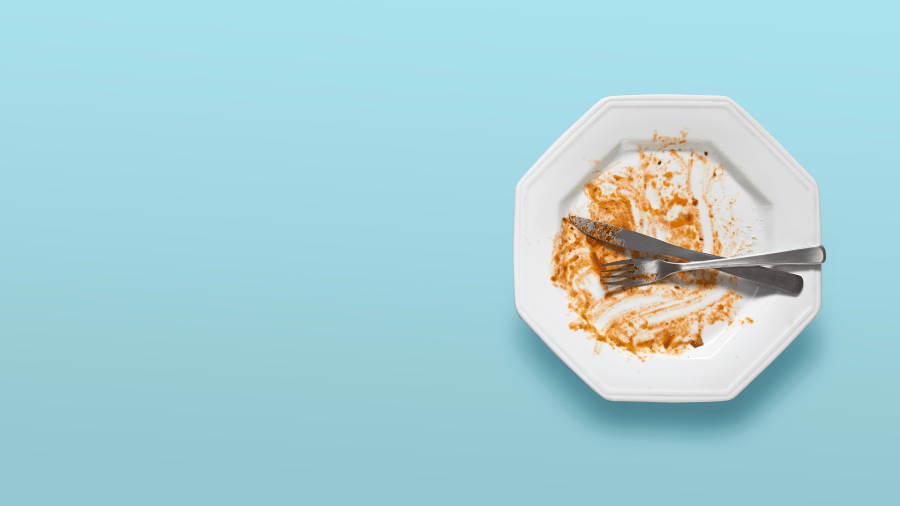
“I don’t even like art.” But she sort of did. She rinsed the plate under the faucet, which hissed when she first turned it on. The remnants of the pigs-in-the-blanket had some of the colors of an Andy Warhol painting. Her mother used Campbell’s tomato soup for the sauce. The cabbage strips slipped off into the strainer. She’d have to clean that later when it became yucky sludge.

“Or a musician.”

“I hate practicing piano.” The lady across the street bent down to pet her dog. “Woof,” Agnes imagined him saying. The trees had lost most of their leaves.

“Look what happened to Mrs. McDonald’s Roxane.”

“What?”

“She broke her arm.”

“So?”

“She won’t be able to play until it heals. But you’re lucky. You can practice right now.”

Agnes glanced toward the living room, where the upright spinet with its battered and peeling veneer sat. “I hate the piano. Hate it. Hate it.”

“People that play the piano live longer. Look at Liberace — he died at the age of one hundred and five.”

“He’s still alive.”

“And Picasso, too, the artist.”

“I would hate to do something I hated for one hundred and five years.”

Her mother put a chipped plate into the dishpan. “Your father works in a factory. Would you like to do that? Breathe hot fumes all day long? He loves you and works hard for you, so you don’t have to work in a factory. You’re lucky you’re a girl. You won’t be sent to Vietnam.”

“And here I thought they needed piano players.”

“Don’t be such a smart-off.”

Agnes smoothed her hair, but her hand was wet. “Someday, I would like to have red hair, or blond hair. Like Sherisse.”

“That girl is not who you want to be.”

“She is, she is.”

“Her mother had an abortion. I heard the baby wasn’t the husband’s.”

“You don’t know that. How do you know that?”

“Mrs. Nilson told me.”

Agnes waved her wet hand. “Mrs. Nilson also believes the world is flat.”

“Even so, she could still be right about some things. A person isn’t one hundred percent one thing. One hundred percent stupid about everything.”

“I wish people wore signs that said what percent they are. Fifty percent honest, twenty-five percent kind, twenty-five percent hardworking.” Agnes rinsed a plate.

“Honey, you’re all those things.”

“But nobody asked me to the Halloween Dance. Some of us girls had to dance with each other. No boy danced with me.”

“They’re shy. They will. You wait and see.”

“Jimmy asked Sherisse to dance.”

“When I was your age…”

“I don’t want to hear about how you didn’t have a car, you cleaned out the stalls, you twisted the heads off the chickens.”

“That’s not what I was going to say. I was going to say I dreamed about having a family, falling in love, and having a baby girl, just like you. Someone kind, pretty, smart.”

“I’m none of those things. I hate myself. Sherisse is beautiful and smart.”

“You are too, honey. You’ll be a famous journalist, or lawyer and deal with facts. You’ll see I was right. You’re our Cinderella.”

A dish slipped from her fingers in the lukewarm water. “I should have never been born.”

“Don’t you dare say that.” Her mother leaned into Agnes and put her cheek on her cheek. “What would your father and I do without you? How could we live?”

“You could get a dog.” Across the street, the neighbor lady walked ahead of her schnauzer.

“Untrue things can be true sometimes.”

“That doesn’t make any sense.”

“The world is flat. But, of course, it’s not. And yet it is. We don’t fly off the planet. But we do fly above it. Although I’ve never been in a plane.” Her mother said this wistfully, took off her apron. “I know you will. Children go farther than their parents. And that’s good.”

“I’ll live here forever in this kitchen. I’ll be an ugly old maid.”

“I’m telling you truths to live by. Someday you’ll be thankful.”

“Someday. Someday.” Agnes dried her hands on the towel, patted her damp skirt. Across the street, the schnauzer trotted joyfully. “Someday.”


Cezarija Abartis has published a collection, Nice Girls and Other Stories (New Rivers Press) and stories in Bennington Review, FRiGG, matchbook, and New York Tyrant, among others. Her flash, “The Writer,” was selected by Dan Chaon for Wigleaf’s Top 50 online Fictions of 2012 and “To Kiss a Bear” was selected for Wigleaf’s Longlist 2016. Her flash “Sisters” was selected by Amber Sparks for Best Microfiction 2021. Recently she completed a crime novel.

Pleocyemata by Tara Tulshyan

Mama said I was born in July, lucky
                enough for a child who was
missing a bellybutton. July – one month

                before ghost month, and one
month after she could no longer harvest
                butong and java plums. She told

me that the day her legs had gone stale,
                she salted her mouth with their
seeds so she could expect a smart child.

                I came out plump instead, arms
tapered into my fingernails that looked
                like dactyls and toes that burst

whenever cradled. My scalp burned
                black — the only lucky
feature mama found where all the fish

                eyes she hollowed and stuck a bone
through was worth it. The aunties said I
                would be prickly, a child with

a mouth where claws grew out from, that
                could not be fed nor rinsed. They
couldn’t nip me into a wife, or pluck a husband

                that could. Mama said I would die
near water, in a glazed shell where my body
                would orange in the heat until dry.

Mama said it was because I was born
                in a month named after a sickness,
where even the hermits bury themselves.


Tara Tulshyan is a sophomore currently living in the Philippines. Her works have appeared on or are forthcoming in DIALOGIST, Ilanot Review, and The Temz Review, among several others.

The Scab of the Family by Mialise Carney

The scab of the family doesn’t say much, so everyone thinks she’s trouble. In high school, she gets grounded twice a week but only for things she should’ve done rather than things she shouldn’t have. When the scab of the family stays out too late and comes home quiet and jumpy, the mother calls her awful things—traitor, trouble, rat. At holidays, the scab of the family is second in line to hug the grandmother and tell her she loves her, but the only one to really mean it. When the scab leaves for college, she doesn’t pack anything sentimental, but cries on her first night in the dorms when her roommate requests a room change.

The scab of the family only goes to some classes and doesn’t get invited to parties or accepted to any sororities, though she goes through all the hazing. She tries to talk to the warm slouching boys that sit beside her in class, but they turn up their headphones before she can finish saying hello. The scab only flies home for funerals, so the mother marks her “deceased/missing” in the family registry in the back of her black crumbling bible. When the scab graduates, she walks the stage but doesn’t invite anyone to watch. That night she burns her sociology degree over the little tin trashcan she keeps beside her bed—she doesn’t understand people any better now than she did before.

The scab of the family remains in her college town and finds a job in data entry. She buys a whole new wardrobe, pencil skirts and warm sweaters and thin heels that accentuate the sharp bones of her feet. She sits in a cold, blank office besides much older, much colder people who listen to audio books on two-times speed and eat tepid lunches at their desks under the bright glow of their monitors. The scab asks her cubical mate out for drinks who refuses: she already has plans that night to cry in the shower. The scab adds it to the end of her hourly planner, right underneath “bus home” and before “brush teeth,” and likes it so much that she does it every night.

The scab of the family lives and works and never goes home, not even for funerals. She calls the arthritic ornery mother only on days when it hails and tries not to cry as the mother says she is selfish and traitorous and unlovable. On her thirtieth birthday, the scab decides she wants to know what trouble really tastes like so she gets rebel tattooed on the wet inside of her bottom lip. It tastes sweeter than she expected, and she chews it off while she sleeps.

The scab of the family adopts a pet rat, not a fancy rat all fluffy and sweet but a gnarly one, gray and twitchy. She names it Pebbles and after work holds its struggling warm body against her chest while sniffling along to K-Dramas. When she grows bored of subtitles, the scab goes to bars to find someone to take her home. So used to the cubical, she sits in the darkest corner, hides in her hair, and potential suitors miss her when they glance around looking for lonely, frightened women. She drinks Bloody Mary after Bloody Mary until her mouth tingles and her throat scratches and she can’t sleep for the bubbling acidic pain. By thirty-two she has invasive emergency surgery to remove all the horseradish-induced ulcers.

The scab of the family is the only child to return home to take care of the mother when she gets too crotchety to be left alone with waiters and too fragile to walk up stairs. She bathes her and dresses her and sings her lullabies all while the mother spits and calls her awful things, traitor, ungrateful, defector, scab. When the mother dies alone in her bed, the scab notes it in the family registry but tells no one. She carefully leaves the bible where it belongs on the mother’s clean mantelpiece between graying family photos and baby pictures and fake sprigs of fir. She flies back home to her college town and her itchy rat greets her sleepily by the door. While she sits on the cool kitchen tile, she lets her rat lap warm gravy from her finger and feels almost loved. She is not so much like a scab anymore, but the shiny newly woven skin underneath.


Mialise Carney (@mialisec) is a writer and MFA student at California State University, Fresno. She is an editor at The Normal School, and her writing has appeared in Hobart, Maudlin House, and The Boiler, among others. Read more of her work at mialisecarney.com.

Paper Face by Sally Nagle

the people here enjoy the act
of unfolding themselves.
watch them wish their bodies
into something clear and papery thin
something riddled with tears
and creases.

you’ve never seen them like that.
never seen them fold their bodies so many times over
that their wrinkles go smooth.
that’s something holy,
but not to me.

when all that you are is paper
the sky cracks itself open
and then you take all the silly things
and break them,
until your palm is full of salt and sadness
and you eat grey like a feast.

you feel your joints fissure.
it’s hard to notice until your gears are rusted over and
every mechanism within your great, terrible body
has become a singular monster.

in all of the small eternities between us,
you are the same.
you would look at this place
of paper houses and paper faces
and strike a match.


Sally Nagle lives in Boston, Massachusetts with her family and has been writing for 8 years. In 2017, she won first place in the 21 and under category of the By Me Poetry Competition. In the spring of 2021, she won a Silver Key in the Scholastic Art and Writing Awards.

things you’ve shared with the ghost in your dorm room (in no particular order) by shelby rice

xii.
you’re lonely and the only thing you’ve felt the touch of is the gutter-water splashing off a car’s michelin tires. one star. you wonder if the mona lisa would be as beautiful if she had a double chin. you’re empty and not displeased about it, but you know you’re going to put the frozen strawberry jam you made with your aunt last summer over cold rice instead of eating a real meal. you’ll feel bad about it later.

xi.
your roommate is doing n+60 jumping jacks a day for lent, and you wonder if she knows by the end that she’ll have to do more than 2000. it takes fifteen days before she folds. you’re not surprised, but something that burns suspiciously of envy crawls up your esophagus. you wonder how long you would have made it. the bass guitar you haven’t played in a month sprouts a mouth and tells you the wicked truth. you can’t sleep that night.

x.
you start to wonder if you were a changeling. somewhere between infancy and now, you stopped thinking about what you wanted to do tomorrow and started to wish it never comes.

ix.
you think the perfect place to work is probably in an aquarium. it’s probably not as glamorous as you make it out to be (if that’s even the proper word) but the darkness and the gurgle of the tanks and the flying floating swilling creatures which drift lackadaisical twilling in the currents. the funny way toddlers walk, little penguins tottering back and forth would be the cherry on top. but maybe that’s just the withdrawal speaking.

viii.
you have a boyfriend who lives off high street. he roosts with two other boys, both faceless entities who come and go as they please. you’re not sure you’ve ever fully met. they seem to exist in a transient state, sort of ever-unpresent, at the grocery or the bar or kicking back at a friend’s house, but never at work. you’re more interested in these boys than your demure, kind-faced boyfriend, but more out of curiosity than libido; you want to know how they live such fluid, ever varying but still listless lives. you wonder if you ever meet if they’ll sweep you up in their unending on-the-go living until you rush on autopilot for as long as they’ll keep you.

vii.
you wonder if you should pierce your own septum. it would do you good to see if you still bleed red like everyone else.

vi.
your godmother is a nun. she doesn’t wear a habit anymore and has licorice gumdrops at her house year-round. they used to burn your mouth but now you find the taste of them keeps you up at night. you buy them at the drugstore but they don’t quite hit the same. the sugar dusting isn’t grainy enough, the taste doesn’t quite clog your mouth the way it used to. maybe it’s because your cousins aren’t egging you on, your brother isn’t trying to outdo you with three more stuffed in his mouth. maybe it’s that he isn’t rushing to the green-tiled bathroom to throw up afterwards. after a fetid few, you let the bag go fallow; it takes root in your pantry and refuses to be disposed of.

v.
the scar on your arm reminds you of a fat leech, if the leech were purplish-pink and created by a miserable idiot and not billions of years of evolution. you tattoo over it, which bolsters you an embarrassing amount, but it hacks away at the quickly dwindling list of things in common you have with your mother. never mind the fact that folks have been tattooing for thousands of years, that it’s not a rash decision, that you’ve been thinking about it almost as long as you could breathe—you think she might have cried when you told her. you schedule a second appointment as soon as possible and wonder if you’re welcome at home anymore.

iv.
your mother and aunt don’t talk anymore, and your grandmother and her sister didn’t either. you wonder if you’re doomed to the same fate.

iii.
you receive a save-the-date and spiral something awful. buried for your own well-being under stacks of junk mail, you send your congratulations and regrets in one run-on message, unable to explain why the thought of a marriage guts you this way. just two people deciding they’re interested in living together for the rest of forever* or whatever it is folks tell themselves. she elbows her way to the back of your mind and you staunchly refuse to acknowledge it. the message you receive back is kind but you can tell there’s a pursed-lip edge to it. you’re glad you won’t have to defrost the summer romper in the back of your closet and try to look happy for six hours. you drink alone the night of the ceremony and shudder to think of what the you in an alternate universe is going through. you wonder if there’s an alternate universe you whose wedding this belongs to.

ii.
you take better care of your plants than you do yourself. you have a meticulously planned spreadsheet which tells you when to water, fertilize, repot; each leaf is examined daily to check for discoloration or spotting. the plethora of pill bottles scattered over your room go unorganized.

i.
you’ve developed a pavlovian response to playing pokemon go. you can’t smoke without it anymore.


shelby rice is trying to reach you regarding your car’s extended warranty. they won the Montaine Award for Creative Nonfiction in 2020 and have been published in Rejection Letters, Existere Literary Magazine, Thirty West, and more. originally from Dayton, Ohio, they recently acquired a cane with a sword inside and will tell anyone who will listen. follow them on twitter @orcmischief (if you dare).

How to Read Poetry While Drinking Monster Alone in a Dimly Lit Cubicle by Cleo Qian

If you are lonely, read poetry.
If the poem is a love poem, break a bottle into two asymmetrical halves.
If the bottle has mead inside, lick the ferment from the ground up from your toes to your shins.
Become once more a stranger to your body.
If the bottle is empty, proceed to the next poem.
If the poem is not a love poem, identify the ways in which it is a love poem.
Name it love for a sentimental sadness, love for summer grapes, love for the child who clutches your hand,
love for a good steak and a crisp, translucent onion, love for the sweet purple comforter which covers your face when you sleep—
Or identify it as a cut poem.
If it is a cut poem, identify the ways in which the speaker is cut.
Identify if the cut was healed from a blood wound or honey.
If it is a blood wound it will howl on all fours and shriek under the moon.
If you are angry, get on your knees and shriek too.
But if you find a honey poem, think of all the bees.
The bees work industriously somewhere out there, all yellow pollen and sticky haze.
If you are a bee-lover, read poetry.
If you are a lonely insect, like all of us who crawl and never fly far enough
off this wretched Earth—
Read a love poem. Suck honey. Cut a poem open, and the pain will last one second, then a lifetime.
Let the sharp blade of the feeling slice you. One moment. Sweet open.


Cleo Qian is a writer based in New York.

Choices by Anna Hundert

1.    In the beginning, there is the sea. There are no choices in the beginning, because I always begin in the sea. I breathe the tides and the tides breathe me. And who would choose the dry, tasteless air over this sun-soaked dwelling of saltwater breath? I wish to stay here always, to never trade my shimmering fins for grasping fingers and toes. But something out there is calling out to me with a fierce and joyful song. What is calling to me?
        –> The rivers that run through the land like so many veins (go to part 2)
        –> The mountains that rise out of the land like so much adolescent acne (go to part 3) (If you are reading this aloud, omit the following sentence. The third choice is a secret: if you wish to abide by her wishes and allow her to remain in the sea, stop reading here.)

2.    The rivers ask me to become one of them, and I enthusiastically consent. River-spirits can undertake many wonders with our freshwater flow, with our roiling river run of cosmic commotion in our high-fabled rapids and such peace in our quieter bends. Over on the land, I see a young woman running from a pursuer and she calls out to me for help. I —
        –> Pull the pursuer into my currents and drown him inside of me (go to part 4)
        –> Transform her into a tree so that she cannot be violated (go to part 5)

3.    In the mountains, I befriend a great clan of ravens who bestow upon me the secret knowledge of flight. My wings emerge from my shoulder blades and they remind me of my days in the sea. When I begin to lay eggs, I —
        –> Find a sexual partner who might make the eggs into something more (go to part 4)
        –> Scramble them with chopped onions (if you are reading this aloud, bring along the necessary supplies to chop some onions, and then allow yourself to cry in front of your audience; when everyone is sufficiently uncomfortable, you may proceed to part 5)

4.    For a time I think that maybe he can stay inside of me forever, moving with my rhythms, touching each groove and turn and the rim bones of my earthly skeleton. I think I might love him, somehow. But I tell him too soon, speak the love into its own undoing, and he says he must go. I grieve this loss for —
        –> Exactly one hundred years, and my tears create new river tributaries (go to part 6)
        –> The amount of time it takes to press the tip of a thread though the eye of a needle (if you are reading this aloud, you must bring along a needle and thread to demonstrate, and then go to part 7)

5.    I deeply regret that I have done this, and —
        –> My body twists itself into a weeping willow upon the riverbank (go to part 8)
        –> I vow that I shall someday have a daughter and make it so that she can be always wild and free (go to part 9)

6.    A man comes along and sees the rivers of my tears and tells me that I am being melodramatic. I say to him, Nobody asked you. And then I say to him, Let me tell you a story about a young woman who only ever wanted to —
        –> Learn the secret language of trees (go to part 10)
        –> Be able to touch her toes without bending her knees (if you are reading this aloud, demonstrate according to your own abilities, without judgment or fear of judgment, and then proceed to part 11)

7.    I say to myself: If I ever have a daughter, I will make sure that she will —
        –> Respect all rivers as holy places of movement and change (go to part 10)
        –> Always cover her mouth when she sneezes and never dare to grow wings from her shoulder blades (go to part 11)

8.    Life as a weeping willow is not terribly exciting, but one day an oracle comes along the path. In exchange for the shelter that I offer her from the rain, she tells me a story from the future about a young woman who will —
        –> Carve her own self-portrait into the face on the moon (go to part 12)
        –> Conduct a research study in pursuit of a more precise identity for Mitochondrial Eve (if you are reading this aloud, ask your audience if they are familiar with the theory of Mitochondrial Eve; if necessary, attempt to explain mitochondrial genetics and matrilineal descent, dispelling common misconceptions as you are able, and then go to part 13)

9.    She will not cry often, but she will never hold back tears when she feels that they are coming. She will —
        –> Learn how to swim at a young age (go to part 12)
        –> Study to become an engineer and someday design bridges to connect all those castles in the air (go to part 13)

10.    She will study the secret language of trees and will find a way to transcribe that poetry which, over the ages, all of the women who have ever been changed into trees have been composing in their photosynthetic minds, with no way to write it all down, making it difficult for them to keep all the line breaks straight, with their style relatively spare yet overusing commas, and never employing the liberating device of multiple choice; after all, they did not choose to become trees (go to part 14)

11.    She will compose melodies so beautiful that her listeners fall in love with their own breath and never think about dying again (go to part 15)

12.    She will paint another self-portrait using her own menstrual blood and critics will call it a little too on the nose and she will point to the nose in the portrait and say, Yes, blood on the nose, blood everywhere. She will insist that her true home is a place where it is always Christmas and never winter. Meanwhile, the hurt changes from day to day but some essential quality of it remains the same. She will continue to feel this mysterious hurt and wonder about its shape, its size, its texture (go to part 14)

13.    She will wear golden eyeliner and carry a flaming sword. She will enjoy speaking with split infinitives and always find opportunities to use phrases like put that in your pipe and smoke it and how do you like them apples (go to part 15)

14.    She will wash her hands frequently and will always say bless you when she hears somebody sneeze. And she will return to the sea someday; I am sure of it. When the light hits the horizon just right, she will watch the glints on the hairs on her legs as they become the scales of a mermaid’s tail. She may still take human lovers if she chooses to, but she will always make sure that they do not drown.

15.    (If you are reading this out loud, softly hum a song that makes you feel safe. If not everyone in your audience can hear it, that’s okay. And if you sneezed while reading this, bless you.)


Anna Hundert is a fiction and nonfiction writer currently pursuing a Master’s Degree in Theological Studies. Her work has appeared in The Rumpus, Literary Hub, Electric Literature, and elsewhere both online and in print. She is also a regular contributor to the Ploughshares blog. You can find her on Twitter @anna_hundert.

Gen Z is Made of Wood by Coleman Bomar

A Silicon Valley millionaire
pays me nine dollars an hour
to be his coffee table.

He doesn’t use a coaster.

At night
the vape pen softens an image: trees
burning from the inside.

I can’t dream, but God
has enough content for
a new video.

It’ll be an apology, and he’ll
cry like a crocodile
on camera.


Coleman Bomar (he/him) is a writer who currently resides in Middle Tennessee. His written works have been featured by and/or are forthcoming in Blink Ink, Drunk Monkeys, Eunoia Review, Maudlin House, X-R-A-Y, and many more. He enjoys 90’s grunge music, and dogs who are too friendly.