There was a meaning by Amelia Averis

There is a boy who speaks in rain at arrivals.
He has time in this world
where the rockpooled minnow
flashes silver seconds.
We follow the funeral and I try to say
‘I am sorry I am not afraid of you’ but I cannot lie,
or forgive the recurrent ghost;
I cannot learn his lesson.
In this dream there is guilt but not enough of it.
I will not die on this hill
but I am freezing beautiful
to an accidental death.
With the moon hanging over the park as the sea, I kissed it
and cried twice
to make it real.

AMELIA AVERIS  is a writer and journalist from Jersey, Channel Islands. She was highly commended by judges of the Passionfruit Review “Here and Now” contest, and also appears in HeimatTiger Moth Review, Palette Poetry, and Prosetrics. The organs of her poems can be found in her decade of journals, where she explores themes of longing, loss, beauty, and memory. Her chapbook as the ink birds split the sunset with Alien Buddha Press is on Amazon. You can find more Amelia at https://ameliaaveris.journoportfolio.com.

You Be the Flotsam, I’ll Be the Jetsam by Melissa Rudick

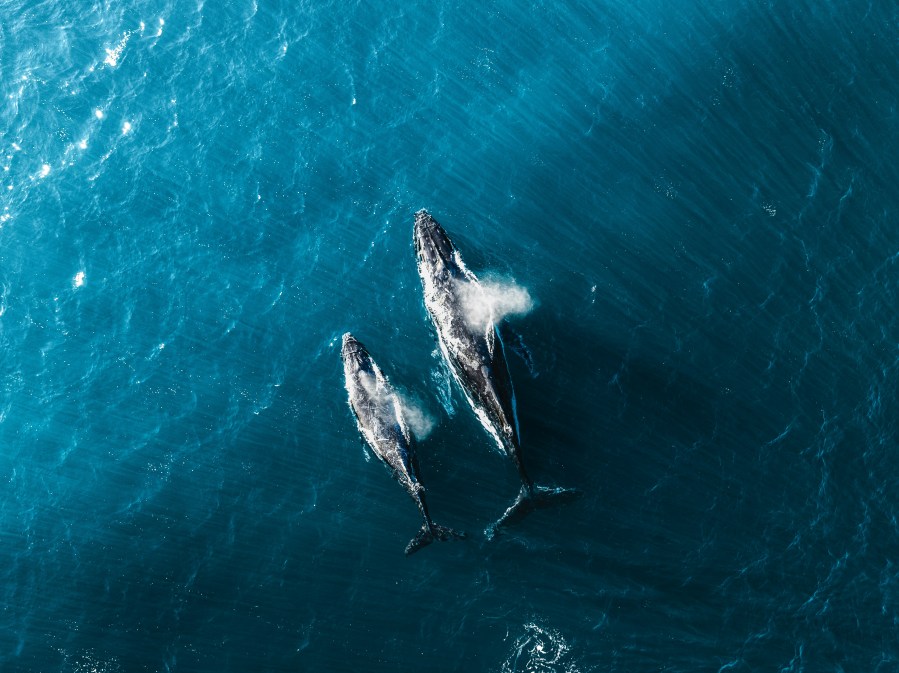
I called off from my job as an IT Support Specialist at the local college Tuesday, and whether as punishment or absolution, was eaten by a whale. If you want to be technical about it, I wasn’t eaten so much as I was in its mouth. The esophagus of a humpback whale is too small to swallow a basketball, let alone an adult human male with a little extra around his midsection. I found that out later, when I saw a marine biologist talking about the incident on TV. 

My buddy Frank, who brought me kayaking that day, thanked me after. He said this was going to blow up his channel. Then he dropped me off at the hospital because of my “creepy smile and dead eyes.” The docs said I was in shock and gave me a full check-up. Seemed like everybody who worked there wanted to poke and prod at me and ask me questions. When they asked me what it was like inside the whale, I forced a laugh, said, “Dark and smelly!” 

To tell the truth of it was impossible. Hell, I didn’t even understand the truth of it myself. 

Mary picked me up at the hospital later. That one eyebrow of hers already raised, as if this was something I had done just to annoy her.

“You ok then?” she asked.

“Yeah, let’s go home,” I said. I reached out for her, but she was already halfway to the parking lot. 

In the car, she was quiet. I watched her chew the inside of her cheek. She turned on the radio and they were talking about me. She turned it off. 

“I don’t see what business you had being anywhere near a whale,” she said. 

“Frank said kayaking would help us relax some is all,” I said. I couldn’t explain it to her. The sameness of my days. She’d tell me that’s what life is for everyone. Why would you think you deserved more than the rest of us, she’d ask. 

“Frank is unemployed and a moron, you shouldn’t listen to him about anything,” she scoffed. “Case in point! I’m sure your boss will be glad to know you were too sick to work yet felt good enough to be swallowed by a whale.” 

“I wasn’t swallowed, Mary. I was just in its mouth for a little bit,” I said. “Frank sent me a video, let me show you.”

“In case you were wondering, I’d already had a massively shitty day, so thank you for all of this.” She pulled into our driveway and got out. “Anyways, it’s all over the internet. I’ve already seen it.” 

Mary’s put up with a lot over the last fifteen years. I get stuck in my head and forget things. I forget her. The only thing I brought to the relationship was being able to make her laugh. 

 “Then you saw how that whale spat me out like I was a band-aid in a pot roast! Like I was some factory worker’s finger in a can of pop! Like I was a pubic hair hidden underneath a burger bun!”

She flipped me the bird, which for Mary is darn close to a declaration of love, and maybe forgiveness too. 

Inside the house, I sat on the couch. “My life flashed before my eyes, you know.”

“What’d you see?” Mary asked.

“Not much,” I said. “Not much at all.”

“Sounds about right,” sighed Mary, sliding a frozen pizza into the oven. 

*

I sat on the toilet watching the clip again and again while Mary slept in our bedroom. There’s me on the water in my red kayak, paddling lazily. A bait ball explodes underneath me, silver fish launch into the air, then rain down on me. A half second later there’s a giant emerging from the ocean, mouth open wide. You can see me rise into the air, the kayak shooting up and away, now empty, and the whale returning below the water. Not even a second later I appear on the surface. 

That I was gone for less than a second didn’t make sense. All I can think is that time works different for a whale, that it operates on its own scale and when I dropped in, it all slowed down for me too. The seconds turned to minutes turned to hours turned to days and there I was submerged in that wet, black cave, the waves and their echo roaring in my ears. I was a speck. I was a nothing. Tiny and absurd is what I was. Am. 

I found a playlist of whale song, stuffed my headphones in my ears, and crawled into bed next to Mary. I pulled her tight the way she likes. She squeezed me back. The whales called to each other. Lonely, it seemed.  I imagined myself sloshing around in that black womb. I closed my eyes to make it darker.

*

Mary called it my Jonah Day. She hummed “Under the Sea” while she washed the dishes. She asked if I wanted to role-play as merfolk. Then, when she saw the teasing hurt me, she got mad again and asked why she never got to have fun. 

“What do you mean, fun?” I asked. 

“I mean, I used to be a person that did things. Like kayaking or jumping off a cliff into water. With you, sometimes. Remember?” 

I had made so many wrong assumptions about what Mary wanted from life and me. I forgot that side of her and we both lost out. 

 “So, neither of us are happy,” I said. 

“But you’re different now.” 

I tried to explain how I’d concluded that man held an outsized view of himself. How we loomed too large on this earth, in no way proportionate to the value we brought. I rambled about wars and climate change and mass extinction events. I told her that whatever fork on the evolutionary road led to us climbing up on land was a mistake.

“We’ve certainly made a mess of things up here.” She nodded her head, thinking. “And you want to go back?”

“Will you come with me?”

We busted into Frank’s garage, left a note that said, “Gone Fishing.” We tied the kayaks to the top of our car. It was night and no one saw us back up to the boat ramp. The ocean calm, we paddled side by side. Mary looked up at the stars. I told her I read online that you could take a scoop of this water, and it would contain more life than stars in the sky. 

Mary cupped the water in her hands, brought it close to her face. “Pleased to make your acquaintance,” she said.

We pulled our oars through the black water. We let ourselves be swallowed up by the enormity of the night sky above us and the sea and all the life it contained below us. We looked everywhere but back. 

We were specks, we were nothings, we were tiny and absurd, together.

Melissa Rudick is a writer living in Lehigh Valley, Pennsylvania. Her work is forthcoming in Vestal Review and The Blood Orange Review. She is currently at work on her first novel. You’ll most likely find her wherever there’s milkweed, looking for monarch eggs.

onwards and without delay by Alexandra Nwigwe

Well, I was late because I took the scenic route
to work, as in I missed my stop, too busy looking

up how to stop a fight, how to walk up to a monument
and scale him to size, how to be the kind of body that moves

like the girl on the bus who stepped in between a baby and a
man with a blowtorch. Either way, there is always a body

in front of the blowtorch. On the pucker-skinned road to Umueze,
you are the only one crying, my mother says

after a lurch pushes me out my skin, one inch closer
to the rifle in the front seat, jumping as well, maw ready

to swallow the ceiling. The soldier looks back while I make
my sobs silent in the middle and my mother smiles

through my tears. Much later, she tells me she was also scared,
that she has gotten more scared with age.

This does not bode well for me.

I imagine learning to eat a punch is akin to riding a bike,
lessons harkening back to middle school when I practiced falling,

challenged boys to races during recess, turned
myself upside down in a fast from any form of grounding.

Four years ago, I fell into traffic, flew even, and the brief gulp
of air I stole was not enough to recall any of the life I’d lived,

what I’d learnt. The pain did not set in until the mirror gifted me
with a busted lip and a torn up chin. I fended off my vanity by

holding hands with the dark.                           No, I kid. I walked
around with a swollen jaw to the tune of tire squeals.

ALEXANDRA NWIGWE is an engineer and writer based in San Francisco. She finds solace in making art with her hands and capturing her memories, whether through poetry or photography. Her photography has appeared in Lucky Jefferson, and her poetry has won MIT’s Isabelle Courtivron Award and has appeared in MIT’s Rune.

Door in the Woods by Chris Scott

Sarah is hiking up ahead of me, so she’s the first to see it. She goes around the bend, says “Hey now,” and stops in her tracks. Then I see it, too. Right there in the middle of the trail is a single door, like it’s been waiting for us. The door doesn’t belong here, obviously, with no structure around it except for a simple wooden frame holding it in place. “Weird,” I say, because what else can you say? 

We circle it once. Studying Sarah’s face, I can see her wheels turning, some private communion between herself and the door that I’m not privy to. Maybe it’s some kind of art installation? The remaining relic of an old, demolished cabin? The thing about the door though: It doesn’t look like it’s been here very long. Like it hasn’t weathered the elements really at all, like it was just constructed specifically for an audience with us.

Sarah steps right up to it, tries the knob, cracks the door open a bit. And because Sarah is Sarah, she says, “I mean, we have to, right?”

The door makes me uncomfortable but I don’t know how to say this in a way that doesn’t make me seem silly. “Do we? Doesn’t really seem like it belongs here.”

“Yeah, no shit,” Sarah says, the kind of offhand dismissal to which I’ve grown accustomed lately. “Okay then, you walk around it and I’ll go through.”

“Are you sure?” We came to the woods to keep a struggling thing going. Six months of couples therapy and my eyes are constantly peeled for any wrong decision that could strain or sever our increasingly tenuous connection, that could make a trial separation less hypothetical, in the future.

“Count of three,” Sarah says, “You go around it, and I’ll go through. One…”  Her hand still on the knob, the door partly open. “Two…” I run my fingers along the frame. “Three.” I go around just as Sarah walks through, and I’m overcome with the sudden certainty that she’ll vanish, the door transporting her to the moon or Siberia. But before my fear can get away from me, she’s already through. Just a door after all.

“Alright well… shall we?” I say, continuing on the trail, eager to put the door behind us. Sarah catches up with me.

“How do you feel?” I hand her the canteen.

“I feel great,” Sarah says. “How do you feel?” Also great. We round another bend, and I look back. The door is still there, closed again. Then I’m trying to remember, did Sarah shut the door after she walked through? But she must have.

In the car on the drive home, Sarah is taking off her hiking boots in the passenger seat when she says, “I can’t believe you did that.”

“Did what?”

Sarah turns up the radio even though we’re having a conversation. Strange habit. “Walked through that creepy ass door in the middle of the woods.”

I would normally assume Sarah was being ironic, making a joke. But. Seven years together, three of them married. I can tell she’s dead serious. “What are you talking about?”

“Umm…” Sarah curls her lips. “The weird door? On the trail?”

“Yeah, I remember the door. You walked through it, I walked around. I was too chicken. Are you messing with me right now?” I turn the radio off.

“Wait, no. What? That’s completely backwards. You walked through, I went around. Are you messing with me?” Sarah pleads, her voice rising. I turn back and forth from her to the road, trying to figure this out.

“What are we talking about, Sarah?” The door in the woods was maybe an hour ago. How could she be remembering it completely wrong? But her face says: She’s asking herself the same thing about me.

I don’t understand how this is happening. We volley back and forth like this for another ten, fifteen minutes, our accounts of what happened mirroring each other’s almost perfectly, but somehow inverted and wrong. We cycle through the conflict resolution methods Dr. Owens taught us. Patiently going over the details as we clearly remember them, over and over. Then one of us will say “reset” and we’ll take a deep breath and start over, but we always end in opposite places, unable to find our way back together. Sarah says I’m not listening to her, but I am. 

I ask Sarah what it will take to put this behind us. She shrugs, says I could remember walking through. That I could remember it how she remembers it. That would be a start. I don’t know what to say to this. I don’t know how to remember something that didn’t happen. Eventually we run out of energy, just sitting in our respective silences on either side of the car. It feels so ridiculous, all of it. The door. Who went through it, who went around it. But the problem is not the fight, it’s the door. I look over at Sarah a few times but she doesn’t look back at me. She’s somewhere else now.

Later that night I’m back at the trailhead, Sarah at home asleep in our bed. Illuminated in my flashlight, everything looks different than it did earlier, otherworldly, backwards in the dark. But I know the door should be just up ahead, maybe twenty minutes jogging. Assuming it’s still there, and that’s why I’m rushing through the woods now, why I had to do this tonight. This feeling that the door will disappear if I don’t reach it in time. Thinking all the while how absurd this is, but I don’t know what else to do.

Then a wave of relief when I finally see it, waiting for me, pale wood against the moonlight, appearing even more out of place than it was earlier. But right where we left it, still. I pause briefly before the door, thinking this through, but there’s nothing to think through, not really. I take the doorknob into my hand and turn. It’s locked. I try again, harder. Locked. I walk around to the other side, just as locked.

I slam on the door with both palms, the smack echoing through the woods, spooking the animals, species I can’t identify. Then both fists pounding now, not budging, not even a little bit, but I have to get through somehow. I can’t accept otherwise, and I can’t lose Sarah to this. So I’ll be here as long as it takes. Until daybreak, until some other hikers come along who can help me, until I am able to walk through this door finally, and go home to Sarah and say: I went through just how you told it. My world is still your world and I still have a place in it, I swear. How will I ever belong anywhere else?

Chris Scott’s work has appeared or is forthcoming in The New Yorker, Flash Frog, ergot., MoonPark Review, New Flash Fiction Review, scaffold, Gone Lawn, Maudlin House, and elsewhere. His fiction was selected for Best Small Fictions 2025, and has been nominated for the Pushcart Prize and Best of the Net. He is a regular contributor for ClickHole, and an elementary school teacher in Washington, DC. You can read his writing at https://www.chrisscottwrites.com.

Hot-Desking by Maxwell Minckler

Happy Monday, Gary! Gary is one of the interns stuck
to the giant strip of sticky tape hanging over the snacks.
Morning full-timer! he buzzes furiously with his one free arm,
revolving away like a sad piñata, Let me know where you need me!
Always a pleasure, Gary, but I’m hot-desking today,
which means I can take any open desk, anywhere.
This desk is bolted to a treadmill, and I get to catch
all of these falling motivational weights while I work.
This desk hangs half out of a top-story window,
to keep an eye on the competition.
This desk is in a vat of coffee — a soggy one, but productive.
This desk is a ping-pong ball with something alive inside it.
This desk is in a lion’s mouth.
This desk is made of something called wood, I think.
How to choose! There’s so much opportunity here!
Then I see it. Tucked in a corner, practically sizzling.
A desk designed to perfectly match my father’s,
smoldering with unfinished novels and seventy-five years
of undiagnosed magical thinking. They’ve even baked
his stay-at-home shame into the chair just right,
nicotine-yellow and padded with burnt job applications.
Here’s his electric typewriter with the E, V, O, and L keys missing.
The Mennin-green aftershave lighting puts the iron wool
of his beard right over my shoulder again,
half an inch above my next keystroke.
Such attention to detail! Management sure knows
how to show they care, to prove we’re part of the family.
Gary is weeping quietly again as the workday
comes to an end, and his feet begin to crisp and smoke.
So beautiful, he mutters to himself,
such beautiful, beautiful hot desks.

MAXWELL MINCKLER’s poems have appeared or are forthcoming in The Atlanta Review, Ambit, Krax, Okay Donkey, The Interpreter’s House, Obsessed with Pipework, and others. He holds an MFA from Durham University UK, was honored to win Lafayette College’s MacKnight Black Poetry Prize, and placed second in the New Writers UK poetry contest.  Originally from Hawaii, Max lives, writes, and works on tech-ish things around England.

13.1 Septillion Pounds by Emily Rinkema

To help her sleep, we give the baby a basketball, a full-size regulation ball that my husband, CT, puts in her crib one night. He writes her name on it with a black Sharpie, bold letters like they would appear on a jersey.

“Ten months is a little young,” I say.

“Never too early for our little athlete,” he says. CT played college ball for a season until he blew out his knee. The first thing he said when he held her was that she was the longest baby he’d ever seen. She came home from the hospital in a UCONN onesie.

When I check on her before I go to bed, she’s still awake with one tiny hand on the ball. She’s never been a good sleeper, but the last month has been significantly worse. She just stares at the slowly spinning mobile of the galaxy above her head, sometimes reaches for it with her fists. I kiss her on the forehead and whisper that the basketball is like the earth. A little poet is never too young for simile. 

In the morning, CT makes us coffee while I go get the baby. She’s asleep. The basketball is on the floor under the crib and the Sharpie is clutched in her hand. I turn on the light.

The walls are covered with math. Math formulas and numbers and equations and graphs and angles and shapes and arrows that direct us from next to the crib to above the changing table to the closet door to behind the rocker and under the window and then back to the crib. 

“Oh, fuck,” says CT, handing me a mug of coffee.

“Language,” I whisper.

“But,” he says, looking around.

“Yeah, fuck,” I say.

CT calls a mathematician while I try to feed the baby, but she wants nothing to do with the Cheerios or blueberries I put in front of her. She just bangs her spoon on the table. She’s got dark circles under her eyes and it’s like looking in a mirror. I can’t remember the last time I’ve slept through the night.

“We did this,” I say to CT, who is now Googling “baby math.” 

“Did what?” He asks.

“Stressed her out,” I say.

“Maybe it’s just math,” he says, putting some pumpkin puree down in front of the baby. “Maybe it’s nothing.” 

I spoon out some puree and bring it towards her, but she just clamps her mouth shut and grabs the spoon. I call my mom and ask if she can come over for a bit.

My mother agrees to take the baby to the park while we meet with the mathematicians. The park’s only a few blocks away, but with all the gear, I suggest she takes the car. On her way out the door, baby on one hip, car seat hooked over her elbow, she raises her eyebrows at me and says, “I told you she was gifted.” She kisses the baby on the top of her head and coos, “Gramma’s little genius.”

Two mathematicians arrive a few minutes later. They are younger than I expected. One is wearing a sweater vest. They both have glasses and are carrying briefcases. The men stand in the middle of the nursery and turn slowly from wall to wall to wall. The taller of the two men takes off his glasses and cleans them. He puts them back on. He opens his briefcase, takes out a notebook, and writes something down. He closes his notebook.

“Well?” asks CT, sitting down in the rocker. 

“Wow,” says the shorter man. “Amazing, really,” he says, taking a deep breath. He points at the wall under the crib. “She starts by calculating the weight of the earth,” he says.

“She’s a baby,” says CT.

“That’s pretty simple math, actually,” the mathematician says, “She just needs the weight of any sphere,” he points at the basketball, “and then she can plug it into Newton’s formula for universal gravitational attraction.” 

The taller man interrupts. “It gets much more sophisticated over here,” he says, pointing to the left of the closet. He bounces a bit on his toes.  “It looks like she’s using semi-parametric predictive modeling to determine existential risk.” He leans towards the wall and squints. He wipes his hands on his pants. He looks at the shorter man and shakes his head. 

 “Wait,” the shorter man says, “Is that strategy optimization for carbon reduction at the bottom of the door?” 

I stare at him, waiting for something I understand, a word, a phrase, a gesture. CT puts his head in his hands. “I have no idea what’s happening,” he says.

“I think she’s looking for a solution,” the tall man says, and when we don’t respond, he says, as if we’re children, “To climate change.”

“But,” I say, and I don’t know what comes after that. I don’t even know what to ask. I think of everything we’ve ever said in front of her, thinking she couldn’t understand. We watch the news during playtime. We listen to NPR in the car. We fight about solar panels and electric cars and how much meat to eat. When I was pregnant, we even fought about whether it was responsible to bring a baby into this world. Did she hear all that? Did she feel it?

CT stands up. “This is fucking ridiculous,” he says. He’s the one who suggested Meatless Mondays. He’s the one who wants a Prius. He’s the one who thought we should skip flying to see his parents this year so we could afford panels on our roof. 

“Wait,” the shorter man says, and looks at his partner for confirmation. He points to the right of the door. “There. Is she using partial differential equations to see if…” and then he stops, squatting in front of the wall nearest the crib. He shakes his head. The taller man keeps putting his hands in his pockets and taking them out again. “It looks like she gave up.” He’s tapping the wall where our baby scribbled with the Sharpie, age appropriate markings that in another world could have been made with crayon or finger paint. “She gave up,” he repeats. 

“She’s a fucking baby,” CT says, and his voice cracks. “A fucking baby.”

“I just want her to be happy,” I say.  “I just want her to write poetry,” I say. CT pulls me into a hug. “Or play basketball,” I say into his neck.

“She can be a poet-athlete,” he says, and we both start to cry.

I check on the baby before I go to bed. Her room still smells of fresh paint, a new color CT picked up at the hardware store after the mathematicians left this morning. Butter yellow to match the stuffed duck he bought on his way home. While the baby napped this afternoon, I took down the universe mobile and replaced it with the one his sister bought us for the baby shower–green giraffes and purple hippos–and CT painted over the math. We’d thought about keeping it, but decided it was all just too heavy for a baby.

“It’s a clean slate,” he’d said when he finished.

The baby is awake and content. She moves her hands in front of her face as if she’s in awe of them, as if she’s still working out whose they are. It’s the way she used to look at me. 

“It’s a blank page,” I whisper to her now, and kiss her on the forehead. And before I leave, I tuck a Sharpie into the corner of her crib, just in case.

Emily Rinkema lives and writes in northern Vermont, USA. Her writing has recently appeared in SmokeLong Quarterly, X-R-A-Y Lit, Variant Lit, and Flash Frog, and she has stories in the Best American Nonrequired Reading, Bath Flash, and Oxford Flash anthologies. She won the 2024 Cambridge Prize and the 2024 Lascaux Prize for flash fiction. You can read her work on her website (https://emilyrinkema.wixsite.com/my-site) or follow her on X, BS, or IG (@emilyrinkema).

Pete the Cat: All Grown Up & Alone In His Car by Emily Dressler

with help from my daughter


At the library,
we walk past Pete the Cat
and you say it’s weird and sad
how you grow up with these books
but they don’t keep growing with you.
Like, Pete the Cat doesn’t go to 5th grade
and lose a preschool best friend,
find humiliation from a teacher,
have ALICE drills
(but you did those in kindergarten too, I
want to remind you, but don’t
because Pete the Cat never does that shit),
strategize about how to take his pads
into the bathroom.

Like, Pete the Cat Gets Braces? I ask.
You smile and say, Pete the Cat Kisses a Girl with Braces.
That’s good, I nod.
We walk past a book titled
My Parents Forgot How to be Friends.
Pete the Cat Has Two Houses Now

you say, pointing.
I laugh. Poor Pete.
We’re going to put him through a lot:

Pete the Cat Learns to Lie
Pete the Cat Becomes Lactose Intolerant

That comes later, I say,
when he cares more.
For now, he is carefree:

Pete the Cat Finds Joy,
in which he learns how to love
being alone, and eats vegetarian
crunchwrap supremes in his car. He’s
happy, he really is. He doesn’t tell
anyone about the parking lot meals
even though they feel like the most
real part of him.

EMILY DRESSLER lives and works in Northeast Ohio. She works as a proofreader for a global ad agency. Her flash fiction has recently appeared in Villain Era Lit.

All the Friends I Could Have Made are Having Fun Without Me by Mackenzie McGee

Alexis throws a big party and everyone’s invited. She lives a half-hour drive from her childhood home, the one with the big bay window and the basement where we had sleepovers every other weekend for most of high school. 

I imagine she’s done well for herself. Her new townhome is in the affluent suburb that kids in our marginally less affluent suburb used to mock. Her Instagram is all pictures of her rescue corgi. Her Facebook is all tagged photos of her at friends’ weddings and thirtieth birthdays, but she’s not thinking about any of them right now. Tonight, she’s fifteen again, and she’s worried I won’t show.

It’s a cool summer evening in Minnesota. From the street I can see the glow of the string lights crisscrossing her treeless backyard. Citronella wafts through the air. I imagine there are two coolers on the concrete patio. The one on the right is stocked with beer and sparkling water. The one on the left is full of Monster Energy Drinks, the Zero Ultra flavor we were obsessed with in tenth grade. Alexis used to buy them two-for-three on her way to our 7 a.m. social studies class. She’s wearing a bracelet made from the can tabs we saved.

Teo’s the first guest to arrive. He pedals down the sidewalk on his childhood mountain bike. I crouch in my car when he passes by. Alexis notices the Jersey in his accent. She asks him, as she will ask everyone, how he knows me. 

He says we met Thanksgiving weekend twenty-five years ago, oh, maybe twenty-two. I was in town visiting my cousins. We were playing basketball in the driveway when he rode up and asked if we wanted to play Nintendo. I loved Nintendo and I hated my cousins, but they were older than me, and they hated Teo. They said he was weird, and when I asked why, they said I was weird too. I’d heard this before. I thought if I could make them like me then it wouldn’t be true.

Michaela comes in as Teo’s finishing his story. She carries her sharpie-covered JanSport on one shoulder, all cool and casual. She shrugs it off to dig for the mix CD she burned for the evening. 

Michaela and I—we shared a cabin at summer camp. We bonded over emo music and the art of tie-dye. We exchanged numbers. She called my house twice that August. I let the phone ring as I tried and failed to conjure a voice full of carefree enthusiasm, the self I could be away from myself. She couldn’t know that the real me was awkward and uncertain, that camp-me was a façade. This was years before I knew to call it fear, not fraud. Michaela left a couple of voicemails. She shrugs like, what are you gonna do?

Alexis nods. That is so like me.

The fashionably late arrive in clusters. Coworkers from my first full-time job sit on the kitchen counter sipping PBRs. Some of my sisters’ friends make friends with my brothers’ friends and share the wisdom I was too awkward to ask for: how to print in pretty bubble letters; how to tell when someone like-likes you, how to tell when someone likes you at all. 

The nice busboy from my short-lived waitressing career is using chunks of cheese to teach Alexis’ corgi to sit. He tells her about the time I got awful hives from the wool scarf I wore to work. He brought Benadryl, just in case. He asks if I RVSPed. Alexis lies and says I texted her to say I’m running late. She doesn’t want people to give up on me just yet.

The biochem TA offers charcuterie to the cute librarian who works the closing shift. The rec league volleyball team I quit after two practices arrives in two consecutive carpools. They dance ironically, and then, a few drinks in, it’s not ironic anymore.

And then they hear it: the drumline’s cadence, the drum major’s whistle. The crowd flows into the front yard to see my high school marching band chair-stepping up the street. Their teenage bodies carry the muscle memory of these instruments, and some of them are really, really good. Someone jumps on the upright piano and leads the living room in a singalong of “Don’t Stop Believing.” The party is in full swing. All that’s missing is me.

I’m still outside, sure I’m about to go home but not ready to admit it yet. I’ll wait in my car five more minutes, and then I’ll go in. I’ll walk through the front door and everyone will cheer, like I’m a fan favorite in a sitcom. There’ll be a big sheet cake decorated with loopy icing in the shape of my name. Everyone will want to know what I’ve been up to, how I’ve been. No one will be mad at me for not calling or texting them back.

I have a minute left when Alexis steps into the front yard, carrying a corner slice of cake on a paper plate. I watch over the steering wheel as she tiptoes between the instruments scattered on the grass. She finds a clear spot to sit cross-legged with the plate in her lap. She looks down the street, down the way I came, and waits for me.

We had every one of our sleepovers at her place, every other weekend for about three years. Then one day, we didn’t. A month went by, and then another. Growing up I often felt, sometimes I still feel, there had been a lesson in kindergarten about how to be a person in the world on a day that I, and only I, had missed. I had wanted to invite Alexis over and return the favor. For a long time, I didn’t know how.

Now everyone inside is getting to know each other and having a good time. Alexis should be inside having a good time. Someone should ask her how she knows me. She was kind enough to host, after all.

I shut the car door behind me. Alexis’ ponytail whips around at the sound. She waves me over and says she’s so glad I’m here, even if the part of the party that was for me is over. The cake has been cut; the end time on the invitation has come and gone. The music is louder than ever. Colored lights flash in the windows. That party, she says, has taken on a life of its own.

She doesn’t ask me to go inside. We sit in the grass and split the slice, taking turns taking bites. The can tab bracelet shushes softly on her wrist. It’s just how I remember it—two of the tabs face the wrong way, their silver underbellies exposed. We watch as guests slowly trickle home in new configurations of designated drivers and rideshares. For each one she says, look. They came here for you. Isn’t that nice? Everyone together, here tonight, and it’s all because of you.

Mackenzie McGee is a winner of the 2021 Pen/Dau Short Story Prize for Emerging Writers. Her fiction can be found in Nat. Brut, Alaska Quarterly Review, Cease, Cows, and elsewhere. She earned her MFA from the University of Arkansas, and she’s currently pursuing a PhD at the University of Kansas.

Vanishing Twin by Jessica Ballen

dear sister with the disappearing yolk, had I been less
starved, perhaps you’d have survived the utero scramble.
who were you before I absorbed your gobbledygoo?
would we have grown sitting at the same table, watching
grandma’s slippers shuffle to the kitchen before dawn?
her birdlike wrist, swift like a woman who has always
been bird, winding up a fork for a good whipping,
two eggs whirling into one. you and I
eyeing the tidal wave, that summersault and undertow,
our mouths cracking for the carved challah soak, the wet

before the burning, the dry. were you someone
who fried whole bodies, learning to eat
yourself? I lent you my ear as a parting gift; it was only fair.
did you swallow that part of me? me? I’m always inhaling—
but you already knew that, my copycat. never mind
the mother bird who chewed and spat. were we not the same
swallow splitting the same cracked house, fork tail,
sad song, yoked together before the beak sliced
our cord? I eat things that flit outside myself.
digest them hard. I don’t make the rules.

a greyhound and her owner walk outside
the windows of my life. on the porch, while I fill
feeders and baths, I wonder if the hound is you,
skinny legs reborn. stringy like a sprinkled fawn.
when I look again, the seeds spill.
one time I spotted a red-tail clawing a rabbit,
but it didn’t seem real. so I did a double-take
from my passing car, but the field was a sea of grass,
silent. that’s when I turned to the passenger’s seat
and said that’s you, dear sister. that’s us.

JESSICA BALLEN, MFA, is a disabled poet who serves as Editor in Chief of Lunch Ticket, Managing Editor of Defunkt Magazine, Senior Editor at Small Harbor Publishing, and guest editor for Frontier Poetry. Their work can be found or is forthcoming in RHINO Poetry, Harbor Review, and Ghost City Review (among others). You can find them compulsively posting on their Instagram stories @_j___esus, listening to dream pop with their four cats, and dancing in the Willamette River with their writer husband, SHT.

98. by Jordyn Damato

  1. There’s something wrong with my head
  2. It’s not a bump
  3. I wish it was a bump
  4. Even if it was a gross, protruding bump that made people afraid to look at me 
  5. I could handle that 
  6. I would dress it up—draw a face on it or something. I don’t know. 
  7. Make it pretty. 
  8. I can’t make the inside pretty. 
  9. I wish I could but
  10. I can’t 
  11. These are some thoughts that infect me 
  12.  Scream right now. Right now. Do it. 
  13.  Flip the table. Now. Flip it or hold your breath until you pass out. 
  14.  Hold your breath until you pass out. Do it. 
  15. I do it. 
  16. I have to do it. 
  17. Scream, pass out, flip things. 
  18. If I don’t, I will die. 
  19. If I don’t, my whole family will die. 
  20. My family is small and not very nice to me but I still don’t want to see them die. 
  21. I saw my twin brother die
  22. When we were kids 
  23. I was not a fan. 
  24. I doubt he was, either. 
  25. Or maybe he was. 
  26. He doesn’t have a voice in his head. 
  27. He doesn’t have a head 
  28. Or a voice
  29. Sorry. 
  30. I guess in many ways, I’m the lucky one 
  31. Mom told me that before 
  32.  Don’t you know how lucky you are? 
  33. After I got sent home from school for stripping naked and attempting to flush my clothes down the toilet 
  34. I made a mess 
  35.  A huge fucking mess! Mom yelled 
  36. I told her it wasn’t me 
  37. It was the voice 
  38.  Newsflash, Tommy! 
  39. It wasn’t a yell, it was a scream. 
  40.  EVERYONE has a voice in their head 
  41. It echoed in my room with two beds 
  42.  You’re not special—don’t give me that bullshit excuse! 
  43. I don’t think I’m special, I wanted to tell her 
  44. I think I’m cursed 
  45. But the words didn’t come out 
  46. Instead, urine came out 
  47.  Piss yourself. Piss yourself right fucking now or else your heart is going to stop. 
  48. I peed. 
  49. Mom screamed. 
  50. Dad came in 
  51. He was drunk 
  52. He pushed me against the wall 
  53. I hit my head 
  54. I hoped for a bump 
  55. (An explanation) 
  56. He spit as he screamed 
  57.  Why do you have to make everything so hard on us? 
  58.  No bump ever formed. 
  59. (No explanation)
  60. He shook my shoulders
  61. Banged my head again 
  62.  You’re so goddamn selfish! 
  63. Through tears and over dad’s shoulder, I saw mom on her knees with disinfectant spray and a rag
  64. I closed my eyes 
  65. I Imagined Tyler’s face 
  66. But it’s the same as my face 
  67. So it didn’t help 
  68. I can’t stand being in this body 
  69. My body 
  70. I miss Tyler
  71. I miss his voice 
  72. I miss the way he could read my mind 
  73. I miss having hot dog eating competitions with him 
  74. I miss winning 
  75. I miss not having a stranger’s voice in my head 
  76.        
  77. I think mom and dad think it’s my fault that he died 
  78. As if I told the drunk driver to be drunk at 7:30am 
  79. As if I told the drunk driver to swerve off the road 
  80. As if I told Tyler to walk on the side closest to the drunk driver  
  81. I broke my arm 
  82. And bumped my head 
  83. But no one seems to remember 
  84. Or care 
  85. Or miss the old me 
  86. I miss the old me 
  87. I miss my old family 
  88. I miss the warmth of the sun on my skin 
  89. The friends I used to have 
  90. The brain I used to own 
  91. It’s a scary thing 
  92. To not own your body anymore 
  93. To not be believed 
  94. To not be trusted 
  95. To keep everyone around you alive every single day, no matter the cost
  96. And to never, ever even hear the words
  97. Thank you 

Jordyn Damato is a writer, lover, dreamer, in that order. She is currently an MFA fiction candidate at Miami University in Oxford, Ohio. Her work has appeared in Brilliant Flash Fiction and Bullshit Lit. Her favorite thing to do is hug.