When Astronauts Landed in Our Neighborhood by James R. Gapinski

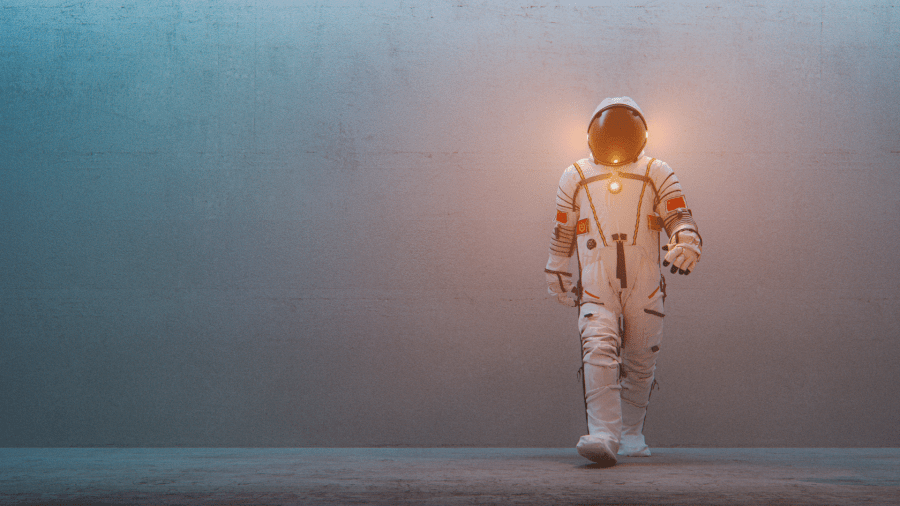
They touched down near the 7-Eleven, just off MLK and Sumner. Four of them, decked out in full spacesuits, large boots heavy in this new gravity, labored breathing moving through their suits like Darth Vader with asthma. They emerged from their spaceship to the tree-lined streets of Portland in an early December downpour. Rain hissed and evaporated as it pelted the hot spaceship exterior. Had they come six months earlier, they would’ve experienced that moment in June, just after the cold snaps, but long before wildfire smoke tinged the sky. A magical time when gentle Spring sun gave way to street fairs, buskers, food trucks, and rosebuds brimming with promise.

The astronauts pushed past gathering crowds. Some neighbors tried to offer umbrellas, but the astronauts couldn’t be bothered that first day. They needed to build shelters before nightfall. They established basecamp in the O’Riley Auto Parts parking lot. They set up portable habitats and sensors on tripods and a recharging station for their rover.

On the second day, the astronauts left basecamp as more rainclouds darkened the sky. They moved slowly around a four-block perimeter. They peered at dormant plant life and captured a pigeon. They inspected mailboxes and fenceposts, staring from behind their mirrored face shields, rain-streaked and beginning to fog. They were faceless and formless under these helmets, so alien-like, even though CNN reported that they had launched from the Kennedy Space Center in Florida several months earlier.

The neighborhood yet again took interest in this development. This time, the astronauts were more willing to engage. They asked lots of questions. For example: What do you call this place? In response: This is America. The astronauts looked around, seemingly unsure, as if they had already visited America and knew this wasn’t it. For another example: How long have your people lived here?

Eventually, the astronauts’ daily explorations expanded into the 7-Eleven. They inspected the shelves, picking up packages of Fritos and holding them beside some Funions for comparison. Having little money to purchase Fritos, Funions, or lotto tickets, the astronauts began asking for trades. They wanted to barter their freeze-dried rations and anti-gravity self-inking pens and spare bundles of wire and bolts and duct tape. In return, they wanted Krispy Kreme and hotdogs. They wanted glossy fashion magazines. They wanted Red Bull and cans of Starbucks Cold Brew.

Soon, the astronauts tired of the 7-Eleven, and they traded for more expensive items. They wanted to-go orders from some hip Alberta Street eateries. They wanted local art. They wanted televisions and stereo equipment. They cited all sorts of scientific reasons for these requests. For example: We’d like to study the effects of sonic distortions of Lizzo’s new album on your neighborhood’s atmospheric properties. For another example: The chemical properties of a small batch craft IPA could lead to breakthroughs in understanding human metabolic functional variance.

The astronauts got what they wanted because they were astronauts, and the neighborhood people knew that astronauts were admired and respected. The neighbors said emphatic things about the importance of this mission. For example: I’m glad I can do my part! Astronauts are the last true heroes. For another example: Sure! Anything you need. Did you know that Buzz Aldrin spoke at my high school graduation back in the day?

Though if anyone asked the neighbors in private, they’d admit they were thinking about more than civic duty. They were happy to get a souvenir from a bona fide NASA mission. They suspected that all these trades would be profitable. They went on eBay and OfferUp to see how much each collectable object might fetch them. In time, they learned that nobody cared about NASA trinkets unless it was something from the Apollo missions.

Trade relations soured. The astronauts went back to freeze-dried rations until they all began to complain. For example: Fuck this shit. Three of the astronauts took their little rechargeable rover into the rainy wastelands beyond their usual four-block perimeter. They sought other neighborhood frontiers, scouting for new sources of food and drink and culture and luxury and wealth—all for the sake of scientific cataloging, of course.

They left just one crew member to guard the skeletal remains of basecamp, already low on supplies, tarps fraying in the cold breeze, power generator flickering more often than not. The lone astronaut deterred gawkers. For example: Keep moving, shithead. She chewed on her freeze-dried rations with contempt. She collected rainwater in buckets. She dug up a pile of weeds and burned them for heat. She dissected a raccoon and smeared its blood on her helmet. She threw bricks through the 7-Eleven’s windows. For science.

The astronaut waited nearly a week for her team to return, but they never did. She feared her fellow astronauts had been lost to the wilds just beyond Lombard Street. She informed ground control that the mission had been a failure. She told them that this planet was harsh and ruthless. For example: It’s a shithole. Needs terraforming. The next crew needs drills. Big ones.

The astronaut initiated the launch sequence. She began her long, solitary journey into the cosmos, arcing deep into the cold void for months on-end. Finally, she reached an apex, reversed thrusters, and plummeted down, down, down to a sunny Florida landing site where she was hailed a hero. She did a press circuit. She wrote a memoir. She visited our neighborhood again to give a guest lecture at PCC’s Cascade campus—this time, she came during the summertime. Her Delta Airlines flight touched down at the PDX airport with enough time for a quick in-and-out on her way to a more important stop in Los Angeles. She congratulated a scholarship recipient and said inspirational things. For example: The children are our future. She shook hands with the college president.

In her guest lecture, the astronaut told us all about her mission to Portland and everything that she learned about our neighborhood. For example:


James R. Gapinski is the author of The Last Dinosaurs of Portland (Bottlecap Press, 2021), Fruit Rot (Etchings Press, 2020), Edge of the Known Bus Line (Etchings Press, 2018), and Messiah Tortoise (Red Bird Chapbooks, 2018). James teaches for Southern New Hampshire University’s MFA program, and they edit for Conium Press.

Comet as Paperboy by Samantha Blysse Haviland

He packs a lunch of phosphorus and amino acids
and enough water to cool a dwarf star. Overworked

and underpaid, he crash lands on an insignificant rock.
The heat from the nearest star thaws out his frozen meal

which he garnishes with iron from the planet’s core.
The home office calls him and asks why he has taken

his lunch break so early. Comet as paperboy tells
the home office to fuck off. The next day more comets join him,

each one carrying a tv dinner that he helps bring to life;
the shelves fill with meatloaf and lasagna. Home office calls again.

What’s this? You’ve formed a union now? Well, what
are your demands? Comet as paperboy hangs up. The comets burn

their phones in the lava pits, sulfur smoke sits in the air.
The stars shine brighter with jealousy, with bitterness—

their readers can get their news the old-fashioned way from now on,
the comets decide. They can wait for the light to reach them.


Samantha Blysse Haviland is from Mamaroneck, New York. Their work has been recognized nationally by the Scholastic Art and Writing Awards and has previously appeared in Ninth Letter, Blue Marble Review, and Lumiere. They enjoy writing in all genres and are especially fond of experimental work.

Ghouls by Gordon Brown

Nobody dares say it aloud but there’s a sense of appreciation surrounding Clyde’s death. Which is a horrible thing to say, but nobody says it. We think it. Feel it. Tell ourselves, walking home from school on long, thin October days, that these are the same trees he used to walk past, the same dark-eyed houses, the same sightless stone cherubs, balancing bird baths on their hideous heads. We make pilgrimages to his parents’ house, pretending to have been his friends. We make up stories. Paint him as the reluctant hero, the well-meaning villain, the inciting incident in tales of junior-year bravado. His parents never notice the plot holes in the homespun mythology. It must make them happy to imagine their son was so loved – that the secret sadness inside him wasn’t so gigantic that it eclipsed everything else that he was.

Sometimes we’re taken up to his room, preserved exactly how it was the day-of. Bed unmade. Heartbreaking participation trophies with cheap-plastic divers dangling forever. Family portrait, Clyde-age-twelve, looking out at the camera with a sullen expression, like he somehow suspected that this picture, the zit on his chin, would last forever. For some reason, we always let ourselves think that this time the mysterious glow around Clyde’s death will be bright enough to blot out the truth of his life, which seemed normal and boring and sad and a little too much exactly like ours. Clyde’s parents will cross the room, hovering lovingly over the framed photo, leaning into each other, oblivious to our quick fingers sliding a GOOD EFFORT ribbon off a nail in the wall or an ossified fortune cookie off the dresser. Fresh produce for the Clyde-economy, which is still thriving, still flooded with counterfeits.

The only way to tell what baby tooth or pencil-mauled-by-bitemarks is the authentic article and which was a cheap imitation is by the stories they come wrapped in. The Zippo lighter Clyde won in a bet.  The cathedral in a snow globe, from some trip to Europe his family took, which Clyde confessed, high at a party he probably never went to, was the first and last time he ever felt he belonged somewhere. 

The best way to make a Clyde story sound real is to simply insert his name when you’re telling a story about yourself. The time you shot a bird with a BB gun and felt so wretched afterward that you spent all day and most of the evening trying to find her nest and eggs, never once questioning if she had either or if she was even a she. The time you hid in the clothes rack at a thrift store to see if they’d lock you in at closing, and the terror you felt when they actually did. The real way you got fired from your first summer job, not the story you told your parents to save face. You got to see which sins were forgivable. You could finally feel free after puking it out of you. It didn’t matter what you’d say, how humiliating or inexcusable it was, because it wasn’t you, it was Clyde, and Clyde’s fucking dead. 

His final moments were bad and slow, if the stories were to be believed. Bad and slow and lonely. It’s common knowledge, even among some adults, that if you manage to sneak into the indoor pool after-hours you can see Clyde, pale and transparent, caught in an endless swan dive towards the bone-dry bottom. Or that his face lingers in certain bathroom mirrors. Or that if you pick the right booth in a certain Chinese restaurant after sunset, you can feel cold fingers brush yours as you reach for your fortune cookie. We don’t tell his parents those stories. Those are for us. We need them – especially these days. When knock-offs and relics of the one-true Clyde have accumulated in our own houses for so long that we can no longer tell which had once been his and which had been ours all along. Or when it’s late at night, when we’re stuck awake with the sound of Clyde’s bare feet springing up and down on the diving board, those stories really help. Which is a horrible thing to say and the reason nobody says it. We just think it. Feel it. That, if this is what happens when you die badly enough, then maybe there’s hope for us all.


Gordon Brown grew up in the deserts of Syria and now lives in the deserts of Nevada. Since arriving in the New World, his work has previously appeared in Hunger Mountain Review, McSweeney’s Internet Tendency, Nightscript, and elsewhere. He spends his time writing feverishly and looking after his cats, of which he has none.

No Residue by Samantha Samakande

I have always known
that before I shed
my mother’s body,

                I was planned,
                planted,
                waited for.

I flirt
with this knowing,
let it irrigate me

                from the inside out, let it
                drift in my hallways
                unpinnable but crisp,

sampling
what it means to be
shamelessly permanent.

                Still, when I slip
                out of bed I want it,
                that pop,

that blink,
that quiet dissolve,
that immediate

                oblivion bubbles do.
                I want it neat,
                I want no residue,

but I will loiter in the sacks
of my father’s lungs,
kink up my mother’s gut,

                gouge a pit ravenous
                as a tapeworm, crust over
                my husband’s lips, another stale

husk of skin between him
and the lovers who will sip
him after I am finished—

                brand them all,
                stubborn as girlhood
                scrapes on knees.

When I leave
it will not be clean.


Samantha Samakande is a Zimbabwean poet currently based out of Bloomfield, NJ where she resides with her husband. She is a graduate of Allegheny College and is an Editor for F(r)iction. Her work has appeared in The South Florida Poetry Journal, Sugar House Review, Pif Magazine, The Indianapolis Review, and Gordon Square Review, among others. In 2020, she was the second-place winner of Frontier Poetry’s Award for New Poets.

Ka, Ba, and Akh by Becky Robison

I don’t think Mom meant to be a pain, but mummification’s hard to come by. The closest Egyptologist—apparently a real job—is in Chicago, 400 miles away. Am I supposed to lug her body in my trunk? Manson Funeral Parlor offers burial or cremation only. I didn’t bother to ask. Godly people, the Mansons.

Leroy says the ancient Egyptians were godly, too. Godlier—all kinds of gods. Leroy says he can do it. I say taxidermy’s not the same thing, and he assures me he’s not going to treat her like a prize buck, she deserves better than that. She does deserve better. She knew it, too.

Mom only got into Egypt after her diagnosis, had to squeeze one last passion in there, but Leroy’s a real buff. Used to read me bedtime stories from the Book of the Dead whenever Mom dropped me at his house next door, short notice, so she could take ballet lessons in the county over, or harvest shiny glass corn on her friend’s cousin’s sustainable farm, or try out for some movie filming in the city, leaving me with Leroy and his deer and pheasants and squirrels until I was old enough to look after myself. Now Leroy tells me the Book of the Dead is more like books—etchings and scrolls cobbled together over time. But those scraps are enough to manage. He’s tried it before, he says, on his aunt’s pet cat. The ancient Egyptians mummified cats sometimes.

I ask if he wants any money, not that I have much. Leroy says it’s an honor, he loved Mom, everybody did, life of the party, but if I could pick up supplies, that would be great. I don’t ask if it’s legal. We both know the answer to that, and so did Mom.

First, he’ll remove Mom’s organs, place them in jars. He says Hobby Lobby has some nice jars. Later he’ll dry her with salt—like jerky, I think. Then he’ll wrap her in linen. There are prayers and rituals throughout the process. He’ll let me know so I can come for those parts, if I want. The whole thing will take more or less 70 days—that’s how long the priests took. He makes me a list.

I was trying to say goodbye, and she wouldn’t stop talking my ear off about her akh. There’s the ka, which hangs out inside the mummy, and the ba, which she said was like a soul but sounded more like a ghost, floating between town and the tomb. Then there’s the akh, which is the part that actually travels to the afterlife, and she was worried about her akh getting lost, she’d always felt so lost. I was surprised she admitted it, but I guess that’s what people do on their deathbeds. I kissed her temple, promised I’d do everything right, make sure she got there safe.

Best to scratch off the easiest items first. Book of the Dead Spell 105: Make sure the dead don’t go hungry. At the corner store, I grab one of those honey-cinnamon granola bars she liked and a can of tangerine LaCroix. Incense—still have some nag champa in my bedroom. She hated me burning it when she was around to smell it, but I think it’s supposed to be symbolic. Natron? Internet says it’s some kind of ashy compound from the bottom of dry lakes, people used it as soap. I raid the bathroom drawer with all the mini-soaps she stole from hotels.

Mom’s going to need more salt than Leroy’s aunt’s pet cat, so I go to the one other person who saw her the way I did, more pilgrim than adventurer. Saw her long before I did, chose to see her, though they never married. We don’t talk much—he was never Dad—but I know he’s coming up on retirement at the Public Works. When I break the news, he gives me all the road salt my car can take, sacks of it in my backseat, the weight of it so heavy you can see it in the wheels.

Spell 26 protects the heart. Leroy wrote out the passage: My heart is mine, and is content with me. At Hobby Lobby, I wonder what kind of jar Mom’s heart belongs in. Not this tacky heart-shaped mason jar. The vases are prettier, but they don’t have lids. There’s a teal and gold glass jar for twenty dollars. It’s a little out of my budget, but what’s a budget to eternity? I’d never begrudge her that.

My haul barely fits inside Leroy’s garage, between the bins of foam animal forms and plastic tubs of glass eyes, shears and scalpels and needles and scrapers hanging from the walls. He’s already got Mom’s body on the table, still wrapped in the sheets where she died, the last bit of warmth she’ll ever feel unless we can get this akh thing going.

Leroy asks if I thought about a tomb yet. I admit that I have not. I ask if he knows a good pyramid nearby.

Our house next door is the closest thing she had to a home, and she only slept there as much as she did because of me. On the pullout couch—she knew I’d make better use of the big bedroom. The little bedroom is hardly more than a closet, which is how she used it, clothes and shoes and bags, a few cardboard boxes of mementos that I never touched, though she never asked me not to. I’d still rather not go through them. I’d rather bury her in the little bedroom with the tokens of what might have been homes. But the house, sturdy as it is, wasn’t built for that kind of lasting.

Leroy says not to think on it too hard. Spell 188: She begs that she may come and go, that she may have power in her legs… a true akh, equipped and divine. That’s what all this is for, so she can get there on her own.

Becky Robison is a karaoke enthusiast, trivia nerd, and fiction writer living in Louisville, Kentucky. A graduate of UNLV’s Creative Writing MFA program, her stories have appeared in [PANK], Paper Darts, Juked, and elsewhere. When she’s not working her corporate job or walking her dog, she serves as the Social Media and Marketing Coordinator for Split Lip Magazine.

The Stress on Modern Women by Alyssa Asquith

Maryanne had an ache in her stomach. It was a hard ache, like a rock settled there, down where her guts should be.

“Drink more water,” the Doctor advised her.

So Maryanne drank more water. Every morning, she stood at the kitchen sink and drank four tall glasses, one after another.

But the hardness did not go away. Instead, Maryanne could feel it moving upwards, from her stomach to her chest. Breathing grew difficult; she developed a cough. The Doctor prescribed her pills, for anxiety.

“The stress on modern women is enormous,” he explained.

Maryanne took the pills every morning, with her water. She worried less about the hardness, which seemed to continue its progression upwards, from her chest to her neck. When she swallowed, she could feel it resting there, at the very back of her throat.

* * *

One night, Maryanne woke suddenly, tasting blood, gasping for air.

“Take deep breaths,” the Doctor told Maryanne, kindly, when she called. “Have some water—you’re alright—you’ll be fine.”

Maryanne followed the Doctor’s advice. Back in bed, she propped her neck up, using three pillows, and closed her eyes, and tried not to worry.

* * *

The next night, Maryanne woke again, and tried to breathe, and couldn’t.

Something was lodged there, trapped in her airway—not hard, she realized, when she reached back and felt it, but soft, and warm, and wet. Maryanne pressed against the thing with her fingers, trying to force it back down her throat, but it was too big and too stuck and wouldn’t budge. When she ran to the sink, to drink from the faucet, the water came out her nose, burning.

She retched, once, then—without meaning to—and felt the thing move up, very slightly, to sit against the back of her tongue.

It moved again, with a second retch; and then again, with a third; and then again; and again and again; and up and up, and up; and then finally out—tasting of mucus, and blood—and into the sink, where it landed, softly, with a low, heavy slap.

Maryanne took a great, shuddering breath and clutched the counter for support. Her chest felt light, and strangely empty; the feeling of hardness had gone.

After a moment, she reached past the sink and switched on the light.

The thing was about the size of a tennis ball: perfectly round, and quite pink. When Maryanne leaned closer—blinking, squinting through beads of sweat—she could just make out the shape of a mouth, and two tiny nostrils, like poppy seeds.

Maryanne prodded it, gently, with her pinky, waiting for a twitch, or a cry. She prodded it again, and again and again, and then scooped it up, with both hands, and held it to the light. Its eyes were squeezed tight, in a kind of grimace. Its skin was bright with blood.

* * *

The Doctor was very apologetic.

“It’s just that this is not the usual progression of a pregnancy,” he explained to her. “It’s a highly unusual case.”

The baby lay in Maryanne’s lap, wrapped snugly in a woolen sock. It hadn’t stirred yet, or opened its eyes, but something about it felt real, and heavy—like a lump of coal, or a paperweight.

“Of course,” the Doctor said, “There was nothing to be done.” He paused, then said, “You mustn’t blame yourself.”

Maryanne, who had not been blaming herself, looked up from the baby at the Doctor. She had the distinct, inexplicable feeling that he was afraid of her.

“Do you want to be a mother?” the Doctor asked.

Maryanne looked down again at her lap. She shifted the baby, pulling it close, feeling its weight in the crook of her arm.

“But I am one,” she said.

The Doctor forced a smile, then reached over and took Maryanne’s hand.

“Of course you are,” the Doctor said, after a moment. “Of course you are, Maryanne.”

* * *

At home, Maryanne propped the baby up on a cushion and sat there for some time, watching it.

It was, she thought, a remarkably good baby: it did not cry or squirm; it did not cough or fuss; it seemed as happy to be lifted and held as it was to be set down again. But Maryanne held it anyway, and rocked it and bounced it, and put her nose to its head.

She thought again, with some resentment, of the Doctor: his apology; his strange fear.

Was she not a mother? The child had grown in her; the child was still growing. Even as she held it, she could feel it growing—if not larger, then denser—thickening, hardening.

Maryanne spent the rest of the day with her baby. When night fell, she tucked it into a shoebox and slid it beneath the bed, for safekeeping. She checked on it eight times, throughout the night, and each time found it sleeping soundly.

Alyssa Asquith’s work has appeared or is forthcoming in X-R-A-Y, NEON, Adroit Journal, Atticus Review, and elsewhere. She has her MFA in fiction from the Iowa Writers’ Workshop.

How have I made beauty a prerequisite to belonging? by Rachel Stempel

I don’t answer
questions as asked
because I’ve my own
agendas. The dawn birds
wait for me to face the mirror to sing
their aubade—a lament whose ringing
never calms the tremors I’ve brought
to the table from furious
dream logic, the same
fury reddening
my cheeks, and I call it flush
because it sounds more romantic than truth

If I can pluck three eyelashes
              Today will be good

All good things come in threes

but I’ve lost count. Sometimes
you do something bad to prevent yourself
from doing something worse.

              Today I am a white horse caked in rouge, hellbent
on seduction


Rachel Stempel is a genderqueer Ukrainian-Jewish poet and PhD student in English at Binghamton University. They are the author of the chapbooks, BEFORE THE DESIRE TO EAT (Finishing Line Press), Dear Abbey (Bottlecap Press, 2022), and Interiors (Foundlings Press, 2022). They currently live, laugh, and love in New York with their rabbit, Diego. You can find them at www.racheljstempel.com.

The Lesbian’s Guide to Making a Baby by Jax Cassidy

1. Make sure you and your wife are in a comfortable position.

You both love each other and are ready to start your family. But keep in mind, having a child is a big step, one you both should be ready for. It won’t be easy, but it will be rewarding in the end. You’ll not only need to be financially stable enough to afford the expenses that come with a baby (formula, baby clothes, crib, car seat, etc.), but since neither of you are biologically male, you also must find alternative methods of conception that will come at a cost. Luckily, this method is the least invasive and the least expensive. We’re honored that you’ve chosen us for this special moment.

2. Decide on the sex of the baby. Set the temperature accordingly.

Of course, you won’t impose traditional gender roles on your future child. You’ve already discussed this with your wife. You will love your child no matter their orientation or gender identity. However, this method of conception requires a “starting point,” if you will. For a boy, set the thermostat to 60° Fahrenheit. For a girl set it to 88° Fahrenheit.

3. Open the seed packet included with the BabyGroTM  Starting Kit. Plant the seed 12 cm in the soil.

Plant your seed in a ten-inch terracotta flowerpot and keep indoors for best results. Keep in front of an east-facing window, in direct sunlight. If your windows do not face east or let in sunlight, we recommend purchasing a solar lamp. Light bulbs are available on our website, lamp not included.  Make sure you bury your seed deep enough into the soil for your baby to grow to a healthy size. After two weeks, you should start to notice a sprout. If no sprout appears after two weeks, call our Parental Support Line at 555-BABYGRO.

Note: If you requested our Twins Pack, we recommend planting both seeds in the same pot to emulate the bond that twins form in the womb. The flowerpot must be at least twenty inches wide, double the size recommended for the Only Child Pack.

4. Combine eight fluid ounces of water with the included packet of BabyGroTM Fertilizer. Water daily.

It is imperative that you water your baby every day. Water acts as their daily nourishment, much like how nutrients are passed from mother to child in the womb. Mix one teaspoon of BabyGroTM  Fertilizer with one cup of water to help your baby develop healthily. For best results, water around midday, when the sun is at its highest.

Nourishment for your baby can also come in the form of love and care. Even though your baby is still growing in the soil, they can hear you. Sing to your baby. Read to your baby. Play classical music, preferably Mozart’s Eine kleine Nachtmusik, for your baby. Refrain from cursing or using foul language around your baby.

5. Perform the Full Moon Ritual.

Make note of what phase the moon is in when you plant your seed. When the cycle reaches the Full Moon, bring your baby outside when the moon is at its highest point in the sky. You and your wife must both participate. Greet the Moon Goddess. Tell her your names. Recite the prayer included on page four of this manual. Raise your baby to the sky. Ask the Moon Goddess for her blessing in the birth of your child. If she chooses to bestow her blessing, silver light will shine down on your baby. This means you can expect a healthy birth within five to seven days. Thank the Moon Goddess. Leave an offering in the form of menstrual blood.

6. Prepare for the birth of your baby.

The time has come. Congratulations! You and your wife will make wonderful parents. Once your baby has flowered, pull your baby out of the soil by its stem. This will not hurt your baby. As soon as the baby has emerged from the soil, she will begin to cry. Cradle the baby. Wipe off the excess dirt from her skin. You will notice the flower sprouting from your baby’s head. Trim the flower and replant it, then bring it outside as a sign to the Moon Goddess that the ritual was successful.

Your baby will not resemble or act like biologically born babies. Do not be alarmed. Your baby is just as human as the rest of them. You will notice the greenish tint to her skin. This should fade within the first two months. Feed your baby as you would any other baby, starting with formula, then moving to baby food. You may notice an affinity for plant-based foods as she gets older. Your child will accelerate in growth and development faster than normal babies. By age three, she will have the ability to read and form full sentences. You will refer to her as “gifted.” Your child will prefer to spend her time outdoors. Embrace her wild side. Let her get dirty. She will find comfort in the same environment she was grown in.

When your child inevitably asks you where she came from, or why she is different, you will tell her, “You came from wishes and prayer. You came from water and sunshine, from the earth and the moon, as do all beautiful things.”


Jax Cassidy is a queer writer living in New Orleans. They recently obtained their MFA in Fiction from the University of New Orleans Creative Writing Workshop. In 2019, they received their BA in Creative Writing from the University of Illinois at Urbana-Champaign. Their work has been previously published in Sonder Midwest and Metafore Magazine, and was a finalist in the River Styx Microfiction Contest.

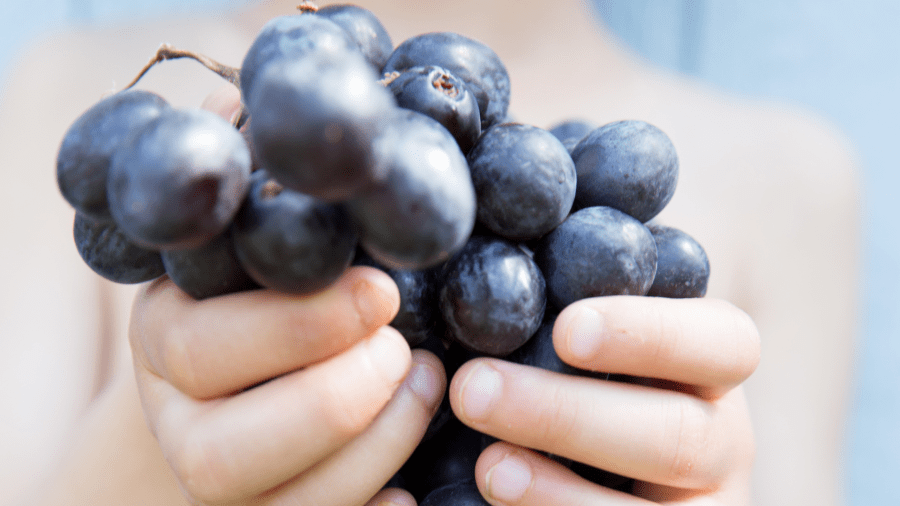
Edible Maladies by Angie Kang

my mother calls the day after the shootings, but
            between us: a fence of teeth. firewall

of bone. this shared red tongue, coated with
            papillae of yellow stars

we’ve knotted into a nest of fragile
            domesticity. here, in the frozen umbra

of new news, our tongue
            does not know how to contort

to discuss it. instead, it ribbons.
            my mother asks: what is this tune?

and then a tinny hum. vibration around
            our useless appendage. the melody dark

and angry. I never knew anything
            to hold so much blood.

as I listen to my mother’s quivering
            voice, I worry my square incisors

with my tongue. when I got my braces
            off, this metal cage, my dentist

shaved off two millimeters of enamel,
            and when I got home my mother

cried. a week of calcium silence.
            mourning what she created and

could no longer protect.
            my lips are pursed as I listen,

trying to place her unfamiliar tune and give
            the yearning a name. together my mother

and I try the impossible: grasping at something
            out of reach, an answer that might

offer relief, satisfy us if only
            for an instant.


Angie Kang is a Chinese-American writer and illustrator living in San Francisco, CA. Her work has been published or is forthcoming in The Believer, The Rumpus, Narrative, The Offing, and others. She enjoys playing online chess, swimming in the ocean, and separating quarters by where they were minted. She can be found online at www.angiekang.net or on Instagram @anqiekanq.