Grounded by Helen Savita Sharma

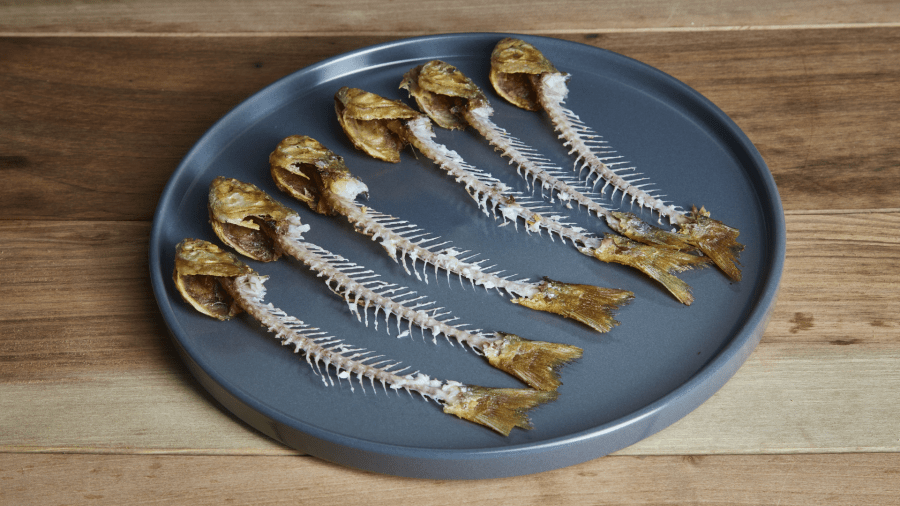
Lately I’ve been too busy to visit my grave. To lay on the grass and soak dew into my skin. To whisper sweet nothings down into the dirt where only my skeleton can hear.

Sometimes I think I can see my headstone if I really squint. The other day I swore I spotted it on the horizon, pale green and blinking in midday moonlight, but a car honked on the street and the flat blare wiggled into my abdomen and broke my focus completely.

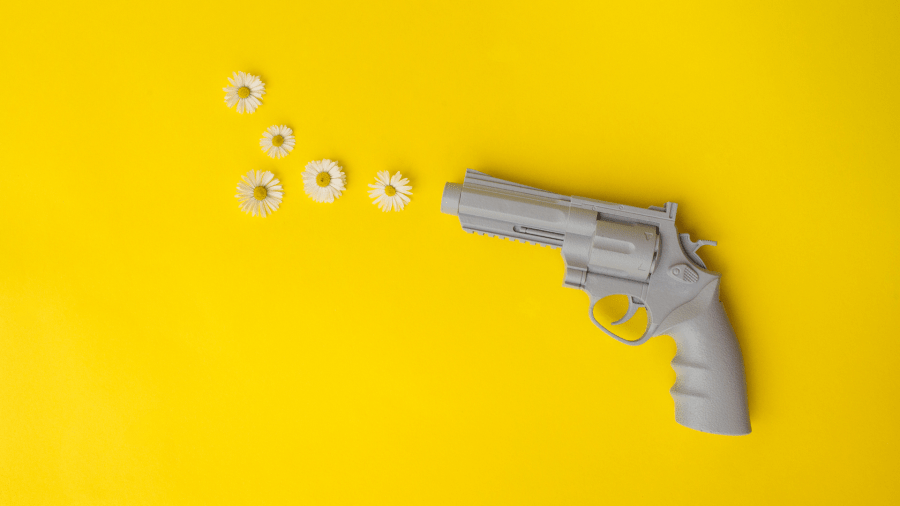
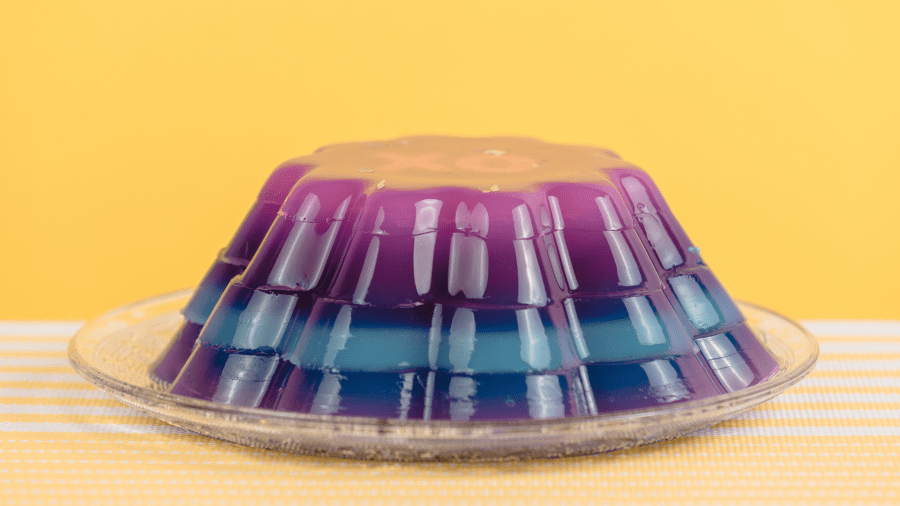
That’s one thing: without a skeleton in my body—a sealed bag of savory Jell-O, really, though no one’s yet noticed—sound moves differently. There’s no sharpness to things. Words wobble in and out of focus. Gunshots start soft and echo around, reverberate themselves into extinction.

But my god, sound is everywhere. Squeaky wheels on a grocery cart make my brain feel like crumpled foil. My daughter’s swim meet is torture.

Not torture. I’m proud of Ari. She’s twelve and still so small but she swims so fast, kicking her little feet up and down the pool until she comes up gasping at the end of the lane, pumps her fist when she realizes she made it back first. Little alien girl, her swim cap and goggles suctioned SMACK to her eye sockets. I couldn’t wear those. I doubt my head would hold its shape.

We’ve been fighting. Before, when she was two and three and a thigh-high hurricane, we didn’t fight. We were best friends who put each other to bed and elbowed each other in the boob by accident during spontaneous hugs and morning snuggles. But she’s gotten mean lately, cliquey with the blonde girls at theater camp and angry for the first time that her dad lives so far away. She told me I was weak the other day, after hearing me argue with him on the phone. She told me he was stronger. She called me spineless. Which, I mean. I am.

So I grounded her. Told her to show me a little goddamned respect. Took away her tablet, drank gin on the couch at midnight, flicking fingers across the unfamiliar apps she’d downloaded: YouTube, Candy Crush, a Barbie something-or-other that made my heart ache from how young it made her seem. An anonymous social media app where she’d said she was eighteen and given our home address to someone named Jarrett.

I let her go to her swim meet. The blonde theater girls don’t swim. Maybe she’ll absorb the other kids’ easy joy and pacifist approach to competition, maybe I have something to learn from their hippie grown-ups with their “COEXIST” bumper stickers and Gentle Parenting. I sit next to them on the bleachers which slowly smush my butt flat and I try to think about something other than the taste of friendly earthworms after heavy rain. Here I am, most of me, showing up.

But the noise. The noise. A thousand kids shouting from the pool deck and their thousand shouts made screams by a thousand whitewashed cinderblocks. I can’t cut through it. The sound seeps into my Jell-O flesh and stays there, leaks through into my brain in a steady roar. Ari is animatedly gesturing in the center of a group of taller kids. I slither off my bench.

I smoke a cigarette at a picnic table outside the rec center. It is dark. The picnic table is wet from rain earlier and smells like the forest it was likely kidnapped from. I put my face down on the table, inhale deeply, and think about my grave. The way the roots of grass lock together and keep my bones for me, in their pile in their box in the dirt miles and miles away.

Low beams of yellow light precede an older model sedan into the parking lot. It pulls up next to the picnic table and idles, driver still sat in silhouette beyond panes of smudgy glass. I watch the figure for a while, flicking my cigarette butt. He’s considering me, too. After a minute, the window rolls down two inches and a very faint voice calls something that I wouldn’t have registered at all if it wasn’t:

“Ari.”

I choke on smoke and my thumb bends backwards—it happens sometimes when I lose control—but I don’t think my shock is visible in the dark. I clear my throat, push smoke out of my lungs, steady my voice.

“Jarrett.”

I walk over and lean on the window. He rolls it all the way down so that I can rest my forearms on the door.

“Hey there, girlie.” His voice is rough and sickening and older than I had thought to fear. “You’re a grown eighteen.”

The cigarette is still burning in my hand. A squiggle of smoke trails into the car.

“Put that out,” he says.

The floodlights come on behind me. The swim meet is ending and families are starting to stream out of the building and into the parking lot. The white light leaves my face in shadow and outlines his features just for me and I reach in without thinking, lit cigarette in hand, and stub the ash in the cool wet of his left eyeball.

He screams. The families behind me turn as one to where I stand beside the unfamiliar car. I don’t look at them. He’s screaming and clawing at his eye and I walk around the side of the building out of the floodlight and disappear.

I text another mom from the swim team. Can Ari come home with you? Everythings fine, will pick her up in an hour.

I lay on the grass, on the shadowed field that sprawls behind the rec center. My nose flattens entirely to my face as I press it into the dirt. I close my eyes. I breathe.

I can feel my skeleton’s presence. She’s safe, I know she is. I’ll be there soon. Promise, baby girl. The soil here is different than at home, a different composition of loam and silt, but I inhale it viciously anyway and fill myself up with the pure base carbon that I am and always was. I soften. I imagine the grate around my plot, the gentle slope of ground above my bones. There’s silence.

Helen Savita Sharma is a librarian and writer working on her first novel from her home in North Carolina, where she lives with her partner and two cats. Helen’s passions outside of writing include “Higher Love” by Steve Winwood, ensemble dramedies, and watery Dunkin’ Donuts iced coffee.

How can you trust us? by Brendan Bense

I mean, you
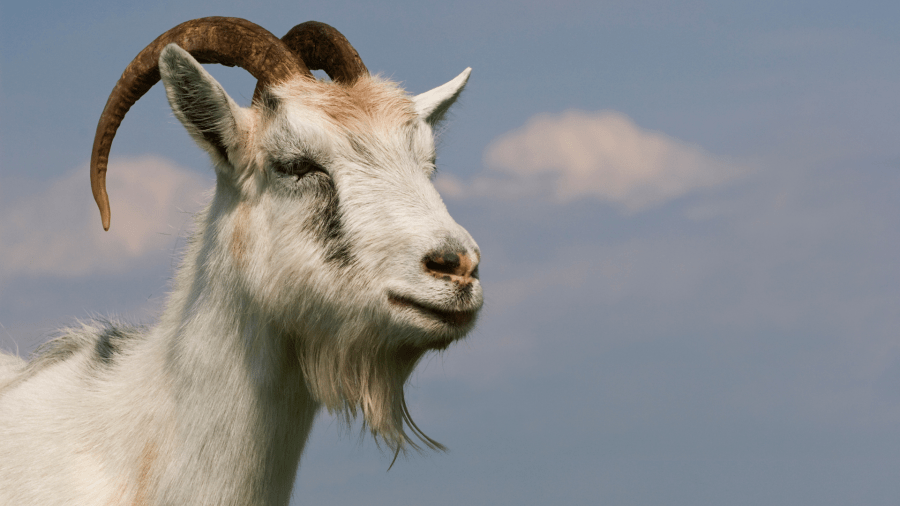
are a goat and a human reaches out their hand, and sure it has feed
in it, but you’ve never met them before, and they’re not your keeper.
What happened to buy me dinner first and can I trouble you for a cup
of sugar, neighbor? Not that goats need sugar for anything, not that
they have a concept for buying dinner. But don’t you want to be known,
a little, first? Don’t you want a scratch behind the ears, not under
the belly as that isn’t just the right spot, and don’t you want your water
bowl changed and hay replenished and fur brushed and affirmations
affirmed before a stranger can be someone with a name, before you
can reach out and take something from someone without fear, without
wondering if it’s all some plot? But there we are, slack-jawed and stupid
and in awe, leaning into the pen making pspspspsp like we’re calling
over a house cat, arms outstretched, hands pale and ugly and shaking
in the cold, hoping we can be trusted, hoping you’ll trust us, hoping
we will be trusted just once, by more than just a stranger, an animal,
a thing so afraid yet so hungry like us, so afraid and so hungry like us.


Brendan Bense is a poet and UC Irvine MFA candidate whose work can be found in Columbia Journal, The Crab Orchard Review, Rust + Moth, and elsewhere. Before joining the cohort at UCI, he worked as a writer and editor in New York and Philadelphia.

Adversity is the Parent of Virtue (in Bed) by Stephen Cicirelli

Sex was different when you had to. He had to. One morning she said, “There’s mucus.”

He was in bed, still waking up. “You’re sick?” Through the crenelated elephant trunk of the CPAP mask, his voice was vapor.

“Down there. My book says morning is the ideal time. Your testosterone levels are their highest. Your sperm have had a chance to regroup.”

He removed his mask, his face striped red, to get ready.

“Is mucus the right word?” he said. “It’s kind of gross.”

“Grow up.”

They had sex that morning and again that evening. All the while, his CPAP machine chugged on the night table. He enjoyed himself. It had been a while. She, on the other hand, was all business. When they were done, she pulled her knees into her chest, and had him put clary sage oil on her belly. Her stomach had sagged a little since their marriage.

She read books, and before bed, drank a special tea. Mugwort was now a word he knew. They had a special wedge pillow, his-and-her thermometers. He also read her books.

The next day they had sex once, and quickly. He had a work call. He was moving up in the company. Men above him had only good things to say. He was a team player, they said.

The next day he had trouble performing.

“Do you want me on top?” she said.

“Maybe if you talk to me?”

“Talk to you? Like dirty talk? What do you want me to say?”

“I don’t know. If I tell you what to say, it won’t be sexy. It’ll be like me talking to myself.”

“You masturbate,” she said. “That’s you having sex with yourself.”

“Oh.”

When they were done, he lay there silently. His CPAP machine blinked on the night table.

The next day they had to stop. He’d been thinking about college. Back then, they did it anywhere, anytime. She was on the pill, but he’d buy condoms, just in case. Sex was magical, dangerous, never the same. Like good art, it existed only for itself. It meant what they wanted it to mean, and they did it because they wanted to.

The next day he wasn’t proud of himself. He imagined an ex from high school. She wasn’t half the person his wife was, but, sexually, she was all-knowing. She never made Honor Roll, but she knew what he wanted before he did. She was small in ways his wife would never be. Once at the municipal pool, she took him, dripping wet, behind the ice cream truck. That morning his wife noticed a big difference. She asked what had changed; he lied, of course. He was a team player. He said he’d followed one of the “Tips for Men” in her fertility book.

“Good work.”

“Thanks.”

The last day he imagined Carmen again. They were in the back seat of his Jeep. It was the summer before he’d go to college and meet his wife. Carmen was staying in town to tend bar. They’d try long-distance. His wife was pleased but, afterward, contrite. She stood in front of their bedroom mirror, looking at her eyes and breasts and hair and stomach. Everything was reversed. She touched a stretch mark. It was darker in the mirror.

“Do you think we’re doing the right thing?” she said.

“Having kids?”

“I won’t know whether it’s the right thing until we’ve done it,” she said, “and by then, it’s too late. Nothing scares me more than having a kid and realizing I shouldn’t have.”

“You don’t think we should?”

“I don’t want to be my parents,” she said. “I wonder if all this stress is why I’m not getting pregnant. My mom was fertile because it never crossed her mind that she shouldn’t be a mother.”

“I don’t think it works like that.”

“It’s in the book,” she said. “Did we wait too long?”

“It could be me,” he said. “I smoked weed in high school.”

“You did a lot of stupid shit in high school.”

The next month, she went to the bathroom to pee and shower, and was in there for a long time, testing. He called to her. She didn’t answer. He listened, waited. He heard the shower stop. He heard crying, drawers opening and closing. What kind of crying was it? He heard his own labored breathing.

The door opened.

She walked back into their bedroom, got in bed with the test and covered herself. He joined her in his work clothes.

“Well?” he said.

Stephen Cicirelli has his MFA from Columbia University. He is currently a full-time lecturer in the English Department at Saint Peter’s University. His fiction and nonfiction have appeared in The Brooklyn Rail, Quick Fiction, Eunoia Review, Flash: The International Short-Short Story Magazine, 100 Word Story, and the anthology Nothing Short Of (Outpost19 Press). He and his partner currently live in New Jersey. Read more at www.cicirelliwrites.com. Follow him on Twitter @SteveCicirelli and on Instagram @stephen_cicirelli.

In Response to Question No. 3 by Susan Barry-Schulz

I would be green of course I would
not emerald green
not Kelly
not sea foam green because obviously that would be the worst
not mint
not sage
not Granny Smith apple although I do appreciate the refreshing tartness of this variety
not lime
not Celadon
not forest although we must act now to save the rainforests
        https://www.worldrainforest.org/rainforest-organizations.html
not jade
not moss
not the neon green of the slouchy socks I paired with canvas Tretorns back in 1985
not artichoke
not seaweed
not Malachite
not juniper not pine nor pickle
the green I would be
would be soft & deep
a heathered olive
flecked with specks
of copper & smoke
the same shade of green
as the pearl-buttoned vintage cardigan
I hung on a hook before clocking in
that summer—and never saw again—
the exact shade of green
you can never get back
once you’ve lost it.

Susan Barry-Schulz grew up outside of Buffalo, New York. She’s a licensed physical therapist living with chronic illness. Her poetry has appeared in Barrelhouse online, Bending Genres, B O D Y, Gyroscope Review, Harpy Hybrid Review, Kissing Dynamite, Nightingale & Sparrow, Rogue Agent, SWWIM, The Wild Word, and other print and online journals and anthologies.

Near the End of Their Lives, Barbie and Ken Question Their Existence by Jo Withers

They had driven to the beach again. They’d left the bubblegum pink convertible at home and were sitting in the petal pink hatchback at the lookout gazing over the crystal waters. They sat for a while, occasionally sipping from the plastic coke cans which were permanently wedged into the cup holders between them.

“Why do we always end up here?” Barbie asked as Ken sat smiling beside her. “Whatever we talk about doing in the afternoon, we always end up here instead.”

“Perfect spot for a picnic,” Ken winked, as he did on every beach trip. He hit a button under his seat and the boot opened, a perfectly prepared plastic picnic popped out.

“I’m not hungry,” Barbie shook her head. In fifty years of beach picnics, she couldn’t remember eating a single thing.

* * *

That evening, Barbie reclined on the sofa in her gold lamé ball gown watching Botched. She wished she had something more practical to wear or somewhere more interesting to go. Ken sat cross-legged on the chaise lounge in his vintage velour tracksuit reading Proust. Beauty, the Afghan hound, lay at his feet, nudging his leg gently in the hope of being petted.

“Why do we always get Afghan hounds?” Barbie commented as the T.V. doctor discussed a particularly disproportionate body part. “I don’t like long-haired dogs; I’ve always wanted a Staffordshire bull terrier.”

Beauty padded across the floor towards her, nuzzled her ribboned ears against her hand. Barbie pulled her hand away, signaled the dog to lie down.

“I’ve never liked this house either. I don’t want a pool on the roof or an entirely open front so all the neighbors can see into every room, and I hate having to go down a slide every time I want to get into the kitchen. All I’ve ever really wanted is a little cottage in the country, a thatched roof and a rose garden. I’ve worked hard all my life, I’ve been a doctor, a ballerina, a rock star and a paratrooper… is a little comfort really too much to ask?”

That night, Barbie lay against the scallop-edged, silk pillows in her four-poster bed, struggling to sleep. Ken lay peacefully snoozing beside her in his paisley pajamas and sleep mask. Barbie looked at the bedside cabinet, the row of family photographs – Ken leaping to catch the beach ball, Skipper riding her bike, Ken relaxing by the pool, Skipper riding her pony. She shook Ken awake. He sat up in bed, pushed the sleep mask up in surprise.

“Do you remember my mother?” Barbie asked fitfully. “Try as I might, I can’t remember the slightest thing about her. I don’t remember yours either. Isn’t that strange?”

“I love you,” Ken said, as he did every night before falling asleep. He rolled over and pulled his sleep mask down again.

“I don’t remember anyone,” Barbie said to herself in the dark. “There’s only Skipper and you. I wonder whether I look like my mother or father? I wonder how they met and how old they were when they had me? I wonder… if they loved me?”

* * *

The next morning, Barbie woke up late in an empty bed – Ken would be flipping blueberry pancakes in the kitchen as he did every morning. Barbie decided not to go downstairs. Instead, she dressed in her diamanté jumpsuit and walked to the west wing of the town house, to the room she rarely visited. Hours later, Ken found her sitting on the floor in the pastel pink room with her head in her hands. Around the walls rabbits and ducklings danced playfully, a cot sat near the window and a raspberry pink rocking chair occupied the corner.

Ken placed a hand on Barbie’s shoulder, “Your pancakes are going cold.”

“Did we plan to have a baby once? Why did we stop trying? How did we just forget about it when it was all that ever mattered?” Barbie tried to push out real tears. She swallowed hard and placed her hand over the empty pit of her perfect size two stomach. She reached for his arm.

“What happened to the future we planned? Sometimes, I feel like my whole life, I’ve been picked up and positioned without ever having any choice in the matter,” she said.

He stared knowingly at her and for a moment she thought he was going to say something profound. Finally, he stroked her cheek then stammered quietly, “I love you… your pancakes are going cold.”

He never offers me any comfort, she thought. It was like there was a pull-cord at the back of his neck and he could only summon a dozen inane responses.

* * *

That afternoon, Barbie gripped the steering wheel tightly as she drove towards the beach. She had decided to take the pink convertible today. As they approached the turn for the lookout, she steered the car into a sharp right instead and drove straight down onto the sand.

Ken gasped as Barbie kept driving, ploughing through the biscuit-crumb beach into the twinkling blue ocean. Ken’s fixed blue eyes seemed to grow wider, and his moulded lips parted into an almost ‘O.’ He swiveled his head sideways, looked at her in a way he hadn’t in years.

He took her paddle-shaped hand in his, kissing it softly as the convertible careened into the wisp-white waves.

“Perfect spot for a picnic,” he said as they began to sink below the gleaming water, the currents engulfing their beautifully bronzed bodies as salmon pink crabs scuttled merrily on the sand.


Jo Withers writes short stories from her home in South Australia. Recent fiction appears in Flash Frog, Bath Flash Fiction Anthology, and the charity collection FUEL, edited by Tania Hershman to raise money for fuel poverty in the United Kingdom.

stop by Naa Asheley Ashitey

Content warning: sexual assault.


[ stop ] (definition source from dictionary.com)

verb (used with object), stopped or (Archaic) stopt; stop·ping.
        1. to cease from, leave off, or discontinue
        2. to cause to cease; put an end to

        to stop kissing me

SEE MORE

verb (used without object), stopped or (Archaic) stopt; stop·ping.
        3. to come to a stand, as in a course or journey; halt.
        4. to cease moving, proceeding, speaking, acting, operating, etc.; to pause; desist.

SEE MORE

        Please stop.
        You can stop, please.
        Why won’t you stop?

SEE LESS

noun
        5. the act of stopping.
        6. a cessation or arrest of movement, action, operation, etc.; end:

        the thrusting came to a stop after he released.
        The nightmare finally came to a stop; the physical part at least.

SEE LESS


Naa Asheley Ashitey is a writer and aspiring physician-scientist from Chicago living in San Francisco. She’s a 2021 graduate from the University of Chicago where she received her B.A. in Creative Writing with Honors, specializing in fiction and with a minor in the Biological Sciences. She is a PROPEL Post-Bacc Scholar at the University of California, San Francisco where her research centers on cancer immunology. Her work has been published in Soul Talk Magazine, Blacklight Magazine, and Euphony Journal. She’s passionate about increasing the intersection between the humanities and STEM, and advocating for making academia more accessible and equitable for historically excluded groups in higher education.

Five Micro Stage Plays by Benjamin Niespodziany

Autobiographical

The magus reaches into her hat. One rabbit, one gun. One water moccasin. One blunt. “It feels like fighting home,” she says. One stone, one button. “Finding home?” a cast member in the audience asks. The magus does not like that question. The audience member is encouraged to exit. The magus assembles her found objects on stage. “Like a farmer’s market,” she says. “Like a graveyard.” She places prices next to each item and waits for interested buyers that never arrive. “Alakazam,” the magus says, defeated. Her rabbit catches fire. The light guy dies.

Sunflowers and Debt

On stage, the business man is in a cafe. He tries to pay his bill with a bouquet of daisies. The magus is the waitress behind the counter. She is still wearing her tuxedo, but she has a hairnet instead of a top hat. “We do not want a bouquet of daisies,” says the magus. “We want money.” The business man does not have money. The business man is struggling. “I don’t have money,” the business man says. “I’m struggling.” The magus behind the counter walks over and hugs him. Then she stands back and with her wand she lifts the man and shakes him from his ankles. From his pockets there falls but lint and whimpers and dust. The daisies are to the side, thriving in a puddle. “I hate flowers,” says the magus. “I hate money,” says the business man. “The sun above has been above forever,” says the magus. “And yet no one knows its birthday,” says the business man.

Cake vs. Pie

On stage, the business man runs around the kitchen, waiting for his cake to finish. Bereft in mittens he walks in circles. He looks at his watch and he looks at the clock and he continues to walk in circles. “Any second now,” he says. His suit is covered in flour and batter and dough. A cast member in the audience stands and throws a pie. It hits the business man’s face. “A pie?” he says, licking his fingers. “Blueberry.” He smiles, then cries. He opens the oven and blue balloons fill the room. The audience is encouraged to be in awe. “It’s perfect,” he whispers, looking into the oven and climbing inside.

It’s All So Very Polite

On stage, Death knits dinner. Her utensils are yarn and so is her carpet. The pie she provides is made of yarn. She knits plates and napkins. She knits the table. She knits it all. When she is finished knitting a bib for her black cat, a door is brought down through the cardboard clouds. There is a knock from the other side. Death stands in front of the door. Again, there’s a knock on the other side. She sits and hums and knits a gun. It’s all so very polite.

Sitcom Laughter

On stage, the business man and the magus are on a roller coaster, hanging on to the harnesses. They hold hands. They try to kiss but they’re too far apart so they laugh it off. It appears to be a fifth or sixth date. From the sound of the consistent click, the audience knows the ride is climbing. Their feet dangle. “I can see my house,” she says. From the speakers, sitcom laughter is heard. “I don’t like how this feels,” he says. Sitcom laughter. “Maybe we can go to the water park to hide your tears,” she says. Sitcom oohs. “Every day feels like fighting life,” he says. Sitcom awws. “What if I dropped my shoes?” she says. Sitcom laughter. The coaster reaches the top and stops. She looks down and screams. He closes his eyes and prays. The cart behind them is empty. The sun, it sets. The moon arrives. The magus’ confidence and humor fades into fear. “Is this what it means to die?” she asks. “It only makes sense,” he says. Sitcom laughter. A cardboard cloud passes by with seat belts and supplies but the two can’t reach no matter how far their arms extend. “I don’t have my wand,” the magus says. She brings her legs up to her chest and looks afraid. The business man’s feet continue to swing.

Benjamin Niespodziany is a Pushcart Prize nominee, Best Microfiction nominee, and Best of the Net nominee. His writing has appeared in Wigleaf’s Top 50 Very Short Fictions, as well as in Cheap Pop, Maudlin House, Pithead Chapel, Tiny Molecules, and various other places. His debut, full-length poetry collection, NO FARTHER THAN THE END OF THE STREET, was released by Okay Donkey Press in 2022.

Periodic Cicada by Michele Rule

The magicicada have been living quietly
under my ribcage
in nymph form
for seventeen years
Silently observing my inner workings
my maturing

Now they emerge
with a deafening sound
a flight of musical notes
from some double forte experimental jazz gone wrong
They don’t stop with their song
until I am thoroughly unraveled

When I can’t bear another moment of the cacophony
they begin to drop to the ground
one by one
dead
their mission complete

The missing symphony of life
that I waited for unawares
all those years
I cover my ears
to block out the silence
hope their sound might return


Michele Rule is a disabled poet from Kelowna BC. She is especially interested in the topics of chronic illness, relationships and nature. Michele is published in OYEDrum, Five Minute Lit, Pocket Lint, WordCityLit, the Lothlorien, and the anthology Poets for Ukraine, among others. She is an associate member of the League of Canadian Poets. Michele’s first chapbook is Around the World in Fifteen Haiku. She lives with a sleepy dog, two cats, and a fantastic partner.

José Martí in 2023 by Chip Livingston

José Martí shakes off a 127-year dead sleep as he wakes up on Calle José Martí, according to the street sign. José Martí checks his thin pigskin wallet for his national ID to confirm he is still José Martí. Revolutionary sycamore trees stretch from the sidewalk, shade cloud-scraping brick apartment buildings. The street’s concrete is cut in curves from iron trolley ruts, sloping to a city beach too brown to be Caribbean. Hijo de puta, the poet mutters to himself. Estoy muy lejos de los platanos. “Where am I? When am I?” José Martí asks a man walking nine canines that shine like a starburst, him the wiry stem of their dandelion. “You’re right there,” he tells the poet but is quickly pulled up Calle José Martí by the harnessed manada. “Where am I?” José Martí asks a woman overacting an enthusiastic power walk in tight and colorful elastic. She removes white metal plugs from her ears, presses her finger against a dark glass square strapped to her forearm. Pauses. “Perdón, I didn’t hear.” “The date, the year.” “You’re not from here,” she says. The poet offers her his Cuban cedula. “Oh dear,” she says. “This is not my island,” José Martí says. “This is not your island.” She shakes her head. “But you’ll certainly be a guest of honor. We take our poets and our revolutionaries very seriously in Uruguay in 2023.” La republica oriental. Dos mil veintitrés. Further away than I thought, José Martí thinks. José Martí smooths his mustache and tips a hat he doesn’t wear. “I hope I’ll see you again.” “I need to keep running, but I’d like to have you sign my first edition.” The poet smiles, a little less lost, a little less lonely. Not because he has a street named after him. But he, José Martí, has more than one edition.

Chip Livingston is the author of three books of poetry, a novel, and a story/essay collection, and editor of LOVE, LOOSHA: The Letters of Lucia Berlin and Kenward Elmslie. His short prose and poetry have appeared in Prairie Schooner, Ploughshares, Subtropics, The Cincinnati Review, and on the Poetry Foundation’s and Academy of American Poets’ websites. Chip teaches in the low-rez MFA program at Institute of American Indian Arts in Santa Fe, NM, and lives in Montevideo, Uruguay.

Aftermath by Jad Josey

The scorpion emerged from shadow, big enough to matter
and small enough to matter, the world

a dram conspiring between floated spirits,
the grain alcohol, the smoky absinthe,

the way my mother is eleven-hundred miles close and
yours is eight miles and nearly vanished,

an apparition you didn’t intend to summon, though
you might have wished her gone one sticky-hot September evening,

never divining the prophet you’d become, never mind how small her
hand felt in your palm, her heart no longer here, the goodbye gone.

The scorpion scuttled onto my foot, and I waited. Waited
for the pricking poison, waited for what comes before the aftermath.

Waited for something small to bring me to my knees again.


Jad Josey’s work has appeared in CutBank, Glimmer Train, Ninth Letter, Passages North, and elsewhere. He has been nominated for the Pushcart Prize, Best of the Net, and Best Small Fictions and his story, “It Finally Happened,” was selected for inclusion in the Best Microfiction 2021 anthology. Read more at www.jadjosey.com, or reach out on Twitter @jadjosey.