A Rupturing of Light by Suzanne Grove

He reads: A glass of orange juice after a glass of water, hospital ice, peas, two (only two) green olives, Polish vodka chilled in the freezer.

We are playing a game for adults with our maybe-friends who live in the planned community two-hundred yards from the sunken curve of our backyard. We own the renovated farmhouse. Outside, our Norwegian dogs stretch the long tendons of their rabbit-like hind legs. From our back porch, shaded and silent save the slow scooping of ceiling fan against August air, we can see the interstate run its horizontal line towards West Virginia. Twenty miles in the distance, it forks away, dips low into a coal-gutted town near the Ohio River.

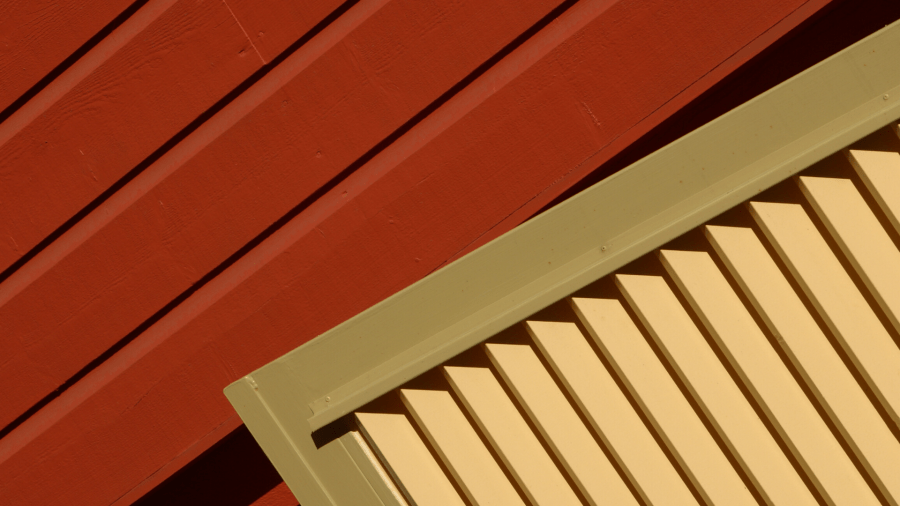
These maybe-friends, six in total, own homes with alternating shutter colors. Navy, tan, red. But with names like Oxford Glacier and Tawny Hide and Midnight Vermillion. They selected them from decks of alternating shades at the home design studio. They repave their driveways every five years, build thick brick and slatestone mailboxes. Hang wreaths that change with the seasons.

For this round of the game—for the list that has just been announced—we were told to write down five things we like to consume. We were welcome, the instructions said, to get naughty.

We take turns guessing who owns each list. Nearly everyone’s list contains booze. Someone wrote nipple. We discuss the word consume. What does it mean, exactly? Someone mentions the Oxford English Dictionary. We think we’re smart. Their kids will go to college. We don’t have any kids, just the dogs.

Orange juice. Olives. Vodka. I look at my husband.  He does not like olives. He eats them in salads I make to accompany our dinners on most nights. But he does not stand in the kitchen like I do, plucking them out of the jar with my fingers. And, peas? No. He orders Manhattans when we go out, likes bourbon and not vodka.

But, Amanda—Amanda with autumn tones burnt into her hair, a soft gloss over the strands, a chemical resuscitation of the follicles she purchases for an additional $45 (she’s offered me a referral to the salon; suggested I try the treatment); Amanda with her hard little knuckles and slim fingers and real gold chains doubled up and crossed and doubled again high and low on her neck—she guesses Adam right away.

Yes, my husband exclaims.

They high-five.

I have a sad score, second to last. We pause to refill drinks. Adam turns on the television mounted high in the corner of this room the other women call a Florida room, but I call a covered porch. Someone changes the channel to a baseball game. I call the dogs inside with me for water, for rest.

When I return, I think about how this summer, our second summer here, the wood surrounding our exterior doors hasn’t bloated so that every open and close necessitates a slamming that echoes throughout the house.

At night, sometimes, I hear the bending of grass blades beneath feet through the window of the guest room where I often sleep because Adam snores.

Out in the direction of the interstate, we have an additional detached garage, four stalls. A workshop where Adam plans to start wood working. Maybe, he tells me at dinner, he’ll take up blacksmithing, too. Inside the fourth stall is an old plaid couch my mother gave me when she redesigned her living room. And a lamp I’ve had since college.

Most nights when I hear the bending grass, I wait. I go to the bathroom and drink water over the sink. Before I shut out the lights, before I climb back into the twin day bed with its brassy frame, I peel the blinds apart and see that fourth stall shining at me, a rupturing of light.


Suzanne Grove is a graduate of the University of Pittsburgh and received the J. Stanton Carson Grant for Excellence in Writing while studying at Robert Morris University. Her poetry and prose have appeared or are forthcoming in The Adirondack ReviewThe Carolina QuarterlyThe Penn ReviewPorter House ReviewThe Raleigh Review, and elsewhere. She received honorable mention in Farrar, Straus, & Giroux’s June contest for her short fiction piece “Shift Work” and was recently a finalist for the SmokeLong Quarterly flash fiction fellowship. She currently serves as the short fiction editor for CRAFT literary magazine.

Underwater Cabbage is Happy by Sean Pravica

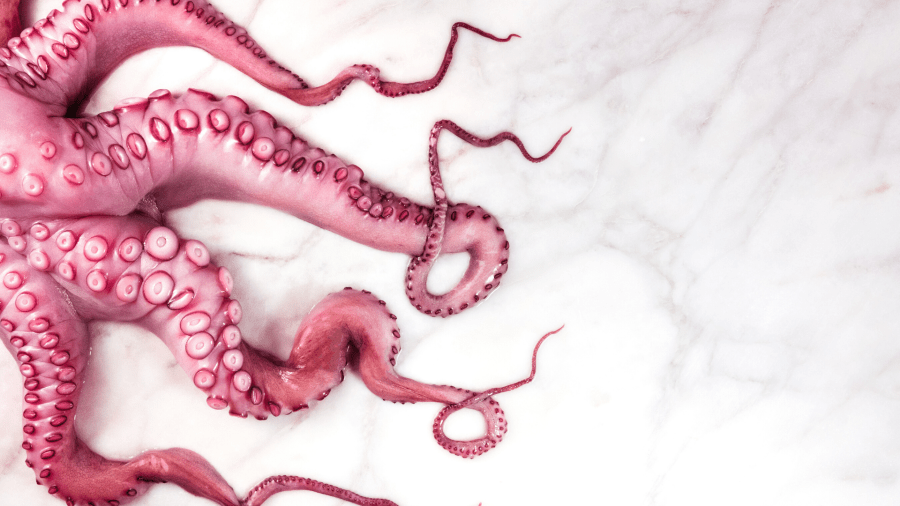
She drew an octopus. It had a bulbous body/head. The innermost legs were thin and curled up around the body/head. It had a red smile.

Another low art grade. According to her teacher, it lacked proportion. Also, octopuses are not purple.

She must have liked the smile, though.


Sean Pravica is a Californian writer and author of Stumbling Out the Stable, a story about mischief, authority, and occasional intoxication. His next book, Hold Still Fast, is a collection of 200 stories 50 words and under and is due out in May by Pelekinesis. He also enjoys climbing rocks and spending time in the desert with his life partner.

Don’t worry about returning it by Devaki Devay

I’ll lose everything, eventually.
I’ll leave my phone on a restaurant table
the night before I fly out. Someday
I won’t recognize the number. Listen,
I left my notebook full of secrets under
one of the chairs in the lecture hall. Now
someone’s heels are brushing against
my newest molestation. It doesn’t bother me,
I lost my headband between the cushions
of a bus, I fell asleep chest up, once I managed
to imagine it was the Earth moving fast
and not our wheels. I’ll lose my wisdom teeth
without ever realizing; I’ll wake up
with pulsing memories of metals at my jaw,
fingers in my mouth,
blood seeping soft in cotton balls.


Devaki is a community college transfer at UC Berkeley studying rhetoric, as well as a reporter for the student paper. Their writing, which has appeared in Entropy and Royal Rose Magazine, centers around childhood trauma, loss, and the South Asian diaspora.

B is for Balls by Kara Vernor

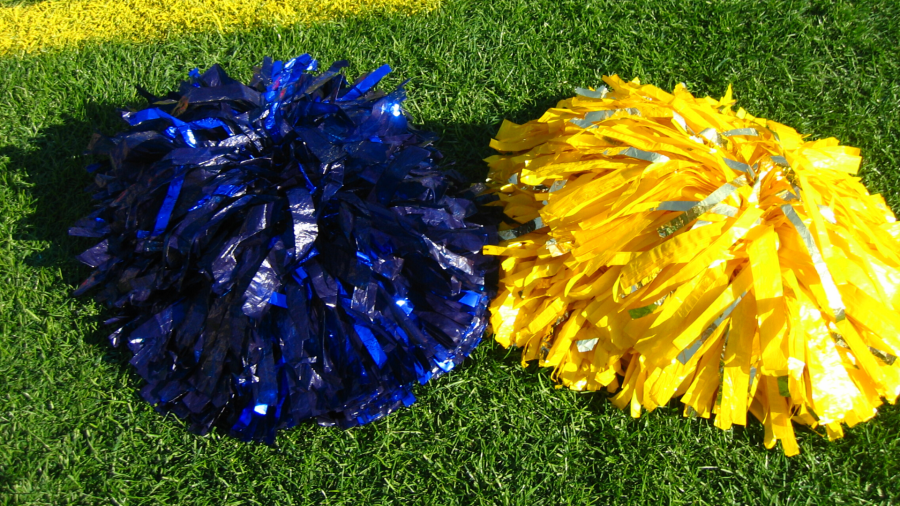
In high school, when a boy threw a ball and another boy caught it, I banged two pom-poms together a few times.

When a boy caught a ball behind the end zone’s white line, I banged two pom-poms and kicked a leg. My crotch was wrapped in blue.

There were thirteen of us who bounced and banged.

When the boys gathered on a field mowed for Friday night, the townspeople mobbed the border. These watchers sat on seats called bleachers because boys could throw balls for three hours with the break they took halfway through. When the throwing of balls exhausted the boys, they resorted to their butts like watchers on bleachers, but not we. We stood and shouted and danced and banged for three hours, sometimes more.

On days when boys threw balls, we covered our butts in mini skirts. We recognized the relationship between our nakedness and their confidence, and it was said frostbite was not worse than Nair. While our legs encouraged boys to throw their balls, the townspeople enjoyed the school-sanctioned opportunity to see the whole lengths of our allegiant legs. They appreciated our legs for their service.

School officials otherwise required taller skirts. Short skirts were a violation and declaration unless worn for ball-throwing boys and the townspeople who ran their eyes up our flagpole limbs. It was true, townspeople needed more than strictly boys and the balls that flew between them, but not we. We had never been served by need.


Kara Vernor’s fiction has appeared in Vol. 1 Brooklyn, Ninth Letter, The Los Angeles Review, and elsewhere. She was the recipient of an Elizabeth George Foundation scholarship, and her writing has been included in Wigleaf’s Top 50 Very Short Fictions, Best Small Fictions 2019, and Golden State 2017: Best New Writing from California. Her flash fiction chapbook, Because I Wanted to Write You a Pop Song, is available from Split Lip Press.

Bob Ciano by Hugh Behm-Steinberg

Each day I reach into our wardrobe to get dressed, all my shirts jostle. Some of them move forward; jealous of my favorites, they try to jump in line. They argue that if only I’d actually see them, they could finally unrumple and be touched by sunlight. They could pick up the scent of my body, soften (even if only slightly), be complimented by everyone who sees me. They crave flattery, the complete stranger saying, “Is that new?” or “Where did you get that?” or “That’s so gorgeous!” I’m drawn to paisleys, pearl buttons, designer labels on the sleeve so anyone shaking my hand would know someone’s spent money (even if it wasn’t me), rich colors, headache inducing patterns. “Change your life, wear a different shirt for once!” the frustrated shirts all cry.

Other shirts hide. They’re ashamed: they think I’ll notice their missing buttons, the memory I no longer wish to remember, the little hole where the decal meets my breastbone, the way they strain a little since I’ve gained weight. Maybe I’ll put one on and my wife Mary will laugh, and that will be that, straight to Goodwill. Or else they’re just as beautiful as the ones I always wear, but they’re afraid of this world, the marks and stains that come from living in it.

The wardrobe rocks back and forth; neither of us can sleep. So Mary says, very loudly, “Your friend Bob, he only wears black button down shirts, right?”

“That’s right,” I say, “and he only needs five of them.”

“I bet he sleeps like a baby because he never has to wonder what he will wear,” Mary says.

“Perhaps we would be happier if we followed his example?” I say.

The wardrobe settles down immediately. But when I reach inside the next morning to get dressed, all my shirts are damp with tears.

It takes three loads to wash the salt out of them and get them dry, and they squirm as we try to fold them. Eventually we put them all back in the wardrobe, more or less neatly folded.

I make promises to treat my clothes more fairly, to rotate my outfits and not wear the same favorites all the time. We’ll repair the shirts with missing buttons; the shirts with holes will be saved until we have use for them in art projects.

I feel terrible because I never keep those sorts of promises. I am lazy: I grab the shirt on top; I play favorites, I’m always on the lookout for the next beautiful shirt whenever we go shopping, and who has time to sew? We initiate cycles of sin, guilt and forgiveness; we think we’re enlightened people, but we’re always doing laundry. Rinse, lather, and repeat.

I think of the cruelty Bob Ciano practiced when he chose to only have five black buttoned down shirts, and got rid of everything else; I wonder if it’s better to just do one terrible thing, or to perform the same awful little actions over and over again.


Hugh Behm-Steinberg’s prose can be found in Gravel, Sand, Grimoire, Joyland, Jellyfish Review, Atticus Review, and Pank. His short story “Taylor Swift” won the 2015 Barthelme Prize from Gulf Coast. A collection of prose poems and microfiction, Animal Children, is forthcoming from Nomadic Press in 2019. He is the chief steward of the adjunct faculty union at California College of the Arts, SEIU 1021.

The Sad Song in Every Story by Mileva Anastasiadou

This is a story about a story that wants to be a song. It could be a song about trees. Or falling trees. Or falling. Or it could be about winds blowing hard, like tornadoes and hurricanes. This could be the intro, some kind of tender, inviting mumbling or scattered notes, slowly playing before the melody starts.

* * * *

North wind was blowing hard, goes the verse.

Just to be clear, the North wind is described as such for the sake of the story, or the aspiring song. The winds were Northeast all the time, or non-existent sometimes. On New Year’s Day we woke up to a fallen tree blocking our front door. We both knew that the year didn’t start well. It was a combination of strong winds and shallow roots. It’s now already summer, the path all cleared, pieces of the fallen tree still beside the door, for I’m too lazy to arrange them in piles and stock them for next winter. They’ll probably be useless by then, he claims and I can’t help but agree.

He never argues when he’s mad. I’d say he never gets mad either, yet I now know him well enough to claim otherwise; he gets mad all the time, only he’s good at hiding it. Until he feels safe enough to explode. He’s an endless, recurrent bomb. Never tired of exploding, when the time is right.

* * * *

South wind was blowing hard, goes the second verse.

“My mom called,” he says.

He speaks in a voice most people use when commenting upon the weather. He always has that attitude; as if he constantly gives the world the middle finger, grinning, saying “fuck you world, I fooled you.” Bombs don’t care for the outcome. He’s now walking ahead of me and I follow, as we walk in the park, among tall trees, which seem taller than when we walked side by side, still immersed in blissful ignorance. He walks blissfully like he’s in heaven while all I see is flowers about to wither, soil eager to be fed with decay, bugs buzzing in search of pray, and he claims I’m always so negative and I wonder how he does that. I’ve been hearing the cracks in my face lately, the wrinkles forming one after another, every time I laugh, or smile, or cry. So I try to remain emotionless, or at least not express emotion, if I can’t avoid feeling it.

We are no longer a couple. He left me after he found out I’d cheated on him. We had never argued before. Until that day, when he exploded.

* * * *

East wind was blowing hard, goes the third verse.

“I don’t feel like speaking to her.”

Of course he doesn’t feel like it. He’s the king of denial, the master of the art of procrastination. I’ll have to pressure him to call her back, only he won’t call until he’s ready.

When he found out about my cheating, he didn’t mention anything at first. He went to the kitchen and prepared some soup. He offered me the soup, feigning tenderness as if I had been naughty and he was gentle enough to forgive me. I was definitely offended that night. In hindsight, I realize that had been his intention: to humiliate me with an act of kindness. He had the moral high ground and enjoyed it. The soup was tasty as hell, I have to admit. I didn’t know then, because he had never made soup for me before, but the soup was the final warning before the bomb exploded. That soup is what I mostly missed of him when we finally broke up.

“Are you over him?” he asked. I nodded hard, as I couldn’t even recall how it was with that guy, for I was drunk and exhausted and vulnerable. But he took it the wrong way. He said I was trying too hard to be convincing. He looked me in the eye, as if trying to read my soul, only he couldn’t see through my eyes, he claimed and I blamed those fucking wrinkles again which made me expressionless.

* * * *

Incomprehensible mumbling during a guitar solo comes next.

“I’ll call her back later. Nice weather, isn’t it?”

He’s doing it again; agreeing with me to avoid conflict. I know he won’t call back.

Instead, he’ll only change the subject.

A few days after the tasty soup came the explosion, following an insignificant disagreement. “I think Camus killed himself,” I told him, and he looked at me perplexed. I’m well aware that’d ruin it all, his work, his theories, everything. So he faked a car accident. He put the train ticket into his pocket, making sure someone would find it and point the irony. Camus was my age when he died and he was tired. Sick of fighting the plague, sick of coffee and soccer and writing. It wasn’t fun anymore and life’s supposed to be fun at core and then everything else. I’m also sick of fighting the plague. Sick of fixing what’s broken, only to repeat the fixing the very next day.

Then followed a stupid fight over the dishes. He packed his things the very next minute. I removed a pillow from behind my back only to realize how more comfortable sitting on the sofa felt without it. I was that pillow to him; not too annoying, yet his life would be much more comfortable without me.

When I realized my cheating was the issue at stake, only he’d chosen a different subject which felt safer to him, it was already too late. In his mind I had started the war, yet he chose the time and place of the final battle.

* * * *

Instrumental bridge:

“Cold, but nice,” I reply.

We survived the explosion, unlike most of his relationships. We’re now friends and as a friend, I’m supposed to insist on his talking with his mother. They haven’t spoken to each other since she left his father. Yet I don’t. I’m a caring person most of the time. Until I’m too overwhelmed to care. So now I don’t. I only focus on the sound that’s coming from an open window. It’s either ‘Electricity’ or ‘Enola Gay’ by OMD. It always takes me a while to tell them apart, since they sound similar at the beginning. And I hear the familiar buzzing of the intro and that’s how electricity sounds. The bomb is not about to fall yet.

* * * *

West wind was blowing hard, goes the final verse.

“I have some soup left, come over,” he says.

His face is cold. He doesn’t mean it, yet he looks at me as if he hates me. I feel angry inside, yet I still smile. I can’t relax my facial muscles enough to look angry or mean. My resting bitch face looks awkwardly compassionate. My angry face is still made of smiles and fake understanding. It feels as if I have no control over my facial expressions, while his emotions are all over his face. He’s trying to hide behind words and acts of kindness, but I can feel his anger building up as he discovers the sad song in every story. He’s in a-minor mode, while I’m already singing the chorus in c-major, like it’s a happy song, for it’s happy interludes that make the path, or the story, or the song, worthwhile.

He considers himself a winner, as I consider his soup too tasty to leave behind. That soup is the symbol of the beginning to me, the opening kick-off before the battle to him. This battle feels better than his love. I pretend that winning is of no importance. That what matters is that I don’t have the skills to make a soup tasty enough to comfort him. Nor the skills to confront and deactivate the bomb. I hear the crack on my face again. Another wrinkle formed. Another emotion escaped. Another happy interlude before closure. My resting bitch face never looks mean enough; it takes a while before I notice I still smile, while I accept the invitation.

* * * *

We are now the Hollow Men, waiting for the world to end. Or the story. Or the sad song (bound to be hidden) in every story.

I can’t handle it anymore, I say.

I can’t handle it.

I can’t.

With a whimper, not with a bang, ends the song. Most songs end with fading out.


Mileva Anastasiadou is a neurologist, from Athens, Greece. Her work can be found or is forthcoming in many journals, such as Molotov Cocktail, Jellyfish Review, Sunlight Press (Best Small Fictions 2019 nominee), Ghost Parachute, Gone Lawn, Ellipsis Zine, Queen Mob’s Tea House, Bending Genres, MoonPark Review, Litro, and others.

We Feed Them to the Lions by Paul Thompson

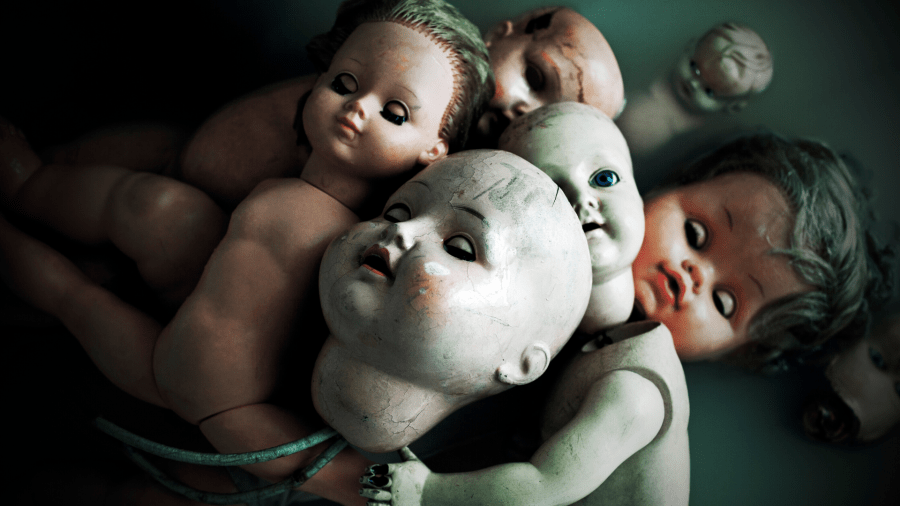
Nine years old, with parents distracted, a boy falls into the lion enclosure.

It looked more like a jump, his sister says.

The boy lands safely, in the artificial lake beneath him. He swims to the shoreline, to his new home. Murals of the savanna and non-native plant life.

Background noise played through speakers. The stare of an audience above him.
The lions protect him from rescue. Surround him in tight circles. Brush their hides against the hair on his arms. Give him a name in their tongue.

Satisfied that his care is adequate, his parents leave him with the pride. Make arrangements for extended visiting hours. Make plans for social time with one less child.

The boy teaches the lions to swim in deep water, to sleep in humanoid positions.

He shows them his fingerprints, his double-jointed thumbs. Over time, his parents forget his birthday, his age now measured in animal years. Other children jump down to join the herd, parents happy with the care provided.

The hybrid exhibit becomes an attraction. Children themed merchandise in the gift shop.

Until one day late in the autumn, when an adult jumps in and tries to join them. Moving with speed they tear off his limbs and play with his torso, before returning to sleep with the lions.


Paul Thompson lives and works in Sheffield. His stories have appeared in Spelk Fiction, Ellipsis Zine, and The Cabinet of Heed. His work also recently appeared in the National Flash Fiction Day anthology 2019.

Fur by Kathryn Kulpa

You don’t have to wear the lion head any more, she imagined him saying. You can just be you.

He’d never said this. There was no reason to think he would. Inside the mask her breath felt thick and meaty. Her eyes swam in a humid backwash of sweat and pepperoni pizza. Their fingers touched through velvety paw-fleece. Only below the waist were they human.

“Faster, Nala!” His voice came through muffled, scratchy, but with an artificial high pitch. He never took off his own lion head either.

They’d met last year at the Providence Convention Center, at Comic-Con. Nala, meet Simba! Too fated to be anything else. They had lunch in the food court. He floated his plastic utensil from his chest to hers. “Sporks flew,” he said.

She worked in the Disney store in the mall. He worked in a bank, lived with his mom in Pittsburgh. He fooled everyone, he told her. Looked normal, worked hard, made decent money. But this is who I am, he said, pointing with his lion paw to his lion head. This is who I really am.

And she nodded, because she knew. Being Nala made her something more than the hardly-know-she’s-there girl, the girl who sat in the back row and made B’s but never A’s, who dropped out her junior year of college without a single professor noticing or asking why. The girl who went home every day after work and changed sheets, cooked meals, washed clothes, washed dishes, put her brother to bed. Because after the accident there was no one else to do it.

After the con they texted and Skyped, and then he found this other con in Albany and she drove 300 miles to meet him for the weekend. It was never enough, but it had to be enough.

Because nobody wanted a boring girl who took care of her disabled brother and worked some dead-end job, but everybody loved a cute, little lion cub.

The heat inside the costume made her dizzy, wild with fever. She imagined clawing it from her body, watching stripes of polyester and latex shred away, leaving bald, pink human skin.

But Nala wasn’t who she was either. Not a cub. Not a toy. She felt her muscles bunch. Her nails extend. Laughing, she tore off his head and her own, drank in the rush of cool air. She could smell the blood pulsing in his throat, so close to the skin. Felt his body arch under hers, in terror or in ecstasy.

The lioness threw her head back and roared.


Kathryn Kulpa (@KathrynKulpa) has work published or forthcoming in Smokelong Quarterly, Pithead Chapel, Lost Balloon, and Women’s Studies Quarterly. She is a flash fiction editor at Cleaver magazine and leads a veterans writing workshop in Rhode Island.

She’s Been Living in the Attic for Who Knows How Long by Steve Chang

And there’s a hole through the puffy insulation below—at her feet!—through which she looks down into the home, at her family, and how it’s changing. The sweet-smelling baby is a boy, a teen, and a man. Her husband is old now, his muttering a mystery.

Is this the original cast? Are these the same actors?

She has to admit she’s not sure.

Should she know?

This is how she’d describe the feeling, how she would if anybody asked.

Some days though, there’s another hole, this one in the roof, through which she watches the sky changing colors—orange, and black, and blue, and pink. Is it always the same sky? She thinks of strangers taking turns at a peephole. The colors blink through, one after the other. It’s almost like somebody’s been watching her back.

She doesn’t know who it is, but she’d like to know, someday, this person, if she can.


Steve Chang is from the San Gabriel Valley, California. His work has appeared or is forthcoming in Epiphany, North American Review, The Southampton Review, Jellyfish Review, and elsewhere. He likes reviews. He tweets at @steveXisXok and his website is literally www.stevehasawebsite.com.

Not What I Ordered by Ava Wolf

“I’ll go wherever you’re going,” he said.

He was a chef—no, a cook, because when I said, “You’re a chef, right?” he shook his head and sniffed the air and told me I smelled delectable, which was an inappropriate thing to say for a variety of reasons, but then he said, “I’m a cook,” and I was like, “Oh, a cook,” as if it mattered anyway—and he was fine. Fine. Built like a human man, by the looks of it.

Then I said, “I’m going home,” and he asked if he was coming with me.

I thought about it. I did! I sized him up, wondering what kind of person wanted to sleep with someone they met less than an hour ago, and then I remembered lots of people wanted to sleep with lots of people, but few acted upon desire, so if anything, this was an admirable display of forwardness, rather than solicitation for sex by a stranger who kept telling the same story of his Jewish cousin named Ariel who played violin on the subway.

He’d imitated his Aunt Linda (pronounced aunt, not aunt, which made me nervous) relaying this information to him: “Your cousin Ariel is playing violin on the L Train!” He did this several times. I laughed. I thought it was funny because of the vodka water. I had asked for a vodka soda, but when I came back from the restroom there was a vodka water on the counter and he said, “I got you a vodka water,” and I said, “I wanted a vodka soda,” but politely, like I was pointing out an observation about the weather, and he looked crestfallen, so I waved my hands around and said it was fine, I’d never had a vodka water, there was a first time for everything. He perked up a bit, and now he wanted to sleep with me. My pee was green because of the riboflavin in my multivitamin.

Here were the options: I could tell him the truth, or I could tell him something else.

“It’s a bit of a complicated situation,” I said, stabbing the slice of lime in my empty vodka water. “I would prefer for you to think of it as though I’ve been inveigled into an elaborate and nefarious crime. I don’t want to drag you into anything. I apologize.”

He straightened up in his seat. Our torsos were different lengths.

“I’m a little disappointed,” he replied, looking into my eyes very seriously. This was excellent news. I loved to disappoint men.

“I’m sorry to hear that,” I lied.

“If you don’t mind me asking,” he said, “what’s so complicated about it?”

I stood up and slipped on my coat, the nice one I wore to work, and turned to face the cook-not-chef, who was disappointed that I had declined to let him, a reasonably attractive person with a Jewish cousin, sleep with me, a reasonably attractive person with many Jewish cousins. Then, I proclaimed loud enough for the whole bar to hear:

“I’m the other woman!”

I left beaming from ear to ear.


Ava Wolf is the author of Year of the Pig (Ghost City Press, 2019). Her work has appeared in Peach Mag, Maudlin House, Occulum, and others. She resides in Philadelphia with her cats, Basil and Juniper. None of them have ever done anything wrong in their lives.