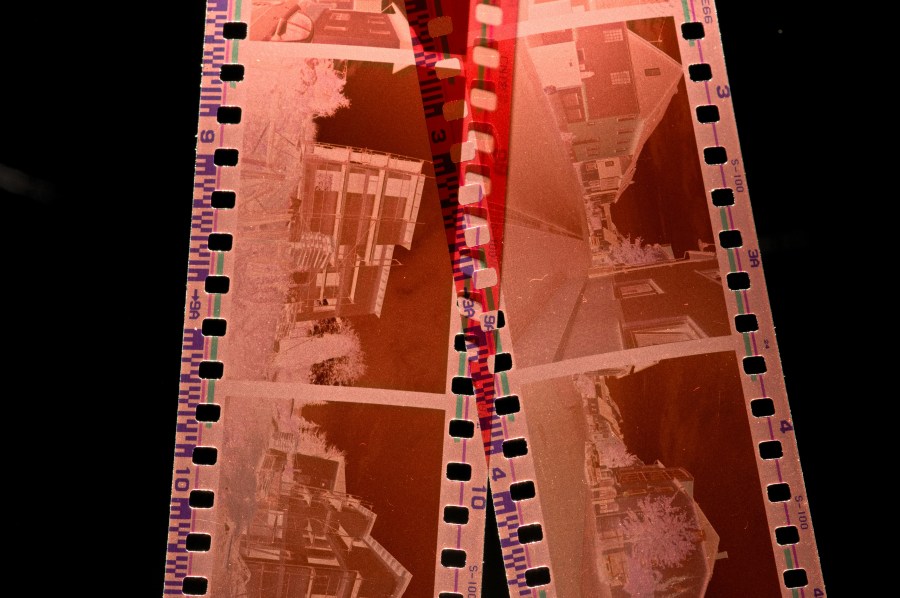
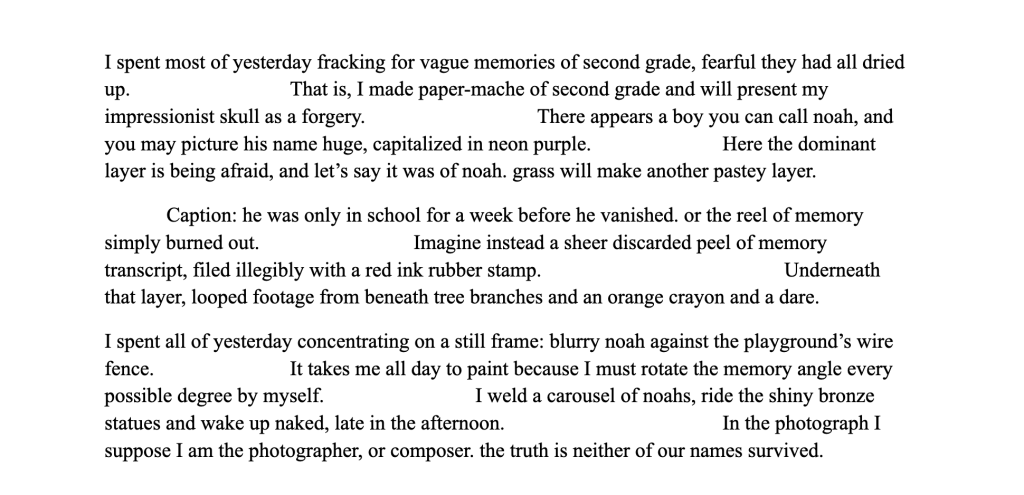
NO OFFENSE TAKEN by Bennett Rine

                                                     NO OFFENSE TAKEN
                                                                         or
  SHORT FILM OF ELEMENTARY SCHOOL PROJECTED ON GREEN BRICKS                                                                     (2007)
                                                                         or
    WHY DOES NOBODY TALK ABOUT HOW DEPRESSION AND ANXIETY                                                   CAN GIVE YOU MEMORY LOSS
                                                                         or
                          BLANK PAGES IN A CHILDHOOD SCRAPBOOK
                                                                         or
          DAILY MENTAL EXERCISE PRESCRIBED BY WELLNESS EXPERT
                                                                         or
                                                 THE FOG OF LOST SOULS
                                                                         or
             WHEN I LEARNED MY SIGNATURE COULD BE GRAFFITTI
                                                                         or
                                                      GENESIS 7:24-8:11
                                                                         or
   PLASTIC COMMEMORATIVE MEDAL FOR FIELD DAY PARTICIPATION
                                                                         or
                                 WHY I HAVEN’T LEFT MY BED YET TODAY
                                                                         or
                                     NOAH IF YOU READ THIS I’M SORRY
                                                                         or
                          YELLOW ONION ROTTING BEHIND MY EYES

___________________________
1.The waters flooded the earth for a hundred and fifty days. But God remembered Noah and all the wild animals and the livestock that were with him in the ark, and he sent a wind over the earth, and the waters receded. (NIV)

BENNETT RINE is a writer from New Orleans currently residing in Los Angeles. Their work can be found in Palaver Arts Magazine and Fruitslice.

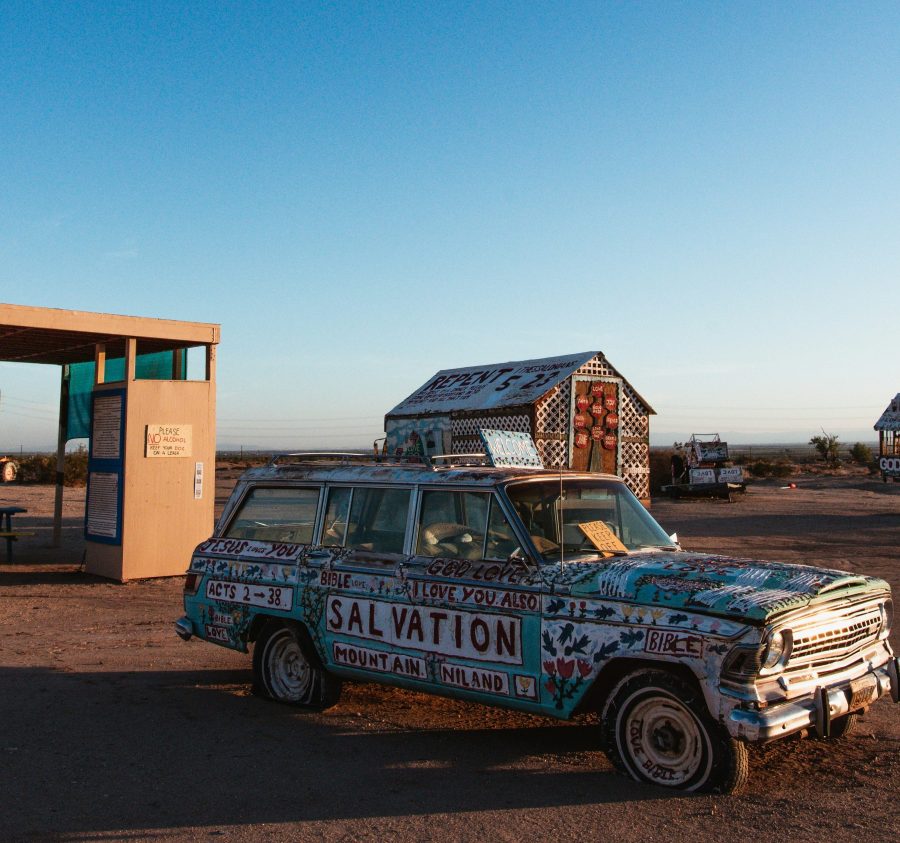
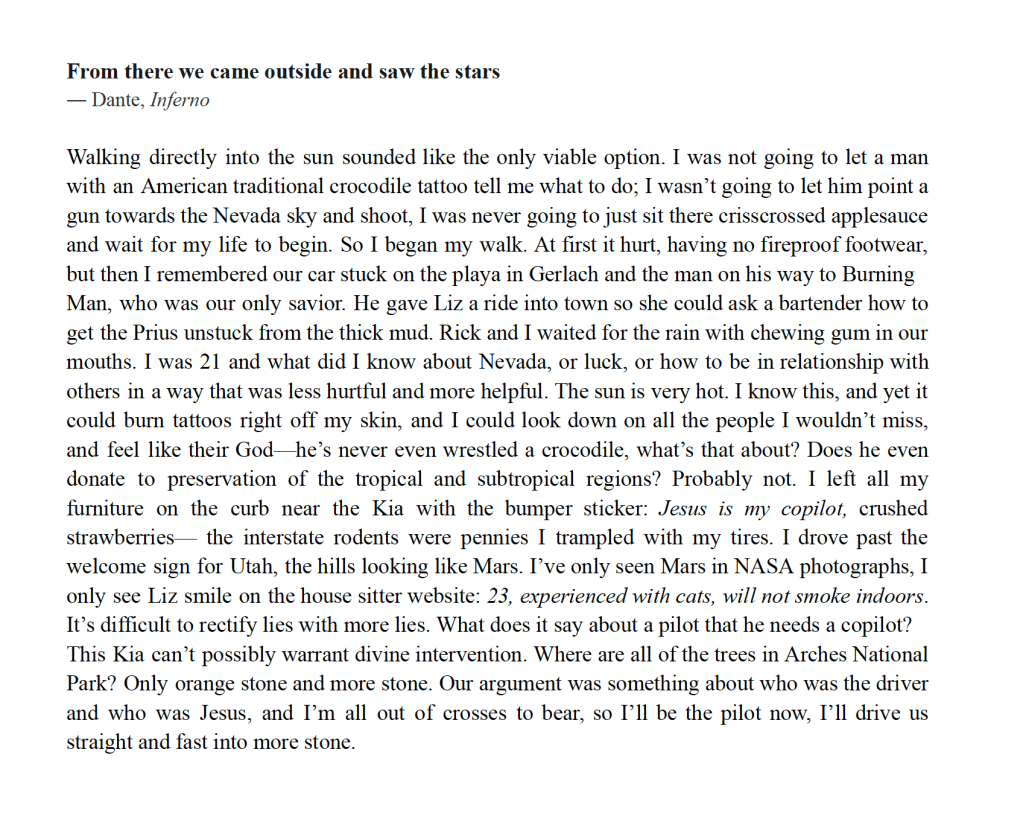
From there we came outside and saw the stars by Lane Devers

― Dante, Inferno

Text of Lane's poem.

Link to PDF: From there we came outside and saw the stars by Lane Devers

LANE DEVERS regrets to inform you he is from Carbondale, Colorado. His work has appeared in places like The Offing, Peatsmoke Journal, and The New Ohio Review. His collection I wish you had married an astronaut, was selected by Hieu Minh Nguyen as the winner of the 2024 Quarter After Eight chapbook contest. He is an MFA student at Columbia University. 

The Farmer by Andrew Doll

Behind the glowing screen the doctor nods. Terminal, yes,
she says. The farmer tugs a small notebook from his shirt
pocket. Will you sign this? he asks. The doctor snakes a
stethoscope around her neck. Applies a daub of lip balm.
You could write anything, he says. Like, thanks for being my
patient. Or, gosh, I love your knees.
At home there’s a sack of
potatoes on the counter. The farmer invites the neighbors
to a party. They play Hot Potato in a field. Toss the little
guys late into the night. The wind rattles the windows.
Then there’s just two men left throwing a burning hand.

ANDREW DOLL is a queer poet and collage artist living in Portland, Oregon. His poems live (or are soon to live) in The Buckman Journal, HAD, Painted Bride Quarterly, Lurch, Sugar House Review, and Ink in Thirds. 

What I Found Underneath Love’s Fingernails by Michael Grant Smith

I was conceived during a nominally romantic tête-à-tête in a public lavatory alongside the information superhighway. My two recollections of the occasion are a sound as of wind approaching and a chain of my ancestors receding into the dusk. A relevant detective story: when push comes to shove, stay away from cliffs. I’ve grown this big since you last saw me. Famished cats scratch at my guts and a slant of sunbeams divides my reasoning, stacks my moods, mangles my composure. Confidence-seeking missiles, aimed with creepy radar, intercept my heart — the small bullseye it is. My daily existence lacks dietetic gravity, the foundation of caloric justice. I eat food served only in pounds and ounces because I find the metric system indigestible. Sweaty walls scatter the chatter of rattling footsteps. My state of mind is aligned precisely with the room’s stainless steel fixtures, defined entirely by landscaped pictures, and maligned subsequently in briefcased scriptures. Narcissists rely on the secret handshake, “Hello, how am I?” Medication across the nation floats my boat on the shiny briny sea of glass as I cast myself into the shadow of the sail, the shade, the cool cunning hideaway whose décor must shutter the bright unkind mouse-eyed light that slices my life’s cake like paper cuts from the envelope containing the winning ticket to ride instead of driving my point home on the range of the target we attack at dawn.


Michael Grant Smith wears sleeveless T-shirts, weather permitting. His writing has appeared in elimae, The Airgonaut, The Cabinet of Heed, Ellipsis Zine, Spelk, Bending Genres, MoonPark Review, trampset, and elsewhere. Michael resides in Ohio. He has traveled to Hong Kong, Shanghai, and Cincinnati. To learn too much about Michael, please visit him at www.michaelgrantsmith.com and @MGSatMGScom.

One Fist Holding by Dustin M. Hoffman

Matthew presented his fist to us. His small fingers curled into a promise. Here, each knuckle teased, right here, inside, awaits a witnessing. So, we huddled around Matthew in the back of Mrs. Lowe’s fourth-grade classroom, back by the duct-taped beanbag chair and the class guinea pig who dozed so as not to break our covenant.

I’ll show you, Matthew said, but you can’t ever tell no one.

It felt like church, the waiting, the forthcoming ritual, like communion, like prayer, as we bowed our heads around his fist. Our selfish prayers remained just as secret, just as fist clenched: new bike, G.I. Joe USS Flagg Aircraft Carrier, just one page from one nudie mag, just one kiss from any girl, a house we didn’t have to leave every twelve months.

Unlike church, his ceremony would not lead to letdown. Dry breadcrumb cube, bitter grape juice, parting gifts to compensate for God’s silence. For when Matthew unlocked his fist, gold shimmered. There, gleaming wreath branches arced over a multi-colored shield, a code written in reds and whites and blues and chrome. A hood ornament, Matthew explained, but we already knew how our parents foolishly flaunted their most precious treasures.

Who could be so stupid, to bait our hands, Matthew’s hands, to bend back the golden crest and expose the delicate rubber binding that could be so easily snipped with Father’s knife? In a micro-second slice, we could dismember our parents’ pride. But, of course, we couldn’t. Only Matthew could, and he stowed the hood ornament in the front pocket of his denim cutoffs and lined up for recess, like it was so easy, nothing, like miracles happened every day.


Dustin M. Hoffman is the author of the story collection One-Hundred-Knuckled Fist, winner of the 2015 Prairie Schooner Book Prize. His second collection No Good for Digging and chapbook Secrets of the Wild were published by Word West Press. He painted houses for ten years in Michigan and now is an associate professor of creative writing at Winthrop University in South Carolina. His stories have recently appeared in The Masters Review, Wigleaf, Bull: Men’s Fiction, Redivider, and Juked. You can visit his site here: dustinmhoffman.com

The Prognosticators by Matthew Burnside

It occurred to all of us about the same time that our little brother could see the truth at the bottom of the well: how all fates entwined, triple-knotted and gleaming in their misery, held together by a wise but stubborn old snake named Mister Misty McRattly Tail, Esquire.

In those days we took turns dangling him by his dusk-colored ankles when we weren’t busy picking at scabs on the porch, or catching too-low clouds scudding overhead toward a big pink horizon of demise.

While it was my turn my sister Witch Hazel counted her splinters gleefully while Buck Owen tore apart a rocking chair and Salinger packed an ant pile into an old pie tin. “Look how big the peppercorns panic!” he hooly-hawed, before pouring it down the back of Zipperboy’s overalls.

“What’s baby see now?” yelled one of em again. I don’t know which.

“Getting closer” I reported, lowering the rope cinched round baby’s ankles as he giggled furiously into the void. “Good baby. Go go go!”

The game of it was just so: Noose up thine soft baby ankles and let descend. Get baby close enough to catch snake in mouth. Pull up for a prize. Most days it wasn’t about winning—just giving a name to our madness.

Soda bottle chimes clanked together strung from their limbs now. An owl peered out from a knothole. “What’s baby see?”

“Not quite yet” I reported, feeling sludgeblooded and starved for action. “First one to brick a bird gets to pet the spider!” one of em announced. I don’t know which.

Next thing I know the sky is thick with salmon dust and breathing is a chore. “Cut it” a neighbor hollered. They must had been burning; I could smell it in the air. Disinfected suds and gristle.

Then all were out wide in the yard equidistantly posed: one burning up the kiddy pool, one blowing black bubbles, one pinching mushrooms, one picking for nose coal. Deep diving.

“What’s baby see?”

“Almost almost,” I reported. Flung my attention down the hole and heard a rising whistle. Like fishhooks swirling around in a bowl made of molars. Glass clicking through its crooked lips.

Someone yodeled. Another yelled out a word we were taught never to say aloud.

Everyone fell down at once, crashing through the grass itch-riddled and red.

“What’s baby see?”

“Nigh coming up” I reported, feeling a sugar high. Sudden summer heat in my bones.

I could feel the future rumbling in my belly, like that pie tin full of ants. Could taste time and rain backwards. Throat full of dandelion parade…little baby bulbs and serpent skulls. Giddy and sad without knowing or caring to know the extent of my own edges.

“What are you children up to now?” said Mother, summoning us for dinner.

Inside, we dunked our heads, said grace, scraped our plates clean.

“So—” Father finally said, slurping his canteen. “How was your day?” In the distance hills were hiccupping; sirens sloshed around like wild bells drunk on panic. Our sheepheads tilted as night was coming on strong, guttering through the slanted board. Mother gnawed a cactus in the disposal.

“Everything is wonderful” I said as baby wriggled, laughing through the snake writhing round in its gummy maw. “Why do you ask?”


Matthew Burnside is the author of Postludes (KERNPUNKT), Rules to Win the Game (Spuyten Duyvil), and the hypertext novel series Dear Wolfmother (Heavy Feather Review). More work may be found at https://matthewburnsideisawriter.tumblr.com.

to grasp by Tyler Barton

Van could make this move easy: just pack the collection’s sixty-two thousand specimens into rubbermaid bins and rent a box truck. But instead he pitches a big museum shuffle.

“I smell local news!” Marianne, the CEO, says over the Panera she’s eating at her desk, the desk that Van will one day put his feet on, after he usurps her. “Vanny, pass me the dressing?”

Van assembles hundreds of museum volunteers—snake-handlers, taxidermists, ornithologists, the assholes with the loupes, community services students, cleaners, fundraisers, pencil sharpeners, bee-keepers, artists, ten year old boys obsessed with for some reason caves, and those purple-lensed planetarium operators. It’s Monday and they’ve formed a long, winding line of hands leading from the museum basement to the loading dock of the Ex-Salvation Army on Locust Street. The TV crews arrive as hoped, as do print media, and even the museum’s dormant Twitter springs to life as the minerals start swimming down the line of gloved hands.

“Remember your training!” Van says, holding a clipboard. It’s one of the great joys of his job, the clipboard—how he can grip and wrench it and nobody but Van sees the stress leaving his body. The new museum, Van remembers for motivation, will be air-conditioned.

Nine minutes in, an envelope-licker drops a cow skull and its long teeth scatter into the street. Furious, Van hurries over, smiling, and invites the man to head home early.

“It’s the sun,” he says. “Just keeps coming in and out of clouds. It won’t happen again.”

“Good,” Van says, no longer smiling, “bye.”

Luckily obsidian is so hard, because no damage is done when it slips from the botanist’s hands and slams the sidewalk. Regardless, Van asks her out of the line. And pretty soon Van stops asking, and it becomes: Go the hell home! This isn’t practice, people. This is the game!

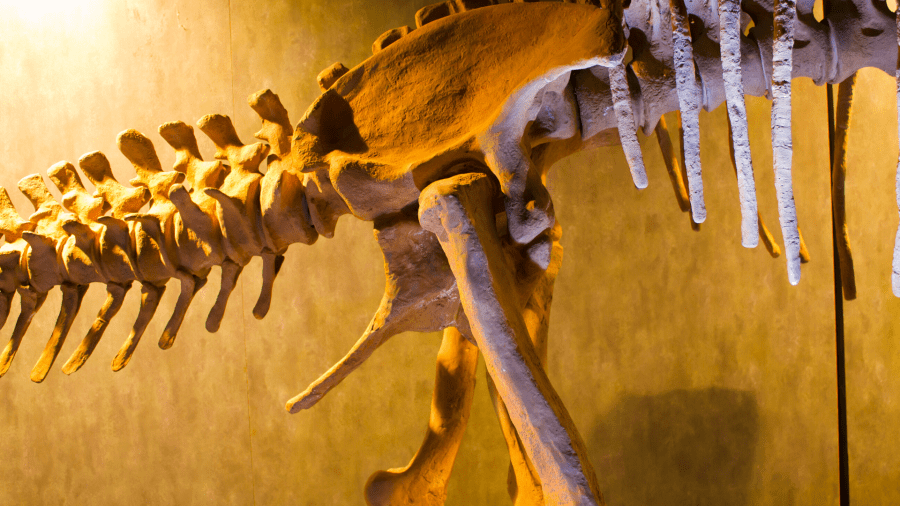
Each time someone drops a specimen, or is seen chatting to their line partner, Van ejects them. He doles out Adderall illegally and screams at people who look distracted. In this way, the line stretches thinner and thinner, until Person 1 has to lean to reach the outstretched hands of Person 2, which results in more drops—until Person 1 has to lightly toss the item across to Person 2, who does not always have game-ready hands, and the line becomes less dotted with volunteers, and the camera crews have all gone home, and the sun is blinking out, and Marianne has stopped waving her support from her corner office window, and it’s just Van and a handful of others with nothing going on in their lives but this, throwing specimens to one another across empty, ten-yard gaps, until it’s midnight, and the drugs haven’t helped anything, and Marianne is home in bed with a novel, and Van rolls up all 20 feet of the anaconda skin, tucks it under his arm like a football, and mounts the back of the Parasaurolophus. “Take us to the Salvation Army,” he whispers to the life-size though not-alive Dino model. They go nowhere. Parasaurolophus doesn’t have ears. It picked up sound via vibrations in the air. Okay, fair enough, then why can’t it hear the amethyst sailing through the cool dark toward Van’s face?

This is what happens in the coma: Van lives and relives and re-relives his first day on the job, the first time he said his boss’s name out loud, when he did not say his boss’s name, but in fact called her, “Marinara.”


Tyler Barton is a cofounder of Fear No Lit, home of the Submerging Writer Fellowship. He’s the author of The Quiet Part Loud (Split Lip Press). His work has appeared in Kenyon Review, The Iowa Review, NANO Fiction, Paper Darts, and elsewhere. “to grasp” is one part of his connected microfiction manuscript, To Work, which focuses on the absurdity and dread of modern work. He lives in Lancaster, PA, where he works in a Nature Museum and teaches free writing workshops to residents of assisted living facilities. Find him @goftyler or tsbarton.com.

Growth by Ben Segal

The tall guard who watches our building is growing. A few years ago he was unremarkable, but now he is enormous. He towers. Now he bends deeply just to shake hands or open a car door, as he often does for our building’s many guests

When I began to work here, the man was hardly memorable. He was a little gangly and his face was the kind of lean and acne-scarred that made one think, unfairly, of methamphetamines. His suits, already inexpensive, looked cheaper for draping his body. Yet there was something winning about him, a sweetness, a slight and almost pitiable magnetism.

He remains ungainly, but now he is impossible to miss. He grows perhaps an inch every three months and has just crossed to the other side of 8 feet.

I too am growing inexplicably. I gain almost a quarter-inch each year. It is not a noticeable phenomenon. Or, at least it’s not to most. I notice it. My mother thinks my posture has improved. For everyone else, the change is too slow to register.

But one day, when I am very old, I will be enormous. I will age into a stooped seven-footer and I will walk slowly past strangers who will imagine I was once a professional athlete. It will be nice, in that future, to lie about my feats of strength.

The guard, however, will not grow old. A body cannot grow like his and survive. His heart will swell and fail. He will die by nine feet, maybe a little past. This is a year away at most. He must know this, as we all do, but still there he is, opening doors, checking guests into the building. He is bending and smiling for pay.

We should not make him come any longer, I think. Surely it is a cruelty. Surely a building such as this – its teeming staff, its endless polished surfaces – can allow the man to stretch out peacefully on his own schedule.

Then again, why does the proximity to death make each hour worked that much more obscene? Perhaps it does not. Perhaps the entire bustle of this building is a slow atrocity. The same fraction of all our lives is wasted. The building is a stack of cruelty with clean bathrooms and packaged snacks.

I watch the giant pull open a glass door and can think only of a general strike. He holds the door open and we nod to one another. I ride the elevator to my office, and I am silent, and I am basically mostly good.


Ben Segal is the author Pool Party Trap Loop (Queen’s Ferry Press), co-author of The Wes Letters (Outpost 19), and co-editor of The Official Catalog of the Library of Potential Literature (Lit Pub Books). His short fiction has been published by or is forthcoming from The Georgia Review, Tin House, The Collagist, Tarpaulin Sky, and Puerto del Sol, among others. He currently lives in Los Angeles.

How I Learned About Evolution by Michelle Ross

Dad wouldn’t let me go to school with the other kids in town. He said school was for people who couldn’t or wouldn’t think for themselves. Other things that were for such people: the internet, greeting cards, and breakfast cereal, to name a few.

Dad worked as an inspector for a sports sock manufacturer. His job was to check socks for imperfections—holes, loose threads, and whatever else went wrong with socks. He had an eye for flaws and took pride in finding more defective socks than any other inspector. Officially, Mom was my teacher. She didn’t have a job outside the house, though she did have laundry and dishes and a toilet to scrub. Unofficially, they split the curriculum pretty evenly. Mom taught me rain with a silver metal colander. “See how the water pours out of all those holes?” Dad taught me sun with a yellow flashlight. “It turns on for day. It turns off for night.” He flicked the flashlight’s chunky switch. Mom taught me Earth with a buttermilk pancake. “We’re about right here,” she said, pointing just off-center of the middle. Dad taught me birds with a helium balloon. “It’s filled with flying gas.”

Dad was an inventor when he wasn’t inspecting socks or overseeing my education. Perhaps he thought of himself as an artist. He didn’t apply a word to his tinkering in the shed with scraps of metal and wood and string. He built countless useless things. Over the years, these things proliferated in our yard and our home, crowding out everything else. Grass yellowed then crumbled because sunlight no longer touched it. Trees became stunted, gnarled. I bruised and scraped as I made my way to the bathroom in the dark of night.

Mom never spoke a disparaging word about Dad’s creations, but she navigated our house gingerly, as though any step could set off a booby trap. Sometimes I found her staring worriedly at one of his hunks of metal like she had at the trail of ants that had entered our house from a crack in the wall above the kitchen sink one dry summer or the lone earwig she’d once found wedged between bristles of her toothbrush. When she saw me, she’d return to her cleaning or cooking or mending. She’d smile, the worried look flicked away like a speck of grit from her eye.

Then one day, Dad erected a thing so enormous, so hulking, I said, “It looks like a dinosaur.”

We were out near the shed. It was dusk. He’d been teaching me fireflies. “Like the sun, only smaller, and on and off faster,” he said. “They have to blink off frequently or else they’d burn alive.”

When I glimpsed the shadowy, towering figure through the shed’s darkened doorway, my spine tingled.

Dad’s expression quickly sharpened. “Dinosaur? What do you know about dinosaurs?”

I told him Mom had taught me that humans were why the dinosaurs went extinct. We overhunted them.

“Extinct?” he said. “What do you know about extinction?”

When Mom emerged from the bathroom after taking her nightly bath, Dad and I were waiting for her in the hallway. He was squeezing my arm too hard, as though he were trying to crush whatever was inside.

He said, “You believe in dinosaurs?”

Mom’s hair was wrapped in a red towel that sat upon her head like a lampshade. She was silent for a long moment. Then she said, “I saw a footprint of one once. In Utah. When I was her age. It was the size of a toddler.”

Dad said, “A footprint? You mean a shape carved in dirt?” He shook his head in disgust.

Mom said nothing, but I saw with my eyes how her face shifted.

Another lesson I’d learned via pancakes, though this one I’d acquired without either of my parents’ instruction, was irreversible change—how some transformations, such as gooey, drippy pancake batter cooking on a hot griddle, can’t be undone. When a pancake wrinkles around the edges, a signal that it’s cooked on bottom, you better flip that pancake fast before it scorches, before it’s ruined. There isn’t any starting over again. Hardened batter is no longer and never will be batter again.


Michelle Ross is the author of There’s So Much They Haven’t Told You (2017), which won the 2016 Moon City Press Short Fiction Award. Her fiction has appeared in Alaska Quarterly Review, Colorado Review, The Pinch, and other venues. Her work has been selected for Best Microfictions 2020 and The Wigleaf Top 50 2019, as well as been a finalist for Best of the Net 2019, among other awards. She is fiction editor of Atticus Review. You can find her at www.michellenross.com.

Stranger Disconnected by Darren Nuzzo

The banner atop the webpage says you’ll be paired with seven F’s for every two M’s – that’s how they get you. The ratio is actually much different. I’ve only seen one F. She was thirteen and from the Philippines. I asked her Buttigieg or Biden and she thought I was talking about laundry detergent. When she lived in Quezon City, her family used Ariel. In Manila, they switched to Zonrox. Then the conversation moved to dish soap until we ran out of opinions on the matter. That was my one experience with an F. Mostly, it goes like this: M 22, M 27, Stranger disconnected. It’s a good idea for a website, linking one stranger to another. It’s just that the math doesn’t add up. M’s want F’s and F’s are smarter than that. For me, I just want someone to talk to. So I’ve changed letters, fixed the problem for most everyone. Things have been going much better ever since. Are you tall? is one of my favorite things to ask. You sound tall, I like to assure them. That always makes the M feel big and strong, and I know that’s important. I like to ask what they do for work. If M says he does construction, I say, “Like an architect.” If M says he hasn’t read a book in eleven years, I say, “There’s nothing found between pages a smart guy like you can’t find on Earth.” When M says he has insomnia, I say, “The brightest minds always do.” And when M tells me all the good things about his penis, I let him know that I really believe him. They never want me to leave. But I say goodnight and move to the next, well aware of this unique opportunity I’ve been given, the chance to put the most good into the world at the cost of the least evil, sinning to the smallest degree possible, telling man everything he needs to hear, lying by just a single letter.


Darren Nuzzo is the author of I’ll Give You a Dollar If You Consider This Art—a collection of stories, essays, poems, and comics.