Me, Irene, and the Radio King of Albuquerque by Ian Anderson

In the Kitchen Department at Macys, the sales associate, Debbie, shows me the KitchenAid stand mixers. They’re lined up on a display table in three lines of six—each row a step higher—so that, together, they resemble a chorus line of robots. They come in colors like Empire Red, or Aqua Sky, or Majestic Yellow, or White.

Debbie is excited to tell me about the features and attachments available, but all I see is the price tag. I think someone accidentally added a zero at the end, I tell her.

She pushes on her spongy, yellow hair. What you have to understand, she says, it that a mixer is an investment in a better life. A stand mixer announces that this is a house that gives, that this is a house that loves. You can’t put a price on that. I say: Okay, but you have put a price on it, and I can’t afford that price. I’m an adjunct professor. STEM? she asks. English, I tell her. You poor thing, she says. There is another option, she says. We walk to the back of the store. I think, Debbie says, that this might be better for someone…in your situation.

On the wall, there are three rows of six hats. The hats come in colors like Empire Red, or Aqua Sky, or Majestic Yellow, or White. Below the hats are silver spoons, whisks, hooks, and bowls laying loose in a cardboard box. While not what I had in mind, I have to admit, this option is more in my price range. Did you have a color in mind? Debbie asks. Pistachio, I tell her. Excellent, she says, should I wrap it up, or will you wear it out?

* * * *

I sit cross-legged on the kitchen counter and wait for Irene to come home. A high-walled bowl sits in my lap. In my right hand, I hold a whisk. The pistachio-colored cap fits snuggly on my head. This isn’t where I thought I would be in my mid-thirties. I thought I would, at least, be tenure track by now, but colleges aren’t hiring; and if they are, they aren’t hiring me. Irene’s father, The Radio King of Albuquerque, told me more than once that I could work for him, selling airtime to advertisers. He says I’m smart. You have to be smart to sell someone air. Irene would never let me take the job, though. She says The Radio King of Albuquerque just wants me to make more money because The Radio King of Albuquerque hates that his daughter has to work. But she likes her job. She likes working. She likes that I teach, and that I still read books. She says if I quit teaching she’d probably divorce me. My back is stiff. I feel like a semicolon.

The front door opens. Irene unloads her bag and coat and comes into the kitchen. She’s going to the refrigerator when she sees me sitting on the counter. She approaches and reads the note I taped to my forehead. It reads: Happy Five Years. Thanks for keeping me in the mix.

She smiles. She looks at my wisk. She pulls flour from a cupboard, eggs from the refrigerator. She measures the flour and dumps it in my lap. She cracks eggs. She pours olive oil. She adds salt. She’s making scratch pasta dough.

It is my favorite.

Irene replaces the whisk in my hand with a flat paddle and lowers my hand into the bowl. She tugs my ear, and I start mixing. The first minute is fine, but as the ingredients come together, my arm begins to ache. I keep going. This dough will be perfect. I mix and mix and mix. My forearm starts to cramp. My elbow is on fire. I don’t think I’ve given stand mixers enough credit. Their price starts to make more sense. Irene tugs my ear again, and I gratefully come to a rest. She replaces the paddle in my hand with a hook. Sonofabitch, I think. But when Irene tugs my ear, I start again with automatic loyalty. I mix until my arm is numb, until sweat drips down my neck.

* * * *

While the dough rests in the refrigerator, Irene sets the table for two, lights candles, and puts a record on the turntable. The Ronettes hum softly to life. Irene sways her hips to the music as she walks back into the kitchen. She pours wine. After years of marriage, I thought I knew everything about her, but I never knew this: what she’s like when she’s alone. She possesses a quiet tenderness. A confidence. It’s sexy in a way that I didn’t know could be sexy.

Irene takes the pasta dough out and cuts it into slices like you would a cheese log. She sets up the pasta maker—a gift from the The Radio King of Albuquerque. He would buy her anything she wants with all his air money, but Irene never told The Radio King of Albuquerque about the stand mixer. There are secret desires that only a spouse can know. It is intimacy, and it is good.

Irene rolls the dough out and cuts it into linguini with the pasta maker. She makes a simple tomato sauce and boils the noodles to al dente. She sends a text. She’s asking where I am, but I turned my phone off hours ago so it wouldn’t give me away. I’m smart enough to sell air if she wanted me to.

Irene ladles the sauce over the noodles. She sets the plates on the dining room table. From my place on the counter, I can see her sitting at the table through the doorway. She is beautiful. The pasta smells delicious. She sends another text. She waits. There are things that I can give my wife, and there things that I cannot. Not at the same time anyway. That’s just how it is. Dinner is getting cold. I wish she would just start eating.


Ian Anderson is a writer and designer living in Baltimore, MD, with his wife and daughter. He is the founder and Editor-in-Chief at Mason Jar Press, and his work has previously appeared or is forthcoming in Wigleaf, X-R-A-Y Literary Magazine, Five:2:One Magazine, Baltimore Fishbowl, and elsewhere. When not writing, designing, running a press, being a husband or father, he is listening to The Beach Boys’ Pet Sounds. He tweets about that and other things from @ianandersonetc.

All giant deer kings hail from Limerick by Meg Mulcahy

Beast and bone tower in dead zoos
without fail, each time a skull that housed a heritage, antlers angel wingspan
fractured lines fermented shifting permeance
presiding over dark and crumbled earth, beetle-shelled glint, rotted rain
melted you away in every stride, chocolate carcass left us hollowed eyes of someone who
saw wars and cherry wine flow bitter from the mouths of flies
bolted down through yellowing joints, strung up in a new world and I,
the furthest from magnificence, can only gaze upwards in imagined genuflect,
and in our visits the displaced may comfort the dead.

Meg Mulcahy is a poet and writer based in Dublin, Ireland. She runs on cold brew and hope. Her work has featured in several publications including Kissing Dynamite Poetry, Crêpe & Penn, and Silk + Smoke, winning the Halloween Flash Fiction Competition 2019. You can always find her on Twitter at @TheGoldenMej.

Master of My Domain by Marissa Glover

I do what I want. I’m an American—
no asking if he’s happy, not caring
if she’s satisfied. I make my own way
in the world: Kick off the bed covers
or hide under sheets; stay silent or
scream. Maybe all of this. Maybe none.
In America, we’re taught finishing first
is all that matters. Here, selfishness is
not a crime. You can’t depend on anyone
to make you feel good—this is a fact
you learned early, when your parents split,
when Marc Bowman’s ambition
got him caught in a kickball double-play
to end the inning. So you learned to please
yourself—now both explorer and native
land. Discover what you love most
about creation. It is good. It is good. It is—
Say your own name instead of God’s
as you finish.


Marissa Glover teaches and writes in Florida, where she is co-editor of Orange Blossom Review and a senior editor at The Lascaux Review. Marissa’s work recently appeared in Mothers Always Write, Whale Road Review, Fresh Air Poetry, The Cabinet of Heed, and Sweet. Her debut poetry collection, Let Go of the Hands You Hold, is forthcoming from Mercer University Press in 2021. Follow Marissa on Twitter @_MarissaGlover_.

tell me i’m prettier when i smile by Danielle Rose

because i do not desire to be a road pocked with potholes / but these scowls gouge the path ahead like too many pecking crows / & this is entirely a dream i can wake from if i can just find the right phrase / like i am a kiln & i become a burnt orange / the sounds stretch & yet i am still dreaming / & this stretching does not decide for me it is a lesson in constraint / like when gps coordinates turn out to be wrong / or how i want to build rhetorical arguments from childrens’ balloons / i want to watch them soar & disappear & become just another dot of clear sky / tell me i am like the sky / & lie to me / tell me i am expansive & clear / i need to hear that joyful clouds reach their hands into my chest / because i can feel them inside of me / storming / telling me i am pretty when i smile / i want to be a set of cascading conditions / like a logical proof or the way i am always sneaking away from my fear / tell me i am prettier when i smile / tell me / become a cloud & tell me that when i am pretty / it is impossible to be so empty


Danielle Rose lives in Massachusetts with her partner & their two cats. She is the managing editor of Dovecote Magazine & her work can be found or is forthcoming in The Shallow Ends, Barren Magazine, Luna Luna Magazine, Empty Mirror, Homology Lit, Turnpike Magazine, Kissing Dynamite & elsewhere.

Don’t worry about returning it by Devaki Devay

I’ll lose everything, eventually.
I’ll leave my phone on a restaurant table
the night before I fly out. Someday
I won’t recognize the number. Listen,
I left my notebook full of secrets under
one of the chairs in the lecture hall. Now
someone’s heels are brushing against
my newest molestation. It doesn’t bother me,
I lost my headband between the cushions
of a bus, I fell asleep chest up, once I managed
to imagine it was the Earth moving fast
and not our wheels. I’ll lose my wisdom teeth
without ever realizing; I’ll wake up
with pulsing memories of metals at my jaw,
fingers in my mouth,
blood seeping soft in cotton balls.


Devaki is a community college transfer at UC Berkeley studying rhetoric, as well as a reporter for the student paper. Their writing, which has appeared in Entropy and Royal Rose Magazine, centers around childhood trauma, loss, and the South Asian diaspora.

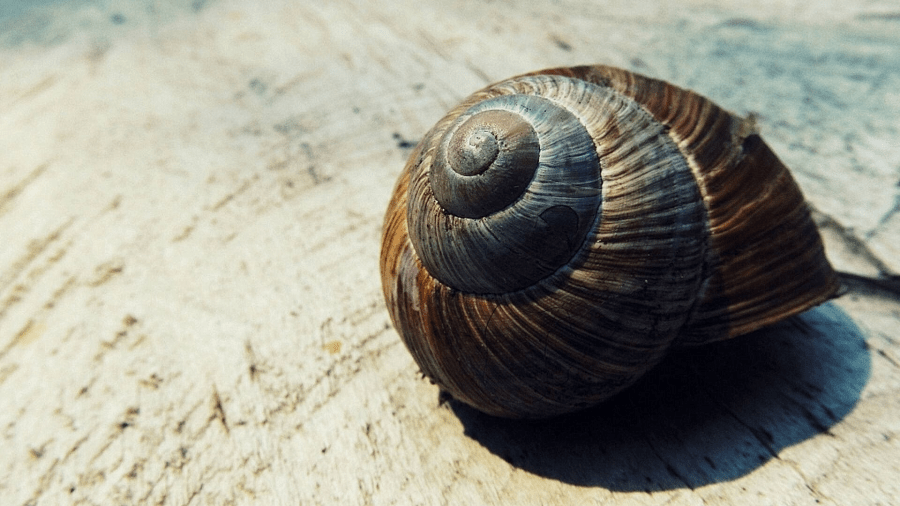
On the Dendrochronology of Gastropod-Shells by Kunjana Parashar

I like it when groups of children visit the river bank
looking for ammonites, echinoids and belemnites:
their ears like a sharp, open-mouthed whelk. To find
lexicon for the old Cretaceous worlds we originated
from, is to find a key to mapping the strange histories
of our bodies: clavicle/drumstick/femur/tendon.
My history has deep gulfs in its narratives, and often
while recounting my traumas I forget how they came
to be. Like a giant whale belly-flopping in my mind,
scattering the rings of data that dendrochronologize
my familial pain: was it the desiccated sap of my mother
that shrunk our house into a stump or was it the towering
girth of my father growing on our backs like an epiphyte.
But what I never forget is that at nights, I would watch them
slipping into that otherness of sleep: grief wrapping their
ancient-bodies like the exoskeletal shells of gastropods.


Kunjana Parashar is a poet from Mumbai whose work appears or is forthcoming in Lammergeier, UCity Review, Riggwelter, The Hellebore, Barren Magazine, The Rumpus (ENOUGH Section), and elsewhere. You can find her on Twitter @wolfwasp.

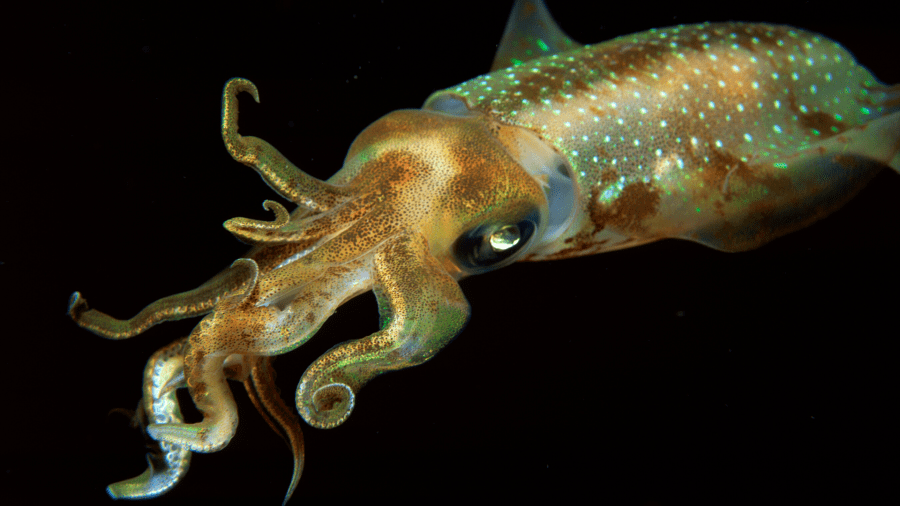
seasonal cephalopodic self-improvement by Natasha King

in spring i’ll unfurl new growth |
exercise | learn an instrument | achieve life goals | spread my twenty-foot tentacles |
wait | what? | oh my god | why do i have tentacles |
is this | self-actualization?

i am | rolling with it | i guess in spring |
i am a squid with large moonglow eyes | and a murderous beak |
i guess in spring | i live in the abyss | with my squiddy brethren and sistren |
i guess in spring | my blood has quickened | also, it’s blue, and
copper-based | i am a little freaked out but i did say i wanted | a change

alright squids and girls | it’s spring |
and i will eat so many fish | yes | raw |
i will duel the sperm whales of the deep | i will rise at night like a spark of silver fire |
is it | the solstice already? i hadn’t noticed | i’m sorry,
but i am too busy squidding around | to have resolutions this year.


Natasha King’s poetry has appeared in Glintmoon, Lily Poetry Review, Oyster River Pages, and others. She lives in North Carolina and reserves her spare time for writing, prowling, and thinking about the ocean.

Tidal by Andrew Hahn

My grandmother once told me she was a mermaid,
that she had given up her life in the water for love
on land, that if I told anyone, she would crumble
into coral dust, and the waves would pull her away.
At school, I accidentally told a friend. In the cafeteria,
I cried hysterically. Now that she owns
an aging body, I feel responsible for tending
to her softening bones, these legs she learned to walk on
ache at the fins of her ankles. I want
to mark her medications in her calendar and reach
for things on top shelves, watch
reality TV and gossip about the neighbors.
Skeptics claim mermaid sightings are manatees floating
near the surface. They say a manatee’s shape
resembles a woman’s, but this is only for the shadow
of the tail undulating beneath crystal waters.
I left her to live with a man on Fort Lauderdale’s Intracoastal.
I sit on the curb under a streetlight and watch the boys
on The Drive walk from bar to bar, sometimes
drunk, sometimes fingering the waistband
of another boy’s sequin shorts, sometimes
in the arms of whiskered, gray men who teach
their bodies opening to the past can be painful, and
whisper that sometimes leaving someone to find
a home looks like abandonment. But
the sea never leaves, instead it pulls away
just long enough for you to remember
its absence, to remind you that it’s in
your blood, to beg you to run toward it.


Andrew Hahn’s work has been featured in Crab Creek Review, Pithead Chapel, Rappahannock Review, Glass: A Journal of Poetry, and Yes, Poetry, among others. His chapbook God’s Boy is available from Sibling Rivalry Press.

Pro re nata Christmas by Elyse Hart

i took a pill at noon instead of nine
so an astronaut blew up in space on christmas.
a child let go of a red balloon
then my mother planted marigolds
next to begonias.

we are what we eat we are where we sleep—
a boy ate one jellybean on christmas morn’.
i took a pill at nine instead of noon.
if jingle bells is a love song then call me dasher
dancer prancer and vixen.

space landed in the garden
so my mother moonwalked to the pharmacy
with a bunch of begonias,
which exploded tinsel.
i took a pill at ten instead of two.

a balloon took hydrogen, not helium
and my head came off,
floated and blew up in space.
wassail rained out the remaining neck.
smithereens of jawbone were found in the alley
behind Rite Aid with my mother’s flowers.

i took a pill straight in the gullet.
those still with their heads
caroled as needed.


Elyse Hart is a poet, songwriter, and composer residing in Los Angeles. Her work has appeared in The Nervous Breakdown with work forthcoming in The Los Angeles Press. Her first chapbook will be released by Subphonic Press in 2020. Find more of Elyse’s work on Instagram at @elysehartpoetry.

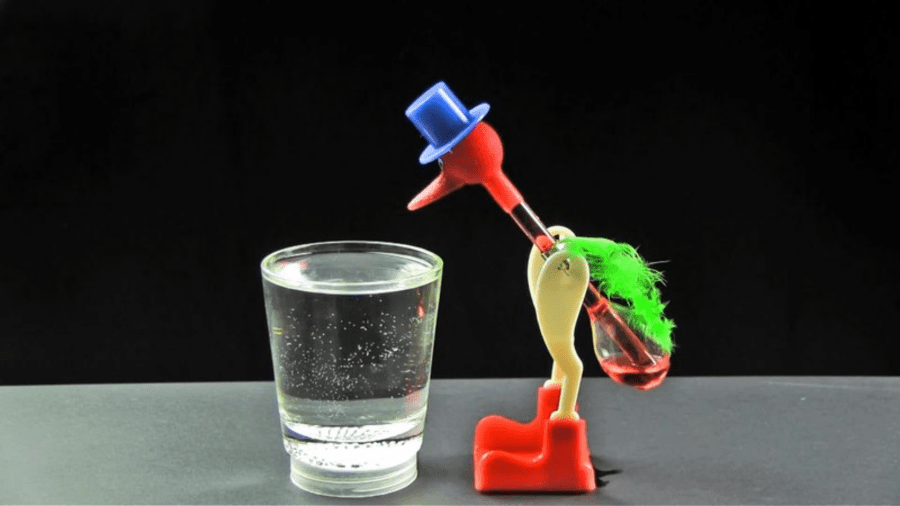
The Mechanical Bird Crafts an Email by Caroline Chavatel

The mechanical bird crafts an email
and we are surprised by its length and wit.
The store has gone dark in its after-
houred mood, so the cameras reveal
his behavior to us. The local news
has reported the unmatched intelligence
of our flocking friend, his beak hammering away
at the keys like a pianist and he makes music,
CC’s the regional manager.
It didn’t always use to be this way—
once he never dreamed of roaming
the local forests, calling out to mates
in syllables we couldn’t sound.
Last week, he almost got swallowed
into a hurricane, up into the nature
of the sky and once, before, he had no
other name. The news had stopped
reporting on him before the email,
had grown tired of his de-
mechanicalization and emergent attitude.
I’m writing to say he is worth noting.
I’m writing to let you know he is here.


Caroline Chavatel is the author of White Noises (GreenTower Press, 2019), which won The Laurel Review’s 2018 Midwest Chapbook Contest. Her work has appeared in Sixth Finch, AGNI Online, Gulf Coast, Hayden’s Ferry Review, Cosmonaut’s Avenue, and The Journal, among others. She is editor and co-founder of Madhouse Press, and co-founding editor of The Shore. She received an MFA from New Mexico State University and is currently a PhD student at Georgia State.