A shortlist of cheeses and wines I would take home for free when I worked in the Specialty Department at Whole Foods by K. Degala-Paraíso

Sancerre: a French wine so light and crisp, it lands somewhere between spring water and God. Small chunks of bougie cheeses, sloppily wrapped in butcher paper: a sliver of Le Fromager, a double-cream brie so clever and smooth, it could seduce the sternest person you know; a corner of Rum Runner from Wisconsin, sticky and sweet and stuffed with crunchy salty bits; fresh, herb-coated capricho de cabra; stinky Camembert; a simple-yet-elegant goat gouda; garlicky Boursin. The parmigiano reggiano crumbles when you slice it, and I abruptly remember how the world crumbles beyond this ranch where we  temporarily live: a pandemic, a coup, videos of anti-Asian hate crimes every morning, a global death count so high it’s almost desensitizing. Almost. And sometimes — sometimes my grief gut-punches me so hard my ribs go numb. Sometimes, my broken hand is in such cheddar-sharp pain, it blinds me. But here, in the tall grass under the apple trees, in the split-second when that orange globe hangs right above the treeline, you’re gently placing a rosemary cracker slathered with brie on your tongue, and you close your eyes before you chew, and I remember how much I love you, and — for just this moment, I believe that everything will be alright.


K. Degala-Paraíso (she/they) is a Filipinx-American experimental writer with a B.A. in Creative Writing from Pitzer College. Her work has also appeared in miniskirt magazine and PANK Magazine. She teaches creative writing through GrubStreet. When she’s not writing, you can catch K. wreaking culinary havoc in the kitchen and follow her online at www.kdegalaparaiso.com.
Summer shame by Jax Bulstrode

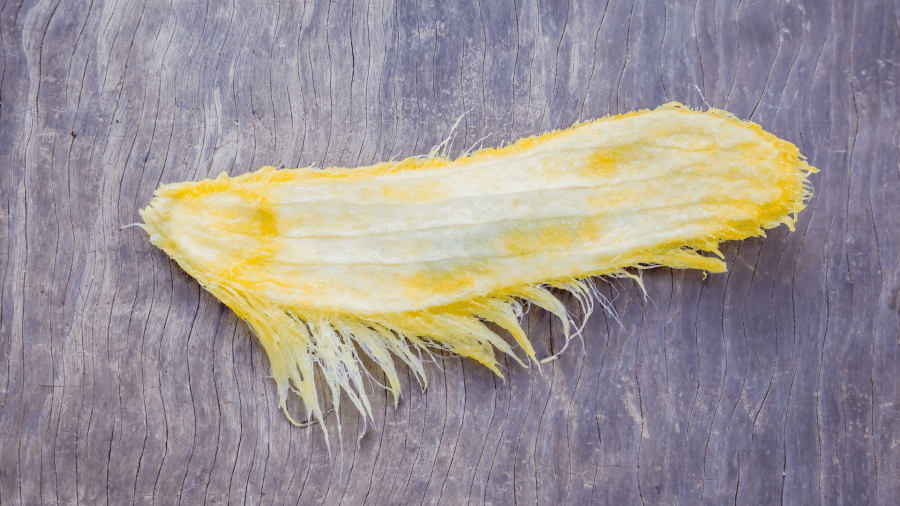
i think we should criminalize golf / i’m making a pros and cons list for buying the haunted house down the street / starting a petition for mangos to not have that seed / in the middle / i think we stop denying ourselves pleasure / especially the mango eating kind

i’m going to seed bomb the neighbor’s front lawn / join me / i’ll make burgers afterwards and drip sauce on my bare toes / you don’t mind do you? / a mess?

we are old enough now / to know how to swell into summer / into silver rings, drink stolen gin / meet me on the back porch / we can compare mosquito bites and cut our hair short

back to the mango thing / how would we do it? / remove the hard bits / the shame part?


Jax Bulstrode likes to write poems, cry, and preferably do both while taking a bath. Jax has had work published in Verandah Journal, Gems, Plumwood Mountain, and Blue Bottle Journal. She is from Naarm/Melbourne.

The Lure by Gretchen Rockwell

The first lander on Venus lasted fifty-three minutes.
It survived long enough to send pictures back and verify
the world was waterless—that humans could not survive
there. The strange yellow images look like something
from a fever dream, cloudy and corrosive. Venus
flytraps are brightly colored, the better to attract prey.
Their sensitive tendrils stroke the air, know when
to clamp down and when to stay agape. They smell
sweet, surely—the better to draw smaller life in.
The flies don’t know any better, misstep, and then
it’s over. The snap of the trap moves too fast for us
to understand. We know the plant can remember
when it has been touched, that it holds the memory
of motion for more than a few seconds. They evolved
from sticky traps. Some theorize life on our planet
came from Venus ages ago, carried on an asteroid,
contributing to the rapid rise and fall of so many species.
Some believe there may still be life in the Venusian atmosphere,
hidden high in the sulfurous clouds. We still don’t know
what the dark streaks mean, whether they could be
microorganisms or simply swirling greenhouse gases.
As I nudge a struggling bug towards my flytrap, I remember
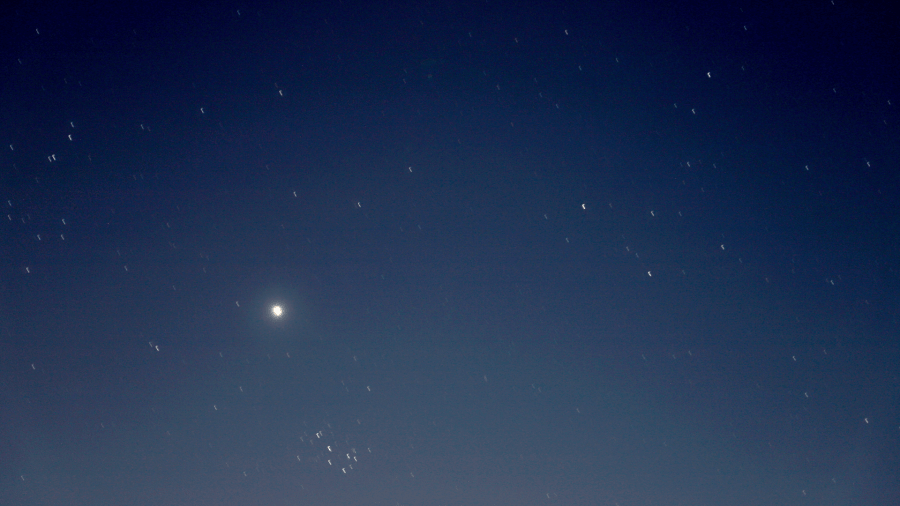
Venus is the brightest thing in the sky besides the Moon,
it is our sister sphere. We won’t be able to resist going there,
to consider building cities in the clouds. Even if we know
it will kill us. We can never leave the unknown alone for long.


Gretchen Rockwell (xe/xer/xers) is a queer poet who can frequently be found writing about gender, science, space, and unusual connections. Xe is the author of the chapbooks body in motion (perhappened press) and Lexicon of Future Selves (Vegetarian Alcoholic Press) and two micro chapbooks; xer work has appeared in AGNI, Cotton Xenomorph, Whale Road Review, Palette Poetry, and elsewhere. Find xer at www.gretchenrockwell.com, or on Twitter at @daft_rockwell.

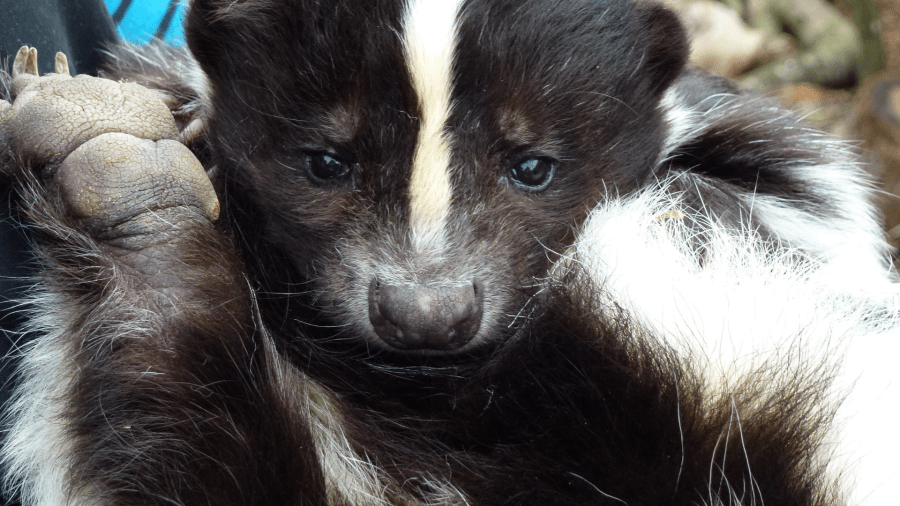
Pelt by Brittney Corrigan

The drape of your body-not-body
across my arm brings death so close
I don’t notice, feel only the rush
of my blood against soft-creature
skin. How the patterns in your fur
are so still, so un-fleeing, I can
marvel at the single white stripe
that divides your dark brow,
the way it rivers down your back,
disappears into gray-mottled sea.
In your face, I see only empties—
not sockets, not eyes—hook
my finger through absence, stroke
the clean, unburrowed slope
of your toothless snout. Where
once strong paws moved earth,
turned worms into the light,
now there is only the ghost
of your long-clawed digging:
tanned hide smooth against
my living skin. Entrail-less,
your death has charmed me
with its novelty. I press
my nose to yours, imagine
the animal stink that does not
rise as I turn your pelt over, offer
your not-heart to what draws near,
stalks at the edge of the knife.


Brittney Corrigan is the author of the poetry collections Daughters, Breaking, Navigation, and 40 Weeks. Solastalgia, a collection of poems about climate change, extinction, and the Anthropocene Age, is forthcoming from JackLeg Press in 2023. Brittney was raised in Colorado and has lived in Portland, Oregon for the past three decades, where she is an alumna and employee of Reed College. She is currently at work on her first short story collection. For more information, visit http://brittneycorrigan.com.

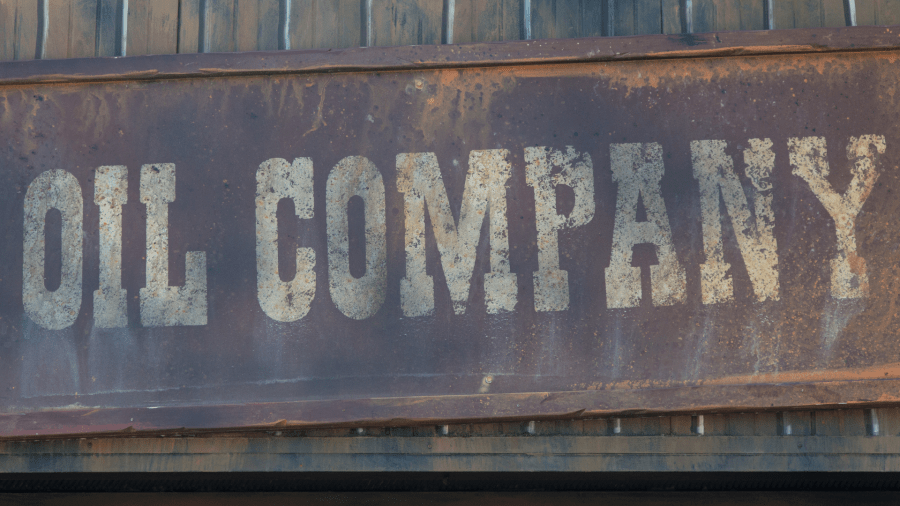
Working for an Oil Company Conglomerate Will Get You Perks Like This by Cheryl Pappas

On a world-class submarine headed to what was left of the Azores, I had just taken one delirious sip of a 1929 Beychevelle Bordeaux when a drop of water plopped on my left shoulder; I watched the crisp cream linen of my shirt morph to gray and looked up: a leak.

The ceiling was 30 feet high, impossible to spot the source. I glanced at the others, drinking their wine and sloe gin fizz. No one had noticed. Alice twirled her shiny black hair while chatting with Rich from finance, her eyes droopy with dopamine. I knew she was sleeping with him now. Days later, Rich’s silken black tie would wash up on a distant shore, but in that moment his teeth held a lively shine, like they were plastic, which in truth they might have been. Another plop. The fairy lights on the upper balconies twinkled like Christmas; violins swooned their way into sleepy hearts; red, white, and blue streamers snowed down from the sub ceiling; children flush with sugar ran up and down metallic stairs. The girls’ dresses fluttered amid giggles and stomping, amid Mozart and a wine glass shattering on the marble floor. It was all very Titanic. I was the only one with the knowledge of what was to come. My vision blurred. I was drunk. I looked long at Alice’s parched lips remembering how soft, how deliriously soft they were when I kissed them under a cherry tree in the dark as I felt two more drops on my shoulder, then three. All the while, as some would find out later, two great whites were a mile away, their noses pointed toward the source of a steady, mellifluous hum.


Cheryl Pappas is an American writer living outside Boston. Her fiction, poetry, and nonfiction have appeared in Hayden’s Ferry Review, Juked, The Chattahoochee Review, HAD, and elsewhere. She is the author of a flash fiction collection, The Clarity of Hunger, published by word west press (2021).

Old Man in the Kitchen by Audrey Hall

Take up your tricorn hat
and sweep the ghastly corners
of your waistcoat from my kitchen,
great-great-and-so-on-grandfather.

Take the soggy reins dangling
from your veiny hands
away from Sunday breakfast.
I do not need you to split
this egg on the pan’s edge
or slice this banana into circles.

Stop telling me the story
of how you died–headfirst
off your horse into a fence, splinters
and brambles crowning your corpse.
You were heroically old,
Tiresias in the saddle, going blind
on your proud gelding.

Stop with your tantrums.
No more tossing my keys onto the floor
in a pale fit of pique. Every time I retrieve
my driver’s license, I feel the urge
to check my temples for gray.


Audrey Hall is a recent graduate from the University of Florida’s MFA program and is earning her MA in English at the University of Alabama. She is a 2021 recipient of a scholarship from the NYS Summer Writers Institute and reads for Black Warrior Review and Five South. Her poems appear in Crab Creek Review, Saw Palm, Hunger Mountain, and Alaska Quarterly Review, among others.

Vestiges by Maggie Wang

I evolved to hold you
with all the tenderness of rain

filling a dried spring basin
after a century of drought,

washing the sand from the bones
of the not-yet-fossil fish

and drumming resurrection spells
into the cracks in the earth.

I evolved to carry you
in the curve between my five

lumbar vertebrae, sheltered
under the same roof

as a piece of sky tipped
out of balance by drunken birds

and dead moths pressed dry
under the desert sun.

I evolved to hide you
between two strata of the

unmarked cave where those
last fish sought futile refuge

from oblivion and where my
mother left me lying, ear pressed

to the ground, listening
for the vestiges of the aquifer.


Maggie Wang (she/her) studies at the University of Oxford. Her poetry and criticism have appeared in Poetry Wales, bath magg, Versopolis Review, and others. She is a Ledbury Emerging Poetry Critic and a Barbican Young Poet.

Tenderness Archive by Suzanne Richardson

IF:
            I rub something fast then slow on my tongue and think of you.
            I stare directly into a lightbulb painful but there you are—a wheel of light
            spinning over everything.
            I dream it’s your stellar lips your forest kiss.

HOURS:
            Build a history castle with you.
            Deepen my cupidity.

MAKE:
            Me bite into a French butter pear, your thighs
            Me dress in peppercorn silk, teleport to your hands.

HOROLOGY:
            You invent a watch for me.
            You stop the clock on me.

JUBILEE:
            Your body is a choir. I am its devoted listener.

ON:
            Bad days I want to go missing. Fantasize only you discover me.

OUR:
            Game: you bury me. I resurface dirtier than ever.
            Game: I bury you. You metamorphose return always more exquisite.

RENDEZVOUS:
            I rode you in December mornings and nights.

REMEMBER:
            I see an owl—it’s how you fell through my nictitating triple lid.
            I see a ghost—it’s how I’m in need of a good haunting.


Suzanne Richardson earned her M.F.A. in Albuquerque, New Mexico at the University of New Mexico. She currently lives in Binghamton, New York and is a Ph.D. student in creative writing at SUNY Binghamton. She is the writer of Three Things @nocontactmag, and more about Suzanne and her writing can be found online here: www-suzannerichardsonwrites.tumblr.com and on Twitter here: @oozannesay.

Our Place by Yanita Georgieva

Everything is breaking at the same time.
The washer is refusing to drain.
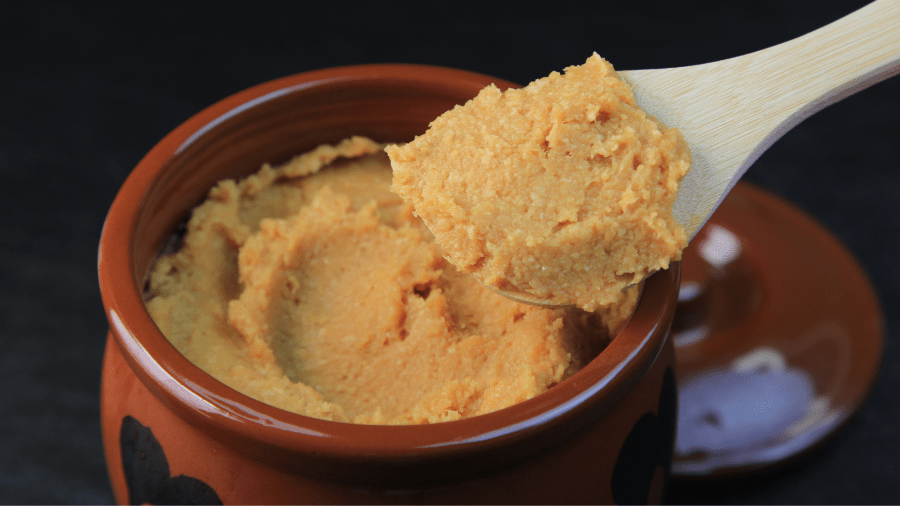
A jar of miso cracked the stovetop.
The oak floors warped and soaked up
all our neighbours’ baths, and just last week,
we shivered in the shower, pouring kettle water
on our feet. But we are determined.
Every day we learn to fix things with our hands.
First, we warm our legs without a working boiler.
Then, we learn to ease the front door off its hinges,
let its weight lean into one of us while the other
lifts it open. Tonight, we’re squatting in the kitchen,
passing a tray of murky water back and forth
like an elaborate machine.
Soon enough, the washer’s drum stops leaking,
and we pull the filter out, shove our fingers in
to find the culprit. A safety pin!
– you’re laughing.
A bit of cardboard from my shirt!
We splash down on the wet tiles,
watch the animal we tamed and nursed
ease back into its body.
It’s beautiful – the washer,
the spin cycle, the kitchen
you called me from last year
saying, I can picture you here,
cutting a lime into wedges.


Yanita Georgieva is a Bulgarian journalist raised in Beirut, Lebanon. She lives and works in London, where she is an MA candidate in Poetry at Royal Holloway University. You can find her work in Hobart, Alien, HAD, and elsewhere.