Look Under the Bed, Please? by Brianna Johnson

Content warning: childhood SA


I told my parents there was a monster under my bed. I asked them to look. Instead, they complained of sore knees and bad backs. The trip to the floor and back was too far for their joints to make. They told me it was probably nothing, just a lost Barbie doll, or an old LEGO brick. I decided to believe them.

Then the scratching started. They told me it was just the floorboards settling, or roaches, or mice scurrying to and fro. They said don’t worry they’d set traps in the morning.

I decided to believe them, but then my bed began to shake. They told me it was possibly an earthquake, or termites chewing at the bedposts. I didn’t need to worry.

I struggled to believe them when I heard a voice in the dark. My parents blamed the radio and the neighbors’ loud TV. I told them it knew my name. They said they didn’t have time for this. They were tired. Didn’t I know how late it was? Didn’t I know how hard they worked? It was just my imagination. They’d deal with me in the morning.

They said similar things when I told them how dad’s friend, Uncle Simon, kissed me hard on the mouth. His teeth scraped mine. They said he probably just missed my cheek. I should’ve turned my head. Or I turned it the wrong way. I decided to believe them. So, I didn’t tell them when it happened again at the 4th of July barbeque, at the pool party, at my birthday… I just needed to keep turning my head.  

Then the voice beneath my bed spoke again. My name, my name… rang in my ears. Its voice was scratchy, like a smoker’s, like Uncle Simon’s.

I pulled the blanket over my head. I plugged my ears with my fingers and squeezed my eyes shut. Maybe it would stop if I just turned my head. So, I tilted and bent trying different angles, like the antenna on my nana’s TV. She called them rabbit ears. I imagined myself as a bunny burrowed in the blankets of my bed, safe and sound.

My name, my name still scratched in the dark. No, it was just my imagination.

In the morning, I yelled for my parents. They showed up with mugs of fresh drip coffee and the sleep washed from their eyes. My mom had removed the rollers from her hair. I watched as they looked for me in the closet, under the blanket, out of the still closed window… never where it really mattered—nowhere even close.

From under the bed, I watched their fuzzy slippers shuffle toward the door. I tried to yell again when they shrugged and left the room. The monster put a claw over my mouth. It shook its head and looked at me with its many pitying eyes. What good would it do? I knew this to be true, so I decided to stay here in the unending dark.

Brianna Johnson’s stories have appeared in Cosmonauts Avenue, Gigantic Sequins, The Molotov Cocktail, Wigleaf, Kenyon Review, Obsidian: Literature & Arts in the African Diaspora, and elsewhere. An alumna of the Tin House Summer Workshop and Hurston/Wright Weekend Workshop, she is a two-time Pushcart Prize nominee with work longlisted for the Wigleaf Top 50. An MFA graduate from The University of Tampa, she teaches college English in Orlando, FL. Visit Brianna online at her website, on Twitter, and on Instagram.

It’s Me, a Selfie by Lindsey Peters Berg

After scrolling past another photo of Portia’s baby contorted against age blocks, Daisy posted a picture of herself and captioned it, “Are you there, external validation? It’s me, a selfie.” She thought it was so clever that she searched the phrase on Twitter to make sure she hadn’t accidentally stolen it from an old tweet she’d forgotten about. This yielded zero results, which first made her feel like the funniest fucking bitch on the planet, then second, created concern that perhaps the caption actually made no sense. But she didn’t really need it to make sense, exactly, just to draw attention to her personal freedom and general youth. And to her spaghetti-strap crop top, a garment she had purchased after Reformation boldly described it as “SLUTTY” in their marketing email.

Daisy took a day-old bottle of wine from the fridge and poured herself a glass, feeling powerful for taking a two minute break from her phone. Especially after posting content, she thought. When she picked it back up, her home screen showed three notifications, all emoji responses from her book club girls. Nice. She opened Instagram and tapped the shimmering circle around her profile picture. Red hearts burst from the lower corner of her screen as she reviewed the story again.

Are you there, external validation. It’s me, a selfie. She was pretty sure it did make sense.

Daisy imagined Portia examining the photo closely, holding one of her full breasts as she admired Daisy’s braless liberation, sweet milk oozing through her fingers as she longed for a body that was, once more, just her own. Daisy had moved away from their bleak Illinois suburb a year ago, to a city with palm trees and mountains and grown women wearing children’s clothes. Now she occasionally attended graveyard movie screenings and natural wine tastings so she could post pictures of them the next day, during peak scrolling hours for the central time zone.

Daisy sipped her wine and tapped the word Activity at the bottom of her screen. A girl she considered a friend—also single in the big city—had watched the story but didn’t comment, which confirmed to Daisy that she was mad at her and/or actually hated her.

Daisy scanned her mental files for reasons she could be hated, landing upon contenders like annoying, into herself, weirdly pretentious even though her music taste hasn’t evolved since high school, and seems nice at first but when you get to know her actually isn’t which has led some of her loved ones to politely refer to her as ‘sharp.’ Then she decided that, in fact, it was her friend who was actually the bitch for hating her when she didn’t even do anything.

Daisy clicked the friend’s story and watched a short video of her betta fish. She nonsensically replied, YOUNG HOT FUN CLUB!, with a fire emoji, hoping this cleared the air.

Daisy revisited her Activity list to see if Portia had seen her story yet. She was wondering if perhaps she looked too good in today’s selfie, if Portia might be so taken aback by her attractiveness that she was simply rendered speechless, when a notification banner appeared across the top of her screen with a name that sent her heart to her throat. Kevin.

The message said, lol.

He was her high school crush. It was the first time he’d commented on any of her stories. Why this one? Maybe she really did look incredible. Daisy downed the rest of her wine and refilled her glass. She needed to be slightly out of her mind if she was going to respond.

They were thirty now. Could this lead to a sexting situation? Daisy had always fantasized about late-night messages from a past admirer, someone who had longed for her years ago. I still jerk off to you, they’d say, and fuck, I love doing it. She’d scold them like she was horrified, then surprise them by asking for details. What do they imagine her wearing? What do they imagine her doing?

Daisy gulped her wine, intimidated by the task of getting the conversation there by way of lol.

She clicked Kevin’s profile and scrolled past photos of him golfing to one with his wife and two toddlers in front of their home. Daisy said, “I guess everyone has a fucking baby now,” out loud. To no one. She zoomed in on Kevin’s wife and entertained an internal Family Feud game as to which mall store she’d bought her outfit from. Daisy cast votes on Madewell and Guess but stopped once she landed on Buckle, remembering that she’s a feminist.

Zooming back out to the ranch house almost certainly full of Hearth & Hand woven baskets, Daisy wondered if Kevin really wanted to be a dad. She pictured him tapping through his Instagram stories and sniffing a glass of mid-range whiskey, one child screaming and the other chewing on a Polly Pocket dress in the next room, as he landed on Daisy’s picture. He pressed his thumb on her chest so he could look at her longer. Are you there, external validation? It’s me, a selfie. He smiled and tapped the Send Message bubble at the bottom of his screen. He wrote lol, but what he meant was, You look great. I missed out. Or maybe, Why didn’t I realize you were cool, or even, I love my wife and I love my kids but sometimes, when I look at you, I wish I never had them.

With her second glass of wine empty, Daisy stared at Kevin’s “lol.” She typed, What’s so funny?, erased, You remember me?, erased, You have literal children?, erased, Am I hotter than your wife?, erased, Would I look hot pregnant?, erased, Am I a fucking loser?, erased, Am I falling behind?, erased, Would a baby make me stop hating myself?

Her phone vibrated in her hand. It was Portia. Yessss girl!! GORGEOUS! P.S. Xander says HI!!! Then a selfie with her baby, his tiny, soft body resting in the curve of Portia’s arm. Her fingers squeezed his terry-socked foot. She looked happier than Daisy had ever seen her.

Daisy flicked away the notification and stared at Kevin’s message. She clicked her screen to sleep.

Adding her wine glass to the pile of dishes in the sink, Daisy thought about Portia. It was past midnight in Illinois. Why was she awake? Maybe her baby had trouble sleeping. She must be so tired. Daisy wondered if she was capable of caring for someone that much. She wondered what it would feel like — to kiss a newborn belly, to trace a finger along mini heart-shaped lips. To be a mother.

She slipped into bed without brushing her teeth and looked at the moon through the window. It was a weird orange-red color, vampiric and full. Her room had a balcony attached to it, and she considered stepping out to the metal railing for a closer look. Instead, Daisy stayed in bed and tried to guess if it was a Blue Moon or a Harvest Moon or a Super Moon. She didn’t have the answer. She closed her eyes and made a story up.

Lindsey Peters Berg lives in Los Angeles. Her fiction has appeared in Rejection Letters, HAD, and Moot Point Magazine. Currently, she’s at work on her first novel. Say hi @lindspetersberg.

Grounded by Helen Savita Sharma

Lately I’ve been too busy to visit my grave. To lay on the grass and soak dew into my skin. To whisper sweet nothings down into the dirt where only my skeleton can hear.

Sometimes I think I can see my headstone if I really squint. The other day I swore I spotted it on the horizon, pale green and blinking in midday moonlight, but a car honked on the street and the flat blare wiggled into my abdomen and broke my focus completely.

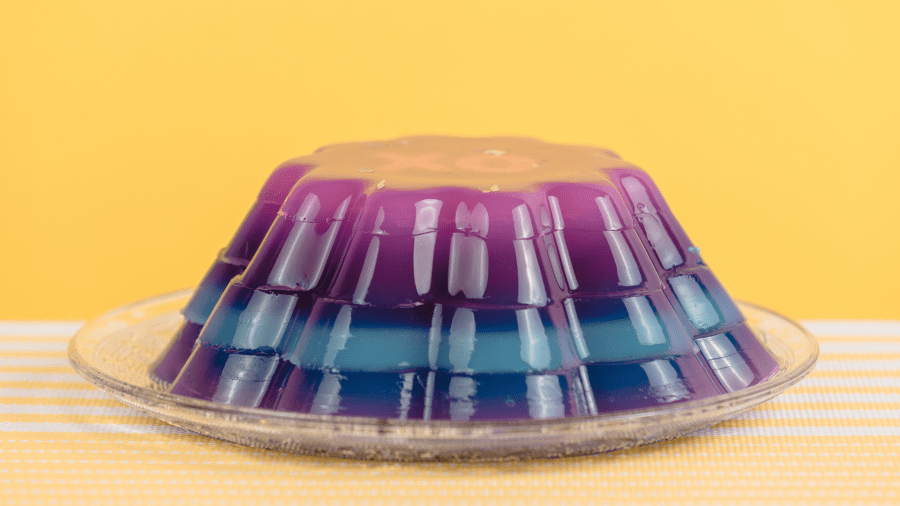
That’s one thing: without a skeleton in my body—a sealed bag of savory Jell-O, really, though no one’s yet noticed—sound moves differently. There’s no sharpness to things. Words wobble in and out of focus. Gunshots start soft and echo around, reverberate themselves into extinction.

But my god, sound is everywhere. Squeaky wheels on a grocery cart make my brain feel like crumpled foil. My daughter’s swim meet is torture.

Not torture. I’m proud of Ari. She’s twelve and still so small but she swims so fast, kicking her little feet up and down the pool until she comes up gasping at the end of the lane, pumps her fist when she realizes she made it back first. Little alien girl, her swim cap and goggles suctioned SMACK to her eye sockets. I couldn’t wear those. I doubt my head would hold its shape.

We’ve been fighting. Before, when she was two and three and a thigh-high hurricane, we didn’t fight. We were best friends who put each other to bed and elbowed each other in the boob by accident during spontaneous hugs and morning snuggles. But she’s gotten mean lately, cliquey with the blonde girls at theater camp and angry for the first time that her dad lives so far away. She told me I was weak the other day, after hearing me argue with him on the phone. She told me he was stronger. She called me spineless. Which, I mean. I am.

So I grounded her. Told her to show me a little goddamned respect. Took away her tablet, drank gin on the couch at midnight, flicking fingers across the unfamiliar apps she’d downloaded: YouTube, Candy Crush, a Barbie something-or-other that made my heart ache from how young it made her seem. An anonymous social media app where she’d said she was eighteen and given our home address to someone named Jarrett.

I let her go to her swim meet. The blonde theater girls don’t swim. Maybe she’ll absorb the other kids’ easy joy and pacifist approach to competition, maybe I have something to learn from their hippie grown-ups with their “COEXIST” bumper stickers and Gentle Parenting. I sit next to them on the bleachers which slowly smush my butt flat and I try to think about something other than the taste of friendly earthworms after heavy rain. Here I am, most of me, showing up.

But the noise. The noise. A thousand kids shouting from the pool deck and their thousand shouts made screams by a thousand whitewashed cinderblocks. I can’t cut through it. The sound seeps into my Jell-O flesh and stays there, leaks through into my brain in a steady roar. Ari is animatedly gesturing in the center of a group of taller kids. I slither off my bench.

I smoke a cigarette at a picnic table outside the rec center. It is dark. The picnic table is wet from rain earlier and smells like the forest it was likely kidnapped from. I put my face down on the table, inhale deeply, and think about my grave. The way the roots of grass lock together and keep my bones for me, in their pile in their box in the dirt miles and miles away.

Low beams of yellow light precede an older model sedan into the parking lot. It pulls up next to the picnic table and idles, driver still sat in silhouette beyond panes of smudgy glass. I watch the figure for a while, flicking my cigarette butt. He’s considering me, too. After a minute, the window rolls down two inches and a very faint voice calls something that I wouldn’t have registered at all if it wasn’t:

“Ari.”

I choke on smoke and my thumb bends backwards—it happens sometimes when I lose control—but I don’t think my shock is visible in the dark. I clear my throat, push smoke out of my lungs, steady my voice.

“Jarrett.”

I walk over and lean on the window. He rolls it all the way down so that I can rest my forearms on the door.

“Hey there, girlie.” His voice is rough and sickening and older than I had thought to fear. “You’re a grown eighteen.”

The cigarette is still burning in my hand. A squiggle of smoke trails into the car.

“Put that out,” he says.

The floodlights come on behind me. The swim meet is ending and families are starting to stream out of the building and into the parking lot. The white light leaves my face in shadow and outlines his features just for me and I reach in without thinking, lit cigarette in hand, and stub the ash in the cool wet of his left eyeball.

He screams. The families behind me turn as one to where I stand beside the unfamiliar car. I don’t look at them. He’s screaming and clawing at his eye and I walk around the side of the building out of the floodlight and disappear.

I text another mom from the swim team. Can Ari come home with you? Everythings fine, will pick her up in an hour.

I lay on the grass, on the shadowed field that sprawls behind the rec center. My nose flattens entirely to my face as I press it into the dirt. I close my eyes. I breathe.

I can feel my skeleton’s presence. She’s safe, I know she is. I’ll be there soon. Promise, baby girl. The soil here is different than at home, a different composition of loam and silt, but I inhale it viciously anyway and fill myself up with the pure base carbon that I am and always was. I soften. I imagine the grate around my plot, the gentle slope of ground above my bones. There’s silence.

Helen Savita Sharma is a librarian and writer working on her first novel from her home in North Carolina, where she lives with her partner and two cats. Helen’s passions outside of writing include “Higher Love” by Steve Winwood, ensemble dramedies, and watery Dunkin’ Donuts iced coffee.

Adversity is the Parent of Virtue (in Bed) by Stephen Cicirelli

Sex was different when you had to. He had to. One morning she said, “There’s mucus.”

He was in bed, still waking up. “You’re sick?” Through the crenelated elephant trunk of the CPAP mask, his voice was vapor.

“Down there. My book says morning is the ideal time. Your testosterone levels are their highest. Your sperm have had a chance to regroup.”

He removed his mask, his face striped red, to get ready.

“Is mucus the right word?” he said. “It’s kind of gross.”

“Grow up.”

They had sex that morning and again that evening. All the while, his CPAP machine chugged on the night table. He enjoyed himself. It had been a while. She, on the other hand, was all business. When they were done, she pulled her knees into her chest, and had him put clary sage oil on her belly. Her stomach had sagged a little since their marriage.

She read books, and before bed, drank a special tea. Mugwort was now a word he knew. They had a special wedge pillow, his-and-her thermometers. He also read her books.

The next day they had sex once, and quickly. He had a work call. He was moving up in the company. Men above him had only good things to say. He was a team player, they said.

The next day he had trouble performing.

“Do you want me on top?” she said.

“Maybe if you talk to me?”

“Talk to you? Like dirty talk? What do you want me to say?”

“I don’t know. If I tell you what to say, it won’t be sexy. It’ll be like me talking to myself.”

“You masturbate,” she said. “That’s you having sex with yourself.”

“Oh.”

When they were done, he lay there silently. His CPAP machine blinked on the night table.

The next day they had to stop. He’d been thinking about college. Back then, they did it anywhere, anytime. She was on the pill, but he’d buy condoms, just in case. Sex was magical, dangerous, never the same. Like good art, it existed only for itself. It meant what they wanted it to mean, and they did it because they wanted to.

The next day he wasn’t proud of himself. He imagined an ex from high school. She wasn’t half the person his wife was, but, sexually, she was all-knowing. She never made Honor Roll, but she knew what he wanted before he did. She was small in ways his wife would never be. Once at the municipal pool, she took him, dripping wet, behind the ice cream truck. That morning his wife noticed a big difference. She asked what had changed; he lied, of course. He was a team player. He said he’d followed one of the “Tips for Men” in her fertility book.

“Good work.”

“Thanks.”

The last day he imagined Carmen again. They were in the back seat of his Jeep. It was the summer before he’d go to college and meet his wife. Carmen was staying in town to tend bar. They’d try long-distance. His wife was pleased but, afterward, contrite. She stood in front of their bedroom mirror, looking at her eyes and breasts and hair and stomach. Everything was reversed. She touched a stretch mark. It was darker in the mirror.

“Do you think we’re doing the right thing?” she said.

“Having kids?”

“I won’t know whether it’s the right thing until we’ve done it,” she said, “and by then, it’s too late. Nothing scares me more than having a kid and realizing I shouldn’t have.”

“You don’t think we should?”

“I don’t want to be my parents,” she said. “I wonder if all this stress is why I’m not getting pregnant. My mom was fertile because it never crossed her mind that she shouldn’t be a mother.”

“I don’t think it works like that.”

“It’s in the book,” she said. “Did we wait too long?”

“It could be me,” he said. “I smoked weed in high school.”

“You did a lot of stupid shit in high school.”

The next month, she went to the bathroom to pee and shower, and was in there for a long time, testing. He called to her. She didn’t answer. He listened, waited. He heard the shower stop. He heard crying, drawers opening and closing. What kind of crying was it? He heard his own labored breathing.

The door opened.

She walked back into their bedroom, got in bed with the test and covered herself. He joined her in his work clothes.

“Well?” he said.

Stephen Cicirelli has his MFA from Columbia University. He is currently a full-time lecturer in the English Department at Saint Peter’s University. His fiction and nonfiction have appeared in The Brooklyn Rail, Quick Fiction, Eunoia Review, Flash: The International Short-Short Story Magazine, 100 Word Story, and the anthology Nothing Short Of (Outpost19 Press). He and his partner currently live in New Jersey. Read more at www.cicirelliwrites.com. Follow him on Twitter @SteveCicirelli and on Instagram @stephen_cicirelli.

Near the End of Their Lives, Barbie and Ken Question Their Existence by Jo Withers

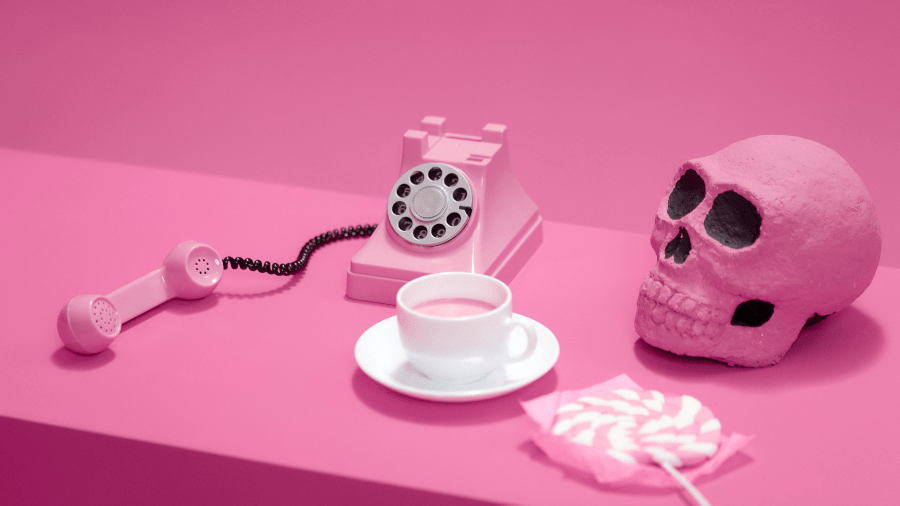
They had driven to the beach again. They’d left the bubblegum pink convertible at home and were sitting in the petal pink hatchback at the lookout gazing over the crystal waters. They sat for a while, occasionally sipping from the plastic coke cans which were permanently wedged into the cup holders between them.

“Why do we always end up here?” Barbie asked as Ken sat smiling beside her. “Whatever we talk about doing in the afternoon, we always end up here instead.”

“Perfect spot for a picnic,” Ken winked, as he did on every beach trip. He hit a button under his seat and the boot opened, a perfectly prepared plastic picnic popped out.

“I’m not hungry,” Barbie shook her head. In fifty years of beach picnics, she couldn’t remember eating a single thing.

* * *

That evening, Barbie reclined on the sofa in her gold lamé ball gown watching Botched. She wished she had something more practical to wear or somewhere more interesting to go. Ken sat cross-legged on the chaise lounge in his vintage velour tracksuit reading Proust. Beauty, the Afghan hound, lay at his feet, nudging his leg gently in the hope of being petted.

“Why do we always get Afghan hounds?” Barbie commented as the T.V. doctor discussed a particularly disproportionate body part. “I don’t like long-haired dogs; I’ve always wanted a Staffordshire bull terrier.”

Beauty padded across the floor towards her, nuzzled her ribboned ears against her hand. Barbie pulled her hand away, signaled the dog to lie down.

“I’ve never liked this house either. I don’t want a pool on the roof or an entirely open front so all the neighbors can see into every room, and I hate having to go down a slide every time I want to get into the kitchen. All I’ve ever really wanted is a little cottage in the country, a thatched roof and a rose garden. I’ve worked hard all my life, I’ve been a doctor, a ballerina, a rock star and a paratrooper… is a little comfort really too much to ask?”

That night, Barbie lay against the scallop-edged, silk pillows in her four-poster bed, struggling to sleep. Ken lay peacefully snoozing beside her in his paisley pajamas and sleep mask. Barbie looked at the bedside cabinet, the row of family photographs – Ken leaping to catch the beach ball, Skipper riding her bike, Ken relaxing by the pool, Skipper riding her pony. She shook Ken awake. He sat up in bed, pushed the sleep mask up in surprise.

“Do you remember my mother?” Barbie asked fitfully. “Try as I might, I can’t remember the slightest thing about her. I don’t remember yours either. Isn’t that strange?”

“I love you,” Ken said, as he did every night before falling asleep. He rolled over and pulled his sleep mask down again.

“I don’t remember anyone,” Barbie said to herself in the dark. “There’s only Skipper and you. I wonder whether I look like my mother or father? I wonder how they met and how old they were when they had me? I wonder… if they loved me?”

* * *

The next morning, Barbie woke up late in an empty bed – Ken would be flipping blueberry pancakes in the kitchen as he did every morning. Barbie decided not to go downstairs. Instead, she dressed in her diamanté jumpsuit and walked to the west wing of the town house, to the room she rarely visited. Hours later, Ken found her sitting on the floor in the pastel pink room with her head in her hands. Around the walls rabbits and ducklings danced playfully, a cot sat near the window and a raspberry pink rocking chair occupied the corner.

Ken placed a hand on Barbie’s shoulder, “Your pancakes are going cold.”

“Did we plan to have a baby once? Why did we stop trying? How did we just forget about it when it was all that ever mattered?” Barbie tried to push out real tears. She swallowed hard and placed her hand over the empty pit of her perfect size two stomach. She reached for his arm.

“What happened to the future we planned? Sometimes, I feel like my whole life, I’ve been picked up and positioned without ever having any choice in the matter,” she said.

He stared knowingly at her and for a moment she thought he was going to say something profound. Finally, he stroked her cheek then stammered quietly, “I love you… your pancakes are going cold.”

He never offers me any comfort, she thought. It was like there was a pull-cord at the back of his neck and he could only summon a dozen inane responses.

* * *

That afternoon, Barbie gripped the steering wheel tightly as she drove towards the beach. She had decided to take the pink convertible today. As they approached the turn for the lookout, she steered the car into a sharp right instead and drove straight down onto the sand.

Ken gasped as Barbie kept driving, ploughing through the biscuit-crumb beach into the twinkling blue ocean. Ken’s fixed blue eyes seemed to grow wider, and his moulded lips parted into an almost ‘O.’ He swiveled his head sideways, looked at her in a way he hadn’t in years.

He took her paddle-shaped hand in his, kissing it softly as the convertible careened into the wisp-white waves.

“Perfect spot for a picnic,” he said as they began to sink below the gleaming water, the currents engulfing their beautifully bronzed bodies as salmon pink crabs scuttled merrily on the sand.


Jo Withers writes short stories from her home in South Australia. Recent fiction appears in Flash Frog, Bath Flash Fiction Anthology, and the charity collection FUEL, edited by Tania Hershman to raise money for fuel poverty in the United Kingdom.

Five Micro Stage Plays by Benjamin Niespodziany

Autobiographical

The magus reaches into her hat. One rabbit, one gun. One water moccasin. One blunt. “It feels like fighting home,” she says. One stone, one button. “Finding home?” a cast member in the audience asks. The magus does not like that question. The audience member is encouraged to exit. The magus assembles her found objects on stage. “Like a farmer’s market,” she says. “Like a graveyard.” She places prices next to each item and waits for interested buyers that never arrive. “Alakazam,” the magus says, defeated. Her rabbit catches fire. The light guy dies.

Sunflowers and Debt

On stage, the business man is in a cafe. He tries to pay his bill with a bouquet of daisies. The magus is the waitress behind the counter. She is still wearing her tuxedo, but she has a hairnet instead of a top hat. “We do not want a bouquet of daisies,” says the magus. “We want money.” The business man does not have money. The business man is struggling. “I don’t have money,” the business man says. “I’m struggling.” The magus behind the counter walks over and hugs him. Then she stands back and with her wand she lifts the man and shakes him from his ankles. From his pockets there falls but lint and whimpers and dust. The daisies are to the side, thriving in a puddle. “I hate flowers,” says the magus. “I hate money,” says the business man. “The sun above has been above forever,” says the magus. “And yet no one knows its birthday,” says the business man.

Cake vs. Pie

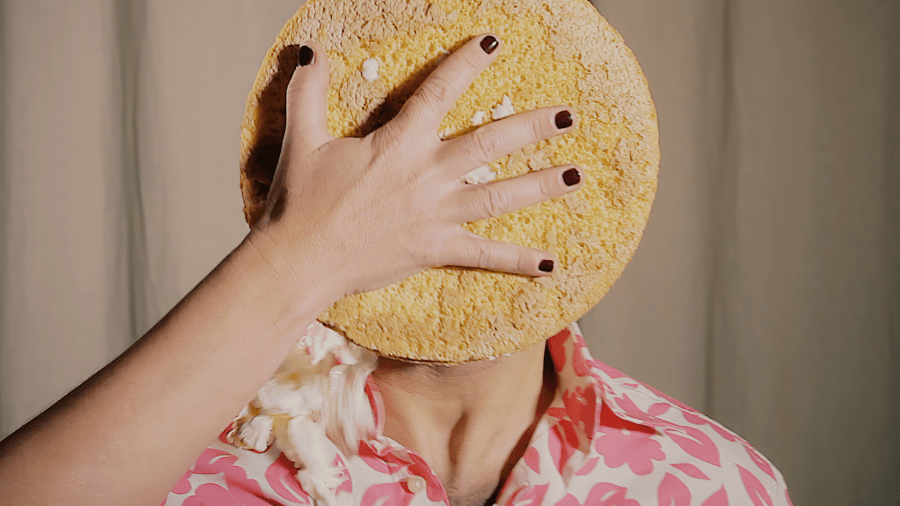
On stage, the business man runs around the kitchen, waiting for his cake to finish. Bereft in mittens he walks in circles. He looks at his watch and he looks at the clock and he continues to walk in circles. “Any second now,” he says. His suit is covered in flour and batter and dough. A cast member in the audience stands and throws a pie. It hits the business man’s face. “A pie?” he says, licking his fingers. “Blueberry.” He smiles, then cries. He opens the oven and blue balloons fill the room. The audience is encouraged to be in awe. “It’s perfect,” he whispers, looking into the oven and climbing inside.

It’s All So Very Polite

On stage, Death knits dinner. Her utensils are yarn and so is her carpet. The pie she provides is made of yarn. She knits plates and napkins. She knits the table. She knits it all. When she is finished knitting a bib for her black cat, a door is brought down through the cardboard clouds. There is a knock from the other side. Death stands in front of the door. Again, there’s a knock on the other side. She sits and hums and knits a gun. It’s all so very polite.

Sitcom Laughter

On stage, the business man and the magus are on a roller coaster, hanging on to the harnesses. They hold hands. They try to kiss but they’re too far apart so they laugh it off. It appears to be a fifth or sixth date. From the sound of the consistent click, the audience knows the ride is climbing. Their feet dangle. “I can see my house,” she says. From the speakers, sitcom laughter is heard. “I don’t like how this feels,” he says. Sitcom laughter. “Maybe we can go to the water park to hide your tears,” she says. Sitcom oohs. “Every day feels like fighting life,” he says. Sitcom awws. “What if I dropped my shoes?” she says. Sitcom laughter. The coaster reaches the top and stops. She looks down and screams. He closes his eyes and prays. The cart behind them is empty. The sun, it sets. The moon arrives. The magus’ confidence and humor fades into fear. “Is this what it means to die?” she asks. “It only makes sense,” he says. Sitcom laughter. A cardboard cloud passes by with seat belts and supplies but the two can’t reach no matter how far their arms extend. “I don’t have my wand,” the magus says. She brings her legs up to her chest and looks afraid. The business man’s feet continue to swing.

Benjamin Niespodziany is a Pushcart Prize nominee, Best Microfiction nominee, and Best of the Net nominee. His writing has appeared in Wigleaf’s Top 50 Very Short Fictions, as well as in Cheap Pop, Maudlin House, Pithead Chapel, Tiny Molecules, and various other places. His debut, full-length poetry collection, NO FARTHER THAN THE END OF THE STREET, was released by Okay Donkey Press in 2022.

José Martí in 2023 by Chip Livingston

José Martí shakes off a 127-year dead sleep as he wakes up on Calle José Martí, according to the street sign. José Martí checks his thin pigskin wallet for his national ID to confirm he is still José Martí. Revolutionary sycamore trees stretch from the sidewalk, shade cloud-scraping brick apartment buildings. The street’s concrete is cut in curves from iron trolley ruts, sloping to a city beach too brown to be Caribbean. Hijo de puta, the poet mutters to himself. Estoy muy lejos de los platanos. “Where am I? When am I?” José Martí asks a man walking nine canines that shine like a starburst, him the wiry stem of their dandelion. “You’re right there,” he tells the poet but is quickly pulled up Calle José Martí by the harnessed manada. “Where am I?” José Martí asks a woman overacting an enthusiastic power walk in tight and colorful elastic. She removes white metal plugs from her ears, presses her finger against a dark glass square strapped to her forearm. Pauses. “Perdón, I didn’t hear.” “The date, the year.” “You’re not from here,” she says. The poet offers her his Cuban cedula. “Oh dear,” she says. “This is not my island,” José Martí says. “This is not your island.” She shakes her head. “But you’ll certainly be a guest of honor. We take our poets and our revolutionaries very seriously in Uruguay in 2023.” La republica oriental. Dos mil veintitrés. Further away than I thought, José Martí thinks. José Martí smooths his mustache and tips a hat he doesn’t wear. “I hope I’ll see you again.” “I need to keep running, but I’d like to have you sign my first edition.” The poet smiles, a little less lost, a little less lonely. Not because he has a street named after him. But he, José Martí, has more than one edition.

Chip Livingston is the author of three books of poetry, a novel, and a story/essay collection, and editor of LOVE, LOOSHA: The Letters of Lucia Berlin and Kenward Elmslie. His short prose and poetry have appeared in Prairie Schooner, Ploughshares, Subtropics, The Cincinnati Review, and on the Poetry Foundation’s and Academy of American Poets’ websites. Chip teaches in the low-rez MFA program at Institute of American Indian Arts in Santa Fe, NM, and lives in Montevideo, Uruguay.

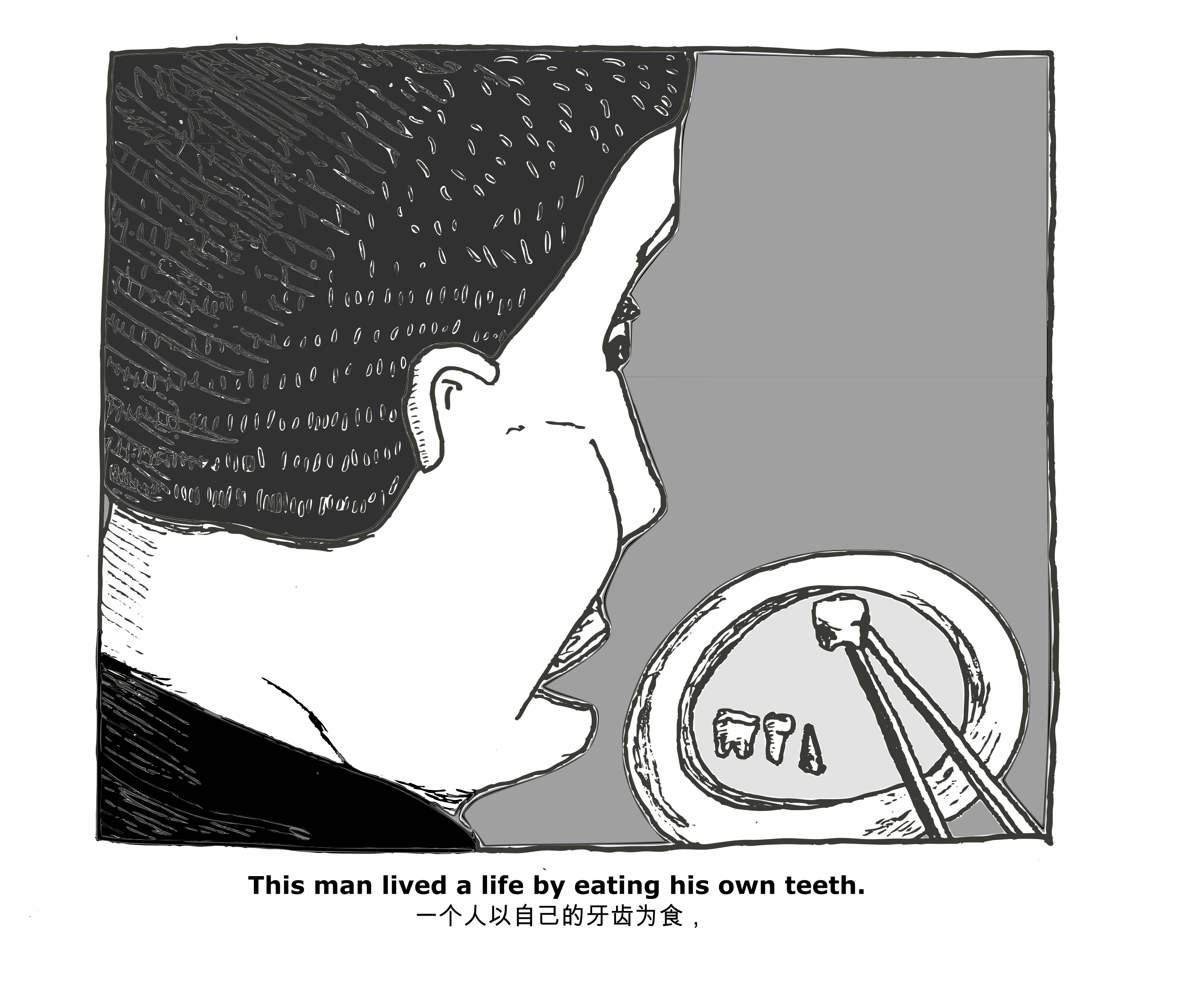
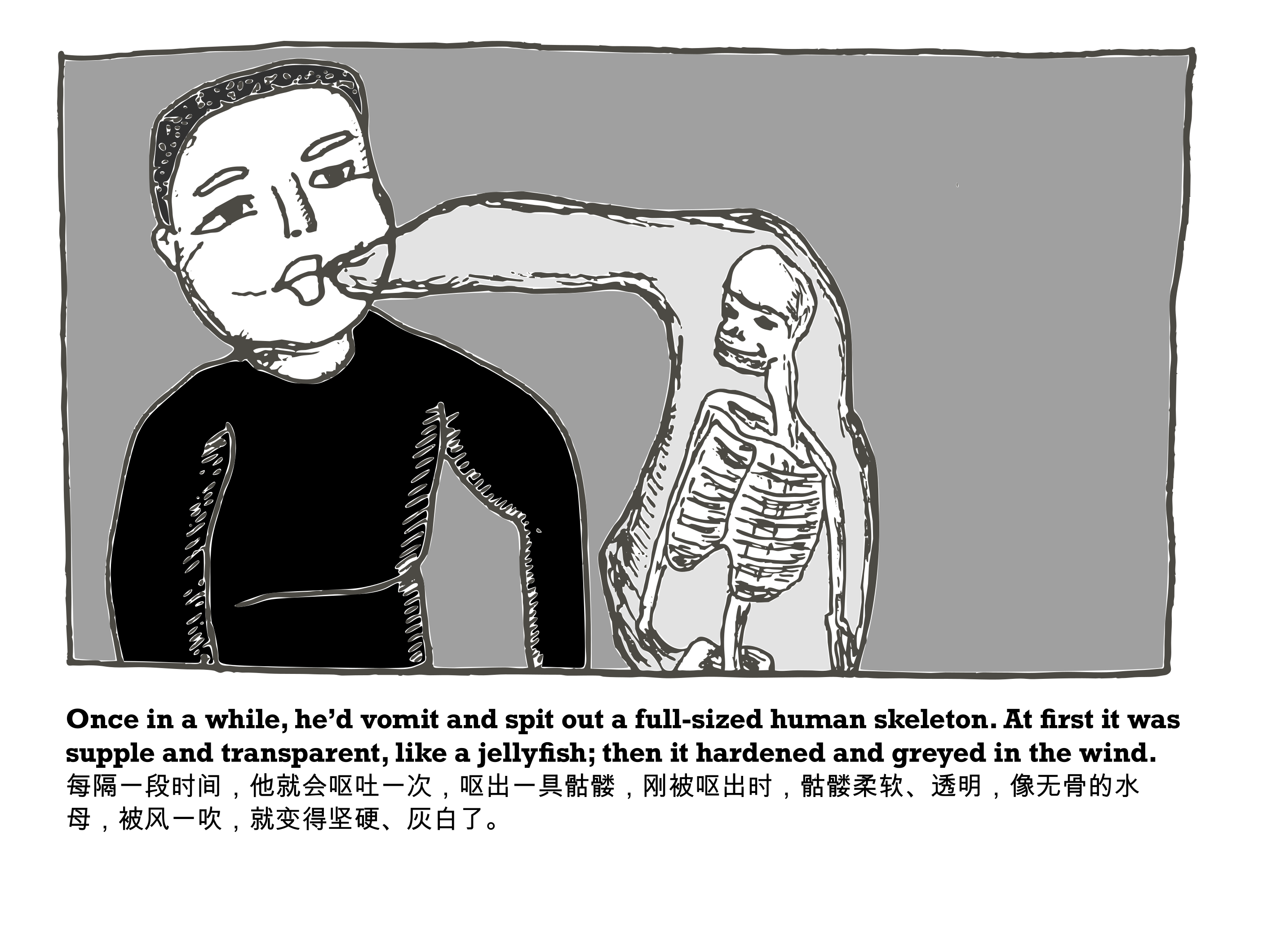
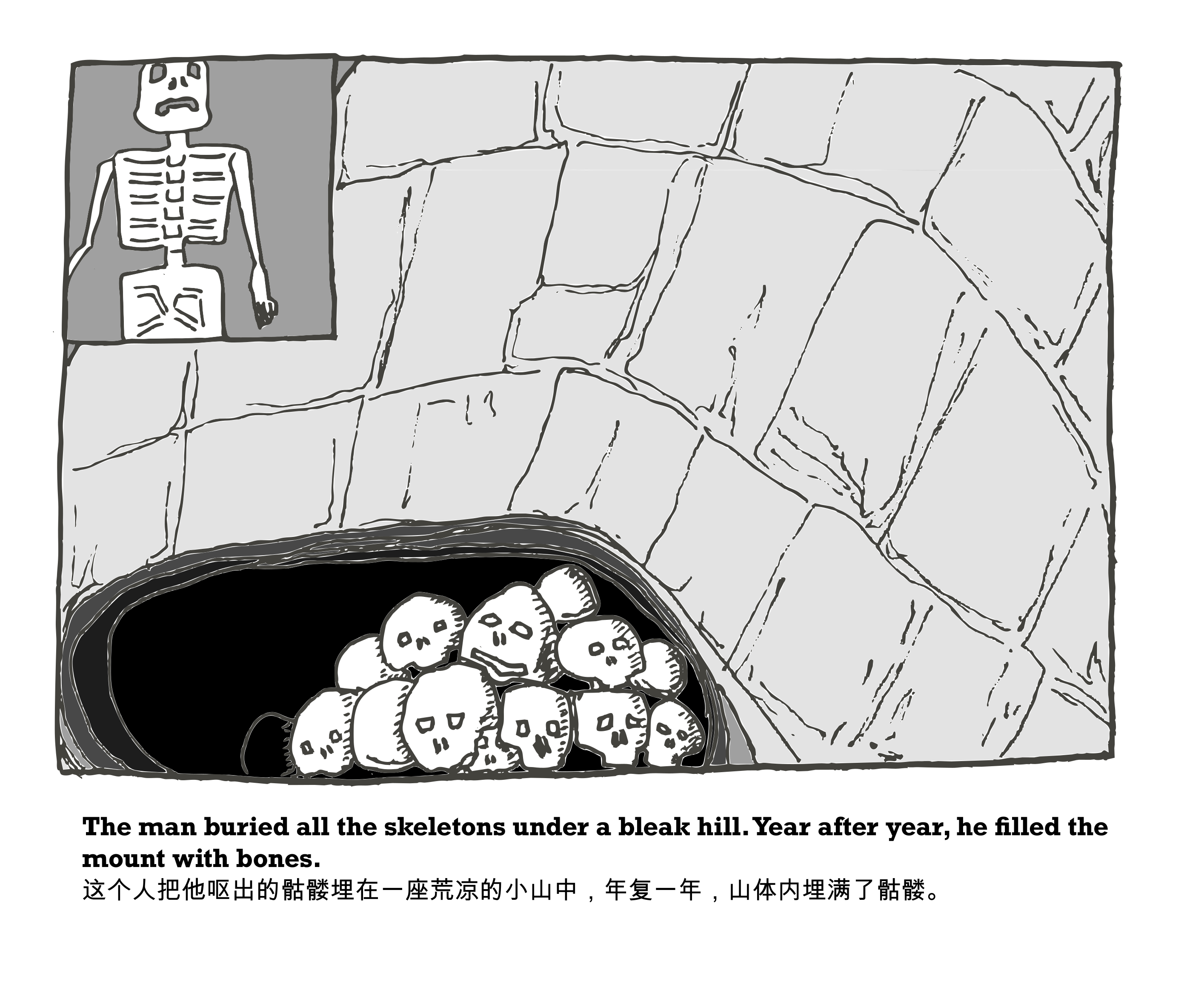
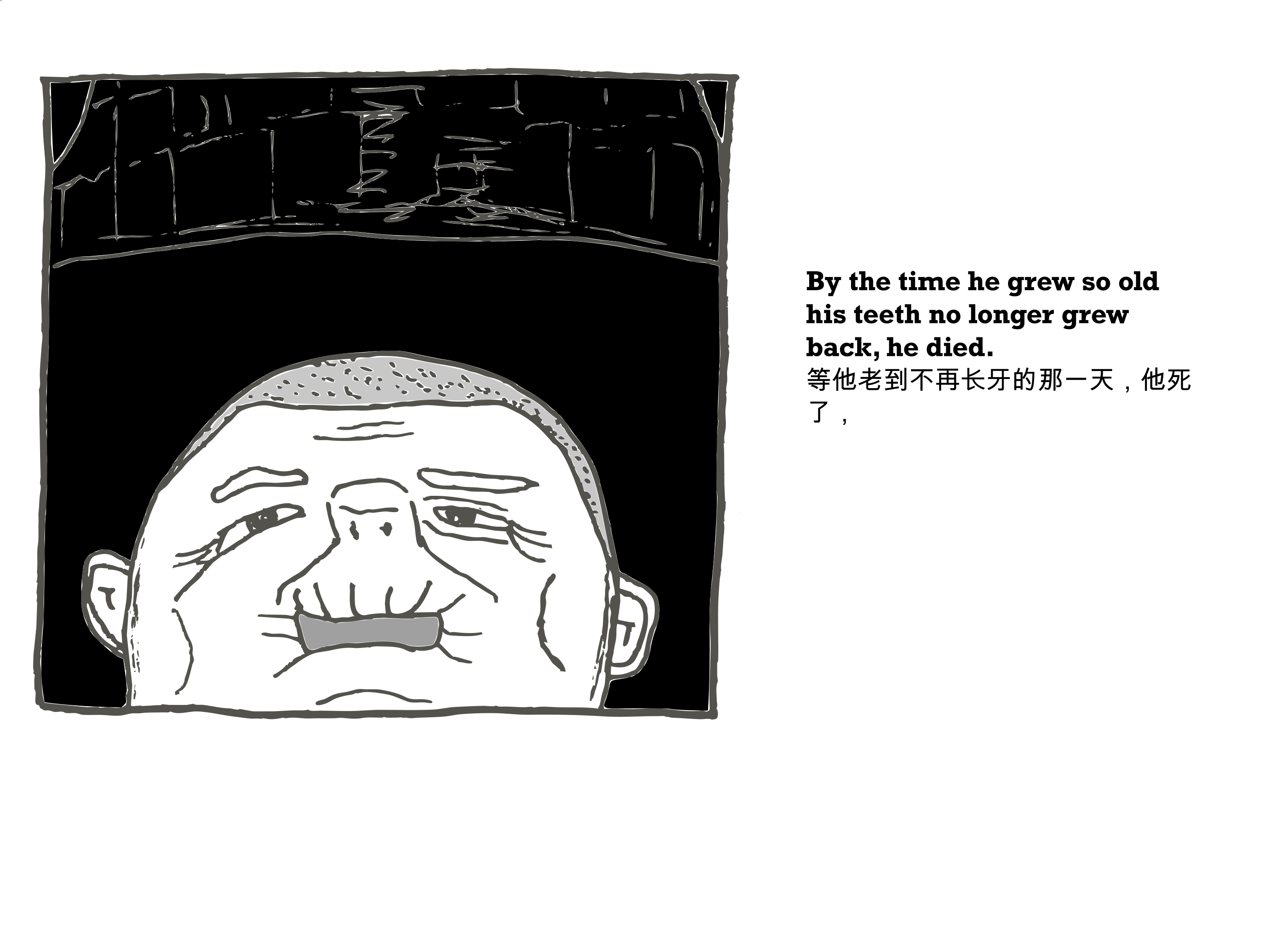
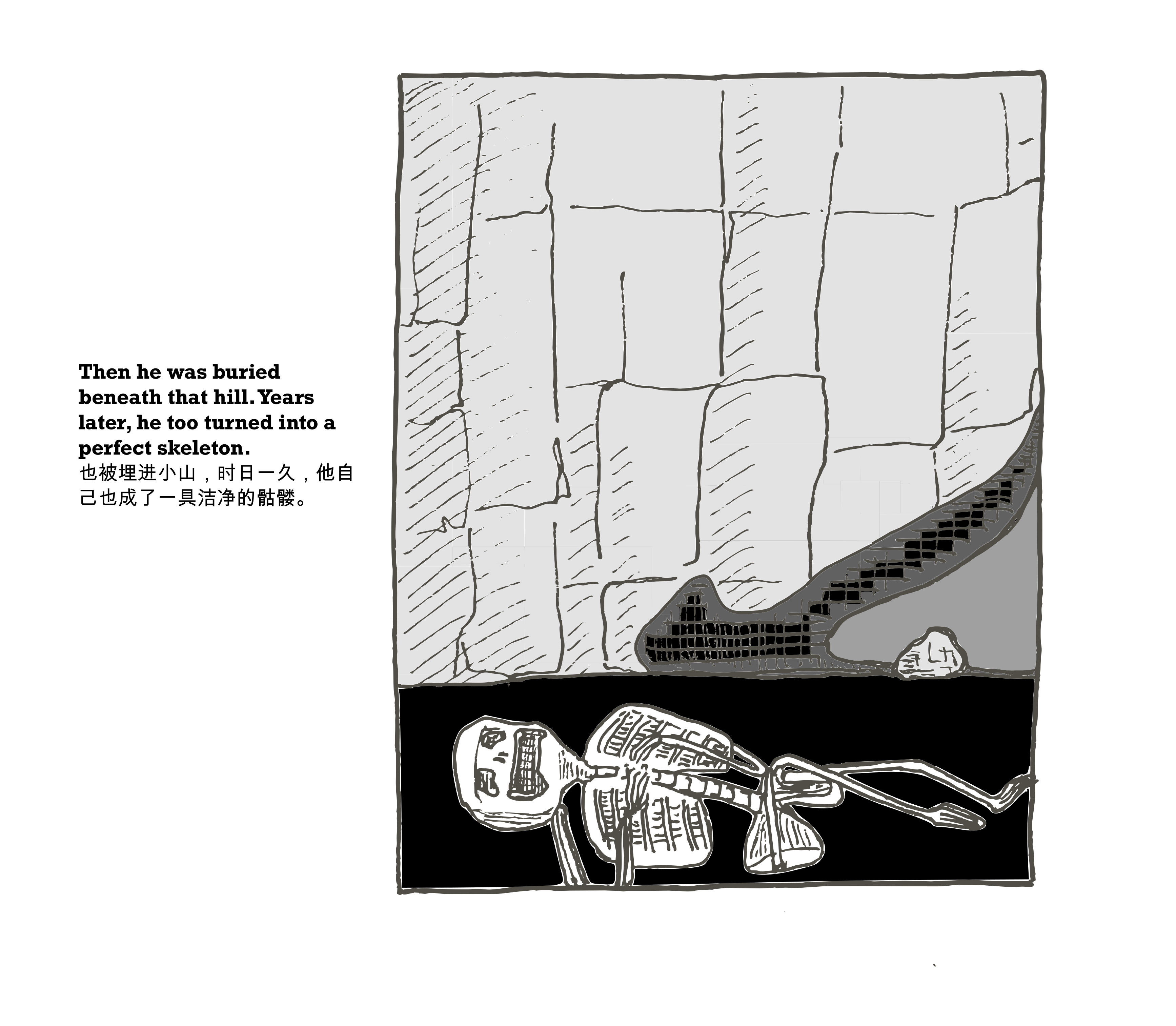
Swallowing Teeth by Zhu Yue (Translated by Jianan Qian and Alyssa Asquith, and Illustrated by Jianan Qian)

Link to PDF: Swallowing Teeth with Illustrations


Zhu Yue has published three short story collections, The Blindfolded Traveler, Masters of Sleep, and Chaos of Fiction. In English translation, his work has appeared in Litro Magazine, The Margins, Paper Republic, The Portland Review, and The Washington Square Review, among others.


Jianan Qian and Alyssa Asquith are graduates of the Iowa Writers’ Workshop with an MFA in Fiction. Jianan is a staff writer at The Millions, and her work has appeared in Granta, Guernica, The Los Angeles Times, and The New York Times, among others. Alyssa lives and works Iowa City, and her stories have appeared in The Adroit Journal, The Atticus Review, The Molotov Cocktail, X-R-A-Y Lit Mag, and elsewhere.

Bury Me with My Delicate Injustices by Alexis Jamilee Carter

The cemetery I’m touring is entirely out of my price range. Still, I let the realtor show me around. She’s a lovely woman. All her corners are polished clean, and her skin is pulled taunt against each sharp angle. Her name is Monica Hanson, and she’s introduced herself to me five times in the last hour. Monica’s smile is blindingly perfect.

We stand in front of a hole, three feet deep. Clumps of dirt give way when we stand too close to the edge. There’s already a name carved on the tombstone, but Monica assures me that roommates can’t be helped in this economy.

“Just look at this open floor plan,” she says. “And the view, you can’t forget about the view.”

The bright sunshine is making a mockery of what would otherwise be fantastically morose surroundings. Monica assures me that the weather is overcast normally. She tells me to picture the potential of the place, ignore the inconvenience of a little sun.

Potentially, it does have the prospect of gloom. We passed a willow tree on the way in that seemed to infuse the atmosphere with just the right amount of melancholy. Ivy grows rampant on every surface. The atmosphere could be fantastically morose. It’s the kind of place you imagine haunting for years to come. I don’t even mind sharing the plot. This is the city, after all. Privacy is an antiquated notion.

“The neighbors, how are they?” I ask.

“Quiet, for the most part. You’ll have such a restful time.”

Then she quotes a price.

Her nails click against the clipboard as she watches me. Her nails watch me too. On each one there’s an immaculate eye painted. Even they seem to realize that there’s no bank in the world that will loan me enough for something as whimsical as a comfortable afterlife. They swivel upward to ask God for patience in dealing with people who haven’t been pre-approved. That smile flashes.

“Why don’t I show you some more affordable options? There’s a charming little spot in a converted warehouse if you don’t mind your ashes getting mixed into concrete.”

She’s starting to wander off, but I don’t follow. I’m staring at the three-feet hole in the ground that I can’t afford. The tombstone has a name on it, but it’s nothing I would recognize. The only thing I can read is the ‘Dearly Beloved.’ I wonder if you can be beloved to yourself.

When I finally drag my eyes from what could have been my final resting place, if it wasn’t for something as damnable as my credit score, Monica is almost out of sight. She’s bobbing between tombstones. Her heels sink into the soft ground a little deeper with each step, and I can hear her talking from here. I’m certain she just introduced herself to the willow tree. It doesn’t seem impressed.

A skeleton burst from the plot one headstone over. Loose dirt and dust stain my cheek. I try to brush it away subtly, like I would if an older aunt accidentally spit on me. There’s no sense in being rude. These things happen.

“Touring or grieving?” the skeleton asks me. Their jaw clicks with each word. The grin they offer is garish without lips. They lean on their headstone, but it must be hard to look casual when the bare bones are all you have to work with.

I try to read the name before I answer, but the only thing engraved on the stone is a pair of hands, praying or pleading. It’s hard to tell the difference between the two. I don’t want to ask their name either, in the unfortunate case that they have forgotten the heavy syllables that used to weigh on their tongue during introductions.

“Both,” I say instead. “Any pest problems?”

“Rats, but only until the flesh is gone.”

That seems reasonable in the way that terrible things seem reasonable once they’ve become familiar. I try not to let the image of rodents burrowing into my organs invade my subconscious. The valiant effort for that is not rewarded.

When I turn back around, the skeleton has been joined by a corpse. She must’ve only been in her forties when she died. Whoever dressed her for her funeral stuck her in a mauve dressing gown that could only be described as a punishment from beyond the grave. She looks furious, and I think that I love her for that alone. From some invisible pocket, she produces a half-empty pack of cigarettes. I watch the one eye that she still has left bounce from the cigarettes to me. She doesn’t offer me one, and I don’t hold it against her. I think I prefer the dead ignoring me.

“They’ve started digging up bodies in the east end,” she rasps to the skeleton. “Bastards are just dumping them in the river.”

The skeleton turns their faceless skull to the sky. They drown themself in sunlight, and I wonder if they can feel the warmth. I hope they can.

“A change of scenery might be nice,” they say.

“For fucks sake, we deserve peace.”

“Do we?” the skeleton asks. “Sometimes, I think I remember guilt.”

She crushes her cigarette under her heel. The embers flare longer than I expected them to.

“And? I still deserve the sanctity of death.”

I don’t notice the guy behind me. Not until he slips his hand into mine. The coolness of his skin does not shock me, but I flinch anyway. I wrench my hand from his, politeness is never something I can fake for long. I take a step away from him then I take another. He watches me. There’s no recognition in his gaze, and I shiver. He does not blink. His eyes are brown.

The skeleton speaks to me softly.

“You know how it is. The freshly deceased take a while to acclimate.”

I take a couple more steps back, toward the gate and the willow tree and the crowds beyond on the busy streets that I can hear even now. It’s lovely here, but I’m not ready to stay.

“Don’t you have more questions for us? Don’t you want to pry and prod until your sick curiosity is sated? Don’t you want to know how the maggots fester?”

She lurches forward more with each word, until her nose is inches from mine. There’s a stench. It’s no use thinking about it, but the tilt of her chin makes me think she’s daring me to mention it.

“I think I’ve learned enough for today,” I say instead.

She grabs my coat, twists the material in her fist, and I pretend I can’t feel her bones.

I try to turn away, but her grip doesn’t loosen. I don’t like knowing the strength of the dead’s convictions.

“No, you wanted to hear from your prospective neighbors. Tell me, what is it you want to know? Let me tell you how it floods in the spring, how the coffins float to the surface. Your family will weep when they see your living conditions.”

The skeleton is pulling on her shoulder, but she’s not finished. They don’t have a homeowner’s association here yet, but I know she’d thrive in a position of obscure authority.

I try to turn away again, and the newly dead guy’s brown eyes are searching mine. I just know he’s going to try to hug me. There’s no escape and my optimism for mortality isn’t holding up well against their tirade.

My savior appears in the form of Monica, the realtor. She descends on the group, introducing herself with stiff handshakes and a barely superior tone. I’m not surprised that she can sense when a property’s value is in danger of plummeting. She’s offering business cards and a last cursory plot appraisal. And then we’re walking. 

“You’ll have to pardon the locals,” she says. “They do take some getting used to.”

I ask her for more options. Some place with a little more square-footage and a little less potential of wildlife absconding with a femur or two.

Monica sighs. It sounds like it comes from the very depths of her real estate agent soul.

“Look,” she says, drawing me closer and whispering like she’s known me for years, “These anti-social tendencies of yours are going to make finding you a final, peaceful resting place very difficult.”

I wish I could sigh with the same convention, agree with her assessment, and maybe try therapy. But Monica isn’t the type for daydreaming nonsense. She’s already taking long strides toward the gate, but she stops with only a quiet beseeching of patience from the cloudless sky and waits for me.

“Have you considered a nice, old-fashioned burial at sea?” she asks, almost entirely to herself.

She knows who’s in control of my death, and more importantly, she knows my price range. Monica grips my fate in her impeccably manicured hands.

I have no choice, but to bear my inescapable financial deficiencies and follow her to my next afterlife option.

Alexis Jamilee Carter is a software engineer in Denver, CO and holds an undergraduate degree in Computer Science with a minor in Medieval and Renaissance Studies. She wants to create, in every sense of the word and as much as possible, but writing has always been her home. Her work has also recently appeared in The Diamond Line and Runestone.

Daddy Issues by Aileen O’Dowd

My dad is a ghost, but he’s not dead.

On my twenty-third birthday, he appears.

I consult with an exorcist. She does not understand. She tells me it is not possible to be both spirit and body, and suggests I’m making it up. “For attention,” she says. “Common behavior in women with daddy issues.”

I consult with a therapist. His specialty is Daddy Issues. He holds a notepad and a pen. “How does this ghost make you feel?” he asks.

“Scared?” I say.

“Of abandonment,” the therapist says. He writes abandonment over and over again, across the page.

“Actually, abandonment is the goal,” I say.

The therapist tells me to come twice a week.

Dad’s translucent body trails behind me.

* * *

At the salon, Dad calls me a harlot.

“It’s just highlights,” I say.

He hovers over my chair with a disapproving face.

Later, he spills wine on my date in an unfortunate location.

I go home.

Dad watches The Addams Family on TV. Drinks beer on my couch. It seeps through his ghost body onto the cushion.

Dad and I used to watch The Addams Family every Friday. Before he disappeared. And left our family for a new one.

* * *

“How did that make you feel?” the therapist says.

“Embarrassed,” I say, “by the cliché.”

The therapist waits for more.

Dad sticks his head through a diagnostic textbook, pretending not to hear.

* * *

At my tiny kitchen table, we eat Salisbury steak dinners.

Dad inhales his uncut beef, like a dog. “Shrinks blame fathers for everything,” he says.

I push my fork through powdery potatoes.

“Why are you here?” I say.

Dad levitates a spoonful of corn into his mouth.

Kernels float across his skinless chest, blinking over his heart, like stars. A yellow Ursa Major descends into Dad’s bowels before shooting onto the floor.

“Excuse me for wanting to spend time with you,” he says. “You complain I wasn’t around. Now I’m here, and you want me gone.” Dad shakes his head.

His words collect in my stomach beside the undigested meat.

He takes a sip of milk. “You know, I did my best.”

Milk drips through him like tears.

* * *

“I cannot watch The Addams Family without crying,” I say to the therapist.

“This is not surprising,” the therapist says. “It reminds you of your childhood—when you watched it with your father.”

“No,” I say. “That’s not it.”

The therapist writes this down. “Gomez and Morticia Addams were a father and mother in love,” he says. “Gomez never tired of Morticia. In fact, his love grew stronger every day. Gomez loved his children, Pugsley and Wednesday, very much. He was active in their lives. It makes you sad to see what you did not have.”

“No,” I say. “That’s not correct, either.”

“You feel like Lurch, the Addams family butler,” the therapist says. “He was like Frankenstein’s monster, unable to fit in. Trapped in a house with a family he did not really belong to. He kept his words bottled up inside of him until they escaped as unintelligible groans. I can see how this plays out in your life, through your emotional constipation.”

“I have never had an issue with my digestive faculties,” I say. “And I would not consider myself a monster.”

I hear Dad laughing in the corner behind me.

“We’re at the end of our session,” the therapist says. He writes DENIAL in red block letters on a post-it note. “Next week, we’ll talk about Uncle Fester.”

“What about Thing?” I say.

The therapist taps his watch.

* * *

Dad stuffs himself with ice cream. I watch mint chip roll through his body, then onto the rug. He snaps along to the beat of the opening credits. Lurch plays the piano and Wednesday frowns, her tiny braids falling down her shoulders, like snakes.

And there it is, the disembodied hand, the Addams family handservant—Thing. The lump returns to my throat, but I swallow it. I do not want to give in. It’s just special effects, I tell myself. Thing pours Morticia a cup of tea from the center of the breakfast table. It’s not real. But my sadness does not care. I am flooded with the same intrusive thoughts every time I see it.

Dad looks at me from the side of his eye. “What’s the matter with you?”

“Nothing.” I wipe my face, casually, with my sleeve. “I just hate that Thing,” I say. And I do. How terrible it would be to be a Thing. A hand without a body. No anchor to ground it. No heart to warm it. No stomach to feed and nourish it. Just a random, dismembered appendage. No one to love it.


Aileen O’Dowd lives in Toronto. Her writing has appeared in Peach Mag, Maudlin House, Rejection Letters, Monkeybicycle, and elsewhere.