Mrs. Frankenstein by Gwen E. Kirby

We fall in love with the Creature slowly, a piecemeal process over long years of hard work, and each in our own way. For the Creature’s twentieth birthday, we celebrate at home.

“Mr. Frankenstein,” I yell down the basement steps, lobster claw oven mitts pinching my hips. “Dinner’s ready!”

Dr. Frankenstein,” he says to me when he comes into the kitchen, first hanging his blood-spattered lab coat on the hook at the top of the stairs. I smile and say I’ll call him doctor when he defends his dissertation.

The Creature lumbers up the stairs behind him and moves quickly to the kitchen chair I keep covered in black trash bags for easy clean up. “Hello, handsome,” I say to him, winking, and goodness, look at the Creature: One blue eye, one green, his skin wax white and body a web of silver scars, like a giant palm waiting to be read by gentle fingertips. “And what’s new with you today?”

“Liver,” the Creature says.

I ladle peas onto their plates. I scoop pot roast from the hot pan, the onions oily. I serve my husband the tenderest pieces of beef. I serve the Creature the bits from the side of the pan where the beef has burnt and gone tough. I eat only the vegetables, don’t have the stomach for meat anymore after the bodies we’ve worked through together.

“Old liver was underperforming,” Mr. Frankenstein says, chewing delicately, his teeth sensitive, while the Creature’s massive jaw rips the beef to shreds. Such powerful mastication!

I spear a red potato and tease Mr. Frankenstein, tell him I won’t be going out grave robbing tonight, and he laughs and says quite right, not in this cold and wet weather. I haven’t been grave robbing in years (it’s grueling work, hard on the back), but the occasion of a birthday makes me nostalgic, even silly these days. I find myself playing a younger me, the daring wife who, before Mr. Frankenstein lost his graduate funding, left home after midnight to find the freshest mounds of earth. I scaled wrought iron gates, frightened caretakers with recordings of wolf howls, brought home stomachs wrapped in wax paper, all while Mr. Frankenstein graded another stack of essays.

“Mary,” he’d wept into my bosom, when he could neither finish his work nor give it up. “I’ve let us down, Mary.” But I rubbed his back and promised him he hadn’t failed. That I didn’t care, that even if he did graduate I didn’t want him adjuncting, making no money, always exhausted, never enough. That I understood why he would never be satisfied with the tedious, glorious process of creation.

These days, new livers arrive in a refrigerated van from our friend Mr. Igor at the nearby crematorium. So civilized.

“But since I’m not grave robbing tonight,” I say, “perhaps we could all play a game?” And at this, I pull a package from under the table and hold it out to the Creature. “Happy Birthday!”

The Creature does not care about birthdays. His age is not countable as no part of him is the same age as another. Still, he indulges us. “What is this, then?” he says and rips the brown paper from the present, revealing a vintage game of Operation. The Creature smiles and thanks us both. He is not a Creature who laughs, though he says that he loves how much we both do.

“Sweetheart,” says Mr. Frankenstein to the Creature, taking his hand. “Here’s your real present.” Mr. Frankenstein hands the Creature a cat from a covered basket, a brown and black dappled stray we’ve been feeding for months, who the Creature has begged us to take in.

“We can’t say no to you,” I say. The Creature bends to place his scarred hand low to the floor and holds it still until the cat sniffs and finally nuzzles him. I find myself wiping away a quick tear and when the Creature notices, I huff a laugh. Sensitive, my husband calls me fondly, but I didn’t used to be. Perhaps we were never meant to know so much about our insides, about the fragile, tenacious squish and pump that keep us upright. Now I cannot look at cat or Creature or husband without amazement and worry.

We drink wine and the Creature’s new liver does admirably. We play Operation and Mr. Frankenstein loses again and again until he throws down his tweezers and accuses the Adam’s Apple of being rigged. As always, Mr. Frankenstein and the Creature retire to their bed hours before I do. Mr. Frankenstein works best when the sun is still rising and the Creature is never far from his side, receiving his tune ups without complaint, never asking if they are necessary or simply a way to make Mr. Frankenstein feel young again, covered in blood and full of new ideas.

When it is past midnight and I’ve scrubbed the pot roast pan, put away the man and his plastic organs, I make my way upstairs to my cool room and take off all my clothes and stand in the moonlight. The cat is curled on the bed, watching me with distrust, like she can smell the old graves on me.

“You’re safe,” I tell her, and yawn, sucking life from the quiet air.

Like most young women, I used to hate my body. Used to worry about Mr. Frankenstein and the Creature excising me like an appendix, vestigial to their new love. But now I always sleep naked. Now I know my worth. Now, I rest a hand on my round stomach as it rises and falls, content with the miracle of me, in awe of how impossible it would be to recreate me, to contain this world of mess inside such seamless skin.

Gwen E. Kirby is the author of the debut story collection, SHIT CASSANDRA SAW. Her stories have appeared in Guernica, One Story, Mississippi Review, SmokeLong Quarterly, and elsewhere.

Rabbits by Maria McLeod

My surgeon looked like a giant rabbit. I was leery about letting him cut into me, because he was from Texas and had a mustache. His medical degree made no difference. I didn’t trust Texans, and a rabbit was just a rodent in disguise. I set my sights on the woman surgeon in the practice, the one who, according to the website, was an organic gardener, rescued greyhounds, and thought of her patients as friends. Of course, she was booked.  So, I got the Easter bunny. He’ll be sticking his paws into me on Tuesday at 8:30 a.m.

Dr. Rabbit informed me that my right ovary’s abnormality appeared identical to ovarian cancer; neither endometriosis—the suspected culprit—or cancer could be positively diagnosed by the ultrasound I had before I showed up in his office.

I was seeing a fertility specialist, both of us dead set on figuring out why a fertilized egg wouldn’t attach itself to the wall of my womb. Upon feeling a lump she didn’t like, she ordered an ultrasound. When the results came in, she called me at home. Surgery. My first question wasn’t whether or not I could have a baby, but whether I’d lose an ovary.

She said no, she didn’t think so, but when she explained the results of the ultrasound, I looked at her freehand drawing and knew immediately that she couldn’t make such an assurance. She obviously spent some time on the illustration, a pen and ink drawing that in no way resembled the female reproductive organs on display in plastic model form on her desk. Initially, I thought I was looking at her doodles of the solar system. One ovary became a crater-filled Mars, the other, Pluto. Between them, my uterus appeared as a sandwich bag lost in space. She said it was a drawing of a cross section. I stared and stared, trying to make sense of it.

She suspected the same bloody substance that lined my uterus decided it could grow elsewhere, engulfing random organs in my abdomen, swaddling them in highly adhesive, thick procreative blood, like those old sci-fi flicks about invasive entities of a difficult-to-describe shape and substance—“The Blob” or “The Thing.” She expected that a surgeon would open me up to find my right ovary completely covered in it, plus bloody strands spread throughout, like webs of bubblegum that got lost in my hair during sleep, or during a particularly wild carnival ride.

My new rabbit doctor ordered a blood test that would serve as a better indicator of my true affliction. Cancer didn’t make sense to me, but I indulged his diagnostic detective work.

Isn’t it better to be sure, my partner suggested.

Of course, I said.

The phlebotomist was a sullen man with bad posture who didn’t know any good jokes. He directed me to hold still please when I began drumming on the floor with both feet, as if to warn my brethren of approaching danger—force of habit whenever a needle was pointed in my direction.

The results of the blood test showed a potential malignancy, which prompted my rabbit doctor to revise his original surgical plan to do a tiny incision and use a teeny-tiny vacuum to suck me clean in there, while he watched live on a video screen. Now, I was slated to have a bigger deal slit in my belly and he’ll probably remove things intact. He said he’ll give me OxyContin, and I’ll be asleep. I won’t know about the cancer verdict until it’s over.

Cancer? I said. Like the kind that kills people?

Doctor rabbit told me that if he could rule out ovarian cancer, I might still have a chance at pregnancy. I was sitting on the edge of the examining table wearing a blue paper dress, my legs dangling like a child’s. He suggested that I seek out a woman half my age, one with younger, healthier eggs. His gut rolled over his belt, and his neck oozed out over his collar.

Oh, I said, Oh. My toes itched. My skin was dry. The hair on my unshaven legs was wild.

The only time I ever hallucinated in my life, I saw rabbits. They were crossing the highway, and I was behind the wheel. I saw snow, too, even though it was summer, and I was sober. I was driving back to Pittsburgh from a bachelorette party in New Jersey for a wedding I didn’t want to be in. The husband-to-be, drunk, slumped over me one night and tried to peel my clothes off. I knocked him over and fled. I should have told my friend, but I didn’t. She was seeking true love, and I hoped his behavior wasn’t a habitual trait.

I was excessively sleep deprived that night after driving six and a half hours of endless highway from Newark to Pittsburgh. The only other gal who knew how to drive a stick shift was passed out in the back seat. Now, I wondered if I’ll wake from surgery all doped up and see a room full of rabbits.

Maria McLeod is the author of two poetry chapbooks, Mother Want, winner of WaterSedge Chapbook Contest 2021 and Skin. Hair. Bones., published by Finishing Line Press in 2022. She’s been nominated for three Pushcart Prizes and has won the Indiana Review Poetry Prize and the Robert J. DeMott Short Prose Prize. Her writing has been featured in several leading literary journals, as well as part of Painted Bride Quarterly’s Slush Pile Podcast and on Sound Poetry, Radio Tacoma. Originally from the Detroit area, she resides in Bellingham, Washington, where she works as a professor of journalism for Western Washington University. Find her on Instagram @mariapoempics.

Four Stories by Tiffany Hsieh

Wendy  

Wendy goes to school and becomes a professional. There’s no rationale for why she loves accounting, but she does. It reminds her of when she used to count money for her parents’ business. Each transaction feels exact and explicit, like Wendy.

In her spare time, Wendy likes to cook. She has many recipes that tell her exactly how much sugar for this and show her explicitly what kind of sugar for that. But Wendy never follows a recipe exactly or explicitly. It reminds her of science class in high school. Each measurement feels too exact and too explicit, too much like Wendy’s science teacher, a big-breasted woman with a manly jaw.

Sometimes Wendy wonders what it’s like to have big breasts. She has no big breasts. Her ma has no big breasts. Her ah-ma has no big breasts. Her other ah-ma has slightly bigger breasts but Wendy doesn’t like her or them. One of Wendy’s breasts is slightly bigger than the other and she counts the difference between them, between two, between one and half.

Titanic

My piano student came here on a boat when she was two years old. Maybe that’s why she wants to learn how to play that song from Titanic. She was there and a part of her goes on and on.

Week after week, my piano student talks to me about boys. She places her hands on the keys as she talks, her nails long and polished, her fingers flat like water. She wants me to play for her instead. I don’t know why I give into her purple-shadowed puppy eyes.

Bit by bit, I let my piano student talk me into helping her quit piano. We go rollerblading by her house, her idea of Big Sisters. Her mother shows me how to make Vietnamese spring rolls. Her father asks where I’m from and smiles with half of his mouth that I have no sea in me like his daughter does. That I’m more grounded somehow.

We have our picture taken on the front steps. We are both in shorts and short sleeves. My piano student looks older than sixteen. Her makeup is all wrong, her posture too ladylike. I tell her she doesn’t need all that stuff on her face, but she hands me a Sprite and tells me about getting a job at the music store, about the guy at the music store, goes on about his motorcycle and leather jacket, goes on and on.

Convocation

 A classmate asked me out after he came back from teaching English in Asia one summer. He said he had tickets to see the Yankees in town. In truth, I didn’t know what to say. We attended the same lectures and sat near each other from freshman to junior, but we never went anywhere or did anything together. We were the perfect classmates.

So I said I was busy. He didn’t speak to me in senior year and I thought what the hell. When we convocated, he acted like we were strangers even though we sat in the same row under the same alphabet. Even though we used to greet one another with a wave and a smile and exchange notes and glances.

I could’ve really been busy, also, and had to say no. And, honestly, he wouldn’t have asked me out in the first place if he hadn’t gone to Asia and seen so many Asians and come back to the one Asian girl in class.

He was probably destined to marry an Asian girl after that, and that was what he did in the end. When I saw their photos on Facebook years later, a part of me couldn’t help but wonder if that’d be me in the photos instead, had I said yes to the Yankees, and if we’d be a good couple or not. But mostly, I just felt relieved that someone else had said yes to him.

The Cellist 

She tightens her bow and flips that fine ponytail of hers that flaps and sways in a Beethoven sonata, the contours of her posture shaped by the cello between her legs, the right one has a habit of making little circles on the floor when crescendo.

Then in limbo, she sticks a pencil in her hair like a meat thermometer and taps the score with the tip of her bow, denting markings of forte, fortissimo, piano, pianissimo, and chanting, bar by bar, tap by tap, Loud, loud, loud, soft, loud, soft, soft, loud, loud.

Once in a while, she pictures someone watching her perform from a distance, listening to her play and admiring how beautifully she plays. He loved her once but she didn’t play the cello then.

Tiffany Hsieh was born in Taiwan and moved to Canada at the age of fourteen. She is the author of the micro chapbook Little Red (Quarter Press) and her work has appeared in The Los Angeles Review, The Malahat Review, Passages North, The Penn Review, Quarter After Eight, and the Best Microfiction anthology among other places. She lives in Kingston, Ontario.

Lake Day & Emerald Ocelot by Joe Gallagher

Lake Day

Sometimes we take rides on our friend Charles. These rides can be quite a hoot because Charles is a frog the size of a dump truck. One morning we rode Charles to Waffle House. We ordered 3002 hash browns: 2 for us and 3000 for Charles. Then we hopped along to the lake because Charles is too big for the pool. If he sits in the pool, then there isn’t a pool anymore, just Charles. On the way to the lake Charles ate some watermelons from the watermelon man’s stand—slorp!—real fast, shooting out his tongue the size of a down spout. We got to the lake, and it turned out to be one of those delicate nice days where the dragonflies are enough to keep you cool. We called a few friends and heard their phones ringing from inside Charles. “Not again!” we said. Charles opened wide and we saw our friends down there, eating watermelon. We helped them climb out. Then, Charles swam out to the middle of the lake and sat there while we played at dodging his tongue and sliding down his big back. “This is nice,” he said. “Yes it is,” we agreed. The watermelon man pacing on the shore could wait a bit longer.


Emerald Ocelot

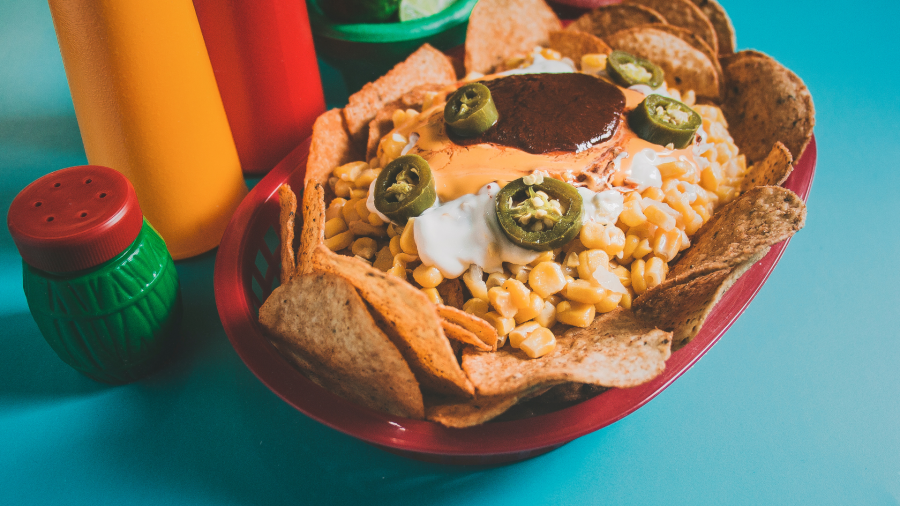
In the middle of a snowy night you shook me awake and said, “I need a tray of nachos.” All we had in the house were neon oil pastels, so I drew you a huge tray of tortilla chips covered with glowing jalapeños and pink lava cheese. “Sorry,” you said, “this just makes me hungrier.”

I was determined to make this work but I still had a long way to go.

So I promised to go get some nachos, no funny business, back before this snow sticks, call you if I need you.

I scraped the ice off the windshield, threw a twelve pack in the passenger seat and drove out toward an all-night grocery. Our town was so small, even the gas station had fallen into ruin.

At the highway onramp, an emerald ocelot stretched across both lanes. Fuck, I said, not again.

I stopped the car, got out and waved. The ocelot beckoned me over with a huge shimmering paw. I brought the twelve pack with me. The ocelot and I laughed about the times we’d met before, like, remember the night I missed two flights? That story, again. Other cars drove around us.

Soon I was leaning against him like a big furry couch in the snow. Then the ocelot said your name and asked how we were. I told him, growing apart.

The night got colder and the cars passing by started to pick up speed, even though it was snowing. The ocelot began to lick the ice off his paw and I forgot why I was there. The warm wet sound of the tongue confused the issue.

The whole time the nachos sat steaming in the car.

When I walked in I told you I was tired and the grocery store was far away. I hid how drunk I was, or thought I had until the Styrofoam box slipped out of my hands. The nachos looked ridiculous on the kitchen floor. I had talked to the ocelot so long, the cheese must’ve been cold by then.

You said, “Was he there again?”

I denied it but you shook your head in disgust.

I had a lot of wrong ideas upon reflection.

I walked toward the back door. The big tree in the yard was gone. The porch light showed the snow ending abruptly in the night. The sea green ocelot stood trapped in the sliding glass door. Its eyes were gray like crumbling stars. Its paws stuck in the soft powder. It was lonely and nothing else. Just like I wanted.

Joe Gallagher was born and raised in Orlando, FL. He now lives in Frederick, MD where he runs an independent press and writes poetry, prose, plays, and the occasional essay about space travel. Previous work has appeared in Carolina Quarterly, DIAGRAM, and Corium. He received an MA in Creative Writing & Publishing from Emerson College, where he was the poetry editor for Redivider. He has a wife who writes novels, two small children, and one large dog. Follow him on Instagram for more art & writing: @jgonestudio.

Last Day Cupcakes by Jeffrey Yamaguchi

I overheard they were ordering cupcakes for tomorrow. I knew what was up. A toast was in the works, on my last day, of what’s likely going to be my last job. I have given my share of toasts of this kind over the years: It’s a funny comment, then a meaningful remembrance of some incident of kindness, and then a really big, over-the-top thank you. What are we going to do without you? That heartfelt question can’t help itself from being asked. It’s on the tip of everyone’s tongues. If no one asks, it’s still hanging in the air, captured in the collective gleam of the faces of those gathered, all standing there in uncomfortable shoes, holding plastic glasses. But we all know the answer. It can break your heart.

These past few months I’ve been taking things, one at a time. Not to keep. I just chuck the item in the first garbage can I see, or leave it somewhere, some place where it might carry on into a new life. I started small, with a stapler from my desk drawer. I placed that on the little makeshift seat in a dressing room. I was there trying on clothes because I thought I’d get a new shirt for my last day, to mark the occasion. But it’s also possible I was just having a hard time being clever with the stapler abandonment, and the only thing I could think of was to leave it in a dressing room. I did laugh while I was doing it, but now, I don’t really get why I thought it was so funny. I also didn’t bother buying a new shirt for my last day in the office. While I truly believed in the forthright irony of that idea, I knew I’d have to verbally call it out and explain it if I wanted anyone else to get in on the joke, and at this point it’s hard enough just to ask, How’s your day going?

 I left one giant file folder on a subway seat. Got off the train and let it go further into the darkened recesses of the city. I took a clock off of the wall, and placed that on a tucked away tree in the park. I used a thumbtack to situate it on the tree. Before I left, I ripped off the hands of the clock, and threw them into the lake. I also snatched one of those forgettable recognition slash award plaques off the wall in the hallway and just left it on the elevator. People were going to see it on the floor and on the one hand wonder why someone would just leave an award there—perpetually stuck in a rise and fall transitory state—but also, not be willing to derail wherever it is they’re going in order to figure out the rightful owner of the memorialized tribute. It’s not like it’s a wallet or a phone or something along those lines that’s truly vital to, well, I was going to say, existence… but of course it depends on what kind of existence you are currently tracked into.

And okay, I admit it, I did take the framed picture of my boss where he’s wearing a polo shirt with the company’s old logo and celebrating catching a fish with a bunch of work colleagues—I definitely worked with some of those people but it was so long ago I can’t recall any of their names. After grabbing a quick burger and fries and then clearing my fast food tray of condiment soiled wrappers, I propped up the photo on the top of the garbage can, letting it teeter right on the edge of the hole. Clearly it was time to stop, and I did. I’m reliable in that way.

After leaving the office on my second to last day, I decided to rework my schedule. It hit me just as I was skipping my subway stop, that I would keep going, to that cupcake shop that I’ve always believed to have the best cupcakes, ever. I could taste them now, and would truly do so soon enough. I decided right there and then that I would not be making it into the office tomorrow. What are they going to do? Fire me? So that means there will be no last day. Tomorrow will be just that: tomorrow.

Jeffrey Yamaguchi (jeffreyyamaguchi.com) is the author of 52 Projects and Anya Chases Down the End, and his work has been featured in publications such as Atticus Review, Kissing Dynamite, Nightingale & Sparrow, X-R-A-Y Lit Mag, Vamp Cat Magazine, Black Bough Poetry, Feral, and The Storms.

The World We Leave You by Frank Jackson

Children, if there’s anything your mother and I have learned throughout the experience of being in the workforce it is the value of team meetings, and having all the proper stakeholders together at once, in order to arrive at what might be described as an actionable consensus and that is what each of you are tonight. Each one of you represents a proper stakeholder of a well-established entity known as the McDermott’s, and though we lack the legal protections generally offered through articles of incorporation, we do find ourselves heavily embedded into the dreary economic realities of our current participation in this late-capitalist endeavor. Children, I don’t have to describe for you the gruesome details of our complex taxation system, nor would I want to terrify you regarding the intricacies of something as seemingly simple as the selection of health care coverage, or the indecencies of navigating archaic PEO software in the hopes of submitting a time off request. These are often referred to as the “benefits” of our employment. Children, if these are the benefits, please allow yourself the capacity to imagine the detriments. You have surely seen the weariness that has encapsulated your mother and I, how it’s frayed the edges of our relationship, strained our patience, turned us into lesser fathers and mothers, often misunderstanding each other in the simplest of ways, becoming distracted by the day-to-the-day redundancies and strangeness of the corporate environment. Perhaps you’re aware of the effect it’s had on our lovemaking. The utter noiselessness of our bedroom. The lack of visible intimacy. We have become broken vessels. Children, I put the question to you. Is that fair? Should mommy who birthed you into existence be made to toil endlessly in inert, airless, sexist, corrupt structures that perennially gnaw and eat away at her sanity? Doesn’t mommy love you both very much?  Doesn’t mommy deserve a better life? Children, what of me? Would you wish your father to drop dead suddenly of a heart attack, or a brain aneurysm, or leaping from the office of one of my superiors? What we are proposing is simple. Complete, unconditional, and total surrender. Children, what we are saying is your mother and I are leaving the workforce behind. It has no further use for us. We have quit our jobs and we are going where the wind takes us. This unfortunately puts on hold certain ventures we had previously negotiated, namely memberships into certain traveling soccer teams, certain orthodontic procedures, certain Disney vacations, certain Netflix and Hulu subscriptions. We could go on and on and on, but children please stop your crying because we need you focused on this next part, which there being no other way to say it, is for each of you to begin the arduous process of putting together an up-to-date resume and finding yourselves a means of income. Your mother and I can assist you in the correct formatting and structure of your C.V., however you will ultimately be responsible for providing the majority of its content. I have done you the tremendous service of researching a list of jobs you can put yourselves in the running for, a generous variety of options, taking into consideration the unique skills and talents you each possess, that we as your father and mother, have become so keenly familiar with and it goes without saying we intend on providing you each with exceptional letters of recommendation. Children, you find yourselves in the most fortunate of times. Thanks to the recently repealing of child labor laws, the burden of protective regulations that previously restricted your full entry into the collective workforce have now been tossed aside by the invisible hand of the market with joyous bipartisan support. The professional possibilities in front of you now are endless, from meatpacking plants to auto shops, from construction sites to neighborhood bars, all avenues to an honest day’s work are right in front of you. Children, bills arrive on a monthly basis, and they must be paid, and all your money will go toward the paying of these bills, and once you stop your crying you will realize the great opportunity before you, and the possibility that someday you will become what our complex taxation systems defines as ‘a success,’ at which time you can rescue your mother and I from an underworld of utter collapse.

Frank Jackson is an MFA graduate from the Writer’s Foundry at St. Joseph’s University. His fiction has appeared previously in journals such as X-R-A-Y Lit, Metratron, Sledgehammer Lit, The Bookends Review, and Shabby Doll House. Find him on Twitter @frankerson.

Your Stepfather, the Giraffe by Cathy Ulrich

(“Your Stepfather, the Giraffe” originally ran in Gravel Magazine in November 2015 and was nominated for a Pushcart Prize. It currently appears in Cathy’s new collection, SMALL, BURNING THINGS.)


On the twelfth anniversary of your parents’ divorce, your mother calls you up.

I’ve met someone, she says. There’s something breathless in her voice, something fluttering. She wants you to come to the house to see him. She always calls it, the house. Are you coming to the house this Thanksgiving? You should come by the house this weekend, and I’ll give you some home-baked chocolate chip cookies. As if it doesn’t belong to either of you, especially your mother.

Will you come? she says, and so you do.

Your mother greets you at the door of the house, a diamond ring winking garishly on her finger.

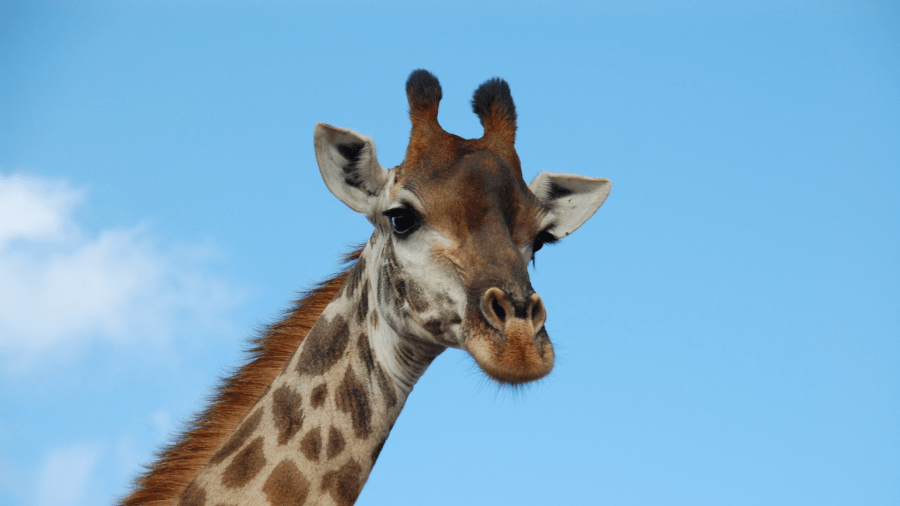
It was love at first sight, your mother sighs, and takes you round back of the house, where her new husband is contentedly grazing off the tops of the neighbors’ trees.

His name is Howard, says your mother.

Her giraffe ducks its head in your direction, as if in greeting.

You’re probably upset I didn’t invite you to the wedding, your mother says. It was just a small ceremony. Just us and the judge, and your Aunt Susan as witness.

She reaches out and strokes her giraffe’s leg. It was all very spur of the moment, you know.

Your mother has always been the type who likes the spur of the moment, not like you, or like your father, who would never do something like fall in love with a giraffe. Your mother likes to say your father lacks an adventurous soul. Sometimes they meet for lunch (to discuss you, you assume, for they have never had anything in common outside of that), and they’ll embrace politely upon parting, your mother brushing your father’s cheek with her lips.

We’ll have to do it again sometime, your father says, and your mother laughs.

I should never have married an accountant, she says. So predictable.

Her new husband, she says, hasn’t got a head for numbers (it’s one of the things I love about him, she declares jauntily, running her hand tenderly along the giraffe’s leg). Your mother has become an expert on giraffes since the last time you saw her. She says her giraffe is a Masai giraffe—you see the distinctive blotches on his coat, she offers in a tour guide’s voice—and that the horns atop its head are actually called ossicones.

He’s a ruminant, you know, she says.

The whole time, your mother’s giraffe has been eating from the neighbor’s trees, muscles twitching at her caress.

We’re moving to Kenya, says your mother. He’s so lonely here.

The plan, she says, is for her to travel with her husband with only what she can carry on her back. She has vowed not to be jealous if he mates with other giraffes.

I know he’d like to have a child of his own, she says. Who doesn’t want that? and strokes the top of your head with her free hand.

Besides, she says, giraffes don’t mate for life.

We’re an exception, she says, showing you again her diamond ring.

She says she’s always wanted to visit Kenya and, while they’re gone, you can stay in the house.

Much nicer than that cramped apartment of yours, she says.

Her giraffe tears some bark of a tree limb and chews it noisily.

What about lions? you say.

Your mother blinks, her calf eyes dull and wide, like the giraffe’s. Well? she says. What about them?

Cathy Ulrich is the founding editor of Milk Candy Review, a journal of flash fiction. Her work has been published in various journals, including Black Warrior Review, Passages North, Split Lip Magazine, and Wigleaf and can be found in Best Microfiction 2022, Best of the Net 2022, and Wigleaf’s Top 50 Very Short Fictions 2022. Her new short story collection, SMALL BURNING THINGS, was released by Okay Donkey Press in 2023. She lives in Montana with her daughter and various small animals.

The Werewolves of Camp Emerald Lake by L. Soviero

The big kids tell us small kids about the werewolves of Camp Emerald Lake. About how it’s super easy to turn into one. All it takes is meeting it in your dreams. Over the first week of camp, it’s all anyone can talk about—in the mess hall, during swim lessons, while on flora and fauna photo hunts, when constructing pinecone bird feeders to send home to our folks. I hate all the talk. Only because I don’t understand the fuss. But the girls from my cabin ask the big kids what attracts a werewolf. And Nancy, whose dad is a Marine, which we decide gives her inherited authority, says we need to leave raw meat under our cabin stairs.

So, Bonnie and Katrina and Meg steal hamburger patties from the mess hall freezer. And even though Nancy never advised it, Bonnie decides it can’t hurt if we eat some too. Marry us to the meat. We divvy up portions and pop them in our mouths, and I can’t help but feel it tastes like the end of a AA battery (though, don’t ask me why I know that). It’s Katrina who has the nightmare first. Because that’s what it ends up being. In it, the full moon swelled like a spider’s egg sac in a starless sky. There was a baying too, somehow both far away and under her skin. It gurgled at times, full of woebegone guts and melancholy blood.

None of us believe her the morning she tells us, but she says, come and see. And we gather around her in the corner of the cabin like she’s a toasty fire. She pulls up her nightgown. And between her legs is a poof of brown, bushy hair. It’s not real, one of the girls says. Katrina shouts that it’s as real as church, and she lets us take turns patting it. It reminds me of Brillo. Maybe not as rough, but still strong enough to scrub a plate. After that, all the girls are desperate to be werewolves, so the big kids tell us it has to be a fresh kill this time. Bonnie says her brothers are manly men with pickups and callouses, and they taught her how to chop wood with a small axe and use the sun as a compass and set traps for God’s small creatures.

So, she shows us how to do that last one with a few simple supplies: some yarn, a forked stick, a wicker basket from the arts and crafts center. And her trap is the real deal, 100 per cent fool proof, because we catch us a baby bunny. Nose wriggling. Eyes alive with the fear of death. But now that we have the bunny nobody wants to kill it until Megs grabs it by the ears and swings it against a tree. It’s brutal, but fast. We cut its throat with a Swiss army knife and take turns sucking its blood. We giggle because it looks like we’re wearing lipstick. We get real silly and blush our cheeks with it too, and for some of us it’s the first time we’ve worn makeup.

That night, we’re skeptical because we know the big kids like to mess with us small kids, but when we go to bed we do so with our fingers crossed. Whispering lispy prayers to the star dust. When we wake up in the morning, it’s worked. We all have our very own tufts. And on each of our beds are dark stains in the most beautiful of patterns. Like the ink blots the doctor showed me in his office those days after mom passed. Luna moths. Galaxies gobbling other galaxies. Pelvic bones exploding like rotten fruit. He showed me the patterns because I didn’t want to talk. And when I did talk, all I did was scream. But I don’t want to scream anymore. Not when I can howl. That’s what we do when the moon’s as swollen as our moms’ bellies were with us. And if you go out into the darkness, you’ll see us there—not as girls, but as silhouettes against a perfect moon—with mouths open, ready to take a bite.

L. Soviero was born and raised in Queens, New York but has made her way around the world, currently laying her hat in Melbourne. She has been nominated for Best Small Fictions on multiple occasions and a Best of the Net, and has been longlisted for the Wigleaf Top 50. Her story “Lucy Ignores Death” was spotlighted in the 2021 Best Small Fictions anthology. Her recent or forthcoming work can be found in Cloves Literary, Janus Literary, and Emerge Literary Journal. A more comprehensive list of publications can be found at lsoviero.com.

Look Under the Bed, Please? by Brianna Johnson

Content warning: childhood SA


I told my parents there was a monster under my bed. I asked them to look. Instead, they complained of sore knees and bad backs. The trip to the floor and back was too far for their joints to make. They told me it was probably nothing, just a lost Barbie doll, or an old LEGO brick. I decided to believe them.

Then the scratching started. They told me it was just the floorboards settling, or roaches, or mice scurrying to and fro. They said don’t worry they’d set traps in the morning.

I decided to believe them, but then my bed began to shake. They told me it was possibly an earthquake, or termites chewing at the bedposts. I didn’t need to worry.

I struggled to believe them when I heard a voice in the dark. My parents blamed the radio and the neighbors’ loud TV. I told them it knew my name. They said they didn’t have time for this. They were tired. Didn’t I know how late it was? Didn’t I know how hard they worked? It was just my imagination. They’d deal with me in the morning.

They said similar things when I told them how dad’s friend, Uncle Simon, kissed me hard on the mouth. His teeth scraped mine. They said he probably just missed my cheek. I should’ve turned my head. Or I turned it the wrong way. I decided to believe them. So, I didn’t tell them when it happened again at the 4th of July barbeque, at the pool party, at my birthday… I just needed to keep turning my head.  

Then the voice beneath my bed spoke again. My name, my name… rang in my ears. Its voice was scratchy, like a smoker’s, like Uncle Simon’s.

I pulled the blanket over my head. I plugged my ears with my fingers and squeezed my eyes shut. Maybe it would stop if I just turned my head. So, I tilted and bent trying different angles, like the antenna on my nana’s TV. She called them rabbit ears. I imagined myself as a bunny burrowed in the blankets of my bed, safe and sound.

My name, my name still scratched in the dark. No, it was just my imagination.

In the morning, I yelled for my parents. They showed up with mugs of fresh drip coffee and the sleep washed from their eyes. My mom had removed the rollers from her hair. I watched as they looked for me in the closet, under the blanket, out of the still closed window… never where it really mattered—nowhere even close.

From under the bed, I watched their fuzzy slippers shuffle toward the door. I tried to yell again when they shrugged and left the room. The monster put a claw over my mouth. It shook its head and looked at me with its many pitying eyes. What good would it do? I knew this to be true, so I decided to stay here in the unending dark.

Brianna Johnson’s stories have appeared in Cosmonauts Avenue, Gigantic Sequins, The Molotov Cocktail, Wigleaf, Kenyon Review, Obsidian: Literature & Arts in the African Diaspora, and elsewhere. An alumna of the Tin House Summer Workshop and Hurston/Wright Weekend Workshop, she is a two-time Pushcart Prize nominee with work longlisted for the Wigleaf Top 50. An MFA graduate from The University of Tampa, she teaches college English in Orlando, FL. Visit Brianna online at her website, on Twitter, and on Instagram.

It’s Me, a Selfie by Lindsey Peters Berg

After scrolling past another photo of Portia’s baby contorted against age blocks, Daisy posted a picture of herself and captioned it, “Are you there, external validation? It’s me, a selfie.” She thought it was so clever that she searched the phrase on Twitter to make sure she hadn’t accidentally stolen it from an old tweet she’d forgotten about. This yielded zero results, which first made her feel like the funniest fucking bitch on the planet, then second, created concern that perhaps the caption actually made no sense. But she didn’t really need it to make sense, exactly, just to draw attention to her personal freedom and general youth. And to her spaghetti-strap crop top, a garment she had purchased after Reformation boldly described it as “SLUTTY” in their marketing email.

Daisy took a day-old bottle of wine from the fridge and poured herself a glass, feeling powerful for taking a two minute break from her phone. Especially after posting content, she thought. When she picked it back up, her home screen showed three notifications, all emoji responses from her book club girls. Nice. She opened Instagram and tapped the shimmering circle around her profile picture. Red hearts burst from the lower corner of her screen as she reviewed the story again.

Are you there, external validation. It’s me, a selfie. She was pretty sure it did make sense.

Daisy imagined Portia examining the photo closely, holding one of her full breasts as she admired Daisy’s braless liberation, sweet milk oozing through her fingers as she longed for a body that was, once more, just her own. Daisy had moved away from their bleak Illinois suburb a year ago, to a city with palm trees and mountains and grown women wearing children’s clothes. Now she occasionally attended graveyard movie screenings and natural wine tastings so she could post pictures of them the next day, during peak scrolling hours for the central time zone.

Daisy sipped her wine and tapped the word Activity at the bottom of her screen. A girl she considered a friend—also single in the big city—had watched the story but didn’t comment, which confirmed to Daisy that she was mad at her and/or actually hated her.

Daisy scanned her mental files for reasons she could be hated, landing upon contenders like annoying, into herself, weirdly pretentious even though her music taste hasn’t evolved since high school, and seems nice at first but when you get to know her actually isn’t which has led some of her loved ones to politely refer to her as ‘sharp.’ Then she decided that, in fact, it was her friend who was actually the bitch for hating her when she didn’t even do anything.

Daisy clicked the friend’s story and watched a short video of her betta fish. She nonsensically replied, YOUNG HOT FUN CLUB!, with a fire emoji, hoping this cleared the air.

Daisy revisited her Activity list to see if Portia had seen her story yet. She was wondering if perhaps she looked too good in today’s selfie, if Portia might be so taken aback by her attractiveness that she was simply rendered speechless, when a notification banner appeared across the top of her screen with a name that sent her heart to her throat. Kevin.

The message said, lol.

He was her high school crush. It was the first time he’d commented on any of her stories. Why this one? Maybe she really did look incredible. Daisy downed the rest of her wine and refilled her glass. She needed to be slightly out of her mind if she was going to respond.

They were thirty now. Could this lead to a sexting situation? Daisy had always fantasized about late-night messages from a past admirer, someone who had longed for her years ago. I still jerk off to you, they’d say, and fuck, I love doing it. She’d scold them like she was horrified, then surprise them by asking for details. What do they imagine her wearing? What do they imagine her doing?

Daisy gulped her wine, intimidated by the task of getting the conversation there by way of lol.

She clicked Kevin’s profile and scrolled past photos of him golfing to one with his wife and two toddlers in front of their home. Daisy said, “I guess everyone has a fucking baby now,” out loud. To no one. She zoomed in on Kevin’s wife and entertained an internal Family Feud game as to which mall store she’d bought her outfit from. Daisy cast votes on Madewell and Guess but stopped once she landed on Buckle, remembering that she’s a feminist.

Zooming back out to the ranch house almost certainly full of Hearth & Hand woven baskets, Daisy wondered if Kevin really wanted to be a dad. She pictured him tapping through his Instagram stories and sniffing a glass of mid-range whiskey, one child screaming and the other chewing on a Polly Pocket dress in the next room, as he landed on Daisy’s picture. He pressed his thumb on her chest so he could look at her longer. Are you there, external validation? It’s me, a selfie. He smiled and tapped the Send Message bubble at the bottom of his screen. He wrote lol, but what he meant was, You look great. I missed out. Or maybe, Why didn’t I realize you were cool, or even, I love my wife and I love my kids but sometimes, when I look at you, I wish I never had them.

With her second glass of wine empty, Daisy stared at Kevin’s “lol.” She typed, What’s so funny?, erased, You remember me?, erased, You have literal children?, erased, Am I hotter than your wife?, erased, Would I look hot pregnant?, erased, Am I a fucking loser?, erased, Am I falling behind?, erased, Would a baby make me stop hating myself?

Her phone vibrated in her hand. It was Portia. Yessss girl!! GORGEOUS! P.S. Xander says HI!!! Then a selfie with her baby, his tiny, soft body resting in the curve of Portia’s arm. Her fingers squeezed his terry-socked foot. She looked happier than Daisy had ever seen her.

Daisy flicked away the notification and stared at Kevin’s message. She clicked her screen to sleep.

Adding her wine glass to the pile of dishes in the sink, Daisy thought about Portia. It was past midnight in Illinois. Why was she awake? Maybe her baby had trouble sleeping. She must be so tired. Daisy wondered if she was capable of caring for someone that much. She wondered what it would feel like — to kiss a newborn belly, to trace a finger along mini heart-shaped lips. To be a mother.

She slipped into bed without brushing her teeth and looked at the moon through the window. It was a weird orange-red color, vampiric and full. Her room had a balcony attached to it, and she considered stepping out to the metal railing for a closer look. Instead, Daisy stayed in bed and tried to guess if it was a Blue Moon or a Harvest Moon or a Super Moon. She didn’t have the answer. She closed her eyes and made a story up.

Lindsey Peters Berg lives in Los Angeles. Her fiction has appeared in Rejection Letters, HAD, and Moot Point Magazine. Currently, she’s at work on her first novel. Say hi @lindspetersberg.