
Call It My Signature Kill by Kristina Ten

When did I start leaving “Best,” off my emails?

Best, Greg. All the best, Greg. Thanks and best, Greg.

It wasn’t always a lie, though by the end I couldn’t type the word without the tips of my fingers starting to burn. Imagine wishing Jay MacArthur in global sales the best and actually meaning it. Or Johanna Wrigley with her long list of demands, every one of them tagged, impossibly, priority number one. Or Brian Warner from HR, who once told me to my face that I might improve my rapport with the team by including more friendly exclamation points in my emails.

How we say something is as important as what we say.

All my best to you and yours! Greg.

Hard to imagine, but it’s true: when I started at the firm, I harbored no ill feelings toward any of them. I was there to do the work and collect the checks, and I wasn’t closed off to the idea of making a friend or two, having drinks at our local, watching the game back at mine.

But then you get to know someone. And it’s Jay with the Bluetooth headset always in one ear, taking loud calls in the shared bathroom, closing the deal in the stall next to mine while I debate whether to relieve myself or hold it in, whether I want whoever’s on the other end of the line to hear or not. Not in the best interest of the firm, sure, but could that foul sound be my weapon in finally bringing Jay MacArthur down a peg?

I chicken out, of course. Sit and wait, tense from the waist down. Wonder if he sleeps with the headset in. Wonder if he wears it with his wife.

So what came first: realizing I didn’t wish good things for these people or realizing that it was working—the wishing, I mean? Now, I’m not ordinarily one for delusions of grandeur. But you can’t argue with the facts. I joined the firm, I sent the emails—best this, best that—and by all accounts, they all seemed to be doing really, really well.

Don’t get me wrong. When we met, they were doing all right. Brian Warner with his shiny new son and homemade baby food. Once he accidentally packed a jar of it into his own lunch and when he pulled it out in the break room, everyone laughed and awwed like, new dad, endearingly frazzled, and makes his own baby food, too. Goes the extra mile. Sweet potatoes and wet banana mashed lovingly by hand.

Like I said, doing all right. But then I join up, fire off a few bests in his direction, and Brian gets a promotion and starts rolling an Alfa Romeo into the company parking lot.

And get this—get this!—Johanna signs a publishing deal for a goddamn memoir. I watch her empty three packets of instant oatmeal into a bowl every morning and stare at the microwave as the seconds count down. What could possibly have happened in her life that’s worth paying to read about? I wonder if her manuscript editor, like her colleague, will suggest more exclamation points.

Don’t believe me yet? How about this: IT guy, Alan something, nice enough actually. Haven’t exchanged more than a few quick words since he got me set up on my first day. We get into a long email thread about a glitching office printer and hours later I find out he’s put in his two weeks’ notice. Why? Huge inheritance. From? A dead great-aunt he didn’t even know.

Best, Greg. Very best, Greg. Really, why don’t you just win the lottery already? Greg.

So here’s what I did: I stopped. Call it a test, to confirm or deny my suspicions. Call me a man of inquiry. It’s not a crime. Show me a single piece of documentation inside or outside the firm that requires me to sign off with “Best.” You can’t. It doesn’t exist.

Hi Johanna,

Please find attached the files you requested.

Greg

Greg. Greg. Greg, Greg, Greg! And just like that, the spells I had unknowingly cast over the employees of Centurion International began to wear off.

And it was satisfying. It was what I wanted. More than that, it was what they deserved.

Suddenly, Johanna starts talking less and less about her writing deadlines—of which everyone has been so supportive, by the way: “Two hundred pages by Monday? Well, you’ve simply got to cut out early! The firm will understand.”—and come to find out the publisher dropped her.

One day, I pull into work and see Jay’s truck parked in the spot furthest from the building doors. That ridiculous oversize luxury pickup, invariably gleaming, no matter the weather, as if under hot, bright studio lights. As I drive by, I see he’s shirtless and shaving, the driver-side mirror flipped down, his heavy chest pushed up against the steering wheel.

Me, I’m not heartless. I was just about to feel sorry for the guy when I saw the Bluetooth headset already lodged in his ear.

Yes, satisfying seeing them get put in their place. At first. But the mind is amazing in its ability to recover from minor setbacks, and sure enough, everyone was back to their regularly scheduled programming within the week.

Then there’s this new hire, Paul Pritzker. “Call me PP,” he says and makes no indication of joking, displays not a molecule of self-consciousness. And the worst part is: people do it! Out loud, in person, straight faced, on the phone. When a difficult client shows up on the roster, they say with confidence, “Don’t worry. PP’s the lead on that one. He’s got it under control.”

But I consider myself a measured man. Level headed, not prone to overreaction. Hey, let him be called what he wants, right? Who’s it hurting? It wasn’t until this PP sat on the corner of my desk—sat, his full body weight, on the corner of my desk—to carry on a bit of mid-afternoon small talk with Rachel, who sits at the desk next to mine, that I made the decision. Straw, meet camel’s back.

So what goes in my emails now? Not “Best,” and not nothing, either. That wide white nothing after the body of the email and before my name, Greg? Well, you know what they say: empty spaces yearn to be filled.

What we say is as important as how we say it.

Use your words.

Granted, I have to be smart about it. I can’t be so obvious. It takes a certain finesse, an understanding of human psychology, multiple meanings: something our friend Paul Pritzker clearly doesn’t have.

Let them think you’re wishing them luck:

Break a leg,

Greg

Or celebrating their successes:

You’re on fire,

Greg

Or hoping they enjoy that conference in Vegas you never get to go to, no matter how long you’ve been with Centurion or how many times you apply for a spot:

Have a hell of a time,

Greg

Yeah, a real hell of a time. Let them think what they want.

Then watch them pack up for the day, every employee, no matter who they are, grabbing the same assortment of objects: two things they’re addicted to (smokes, phone) and two things they think they’ll need later (keys, wallet).

Watch them pull out of the parking lot.

And watch it come true.


Kristina Ten is a Russian-American writer of short fiction and poetry, and a 2019 graduate of Clarion West Writers Workshop. Her work has appeared or is forthcoming in LightspeedBlack StaticAE Science Fiction, and elsewhere. Find her at kristinaten.com and on Twitter as @kristina_ten.
Now We’re Getting Somewhere by Claire Hopple

We agree to liaise at the apartment building. I picture myself shepherding you through the tour and already feel perturbed before I’ve parked.

We surveille the vestibule and await developments. You hang your arms over the railing and momentarily drop your head.

“This cruelty-free deodorant has turned out to be anything but,” you say.

This three-story brick complex is barbarous and listless enough to suit you. A distant television is the only sound. There are bike tire tracks on the walls opposite the mailboxes. All the trappings of a dwelling you would consider renting. Or at least looting.

The landlord or property manager or whoever arrives. She sedates us with small talk and you politely avert your eyes.

Her precious schoolmarm demeanor has little effect on me and it’s difficult to determine whether I should be proud of this.

She leads us up to the third floor.

“This dining nook is large enough to host a dinner party, if I can muster enough friends to appear,” you notice once we’re inside.

She runs through the floor plan and the numbers with you while I test the plumbing. I go to wash my hands but can’t figure out how to turn on the sink. I pull at things and twist certain parts but nothing budges. I look underneath it, on its sides, flip the wall switches just to be sure. I walk out and remain quiet.

The woman gets a phone call.

“How’s school?” I ask.

You look startled.

“Let’s find somewhere we can discuss this.”

I oblige.

We move into a bedroom.

“First of all, your enthusiasm is becoming a problem. If you must know, school is going okay. I have this…semi-respected professor who’s very complimentary of my work. But it seems as if he’s becoming senile so I can’t really take him seriously. I have to question all of it.”

The woman ends the call and joins us, walking to the far side of the room to open a window. While she’s leaning over to lift one, you focus on my face and whisper “defenestration” like you want me to push her out into the gravel lot below.

“That abandoned car in the ravine down there should be towed by next week,” she says as she turns around.

She gets another call. I wonder if she is some kind of real estate magnate.

“And are your parents still in that, uh, rough patch?” I squint at you.

You tell me about running into your dad at the grocery store and him not recognizing you. How he blamed it on you wearing a hat. That he disclosed he’d kept a secret pet hidden in the garage. Your mom unearthed the ferret behind the bucket of badminton equipment and later hissed at your dad when he attempted to recuse himself. Then how your mother retaliated by purchasing a used lifeguard chair from the internet and planting it in their pool-less backyard to survey the neighborhood and whistleblow at behaviors she observed but didn’t take to.

“Melodrama” sounds like a caramel-based candy bar, not the highly emotive scenes it contains, though both are perhaps equally fabricated, I think.

When we’ve seen everything there is to see, you shake her hand while saying, “Please accept this symbolic gesture.”

I glance back to observe her wiping the hand she shook with on her skirt. She probably didn’t mean for me to see that.

I pick up what looks to be a Girl Scout badge from the grass and pocket it.

You sum things up by saying you haven’t been all too pleased with your own behavior lately, and so, acting as the only adult in your household, you have grounded yourself.

“It’s customary to stay home unless there are prearranged appointments such as these.”

You are learning that adulthood is basically a series of deciding things but never really getting to decide anything at all.

You’ve probably made it back by now and are reheating a bowl of some leguminous dish in your microwave.

I didn’t get a chance to tell you about the trap door at work. The door leads to what may or may not have once been a cellar. Employees regularly submerge their senses there after talking to clients (and each other) all day. The place seems ideal for a cigarette break, but no one smokes, so we end up bringing down lukewarm LaCroixs and standing around with those.

There isn’t a trap door anywhere in my house but I wanted a similar environment so I’ve created what might be a sensory deprivation closet. There’s nobody to escape from in this setting, only myself, and that is plenty.

You probably wouldn’t have a clue what to make of this news anyway, and you’re an adult who’s grounded herself, so what do you know?


Claire Hopple is the author of Tell Me How You Really Feel (forthcoming), Tired People Seeing America, and Too Much of the Wrong Thing. Her fiction has appeared in Hobart, Heavy Feather Review, People Holding, Timber, and others. More at clairehopple.com.

The Jackalope in Economy Class by Elizabeth Hart Bergstrom

The jackalope couldn’t believe she’d gotten a middle seat again. She had tried to book her flights early, but the WiFi in her Wyoming bungalow was spotty at best, and it took so long to get tickets that almost all the seats were taken. If she had been a Pegasus, she wouldn’t have to deal with this kind of thing. She could’ve flown to Scotland herself.

But she was stuck being small and terrestrial, so she dragged her suitcase to join the herd of irritable passengers waiting at the international gate. When the line finally moved, the jet bridge stank of airplane fuel that rose in hot breaths from the gap between the platform and the door.

The jackalope found her seat in the last row between a teething baby and a Bigfoot who was already snoring at the volume of a small chainsaw. The overhead compartment was full, not that the jackalope was tall enough to reach it—why can’t Bigfeet ever be awake when you need them? A flight attendant wrestled the suitcase out of her paws and stashed it away. Defeated, the jackalope flopped into the middle seat and buckled her seatbelt. She tried vainly to smooth her rumpled whiskers.

It was a nine-hour flight to Scotland, and the baby would not stop screaming. Judging by its robust size and lung capacity, maybe it was the Bigfoot’s child, but the jackalope was not an expert on babies. Thank goodness she brought earplugs. After a series of garbled announcements over the intercom, the jackalope dozed off.

She woke to the sensation of the baby gumming her antlers and drooling onto her fur. At least it meant the screaming had stopped, so she resigned herself to being used as a teething ring. Her antlers had survived worse before.

All the jackalope really wanted from this trip was to take a picture with the Loch Ness Monster. Nessie was so popular you could book a whole vacation themed around her, stay in a charming cottage with lake views, ride a trolley painted with greenish-black scales, and go out on pleasure boats to hope for a sighting.

In comparison, what little fame the jackalope once had from tall tales had faded. She owned her bungalow in the Red Desert, but she could barely afford to pay the utilities with the dwindling royalties coming in from jackalope merch and the tell-all memoir she wrote in her thirties. She’d spent the last of her savings to book this trip.

What about other jackalopes? She was the last one, as far as she knew. The whole reproduction process for her species was pretty mysterious, something involving lightning strikes and clashing antlers, and she couldn’t remember ever having a mother or father. She had searched the internet, social media and message boards and dating apps, but every lead to find other living jackalopes turned out to be a fake. She’d stopped getting her hopes up.

But this time was different. It had to be. The jackalope fantasized that she and Nessie would hit it off. They probably had a lot of things in common besides being cryptids. For example, the jackalope’s favorite drink was whiskey, and Scotland was known for excellent Scotch. Maybe they would go out for drinks at a lakeside bar, someplace with a floating dock so Nessie would be comfortable. They would share stories about where they grew up, discover they were both bullied in high school, quibble over the best episodes of their favorite TV show. They would talk until they were a warm, euphoric kind of drunk. They would talk until last call. Maybe they would start to fall in love? No, that was the kind of thing that only happened in movies.

She hoped Nessie would invite her to crash for the night. They’d go out for brunch the next morning. Maybe, if things went really well, the lake monster would invite the jackalope to come on as a sidekick in the tourism gig. The jackalope would ride on the back of her neck so it looked like the serpent had a magnificent set of antlers. The visitors would eat it up. The documentarians would arrive in droves. The conspiracy theorists would flood their YouTube channels with annotated videos. She could see it all so clearly.

The jackalope didn’t know how to swim, but she could learn. She could learn anything if she tried hard enough. She would change herself to fit whatever the monster needed her to be.


Elizabeth Hart Bergstrom’s flash fiction appears in Jellyfish Review and CHEAP POP, and her other work appears or is forthcoming in Indiana Review, Juked, PANK, and elsewhere. She’s a queer, disabled writer who was born in the Blue Ridge Mountains of Virginia.

Signature by Nicholas Grider

Jack arrived with a metallic blue Sharpie and wrote his name on me as if adding his signature, signing a receipt. Underneath it he wrote my name too (spelled wrong and crossed out and spelled correctly with a smiley face) so whenever we were half-dressed in the half-dark together and I could trust it was just him touching me and no one else, none of his friends alone or in a group, and I could trust where his dry fingers would fall like the soft rubber of an old pencil’s stained eraser, and I could trust when, and could trust that I could follow his instructions and he would answer my questions, or at least the important ones, and I could trust we belonged to each other, that I was capable of belonging to someone. While we waited for the gleaming ink to dry before I let him lay me on my bed and press me into romance we sat half-dressed, kissing and being kissed, and I thought of how when I was young and slid under another surface I’d trail the other kids as we wrote stylized tags on telephone poles and neglected walls––we’d seen it on T.V. and that kind of ownership felt rebellious––and I kept in mind how Jack told me “they say silence is golden because is beautiful,” reminding me that being quiet added to my appeal, that mystery meant value and naming meant knowing, and it was only later that I asked him why he’d named us on my lower back close to my waist and a small constellation of moles, he told me that from now on, in our future of shadowy bedrooms, neither of us would need to worry about forgetting who either of us were, and that this was a sign of his love. Love, he said before his fingers caressed my lips to erase my reply, was a good kind of stain, and not as painful as a name.


Nicholas Grider is the author of the story collection Misadventure (A Strange Object) and the chapbook Forest of Borders (Malarkey Books). Their work has appeared in Atticus Review, Conjunctions, Five:2:One, Guernica, Midnight Breakfast, Vol. 1 Brooklyn, and X-R-A-Y. They can be found apologizing for things on Twitter at @ngrdr.

Martin Moves In by Ellen Rhudy

It was the morning after their third date. Jenny woke with an odd heaviness on her stomach, as if someone were sitting on her. To stand she had to first roll on her side, levering herself towards the edge of the bed. A pinching at her crotch: a sheet of notebook paper rolled into a cigarette emerged, mucus stringing from one end.

Huevos coming, written in clumsy block letters she didn’t yet recognize as Martin’s. iPhone charger.

Jenny held the note a moment before laying it on the bedside table. She squatted with one hand on the mattress for balance. She bore down, imagining she could see with the pads of her fingers. This was not so different from recovering a stray tampon, she thought. She felt for a foot, for one of those damp hands that had grasped her own just the night before. Nothing emerged but another note: Nice try.

An hour later a GrubHub deliveryman arrived with an order of huevos rancheros, which Jenny ate. The next day an Amazon package addressed to a Martin Penderson, containing a phone charger and a pair of blue earbuds. Order pizza, said the note pressing into her underwear that night. Did my package come? Low batt. The block letters didn’t connect cleanly and it took her a few minutes to decipher his meaning.

You can have your package when you come out, Jenny texted. Order your own pizza. She appended a dozen dancing cat gifs and imagined his cries as his battery drained. Her back was so stiff that she felt as though her spine had been removed, knotted in two, and planted back beneath the skin.

She cancelled plans with her friends that night. Cancelled a date for the following day. Martin pummeled the inside of her stomach, his fists pressing against gleaming white marks shot across her skin. At times he settled on her bladder or pressed an elbow against her kidney; other times he went exploring, his fingers grasping for something he could never quite locate. He would come out when he was hungry enough, she thought, though a week passed with no movement.

When she’d used all but one of her vacation days she called her ex-girlfriend Sam, a doula. “Well fuck,” Sam said when Jenny opened the door to reveal her distended stomach, Martin’s elbow visible through her t-shirt. “You could try giving birth, if he were open to it,” she said as she pressed her palms on Jenny’s stomach, “but I wouldn’t if I were you.”

“You wouldn’t…?”

“It’s dangerous enough to have a baby, and he’s a full-grown man.”

Jenny stared at her stomach. She’d spent the morning laying on the hardwood floor, knees bent. She could feel her spine compressing into itself. “What about a c-section?”

A fist billowed against her stomach. Jenny watched Sam inspect its shadow. “There’s a support group for this,” she said before leaving. “Down the community center. That’s the best thing.”

That night Jenny tried to convince herself she wasn’t alone though she had not received a note in almost two days. She touched her stomach, felt the bulge of Martin’s head beneath her palm. She imagined the enveloping comfort of being inside a body that was not her own, of curling in the pliable constraints of a stranger’s womb. She inserted string cheese and slim jims as though they were tampons, then plucked free their empty wrappers with hesitating fingers. She snaked in the end of the iPhone charger and Martin pulled it like a lifeline, so fast that the square plug popped off and clattered to the floor. Jenny felt something like a bee sting, and ten minutes later her phone pinged.

I don’t like the cheese. As she stared at her phone a light began to dart across the floor, streaming from between her legs. Martin’s hands groped as though he was searching for some part of Jenny she hadn’t yet found herself. She emailed the support group leader, who wrote back, Yr body is a life-giving vessel, it is a home, you are a miraculous being. Hope 2 C U Wed at 8. She imagined this placid woman rubbing a gleaming parchment-thin stomach broken only by purple veins and the shifting contours of the body it held. On Wednesday night she jumped up and down in her living room, Martin laughing. She ran a bath and raised minor waves as she lowered herself, lay a towel across her stomach so she wouldn’t have to see his face pressing against her skin. Watching her limbs distort beneath retreating bubbles, she recalled reading that people loved water because it reminded them of their first lives.

Jenny took a deep breath and sank below the surface. Distantly she heard water splashing to the tiles. She waved her hands, stroked the smooth walls of the tub. She would have liked to turn over, to feel the rippled flowers on its floor. It must be nice, she thought, to float – to just float, and nothing more. To feel yourself held so secure. A damp bitterness would grip her when she emerged from the water to find her back still pinched, pain radiating around her left hip, feet crushed by the doubled weight of her body, but for this minute – she could have this minute. What’s the harm in her one minute, when Martin has all the rest?


Ellen Rhudy lives in Philadelphia, where she works as an instructional designer. Her fiction has recently appeared in The Adroit Journal, cream city review, SmokeLong Quarterly, Necessary Fiction, and Monkeybicycle. You can find her at http://www.ellenrhudy.com, or on twitter @EllenRhudy.

here is the whole history of us chapter one by Amanda Claire Buckley

we came out of the ocean. coming out of the ocean began with your attempts to get on land. you’d developed lungs. they were badly formed. no one had even thought to try to get on land before you. you said it was easier for you on shore. it felt better. i worried about you. come down from there. i called from the sea bed. i’m ovulating. we had a child who inherited both your lungs and my gills. i worried my gills made her lungs even weaker. you died above us not long after she came out of me. it was too bright. your scales and your eyes had nothing on your lungs and your lungs were barely there to begin with. your lungs were small half-formed pockets that were continually ripping and sloshing with salt water. you’d cough up the salt water on the beach. you’d tell me about how the sand got wet where you coughed. you leaked our home out of your lungs. you said the shore wasn’t so different from what we had down below. everything was just heavier up there. the sand. your body. our child is already swimming and your bones are where the light is. she asks about you. i tell her i remember very little. i tell her she will have to remember better. her brain is bigger than the both of ours. but she has your cough. i worry about her lungs. i put my ear to her chest and hope. our books say nothing about what to do with these new bodies. i have read them all. our child is already kicking. i can’t believe it. she launches her body above the break of the ocean. into the air above us. then she crashes back down into the dark weightlessness. back to where we live together. we’re a small family compared to the others. i beg our girl to please stay near the sea bed but she says it’s easier for her up there. in the air. i tell her not to go on shore. i worry. she says she’ll try not to go on shore but it’s just so easy. it’s so easy for her up there. away from me. she’s growing. she doesn’t need her mother to tell her anything anymore. she doesn’t need my gills. i weave seaweed in my hair to make myself look younger. our child is growing faster than the others. i write the books i wish i could read to her. our child is grown. she is tan. one day she is late for dinner and i call her and ask her if she’s alright and she tells me she’s seen your skeleton on a nearby beach. how long have i known she asks. i tell her i didn’t want her to learn this way and she tells me she thinks she’s going to stay on the beach above me from now on. it’s just easier for everyone this way. by everyone she means her and her new child. my grandchild’s lungs are so wide they can’t help but float at the surface of our world. i would cry but I have not evolved tear ducts yet. i give a lecture to the others about paradigm shifts. the others say the world is flat. i tell them i’ve seen feet.


Amanda Claire Buckley is a writer who was once a waitress who was once a philosophy student who was once a musical director for a sketch comedy troupe. Her work has been featured in X-R-A-Y, The Same, and Story Club Magazine. She’s currently an MFA candidate at Sarah Lawrence College and is a contributing editor for the literary journal Pigeon Pages. She can be found on Twitter @aclairebuckley and online at http://www.amandaclairebuckley.com

Port Town/El Pueblo del Puerto by Édgar Omar Avilés (translated by Toshiya Kamei)

After the tsunami, in the port town some mermaids comb their hair in bathtubs, others swim at the bottom of tequila glasses, drivers see them reflected in their rear view mirrors, housewives find them when they open cans of sardines, the radio interrupts cumbia and lets the enigma of their songs be heard, children find them while playing hide and seek, the parish priest assures that a swarm of them goes to church and seduces angels on rainy nights.

After the tsunami, the port town remained under water, and the mermaids are terrified that this human memory still lingers under the sea.

* * *

Luego del tsunami, en el pueblo del puerto hay sirenas peinándose en las bañeras, otras nadan en el fondo de los vasos de tequila, los conductores las ven reflejadas en los espejos retrovisores, las amas de casa las encuentran al abrir una lata de sardinas, en la radio la cumbia se interrumpe y se escucha el enigma de sus cantos, los niños las descubren jugando escondidillas, el párroco asegura que en las noches de lluvia un ejército de ellas va a la iglesia y seduce a los ángeles.

Luego del tsunami, el pueblo del puerto quedó sumergido, y a las sirenas les aterra que aún persista aquel recuerdo humano bajo el mar.


Born in Morelia, Michoacán in 1980, Édgar Omar Avilés has authored several books, including the story collections Cabalgata en duermevela (2011) and No respiramos: Inflamos fantasmas (2014), as well as the novels Guiichi (2008) and Efecto vudú (2018). His short stories have appeared in various journals and anthologies, including The Airgonaut, New Flash Fiction Review, and Queen Mob’s Teahouse.

Toshiya Kamei holds an MFA in Literary Translation from the University of Arkansas. His translations include Liliana Blum’s The Curse of Eve and Other Stories (2008), Naoko Awa’s The Fox’s Window and Other Stories (2010), Espido Freire’s Irlanda (2011), and Selfa Chew’s Silent Herons (2012). Other translations have appeared in The Global Game (2008), Sudden Fiction Latino (2010), and My Mother She Killed Me, My Father He Ate Me (2010).

The Candy Children’s Mother by A.A. Balaskovits

I had to send them away. They were children not born of me; they came rushing out between some other woman’s legs, one right after the other, and I was told she lost so much of her liquid that, as soon as they squealed in the air, she had dried up, all broken apart, and pieces of her blew away with the gust of their father’s grief. I had not known her, being so young myself when she died, barely out of my first bleeding, that when I was invited to her funeral, as the whole village was, I looked at the fractured remains of her bones with the curious pity one has for a dead animal. I expressed the appropriate grief to the father, my eyes cast down and my lips trembling, but he must have seen something genuine in me, though there was none at all, and he asked my father if I would be a suitable replacement. My father hand hesitated to grant the blessing, but when a bag of coins found their way into his fingers, my father’s hand was firm.

It was not so bad, at first. The children would not suckle from my breasts, but I warmed milk from the goat and dripped it into their mouths until their skin stretched over their expanding bones. They grew fast: the boy, Hansel, with his greedy appetite, and the girl, Gretel, long and thin like a branch, but whose arms knocked the china from the table if she did not get her way. They loved me, I suppose, as much as their father did, though when they saw my belly begin to expand they huddled together and whispered. When the rain forgot to fall on our small garden and the ground cracked, our lone goat’s milk refused to be coaxed, and the four of us knew what would happen: a fifth would devastate us. Two of us would have to go. We would all starve if we remained together. I have not been taught numbers as men are, but even I know that three is less than five.

My grandmother once told me that once you go into the forest, you come back a changeling. Or you don’t come back at all.

Gretel was awake the night I decided. Our small house had only one room for sleeping, and so all of us dreamed together. I climbed above their father and massaged his neck and behind his ear, as he likes. I pressed his hands to my belly and rejoiced at what we had created.  In his ear I whispered that I would not die with its birth, for I was made of stronger things than dust.

It was difficult, after we finished, to fall asleep, for that daughter who was mine but not mine stared at me all night, the moon reflecting off her dark eyes.

They cried, of course, the boy more than the girl – his emotions reflected his appetite, and he could keep neither in check. Their father cried as well when he held the door open, but I held my hand on my belly – my only bargaining chip – and he gave them a little bread and told them they were old enough to make their own way, though they were young, too young.

At night, I asked them to forgive me, though they were already gone.

*  * *

I bore him my daughter and I did not die. She suckles from my breast and squirms and laughs with all the happiness of a small thing. I see myself in her, that bit of myself that did not have to choose. With so few mouths to beg, the goat returned to its milk. We are saved.

Their father weeps for them, though quietly, as he knows it upsets me and my daughter. I don’t voice what flows in my veins: I do not want them to come back, not my long-armed daughter nor my voracious son. If they come back, it is I who will pay the price for saving us, I who will pay the price for desiring my own daughter over them, I who will pay the price for making the difficult decision, though it was their father who held the door. After a few months, I suspect that they have died out there, and while I feel the ache of loss, I am also relieved that I will not suffer their retribution, even though they would be within their right.

* * *

One night, a little time before the birth of the new year, as I sit on the little landing with my daughter wrapped up against my breast, showing her snow for the first time, I see two figures make their way towards the house. Rather, I smell them first, the sickly stench of rotten sugar clings to them like a death. The boy is so big he makes the earth shake with each step, and the girl, tall and thin as she always was, had a red glint in her eye, and her teeth, when I they are near enough to see, are filed to uneven spikes.

They are almost upon me, and I hold my sweet baby daughter to my breast as I stand tall to receive them, these children that I have sacrificed to save my own, these children who are mine and not mine, these children who now sniff at my arms and neck, looking for the place to bite.


A. A. Balaskovits is the author of Magic for Unlucky Girls (SFWP). Her writing can be found in Indiana Review, The Southeast Review, The Missouri Review, Apex Magazine, and many others. She is the Co-Editor in Chief of Cartridge Lit. On twitter @aabalaskovits.

The Numbers Game by Gaynor Jones

First, the bodies.

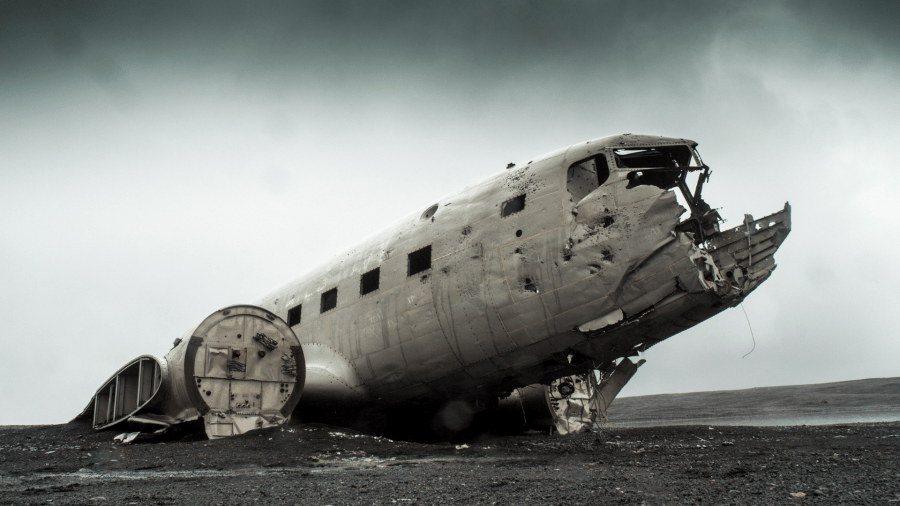
3 on the first day. When your head was still bleeding and the smoke was still curling black across the white. When you had checked all the pulses. When you didn’t know what to do and so you started doing what you thought you should and then you didn’t know if you should even be doing that.

9 on the second day when you were determined and something gave you strength, maybe it was your husband moaning or maybe it was your daughter crying or maybe it was the stranger praying to a god you’d never heard of.

16 on the third day when the efforts of the second day had carved a tunnel of ice into the snow and you could almost fling the bodies down the track you had made and award yourself three points or a gold medal or whatever they give Olympic-standard curlers.

4 on the fifth day because on the fourth day you couldn’t face it, on the fourth day you shut down and it was like giving birth, when they warned you that the high of the endorphins from labor would crash (not that word, not that word) drift away and leave you broken and sobbing and numb. There were four on the fifth day, but they came in many pieces.

2 Legs. Two legs that used to wrap around your waist – your neck even – in younger, more adventurous times. Two legs that walked out of the church by your side, that stood next to you in your eight-hour labor, that paced the hospital corridor for hours after while they fixed you up. Two legs. Crushed.

64 tray meals. It’s not enough, it’s not enough, it’s not enough.

2 movies you have seen about this very scenario. First the one with the terrible ending and the two Hollywood stars who inexplicably fucked their way out of trouble. They had a dog. Of course, they had a dog. If you found a dog now you would eat it. And you would hum The Littlest Hobo theme song while you did. Then the other movie. The one with the soccer team. The one with the thin goatee guy, who used to date Winona Ryder pre- Johnny Depp, pre-shoplifting. Wait. Is that right? Or did you just want them to be a couple because of the on-screen chemistry? Because, right now, figuring this out seems like the most important thing. Because you’re trying to fill your brain, to replace the memories of the book of the film because you’re remembering the detail about what they did, so much detail that you wished you’d never read it, details about how they cut the flesh and how they made bowls from skulls, and utensils from bones.

6 bodies mauled. They look like the exhibition you went to, the one everyone raved about because dead, peeled bodies were something that they were never going to see. You waited four months for the tickets and then you left within minutes. The bodies made you sick. You didn’t want to know what was inside of you.

6 bodies mauled = 1 moment of hope. That something else is alive out here.

822 pawprints you counted before you began to lose sight of the plane and turned back.

5 times you felt like something was watching you.

1 time you shouted, “Come at me, bitches!” then ran away from your own echo.

9 days.

10 days.

11 days.

1 decision to make.

26 months. Your mother nags you, says “she’s two,” but you count her in months because she is closer to a baby that way, closer to you.

1 vision. You wrap her up, as warm as you can, using everything you have found. You strap her to your back with torn seatbelts, singing songs the whole time. She whispers back, raw red cheeks trying to smile at Mummy’s voice. You kiss goodbye to her father, say a prayer with the stranger. You can see the headlines already. You can see the picture of your husband in his wheelchair, your baby with missing toes, you – gaunt, but glowing, your chest puffed out and your loose teeth smiling. The stranger won’t be there – he doesn’t fit the headline. You’ll probably get free trips to Disneyland and an appearance on Ellen. And all this will seem worth it. You fix the newspaper picture in your mind, project it out onto the blankness before you. Then you set off into the snow.


Gaynor Jones is an award-winning short fiction writer based in Manchester, U.K. Her website is http://www.jonzeywriter.com.

The Unreliable Narrator Apologizes by Chris Haven

I never meant to mislead you. I know you are suspicious of surprise endings, and I have done my best to represent all the facts as I knew them.

If I told you the sun kissed my face on the day I was born, does it matter if in fact it was cloudy? If you trust me to walk down this path, are you not moving with your own feet? If at the end you no longer believe me, have I not given you something? Something which you did not have previously?

It’s fair to say that people are fascinated with me. Love to study me. This would not be so had I given you merely ordinary knowledge. So dull. Shouldn’t everything be a clue? That glance, this gesture.

Here, in this mystery that we’re in together, shall I be the detective? No, you be the detective. Let’s take turns, see what we can find. How will you know the one who loves you? Your true calling? The safety, and the danger?

The sun is setting, and it’s getting harder to see here in the dark. What is this that we hold in our hands? If I tell you that I hold my own heart in my hands, will you believe me? Would you believe the one you love? If I tell you that I hold your heart in my hands, will you let me carry it? If I tell you that you hold my heart in your hands, what will you do with it?

Come, let’s look for some more clues.

Soon it will be so dark we won’t be able to see each other. It’s too late now to turn back. We don’t really know each other that well, it’s true. But the darker it gets, the more we have to hold to our trust. Please don’t suspect me. There’s only a little ways more to go. I know it’s late, and you’re getting hungry. So am I, but I will share what I have with you.

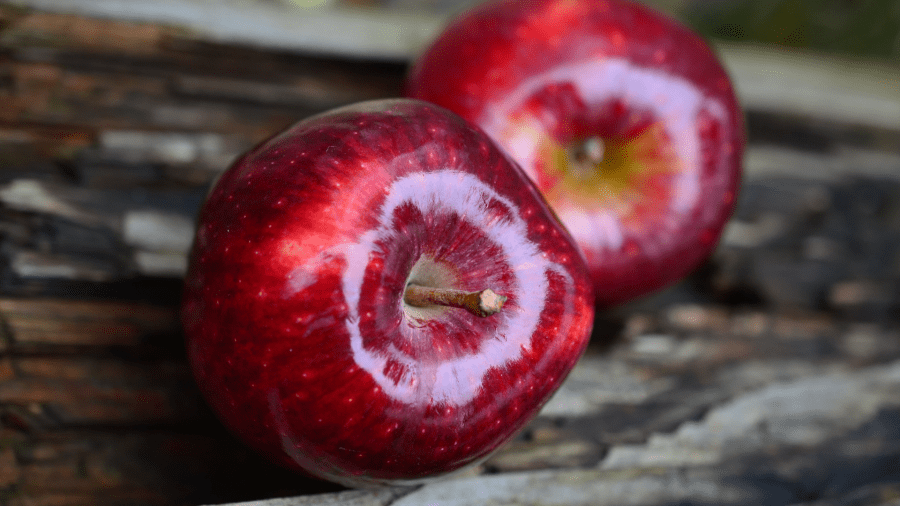
I didn’t want you to know this earlier, but I’ve foreseen this problem. I have taken care of you. What we have in our hands, they are really apples.

It’s okay. Go ahead.


Chris Haven has short prose in or forthcoming in Cincinnati Review miCRo, FRiGG, Atticus Review, Jellyfish Review, Electric Literature, and Kenyon Review. He teaches writing at Grand Valley State in Michigan. Find him on Twitter @ChrisLHaven.