Bundle of Joy by Catherine Weiss

if you are ever handed a gun
in a social setting

there is this funny
expectation

that you coo
over design or heft,

maybe portability.
it is polite to find

some reason to admire
the machine.

when the new friend
laid the weapon

onto my lap
i couldn’t appreciate

in that moment
its promise of violence.

your gun is beautiful.
you should be very proud.

i am thinking of the newborn
my sister-in-law birthed

two days ago.
i’m afraid

to hold a gun
and a baby

for two different reasons
but my hands

feel dangerous
in just one way.


Catherine Weiss is a poet and artist from Deer Isle, Maine. Their poetry has been published in Tinderbox, Up the Staircase, Fugue, Bodega, Counterclock, petrichor, HAD, Taco Bell Quarterly, and Flypaper Lit. Catherine is an artist behind the collaborative poetry chapbook/card deck I WISH I WASN’T ROYALTY (Game Over Books, 2020). They are also the author of the chapbook-length poem FERVOR (Ginger Bug Press, 2021), and the full-length poetry collections WOLF GIRLS VS. HORSE GIRLS (Game Over Books, 2021) and GRIEFCAKE (Game Over Books, 2023). Find more at catherineweiss.com.

Look Under the Bed, Please? by Brianna Johnson

Content warning: childhood SA


I told my parents there was a monster under my bed. I asked them to look. Instead, they complained of sore knees and bad backs. The trip to the floor and back was too far for their joints to make. They told me it was probably nothing, just a lost Barbie doll, or an old LEGO brick. I decided to believe them.

Then the scratching started. They told me it was just the floorboards settling, or roaches, or mice scurrying to and fro. They said don’t worry they’d set traps in the morning.

I decided to believe them, but then my bed began to shake. They told me it was possibly an earthquake, or termites chewing at the bedposts. I didn’t need to worry.

I struggled to believe them when I heard a voice in the dark. My parents blamed the radio and the neighbors’ loud TV. I told them it knew my name. They said they didn’t have time for this. They were tired. Didn’t I know how late it was? Didn’t I know how hard they worked? It was just my imagination. They’d deal with me in the morning.

They said similar things when I told them how dad’s friend, Uncle Simon, kissed me hard on the mouth. His teeth scraped mine. They said he probably just missed my cheek. I should’ve turned my head. Or I turned it the wrong way. I decided to believe them. So, I didn’t tell them when it happened again at the 4th of July barbeque, at the pool party, at my birthday… I just needed to keep turning my head.  

Then the voice beneath my bed spoke again. My name, my name… rang in my ears. Its voice was scratchy, like a smoker’s, like Uncle Simon’s.

I pulled the blanket over my head. I plugged my ears with my fingers and squeezed my eyes shut. Maybe it would stop if I just turned my head. So, I tilted and bent trying different angles, like the antenna on my nana’s TV. She called them rabbit ears. I imagined myself as a bunny burrowed in the blankets of my bed, safe and sound.

My name, my name still scratched in the dark. No, it was just my imagination.

In the morning, I yelled for my parents. They showed up with mugs of fresh drip coffee and the sleep washed from their eyes. My mom had removed the rollers from her hair. I watched as they looked for me in the closet, under the blanket, out of the still closed window… never where it really mattered—nowhere even close.

From under the bed, I watched their fuzzy slippers shuffle toward the door. I tried to yell again when they shrugged and left the room. The monster put a claw over my mouth. It shook its head and looked at me with its many pitying eyes. What good would it do? I knew this to be true, so I decided to stay here in the unending dark.

Brianna Johnson’s stories have appeared in Cosmonauts Avenue, Gigantic Sequins, The Molotov Cocktail, Wigleaf, Kenyon Review, Obsidian: Literature & Arts in the African Diaspora, and elsewhere. An alumna of the Tin House Summer Workshop and Hurston/Wright Weekend Workshop, she is a two-time Pushcart Prize nominee with work longlisted for the Wigleaf Top 50. An MFA graduate from The University of Tampa, she teaches college English in Orlando, FL. Visit Brianna online at her website, on Twitter, and on Instagram.

Autumnkraftwerk by Jay Aelick

What’s left to say about fireflies,
their whimpering glow?
In late August, the leaves are a Kantorei
of uranium. Not long now

until they fall,
sizzling in the creek’s cool flume.
Time makes mushrooms
of us all.

Jay Aelick is a birdwatcher, disc golfer, tarot reader, and sometimes even poet. Their work has previously appeared or is forthcoming in The Journal, The Blowing Rock Art and History Museum, Barely South Review, and elsewhere. They are one half of the St. Balasar University English Club podcast, where real critique partners at a fake university workshop the books the internet had written off.

It’s Me, a Selfie by Lindsey Peters Berg

After scrolling past another photo of Portia’s baby contorted against age blocks, Daisy posted a picture of herself and captioned it, “Are you there, external validation? It’s me, a selfie.” She thought it was so clever that she searched the phrase on Twitter to make sure she hadn’t accidentally stolen it from an old tweet she’d forgotten about. This yielded zero results, which first made her feel like the funniest fucking bitch on the planet, then second, created concern that perhaps the caption actually made no sense. But she didn’t really need it to make sense, exactly, just to draw attention to her personal freedom and general youth. And to her spaghetti-strap crop top, a garment she had purchased after Reformation boldly described it as “SLUTTY” in their marketing email.

Daisy took a day-old bottle of wine from the fridge and poured herself a glass, feeling powerful for taking a two minute break from her phone. Especially after posting content, she thought. When she picked it back up, her home screen showed three notifications, all emoji responses from her book club girls. Nice. She opened Instagram and tapped the shimmering circle around her profile picture. Red hearts burst from the lower corner of her screen as she reviewed the story again.

Are you there, external validation. It’s me, a selfie. She was pretty sure it did make sense.

Daisy imagined Portia examining the photo closely, holding one of her full breasts as she admired Daisy’s braless liberation, sweet milk oozing through her fingers as she longed for a body that was, once more, just her own. Daisy had moved away from their bleak Illinois suburb a year ago, to a city with palm trees and mountains and grown women wearing children’s clothes. Now she occasionally attended graveyard movie screenings and natural wine tastings so she could post pictures of them the next day, during peak scrolling hours for the central time zone.

Daisy sipped her wine and tapped the word Activity at the bottom of her screen. A girl she considered a friend—also single in the big city—had watched the story but didn’t comment, which confirmed to Daisy that she was mad at her and/or actually hated her.

Daisy scanned her mental files for reasons she could be hated, landing upon contenders like annoying, into herself, weirdly pretentious even though her music taste hasn’t evolved since high school, and seems nice at first but when you get to know her actually isn’t which has led some of her loved ones to politely refer to her as ‘sharp.’ Then she decided that, in fact, it was her friend who was actually the bitch for hating her when she didn’t even do anything.

Daisy clicked the friend’s story and watched a short video of her betta fish. She nonsensically replied, YOUNG HOT FUN CLUB!, with a fire emoji, hoping this cleared the air.

Daisy revisited her Activity list to see if Portia had seen her story yet. She was wondering if perhaps she looked too good in today’s selfie, if Portia might be so taken aback by her attractiveness that she was simply rendered speechless, when a notification banner appeared across the top of her screen with a name that sent her heart to her throat. Kevin.

The message said, lol.

He was her high school crush. It was the first time he’d commented on any of her stories. Why this one? Maybe she really did look incredible. Daisy downed the rest of her wine and refilled her glass. She needed to be slightly out of her mind if she was going to respond.

They were thirty now. Could this lead to a sexting situation? Daisy had always fantasized about late-night messages from a past admirer, someone who had longed for her years ago. I still jerk off to you, they’d say, and fuck, I love doing it. She’d scold them like she was horrified, then surprise them by asking for details. What do they imagine her wearing? What do they imagine her doing?

Daisy gulped her wine, intimidated by the task of getting the conversation there by way of lol.

She clicked Kevin’s profile and scrolled past photos of him golfing to one with his wife and two toddlers in front of their home. Daisy said, “I guess everyone has a fucking baby now,” out loud. To no one. She zoomed in on Kevin’s wife and entertained an internal Family Feud game as to which mall store she’d bought her outfit from. Daisy cast votes on Madewell and Guess but stopped once she landed on Buckle, remembering that she’s a feminist.

Zooming back out to the ranch house almost certainly full of Hearth & Hand woven baskets, Daisy wondered if Kevin really wanted to be a dad. She pictured him tapping through his Instagram stories and sniffing a glass of mid-range whiskey, one child screaming and the other chewing on a Polly Pocket dress in the next room, as he landed on Daisy’s picture. He pressed his thumb on her chest so he could look at her longer. Are you there, external validation? It’s me, a selfie. He smiled and tapped the Send Message bubble at the bottom of his screen. He wrote lol, but what he meant was, You look great. I missed out. Or maybe, Why didn’t I realize you were cool, or even, I love my wife and I love my kids but sometimes, when I look at you, I wish I never had them.

With her second glass of wine empty, Daisy stared at Kevin’s “lol.” She typed, What’s so funny?, erased, You remember me?, erased, You have literal children?, erased, Am I hotter than your wife?, erased, Would I look hot pregnant?, erased, Am I a fucking loser?, erased, Am I falling behind?, erased, Would a baby make me stop hating myself?

Her phone vibrated in her hand. It was Portia. Yessss girl!! GORGEOUS! P.S. Xander says HI!!! Then a selfie with her baby, his tiny, soft body resting in the curve of Portia’s arm. Her fingers squeezed his terry-socked foot. She looked happier than Daisy had ever seen her.

Daisy flicked away the notification and stared at Kevin’s message. She clicked her screen to sleep.

Adding her wine glass to the pile of dishes in the sink, Daisy thought about Portia. It was past midnight in Illinois. Why was she awake? Maybe her baby had trouble sleeping. She must be so tired. Daisy wondered if she was capable of caring for someone that much. She wondered what it would feel like — to kiss a newborn belly, to trace a finger along mini heart-shaped lips. To be a mother.

She slipped into bed without brushing her teeth and looked at the moon through the window. It was a weird orange-red color, vampiric and full. Her room had a balcony attached to it, and she considered stepping out to the metal railing for a closer look. Instead, Daisy stayed in bed and tried to guess if it was a Blue Moon or a Harvest Moon or a Super Moon. She didn’t have the answer. She closed her eyes and made a story up.

Lindsey Peters Berg lives in Los Angeles. Her fiction has appeared in Rejection Letters, HAD, and Moot Point Magazine. Currently, she’s at work on her first novel. Say hi @lindspetersberg.

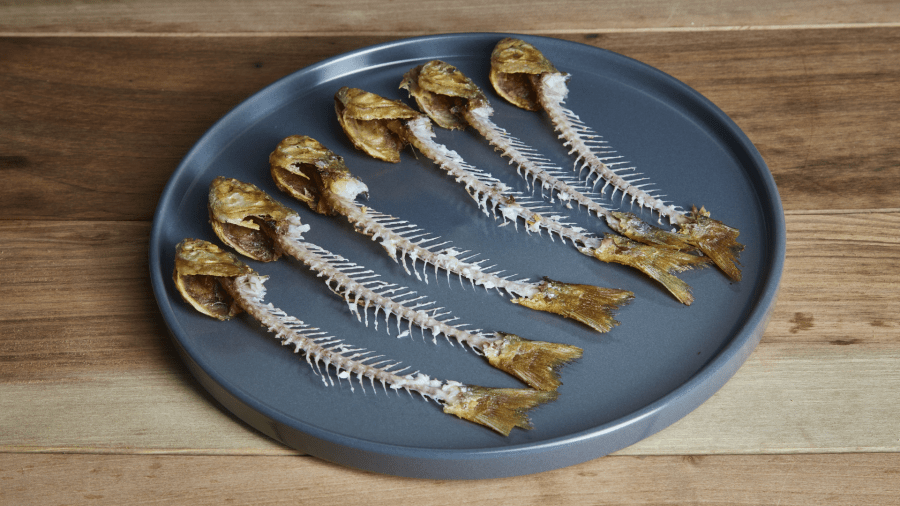
Sapidissima by Amrita V. Nair

I think you have me mistaken
For something else entirely
It’s easy to do that with me
Happens all the time, really
I just have one of those faces
One of those faces that make you think
That I am harmless and boneless
That you can reel me in and check my weight
And throw me back again and again
And that even as I am gasping for air
I will thank you for your time
That even being considered is a privilege
I think it will be all sorts of awkward
When you finally deign to eat me
I might be a delicacy
But I have 3,000 bones
They will each do their very best
To stick in your craw.


Amrita V. Nair (she/her) is a poet from India who currently lives in the traditional, ancestral, and unceded territory of the Coast Salish peoples (Vancouver, Canada). Her poetry has appeared in Anak Sastra, Kitaab, The Nervous Breakdown, and Indian Literature and was included in The Bloomsbury Anthology of Great Indian Poems. You can find more on her website: www.amritanair.com.

Grounded by Helen Savita Sharma

Lately I’ve been too busy to visit my grave. To lay on the grass and soak dew into my skin. To whisper sweet nothings down into the dirt where only my skeleton can hear.

Sometimes I think I can see my headstone if I really squint. The other day I swore I spotted it on the horizon, pale green and blinking in midday moonlight, but a car honked on the street and the flat blare wiggled into my abdomen and broke my focus completely.

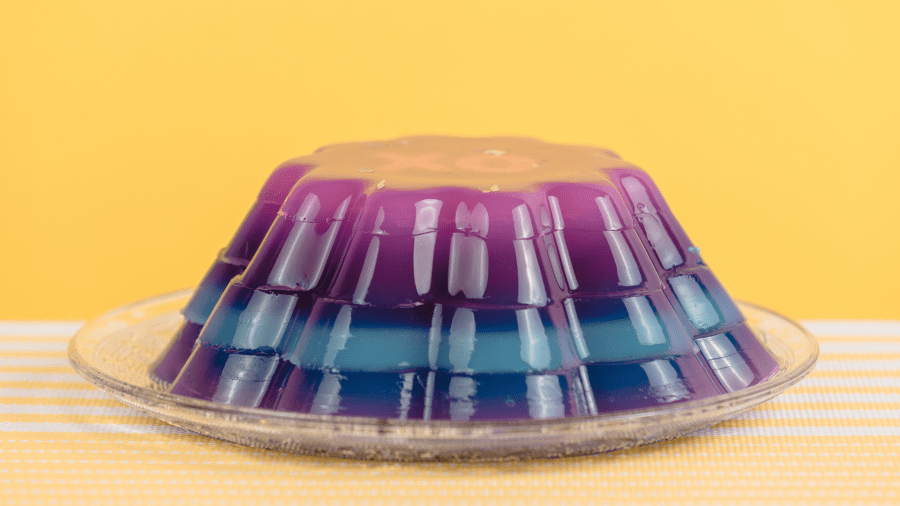
That’s one thing: without a skeleton in my body—a sealed bag of savory Jell-O, really, though no one’s yet noticed—sound moves differently. There’s no sharpness to things. Words wobble in and out of focus. Gunshots start soft and echo around, reverberate themselves into extinction.

But my god, sound is everywhere. Squeaky wheels on a grocery cart make my brain feel like crumpled foil. My daughter’s swim meet is torture.

Not torture. I’m proud of Ari. She’s twelve and still so small but she swims so fast, kicking her little feet up and down the pool until she comes up gasping at the end of the lane, pumps her fist when she realizes she made it back first. Little alien girl, her swim cap and goggles suctioned SMACK to her eye sockets. I couldn’t wear those. I doubt my head would hold its shape.

We’ve been fighting. Before, when she was two and three and a thigh-high hurricane, we didn’t fight. We were best friends who put each other to bed and elbowed each other in the boob by accident during spontaneous hugs and morning snuggles. But she’s gotten mean lately, cliquey with the blonde girls at theater camp and angry for the first time that her dad lives so far away. She told me I was weak the other day, after hearing me argue with him on the phone. She told me he was stronger. She called me spineless. Which, I mean. I am.

So I grounded her. Told her to show me a little goddamned respect. Took away her tablet, drank gin on the couch at midnight, flicking fingers across the unfamiliar apps she’d downloaded: YouTube, Candy Crush, a Barbie something-or-other that made my heart ache from how young it made her seem. An anonymous social media app where she’d said she was eighteen and given our home address to someone named Jarrett.

I let her go to her swim meet. The blonde theater girls don’t swim. Maybe she’ll absorb the other kids’ easy joy and pacifist approach to competition, maybe I have something to learn from their hippie grown-ups with their “COEXIST” bumper stickers and Gentle Parenting. I sit next to them on the bleachers which slowly smush my butt flat and I try to think about something other than the taste of friendly earthworms after heavy rain. Here I am, most of me, showing up.

But the noise. The noise. A thousand kids shouting from the pool deck and their thousand shouts made screams by a thousand whitewashed cinderblocks. I can’t cut through it. The sound seeps into my Jell-O flesh and stays there, leaks through into my brain in a steady roar. Ari is animatedly gesturing in the center of a group of taller kids. I slither off my bench.

I smoke a cigarette at a picnic table outside the rec center. It is dark. The picnic table is wet from rain earlier and smells like the forest it was likely kidnapped from. I put my face down on the table, inhale deeply, and think about my grave. The way the roots of grass lock together and keep my bones for me, in their pile in their box in the dirt miles and miles away.

Low beams of yellow light precede an older model sedan into the parking lot. It pulls up next to the picnic table and idles, driver still sat in silhouette beyond panes of smudgy glass. I watch the figure for a while, flicking my cigarette butt. He’s considering me, too. After a minute, the window rolls down two inches and a very faint voice calls something that I wouldn’t have registered at all if it wasn’t:

“Ari.”

I choke on smoke and my thumb bends backwards—it happens sometimes when I lose control—but I don’t think my shock is visible in the dark. I clear my throat, push smoke out of my lungs, steady my voice.

“Jarrett.”

I walk over and lean on the window. He rolls it all the way down so that I can rest my forearms on the door.

“Hey there, girlie.” His voice is rough and sickening and older than I had thought to fear. “You’re a grown eighteen.”

The cigarette is still burning in my hand. A squiggle of smoke trails into the car.

“Put that out,” he says.

The floodlights come on behind me. The swim meet is ending and families are starting to stream out of the building and into the parking lot. The white light leaves my face in shadow and outlines his features just for me and I reach in without thinking, lit cigarette in hand, and stub the ash in the cool wet of his left eyeball.

He screams. The families behind me turn as one to where I stand beside the unfamiliar car. I don’t look at them. He’s screaming and clawing at his eye and I walk around the side of the building out of the floodlight and disappear.

I text another mom from the swim team. Can Ari come home with you? Everythings fine, will pick her up in an hour.

I lay on the grass, on the shadowed field that sprawls behind the rec center. My nose flattens entirely to my face as I press it into the dirt. I close my eyes. I breathe.

I can feel my skeleton’s presence. She’s safe, I know she is. I’ll be there soon. Promise, baby girl. The soil here is different than at home, a different composition of loam and silt, but I inhale it viciously anyway and fill myself up with the pure base carbon that I am and always was. I soften. I imagine the grate around my plot, the gentle slope of ground above my bones. There’s silence.

Helen Savita Sharma is a librarian and writer working on her first novel from her home in North Carolina, where she lives with her partner and two cats. Helen’s passions outside of writing include “Higher Love” by Steve Winwood, ensemble dramedies, and watery Dunkin’ Donuts iced coffee.

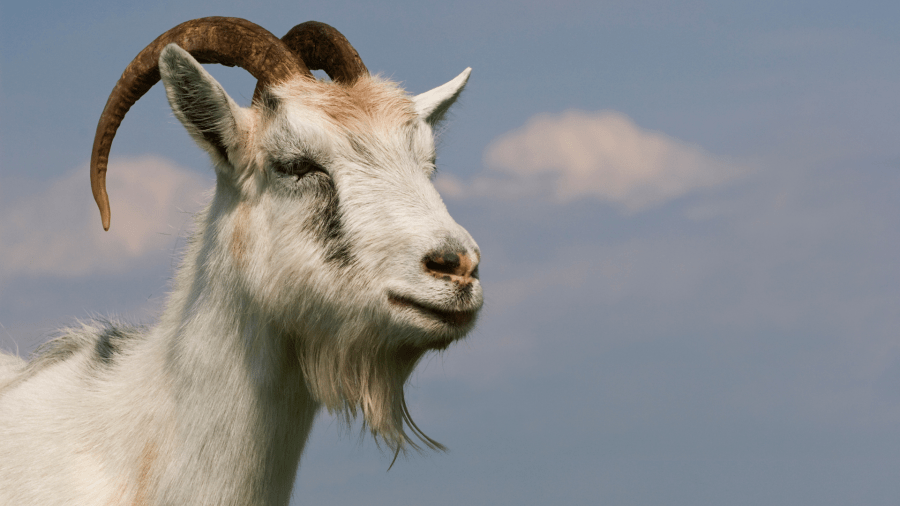
How can you trust us? by Brendan Bense

I mean, you
are a goat and a human reaches out their hand, and sure it has feed
in it, but you’ve never met them before, and they’re not your keeper.
What happened to buy me dinner first and can I trouble you for a cup
of sugar, neighbor? Not that goats need sugar for anything, not that
they have a concept for buying dinner. But don’t you want to be known,
a little, first? Don’t you want a scratch behind the ears, not under
the belly as that isn’t just the right spot, and don’t you want your water
bowl changed and hay replenished and fur brushed and affirmations
affirmed before a stranger can be someone with a name, before you
can reach out and take something from someone without fear, without
wondering if it’s all some plot? But there we are, slack-jawed and stupid
and in awe, leaning into the pen making pspspspsp like we’re calling
over a house cat, arms outstretched, hands pale and ugly and shaking
in the cold, hoping we can be trusted, hoping you’ll trust us, hoping
we will be trusted just once, by more than just a stranger, an animal,
a thing so afraid yet so hungry like us, so afraid and so hungry like us.


Brendan Bense is a poet and UC Irvine MFA candidate whose work can be found in Columbia Journal, The Crab Orchard Review, Rust + Moth, and elsewhere. Before joining the cohort at UCI, he worked as a writer and editor in New York and Philadelphia.

Adversity is the Parent of Virtue (in Bed) by Stephen Cicirelli

Sex was different when you had to. He had to. One morning she said, “There’s mucus.”

He was in bed, still waking up. “You’re sick?” Through the crenelated elephant trunk of the CPAP mask, his voice was vapor.

“Down there. My book says morning is the ideal time. Your testosterone levels are their highest. Your sperm have had a chance to regroup.”

He removed his mask, his face striped red, to get ready.

“Is mucus the right word?” he said. “It’s kind of gross.”

“Grow up.”

They had sex that morning and again that evening. All the while, his CPAP machine chugged on the night table. He enjoyed himself. It had been a while. She, on the other hand, was all business. When they were done, she pulled her knees into her chest, and had him put clary sage oil on her belly. Her stomach had sagged a little since their marriage.

She read books, and before bed, drank a special tea. Mugwort was now a word he knew. They had a special wedge pillow, his-and-her thermometers. He also read her books.

The next day they had sex once, and quickly. He had a work call. He was moving up in the company. Men above him had only good things to say. He was a team player, they said.

The next day he had trouble performing.

“Do you want me on top?” she said.

“Maybe if you talk to me?”

“Talk to you? Like dirty talk? What do you want me to say?”

“I don’t know. If I tell you what to say, it won’t be sexy. It’ll be like me talking to myself.”

“You masturbate,” she said. “That’s you having sex with yourself.”

“Oh.”

When they were done, he lay there silently. His CPAP machine blinked on the night table.

The next day they had to stop. He’d been thinking about college. Back then, they did it anywhere, anytime. She was on the pill, but he’d buy condoms, just in case. Sex was magical, dangerous, never the same. Like good art, it existed only for itself. It meant what they wanted it to mean, and they did it because they wanted to.

The next day he wasn’t proud of himself. He imagined an ex from high school. She wasn’t half the person his wife was, but, sexually, she was all-knowing. She never made Honor Roll, but she knew what he wanted before he did. She was small in ways his wife would never be. Once at the municipal pool, she took him, dripping wet, behind the ice cream truck. That morning his wife noticed a big difference. She asked what had changed; he lied, of course. He was a team player. He said he’d followed one of the “Tips for Men” in her fertility book.

“Good work.”

“Thanks.”

The last day he imagined Carmen again. They were in the back seat of his Jeep. It was the summer before he’d go to college and meet his wife. Carmen was staying in town to tend bar. They’d try long-distance. His wife was pleased but, afterward, contrite. She stood in front of their bedroom mirror, looking at her eyes and breasts and hair and stomach. Everything was reversed. She touched a stretch mark. It was darker in the mirror.

“Do you think we’re doing the right thing?” she said.

“Having kids?”

“I won’t know whether it’s the right thing until we’ve done it,” she said, “and by then, it’s too late. Nothing scares me more than having a kid and realizing I shouldn’t have.”

“You don’t think we should?”

“I don’t want to be my parents,” she said. “I wonder if all this stress is why I’m not getting pregnant. My mom was fertile because it never crossed her mind that she shouldn’t be a mother.”

“I don’t think it works like that.”

“It’s in the book,” she said. “Did we wait too long?”

“It could be me,” he said. “I smoked weed in high school.”

“You did a lot of stupid shit in high school.”

The next month, she went to the bathroom to pee and shower, and was in there for a long time, testing. He called to her. She didn’t answer. He listened, waited. He heard the shower stop. He heard crying, drawers opening and closing. What kind of crying was it? He heard his own labored breathing.

The door opened.

She walked back into their bedroom, got in bed with the test and covered herself. He joined her in his work clothes.

“Well?” he said.

Stephen Cicirelli has his MFA from Columbia University. He is currently a full-time lecturer in the English Department at Saint Peter’s University. His fiction and nonfiction have appeared in The Brooklyn Rail, Quick Fiction, Eunoia Review, Flash: The International Short-Short Story Magazine, 100 Word Story, and the anthology Nothing Short Of (Outpost19 Press). He and his partner currently live in New Jersey. Read more at www.cicirelliwrites.com. Follow him on Twitter @SteveCicirelli and on Instagram @stephen_cicirelli.

In Response to Question No. 3 by Susan Barry-Schulz

I would be green of course I would
not emerald green
not Kelly
not sea foam green because obviously that would be the worst
not mint
not sage
not Granny Smith apple although I do appreciate the refreshing tartness of this variety
not lime
not Celadon
not forest although we must act now to save the rainforests
        https://www.worldrainforest.org/rainforest-organizations.html
not jade
not moss
not the neon green of the slouchy socks I paired with canvas Tretorns back in 1985
not artichoke
not seaweed
not Malachite
not juniper not pine nor pickle
the green I would be
would be soft & deep
a heathered olive
flecked with specks
of copper & smoke
the same shade of green
as the pearl-buttoned vintage cardigan
I hung on a hook before clocking in
that summer—and never saw again—
the exact shade of green
you can never get back
once you’ve lost it.

Susan Barry-Schulz grew up outside of Buffalo, New York. She’s a licensed physical therapist living with chronic illness. Her poetry has appeared in Barrelhouse online, Bending Genres, B O D Y, Gyroscope Review, Harpy Hybrid Review, Kissing Dynamite, Nightingale & Sparrow, Rogue Agent, SWWIM, The Wild Word, and other print and online journals and anthologies.

Near the End of Their Lives, Barbie and Ken Question Their Existence by Jo Withers

They had driven to the beach again. They’d left the bubblegum pink convertible at home and were sitting in the petal pink hatchback at the lookout gazing over the crystal waters. They sat for a while, occasionally sipping from the plastic coke cans which were permanently wedged into the cup holders between them.

“Why do we always end up here?” Barbie asked as Ken sat smiling beside her. “Whatever we talk about doing in the afternoon, we always end up here instead.”

“Perfect spot for a picnic,” Ken winked, as he did on every beach trip. He hit a button under his seat and the boot opened, a perfectly prepared plastic picnic popped out.

“I’m not hungry,” Barbie shook her head. In fifty years of beach picnics, she couldn’t remember eating a single thing.

* * *

That evening, Barbie reclined on the sofa in her gold lamé ball gown watching Botched. She wished she had something more practical to wear or somewhere more interesting to go. Ken sat cross-legged on the chaise lounge in his vintage velour tracksuit reading Proust. Beauty, the Afghan hound, lay at his feet, nudging his leg gently in the hope of being petted.

“Why do we always get Afghan hounds?” Barbie commented as the T.V. doctor discussed a particularly disproportionate body part. “I don’t like long-haired dogs; I’ve always wanted a Staffordshire bull terrier.”

Beauty padded across the floor towards her, nuzzled her ribboned ears against her hand. Barbie pulled her hand away, signaled the dog to lie down.

“I’ve never liked this house either. I don’t want a pool on the roof or an entirely open front so all the neighbors can see into every room, and I hate having to go down a slide every time I want to get into the kitchen. All I’ve ever really wanted is a little cottage in the country, a thatched roof and a rose garden. I’ve worked hard all my life, I’ve been a doctor, a ballerina, a rock star and a paratrooper… is a little comfort really too much to ask?”

That night, Barbie lay against the scallop-edged, silk pillows in her four-poster bed, struggling to sleep. Ken lay peacefully snoozing beside her in his paisley pajamas and sleep mask. Barbie looked at the bedside cabinet, the row of family photographs – Ken leaping to catch the beach ball, Skipper riding her bike, Ken relaxing by the pool, Skipper riding her pony. She shook Ken awake. He sat up in bed, pushed the sleep mask up in surprise.

“Do you remember my mother?” Barbie asked fitfully. “Try as I might, I can’t remember the slightest thing about her. I don’t remember yours either. Isn’t that strange?”

“I love you,” Ken said, as he did every night before falling asleep. He rolled over and pulled his sleep mask down again.

“I don’t remember anyone,” Barbie said to herself in the dark. “There’s only Skipper and you. I wonder whether I look like my mother or father? I wonder how they met and how old they were when they had me? I wonder… if they loved me?”

* * *

The next morning, Barbie woke up late in an empty bed – Ken would be flipping blueberry pancakes in the kitchen as he did every morning. Barbie decided not to go downstairs. Instead, she dressed in her diamanté jumpsuit and walked to the west wing of the town house, to the room she rarely visited. Hours later, Ken found her sitting on the floor in the pastel pink room with her head in her hands. Around the walls rabbits and ducklings danced playfully, a cot sat near the window and a raspberry pink rocking chair occupied the corner.

Ken placed a hand on Barbie’s shoulder, “Your pancakes are going cold.”

“Did we plan to have a baby once? Why did we stop trying? How did we just forget about it when it was all that ever mattered?” Barbie tried to push out real tears. She swallowed hard and placed her hand over the empty pit of her perfect size two stomach. She reached for his arm.

“What happened to the future we planned? Sometimes, I feel like my whole life, I’ve been picked up and positioned without ever having any choice in the matter,” she said.

He stared knowingly at her and for a moment she thought he was going to say something profound. Finally, he stroked her cheek then stammered quietly, “I love you… your pancakes are going cold.”

He never offers me any comfort, she thought. It was like there was a pull-cord at the back of his neck and he could only summon a dozen inane responses.

* * *

That afternoon, Barbie gripped the steering wheel tightly as she drove towards the beach. She had decided to take the pink convertible today. As they approached the turn for the lookout, she steered the car into a sharp right instead and drove straight down onto the sand.

Ken gasped as Barbie kept driving, ploughing through the biscuit-crumb beach into the twinkling blue ocean. Ken’s fixed blue eyes seemed to grow wider, and his moulded lips parted into an almost ‘O.’ He swiveled his head sideways, looked at her in a way he hadn’t in years.

He took her paddle-shaped hand in his, kissing it softly as the convertible careened into the wisp-white waves.

“Perfect spot for a picnic,” he said as they began to sink below the gleaming water, the currents engulfing their beautifully bronzed bodies as salmon pink crabs scuttled merrily on the sand.


Jo Withers writes short stories from her home in South Australia. Recent fiction appears in Flash Frog, Bath Flash Fiction Anthology, and the charity collection FUEL, edited by Tania Hershman to raise money for fuel poverty in the United Kingdom.