Emily Jarred by Toni Leonetti

A poet’s X post argued
for art apart from artist.
His example?
We love Dickinson’s verse,
even though she killed kittens,
drowning them in pickle jars.
Look it up, he said.
What?
I checked.
Everyone but me knew.

Hope is the thing with feathers—
Unlike cats who can’t fly away

Because I could not stop for Death—
I tossed him softer fur to hug
Fresh eyes to blind in brine
Purrs to choke

My Life had stood—a Loaded Gun—
Until blasted in helpless corners

My letter to the World
Met no reply—
After I tore it into tuna
Crammed down one hungry last meow—

Toni Juliette Leonetti lives in the San Francisco Bay Area and has written short stories, poetry, plays, and a mystery novel. Her work appears in publications including DarkWinter Literary MagazineLiterally StoriesElegant Literature, and Soul Forte.

Y2K by Sonia Alejandra Rodriguez

The world might end in 30 minutes. For months, there’s been speculation on the Chicago news channels about electronics failing, of planes falling out of the sky, of the market crashing, of chaos on the streets because we will run out of food and water.  

My baby bump is enormous, I can’t see my swollen feet. My husband’s in jail for being a pendejo but technically for drinking and driving. I’ve huddled myself and my children in the bedroom to wait for whatever Y2K will bring.

“And if we need to use the bathroom?” my eleven-year-old daughter snarks as she bounces her baby brother on her hip. She’s been mad at me for a while now. But who else can I make help me with these kids?

“Pues ahí está, Sofia,” I point to the bedroom door, letting her know she can go in and out as she pleases. 

Sofia rolls her eyes at me and switches to cradling the baby to try to get him to sleep.

“It’s okay. You’re okay,” Sofia whispers and sticks the bottle in her brother’s mouth.

I wish I could go back in time when I’d cradle her.

Meanwhile, Pao, my middle child, bounces from the love seat to the edge of the bed and back. 

When the doctor said I was for sure pregnant again, I took my daughters to La Michoacana for ice cream, to share the happy news.

“No, the baby’s not here yet. We have to wait 5 months.”

“Five months?! The world’s going to end before then. Sorry, baby!” Pao exclaimed and kept eating her rocky road ice cream. 

Sofia pushed away her vanilla scoops. The slight shadow growing underneath her eyes darkened.

“Ya no quiero.” She glanced at her brother in the stroller. When I was Sofia’s age, I took care of my little sisters whether I wanted to or not. But, yes, I worried, too. How were we going to care for another child?

I placed my hands on my belly, thanking God for this miracle, and praying for the ones I’d lost before. We ate in silence while “Livin’ La Vida Loca” blared from the radio. I craved the charred taste of burnt tortillas.

The phone rings at 11:45 pm and we all flinch at the unexpected noise. The baby stirs and Sofia glares at me like I somehow made the phone ring. 

The answering machine picks up, “This is a collect call from Cook County Jail…”

“Papi!” Pao hops from the love seat to the floor to grab the cordless phone before it’s too late. “I accept!” she yells into the receiver and Sofia shushes her. 

“¡Dámelo!” I lean as far as I can from the bed and pull Pao by the shirt to snatch the phone away. Her little face scrunches as if I had reached into her tiny chest for her beating heart. 

“¿Q’vole? How are things over there?” I can barely hear Manny over the yelling happening behind him. 

“They’re doing lights out in 5 minutes. Everyone in their cells before midnight. Se nota que los guards are all tense and shit at the thought of their fancy locks not working when the clock strikes twelve.” 

“Whatever, Manny. If you miss the birth of this baby, I swear to God!”

On the screen, the news switches between people in bedazzled “2000” glasses and images of people looting a Wal-Mart in the Southside, running out with giant TVs. Food is what I’d take. A lot of diapers. Formula for sure. Clothes for the girls. Oooh, maybe a new winter coat. Some lipstick. Hoops that don’t turn my ears green.

“Te habla tu padre,” I hand the phone to Pao, who leaps for the cordless. The sound of Manny’s voice makes the baby inside me kick and vomit rise in my throat.

“Papi, I can jump from the couch to the bed without falling!”

I try to hand the phone to Sofia, but she refuses. I motion for her to place the phone near her brother so Manny can talk to him, but Sofia turns her back.

“Si, si, we love you, too!” I begin to cry because if the world is ending, I wish my husband was at home with us. If the world is ending, I wish I had had a chance to see my mother. The last time I saw her was 5 years ago when we left Mexico. But if the world is ending, I might finally get some rest. 

Sofia yanks the phone and quickly says, “Bye, papi. Happy New Year,” before she hangs up.

I look out the window and see that soft white petal snow is falling—my favorite. I pray this storm isn’t like the one that hit us at the beginning of the year. We were snowed in for days. The snowplows didn’t come through our street. There was no way to drive anywhere. We stocked up on food when the news reported that we should expect the worst blizzard “the windy city” had seen since the late 60s. We got all the formula and whole milk WIC would let us. We didn’t know how long we would be trapped, but at least then we were together.

Sofia gently sits on the loveseat still holding her sleeping brother. I struggle to get myself off the bed and Pao comes from behind to push me up. I scoot in next to Sofia and feel her inching away from me. I pull Pao next to me and she dozes off on my lap.

Someone on TV announces it’s almost time for the countdown. Behind them, someone holds a large poster with the words, “We ❤ robots!”

I take Sofia’s hand, and she presses her sweaty palm into mine so tightly I can feel the intensity of her pulse. I kiss the top of her head.

The announcer counts down: 10, 9, 8, 7, 6… 

My heart pounds and my throat tightens. The baby inside me kicks, their little leg protruding from my stomach. The kick lands near Pao’s head and Sofia bursts out laughing. Soon I’m laughing and shushing at the same time, trying to keep the younger children asleep. 

On the TV, confetti fills the screen. Fireworks and gunshots echo outside. 

“Diosito santo, protégenos.” I hold my children close when the lights go off. 

Sonia Alejandra Rodríguez (they/she) is a writer and educator living in Queens, New York. They’ve participated in writing workshops at Tin House, VONA, and Kweli. Their stories have been published in Latino Book Review Magazine, Kweli Journal, Variant Lit, Strange Horizons, The Acentos Review, Longreads, Okay Donkey, Reckon Review, and elsewhere. Sonia Alejandra’s writing has been nominated for a Pushcart Prize, Best Small Fiction, and Best Microfiction. Follow them on Instagram at @soniaalejandrawrites.

The Signs by Gabe Montesanti

Backtracking is a rigged poker game, and yet, I still play. I bake backtracking on the top rack of the oven and scatter its crumbs through the forest. Like a bait dog, backtracking still growls at its own reflection. Backtracking and I steal every No U-Turn sign in the city of St. Louis, Missouri. Mounted on the wall like a moose head, backtracking stares at me through empty eyes. I bite into the poisonous pit of a backtracking plum because I’ve survived those juices before. Sometimes, backtracking pitches a tent in the wilderness. What’s the difference between me and nostalgia? backtracking wants to know. Mirrors reflect backtracking like a set of circular footprints in the sand, the hump of a question mark. Backtracking is the frozen tundra in the arctic onto which I can’t help but keep my cheek pressed. Like sandpaper, backtracking wants to use mindless repetition to make smooth what was once rough. Backtracking is disiecta membra, limbs of a scattered poet, Latin from Horace’s Satires. At the 7-Eleven soda machine, between the root beer and the cherry cola, backtracking induces nausea. Extraterrestrials don’t buy into backtracking because their aircrafts only move forward. Beam me up, I scream from a barren field of corn. Don’t let me track back into myself what I have collected by running away.

Gabe Montesanti is the author of BRACE FOR IMPACT: A MEMOIR, which chronicles her time skating for Arch Rival Roller Derby. She earned her MFA at Washington University in St. Louis. Her work has been published in Huff Post, LA Times, Lit Hub, and elsewhere. She is currently at work on a second memoir. 

Rules for New Girls by Leslie Pietrzyk

1976

That Bicentennial summer everyone talks about tennis, desperate to be pretty Chrissy Evert, thwacking balls into meteors. We’re tired of being Iowa girls. But tennis rackets cost real money, meaning of us five, only Janelle’s got a racket because she’s got one of everything. Still, no one plays tennis, so Janelle can’t much lord her fancy Head racket over us. Boy, that makes me secretly happy. 

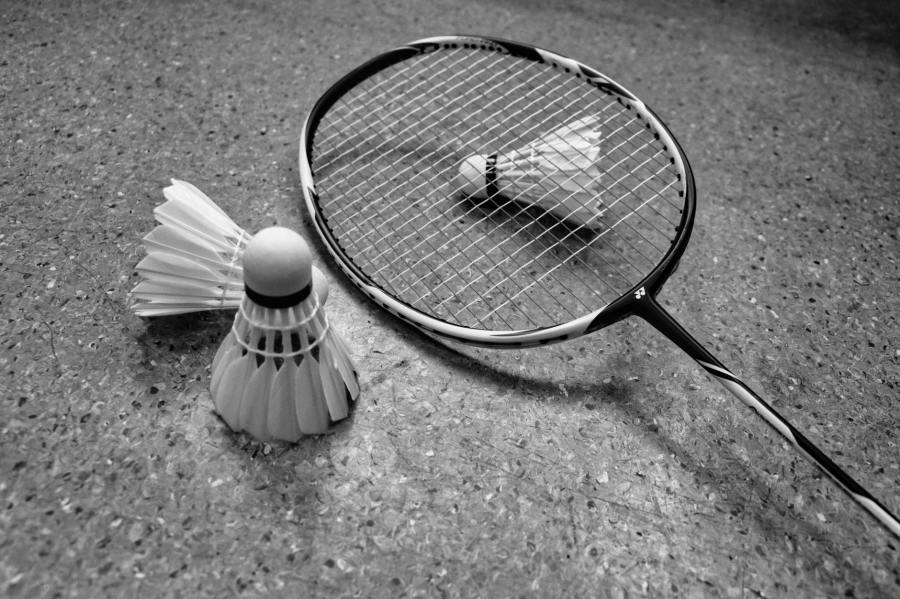
Suzanne and Tracy find a ratty badminton set in their garage, so we agree being Chrissy Evert with badminton rackets counts. One problem solved but there’s another: four rackets, five girls. They had been an easy four until my mom, her boyfriend, and I moved into the neighborhood in March—as Janelle reminds us while we rock-paper-scissors to see who plays and who’s stuck being line judge. It’s Donna, the nicest and fairest. “You’re swapping with Donna first,” Janelle tells me. “That’s the rule for new girls.” 

Suzanne and Tracy’s dad sets up the net: no wobbling. We’re in the front yard because the back’s a hill, only good for sledding. Where I lived before was flat and concrete and no yards and no kids. I didn’t know not to like it. “Ew,” Janelle said.

Playing out front will be exposed, with cars passing, strangers eyeing us swat the birdie like it’s a fly in the kitchen, belly-laughing as we leap and miss, crashing into the scratchy crabgrass. I hate people watching, can’t stand people knowing things about me. “New girl’s got a secret,” Janelle told the others yesterday, smack in front of me.

Suzanne and Tracy team up, leaving me with Janelle. She tugs the top off a dandelion. “Fine,” she says to no one, tossing away the yellow flower. “Fine,” I say right back. The thing is, I might actually be good at badminton. Keefer, our cranky gym teacher, liked me best of the sixth grade girls because I can run forever. “This girl,” Keefer said on the last day of school, handing me the highest presidential fitness certificate with the biggest, goldest seal.

Janelle’s terrible at badminton but criticizes me left and right. I’m in her way, she complains, or she shouts, “Stop your dumb, weird breathing.” I whack my racket hard, making air whistle between the strings. Suzanne’s good, and we whoosh the birdie between us.

Then Janelle pushes in front of me so I can’t swing without hitting her, meaning Suzanne wins the point as the birdie arrows feathers-up into the grass. She and Tracy high-five. “You’re hogging,” Janelle says.

“That doesn’t count.” I don’t know why I say that because I don’t care.

“Ask the line judge,” Janelle says.

“You guys,” Donna says.

Janelle arcs her racket through empty space, and I step back. She might never like me, even if I wait forever. We’re not moving back, and those old friends are gone. “No way,” my mom says. Her creepy boyfriend has his important new job. I hate him.

Right then, a station wagon with wood paneling pulls curb-close, and a woman wearing too-big sunglasses rolls down the window and calls, “Can one of you girls pretty-please help me for a sec?” A checkered scarf covers her hair, is knotted tight at her throat. Like she’s the wolf waiting in Little Red Riding Hood’s grandmother’s bed.

Suzanne and Tracy stare at the grass. Donna’s face reddens. Only Janelle watches me, a strange, hard, unfriendly smile distorting her face. Like a painted clown who’s not funny. Like she wants me to cry. Like she knows what happened in my old neighborhood though I’ve told no one.

I remind myself to breathe, because Stranger Danger is the scary man with handfuls of candy. He’s a troll, an ogre, the witch in the forest. He’s not real. This is a lady like our moms driving a car with a bicentennial license plate from Michigan.

My own mother worries about strange men, about boys demanding to see my underwear, about the priest. “Tell me if anything happens,” she says, “promise.” I promise. But when it did, I didn’t know any words she wanted to hear. Like, what if he’s not a stranger?

Janelle points at me. “Go see what she wants. You’re the new girl.”

“Are you afraid?” I ask.

“Never.” She tosses her racket way high in the sky and starts sauntering toward the car even before the racket crashes to the ground.

It’s not a game. I despise Janelle, but it’s not like I truly want her to disappear. I pick up her racket, curving my fingers into the grip, touching the warm, worn leather where Janelle’s fingers were.

“Wait,” Donna says, not to Janelle but to me.

Suzanne and Tracy poke their fingertips against the taut strings of their rackets, maybe testing them. What if no one likes Janelle? Maybe the rule’s that the new girl says it. Say it, I think. Give them what they want and they’ll like you.

I say, “Let her go. She’s fine.”

We watch Janelle talk to the woman then slide into the front seat of the car. The door slams, and the car drives off. “She didn’t even wave goodbye,” Tracy says.

“How come dumb Iowa doesn’t have special red, white, and blue license plates for the Bicentennial?” Suzanne asks.

“Great question,” Donna says.

So we four wonder about that for a while, and other stuff, until our mothers call us in for dinner, Janelle’s mother’s voice coming hoarse and wretched through the screened window of my bedroom late into the night.

Leslie Pietrzyk’s collection of linked stories set in Washington, D.C., Admit This to No One, was published in 2021 by Unnamed Press. Her first collection of stories, This Angel on My Chest, won the 2015 Drue Heinz Literature Prize. Short fiction and essays have appeared in Ploughshares, Story Magazine, Southern Review, Iowa Review, The Sun, and Cincinnati Review, among others. Her awards include a Pushcart Prize in 2020.