The Sharp < Parents > Have a Round ( Child ) by Luigi Coppola

They asked how many sides the fetus had.
Unsure of what to say, the doctor lied, knowing
they expected the same number as themselves.

When the baby bulged and bounced
down their sides, the sky turned plain and paths
were pathed with flattened fool’s gold.

Like cubes trying to love spheres, they
could only wonder at the failed geometry
of it all – nothing stacking up.

They balanced between the planes
and the points of parenthood, never to under-
stand the trials of being round.

More worried about, than for: they thought
of how schools were unfit for purpose; the streets
bordered by broken fences; the hospitals

confused with their whetted tools. So
they spent their whole lives shaping their child: a
                                                                                nip
here,                                                 there,
                                a tuck
                a word,                                         just
                                                a word,

a word made of silent letters. And then all
was right-angled in the world; the round peg
chiseled down to fit into a square hole.

Every day, hidden away with tight –clothes–,
straightened |hair| and ironed-out [expectations],
a vised {heart} is by its own (ribs).

Luigi Coppola – www.LinkTr.ee/LuigiCoppola – is a poet, teacher, and avid rum and coke drinker. He has been selected for the Southbank Centre’s New Poets Collective 23/24, Poetry Archive Now Worldview winner’s list, Birdport Prize shortlist, and Poetry Society’s National Poetry Competition longlist. He also performs music as ‘The Only Emperor’ and has a debut poetry collection from Broken Sleep Books due out in 2025.

For music, videos, the writing process of the poem, and other links, please visit: https://linktr.ee/thesharpparentsofaroundchild.
Deserving by Marie Hoy-Kenny

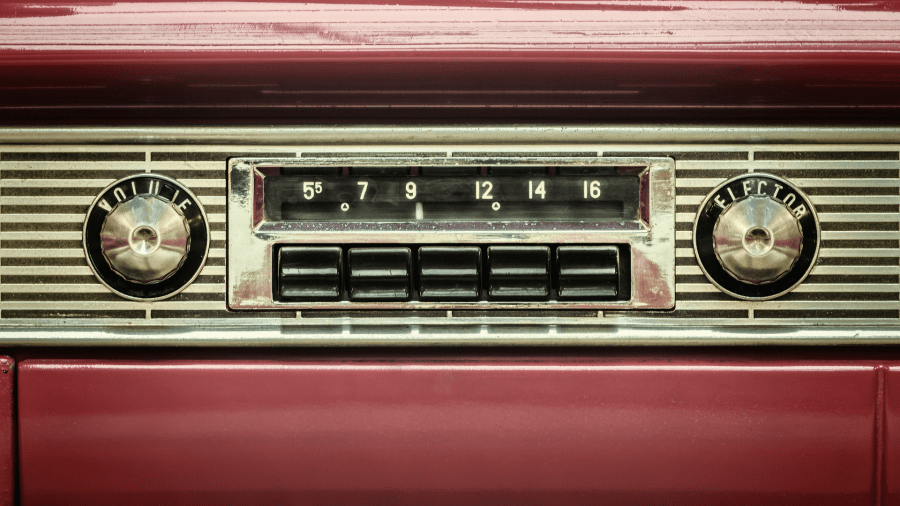
You tell me not to come, but I’m already in the car. You’re cursing under the sound of the ignition and heater starting and I’m switching on the radio, flicking through the stations, stopping on a Queen song, hoping you’ll shout out the lyrics and forget about shouting at me. My seat warmer’s on and it usually comforts me like a cup of Campbell’s Cream of Mushroom, but all it does now is make me feel more shit. I don’t deserve Bohemian Rhapsody, I don’t deserve a warm back, and I sure as hell don’t deserve you. Because as soon as I felt love, I pushed and pushed, and fucked around until I discovered the terms that made our bond conditional. I turn off the seat warmer and pull my sweatshirt, then my tee shirt, over my head, trampling them with my combat boots. I’m sitting beside you in my burgundy bra, and you act as though you don’t notice, stare straight at the road ahead and nothing else. When we first started dating a year ago when we were juniors, that would have worked, you would have parked at the side of the road and turned to me and I would have climbed across the center console and onto your lap. That was before what I did with Tyler though. It will be harder to make you care now, or—terrifying to think it—impossible. I roll down my window and stick my bare arm out, the wind slapping against it. I glance your way, but you don’t flinch, your eyes still on the dark road that stretches longer than patience. I’m hanging out of the window now, the wind whipping against my stomach, my chest, and I’m yelling the words of a prayer my mother taught me, out into the woods for the squirrels and birds to listen to because you’re acting as though you can’t hear me at all. THE LORD IS MY PROTECTOR AND HE OFFERS ME FORGIVENESS AND LOVE. You twist the volume dial and Freddy Mercury bellows the lyrics over me and my prayers and I’m pine needle-small, pebble-small, so I whisper your name instead, laced with a string of futile words. You park at the mouth of a trail and I get out, step through the teeth of it, away from my sweater, my shirt, your car, you—eyes closed, head resting against your steering wheel, and I’m running, running, running through the thick underbrush you will refuse to chase me through. And the further I sprint the less I care.

Marie Hoy-Kenny attended the University of Toronto, where she earned her bachelor of arts in English, and professional writing and communication. Her work has been published in several literary magazines, including trampset, Cosmonauts Avenue, and FlashBack Fiction. Her debut novel, THE GIRL FROM HUSH CABIN, was published by Blackstone Publishing in 2023.

you must praise the damaged world by Gervaise Alexis Savvias

indelible promises.
the dent in your palm.
the memory of what-could-have-been.
confusion, misgivings, sin.
the crack left in your side.
bruised knuckles.

you claw your way to an opening;
lose a little time trying to gain a little speed.

what does grief feel like today?
are its fingers pushing against your spine?
can you breathe past it?
or is it crushing the innocence
trapped in your windpipe?

regardless of how big the wound is,
the world says you shouldn’t fuss over it;
the wound says you shouldn’t make a future out of it.
when grief is synonymous to existence,
the world is sharper.
but, see,
no one ever taught me how to grieve.
they say: it’s just a matter of learning backwards.

glory be to the topsoil.
to the worms, to the wounds.
glory be to the intricate congregation of mycelium.
what makes for a better angel of death than
the quaint prompt of decomposition?
a thankless, endless task.
return to the earth:
precipice and prayer.

silence and sunrise.
silhouettes on the garage door.
the checkbook of mortality.
the blue chemical of the morning.
the waking burn in your stomach.
the taunting endures; single-toned litany.
your eyes adjust to the darkness; the heart never.

Gervaise Alexis Savvias (they/he) is a Zambian-Cypriot writer, artist and researcher currently based in Nicosia, Cyprus. Their practice is predicated on an entanglement of parapoetics, radical archival methodologies, and lounging in the sun. Their work stretches across installation, poetry, collective utterance, and sound; observing language through its manifold forms and recognizing its ability for collective communing and vulnerability.

Stitch by Allison Field Bell

Mary was the first to do it. She used silver thread, and we admired the biblical resonance of her name, her tight straight stitch. She started with the left eye, at the corner away from her nose. It was painful and messy, the needle threading through eyelid, but eventually the blood dried, and there she was in our high school hallways, eyes stitched closed.

After that, it was a new girl every day. You could tell who was new by the crust of red at the stitches, by their bumbling walk and their reaching for every wall.

The boys wrote us off. They said there wasn’t anything political about it. It was just the latest fashion. They opened doors for us, guided us from one classroom to the next. They read our homework aloud and cooked us afternoon snacks: rice with broccoli or macaroni and cheese, whatever they liked to eat.

We had told them about the ways the world worked for us, about our bodies and how they felt always on display, too big or too small, too easy to comment on or whistle at, how some boys didn’t listen when we said no or stop or leave me alone. These boys we told: they ignored us too.

So we no longer watched their football games or returned their smiles from across a room. We stopped shopping at the mall. We wore sweatpants and tee-shirts and never any makeup. The boys said things to us like, You’re really letting yourselves go. And we smiled and noticed the different shades of light that danced upon our eyelids.

We learned to do tasks alone, to take care of our own needs, our own wants. We began to question the need for boys at all. We stopped dating them, began to find pleasure in each other—our bodies smooth and desirous, our laughter light and ringing in our ears.

Eventually, the principal got involved. There were too many girls with too many needs. He persuaded our parents that if our behavior continued, we wouldn’t go to college or find jobs. We wouldn’t get husbands and make babies. Too much thinking, he insisted, is not good for a developing brain.

Our parents agreed. They crept into our rooms at night and ripped out our threads stitch-by-stitch. We protested of course, but slowly, we woke up to see again. Except: there was nothing we could fully recognize from before.

We could see, but it was as if we were seeing for the first time. We saw each other most distinctly. Our limbs and waists and faces. Beautiful, we told the world. And we wanted to look at each other all day. So we did. We looked and looked until Mary took out her needle and thread again. Nobody’s listening to us anyway, she said, and then she stitched her top lip to her bottom lip and we followed, sealing our mouths shut.

Allison Field Bell is originally from northern California, but has spent most of her adult life in the desert. She is a PhD candidate in Prose at the University of Utah, and has an MFA in Fiction from New Mexico State University. Allison’s prose has appeared in SmokeLong Quarterly, DIAGRAM, The Adroit Journal, New Orleans Review, Alaska Quarterly Review, and elsewhere. Her poems have appeared in The Cincinnati Review, Superstition Review, Palette Poetry, and elsewhere. Find her at allisonfieldbell.com.

this because dog is god spelled backwards by Erinola E. Daranijo

after Daniella Toosie-Watson

One of these days, I will buy myself a god; and no, not a toy god, but the big kind. I will show my god off to my friends and brag about how big my god is. Say my god is bigger than yours; and when my god barks, I’ll say my god speaks the loudest; when god licks me I can say god loves me too and when god strolls too far, I can say my god has forsaken me. But I’ve been told that’s just pessimism; god can never leave me because every day I’ll pray to dog. Say dog, big dog, dog of mercy, I offer myself unto you. I used to have two gods before, named them Bonnie and Charlie. Bonnie was a sweetheart god. Mother of gods. Charlie was more devil than god—once tried to maul me to death. I ran from the angry god and cried to mother. God tried to kill me! Mother laughed. You do not run from your god. Bonnie and Charlie died many years ago, when I was younger, long before I understood gods. I thought gods never died. Mother cried for weeks. Cried, my gods! My gods! Dog! Why did you have to take my gods?

Erinola E. Daranijo (he/him) is a Nigerian writer. He is the Editor-in-Chief of Akéwì Magazine, and author of the micro-chapbooks An Epiphany of Roses (Konya Shamsrumi Press, 2024) and Every Path Leads to the Sea (Ghost City Press, 2024). He splits his time between the cities of Ibadan, Lagos, and Cape Town. Say hi on Twitter at @Layworks.