
Mrs. Frankenstein by Gwen E. Kirby

We fall in love with the Creature slowly, a piecemeal process over long years of hard work, and each in our own way. For the Creature’s twentieth birthday, we celebrate at home.

“Mr. Frankenstein,” I yell down the basement steps, lobster claw oven mitts pinching my hips. “Dinner’s ready!”

Dr. Frankenstein,” he says to me when he comes into the kitchen, first hanging his blood-spattered lab coat on the hook at the top of the stairs. I smile and say I’ll call him doctor when he defends his dissertation.

The Creature lumbers up the stairs behind him and moves quickly to the kitchen chair I keep covered in black trash bags for easy clean up. “Hello, handsome,” I say to him, winking, and goodness, look at the Creature: One blue eye, one green, his skin wax white and body a web of silver scars, like a giant palm waiting to be read by gentle fingertips. “And what’s new with you today?”

“Liver,” the Creature says.

I ladle peas onto their plates. I scoop pot roast from the hot pan, the onions oily. I serve my husband the tenderest pieces of beef. I serve the Creature the bits from the side of the pan where the beef has burnt and gone tough. I eat only the vegetables, don’t have the stomach for meat anymore after the bodies we’ve worked through together.

“Old liver was underperforming,” Mr. Frankenstein says, chewing delicately, his teeth sensitive, while the Creature’s massive jaw rips the beef to shreds. Such powerful mastication!

I spear a red potato and tease Mr. Frankenstein, tell him I won’t be going out grave robbing tonight, and he laughs and says quite right, not in this cold and wet weather. I haven’t been grave robbing in years (it’s grueling work, hard on the back), but the occasion of a birthday makes me nostalgic, even silly these days. I find myself playing a younger me, the daring wife who, before Mr. Frankenstein lost his graduate funding, left home after midnight to find the freshest mounds of earth. I scaled wrought iron gates, frightened caretakers with recordings of wolf howls, brought home stomachs wrapped in wax paper, all while Mr. Frankenstein graded another stack of essays.

“Mary,” he’d wept into my bosom, when he could neither finish his work nor give it up. “I’ve let us down, Mary.” But I rubbed his back and promised him he hadn’t failed. That I didn’t care, that even if he did graduate I didn’t want him adjuncting, making no money, always exhausted, never enough. That I understood why he would never be satisfied with the tedious, glorious process of creation.

These days, new livers arrive in a refrigerated van from our friend Mr. Igor at the nearby crematorium. So civilized.

“But since I’m not grave robbing tonight,” I say, “perhaps we could all play a game?” And at this, I pull a package from under the table and hold it out to the Creature. “Happy Birthday!”

The Creature does not care about birthdays. His age is not countable as no part of him is the same age as another. Still, he indulges us. “What is this, then?” he says and rips the brown paper from the present, revealing a vintage game of Operation. The Creature smiles and thanks us both. He is not a Creature who laughs, though he says that he loves how much we both do.

“Sweetheart,” says Mr. Frankenstein to the Creature, taking his hand. “Here’s your real present.” Mr. Frankenstein hands the Creature a cat from a covered basket, a brown and black dappled stray we’ve been feeding for months, who the Creature has begged us to take in.

“We can’t say no to you,” I say. The Creature bends to place his scarred hand low to the floor and holds it still until the cat sniffs and finally nuzzles him. I find myself wiping away a quick tear and when the Creature notices, I huff a laugh. Sensitive, my husband calls me fondly, but I didn’t used to be. Perhaps we were never meant to know so much about our insides, about the fragile, tenacious squish and pump that keep us upright. Now I cannot look at cat or Creature or husband without amazement and worry.

We drink wine and the Creature’s new liver does admirably. We play Operation and Mr. Frankenstein loses again and again until he throws down his tweezers and accuses the Adam’s Apple of being rigged. As always, Mr. Frankenstein and the Creature retire to their bed hours before I do. Mr. Frankenstein works best when the sun is still rising and the Creature is never far from his side, receiving his tune ups without complaint, never asking if they are necessary or simply a way to make Mr. Frankenstein feel young again, covered in blood and full of new ideas.

When it is past midnight and I’ve scrubbed the pot roast pan, put away the man and his plastic organs, I make my way upstairs to my cool room and take off all my clothes and stand in the moonlight. The cat is curled on the bed, watching me with distrust, like she can smell the old graves on me.

“You’re safe,” I tell her, and yawn, sucking life from the quiet air.

Like most young women, I used to hate my body. Used to worry about Mr. Frankenstein and the Creature excising me like an appendix, vestigial to their new love. But now I always sleep naked. Now I know my worth. Now, I rest a hand on my round stomach as it rises and falls, content with the miracle of me, in awe of how impossible it would be to recreate me, to contain this world of mess inside such seamless skin.

Gwen E. Kirby is the author of the debut story collection, SHIT CASSANDRA SAW. Her stories have appeared in Guernica, One Story, Mississippi Review, SmokeLong Quarterly, and elsewhere.
Body Horror by Court Ludwick

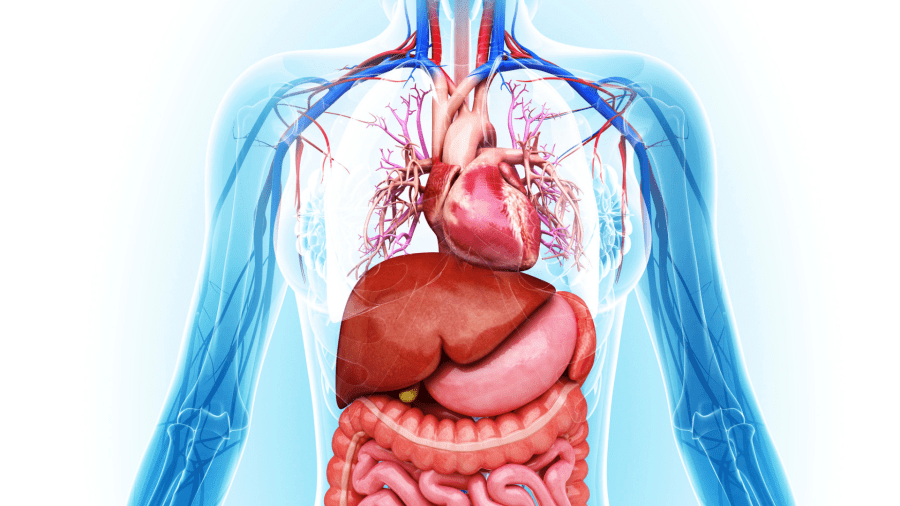
See the mother. See through her skin. See the skeleton. See inside the body. Look, there is another body, only smaller and made of disconnected parts. What constitutes a body? See, Mother has a pelvis. See the pelvis move, separate, tilt and open. Shine a flashlight in. Look. See the body inside of the body? Wait no the body is gone. Someone has stolen the body? Who has done this to the body! See but don’t hear the baby screaming. And there’s a theory that says birth is the first experience of anxiety, so do you think that’s why everyone, all the time, is still fucking screaming? The father is outside of the hospital. The infant is outside of the womb. The breath is outside of the mother’s mouth and she keeps trying to hold in all the air but she collapses like a faulty lung. You never get to see how the outside layer of bone fuses together then holds up her, holds up the body. See the father smoking. See the mother, panting.

Court Ludwick is the author of THESE STRANGE BODIES (ELJ Editions, 2024), and the founding editor-in-chief of Broken Antler Magazine. Her words have appeared or are forthcoming in Archetype, West Trade Review, Full House Literary, Oxford Magazine, Jet Fuel Review, New Note Poetry, Sweet Tooth, Watershed Review, Red Noise Collective, and elsewhere. Find Court on Instagram and Twitter @courtludwick. Find more of her work on www.courtlud.com.

Rabbits by Maria McLeod

My surgeon looked like a giant rabbit. I was leery about letting him cut into me, because he was from Texas and had a mustache. His medical degree made no difference. I didn’t trust Texans, and a rabbit was just a rodent in disguise. I set my sights on the woman surgeon in the practice, the one who, according to the website, was an organic gardener, rescued greyhounds, and thought of her patients as friends. Of course, she was booked.  So, I got the Easter bunny. He’ll be sticking his paws into me on Tuesday at 8:30 a.m.

Dr. Rabbit informed me that my right ovary’s abnormality appeared identical to ovarian cancer; neither endometriosis—the suspected culprit—or cancer could be positively diagnosed by the ultrasound I had before I showed up in his office.

I was seeing a fertility specialist, both of us dead set on figuring out why a fertilized egg wouldn’t attach itself to the wall of my womb. Upon feeling a lump she didn’t like, she ordered an ultrasound. When the results came in, she called me at home. Surgery. My first question wasn’t whether or not I could have a baby, but whether I’d lose an ovary.

She said no, she didn’t think so, but when she explained the results of the ultrasound, I looked at her freehand drawing and knew immediately that she couldn’t make such an assurance. She obviously spent some time on the illustration, a pen and ink drawing that in no way resembled the female reproductive organs on display in plastic model form on her desk. Initially, I thought I was looking at her doodles of the solar system. One ovary became a crater-filled Mars, the other, Pluto. Between them, my uterus appeared as a sandwich bag lost in space. She said it was a drawing of a cross section. I stared and stared, trying to make sense of it.

She suspected the same bloody substance that lined my uterus decided it could grow elsewhere, engulfing random organs in my abdomen, swaddling them in highly adhesive, thick procreative blood, like those old sci-fi flicks about invasive entities of a difficult-to-describe shape and substance—“The Blob” or “The Thing.” She expected that a surgeon would open me up to find my right ovary completely covered in it, plus bloody strands spread throughout, like webs of bubblegum that got lost in my hair during sleep, or during a particularly wild carnival ride.

My new rabbit doctor ordered a blood test that would serve as a better indicator of my true affliction. Cancer didn’t make sense to me, but I indulged his diagnostic detective work.

Isn’t it better to be sure, my partner suggested.

Of course, I said.

The phlebotomist was a sullen man with bad posture who didn’t know any good jokes. He directed me to hold still please when I began drumming on the floor with both feet, as if to warn my brethren of approaching danger—force of habit whenever a needle was pointed in my direction.

The results of the blood test showed a potential malignancy, which prompted my rabbit doctor to revise his original surgical plan to do a tiny incision and use a teeny-tiny vacuum to suck me clean in there, while he watched live on a video screen. Now, I was slated to have a bigger deal slit in my belly and he’ll probably remove things intact. He said he’ll give me OxyContin, and I’ll be asleep. I won’t know about the cancer verdict until it’s over.

Cancer? I said. Like the kind that kills people?

Doctor rabbit told me that if he could rule out ovarian cancer, I might still have a chance at pregnancy. I was sitting on the edge of the examining table wearing a blue paper dress, my legs dangling like a child’s. He suggested that I seek out a woman half my age, one with younger, healthier eggs. His gut rolled over his belt, and his neck oozed out over his collar.

Oh, I said, Oh. My toes itched. My skin was dry. The hair on my unshaven legs was wild.

The only time I ever hallucinated in my life, I saw rabbits. They were crossing the highway, and I was behind the wheel. I saw snow, too, even though it was summer, and I was sober. I was driving back to Pittsburgh from a bachelorette party in New Jersey for a wedding I didn’t want to be in. The husband-to-be, drunk, slumped over me one night and tried to peel my clothes off. I knocked him over and fled. I should have told my friend, but I didn’t. She was seeking true love, and I hoped his behavior wasn’t a habitual trait.

I was excessively sleep deprived that night after driving six and a half hours of endless highway from Newark to Pittsburgh. The only other gal who knew how to drive a stick shift was passed out in the back seat. Now, I wondered if I’ll wake from surgery all doped up and see a room full of rabbits.

Maria McLeod is the author of two poetry chapbooks, Mother Want, winner of WaterSedge Chapbook Contest 2021 and Skin. Hair. Bones., published by Finishing Line Press in 2022. She’s been nominated for three Pushcart Prizes and has won the Indiana Review Poetry Prize and the Robert J. DeMott Short Prose Prize. Her writing has been featured in several leading literary journals, as well as part of Painted Bride Quarterly’s Slush Pile Podcast and on Sound Poetry, Radio Tacoma. Originally from the Detroit area, she resides in Bellingham, Washington, where she works as a professor of journalism for Western Washington University. Find her on Instagram @mariapoempics.

Once the Good Daughter by Kiyanna Hill

I was obedient, a dim beam
from a frayed wire, never

                alight. I was the finest void,
                listening to my mother sing
                about Diane sitting in Jack’s lap.

She talked to herself,
sobbing when she couldn’t answer

                her own questions. I tried to be
                a good unwanting, a quiet thing
                a collapsed lung. At night,

I bit my nails down to the quick
staining my sheets with dotted blood.

                I uncover my voice, my tongue
                filling my toothed gap. I speak
                to my reflection & ask

her to be the brightest light.

Kiyanna Hill (she/her) is a Black writer. Her work can be found in Porter House Review, Honey Literary, Autofocus, Peach Mag, and elsewhere. Her debut poetry chapbook, A Damned House and Us In It, is forthcoming from Variant Lit.