Four Stories by Tiffany Hsieh

Wendy  

Wendy goes to school and becomes a professional. There’s no rationale for why she loves accounting, but she does. It reminds her of when she used to count money for her parents’ business. Each transaction feels exact and explicit, like Wendy.

In her spare time, Wendy likes to cook. She has many recipes that tell her exactly how much sugar for this and show her explicitly what kind of sugar for that. But Wendy never follows a recipe exactly or explicitly. It reminds her of science class in high school. Each measurement feels too exact and too explicit, too much like Wendy’s science teacher, a big-breasted woman with a manly jaw.

Sometimes Wendy wonders what it’s like to have big breasts. She has no big breasts. Her ma has no big breasts. Her ah-ma has no big breasts. Her other ah-ma has slightly bigger breasts but Wendy doesn’t like her or them. One of Wendy’s breasts is slightly bigger than the other and she counts the difference between them, between two, between one and half.

Titanic

My piano student came here on a boat when she was two years old. Maybe that’s why she wants to learn how to play that song from Titanic. She was there and a part of her goes on and on.

Week after week, my piano student talks to me about boys. She places her hands on the keys as she talks, her nails long and polished, her fingers flat like water. She wants me to play for her instead. I don’t know why I give into her purple-shadowed puppy eyes.

Bit by bit, I let my piano student talk me into helping her quit piano. We go rollerblading by her house, her idea of Big Sisters. Her mother shows me how to make Vietnamese spring rolls. Her father asks where I’m from and smiles with half of his mouth that I have no sea in me like his daughter does. That I’m more grounded somehow.

We have our picture taken on the front steps. We are both in shorts and short sleeves. My piano student looks older than sixteen. Her makeup is all wrong, her posture too ladylike. I tell her she doesn’t need all that stuff on her face, but she hands me a Sprite and tells me about getting a job at the music store, about the guy at the music store, goes on about his motorcycle and leather jacket, goes on and on.

Convocation

 A classmate asked me out after he came back from teaching English in Asia one summer. He said he had tickets to see the Yankees in town. In truth, I didn’t know what to say. We attended the same lectures and sat near each other from freshman to junior, but we never went anywhere or did anything together. We were the perfect classmates.

So I said I was busy. He didn’t speak to me in senior year and I thought what the hell. When we convocated, he acted like we were strangers even though we sat in the same row under the same alphabet. Even though we used to greet one another with a wave and a smile and exchange notes and glances.

I could’ve really been busy, also, and had to say no. And, honestly, he wouldn’t have asked me out in the first place if he hadn’t gone to Asia and seen so many Asians and come back to the one Asian girl in class.

He was probably destined to marry an Asian girl after that, and that was what he did in the end. When I saw their photos on Facebook years later, a part of me couldn’t help but wonder if that’d be me in the photos instead, had I said yes to the Yankees, and if we’d be a good couple or not. But mostly, I just felt relieved that someone else had said yes to him.

The Cellist 

She tightens her bow and flips that fine ponytail of hers that flaps and sways in a Beethoven sonata, the contours of her posture shaped by the cello between her legs, the right one has a habit of making little circles on the floor when crescendo.

Then in limbo, she sticks a pencil in her hair like a meat thermometer and taps the score with the tip of her bow, denting markings of forte, fortissimo, piano, pianissimo, and chanting, bar by bar, tap by tap, Loud, loud, loud, soft, loud, soft, soft, loud, loud.

Once in a while, she pictures someone watching her perform from a distance, listening to her play and admiring how beautifully she plays. He loved her once but she didn’t play the cello then.

Tiffany Hsieh was born in Taiwan and moved to Canada at the age of fourteen. She is the author of the micro chapbook Little Red (Quarter Press) and her work has appeared in The Los Angeles Review, The Malahat Review, Passages North, The Penn Review, Quarter After Eight, and the Best Microfiction anthology among other places. She lives in Kingston, Ontario.
Implement by Chiara Di Lello

What the self forms around
cannot be undone
– Gabrielle Bates

I was birthed
      sleek, a drop
of magnetite
      cracked egg-like upon
the world

      she might say
I arrived
      a gnarled stump
and it’s time
      chiselling me smooth

all this fearfulness
      of edges
when it’s how you hold me
      that makes me tool
or weapon

she spirals skin
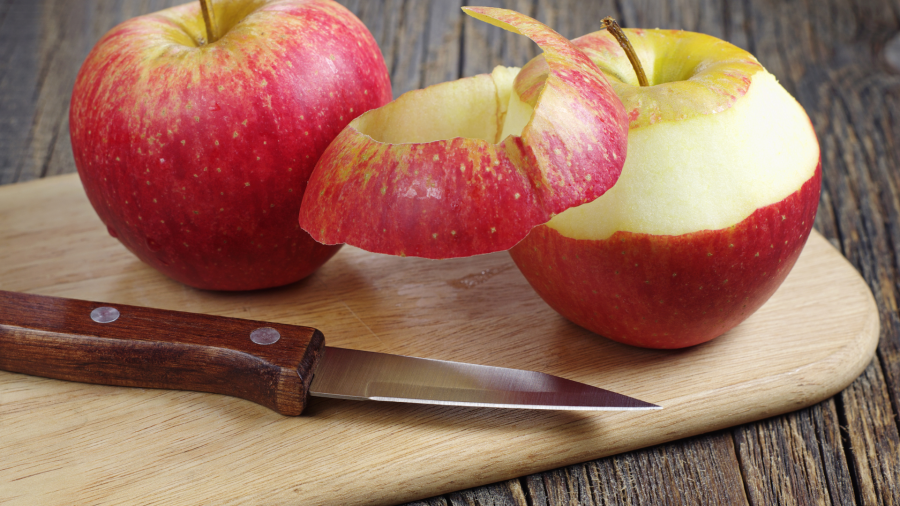
      from an apple
with the blade
          leveled
      advancing
on her wrist

which way am I
          pointed, mother
      are you afraid
of my edges
          or your own grip

when a knife
      falls from the counter
I learned to fight
          the urge
      to catch it


Chiara Di Lello is a writer and educator. She delights in public art, public libraries, and getting improbable places by bicycle. For a city kid, she has a surprisingly strong interest in beekeeping. Find her poems in Rust + Moth, Whale Road Review, Kissing Dynamite, and Best New Poets.

Lake Day & Emerald Ocelot by Joe Gallagher

Lake Day

Sometimes we take rides on our friend Charles. These rides can be quite a hoot because Charles is a frog the size of a dump truck. One morning we rode Charles to Waffle House. We ordered 3002 hash browns: 2 for us and 3000 for Charles. Then we hopped along to the lake because Charles is too big for the pool. If he sits in the pool, then there isn’t a pool anymore, just Charles. On the way to the lake Charles ate some watermelons from the watermelon man’s stand—slorp!—real fast, shooting out his tongue the size of a down spout. We got to the lake, and it turned out to be one of those delicate nice days where the dragonflies are enough to keep you cool. We called a few friends and heard their phones ringing from inside Charles. “Not again!” we said. Charles opened wide and we saw our friends down there, eating watermelon. We helped them climb out. Then, Charles swam out to the middle of the lake and sat there while we played at dodging his tongue and sliding down his big back. “This is nice,” he said. “Yes it is,” we agreed. The watermelon man pacing on the shore could wait a bit longer.


Emerald Ocelot

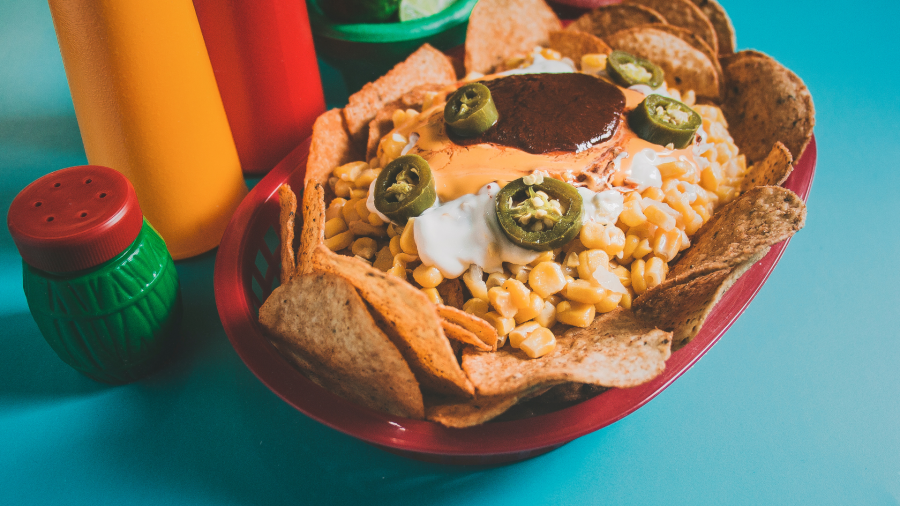
In the middle of a snowy night you shook me awake and said, “I need a tray of nachos.” All we had in the house were neon oil pastels, so I drew you a huge tray of tortilla chips covered with glowing jalapeños and pink lava cheese. “Sorry,” you said, “this just makes me hungrier.”

I was determined to make this work but I still had a long way to go.

So I promised to go get some nachos, no funny business, back before this snow sticks, call you if I need you.

I scraped the ice off the windshield, threw a twelve pack in the passenger seat and drove out toward an all-night grocery. Our town was so small, even the gas station had fallen into ruin.

At the highway onramp, an emerald ocelot stretched across both lanes. Fuck, I said, not again.

I stopped the car, got out and waved. The ocelot beckoned me over with a huge shimmering paw. I brought the twelve pack with me. The ocelot and I laughed about the times we’d met before, like, remember the night I missed two flights? That story, again. Other cars drove around us.

Soon I was leaning against him like a big furry couch in the snow. Then the ocelot said your name and asked how we were. I told him, growing apart.

The night got colder and the cars passing by started to pick up speed, even though it was snowing. The ocelot began to lick the ice off his paw and I forgot why I was there. The warm wet sound of the tongue confused the issue.

The whole time the nachos sat steaming in the car.

When I walked in I told you I was tired and the grocery store was far away. I hid how drunk I was, or thought I had until the Styrofoam box slipped out of my hands. The nachos looked ridiculous on the kitchen floor. I had talked to the ocelot so long, the cheese must’ve been cold by then.

You said, “Was he there again?”

I denied it but you shook your head in disgust.

I had a lot of wrong ideas upon reflection.

I walked toward the back door. The big tree in the yard was gone. The porch light showed the snow ending abruptly in the night. The sea green ocelot stood trapped in the sliding glass door. Its eyes were gray like crumbling stars. Its paws stuck in the soft powder. It was lonely and nothing else. Just like I wanted.

Joe Gallagher was born and raised in Orlando, FL. He now lives in Frederick, MD where he runs an independent press and writes poetry, prose, plays, and the occasional essay about space travel. Previous work has appeared in Carolina Quarterly, DIAGRAM, and Corium. He received an MA in Creative Writing & Publishing from Emerson College, where he was the poetry editor for Redivider. He has a wife who writes novels, two small children, and one large dog. Follow him on Instagram for more art & writing: @jgonestudio.

Shark Body by Josephine Wu

Two years ago, my sister googled my
symptoms & warned me I would bear
cavities in my stomach. Back then,

I laughed, telling her I shed
grief like a fish. That all the softness
I had been holding would bloom

into sashimi, wet as a newborn
weeping. The body narrowing
into shadow. Two years ago,

when I first turned jawless,
the teenage lifeguard found a beached shark
on the shore of a lake my sisters & I

deemed monstrous. That night, we snuck
through the gate to see if it had
two heads, human teeth, a body worth

honesty
in retelling. Instead, we found
its dagger-white belly scribbled

with blood, a dark smiley
etched underneath the tail.
We imagined it to be from local

fishermen, abandoned beer cans, the
serrated teeth of sea glass. Shark pups
sensing loss & gnawing their way out of

their mother. Two years ago, I imagined loss
to beget loss. I didn’t know
it was from me all this time, it was me

careening into the dark,
scraping against softness.


Josephine Wu is a writer from New Jersey. She has been published in diode, Hobart Pulp, and Eunoia Review. She has also received two Best of the Net nominations and was a Lannan Fellow for Poetics and Social Practice at Georgetown.

Last Day Cupcakes by Jeffrey Yamaguchi

I overheard they were ordering cupcakes for tomorrow. I knew what was up. A toast was in the works, on my last day, of what’s likely going to be my last job. I have given my share of toasts of this kind over the years: It’s a funny comment, then a meaningful remembrance of some incident of kindness, and then a really big, over-the-top thank you. What are we going to do without you? That heartfelt question can’t help itself from being asked. It’s on the tip of everyone’s tongues. If no one asks, it’s still hanging in the air, captured in the collective gleam of the faces of those gathered, all standing there in uncomfortable shoes, holding plastic glasses. But we all know the answer. It can break your heart.

These past few months I’ve been taking things, one at a time. Not to keep. I just chuck the item in the first garbage can I see, or leave it somewhere, some place where it might carry on into a new life. I started small, with a stapler from my desk drawer. I placed that on the little makeshift seat in a dressing room. I was there trying on clothes because I thought I’d get a new shirt for my last day, to mark the occasion. But it’s also possible I was just having a hard time being clever with the stapler abandonment, and the only thing I could think of was to leave it in a dressing room. I did laugh while I was doing it, but now, I don’t really get why I thought it was so funny. I also didn’t bother buying a new shirt for my last day in the office. While I truly believed in the forthright irony of that idea, I knew I’d have to verbally call it out and explain it if I wanted anyone else to get in on the joke, and at this point it’s hard enough just to ask, How’s your day going?

 I left one giant file folder on a subway seat. Got off the train and let it go further into the darkened recesses of the city. I took a clock off of the wall, and placed that on a tucked away tree in the park. I used a thumbtack to situate it on the tree. Before I left, I ripped off the hands of the clock, and threw them into the lake. I also snatched one of those forgettable recognition slash award plaques off the wall in the hallway and just left it on the elevator. People were going to see it on the floor and on the one hand wonder why someone would just leave an award there—perpetually stuck in a rise and fall transitory state—but also, not be willing to derail wherever it is they’re going in order to figure out the rightful owner of the memorialized tribute. It’s not like it’s a wallet or a phone or something along those lines that’s truly vital to, well, I was going to say, existence… but of course it depends on what kind of existence you are currently tracked into.

And okay, I admit it, I did take the framed picture of my boss where he’s wearing a polo shirt with the company’s old logo and celebrating catching a fish with a bunch of work colleagues—I definitely worked with some of those people but it was so long ago I can’t recall any of their names. After grabbing a quick burger and fries and then clearing my fast food tray of condiment soiled wrappers, I propped up the photo on the top of the garbage can, letting it teeter right on the edge of the hole. Clearly it was time to stop, and I did. I’m reliable in that way.

After leaving the office on my second to last day, I decided to rework my schedule. It hit me just as I was skipping my subway stop, that I would keep going, to that cupcake shop that I’ve always believed to have the best cupcakes, ever. I could taste them now, and would truly do so soon enough. I decided right there and then that I would not be making it into the office tomorrow. What are they going to do? Fire me? So that means there will be no last day. Tomorrow will be just that: tomorrow.

Jeffrey Yamaguchi (jeffreyyamaguchi.com) is the author of 52 Projects and Anya Chases Down the End, and his work has been featured in publications such as Atticus Review, Kissing Dynamite, Nightingale & Sparrow, X-R-A-Y Lit Mag, Vamp Cat Magazine, Black Bough Poetry, Feral, and The Storms.