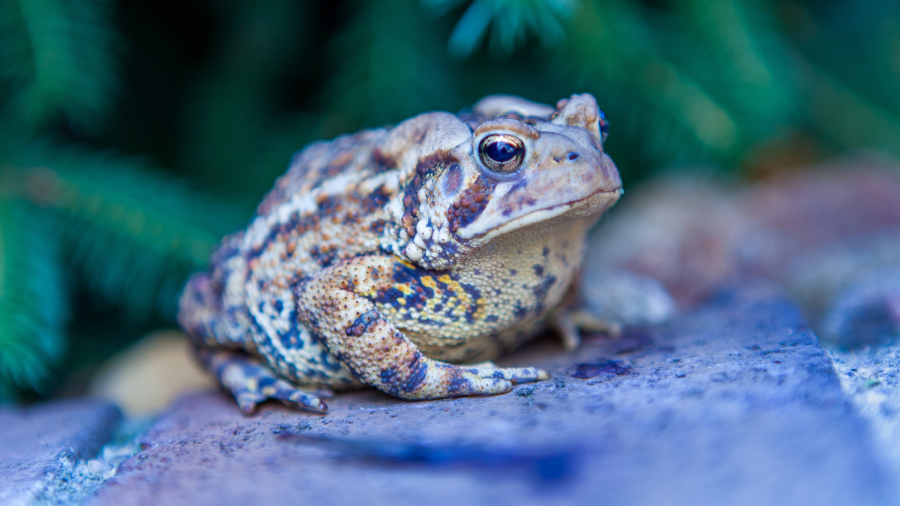
The National Park Service Warns Us Not to Lick the Psychedelic Toad by Carla Sofia Ferreira

Please don’t lick this psychedelic toad,
                                                                        National Park Service warns.

I have
              a few follow-up questions.

I want to hear first from those of you
who are looking at toads—psychedelic or otherwise—
and then think, hmm, time to lick that.
I want you to know I’m speaking from a place
of great envy, even admiration, I, who am
so cautious at taking even logical risks like
jumping feet-first into a crystal clear lake on a summer day or
kissing a man who is my friend and whose lips I want to taste or
any other small and probably not fatal leap like those,
but there are those of you out there, who are
licking toads? Can I meet you? Can we talk?
I have so much to learn.

Next, some questions for the National Park Service:
you might think I want to ask you how you know a toad
is psychedelic, but no, I want to know about this small
kindness, this extension of yourselves beyond what I am sure
is a daily cat’s cradle of red-tape routines into this gesture—
telling others what you likely never imagined you would
have to say: please do not lick the toads, though they are beautiful
because I know, personally, how hard it is to deny simple risks
that could yield pleasure but only at the expense of perhaps great
pain. In fact, really, I don’t know what the consequences are for licking
a psychedelic toad. You see, I am, I guess, a typical
American who did not read past the headline and also I am given
to writing poems the way some people might be drawn to, say, licking
a toad despite its poison, so I wrote this instead. But National Park Service
representative, whoever you are, out there, writing these public service
announcements, I hope you see them for what they are: an act of care,
a steady caution, the hand that holds the kettle.

I have some questions for the frog, too,
namely, what’s it like to be craved
beyond logic, beyond caution?


Carla Sofia Ferreira is the daughter of Portuguese immigrants and a teacher from Newark, New Jersey. Author of the microchap Ironbound Fados (Ghost City Press 2019) and forthcoming debut poetry book, A Geography That Does Not Hurt Us (River River Books 2024), her writing can be found in The Rumpus, Cotton Xenomorph, Glamour, underblong, Washington Square Review, and EcoTheo, among others. She believes in community gardens, semicolons, and that ICE must be permanently abolished.

The World We Leave You by Frank Jackson

Children, if there’s anything your mother and I have learned throughout the experience of being in the workforce it is the value of team meetings, and having all the proper stakeholders together at once, in order to arrive at what might be described as an actionable consensus and that is what each of you are tonight. Each one of you represents a proper stakeholder of a well-established entity known as the McDermott’s, and though we lack the legal protections generally offered through articles of incorporation, we do find ourselves heavily embedded into the dreary economic realities of our current participation in this late-capitalist endeavor. Children, I don’t have to describe for you the gruesome details of our complex taxation system, nor would I want to terrify you regarding the intricacies of something as seemingly simple as the selection of health care coverage, or the indecencies of navigating archaic PEO software in the hopes of submitting a time off request. These are often referred to as the “benefits” of our employment. Children, if these are the benefits, please allow yourself the capacity to imagine the detriments. You have surely seen the weariness that has encapsulated your mother and I, how it’s frayed the edges of our relationship, strained our patience, turned us into lesser fathers and mothers, often misunderstanding each other in the simplest of ways, becoming distracted by the day-to-the-day redundancies and strangeness of the corporate environment. Perhaps you’re aware of the effect it’s had on our lovemaking. The utter noiselessness of our bedroom. The lack of visible intimacy. We have become broken vessels. Children, I put the question to you. Is that fair? Should mommy who birthed you into existence be made to toil endlessly in inert, airless, sexist, corrupt structures that perennially gnaw and eat away at her sanity? Doesn’t mommy love you both very much?  Doesn’t mommy deserve a better life? Children, what of me? Would you wish your father to drop dead suddenly of a heart attack, or a brain aneurysm, or leaping from the office of one of my superiors? What we are proposing is simple. Complete, unconditional, and total surrender. Children, what we are saying is your mother and I are leaving the workforce behind. It has no further use for us. We have quit our jobs and we are going where the wind takes us. This unfortunately puts on hold certain ventures we had previously negotiated, namely memberships into certain traveling soccer teams, certain orthodontic procedures, certain Disney vacations, certain Netflix and Hulu subscriptions. We could go on and on and on, but children please stop your crying because we need you focused on this next part, which there being no other way to say it, is for each of you to begin the arduous process of putting together an up-to-date resume and finding yourselves a means of income. Your mother and I can assist you in the correct formatting and structure of your C.V., however you will ultimately be responsible for providing the majority of its content. I have done you the tremendous service of researching a list of jobs you can put yourselves in the running for, a generous variety of options, taking into consideration the unique skills and talents you each possess, that we as your father and mother, have become so keenly familiar with and it goes without saying we intend on providing you each with exceptional letters of recommendation. Children, you find yourselves in the most fortunate of times. Thanks to the recently repealing of child labor laws, the burden of protective regulations that previously restricted your full entry into the collective workforce have now been tossed aside by the invisible hand of the market with joyous bipartisan support. The professional possibilities in front of you now are endless, from meatpacking plants to auto shops, from construction sites to neighborhood bars, all avenues to an honest day’s work are right in front of you. Children, bills arrive on a monthly basis, and they must be paid, and all your money will go toward the paying of these bills, and once you stop your crying you will realize the great opportunity before you, and the possibility that someday you will become what our complex taxation systems defines as ‘a success,’ at which time you can rescue your mother and I from an underworld of utter collapse.

Frank Jackson is an MFA graduate from the Writer’s Foundry at St. Joseph’s University. His fiction has appeared previously in journals such as X-R-A-Y Lit, Metratron, Sledgehammer Lit, The Bookends Review, and Shabby Doll House. Find him on Twitter @frankerson.

Taxidermy by Sarah Fawn Montgomery

Frozen to a position
more pleasing, I am

at last a specimen
to your liking, mount

made still, silent
and shellacked to shine,

woven with wire
to shape your desire

onto what is no longer
living, though you’ve bound

me down, hollowed
heart and liver, tangled

arteries and mellow
fat left to harden

on the table, blade
abandoned for thread

to stitch around emptiness
and how I howl

mouth stretched wide
like wound and the want

of your reflection
in my vacant glass eyes.


Sarah Fawn Montgomery is author of Halfway from Home (Split/Lip Press), Quite Mad: An American Pharma Memoir (Ohio State University Press), and three poetry chapbooks. She is an Assistant Professor at Bridgewater State University.

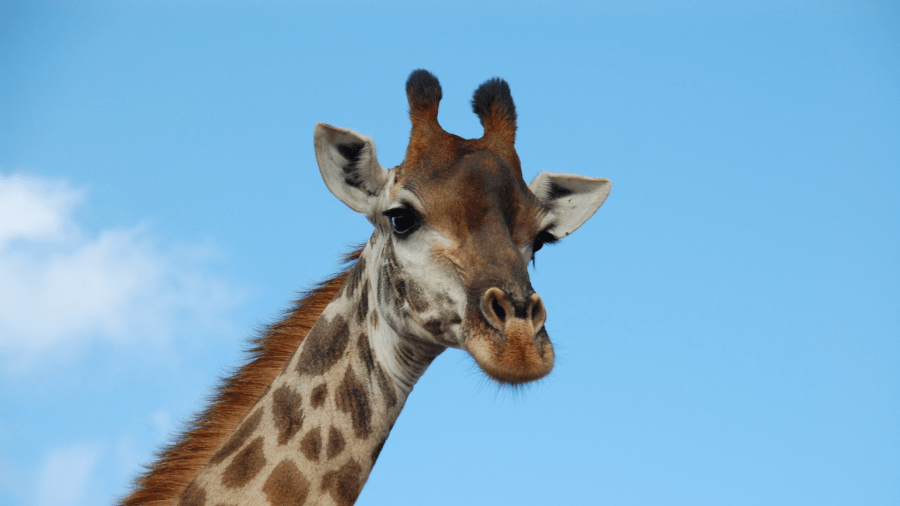
Your Stepfather, the Giraffe by Cathy Ulrich

(“Your Stepfather, the Giraffe” originally ran in Gravel Magazine in November 2015 and was nominated for a Pushcart Prize. It currently appears in Cathy’s new collection, SMALL, BURNING THINGS.)


On the twelfth anniversary of your parents’ divorce, your mother calls you up.

I’ve met someone, she says. There’s something breathless in her voice, something fluttering. She wants you to come to the house to see him. She always calls it, the house. Are you coming to the house this Thanksgiving? You should come by the house this weekend, and I’ll give you some home-baked chocolate chip cookies. As if it doesn’t belong to either of you, especially your mother.

Will you come? she says, and so you do.

Your mother greets you at the door of the house, a diamond ring winking garishly on her finger.

It was love at first sight, your mother sighs, and takes you round back of the house, where her new husband is contentedly grazing off the tops of the neighbors’ trees.

His name is Howard, says your mother.

Her giraffe ducks its head in your direction, as if in greeting.

You’re probably upset I didn’t invite you to the wedding, your mother says. It was just a small ceremony. Just us and the judge, and your Aunt Susan as witness.

She reaches out and strokes her giraffe’s leg. It was all very spur of the moment, you know.

Your mother has always been the type who likes the spur of the moment, not like you, or like your father, who would never do something like fall in love with a giraffe. Your mother likes to say your father lacks an adventurous soul. Sometimes they meet for lunch (to discuss you, you assume, for they have never had anything in common outside of that), and they’ll embrace politely upon parting, your mother brushing your father’s cheek with her lips.

We’ll have to do it again sometime, your father says, and your mother laughs.

I should never have married an accountant, she says. So predictable.

Her new husband, she says, hasn’t got a head for numbers (it’s one of the things I love about him, she declares jauntily, running her hand tenderly along the giraffe’s leg). Your mother has become an expert on giraffes since the last time you saw her. She says her giraffe is a Masai giraffe—you see the distinctive blotches on his coat, she offers in a tour guide’s voice—and that the horns atop its head are actually called ossicones.

He’s a ruminant, you know, she says.

The whole time, your mother’s giraffe has been eating from the neighbor’s trees, muscles twitching at her caress.

We’re moving to Kenya, says your mother. He’s so lonely here.

The plan, she says, is for her to travel with her husband with only what she can carry on her back. She has vowed not to be jealous if he mates with other giraffes.

I know he’d like to have a child of his own, she says. Who doesn’t want that? and strokes the top of your head with her free hand.

Besides, she says, giraffes don’t mate for life.

We’re an exception, she says, showing you again her diamond ring.

She says she’s always wanted to visit Kenya and, while they’re gone, you can stay in the house.

Much nicer than that cramped apartment of yours, she says.

Her giraffe tears some bark of a tree limb and chews it noisily.

What about lions? you say.

Your mother blinks, her calf eyes dull and wide, like the giraffe’s. Well? she says. What about them?

Cathy Ulrich is the founding editor of Milk Candy Review, a journal of flash fiction. Her work has been published in various journals, including Black Warrior Review, Passages North, Split Lip Magazine, and Wigleaf and can be found in Best Microfiction 2022, Best of the Net 2022, and Wigleaf’s Top 50 Very Short Fictions 2022. Her new short story collection, SMALL BURNING THINGS, was released by Okay Donkey Press in 2023. She lives in Montana with her daughter and various small animals.